Kai Winding cabinet
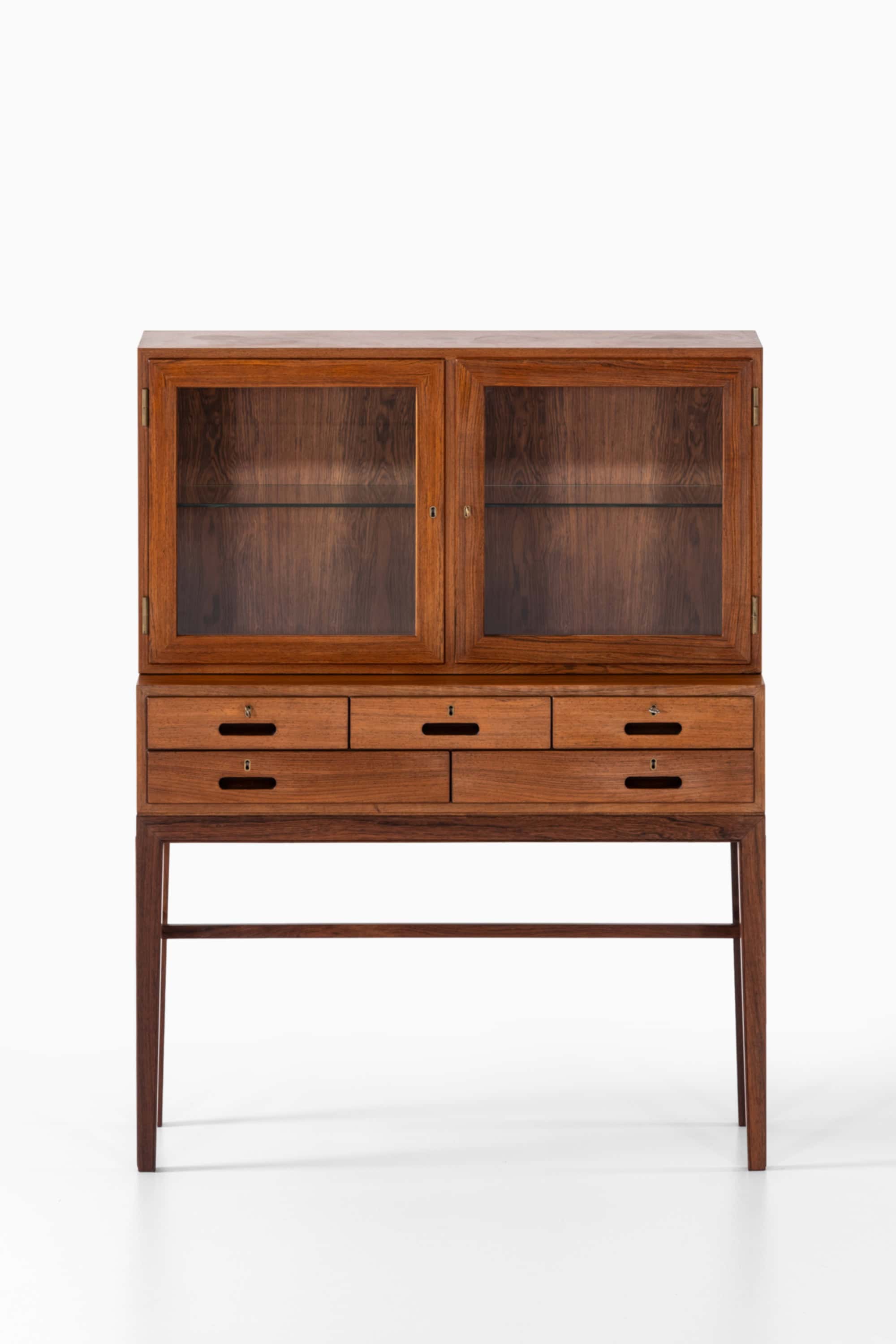
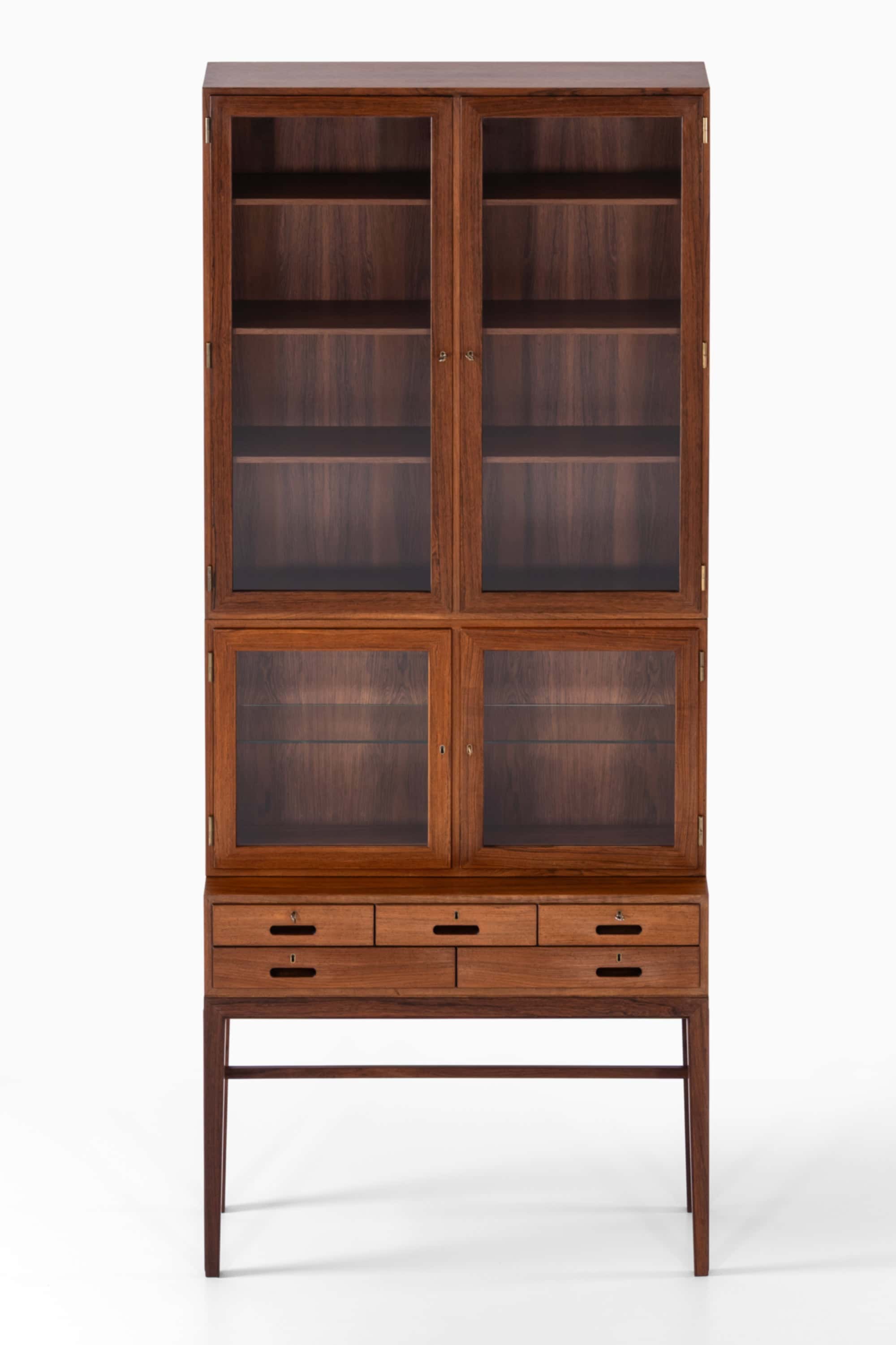
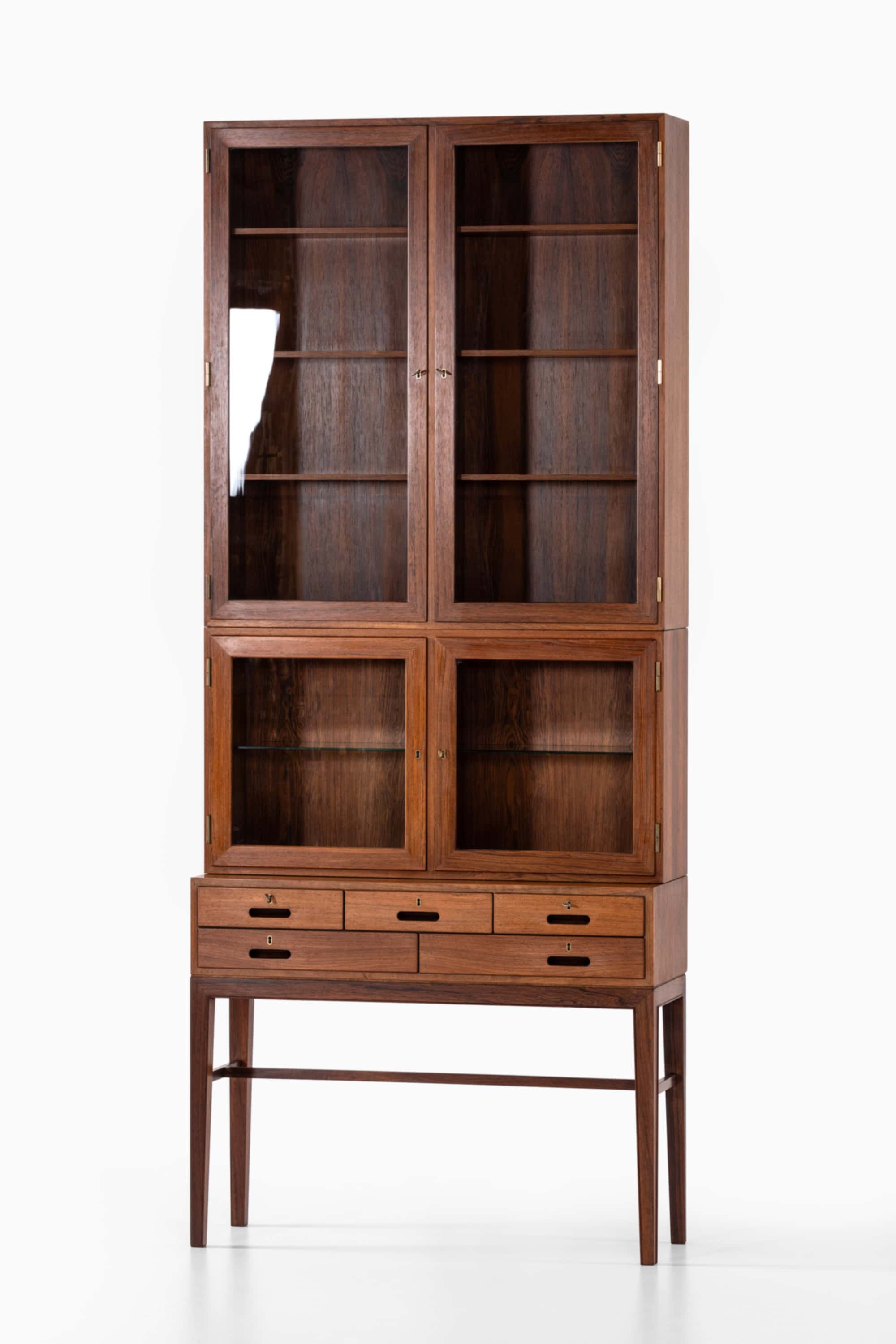
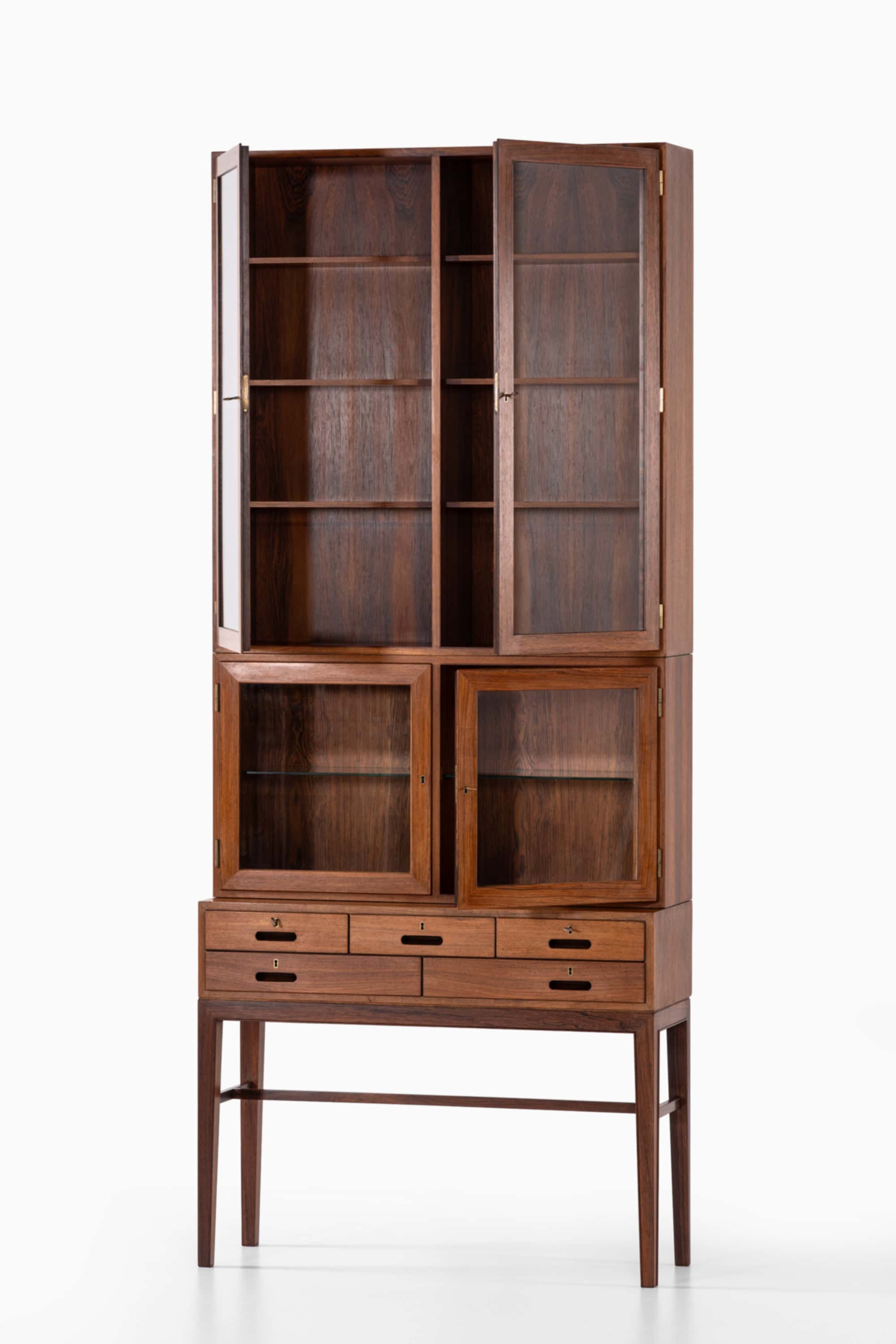
This rare and large modular glass cabinet was designed by Danish designer Kai Winding and produced by P. Jeppesen Møbelfabrik in Denmark during the 1960s. Executed principally in rosewood with glass and brass fittings, the cabinet belongs to the Danish modern tradition and combines display storage with an unusually detailed drawer section. Its architectural, vertically stacked construction allows the individual components to read as separate pieces while forming a unified cabinet when assembled.
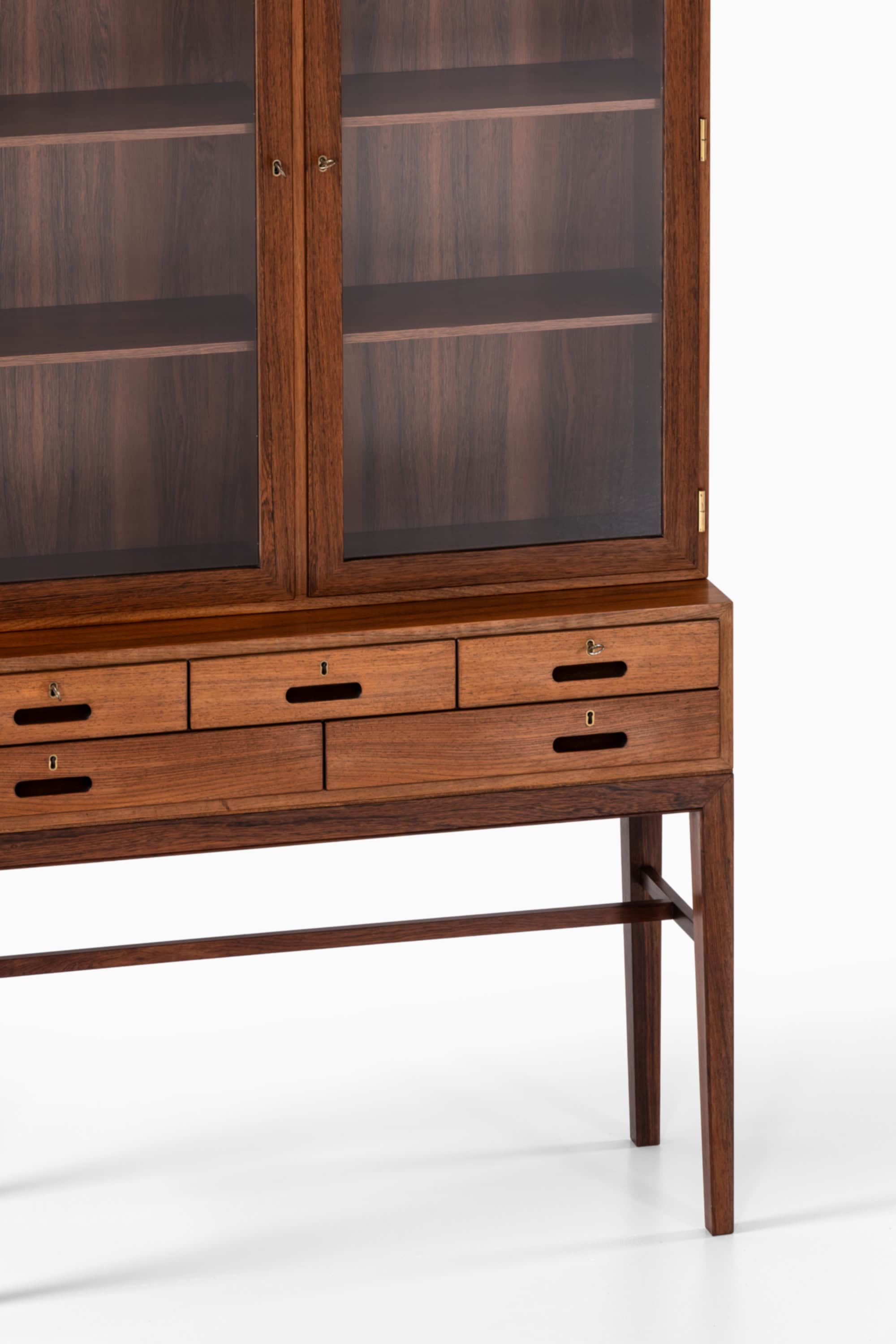
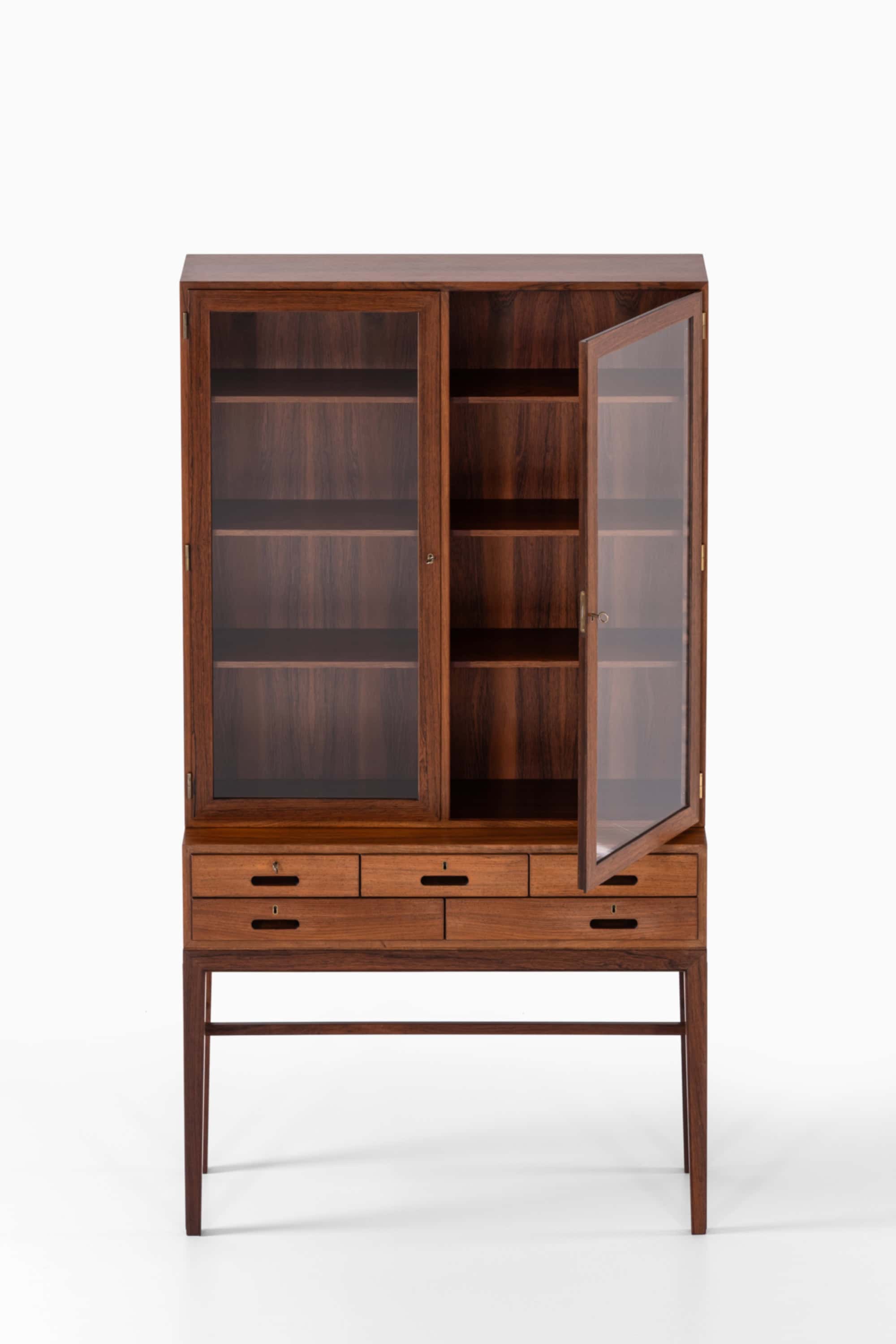
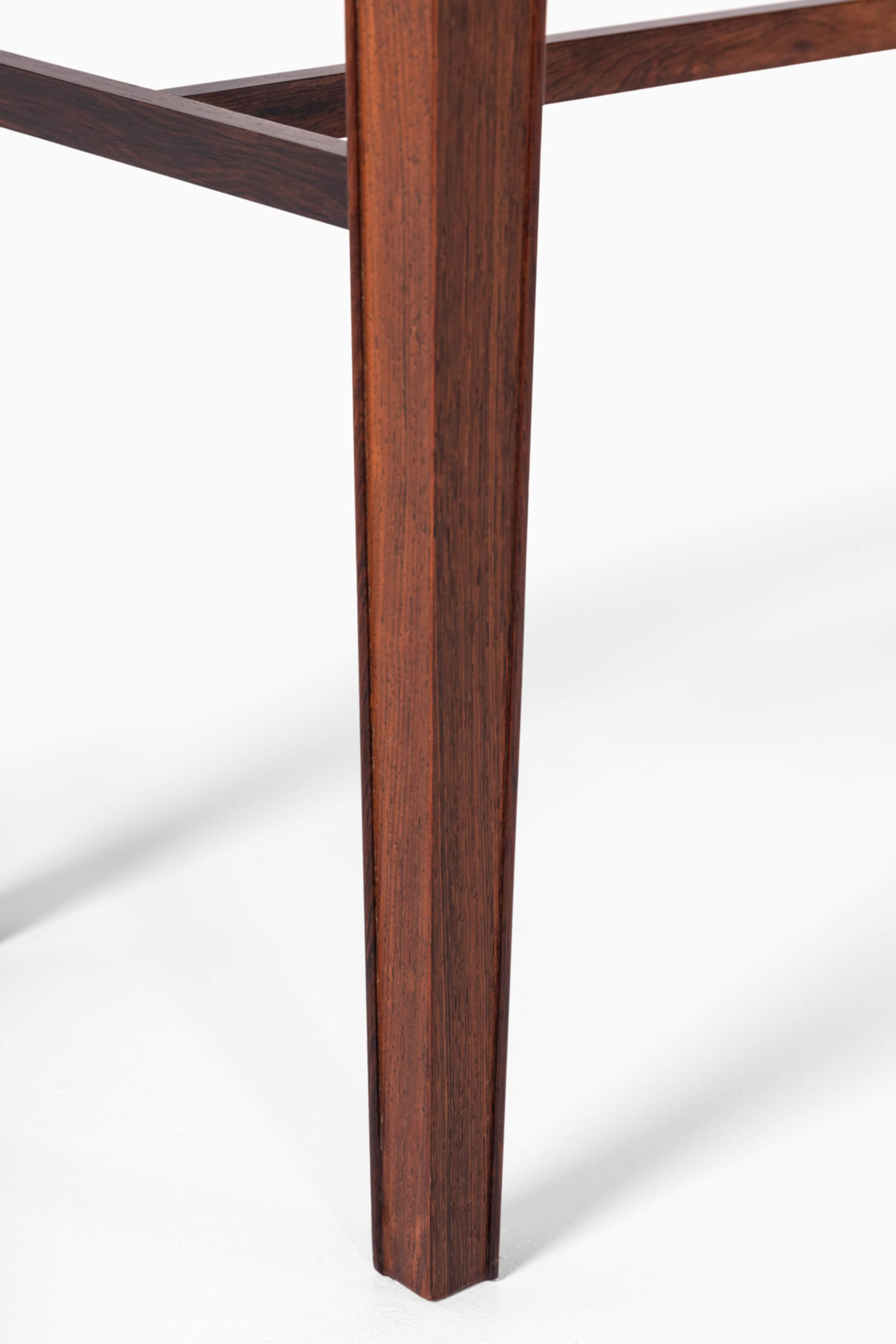
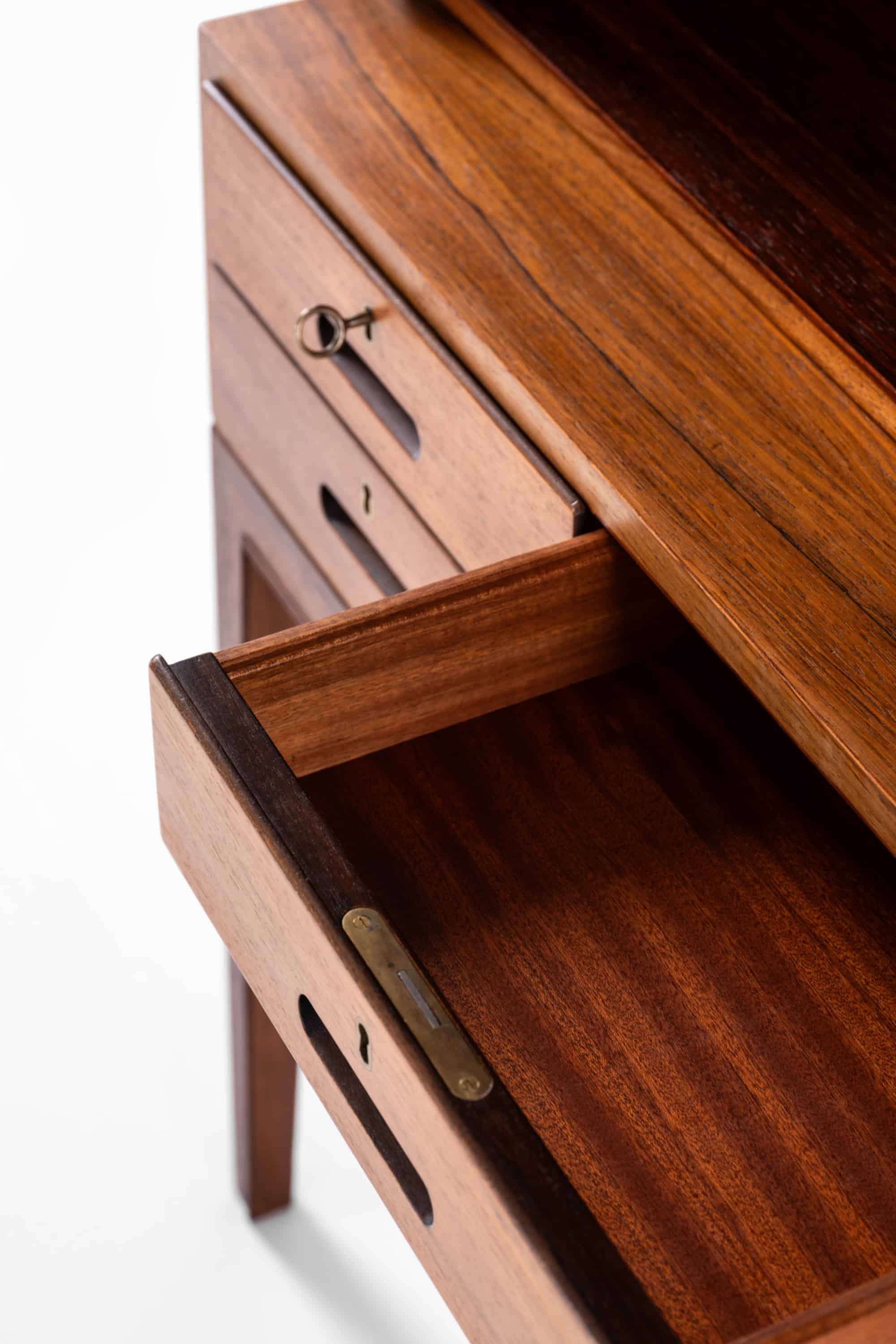
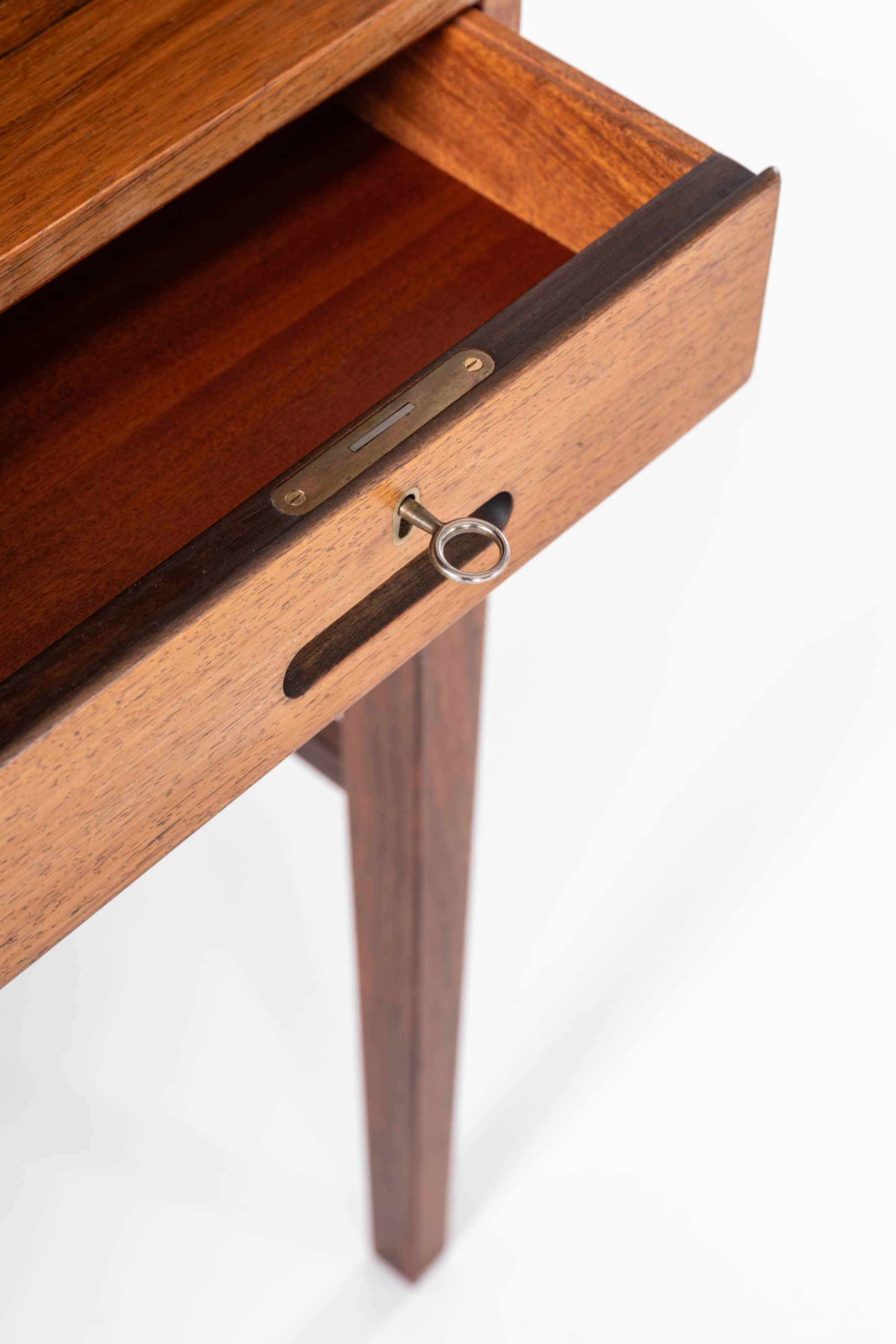
The cabinet consists of three principal sections. The lower element is a drawer cabinet raised on four tall, slender legs connected by narrow stretchers. Five drawers are arranged asymmetrically in two rows, with three smaller drawers above two wider drawers. Recessed horizontal finger pulls are cut directly into the drawer fronts, eliminating applied handles and maintaining a flat, uninterrupted façade. Individual keyholes and locks are incorporated into the drawers, with brass lock mechanisms visible when opened. The restrained rectangular construction is softened by carefully finished edges and the slight taper of the legs.
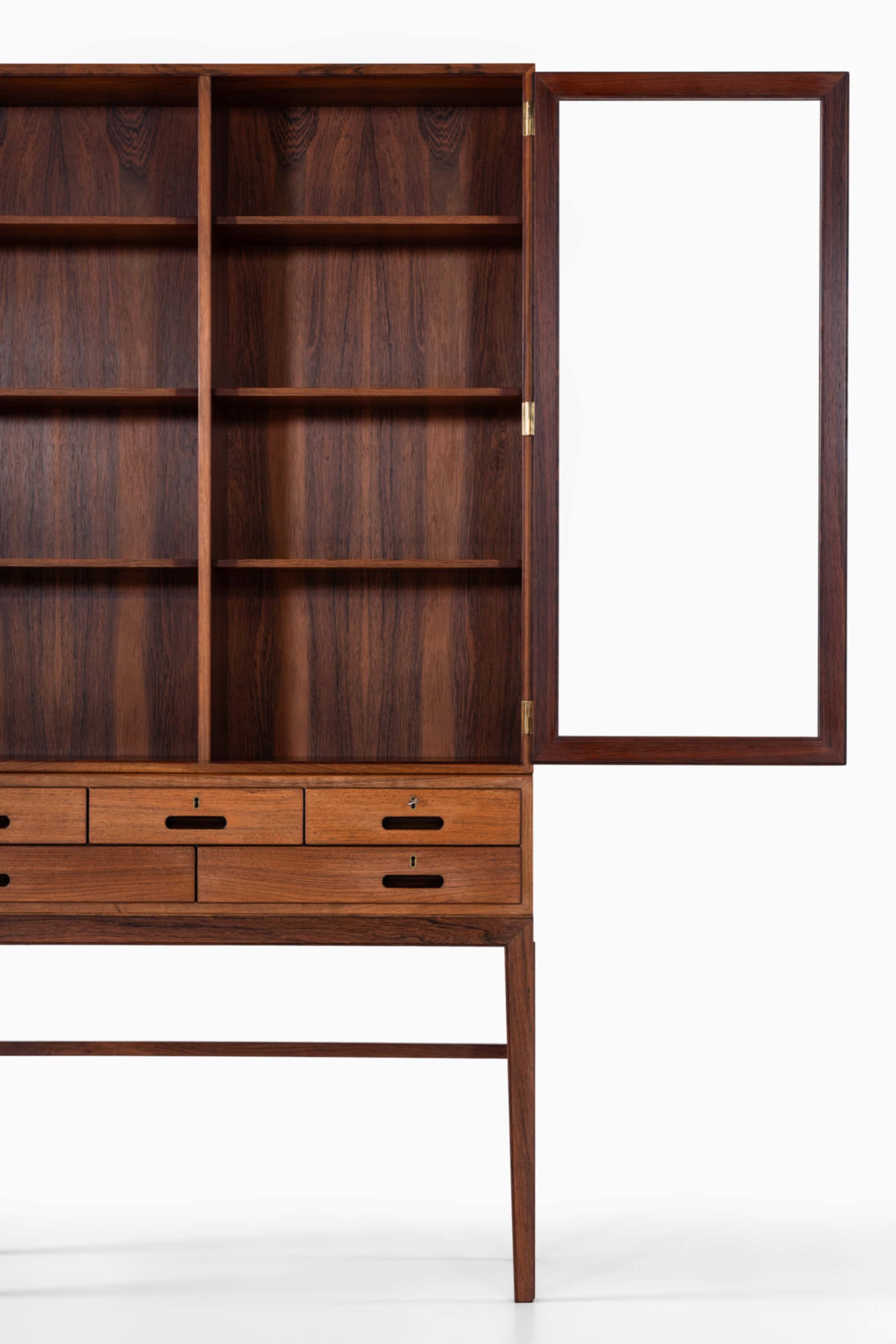
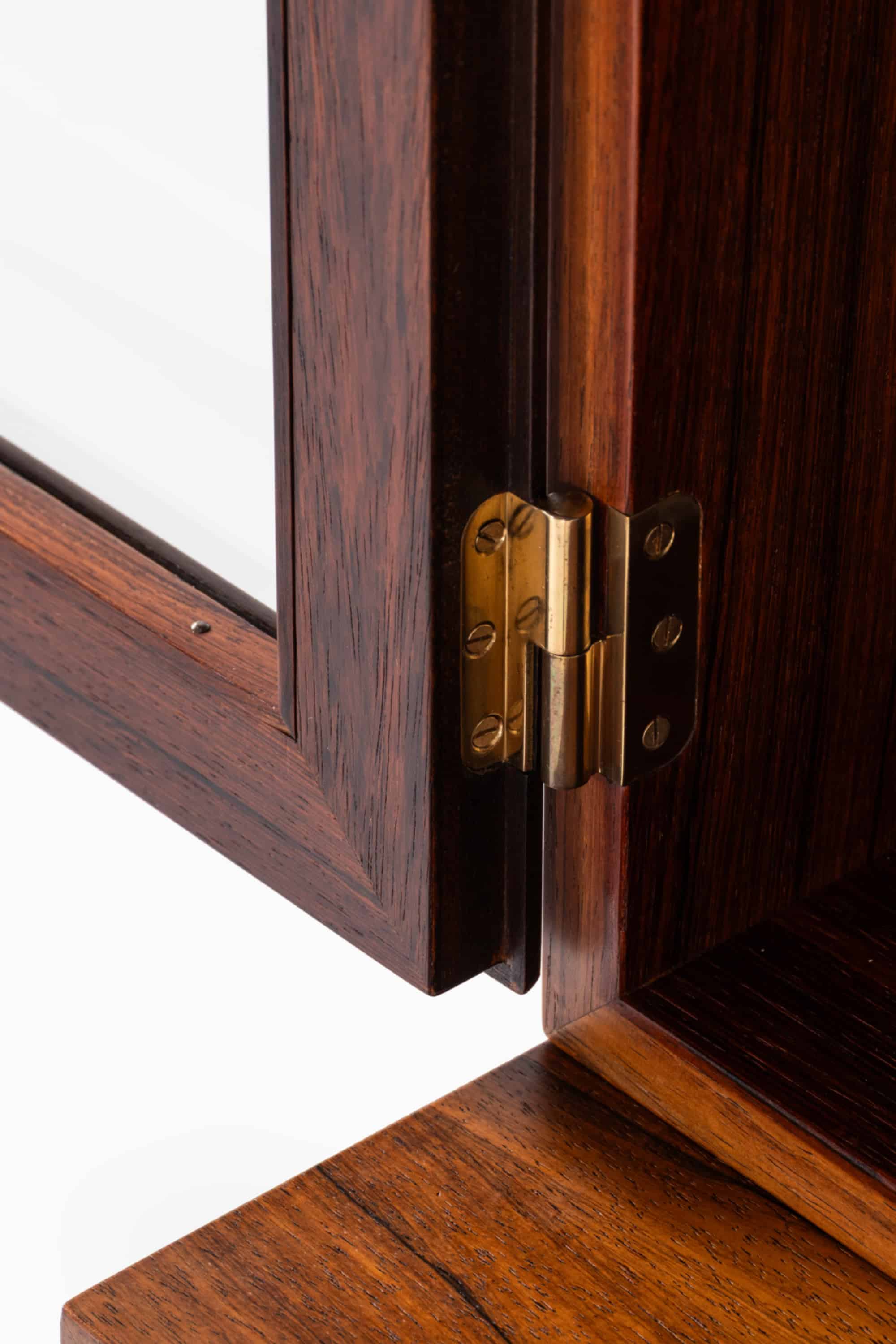
Above the drawer cabinet are two independent glazed display sections. The smaller cabinet has two framed glass doors and a glass shelf, while the larger upper cabinet has two tall glazed doors and multiple internal wooden shelves. When the three components are stacked, the alternating horizontal divisions produce a tall, strongly vertical composition. The transparent doors expose the richly figured rosewood interiors, allowing the grain of the back panels and shelving to remain an integral part of the exterior appearance. Brass hinges and small locking hardware provide a subtle metallic contrast to the dark timber.
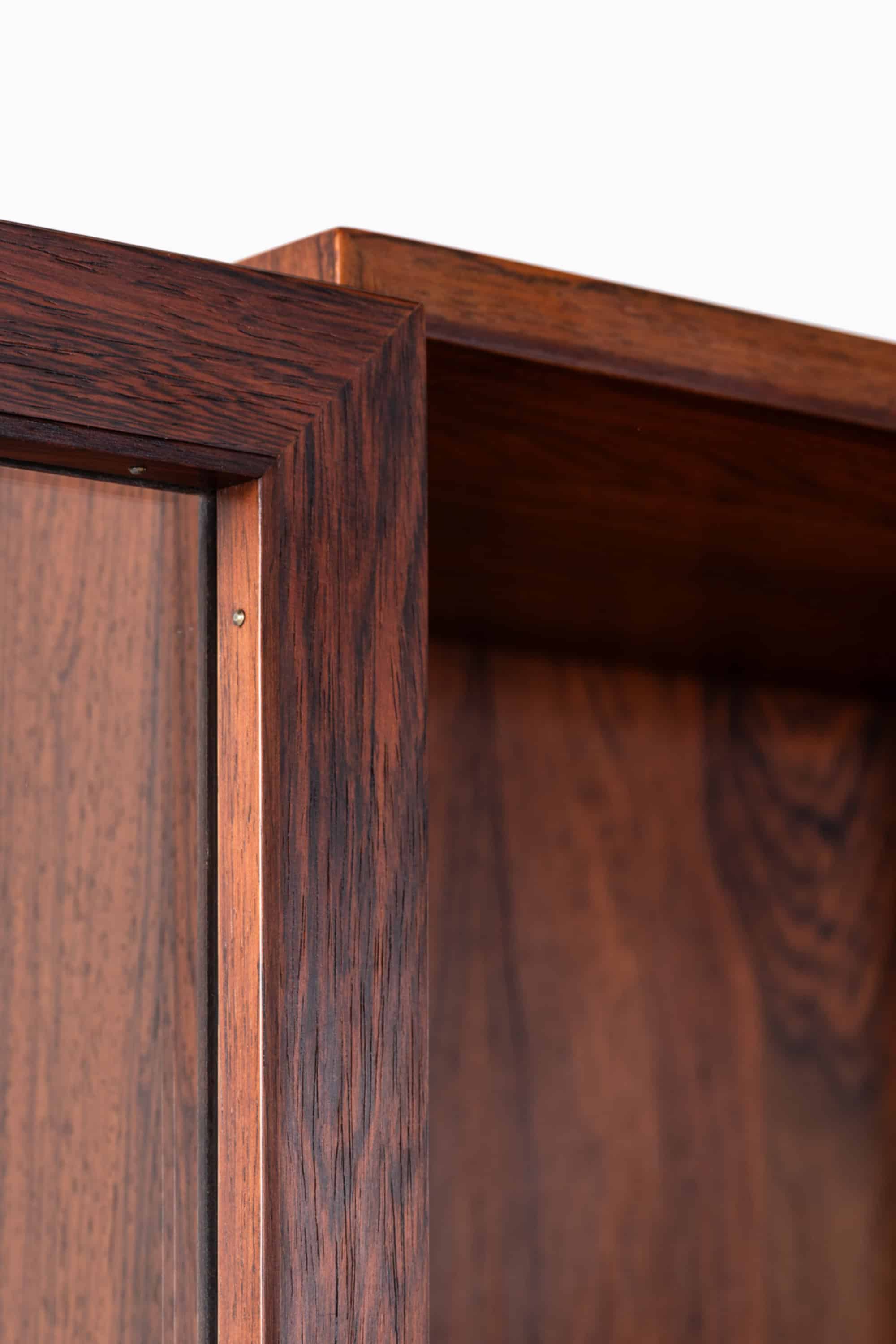
The rosewood varies from warm reddish and medium brown to considerably darker brown and near-black streaks. Particular attention has been given to the selection and orientation of the veneers, especially across the large interior back panels, where the naturally figured grain becomes decorative without requiring additional ornament. The framed doors show similarly careful timber selection, with mitred corners and narrow profiles surrounding the glass. The construction reflects the cabinetmaking standards associated with higher-quality Danish furniture of the period, with precisely fitted drawers, recessed hardware and a visually light supporting structure beneath the comparatively substantial storage volumes.
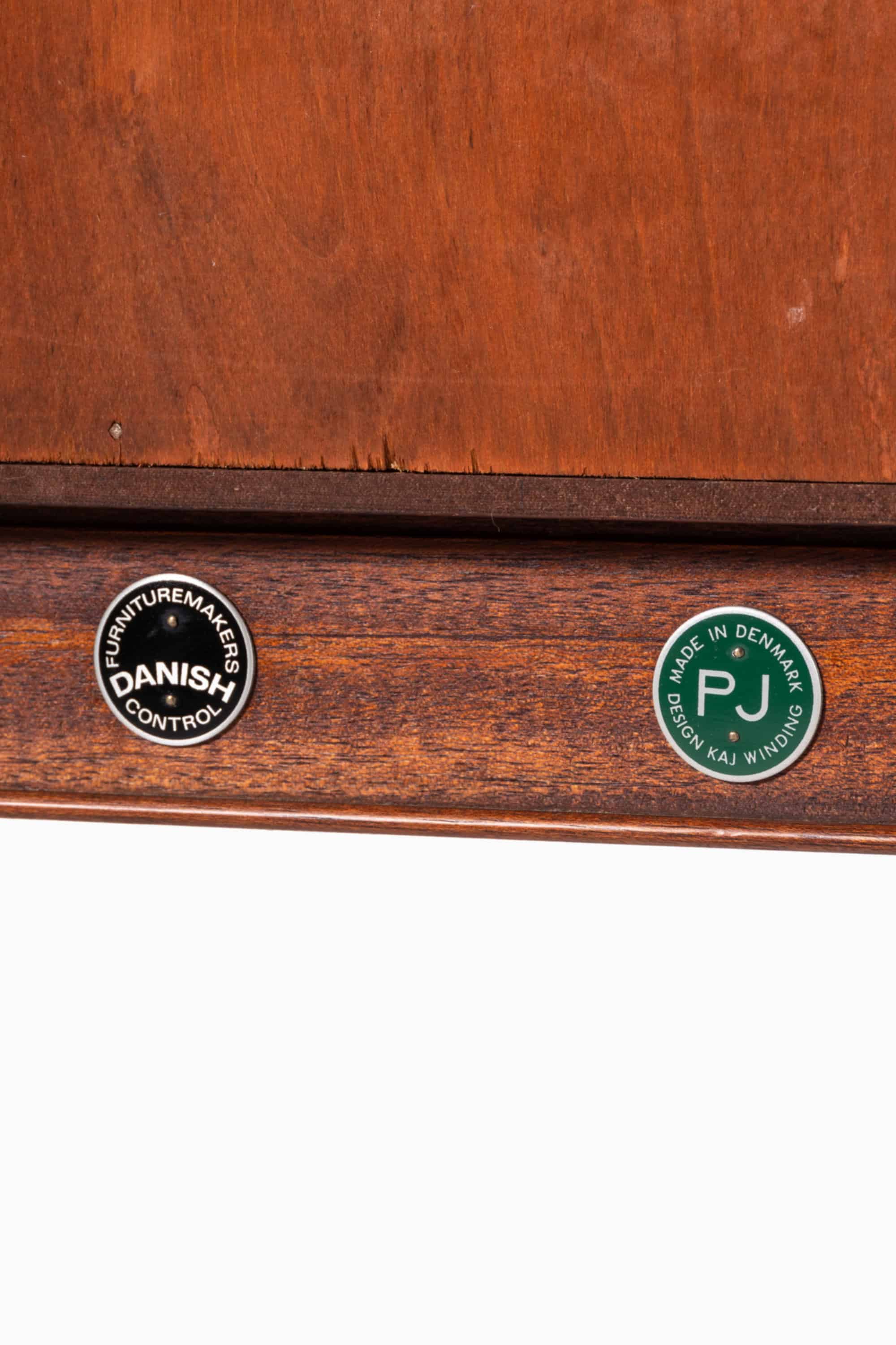
Kai Winding worked within the Danish cabinetmaking tradition during the mid-twentieth century, designing furniture characterized by functional organization, restrained detailing and careful treatment of hardwood surfaces. His work is less widely documented internationally than that of several of his Danish contemporaries, which makes surviving marked examples particularly useful in establishing attribution. This cabinet retains a circular maker’s medallion reading “PJ, Made in Denmark, Design Kaj Winding,” directly identifying both the manufacturer and designer. The spelling “Kaj Winding” appearing on the original manufacturer’s badge is noteworthy in relation to the designer name commonly given as Kai Winding.
P. Jeppesen Møbelfabrik was a Danish furniture manufacturer associated with high-quality cabinetmaking and the production of modern furniture by Danish designers. The company worked extensively with rosewood and other cabinet woods during the post-war period. This example also retains the black-and-white Furnituremakers’ Danish Control medallion. The Danish Furnituremakers’ Control system was associated with participating manufacturers and was intended to identify furniture produced according to defined standards concerning materials and workmanship.
Stylistically, the cabinet is characteristic of Danish modern furniture of the 1960s, but its proportions and construction are more architectural than many conventional storage cabinets of the period. The tall modular arrangement, narrow legs, open space beneath the case and absence of applied decorative elements emphasize structural clarity. Ornament is instead supplied by the rosewood itself, by the repeated rectangular geometry of doors and drawers, and by the small areas of brass hardware. The extensive glazing reduces the visual mass of a cabinet that reaches almost 2.4 metres in height when fully assembled.
The cabinet is in good vintage condition with small signs of use consistent with its age. The rosewood retains an even, warm patina, with minor surface marks and variations visible on close inspection. The glass, brass fittings, locks and hinges contribute to the preserved period character of the piece. Keys are present as shown. Overall, the cabinet presents as a well-preserved example with its original design details, maker identification and Danish Furnituremakers’ Control label retained.
The lower drawer cabinet measures 100 cm wide × 36 cm deep × 78.5 cm high, approximately 39.4 × 14.2 × 30.9 inches. The large glazed cabinet measures 100 cm wide × 25 cm deep × 107 cm high, approximately 39.4 × 9.8 × 42.1 inches. The smaller glazed cabinet measures 100 cm wide × 25 cm deep × 53 cm high, approximately 39.4 × 9.8 × 20.9 inches. With all three components installed, the complete cabinet has a total height of 238.5 cm, approximately 93.9 inches.
Dimensions (cm) | Drawer cabinet: W: 100 / D: 36 / H: 78.5 Large glass cabinet: W: 100 / D: 25 / H: 107 Small glass cabinet: W: 100 / D: 25 / H: 53 |
| Producer | P. Jeppesen møbelfabrik |
| Decade | 1960s |
| Country | Denmark |
| Style | Danish modern, Mid Century, Scandinavian Modern |
| Material | Brass, Glass, Rosewood |
| Designed in | 1960s |
| Item Number | 250818 |
Kai Winding
Kai Winding was part of the Danish postwar design movement that emphasized functional clarity, natural materials, and high-quality craftsmanship. Known primarily for his cabinetry and storage designs, his work reflects a refined understanding of p...
Read more