


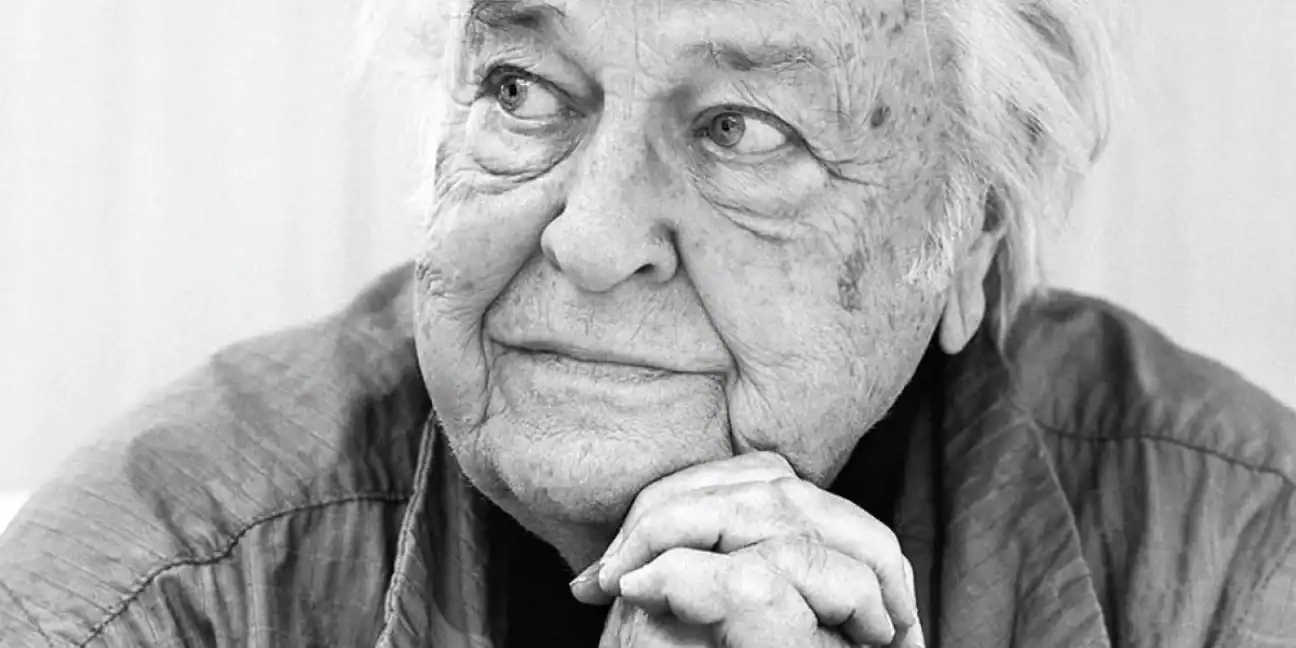
Eero Aarnio
Eero Aarnio (born 1932) is a Finnish designer associated with the experimental and futuristic direction of 1960s modern furniture design. He is widely recognized for his pioneering use of plastic and fiberglass, materials that allowed him to create bold, playful, and highly distinctive forms. His best-known designs, including the Ball Chair, Bubble Chair, and Pastil Chair, became icons of the space-age era and reflect his ability to combine comfort, technical innovation, and strong visual identity.
Biography
Eero Aarnio was born in Helsinki in 1932 and studied at the Institute of Industrial Arts in Helsinki, graduating in 1960. After completing his studies, he established his own design office in 1962 and soon began experimenting with new materials and production methods that differed from the more traditional wood-based language of Scandinavian modern design.
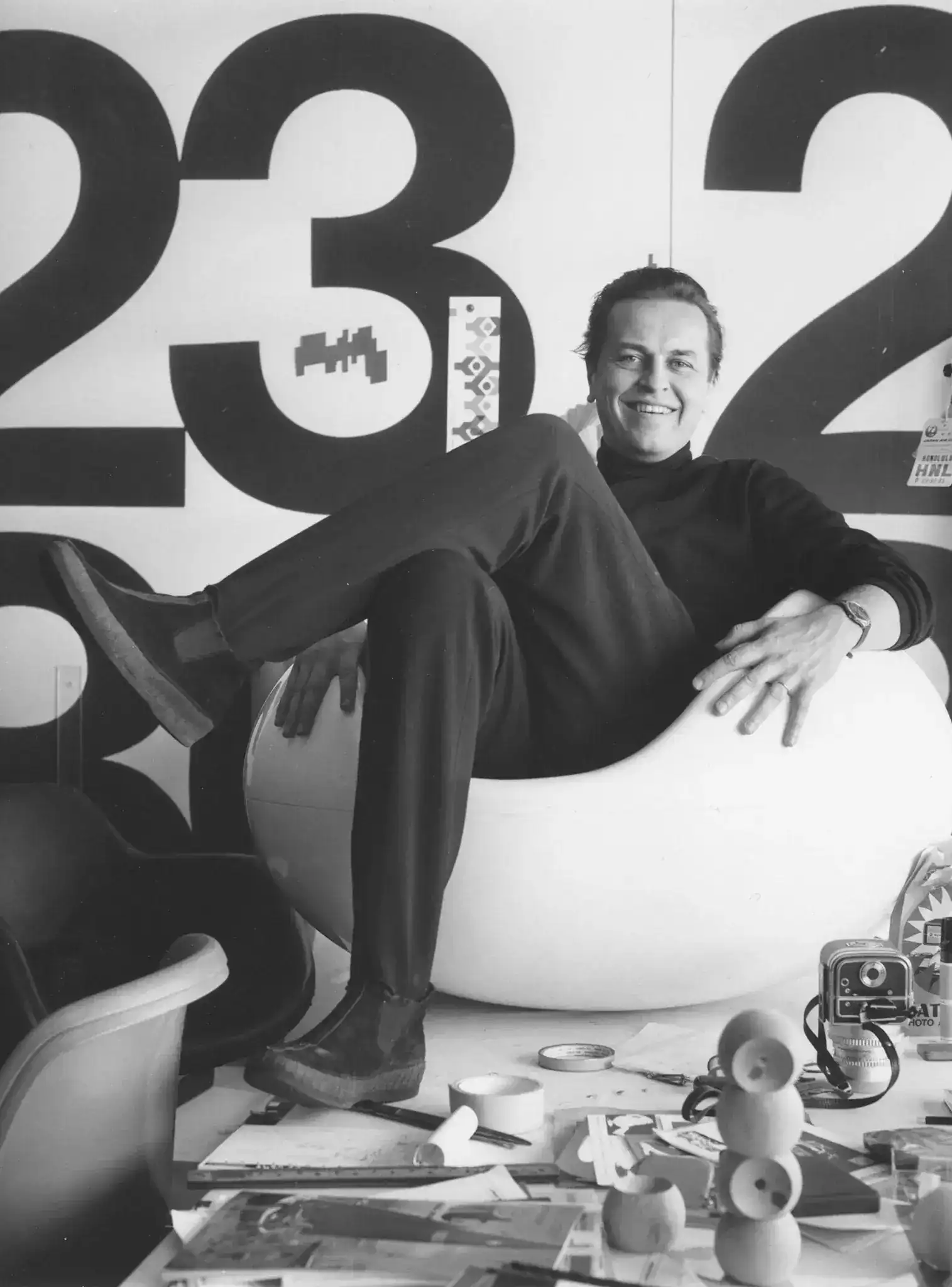
Aarnio’s breakthrough came with the Ball Chair, designed in the early 1960s and introduced internationally at the Cologne Furniture Fair in 1966. Formed as a hollow sphere on a stand, open on one side, the chair created a private and enclosed seating experience while presenting a radically new visual form. Its use of fiberglass and its futuristic shape quickly made it one of the most recognizable furniture designs of the period.
He continued to develop this experimental approach with designs such as the Pastil Chair and the Bubble Chair. The Pastil Chair, produced in fiberglass, explored a soft, rounded form that could be used in a relaxed and informal way, while the transparent Bubble Chair was suspended from above, creating a lighter and more floating expression. These works reflected Aarnio’s interest in simple geometric forms, bright colors, and furniture that could feel both functional and imaginative.
Throughout his career, Aarnio’s designs became closely connected to 1960s popular culture and the visual language of the space age. His furniture appeared in modern interiors, exhibitions, and film environments, where its bold silhouettes and synthetic materials suited the optimistic and experimental spirit of the era. Beyond seating, he also designed lighting, tables, children’s furniture, and playful object-based works.
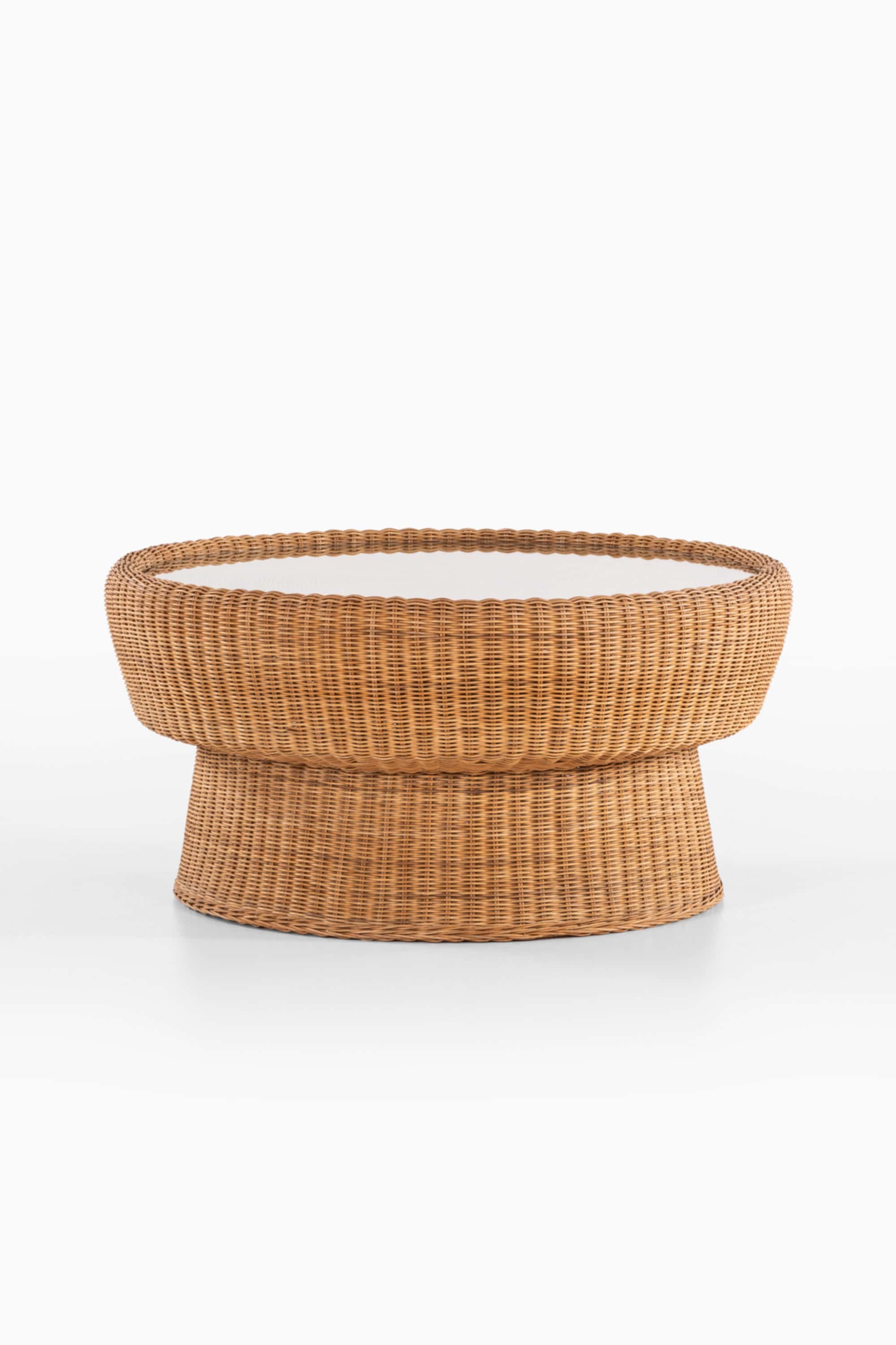
Eero Aarnio attrib. coffee table
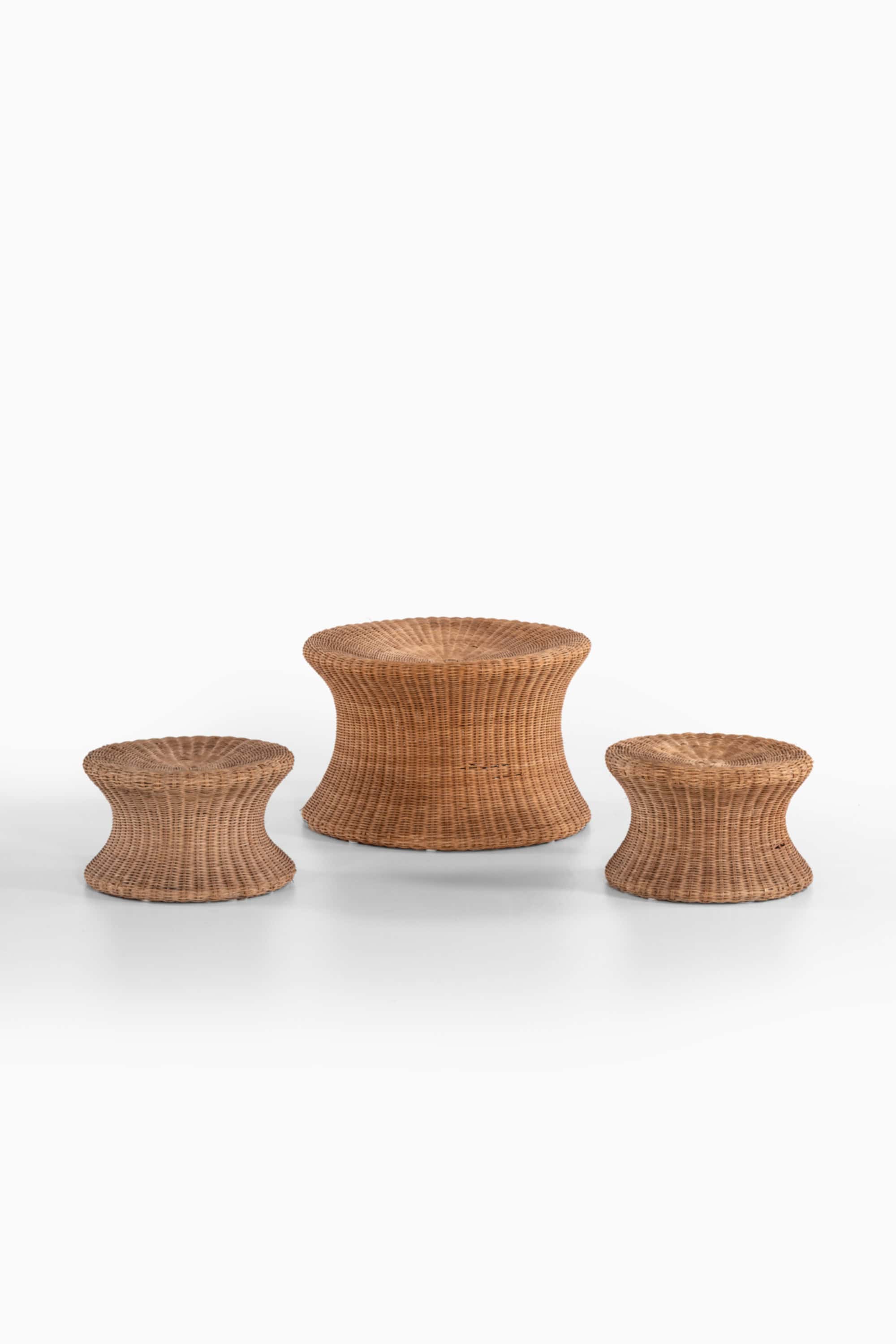
Eero Aarnio stools
(3 PCS)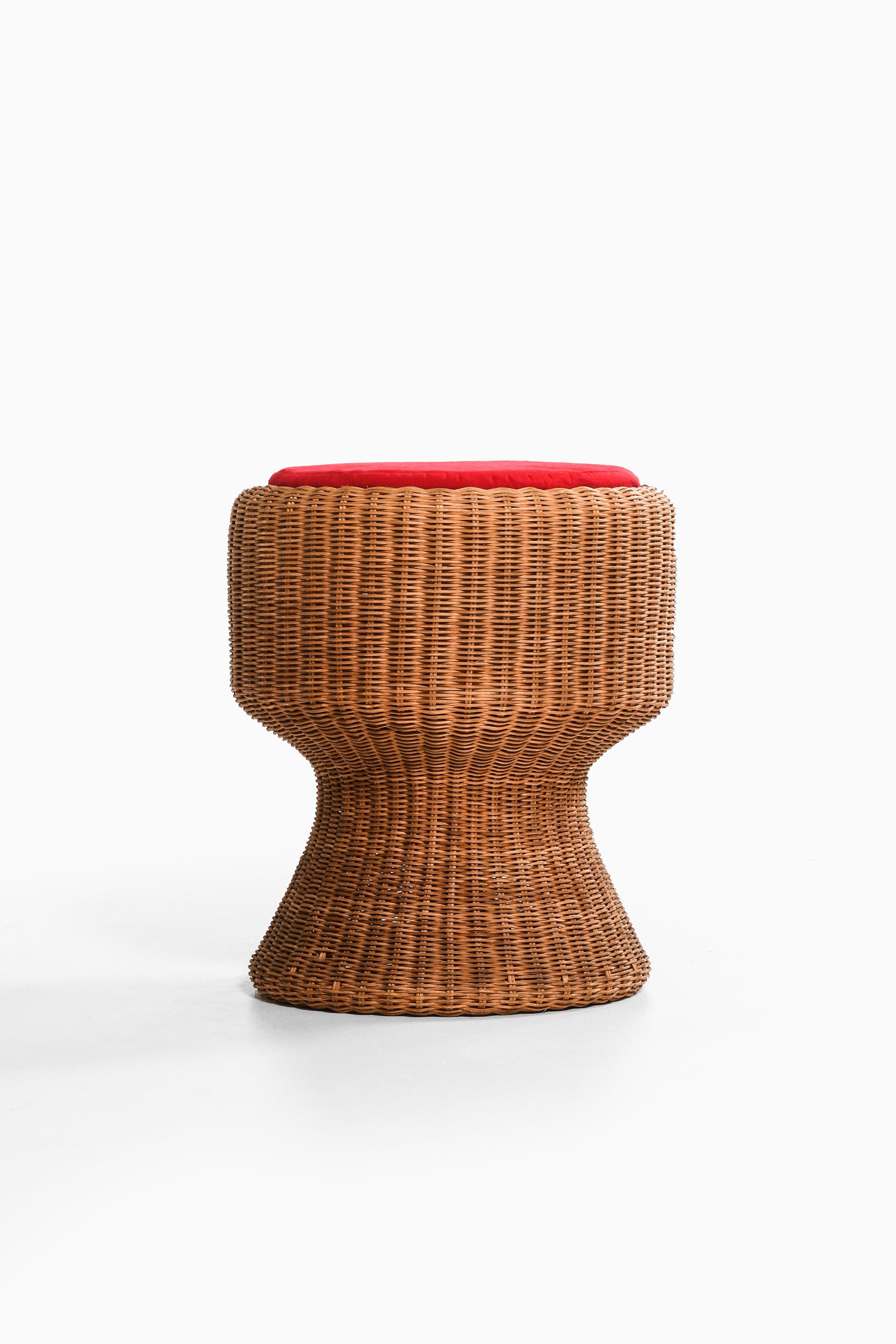
Eero Aarnio stool

Eero Aarnio stool

Eero Aarnio stool

Eero Aarnio side table
