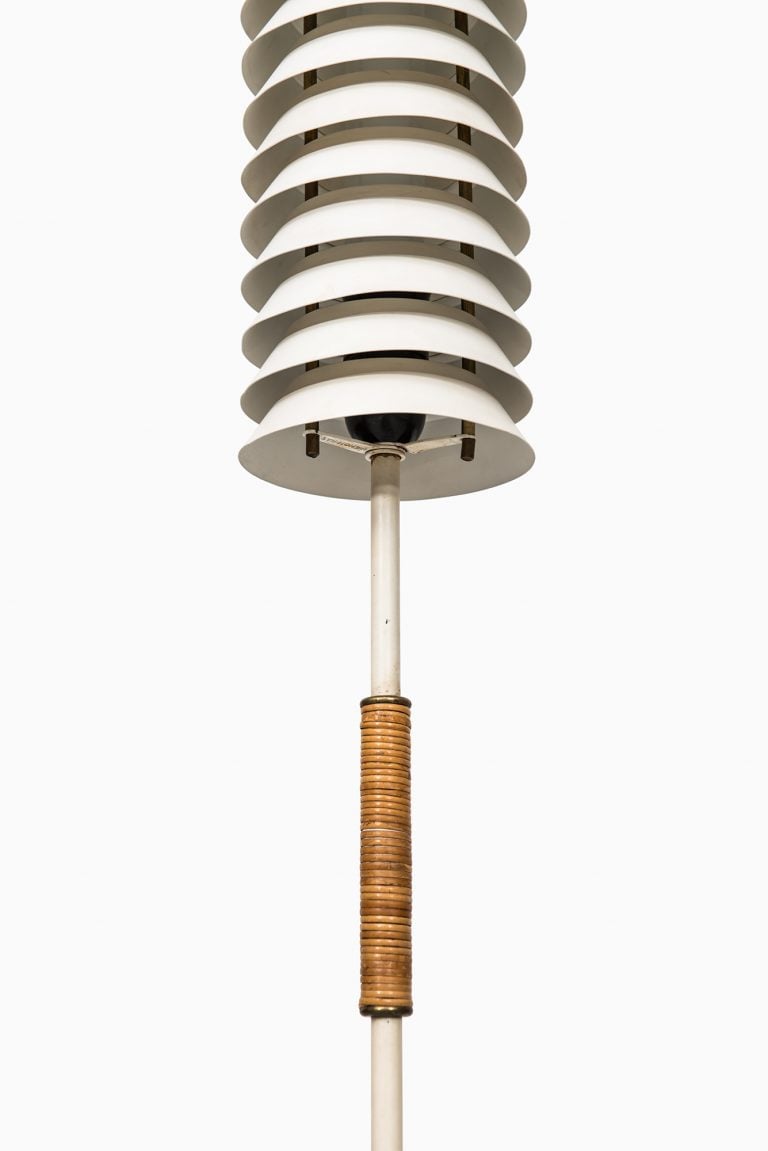
Ilmari Tapiovaara
Ilmari Tapiovaara (1914–1999) was a Finnish designer and interior architect widely regarded as one of the leading figures in modern Finnish design. His work spans furniture, interiors, and industrial design, and is characterized by a strong emphasis on functionality, social responsibility, and efficient production. Tapiovaara played an important role in shaping postwar design in Finland, creating furniture intended for both public institutions and domestic environments.
Biography
Ilmari Tapiovaara studied interior architecture and furniture design at the Central School of Applied Arts in Helsinki. Early in his career he worked in the office of Alvar Aalto, where he gained practical experience in modern architecture and furniture design. This period had a lasting influence on his approach, particularly the integration of architecture, furniture, and everyday life into a coherent design philosophy.
During the 1940s and 1950s, Tapiovaara developed a series of furniture designs that addressed the needs of postwar society, focusing on affordability, durability, and ease of production. He worked with several Finnish manufacturers, most notably Asko and later Laukaan Puu, producing chairs, tables, and storage furniture for schools, public buildings, and homes. His designs often employed simple wooden structures, clear joinery, and carefully considered ergonomics.
Among his most recognized works is the Domus chair, designed in 1946 for student housing in Helsinki. The chair combined comfort with efficient manufacturing and became one of the most widely distributed pieces of Finnish furniture in the postwar period. Tapiovaara also designed stacking chairs, children’s furniture, and outdoor seating, many of which remain in production or have been reissued in recent decades.
Ilmari Tapiovaara’s work represents a socially oriented approach to modern design, where good design was seen as a public good rather than a luxury. His furniture remains closely associated with the functional ideals of Nordic modernism and is valued for its durability, clarity of form, and suitability for everyday use.