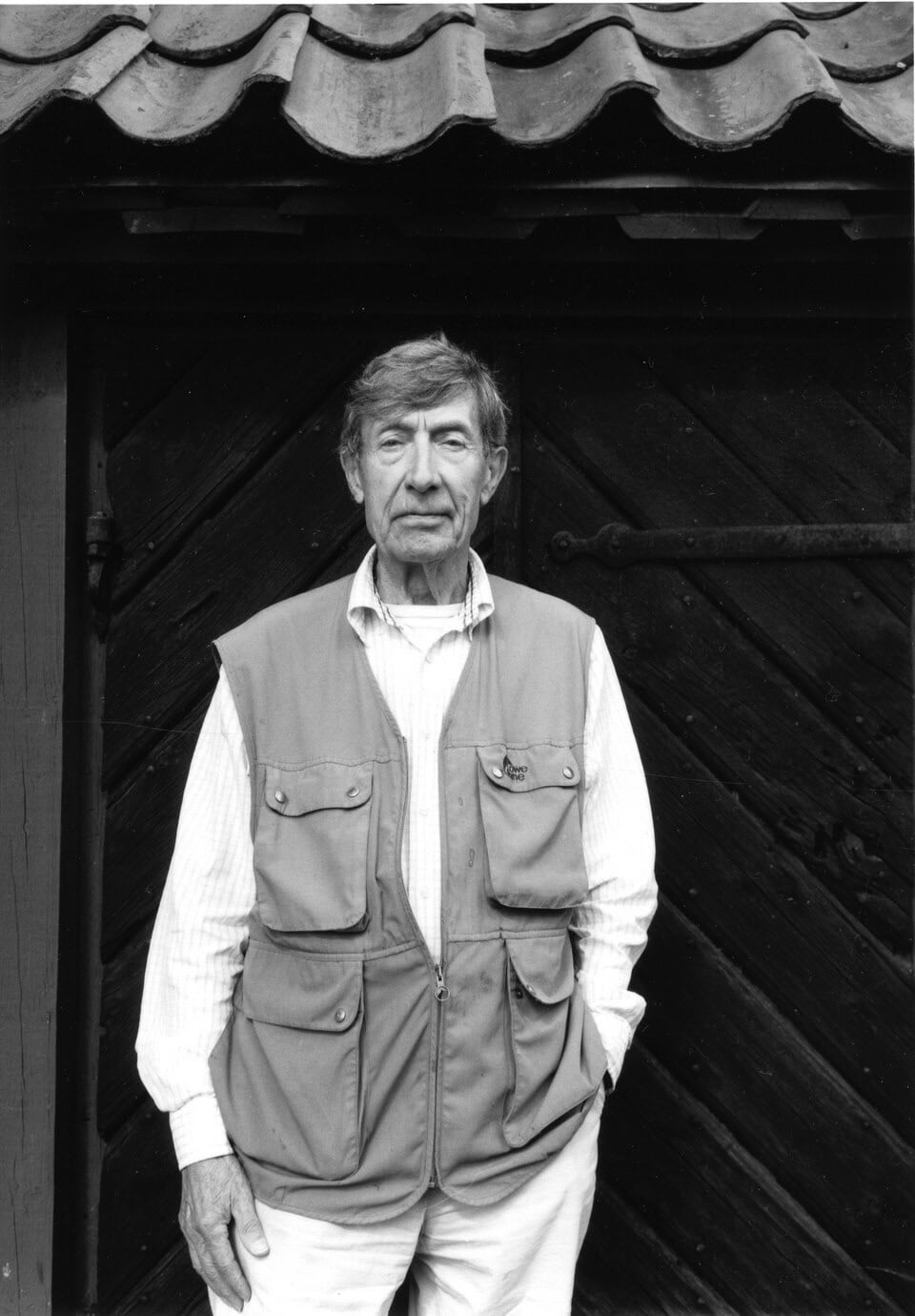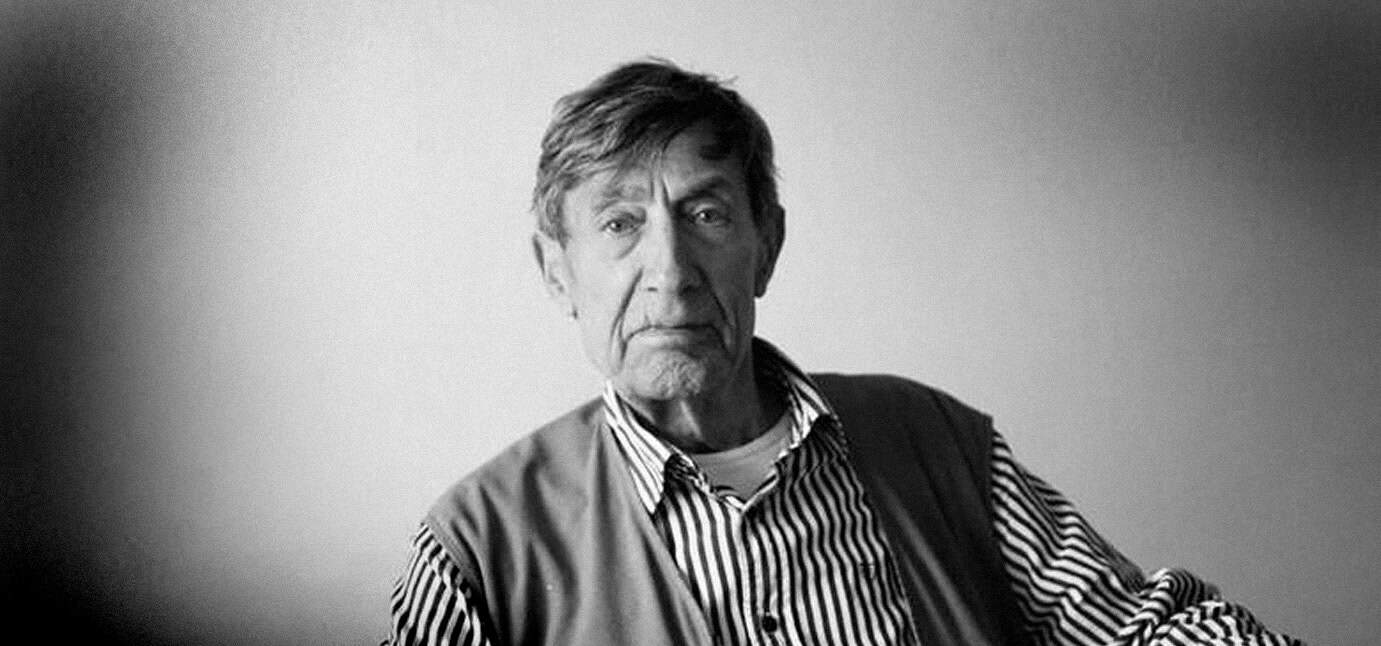
Lars-Erik Falk
Lars-Erik Falk (1922–2018) was a Swedish painter and sculptor and an important representative of Concrete art in Sweden. Over a career spanning more than six decades, he developed a distinctive non-figurative language in which geometry, colour, repetition and movement were organized into precisely balanced compositions.
Biography
Falk was born in Uppsala in 1922. He studied in Stockholm at Otte Sköld’s painting school in 1944 and at Isaac Grünewald’s painting school the following year. During the 1940s he also studied at the Académie de la Grande Chaumière in Paris, where he encountered international developments in abstract and Concrete art.
Falk became associated with Swedish concretism in the post-war period, developing an artistic approach based on geometric construction rather than representation. His paintings frequently employ diagonals, squares, lines and repeated forms, with colour functioning as an active structural element within the composition. Through carefully calculated relationships between these elements, he explored balance, tension and visual movement.
These principles extended from painting into sculpture. Falk became particularly known for his works constructed from painted aluminium profiles, often positioned at a characteristic inclination of 73 degrees. The repeated angle became a defining element of his work, creating sculptures that appear to lean or hover in a state of instability while remaining precisely balanced.
Alongside painting and sculpture, Falk worked with textile art and graphic design. His consistent exploration of geometric abstraction placed him within the tradition of Swedish Concrete art that developed strongly during the mid-20th century, while his distinctive use of colour, rhythm and the 73-degree diagonal gave his work an immediately recognizable identity.
Falk exhibited throughout his long career and created numerous works for public environments. His paintings and sculptures are represented in Swedish museum collections, including Kalmar konstmuseum, and his monumental works can be found in public spaces around Sweden.