Mogens Lassen
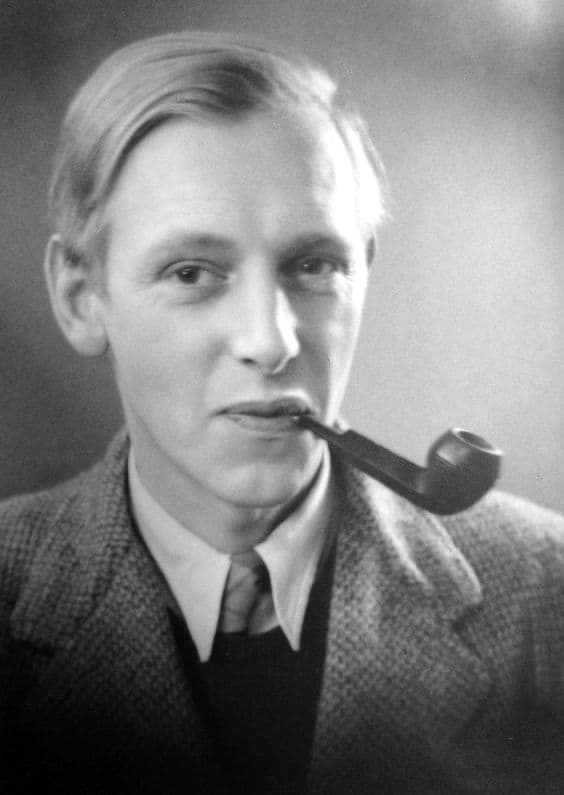
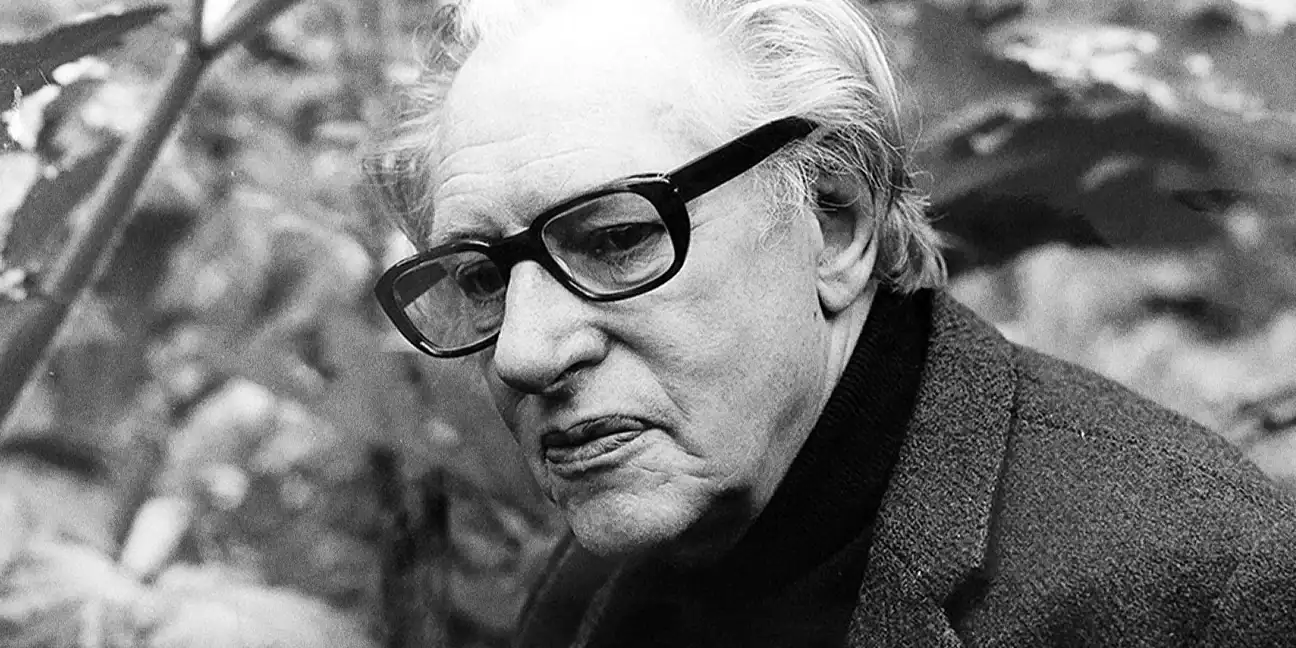
Mogens Lassen (1901–1987) was a Danish architect and designer and an important figure in the development of Danish functionalism. Influenced by the International Style and particularly the work of Le Corbusier, he developed a rigorous approach based on geometric forms, functional planning and a close relationship between architecture, furniture and everyday life.
Biography
Lassen was born in Copenhagen in 1901 into an artistic family. His father, Hans Vilhelm Lassen, was a decorative painter, while his mother, Ingeborg Winding, was a painter. He was the brother of architect Flemming Lassen. After training as a mason, Mogens Lassen continued his architectural education through several Copenhagen practices, most notably working with architect Tyge Hvass.
A formative period came during a stay in Paris in the late 1920s, where Lassen worked for the Danish engineering company Christiani & Nielsen. While in Paris, he encountered the work of Le Corbusier, whose radical ideas about modern architecture became an important influence on his own development. On returning to Denmark, Lassen increasingly embraced functionalism and established his own architectural practice in 1935.
His architecture was characterized by clear geometric volumes, careful spatial planning and an interest in how buildings could respond to the practical requirements of everyday life. Lassen primarily designed houses and apartment buildings, becoming one of the architects who helped establish functionalist principles in Denmark during the 1930s.
Alongside his architectural work, Lassen designed furniture and objects. His early furniture experiments included designs in tubular steel, while later works explored wood and traditional craftsmanship within a modern vocabulary. Among his best-known furniture designs are the three-legged stool and the folding Egyptian Table, designed in 1940 and originally produced by master cabinetmaker A.J. Iversen.
Lassen's interest in pure geometry also extended to smaller objects. His designs frequently employ circles, squares and other elementary forms, reducing construction to clear and carefully balanced compositions. This approach became particularly evident in his well-known Kubus candleholder, originally developed in the 1960s.
Throughout his career, Lassen moved between modernist experimentation and the Danish tradition of craftsmanship, applying similar principles of proportion, material and function across different scales. His work contributed significantly to the emergence of Danish modernism and remains an important part of 20th-century Danish architecture and design.