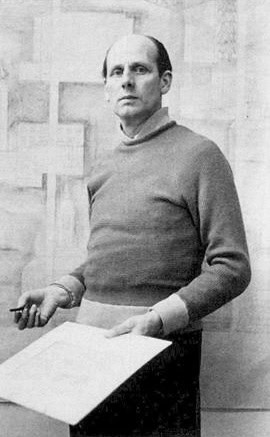
Sven Palmqvist
Sven Palmqvist (1906–1984) was a Swedish glass artist and designer, best known for his innovative contributions to glassmaking at Orrefors. Throughout his career, he developed several pioneering techniques that expanded the artistic and technical possibilities of glass. His work is characterized by experimental craftsmanship, refined forms and a distinctive approach to colour and texture. Among his most celebrated creations are the Kraka, Ravenna and Fuga collections, which established him as an influential figure in twentieth-century Swedish glass design.
Biography
Born on September 4, 1906, in Lenhovda, Sweden, Sven Palmqvist began his artistic training at the engraving school at Orrefors, graduating in 1931 with qualifications in engraving and freehand drawing. Under the guidance of Simon Gate, he became a design assistant at Orrefors Glassworks and was encouraged to pursue further studies. He subsequently attended the Technical School and the Royal Academy of Fine Arts in Stockholm, as well as spending several years in Paris. During the Second World War, he returned to Orrefors, where he remained until his retirement in 1971.
Palmqvist became particularly recognized for his development of innovative glassmaking techniques. In 1944, he introduced the Kraka series, an evolution of traditional Graal glass, in which air bubbles and metal mesh created intricate patterns within the glass. This was followed by Ravenna in 1948, a technique combining coloured glass, crushed glass and layers of clear glass to produce richly textured, decorative surfaces. These experiments demonstrated his ability to unite technical precision with artistic expression.
His greatest commercial success came with the Fuga series, introduced in 1954. Developed from an idea he had explored as early as 1934, the collection was produced using a centrifugal technique in which molten glass was spun inside a rapidly rotating mould rather than shaped through traditional glassblowing. The process enabled the production of simple, durable and affordable glass bowls in various colours and sizes. Fuga achieved widespread recognition following its presentation at the H55 exhibition in Helsingborg in 1955 and became one of Orrefors' most successful designs.
Beyond his decorative glass collections, Palmqvist also worked on larger artistic commissions and public installations. His projects included the glass-block sculpture Elektronik contra stalaktit for the entrance of Sveriges Television in Stockholm, decorative work for a ministerial palace in Dubai and a baptismal font for Kråksmåla Church in Sweden.