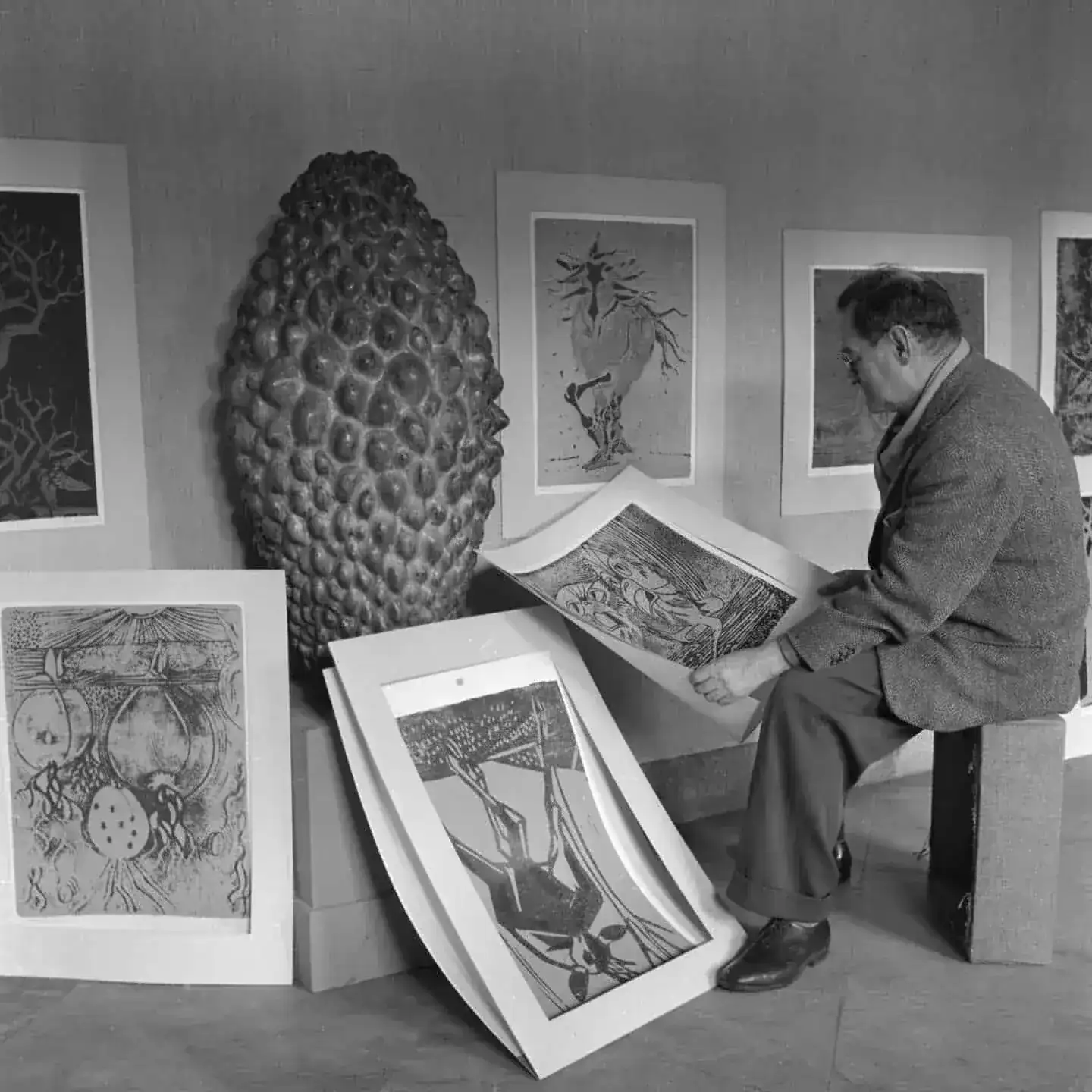
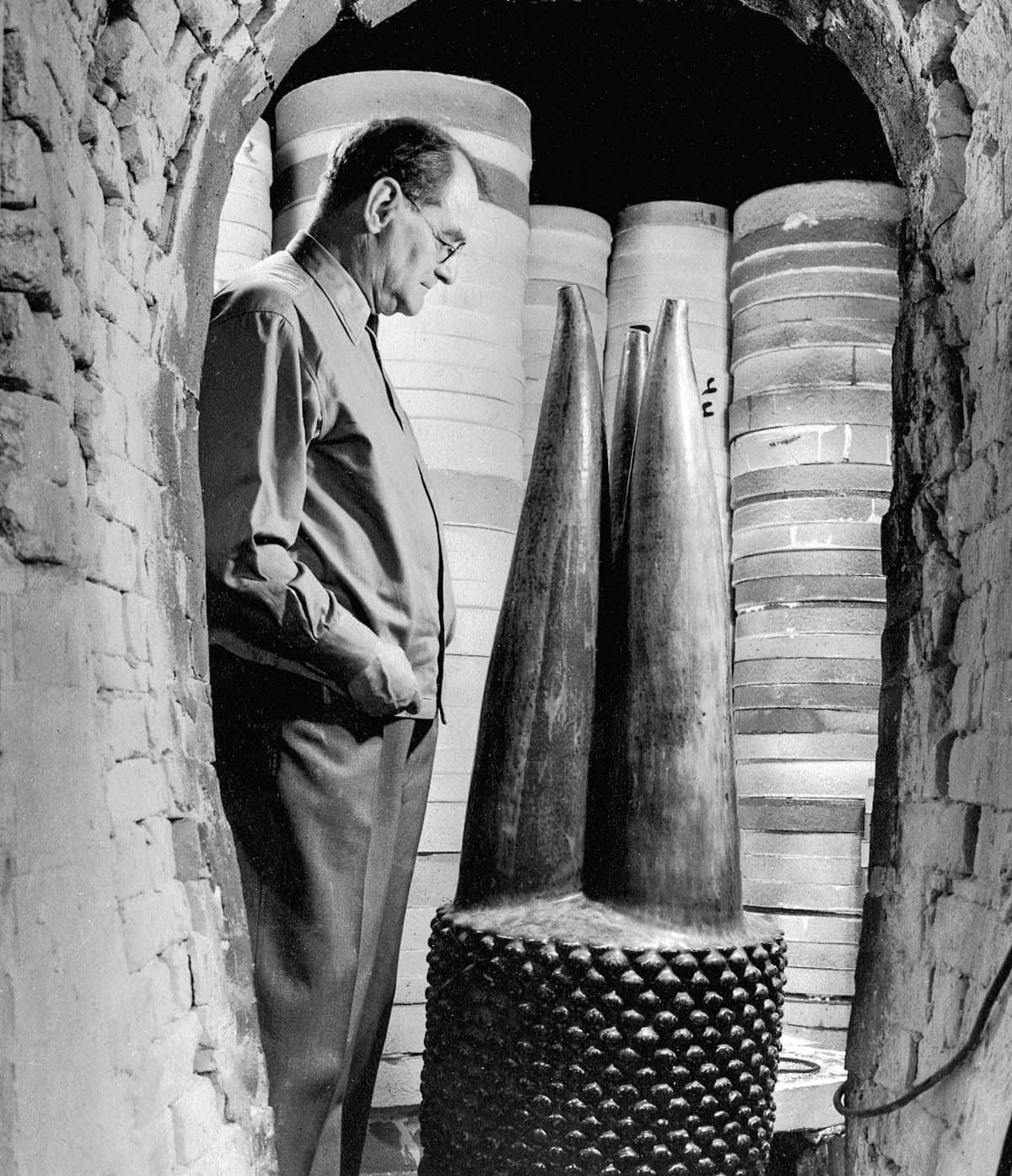
Axel Salto: The Organic Force of Stoneware
Axel Salto occupies a singular position in twentieth-century Danish ceramics. Trained as an artist and active across several creative disciplines, he became most widely recognized for his sculptural stoneware, created in close association with Royal Copenhagen. His ceramic work departed from conventional vessel forms, developing instead a language of movement, growth and organic tension. Surfaces appear to swell, split, ripple or emerge from within, as if shaped by natural forces rather than by hand alone.
Salto’s work is often discussed through three characteristic modes: fluted, budding and sprouting. Each reflects his deep interest in the structures of the natural world – seeds, shells, fruit, scales, cones and growing plants. Yet his ceramics are not literal studies of nature. They transform botanical and organic references into dense, tactile objects where form, relief and glaze become inseparable. The result is a body of work that feels both ancient and modern: rooted in natural observation, but radically sculptural in expression.
Budding as Growth
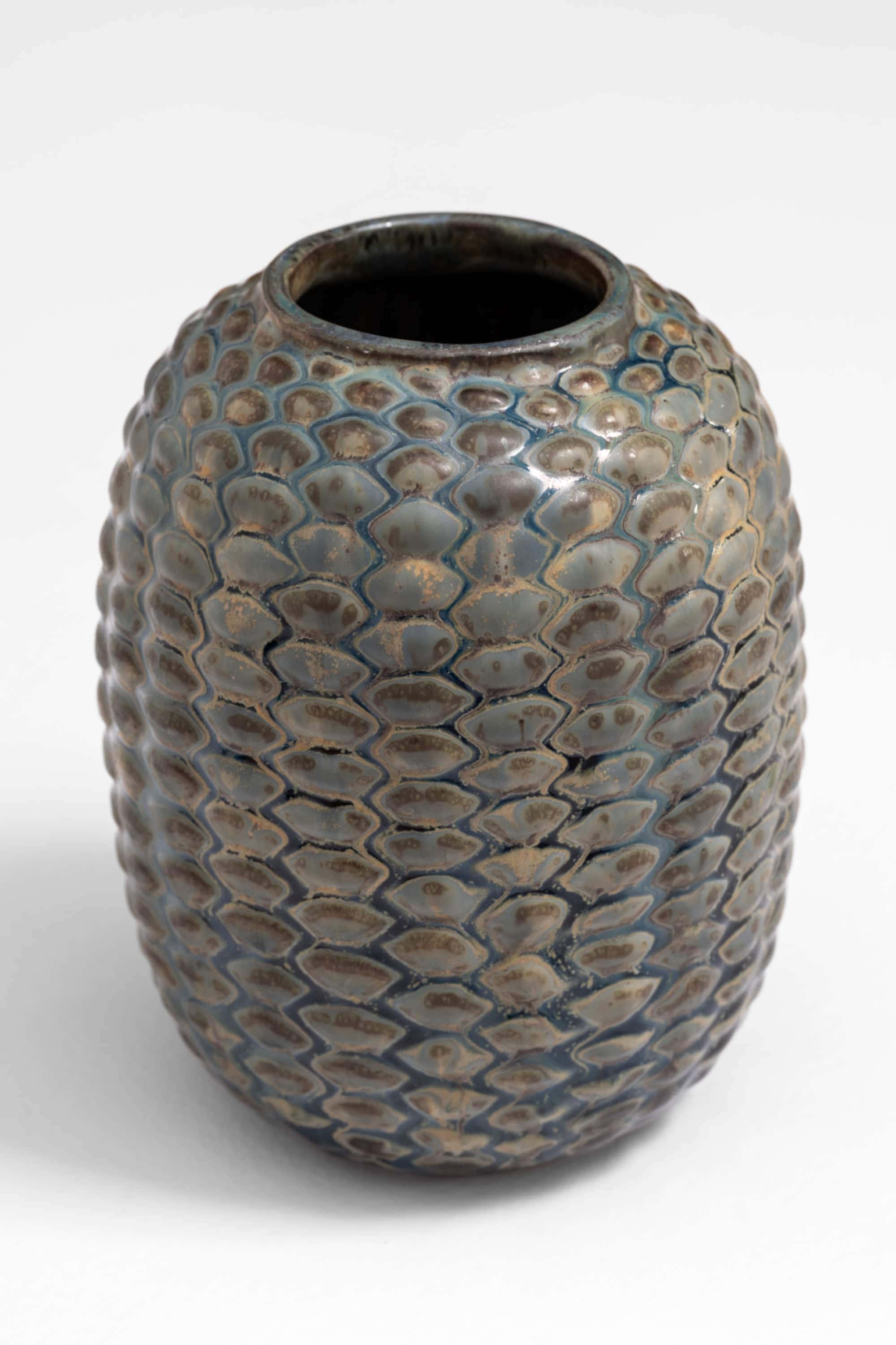
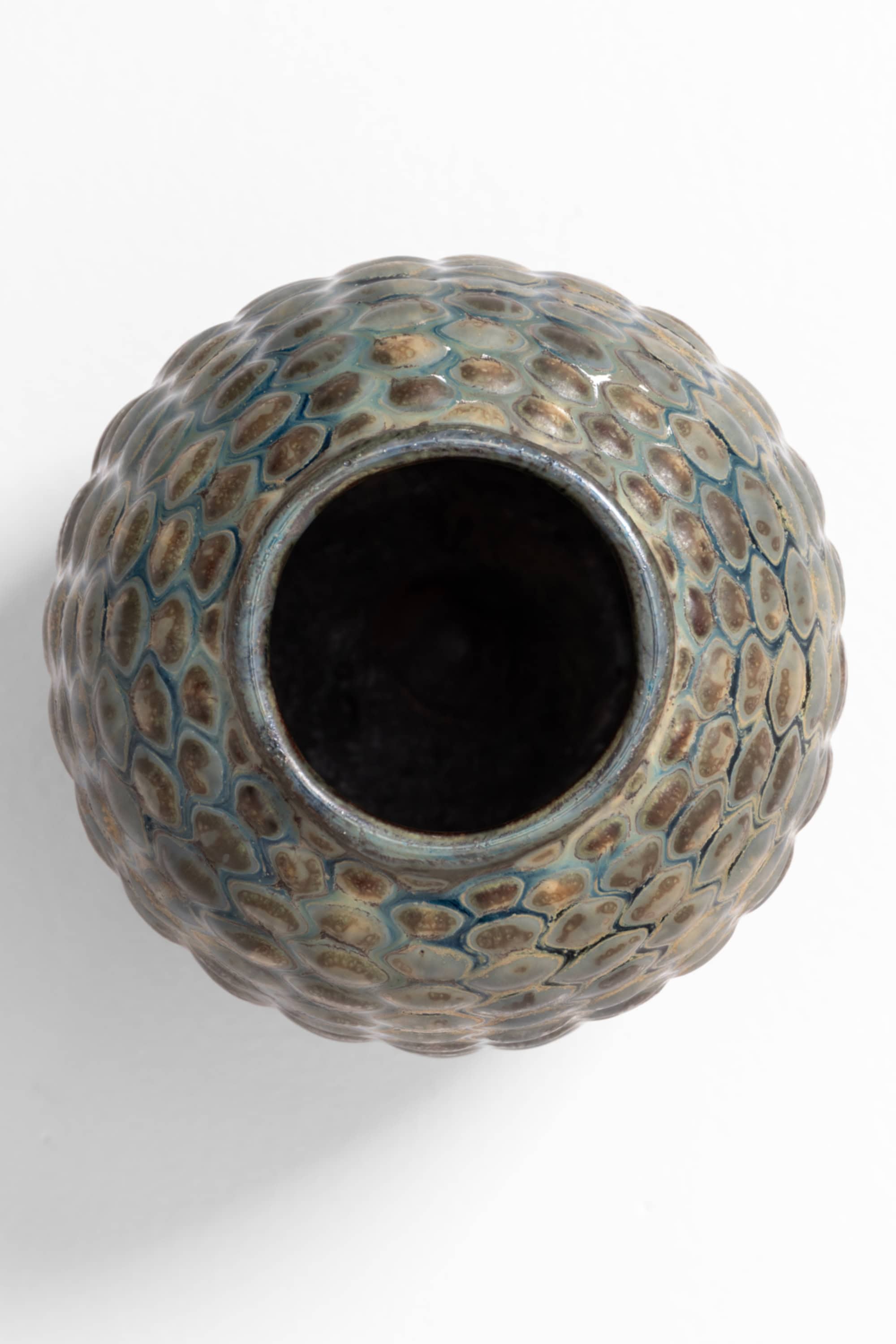
The rare Budding vase from 1935 is an early and powerful expression of Salto’s organic vocabulary. Designed by Axel Salto and produced by Royal Copenhagen, the vase presents a softly ovoid body with a narrow circular opening. Its surface is entirely covered in a rhythmic relief pattern resembling seeds, buds or reptilian scales, giving the vessel a dense and living quality.
Rather than applying ornament to a simple ceramic body, Salto allows the decoration to define the form itself. The relief appears to grow across the surface, expanding around the rounded volume in a continuous pattern. The glaze, with tones of blue-grey, celadon, olive, taupe and deep brown, settles into the recesses and breaks across the raised areas, producing a complex sense of depth. Light moves across the textured surface, revealing subtle shifts in colour and emphasizing the sculptural quality of the piece.
Relief and Repetition
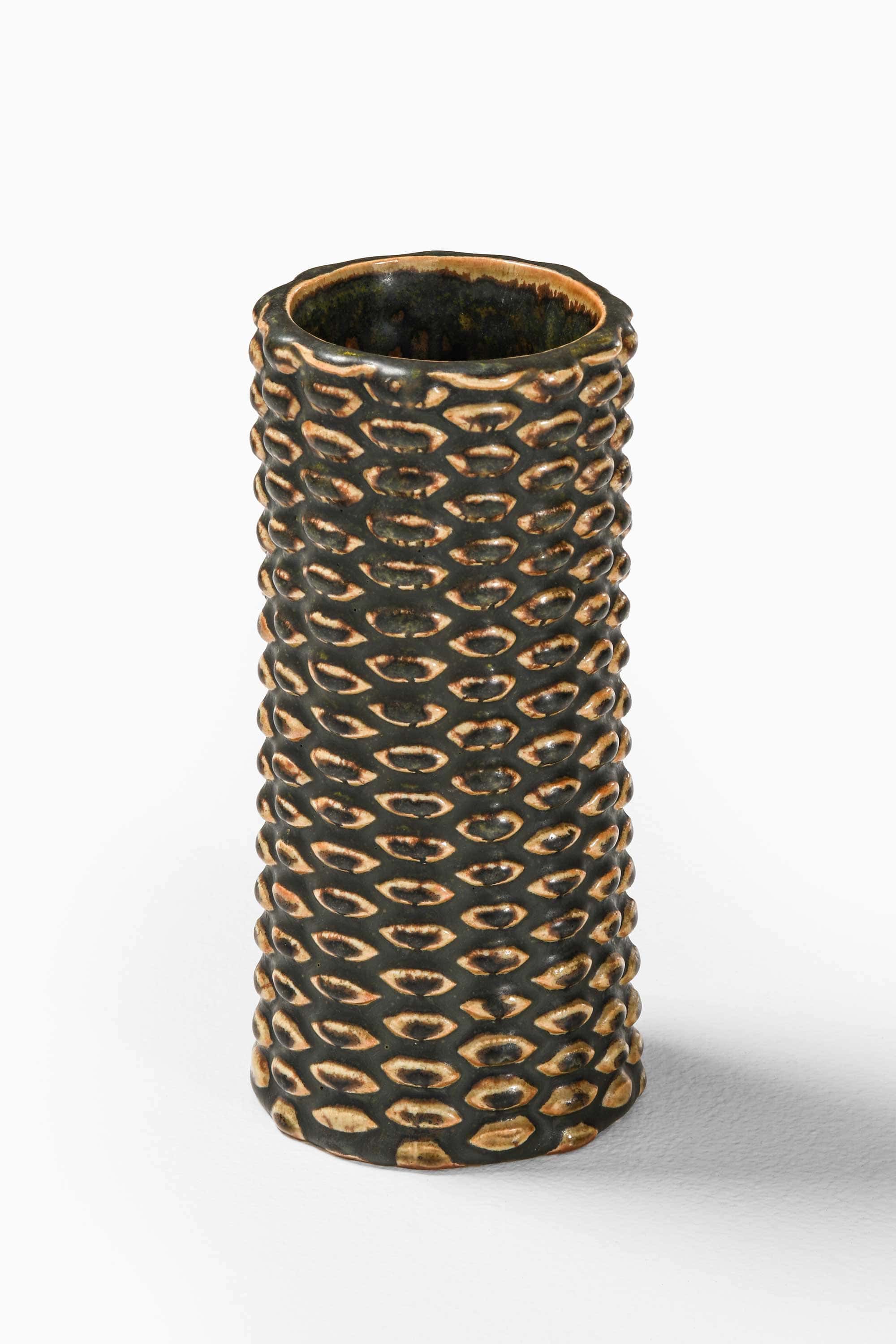
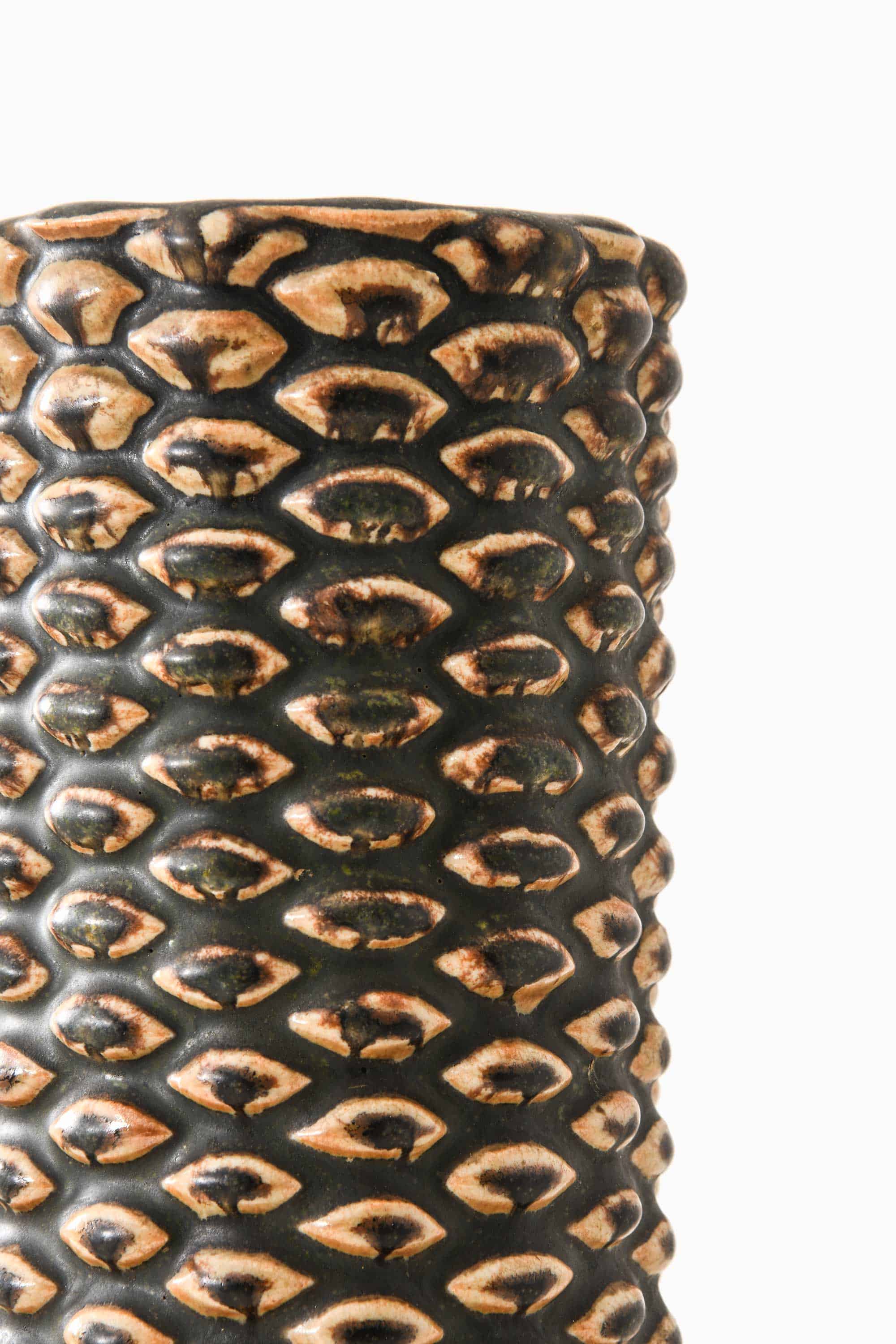
A second ceramic vase shows another interpretation of Salto’s budding motif. Its cylindrical form gives the repeating relief pattern a stricter rhythm, with small raised elements arranged across the surface like compact organic growth.
Finished in a Solfatara glaze, the vase has a dark, earthy surface with brown, mossy and ashen undertones. The glaze shifts between matte and semi-gloss areas, catching the raised relief and activating the surface through light and texture.
Compared with the rounded, cellular quality of the 1935 vase, this example feels more restrained and vertical, showing how Salto adapted natural motifs across different forms while maintaining a consistent sculptural language.
Ceramic as Light
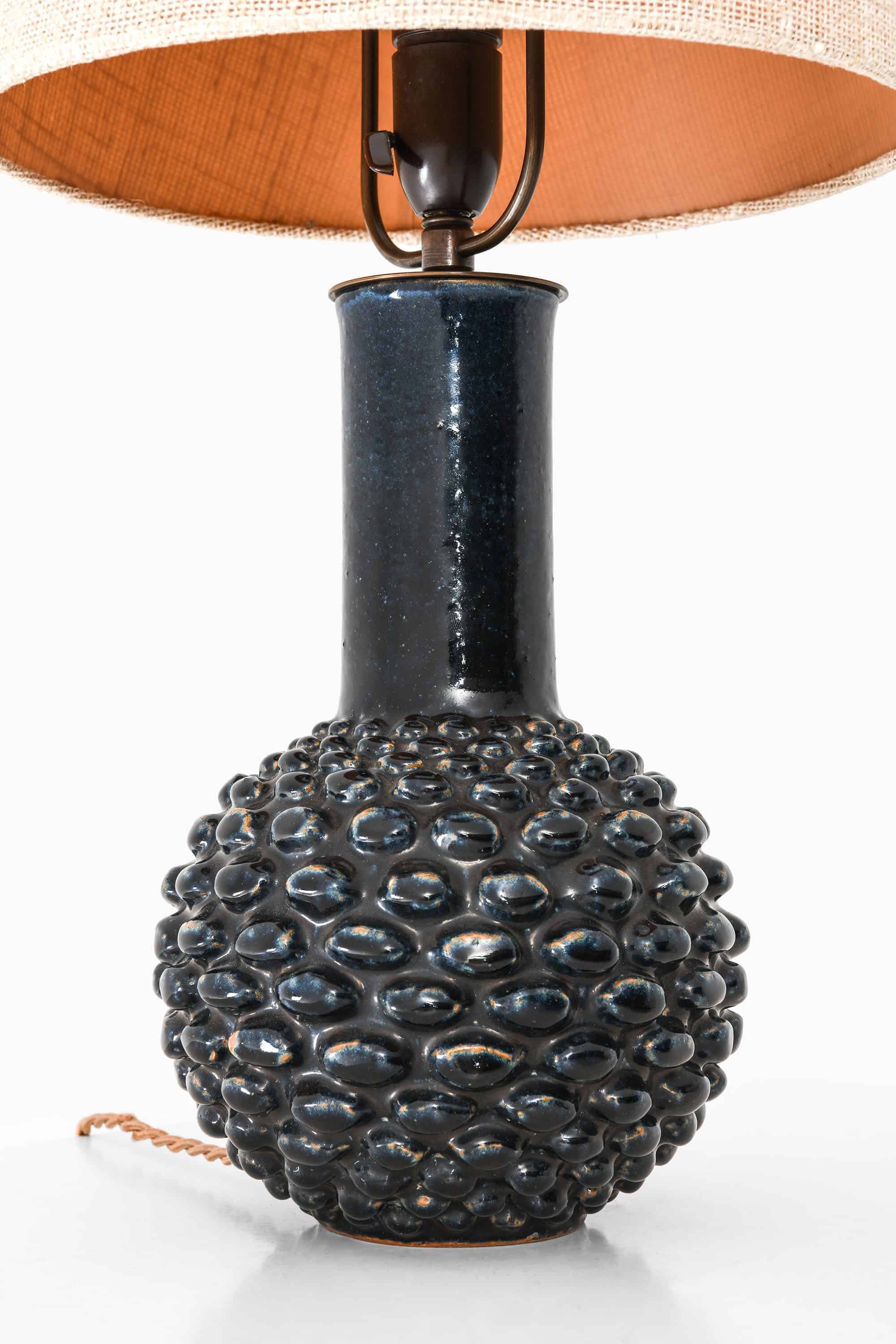
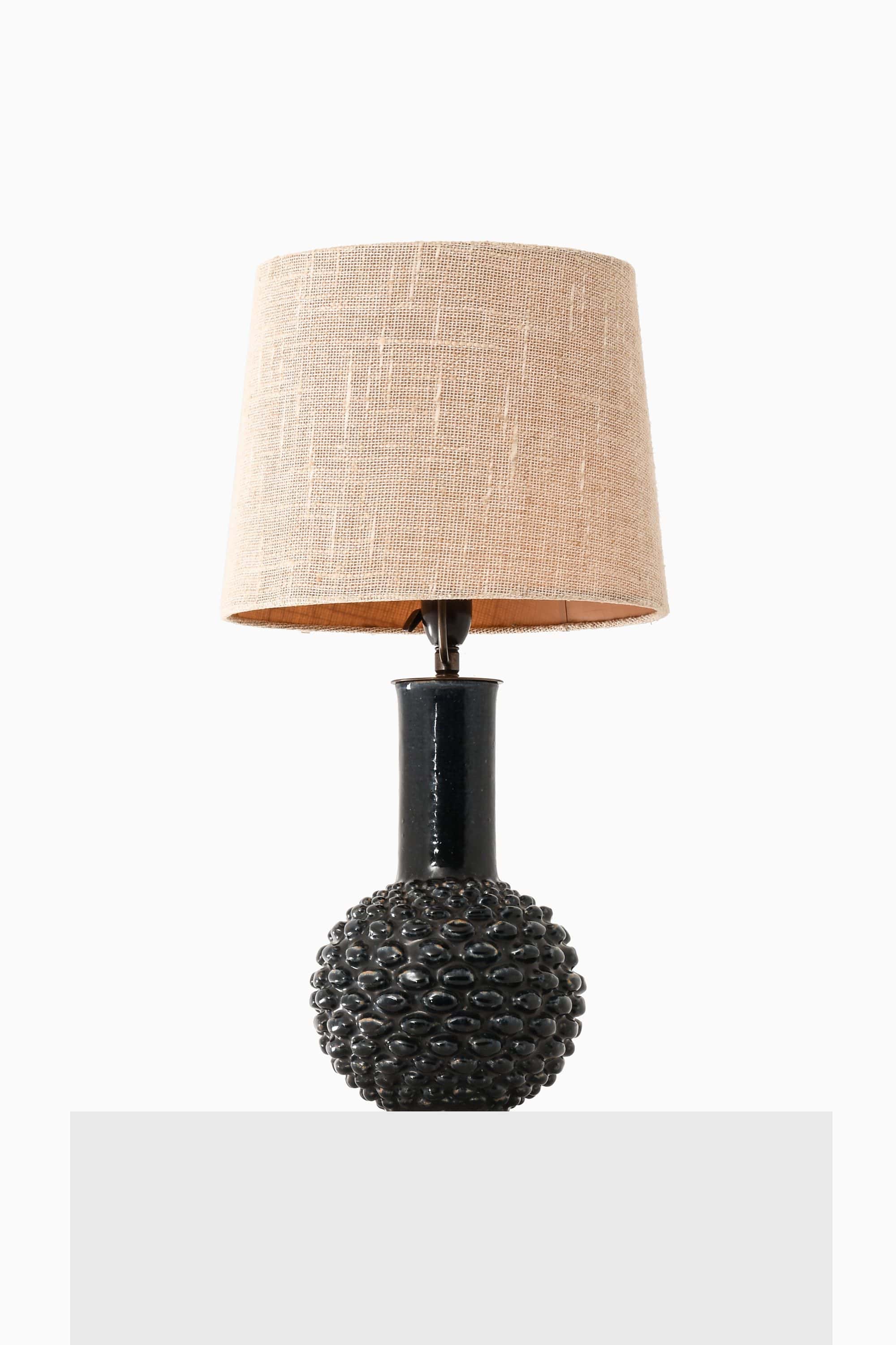
The 1958 table lamp shows how Salto’s ceramic language could be translated into a functional object while retaining its sculptural intensity. It combines a ceramic base with patinated bronze fittings and a woven beige shade, positioning the piece between lighting design and ceramic sculpture.
The base has a rounded lower body covered in shell-like relief, rising into a tall cylindrical neck. Finished in a deep blue glaze, the surface shifts in tone as the glaze pools in the recesses and thins across the raised areas, creating a tactile surface that changes with light.
The bronze fittings add material contrast, while the woven shade softens the illumination and allows the ceramic base to remain visually dominant. In this piece, Salto’s organic vocabulary becomes part of the atmosphere of the interior.
Glaze as Depth
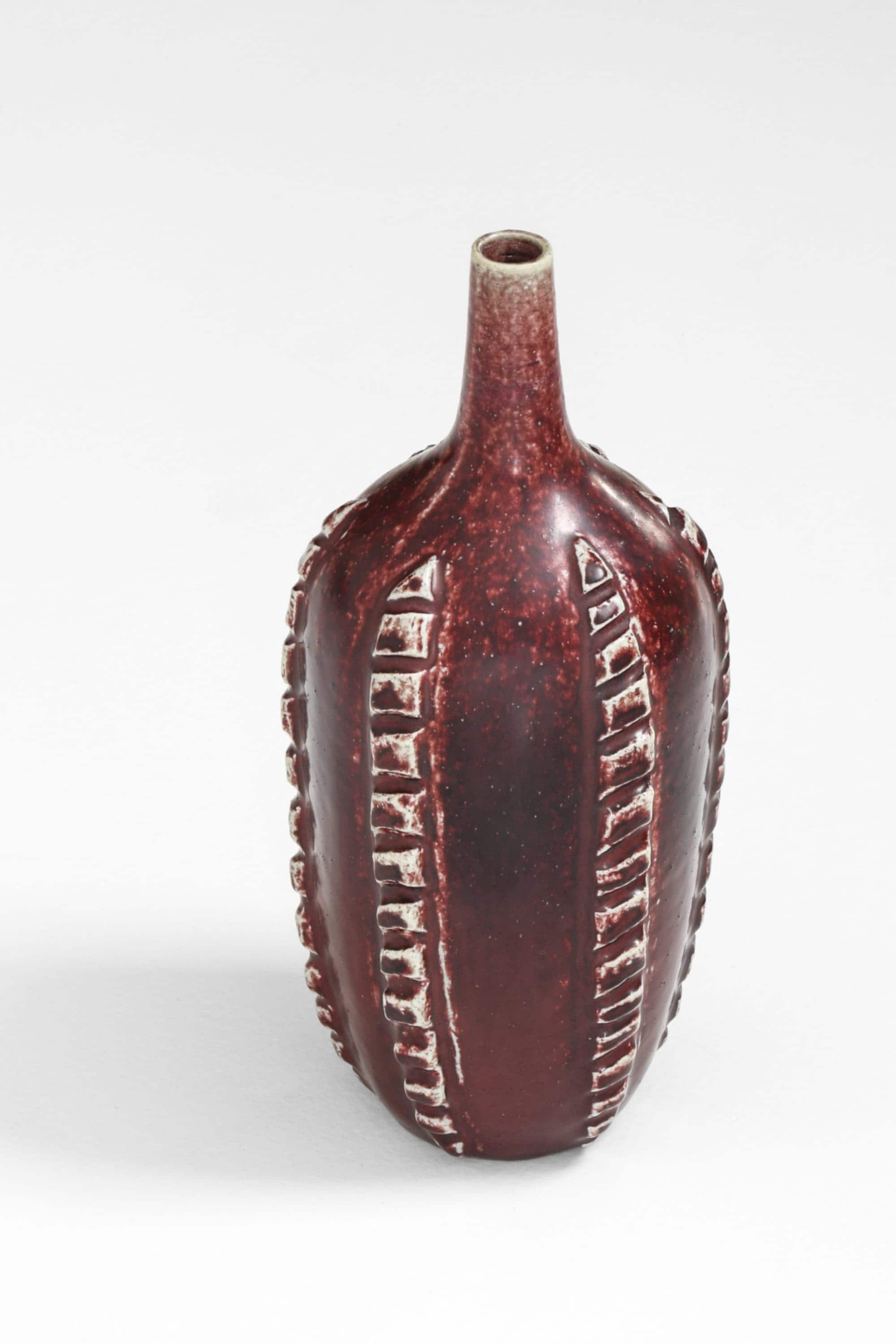
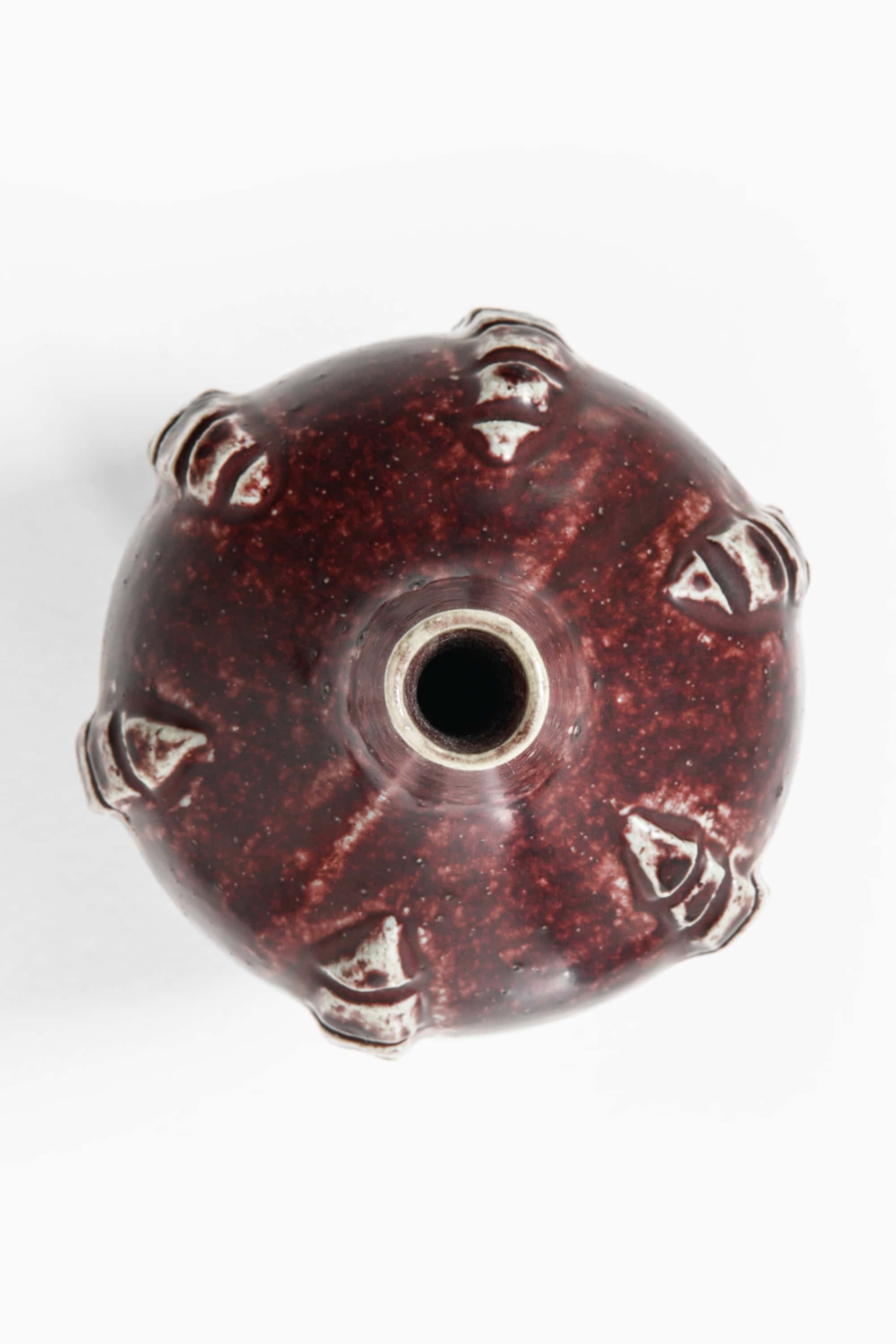
The oxblood stoneware vase, model number 21491, represents the expressive power of glaze in Salto’s work. Designed for Royal Copenhagen, the vase has a narrow cylindrical neck and a full-bodied, slightly elongated oval profile, with pronounced vertical ridges and repeating geometric relief creating rhythm across the surface.
The deep oxblood glaze gives the piece a saturated intensity, shifting from dark red to lighter highlights where the glaze thins over the raised edges. Its subtle speckling and tonal variation demonstrate the complexity of high-fired stoneware and reactive glazing.
Here, relief and glaze work together to give the compact vessel depth and movement, showing Salto’s ability to create character through surface, colour and ceramic structure.
Conclusion
Together, these works reveal the range and force of Axel Salto’s ceramic vision. Across vases and lighting, rounded bodies and cylindrical forms, blue, earthy and oxblood glazes, a consistent idea emerges: ceramics as living structure. Salto did not treat the vessel as a neutral shape to be decorated. Instead, he allowed surface, relief and glaze to become the central language of the object.
His work stands at the intersection of art, craft and design. It is deeply rooted in the material traditions of Royal Copenhagen, yet it moves beyond refinement alone toward something more organic, tactile and expressive. The budding motifs, shell-like surfaces and reactive glazes give each piece a sense of growth and transformation, as if the object were still in the process of becoming.