


Fritz Hansen sofa
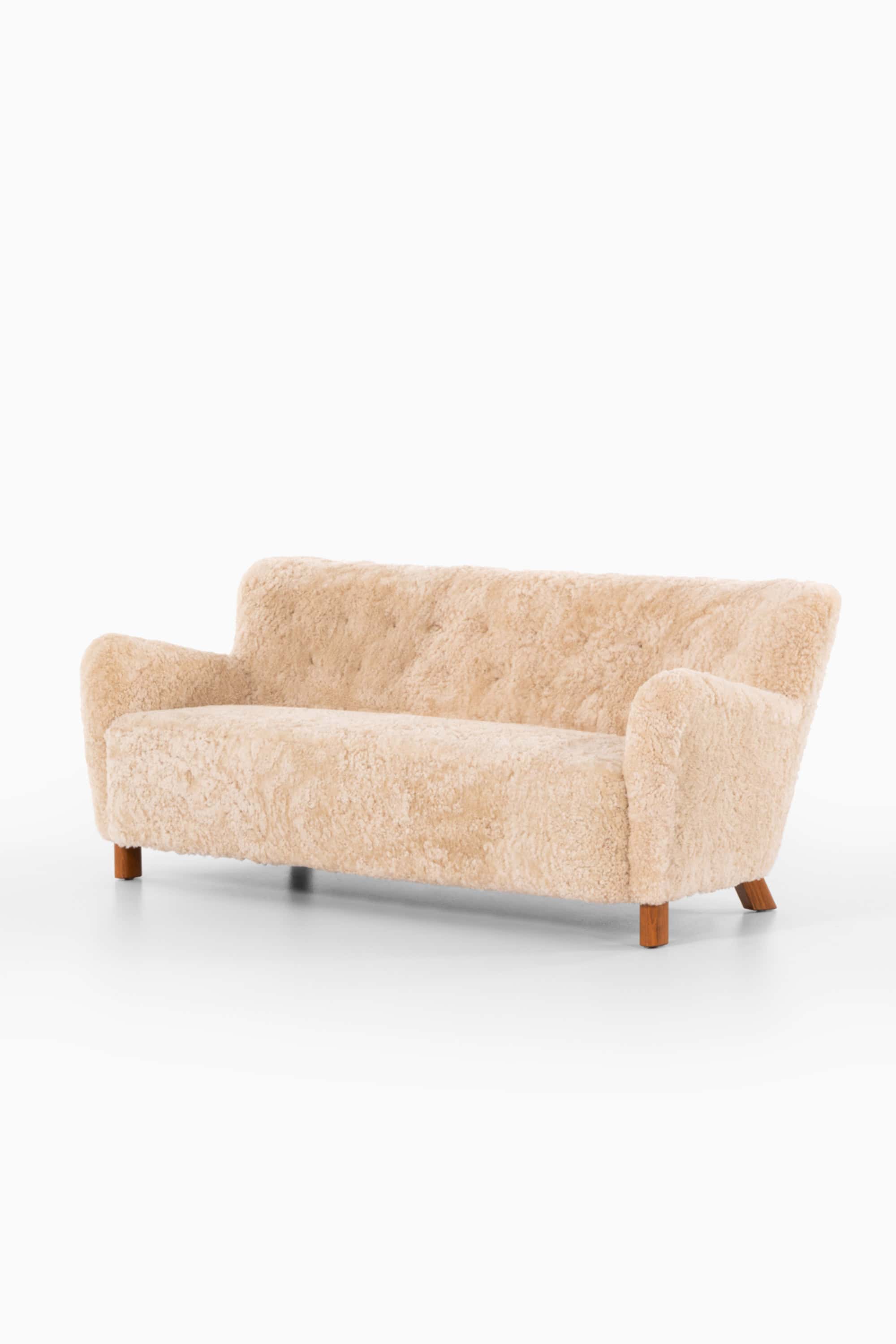
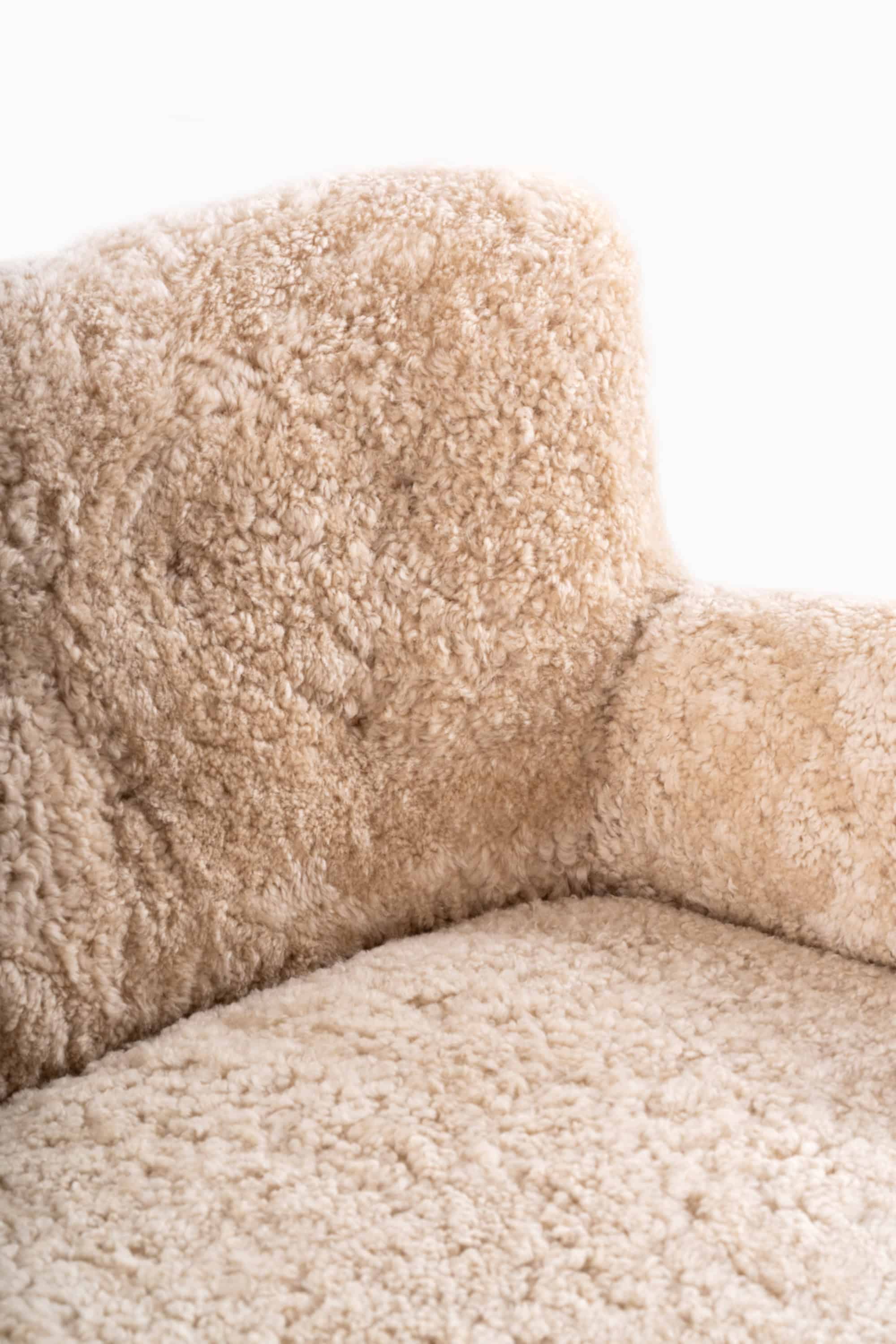
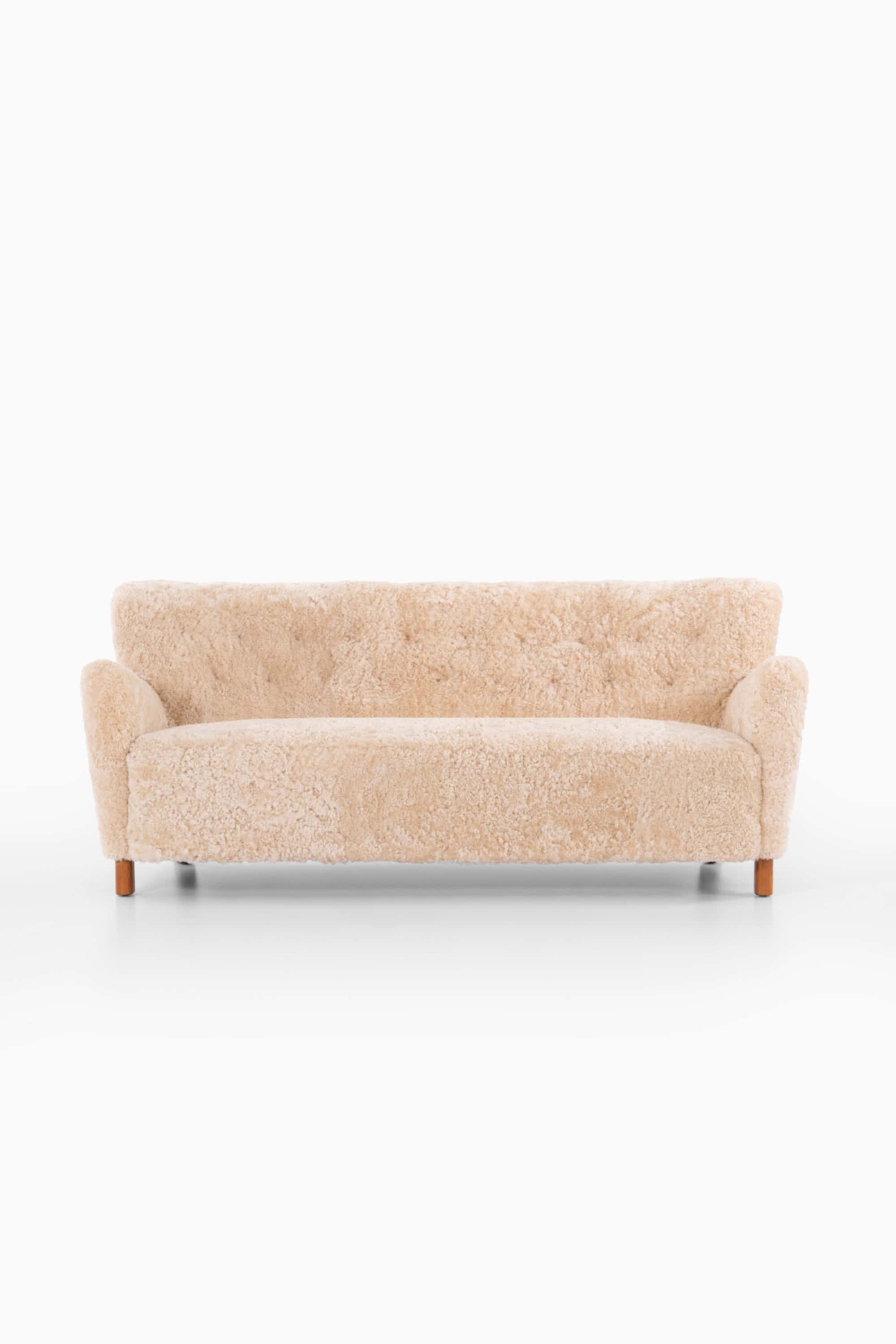
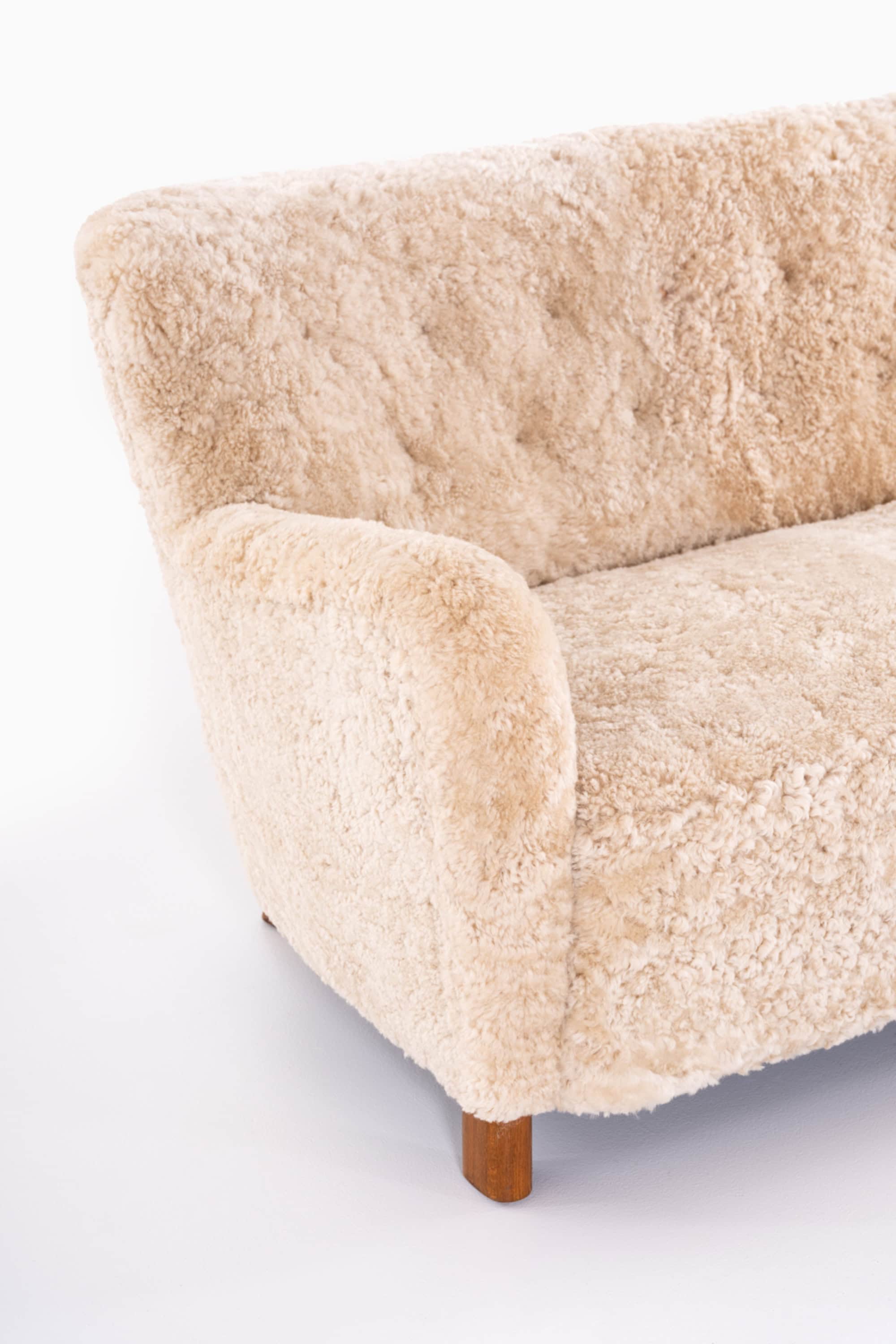
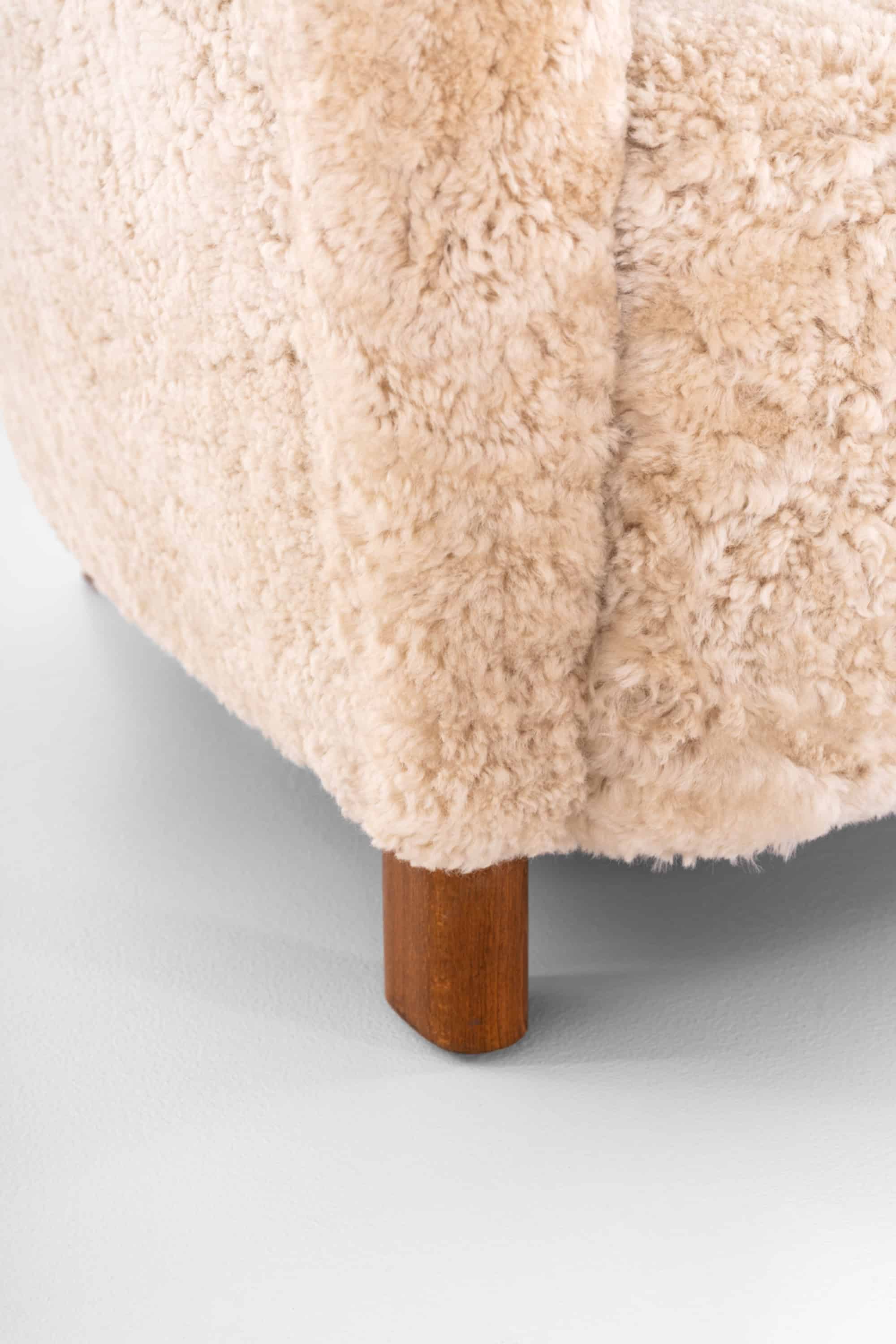
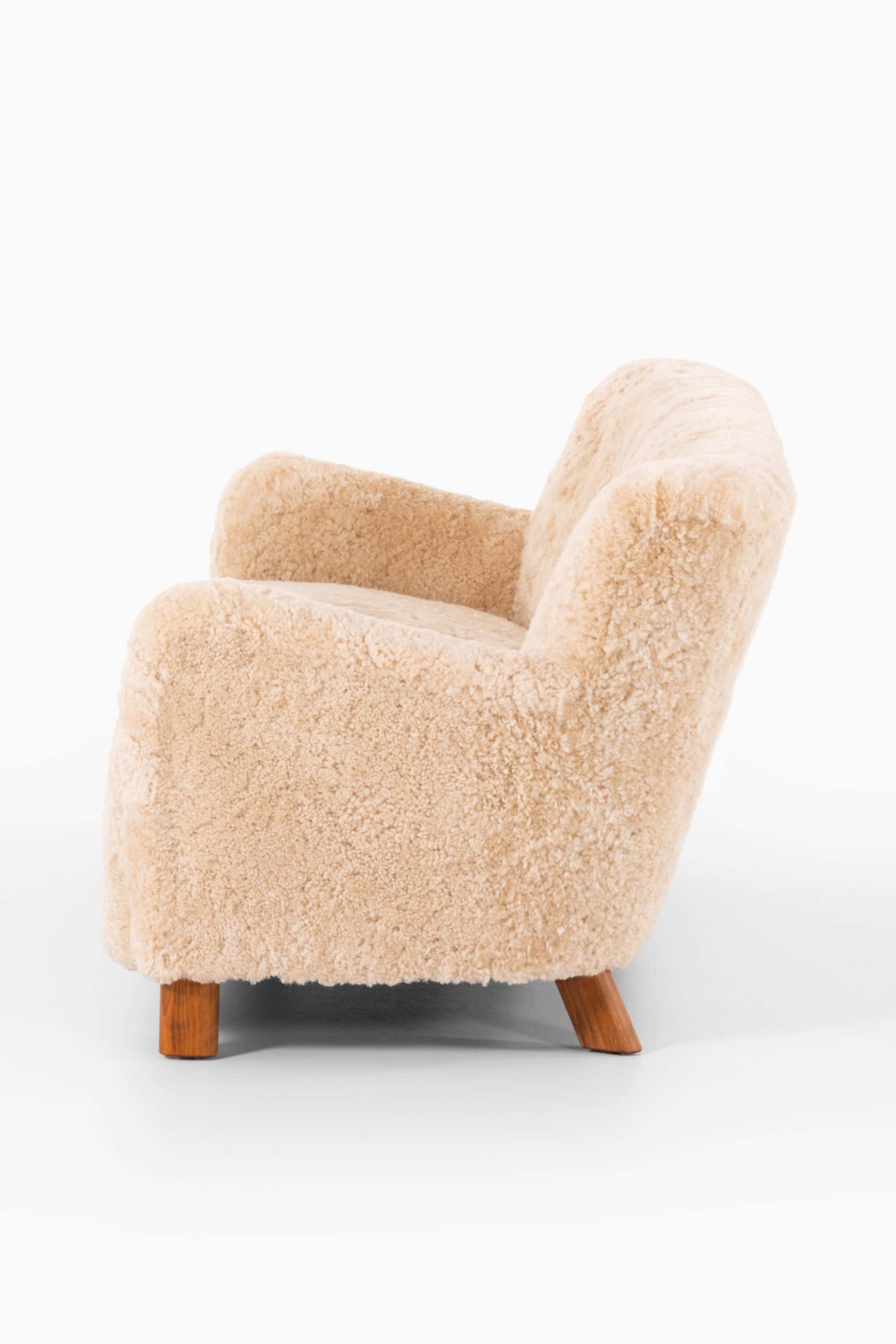
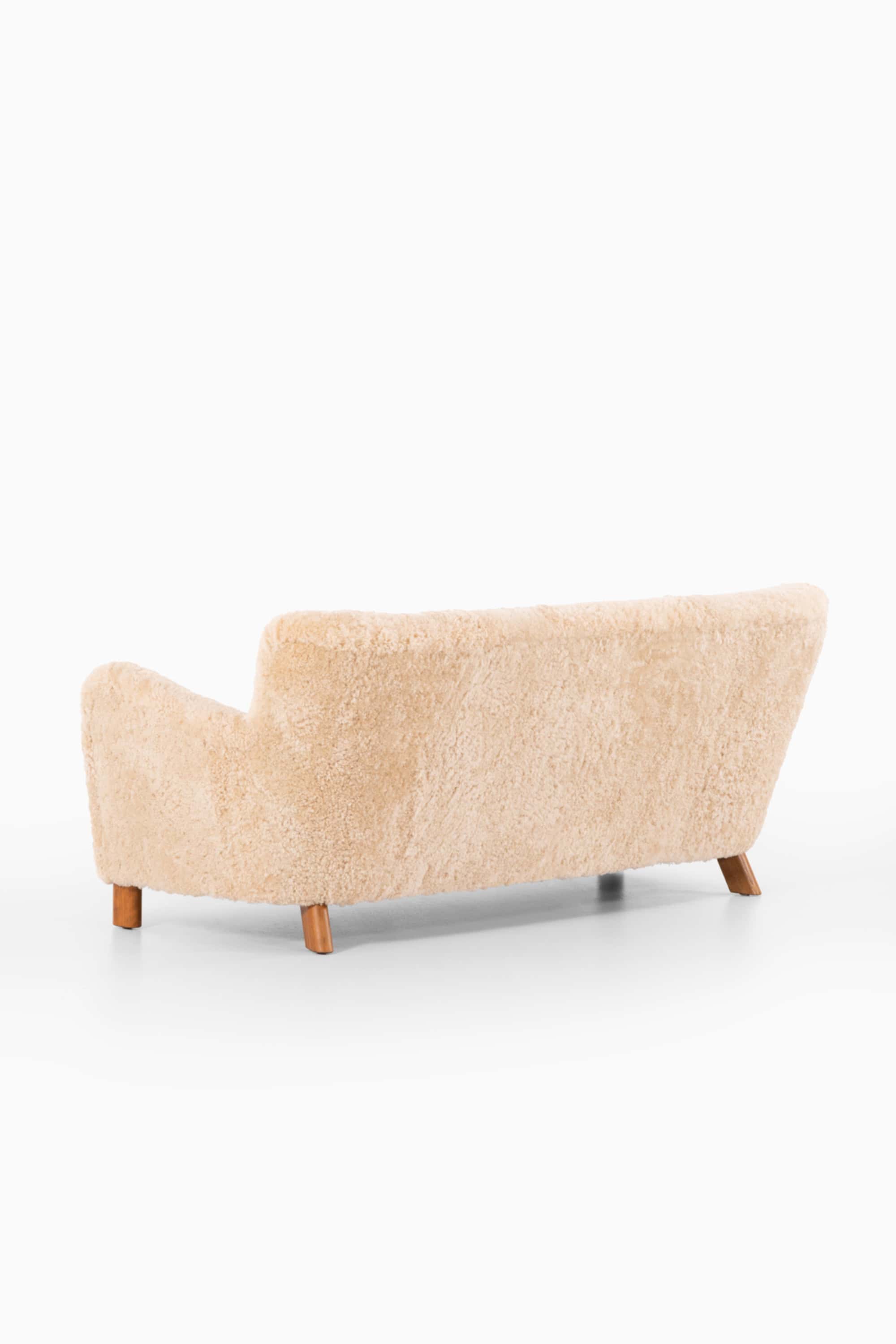
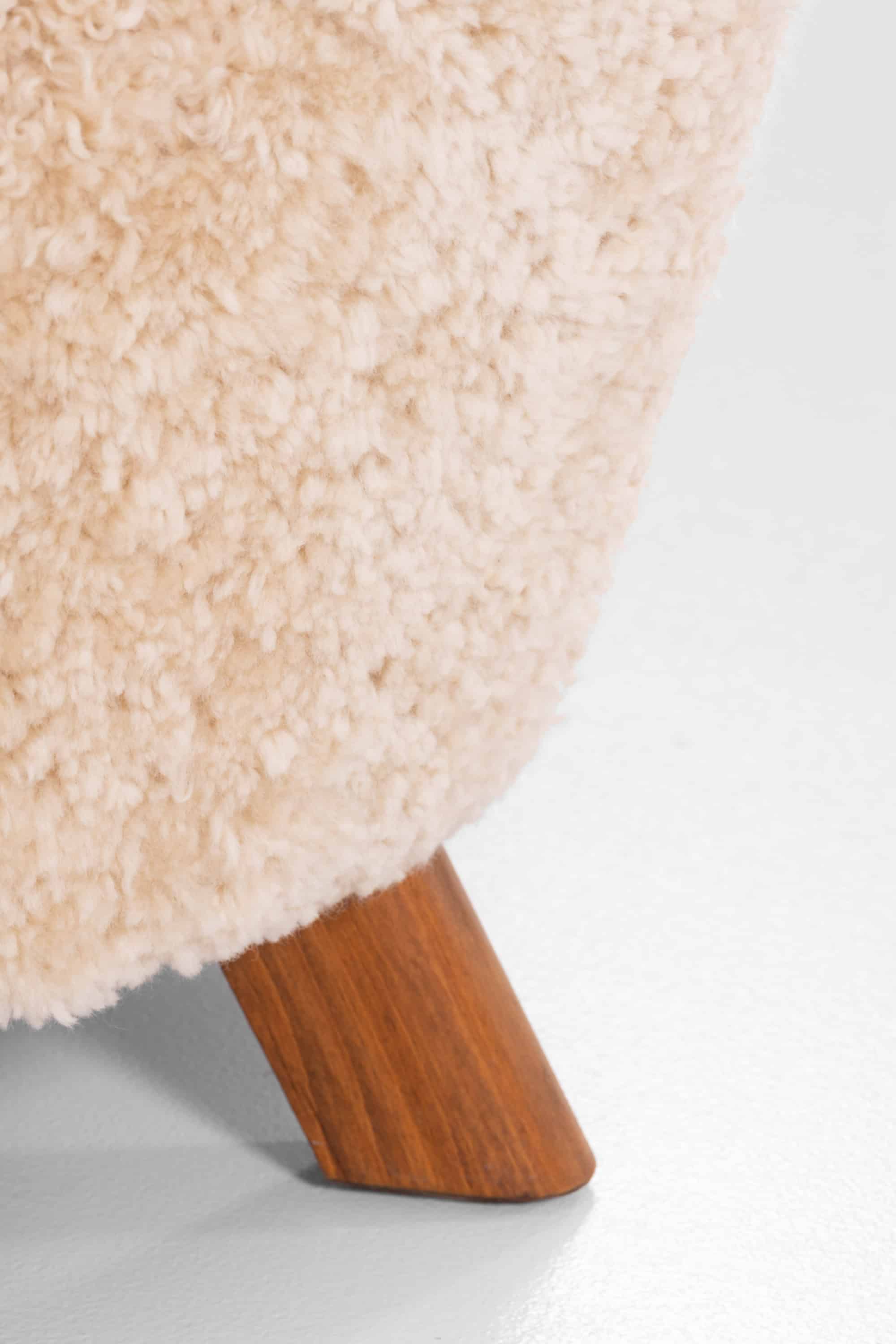
The design is characterized by a broad, slightly reclined backrest with a gently curved upper edge, extending across the full width of the sofa. The substantial armrests are rounded at the top and taper subtly toward the seat, creating a continuous, enclosed seating area. The deep, generously padded seat has a smooth, uninterrupted surface, while the upholstered front extends almost to the floor, leaving only the short wooden legs visible. The rear legs are angled outward, contrasting with the more upright front legs and contributing to the sofa’s distinctive profile. The newly applied sheepskin upholstery has a dense, curly texture with natural variations in tone and pile, emphasizing the rounded contours of the construction.
Fritz Hansen was founded in Copenhagen in 1872 by cabinetmaker Fritz Hansen and developed into one of Denmark’s most established furniture manufacturers. Initially specializing in traditional cabinetmaking and upholstered furniture, the company expanded its production during the early 20th century and became particularly influential through its development of industrial furniture manufacturing techniques. During the 1930s and 1940s, Fritz Hansen produced a wide range of upholstered seating, combining established craftsmanship with increasingly simplified forms. The company’s later collaborations with designers such as Arne Jacobsen and Hans J. Wegner helped establish its international reputation as a leading manufacturer of Danish modern furniture.
The model 1669 belongs to an earlier period in the manufacturer’s history, when upholstered sofas were characterized by substantial proportions, integrated armrests, and an emphasis on comfort. Its restrained detailing and rounded architectural form reflect the development of Danish furniture design during the 1940s, when traditional upholstery techniques were increasingly combined with modernist ideas of simplicity and functional construction. The use of solid beech for the supporting legs is consistent with the Scandinavian furniture industry’s extensive use of locally available hardwoods during this period.
The sofa has been fully restored and is in good vintage condition, with minor signs of age and use remaining on the wooden elements. The upholstery has been completely renewed in natural sheepskin, providing a consistent surface across the seat, backrest, armrests, and exterior panels. The exposed beech legs retain their warm brown finish, with visible wood grain and slight variations in color characteristic of aged timber.
The sofa measures 200 cm (78.7 in) in width, 85 cm (33.5 in) in depth, and 78 cm (30.7 in) in height, with a seat height of 41 cm (16.1 in).
Literature
Fritz Hansen, manufacturer’s catalogue, 1942, p. 17.
Dimensions (cm) | W: 200 / D: 85 / H: 78 / Seat H: 41 |
| Producer | Fritz Hansen |
| Color | Beige |
| Decade | 1940s |
| Country | Denmark |
| Style | Mid Century, Scandinavian Modern |
| Material | Beech, Leather, Sheepskin |
| Designed in | 1940s |
| Item Number | 250895 |
Fritz Hansen
Fritz Hansen (1847–1902) was a Danish cabinetmaker and entrepreneur who founded the furniture company that bears his name. Established as a small Copenhagen workshop in 1872, the business developed into one of Denmark’s most important furnitur...
Read more