Gunnar Nylund bowl
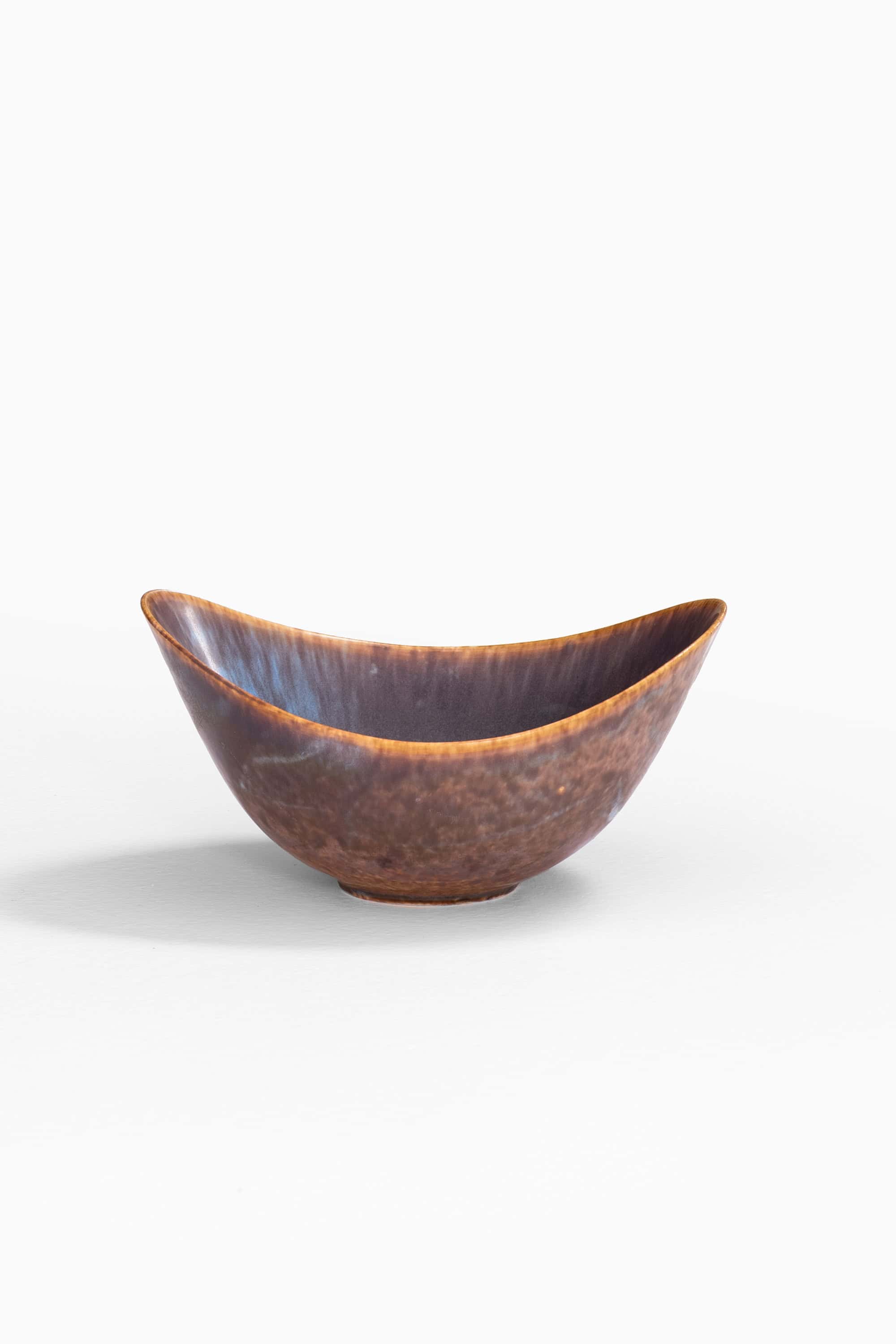
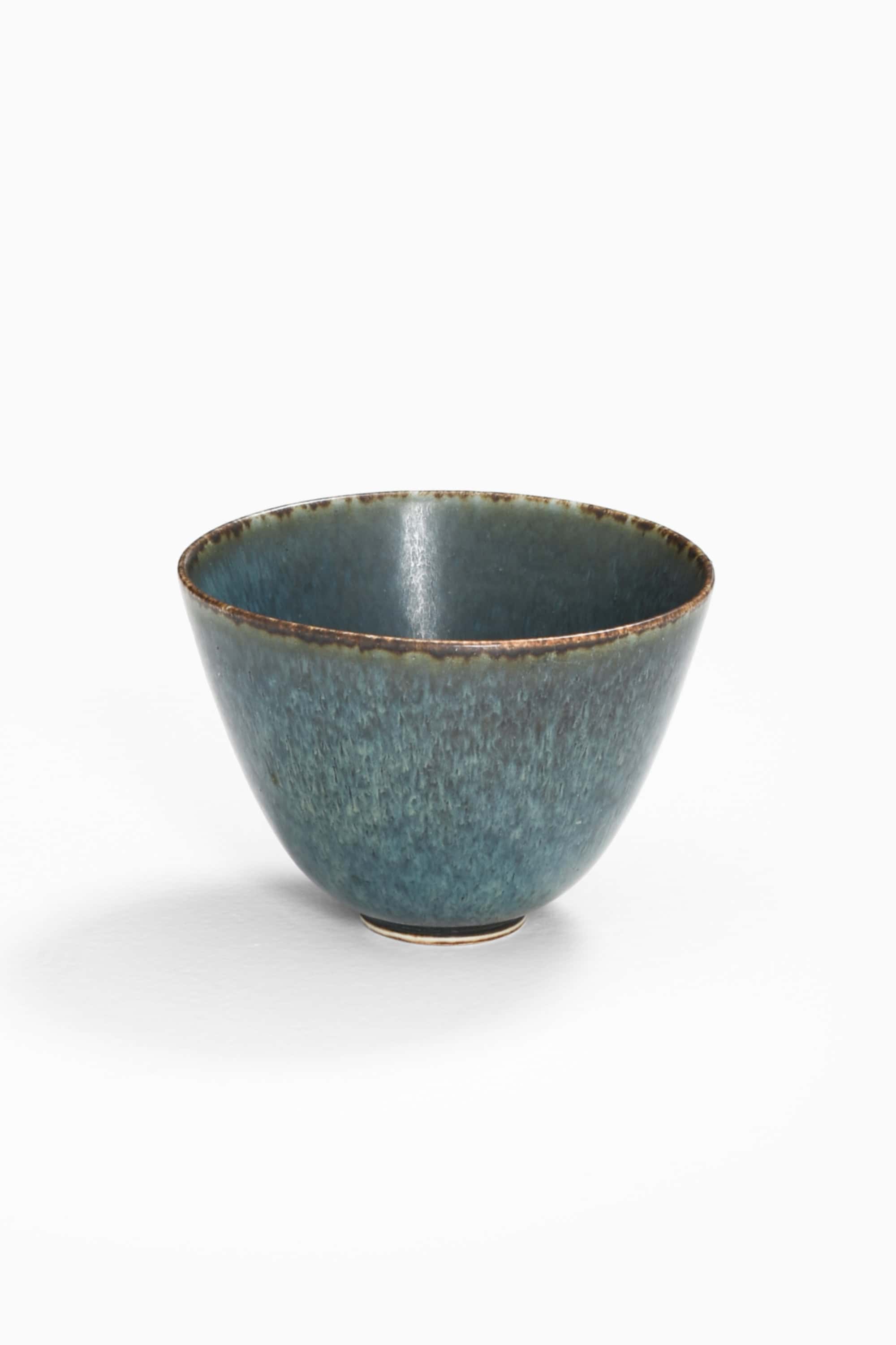
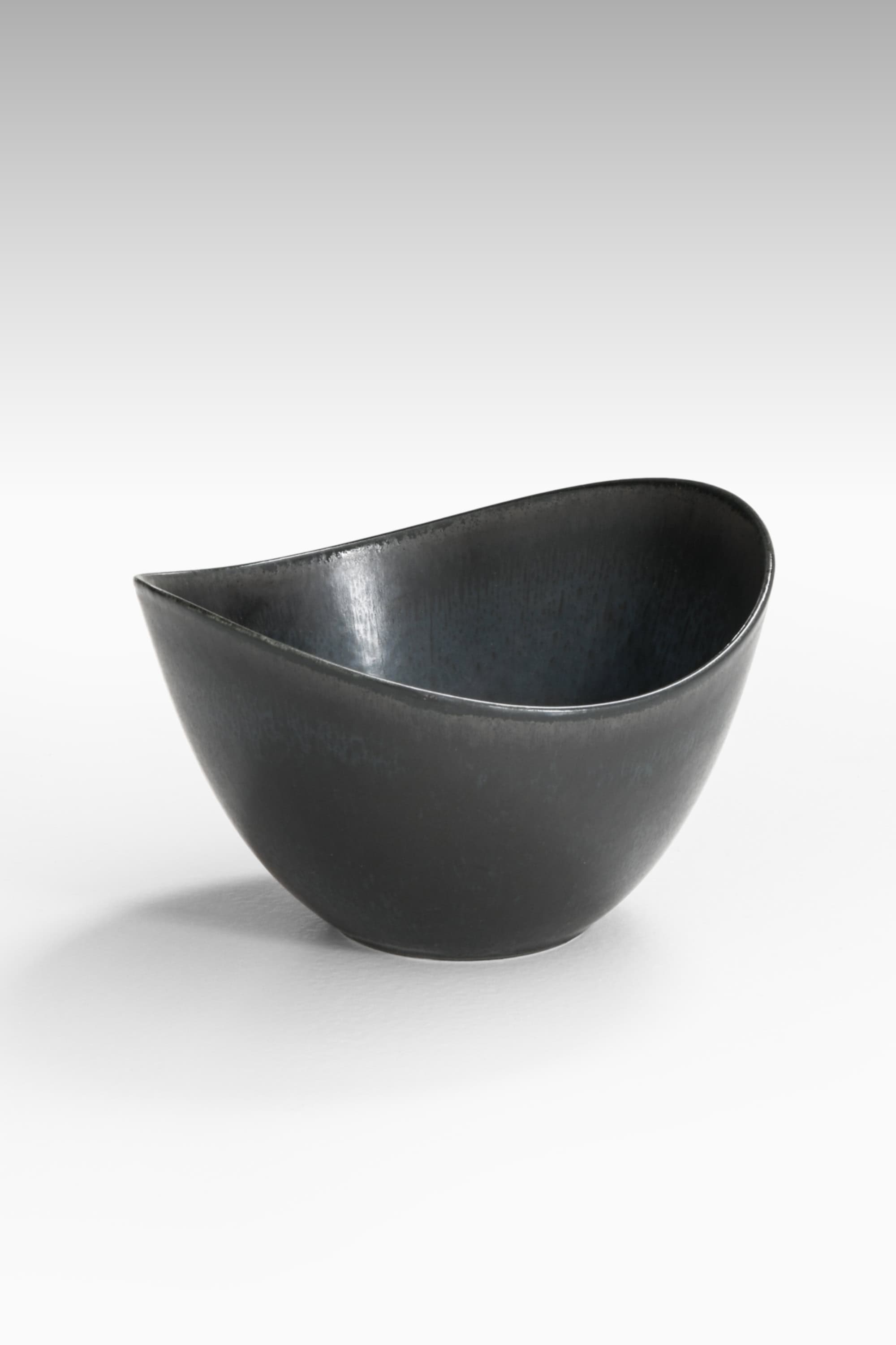
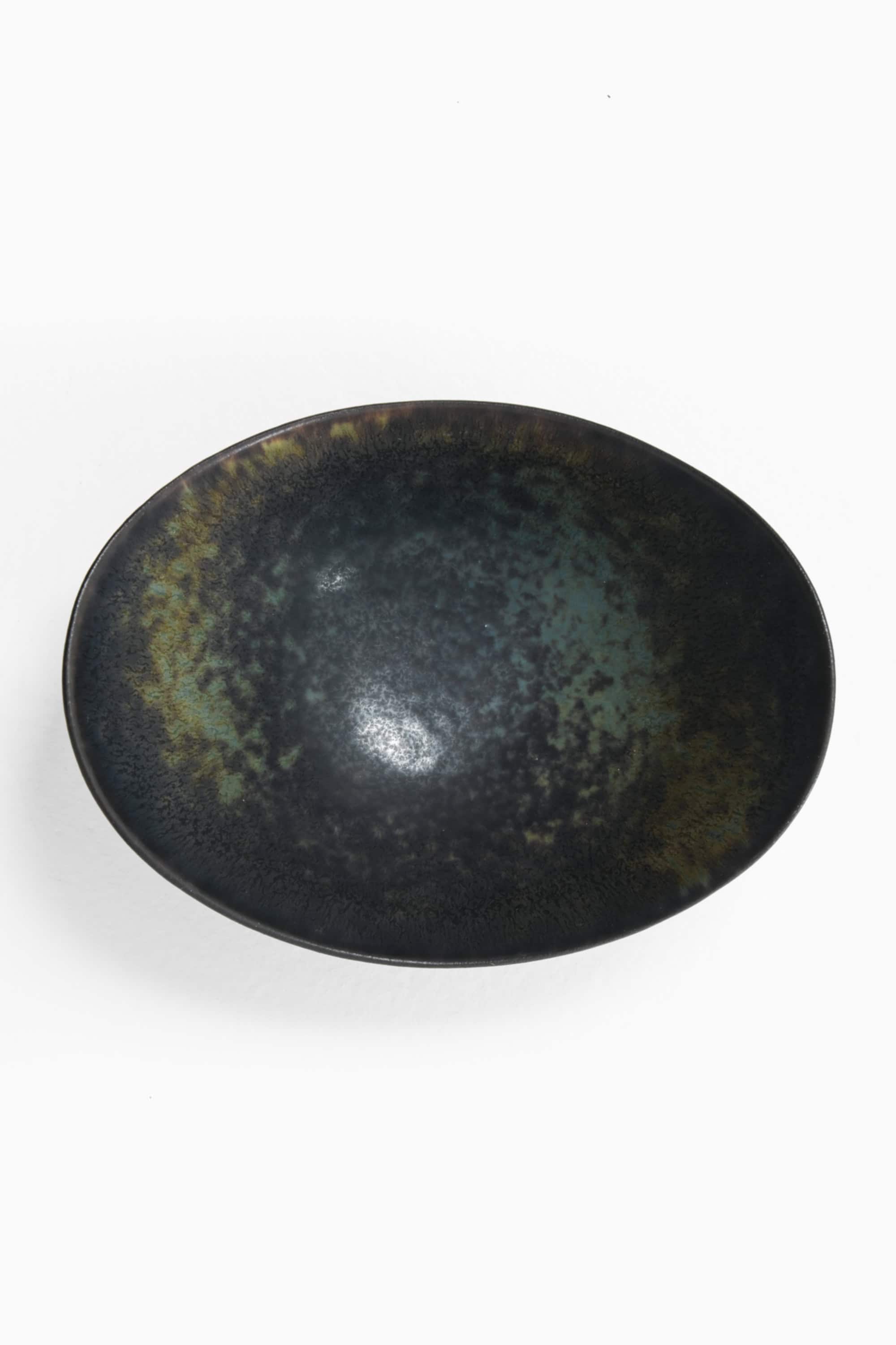
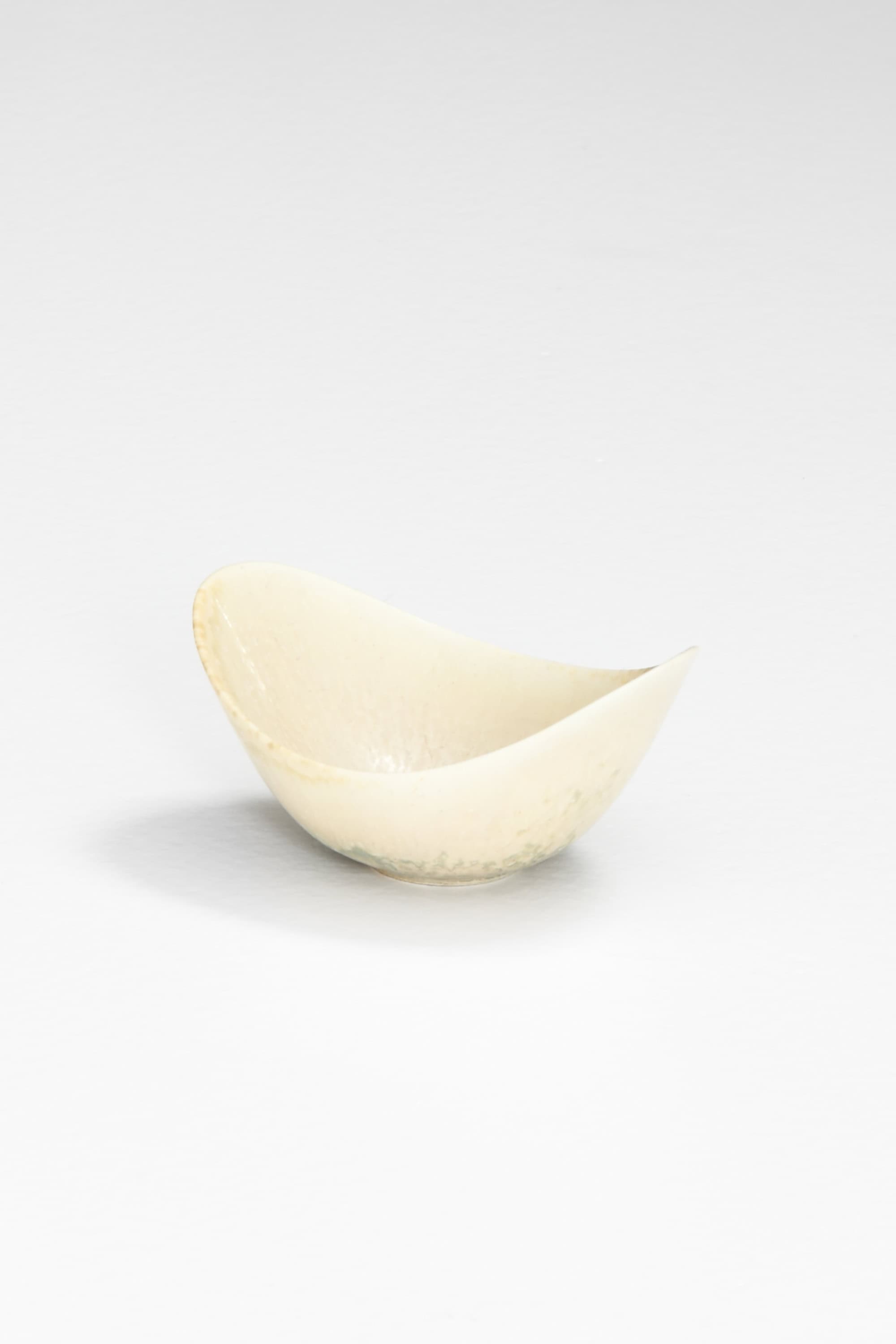
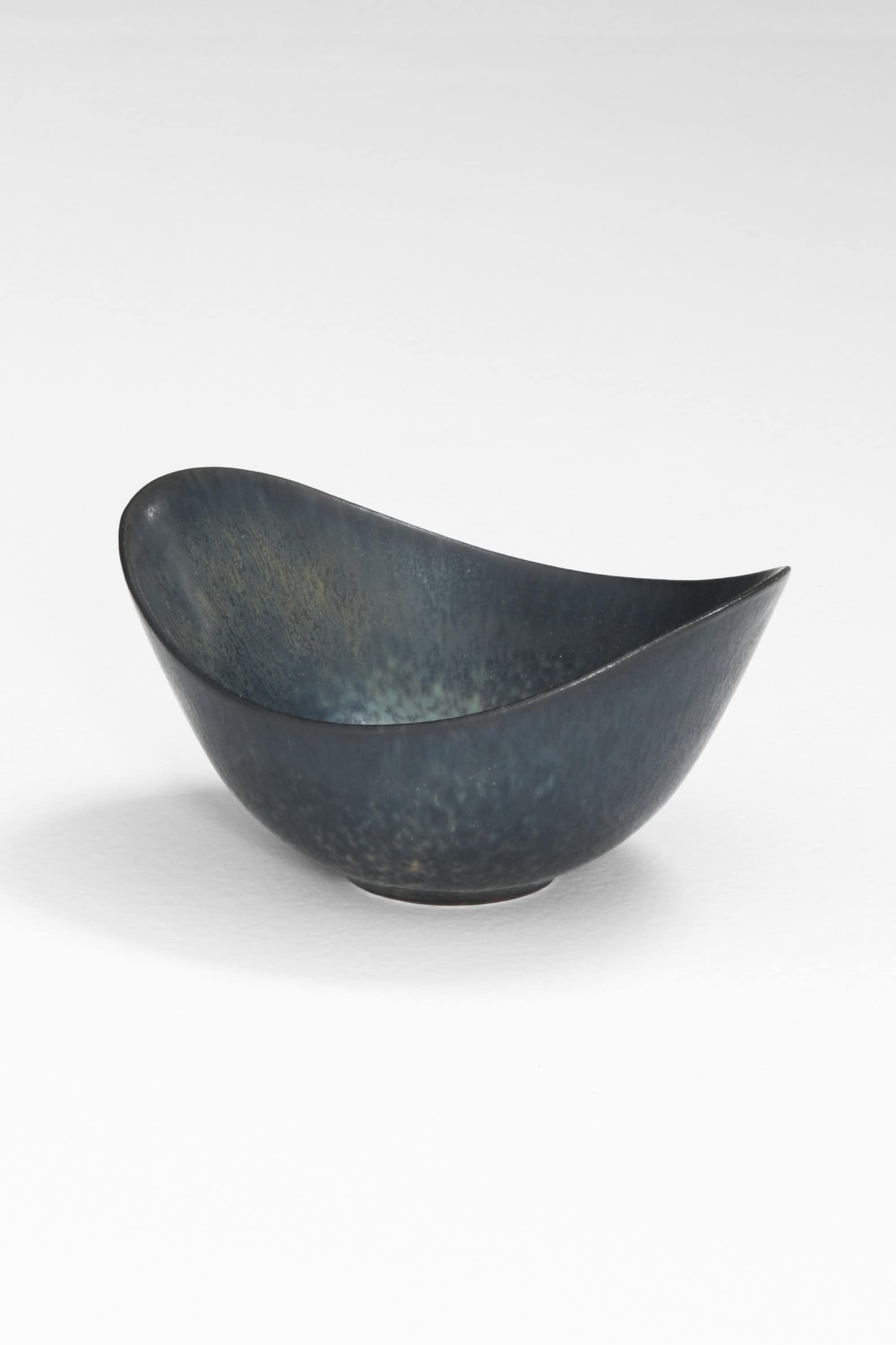
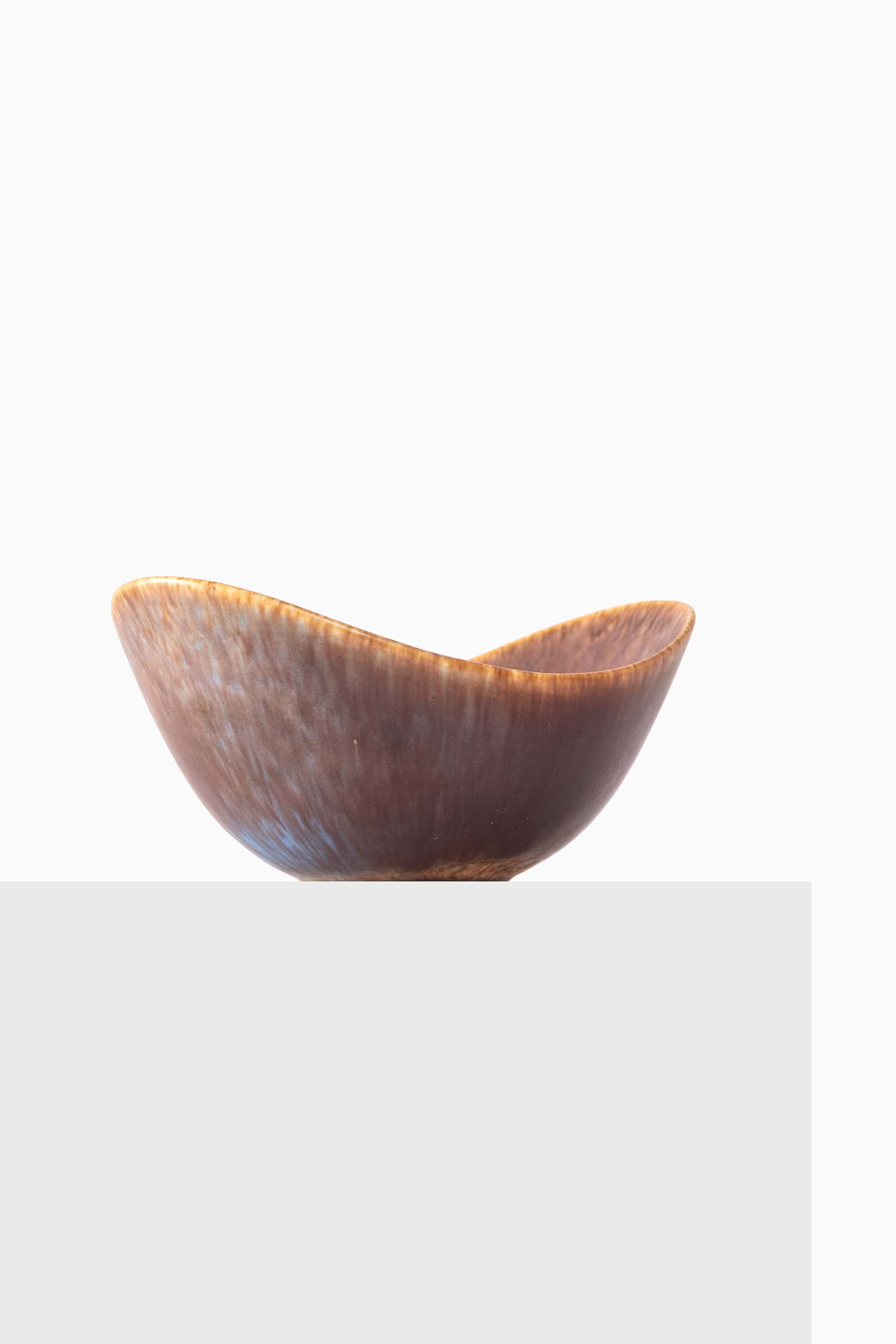
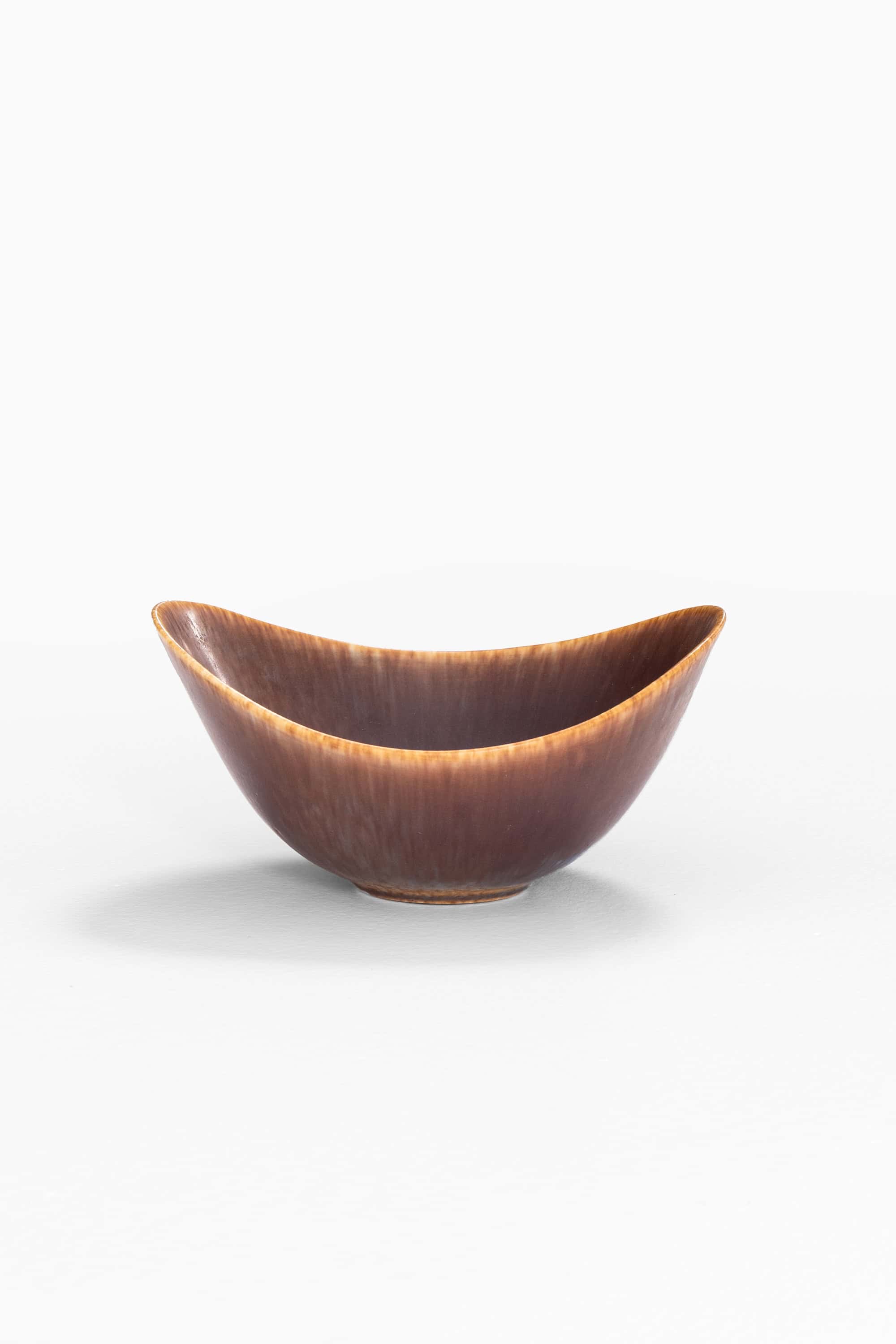
Ceramic bowl, model ARO, designed by Gunnar Nylund and produced by Rörstrand in Sweden during the 1950s. The bowl belongs to the extensive body of stoneware that Nylund developed during his long association with Rörstrand and demonstrates his characteristic interest in organic forms, tactile glazes and subtle variations of color.
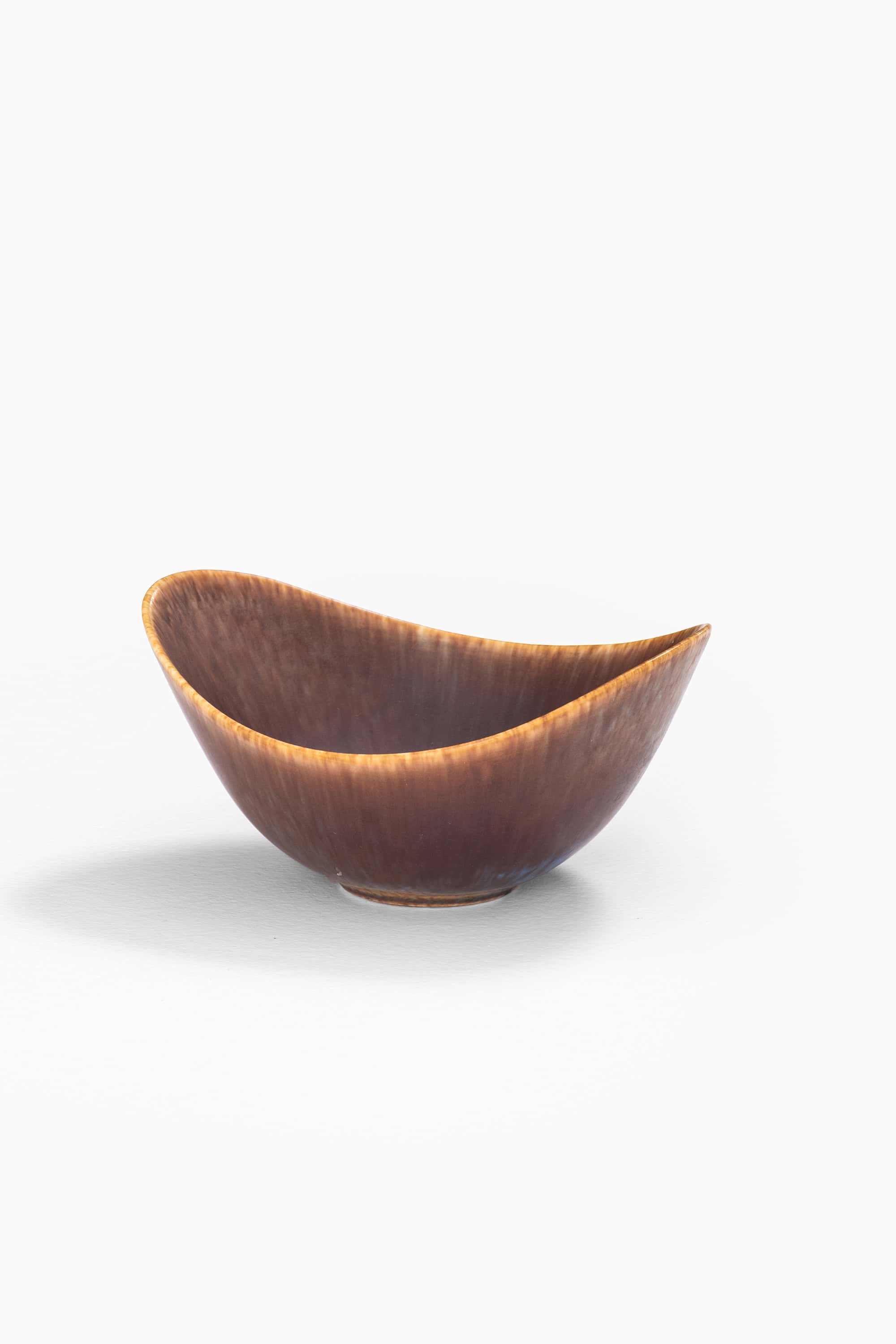
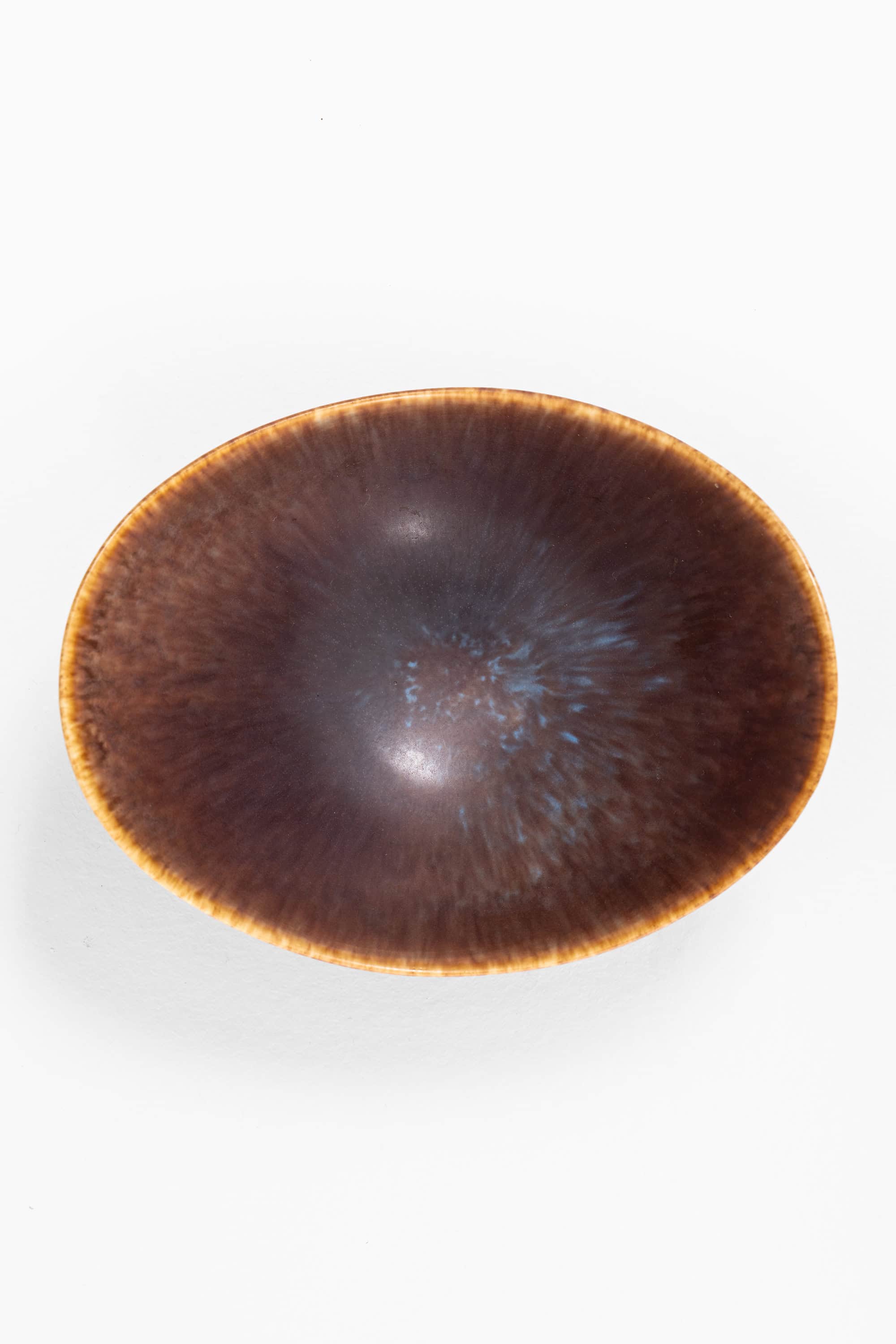
The bowl has an elongated oval form with a small foot and a distinctive undulating rim. Viewed from the side, the walls rise towards two opposing points, producing a soft, asymmetric-looking silhouette reminiscent of a leaf, shell or gently folded vessel. The form is particularly characteristic of Scandinavian studio ceramics of the period, where references to nature were often expressed through simplified shapes rather than applied ornament.
Its glaze is dominated by deep brown and aubergine tones, graduating towards warmer ochre, amber and golden brown along the rim and around the foot. Fine vertical variations in the glaze follow the curved walls of the vessel, while areas of muted blue and blue-grey appear across the interior and exterior. These subtle changes are inherent to the firing and glazing process and mean that individual examples of the same model can differ considerably in appearance. The softly mottled surface gives the otherwise restrained form considerable visual depth.
Gunnar Nylund was one of the most influential figures in Scandinavian ceramics during the twentieth century. Born in Paris in 1904 to a Danish mother and Finnish-Swedish father, he trained within the Nordic artistic tradition and initially worked in Denmark. Together with Nathalie Krebs, he established the ceramic workshop Saxbo in Copenhagen before joining Rörstrand in Sweden during the 1930s. He subsequently became artistic director at the factory and played an important role in developing Rörstrand’s modern stoneware production.
At Rörstrand, Nylund combined the traditions of individually made studio pottery with production methods that allowed sophisticated ceramic designs to reach a wider audience. His work frequently employed restrained organic forms together with complex matte and semi-matte glazes inspired by stone, earth, vegetation and other natural surfaces. Series such as ARO demonstrate this approach particularly clearly: the decoration is created primarily through the interaction of form, glaze and firing rather than through painted motifs.
Rörstrand itself has a much longer history. Established in Stockholm in 1726, it is one of Sweden’s oldest ceramic manufacturers and played a central role in the development of Swedish ceramics. During the twentieth century the company employed a succession of significant artists and designers, and its art pottery from the mid-century period became particularly associated with Scandinavian modernism. Nylund’s work for the factory remains among the most recognizable expressions of this period.
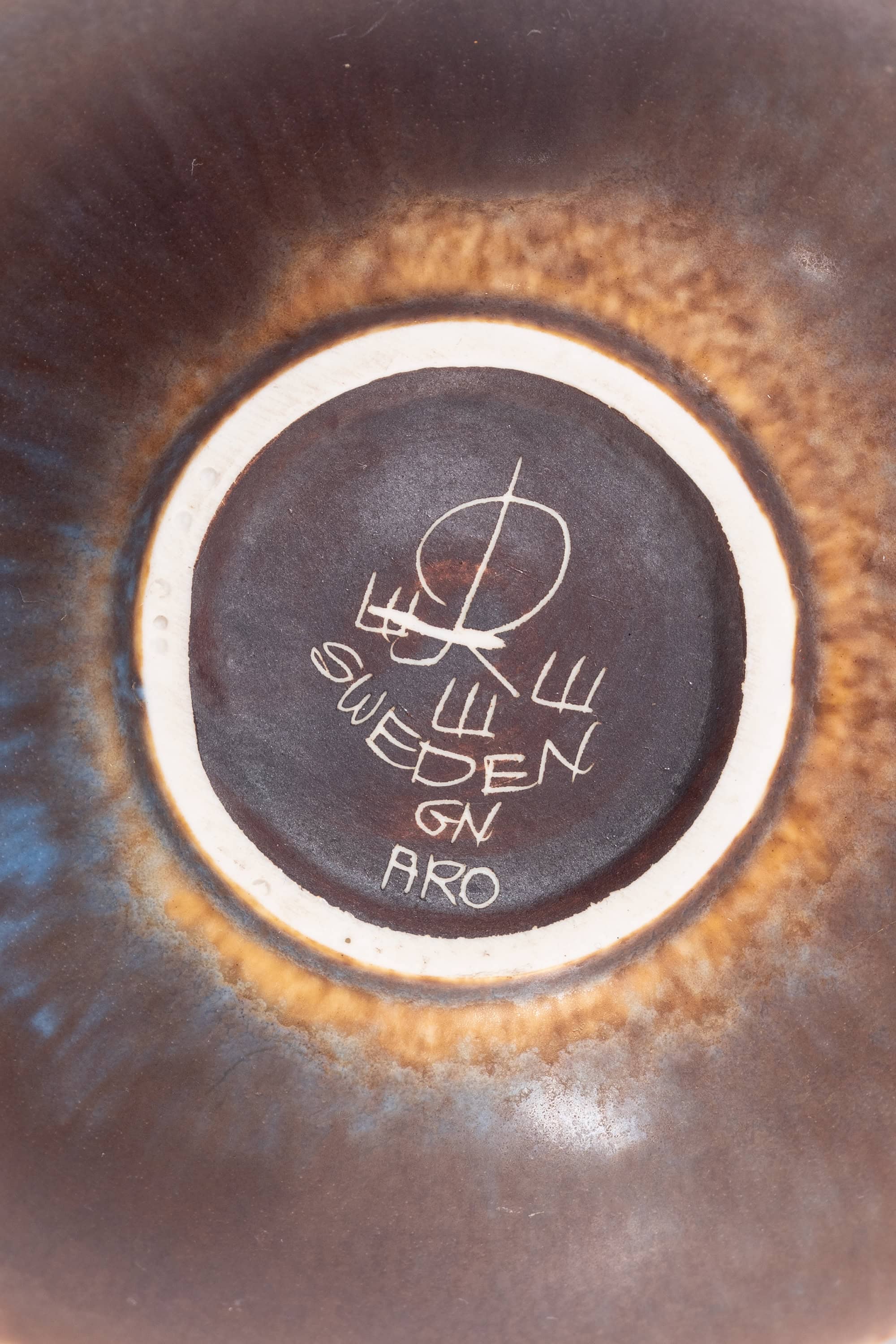
The underside carries the characteristic incised Rörstrand factory mark together with “SWEDEN”, the initials “GN” for Gunnar Nylund and the model designation “ARO”.
The bowl is preserved in good vintage condition with small signs of use consistent with its age. Minor surface traces and natural irregularities associated with the glaze and production process may be present. The rich tonal variation, including the brown, amber and blue areas visible across the surface, forms part of the original character of the glaze.
The bowl measures approximately 16 × 12.5 × 8 cm (6.3 × 4.9 × 3.1 in).
Dimensions (cm) | W: 16 / D: 12.5 / H: 8 |
| Producer | Rörstrand |
| Decade | 1950s |
| Country | Sweden |
| Style | Mid Century, Scandinavian Modern |
| Material | Ceramics |
| Designed in | 1950s |
| Item Number | 250761 |
Gunnar Nylund
Gunnar Nylund (1904–1997) was a prominent Swedish ceramist, sculptor, and designer, best known for his influential role at Rörstrand, one of Sweden’s oldest and most renowned porcelain manufacturers. He was a key figure in 20th-century Sc...
Read more