


Josef Frank Flora bureau
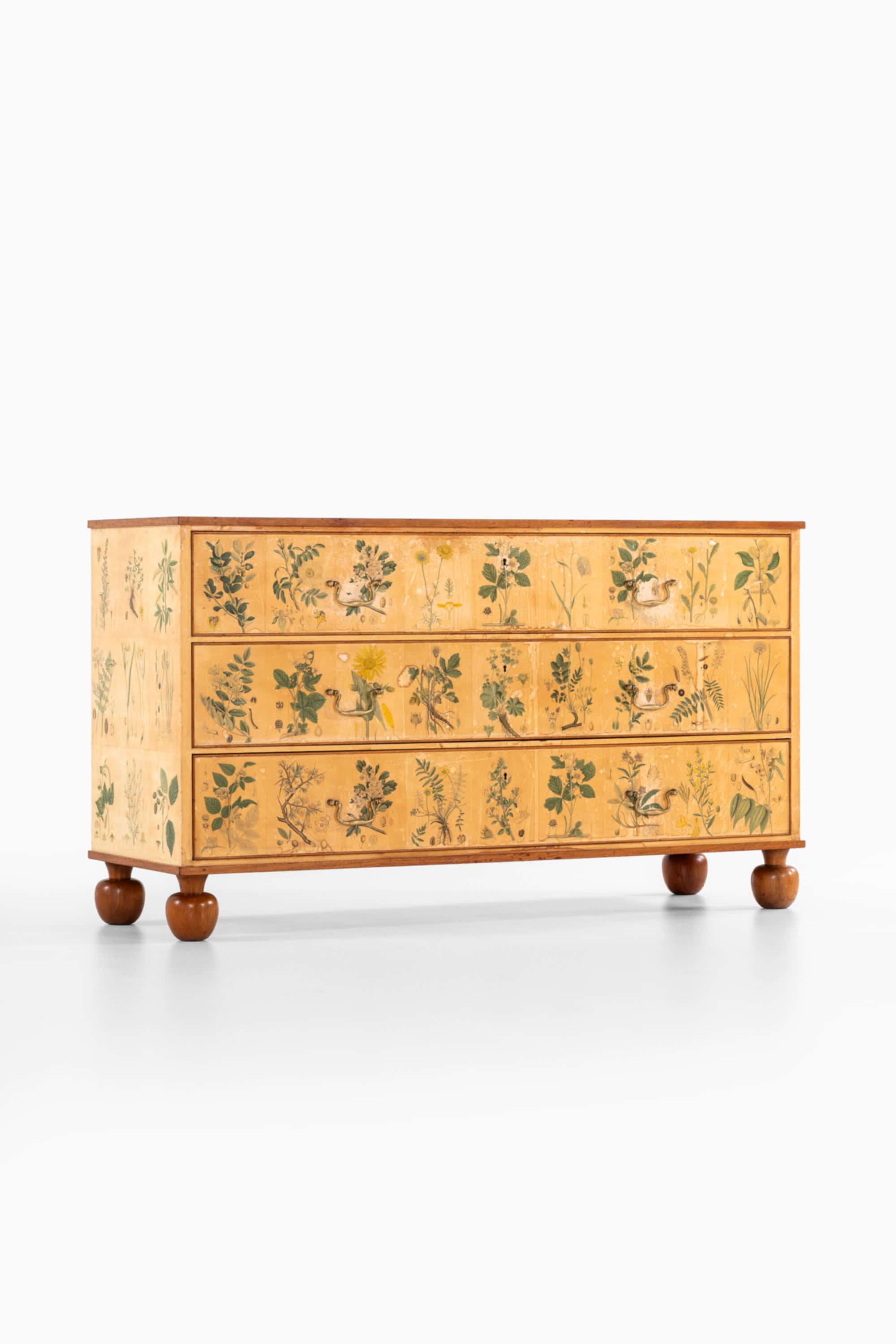
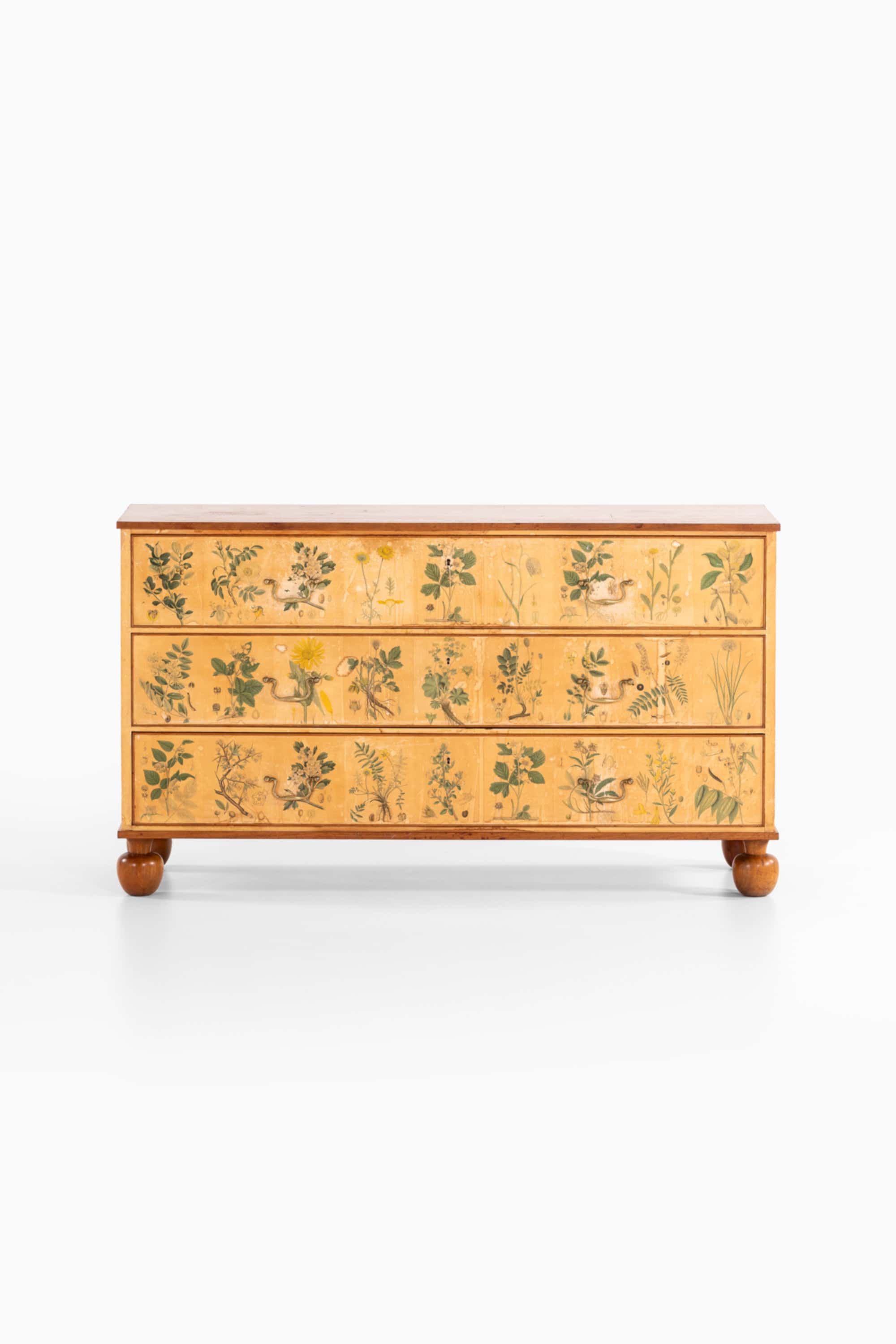
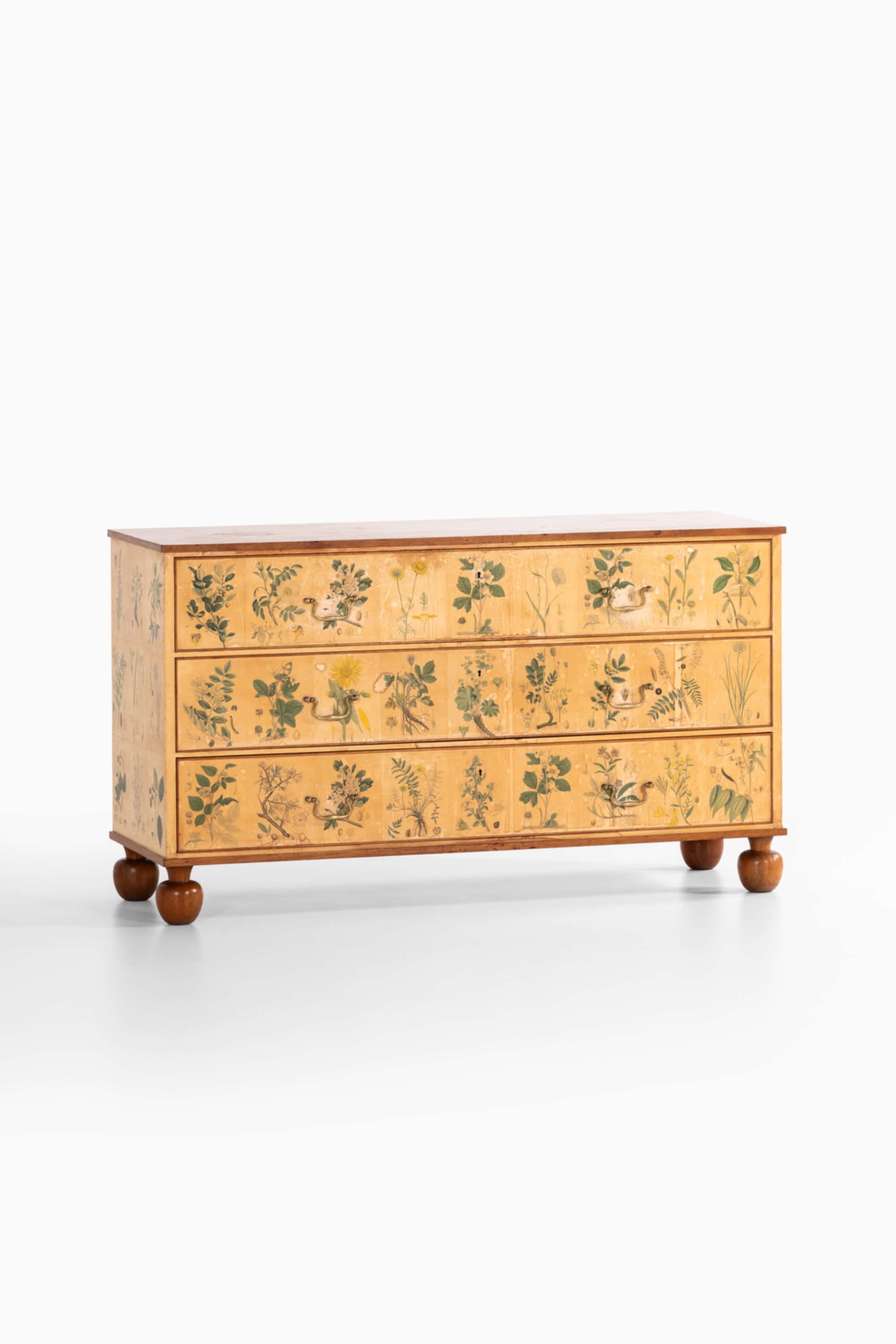
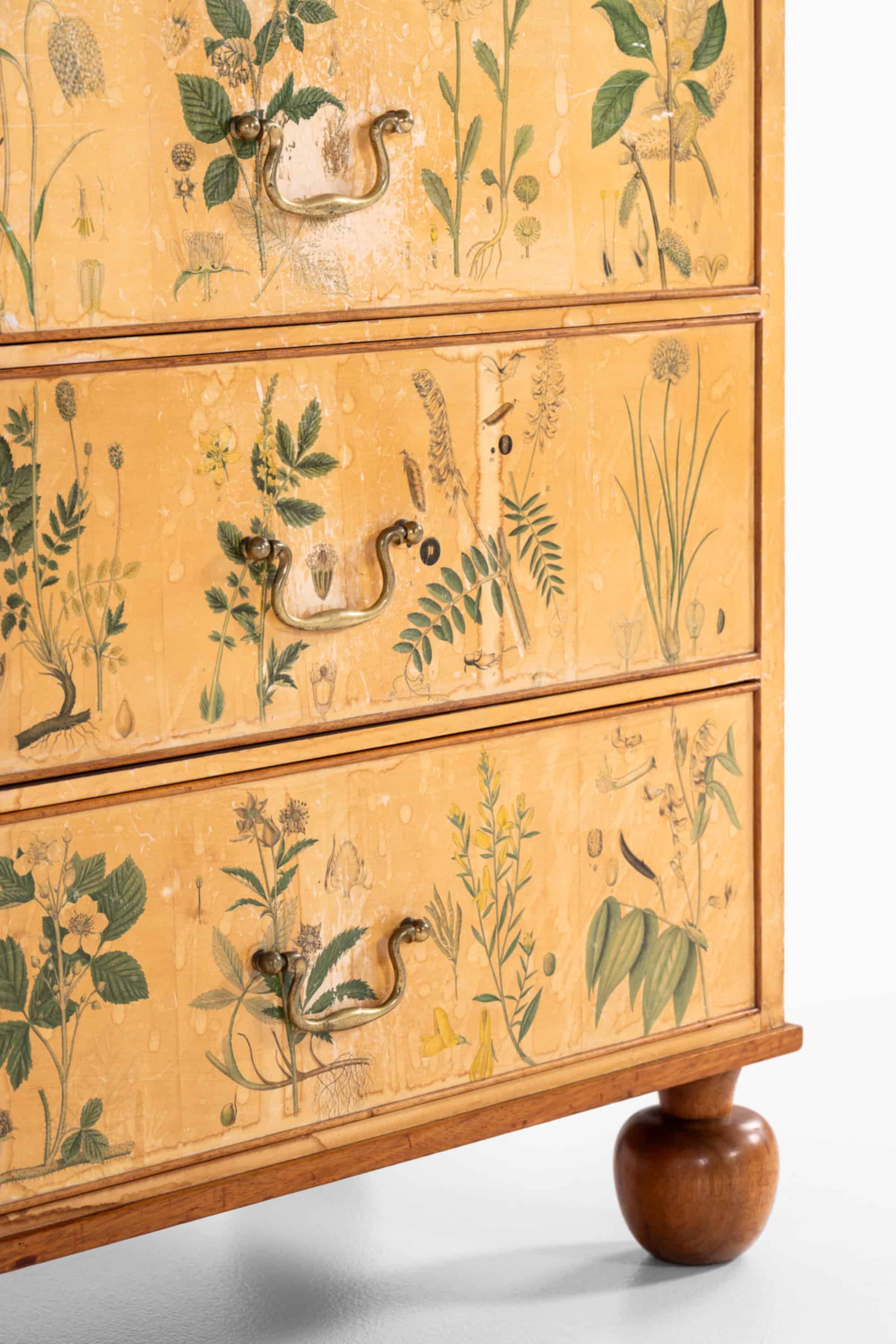
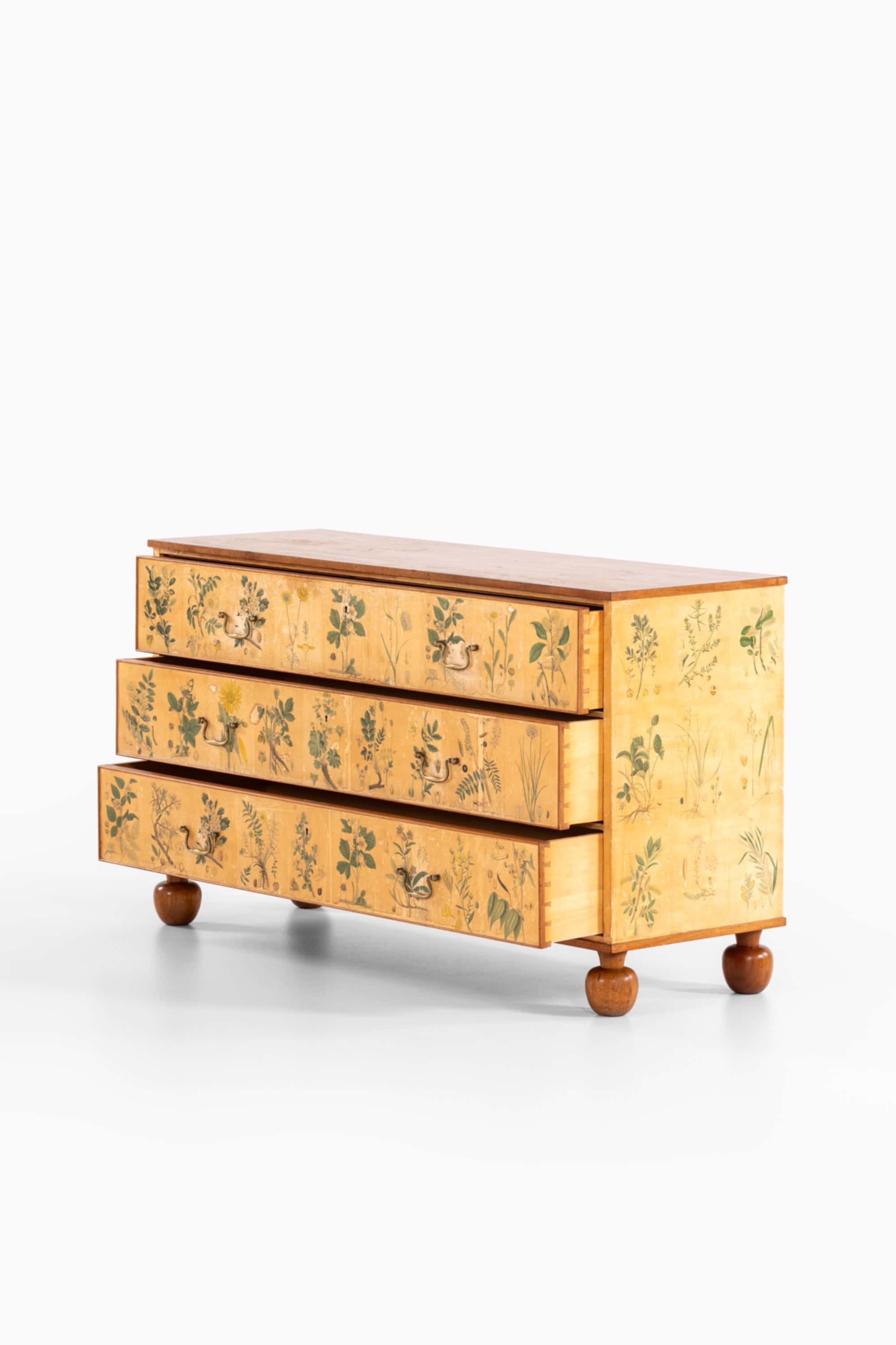
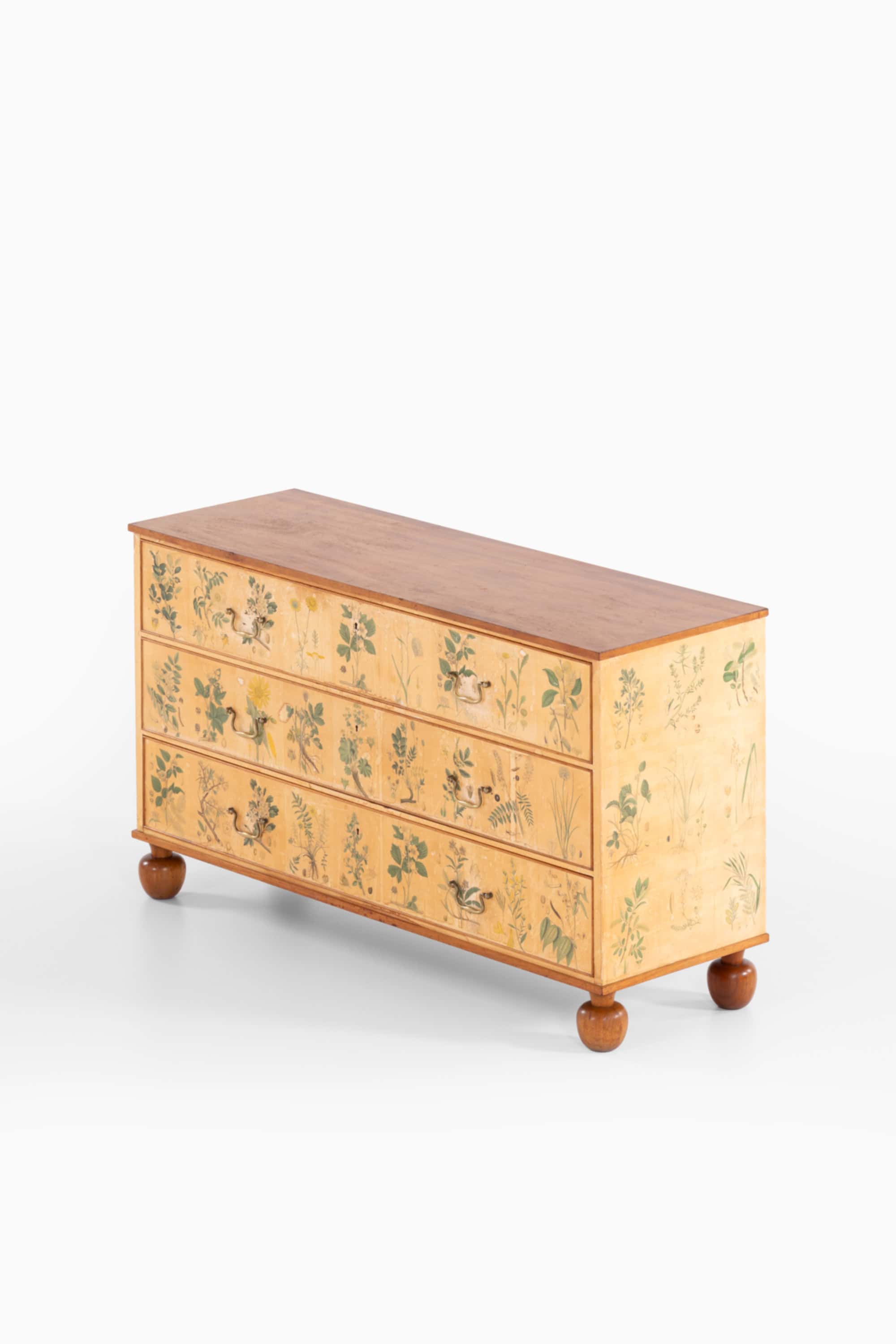
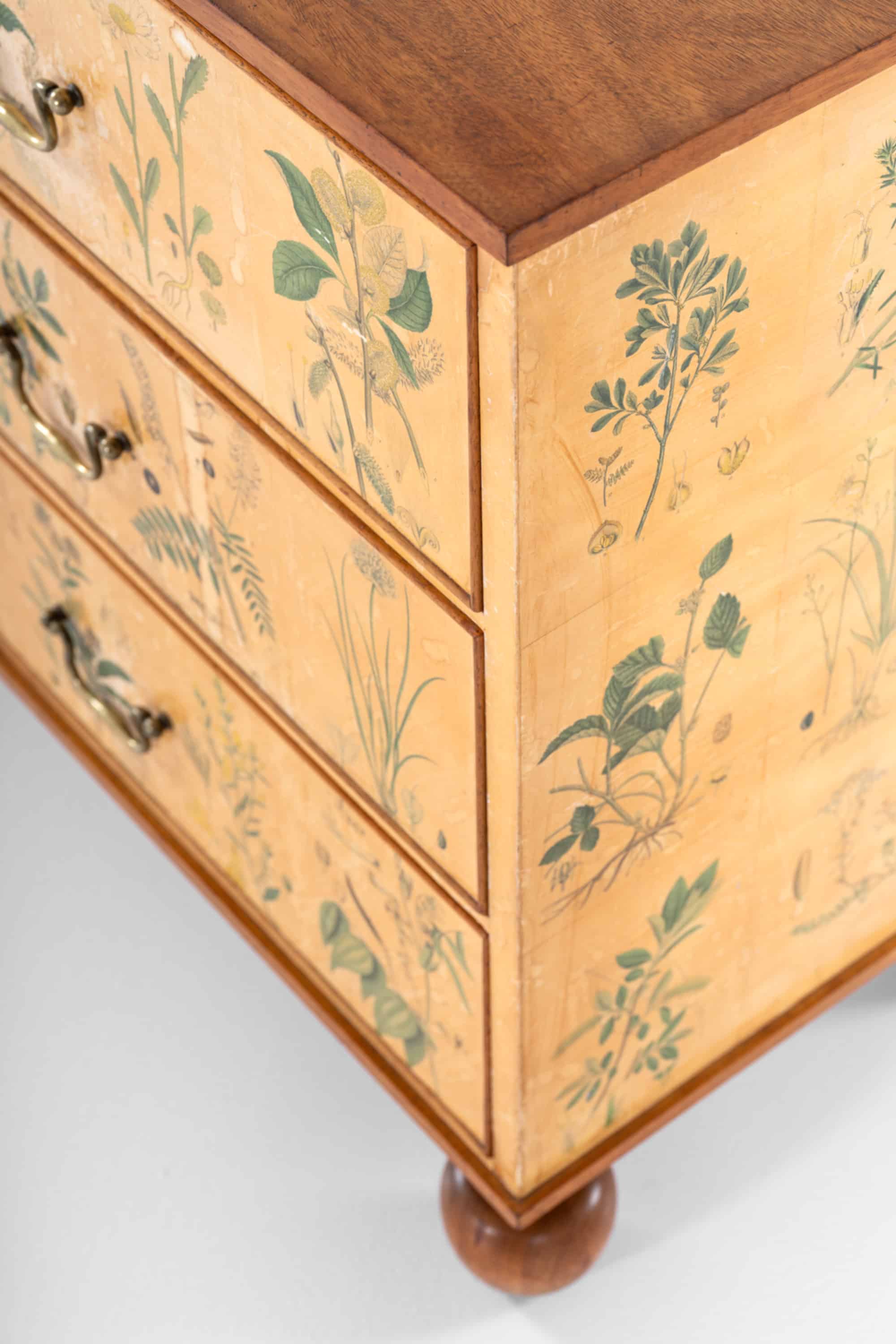
Very rare and early Flora bureau model 1050 designed by Josef Frank and produced by Svenskt Tenn in Sweden during the 1930s. This exceptional chest of drawers is one of the earliest and most iconic interpretations of the Flora series, representing the celebrated collaboration between Josef Frank and Estrid Ericson. Executed in mahogany with applied botanical paper panels, the piece embodies the poetic and intellectual decorative language that became central to Svenskt Tenn’s identity during the interwar period.
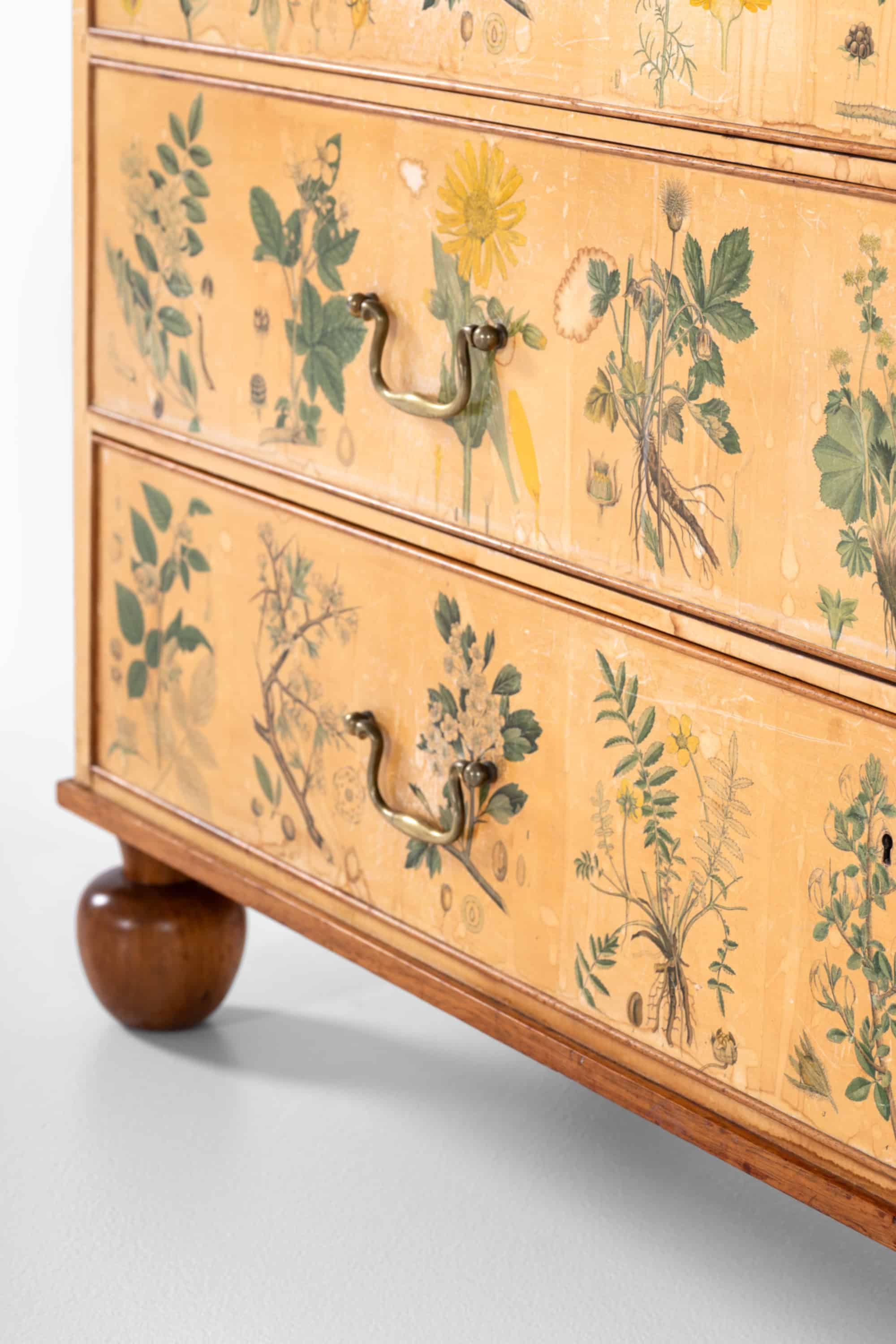
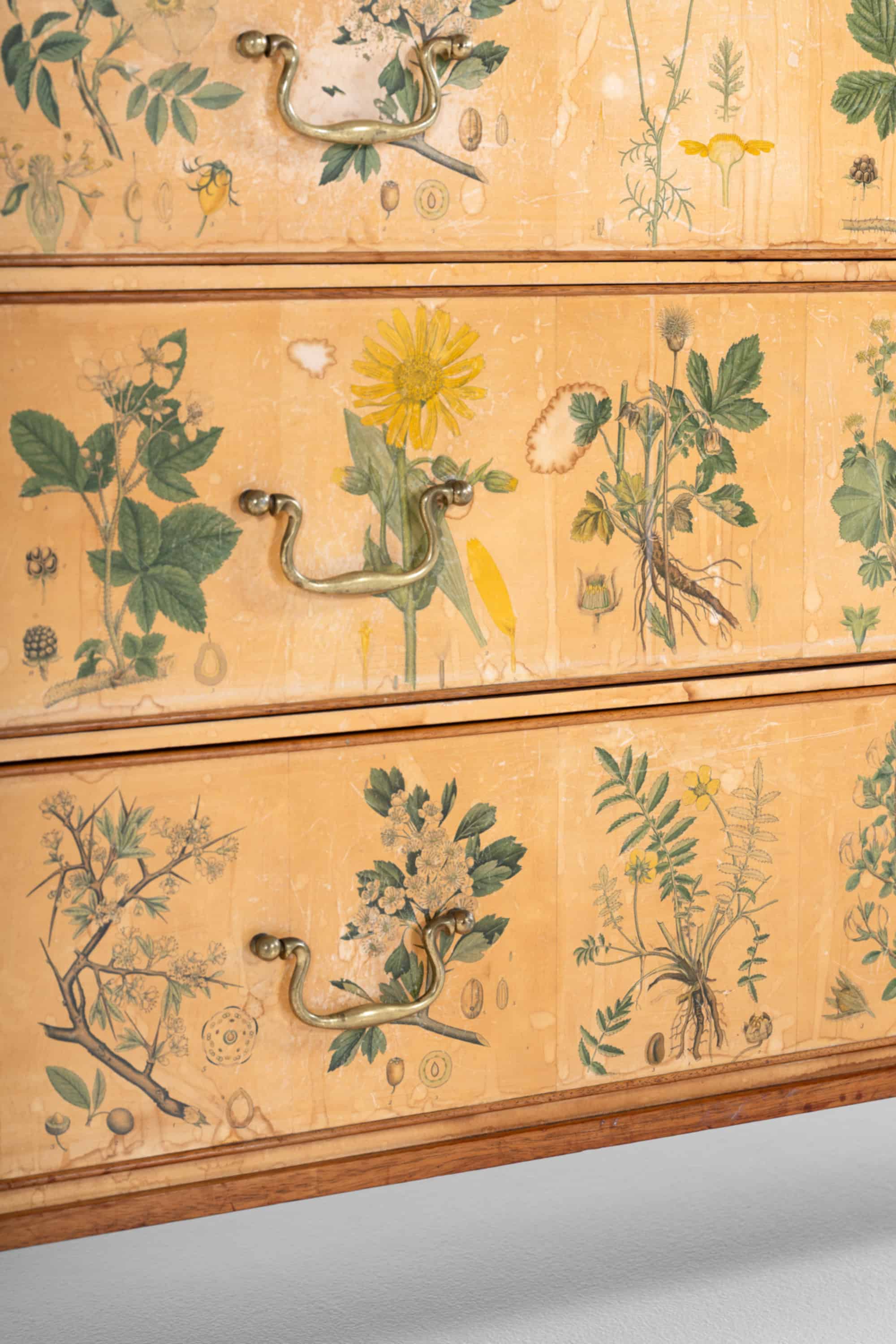
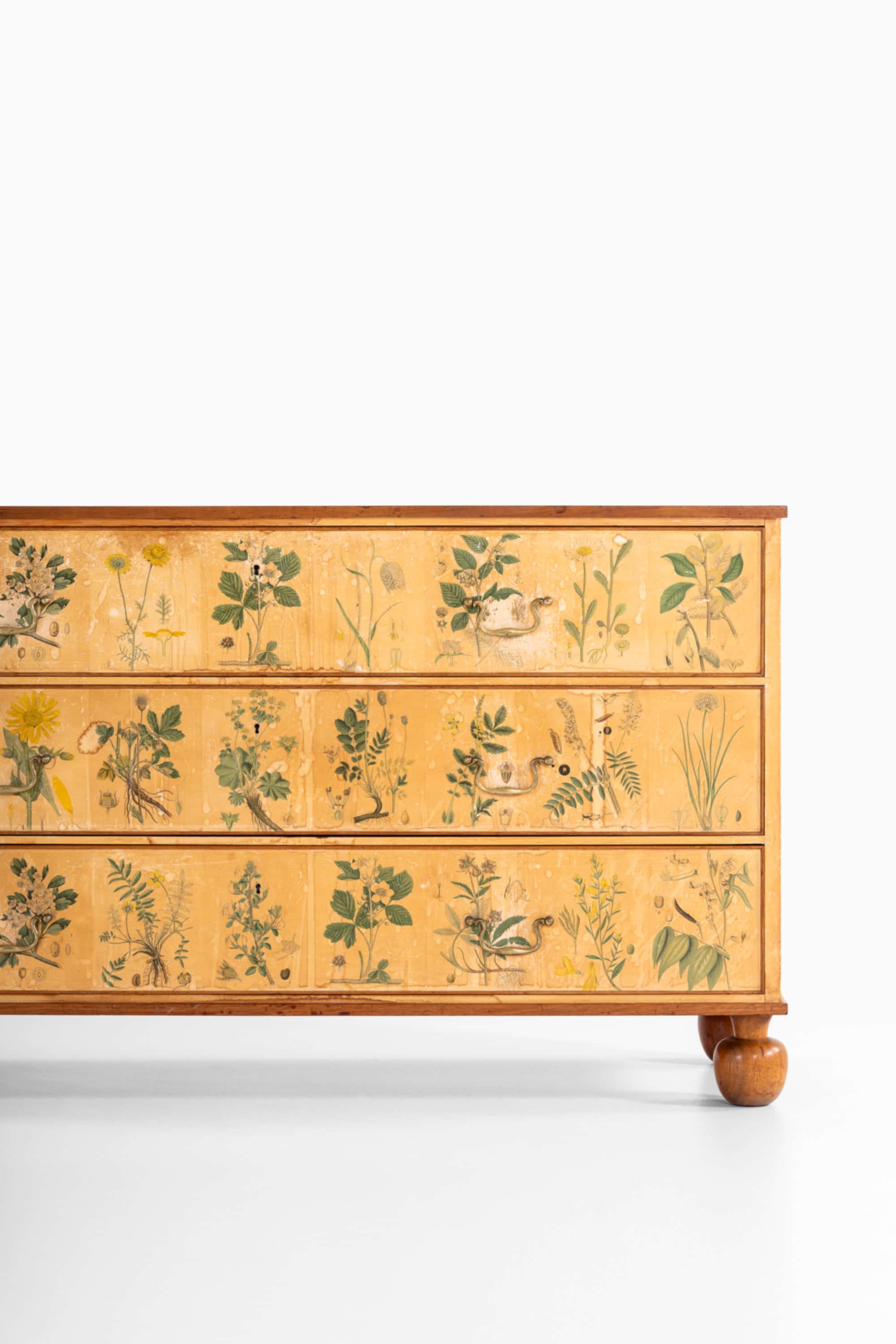
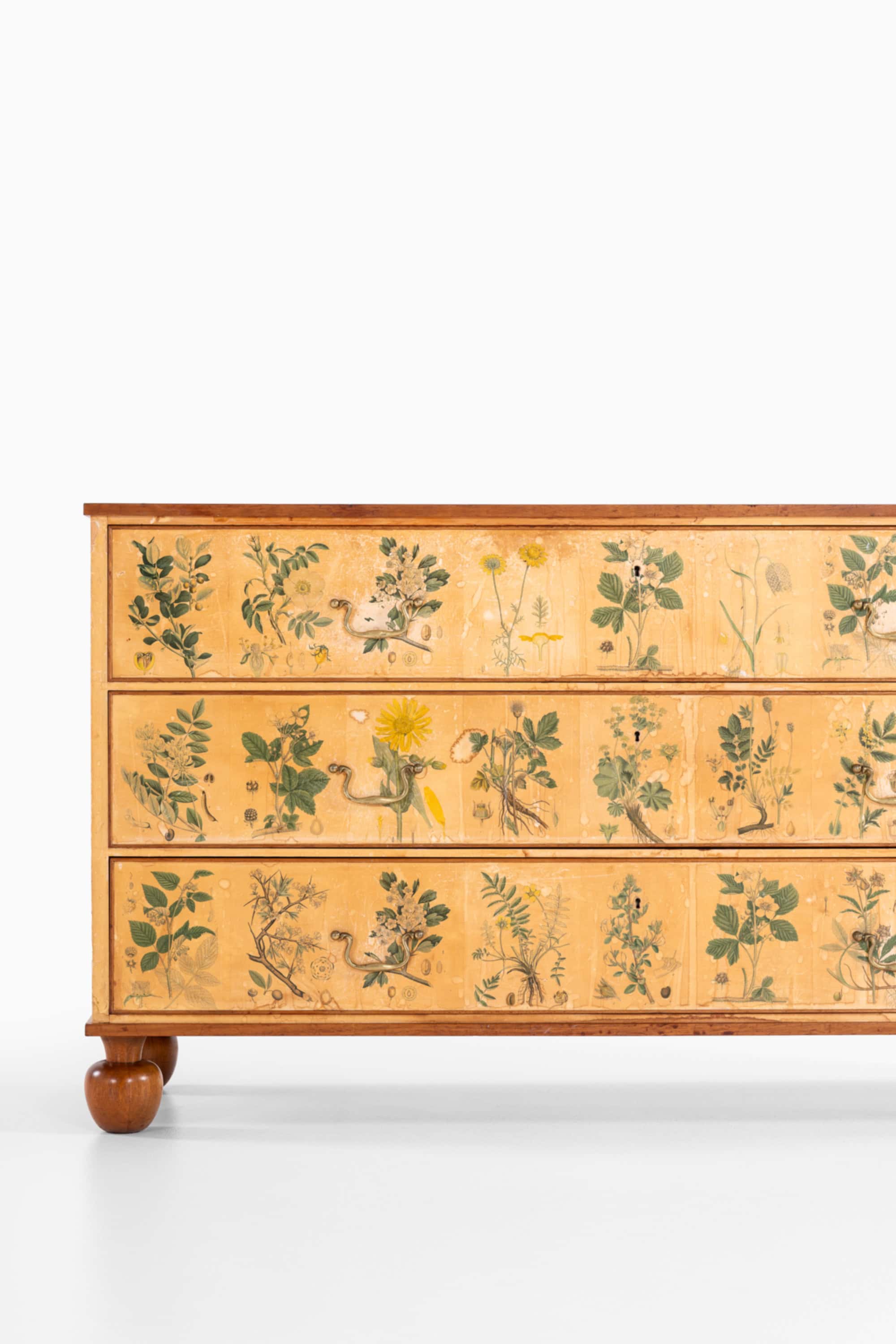
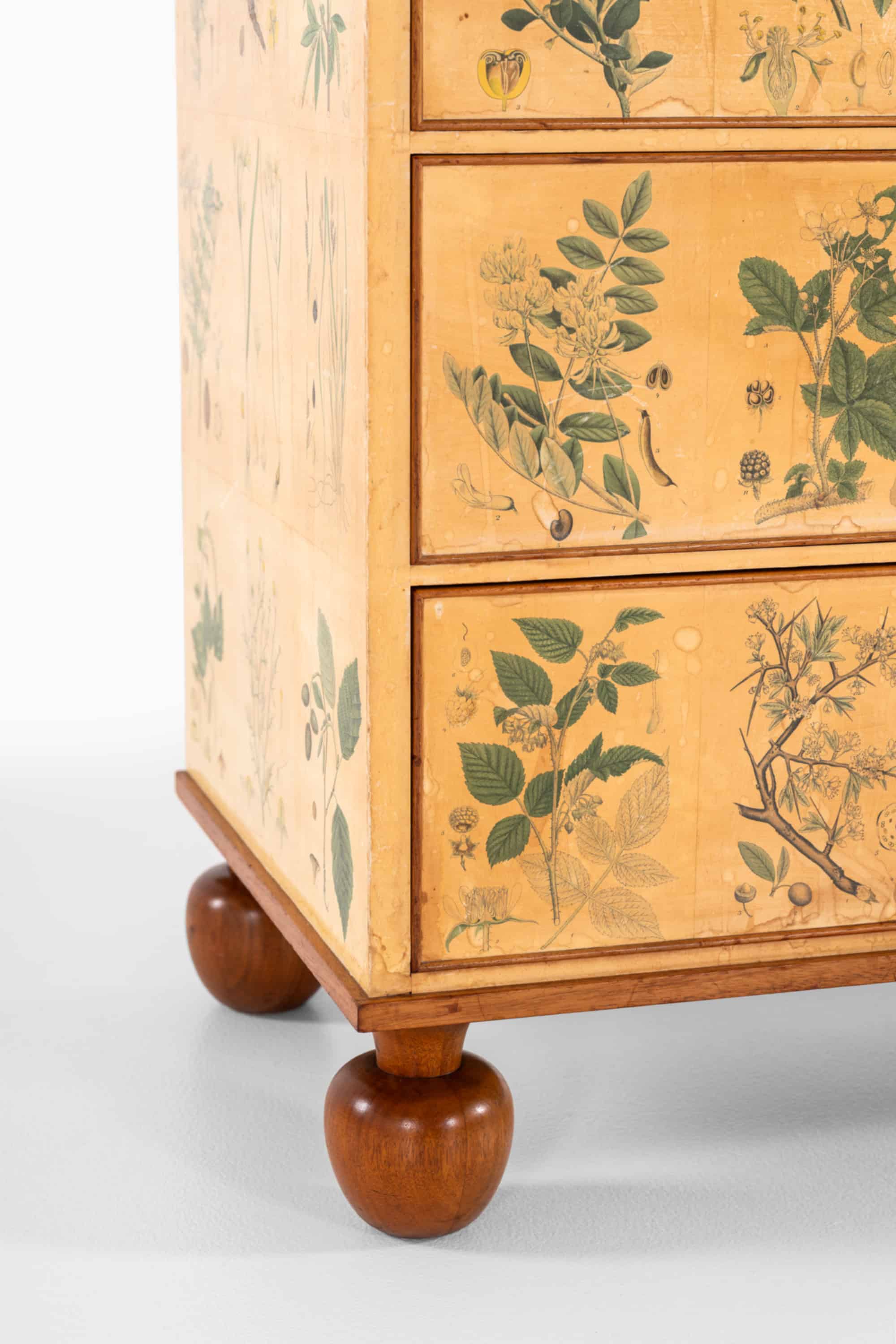
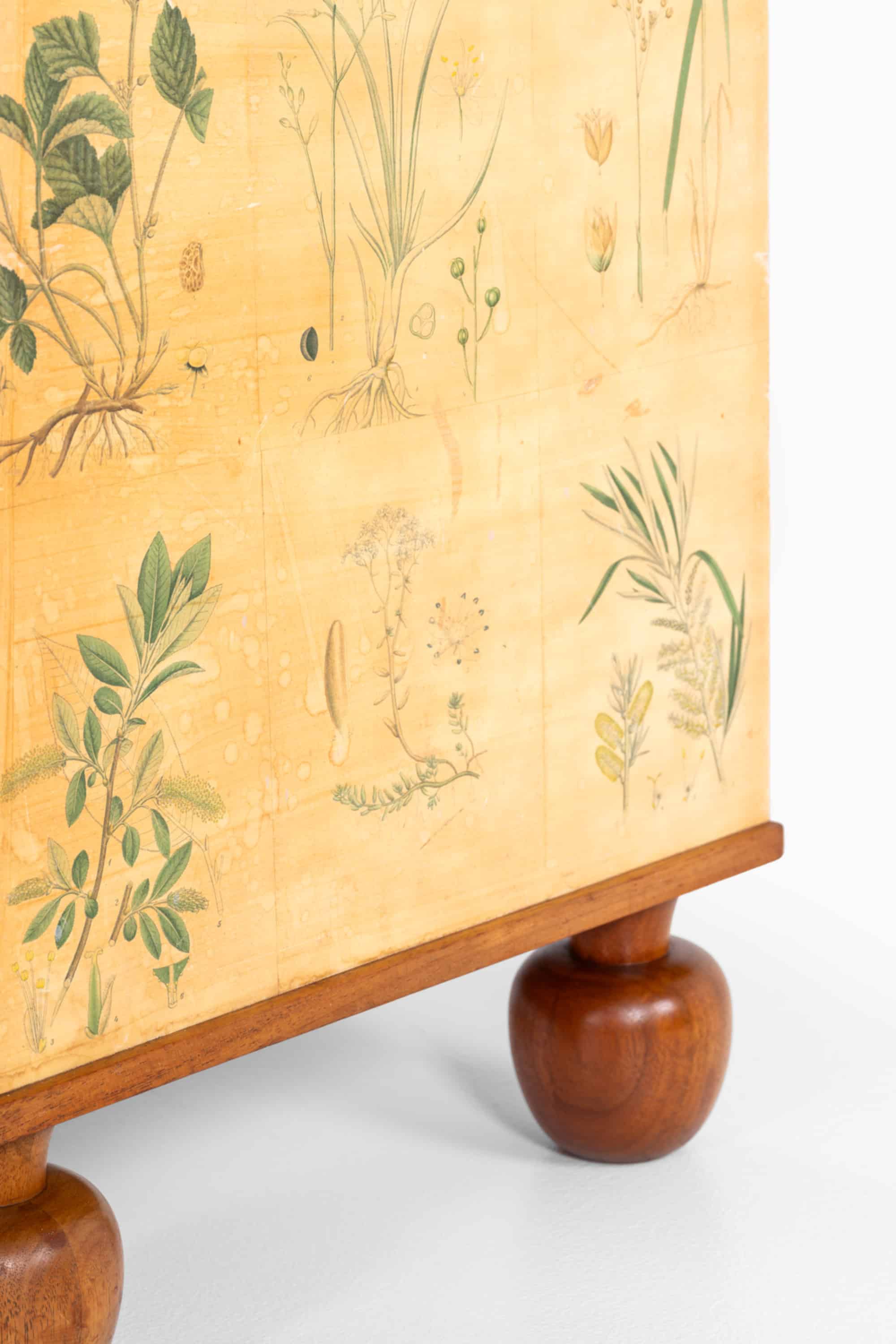
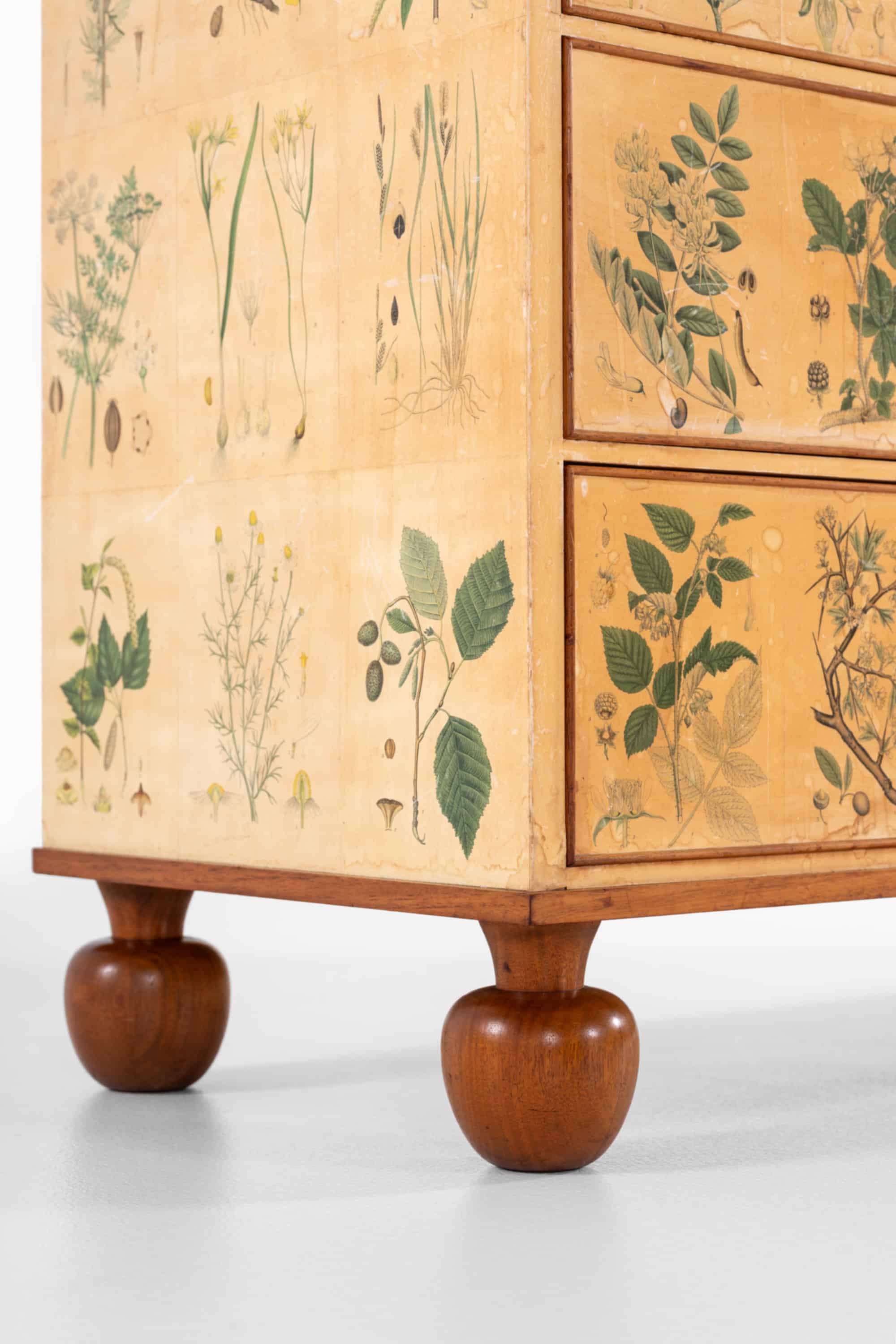
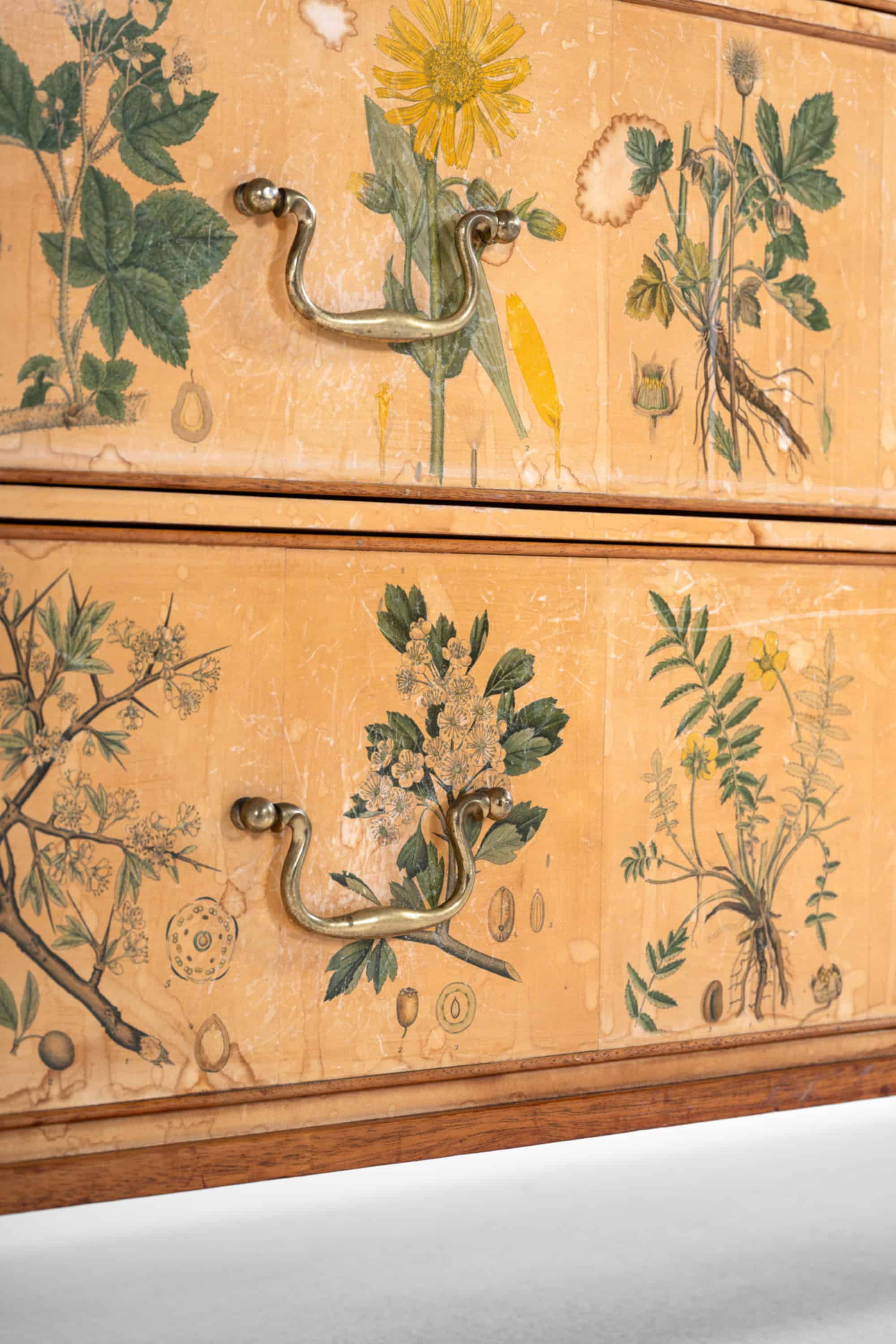
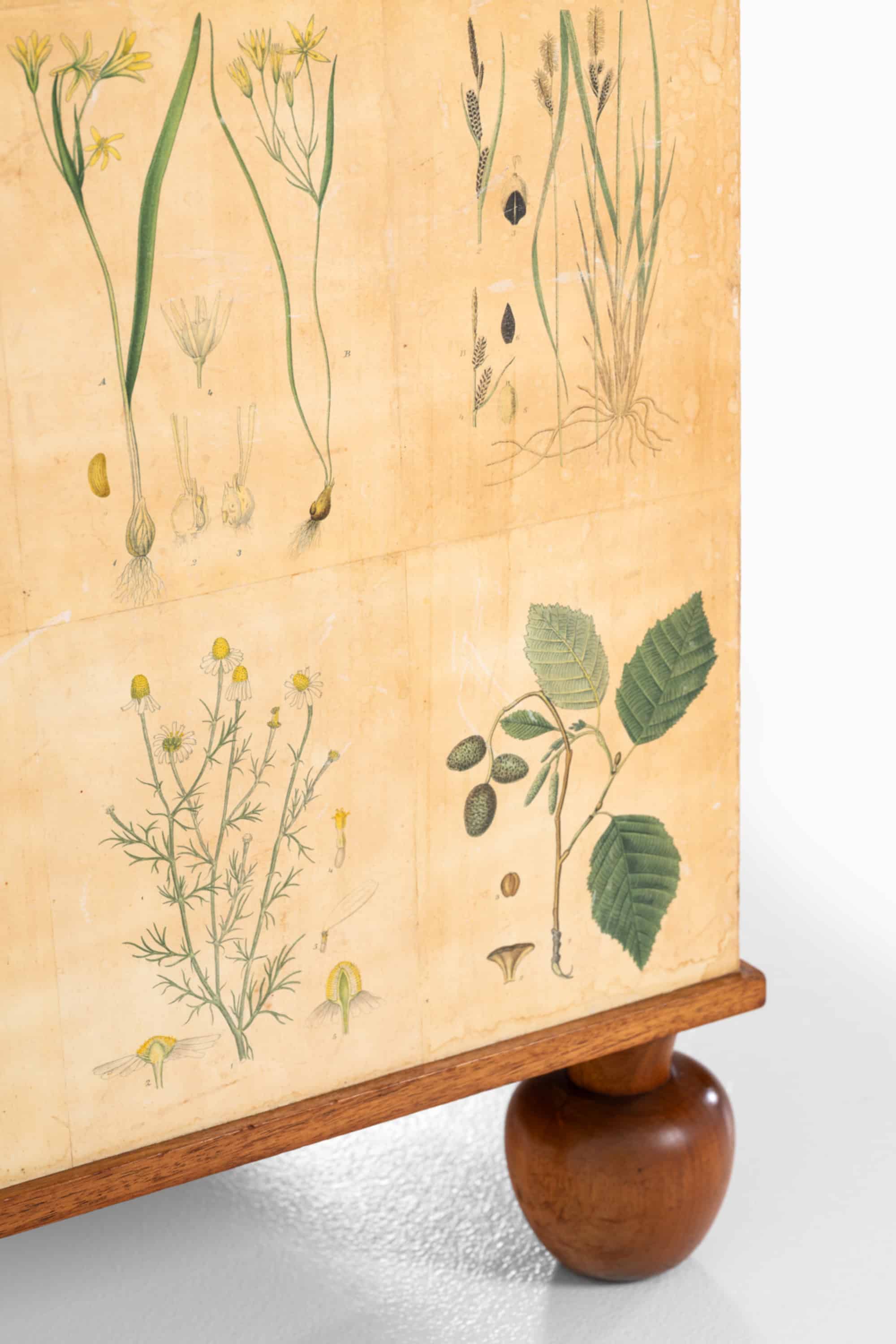
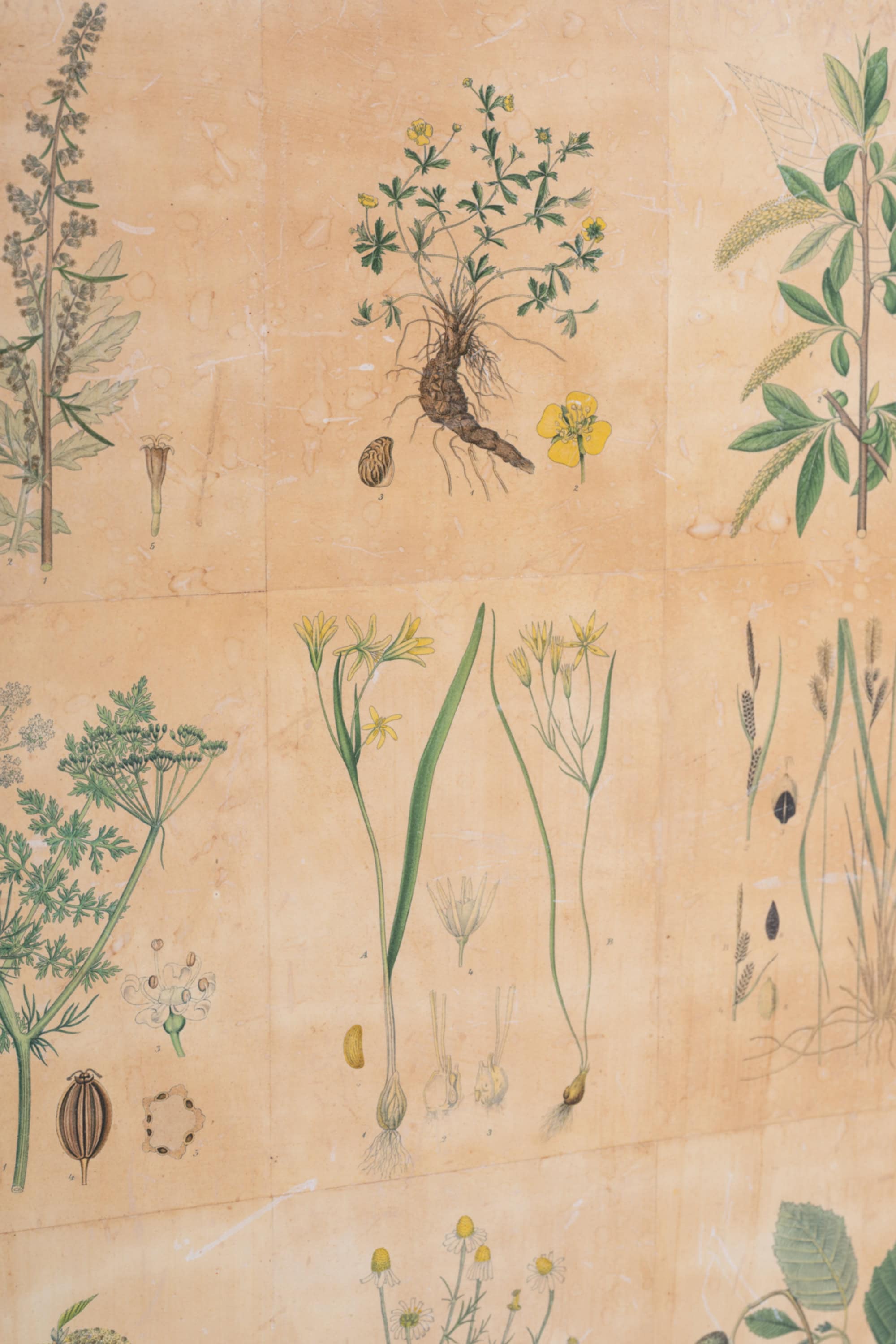
The bureau is decorated throughout with botanical illustrations derived from Carl Lindman’s Svensk Flora, arranged in carefully composed panels across the drawer fronts and sides. The warm honey-toned ground creates a vivid contrast against the green foliage and delicate yellow floral details, while the naturally aged paper surfaces have developed a richly nuanced patina over time. Frank’s architectural sensitivity is visible in the restrained geometry, the finely proportioned framing moldings around each botanical panel, and the sculptural turned ball feet with their pronounced neck detail. The elegant brass handles further enhance the organic rhythm of the floral compositions.
The Flora series originated from Estrid Ericson’s fascination with Carl Linnaeus and botanical illustration. Following a visit to Linné’s Hammarby in 1930, Ericson became inspired by Linnaeus’ use of botanical prints as interior decoration. Around the same period, Josef Frank experimented with lining cupboards in Vienna using printed textiles and floral materials. Their shared interest in combining scientific illustration with domestic modernism culminated in the Flora furniture series introduced during the late 1930s, of which this bureau is among the rarest and most sought-after examples.
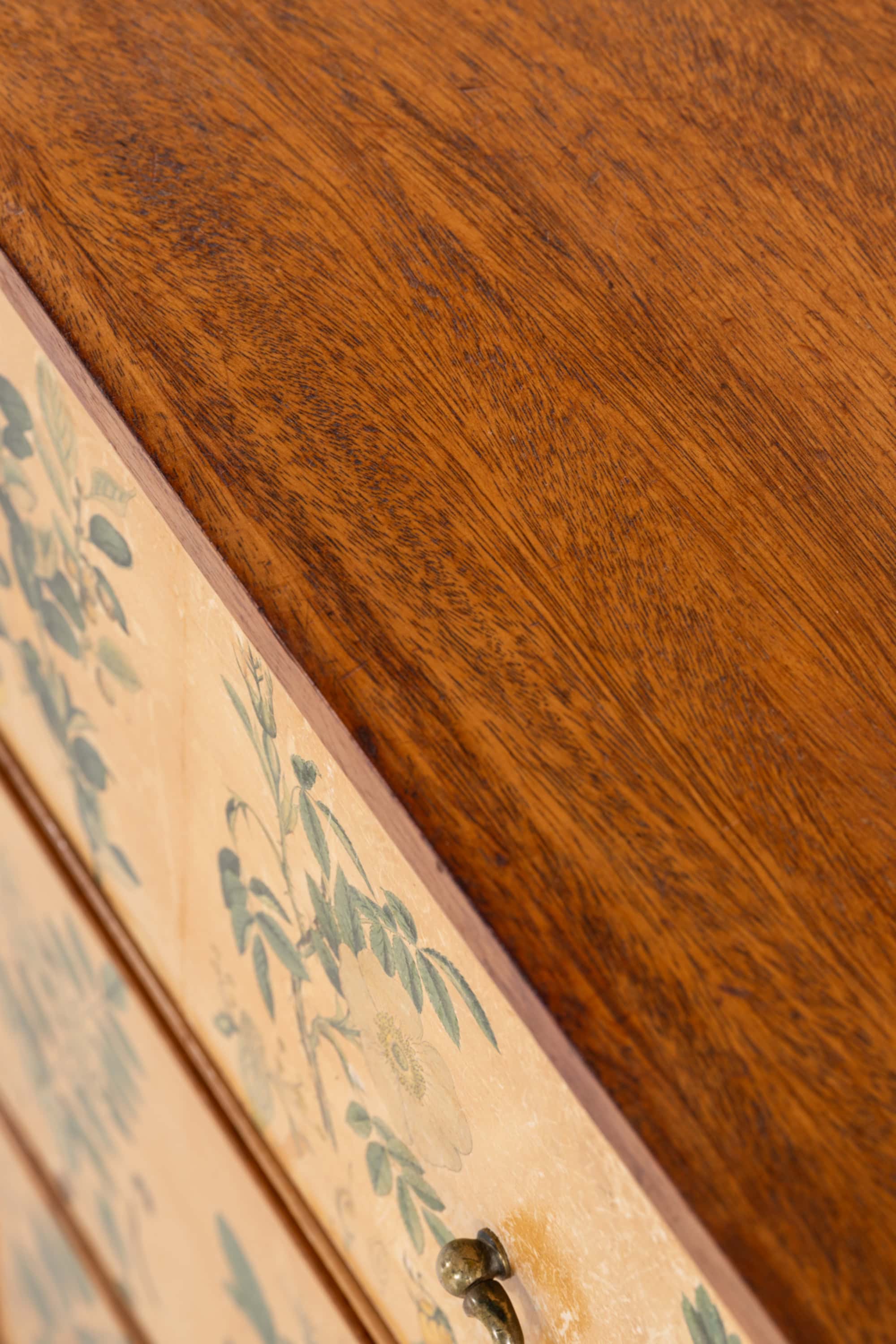
The cabinet features three generously proportioned drawers with dovetail construction and veneered mahogany top and framing. The sides are fully decorated with corresponding flora studies, creating a continuous visual expression from all angles. The surface displays age-appropriate wear, craquelure, discoloration, scratches, and minor losses to the paper consistent with nearly a century of use, contributing to the authentic character and historical depth of the piece.
An important and highly collectible example of early Svenskt Tenn production and Josef Frank’s enduring contribution to Scandinavian modernism.
Width: 132.5 cm / 52.2 in, Depth: 44 cm / 17.3 in, Height: 75.5 cm / 29.7 in
Good vintage condition with age-related wear and patina. Minor damages, scratches, staining, and losses to the paper surfaces. Overall structurally sound and well-preserved.
Literature
Monica Boman (ed.), Josef Frank interior design, Millesgården 1994, p. 32.
Kristina Wängberg-Eriksson and Jan Christer Eriksson, Josef Frank Furniture Designer, Carlssons Book Publishers, Stockholm 2014, K 65.
Dimensions (cm) | W: 132.5 / D: 44 / H: 75.5 |
| Producer | Svenskt Tenn |
| Decade | 1930s |
| Country | Sweden |
| Style | Scandinavian Modern |
| Material | Mahogany, Paper |
| Designed in | 1930s |
| Item Number | 250671 |
Josef Frank
Josef Frank (1885–1967) was an Austrian-born architect, furniture designer, and textile artist who became a central figure in Swedish modernism. He is best known for his vividly patterned textiles and distinctive approach to furniture and interi...
Read more