Frits Schlegel & Vilhelm Lauritzen table lamp
A rare adjustable table lamp designed in 1928 by the Danish architects Frits Schlegel and Vilhelm Lauritzen, and manufactured during the 1930s for Fritzsche’s Glashandel.
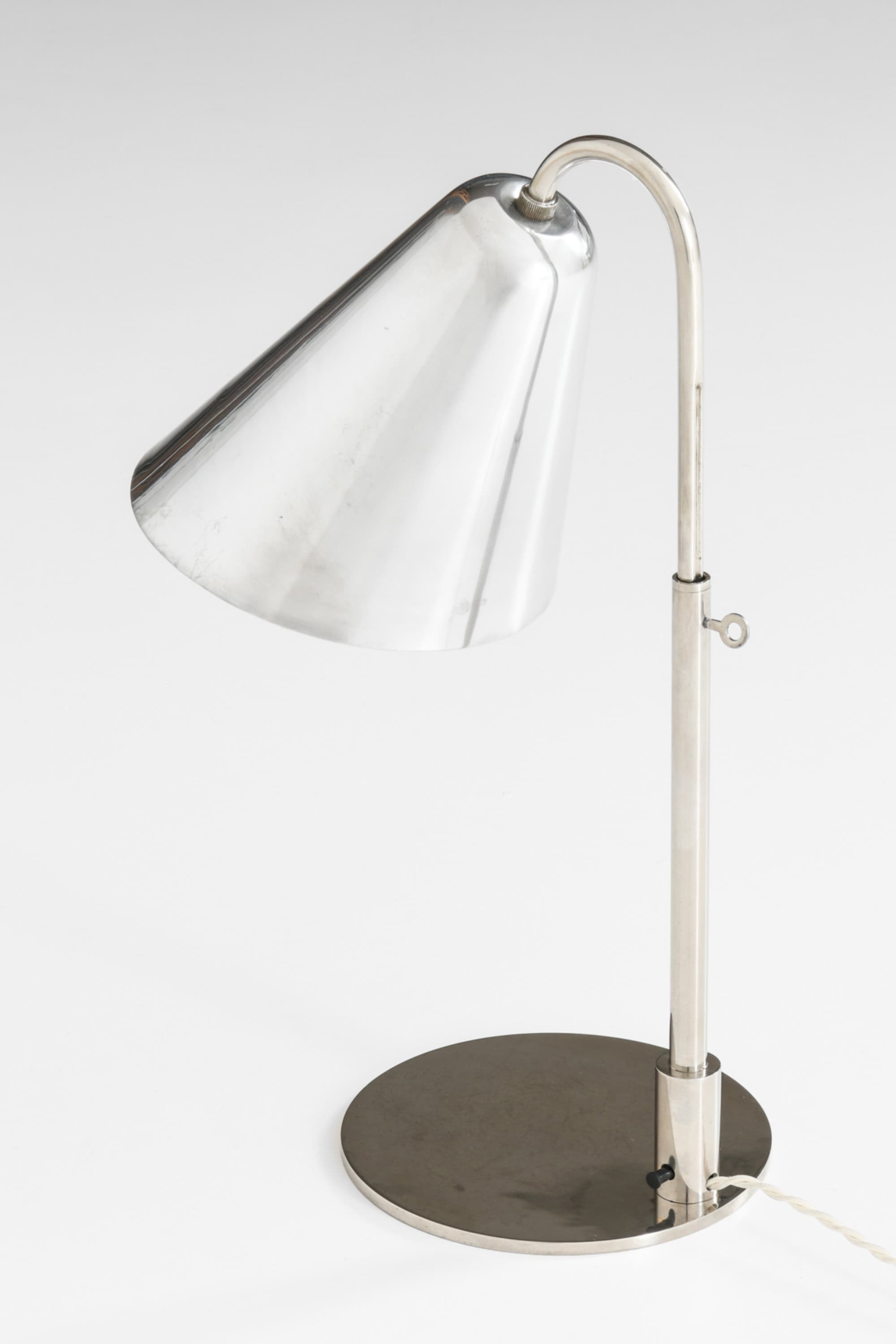
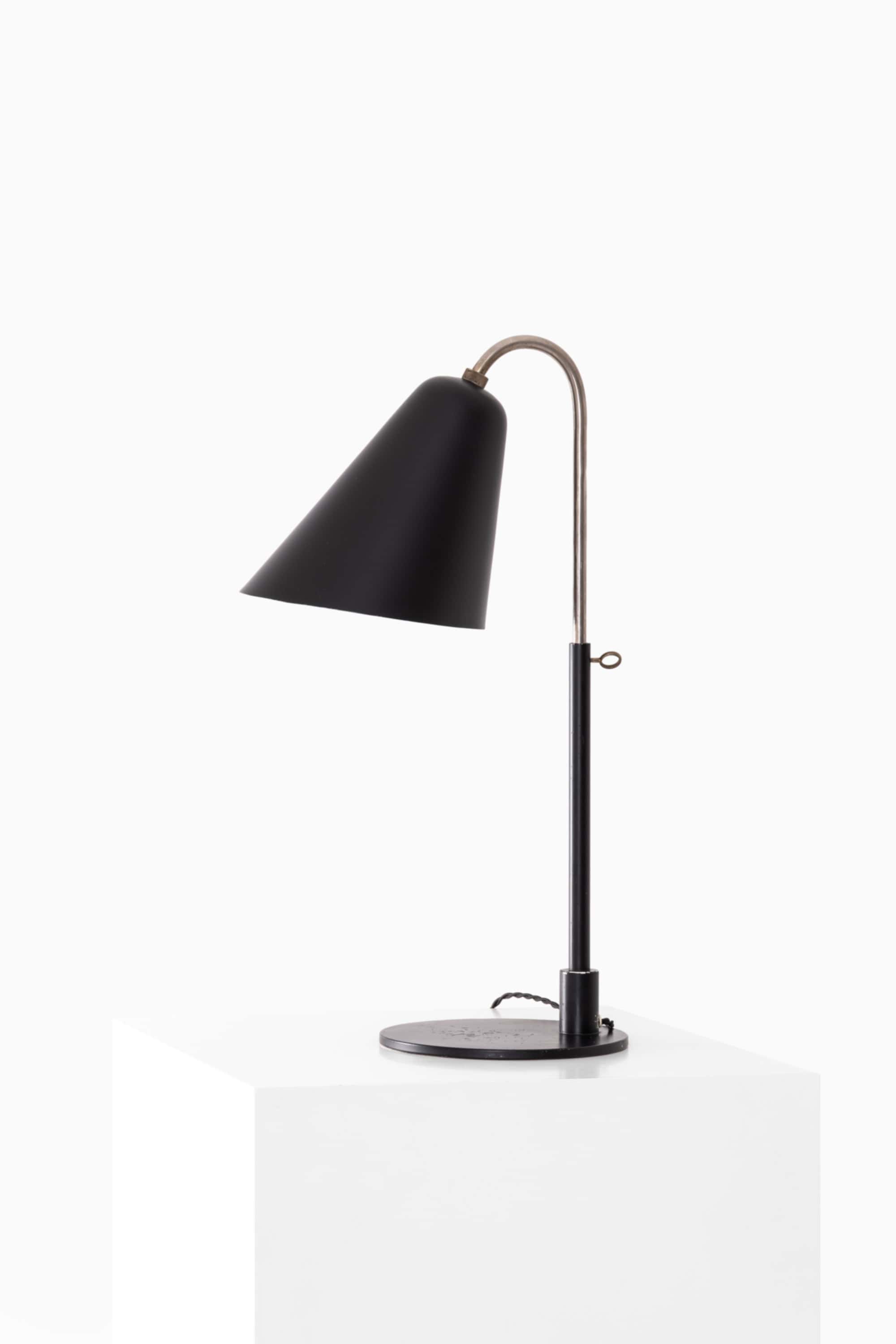
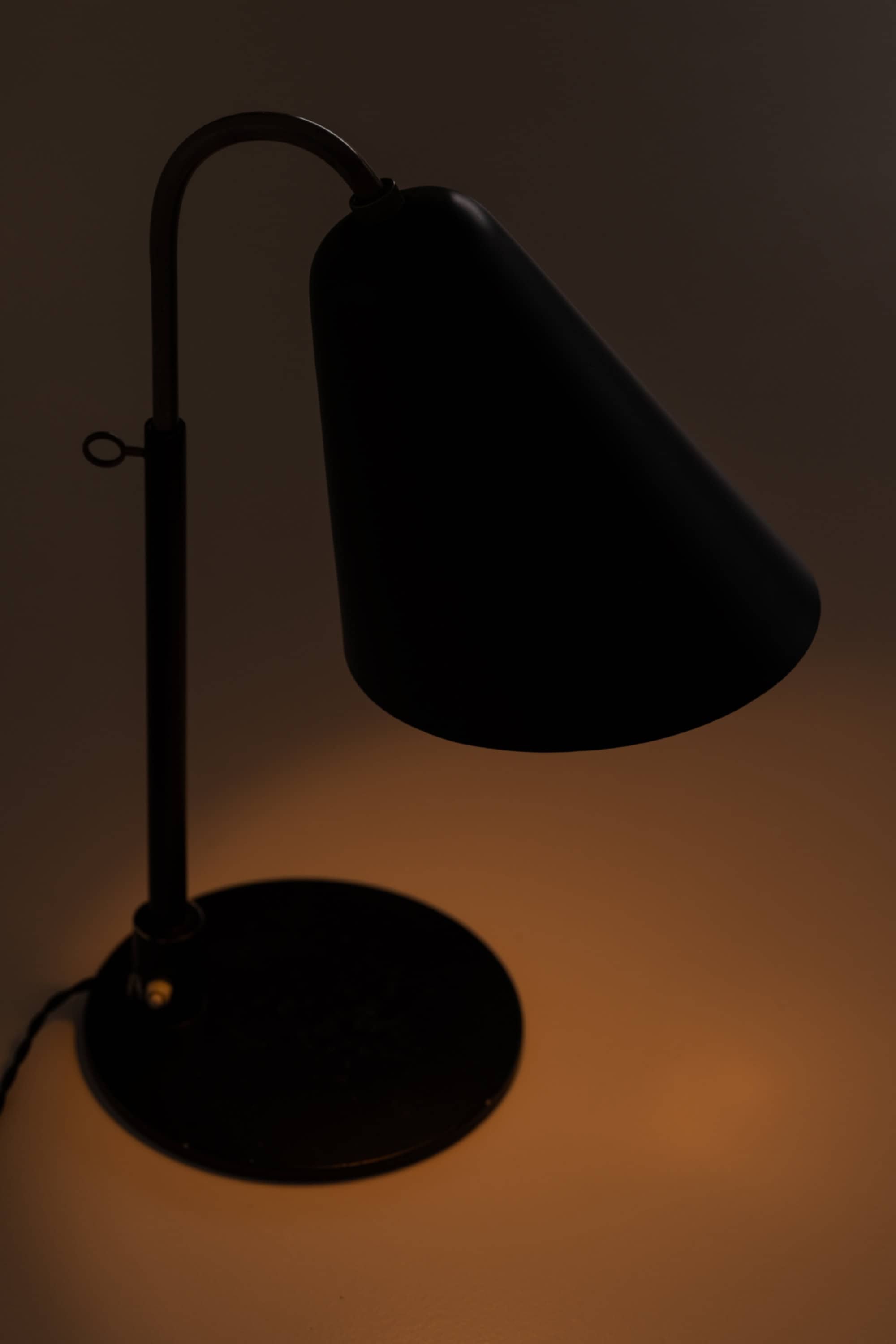
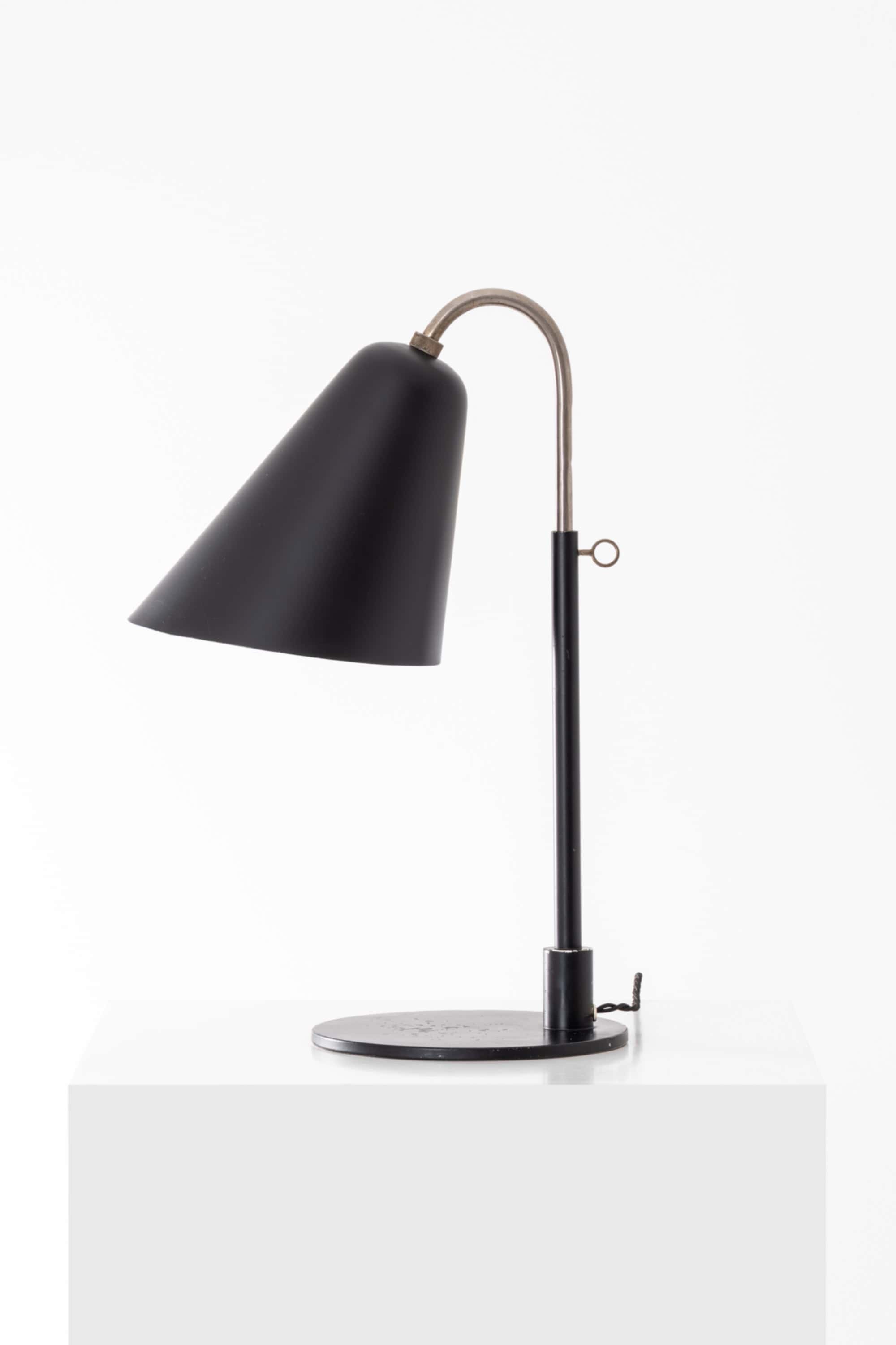
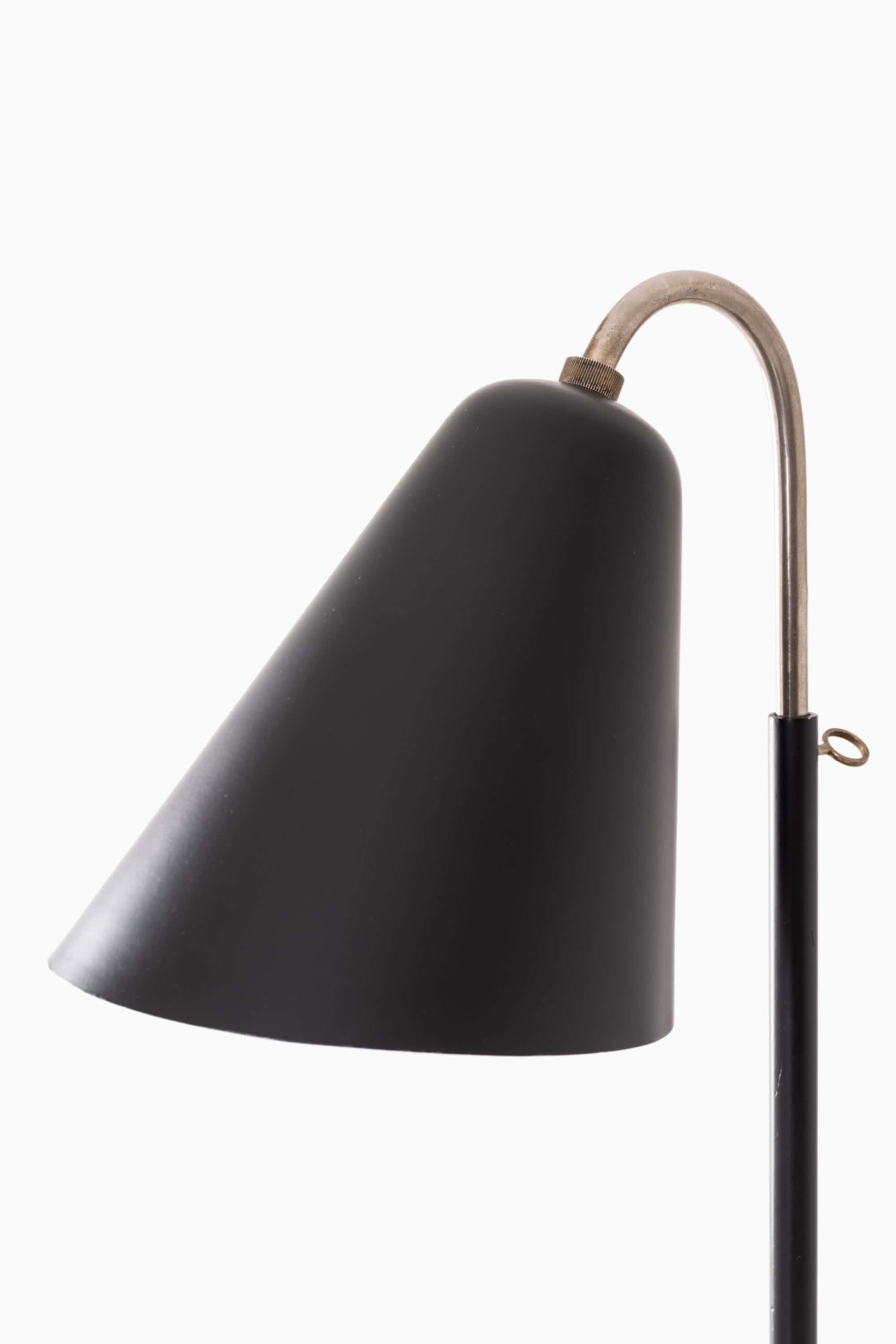
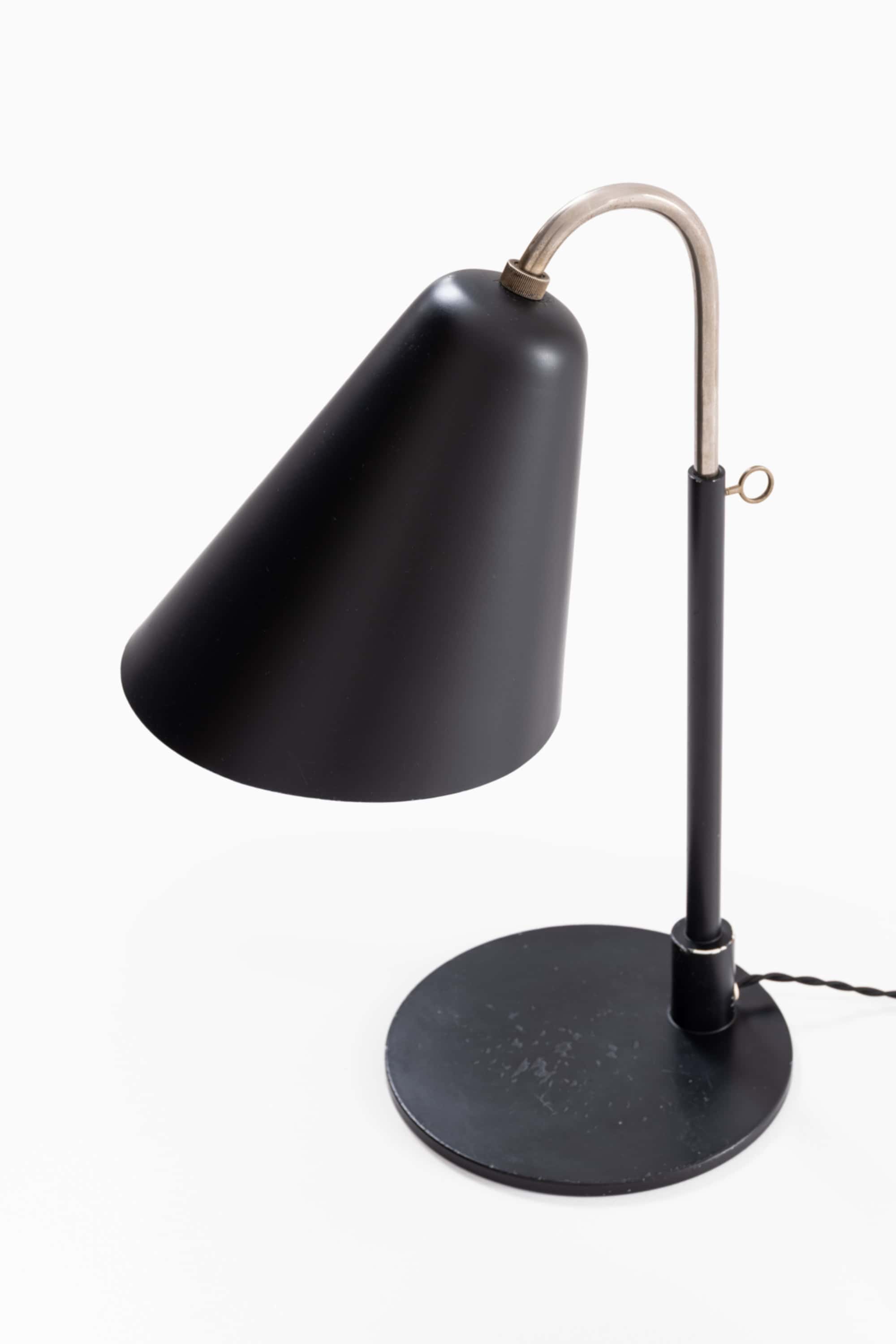
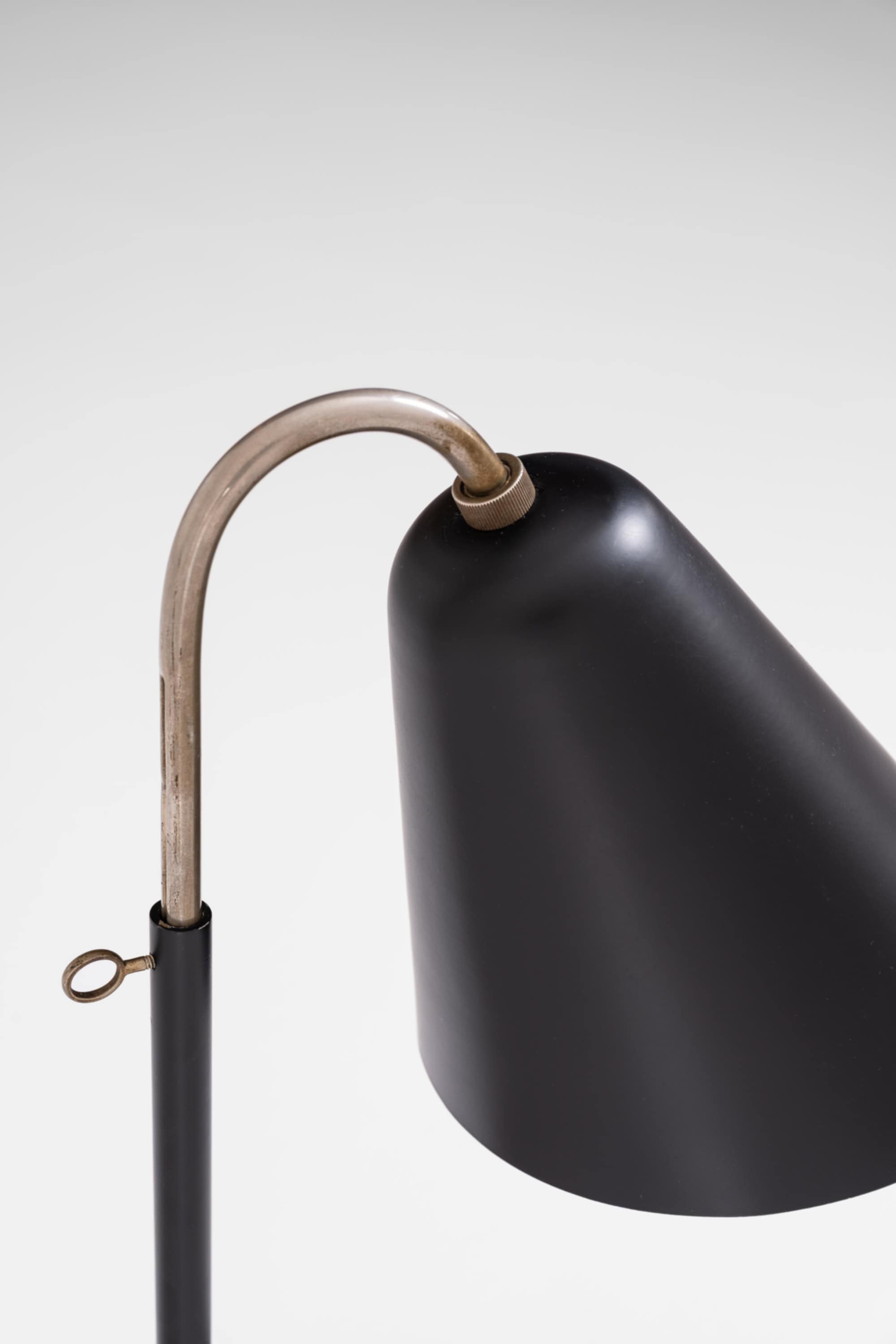
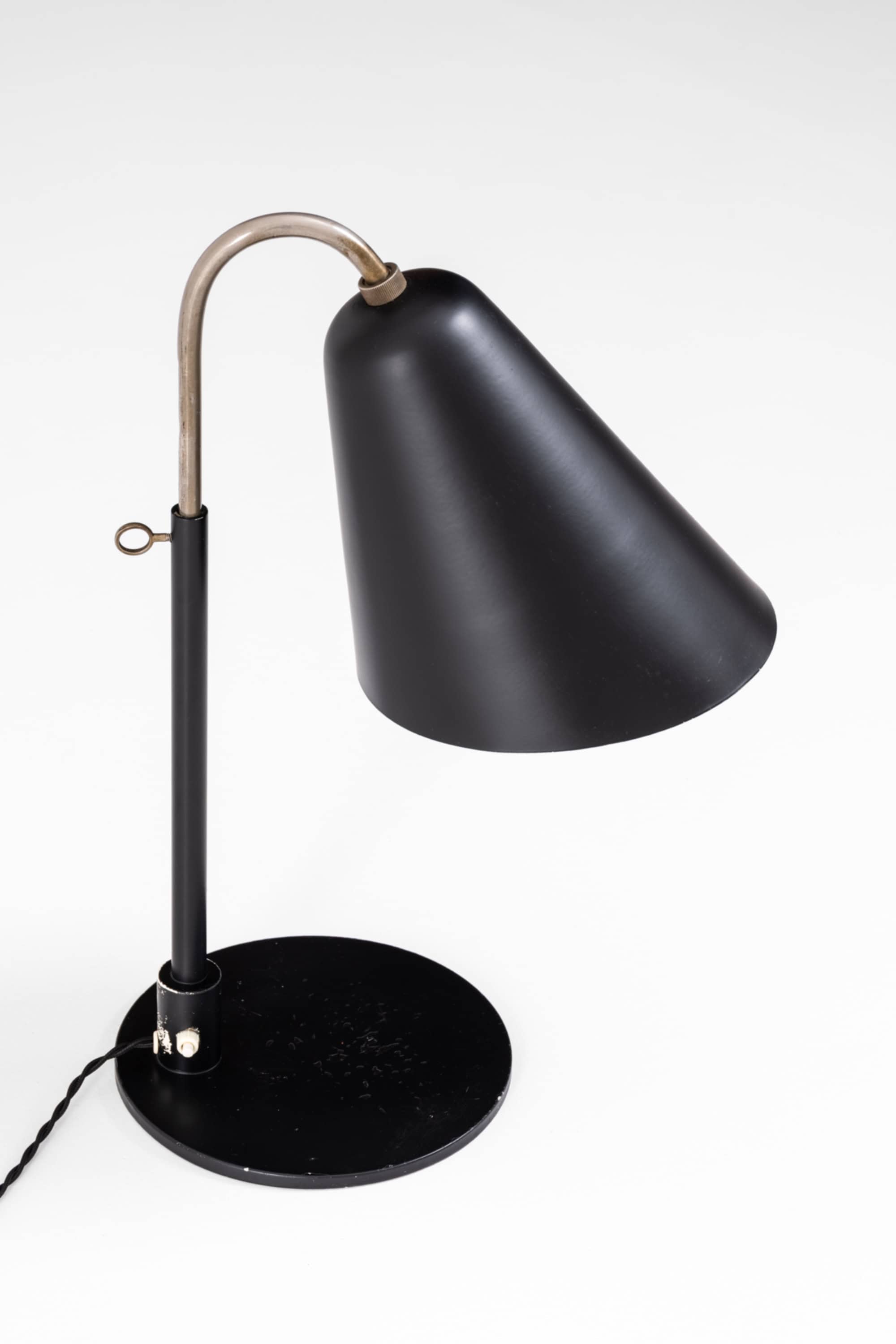
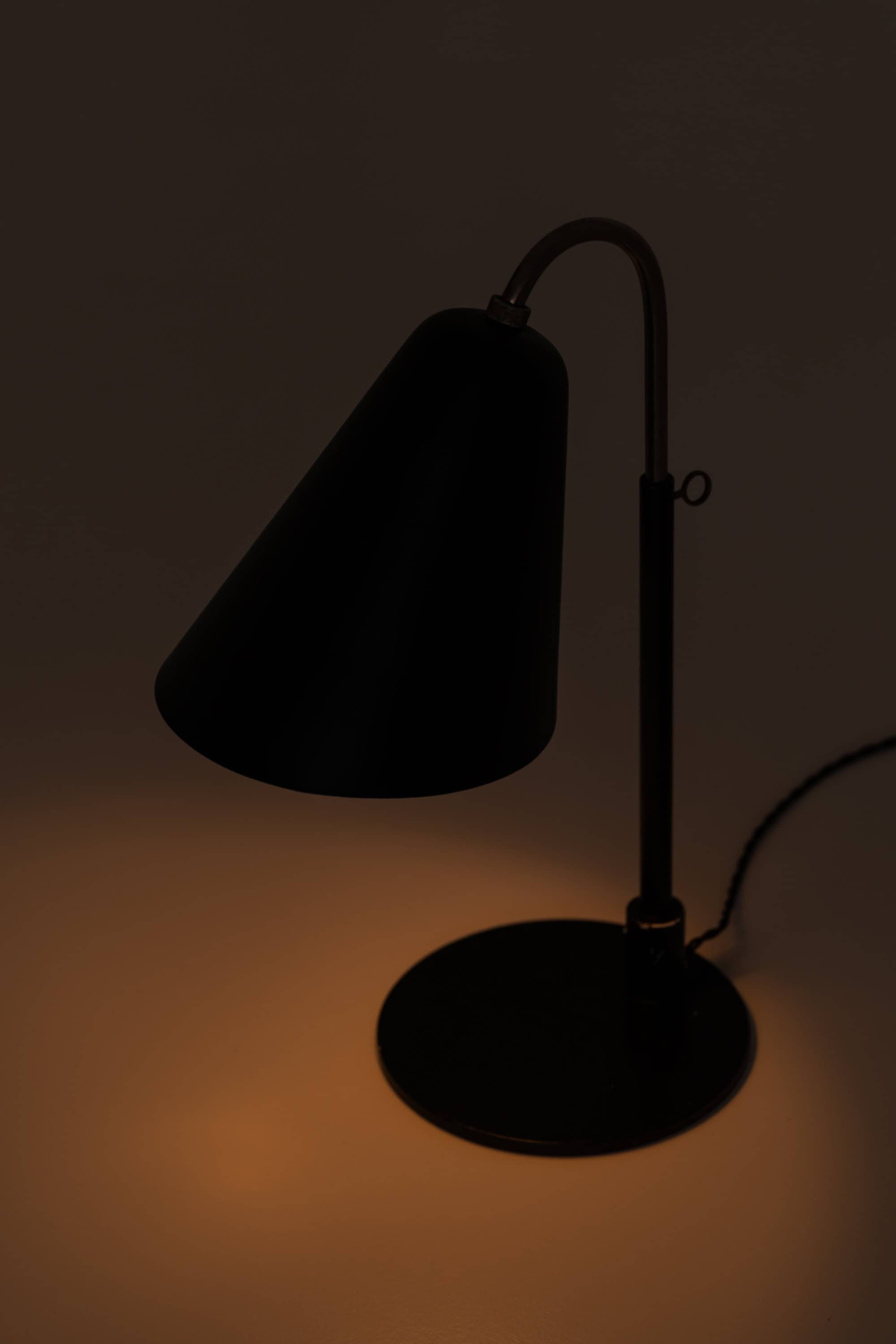
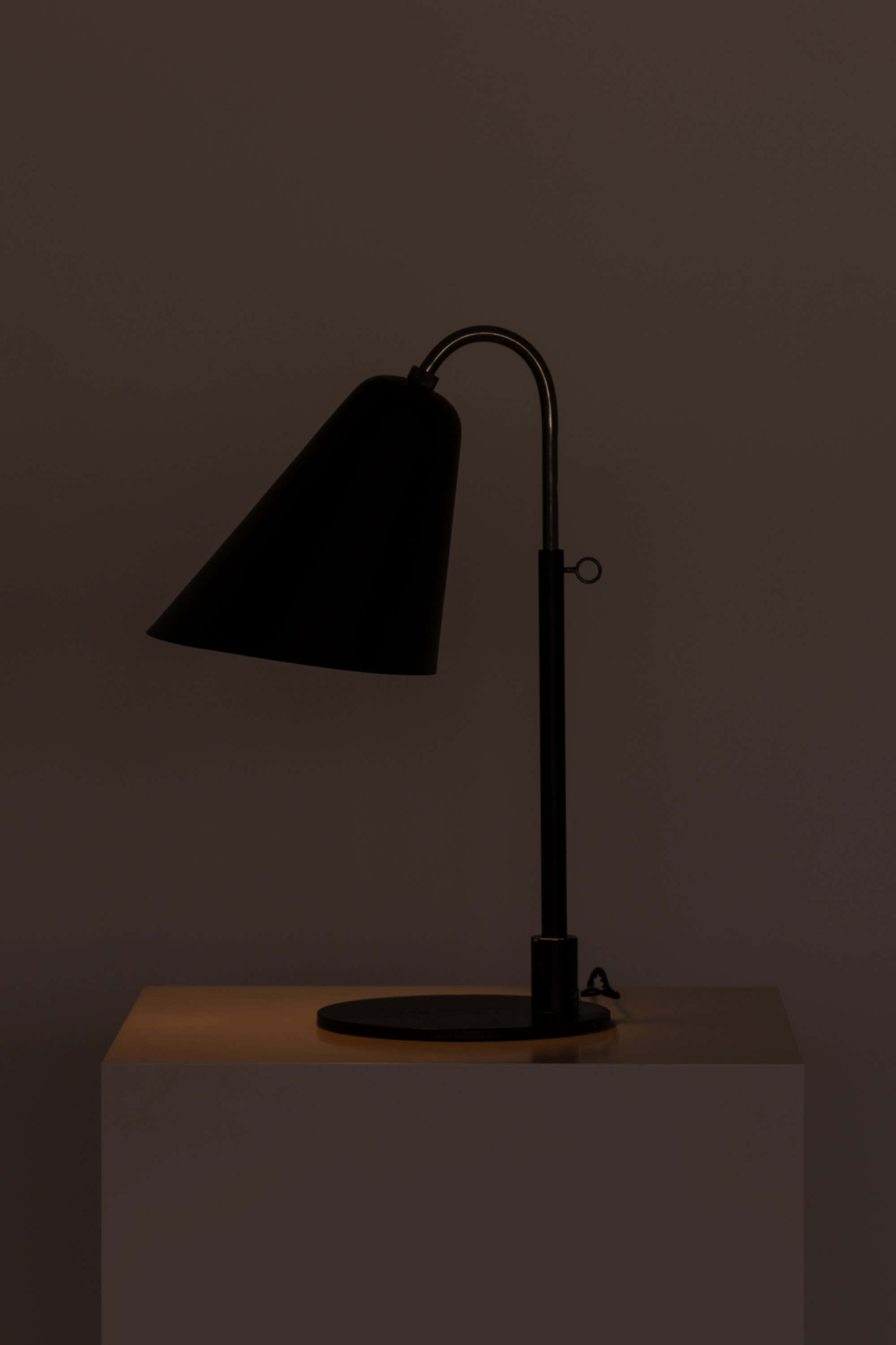
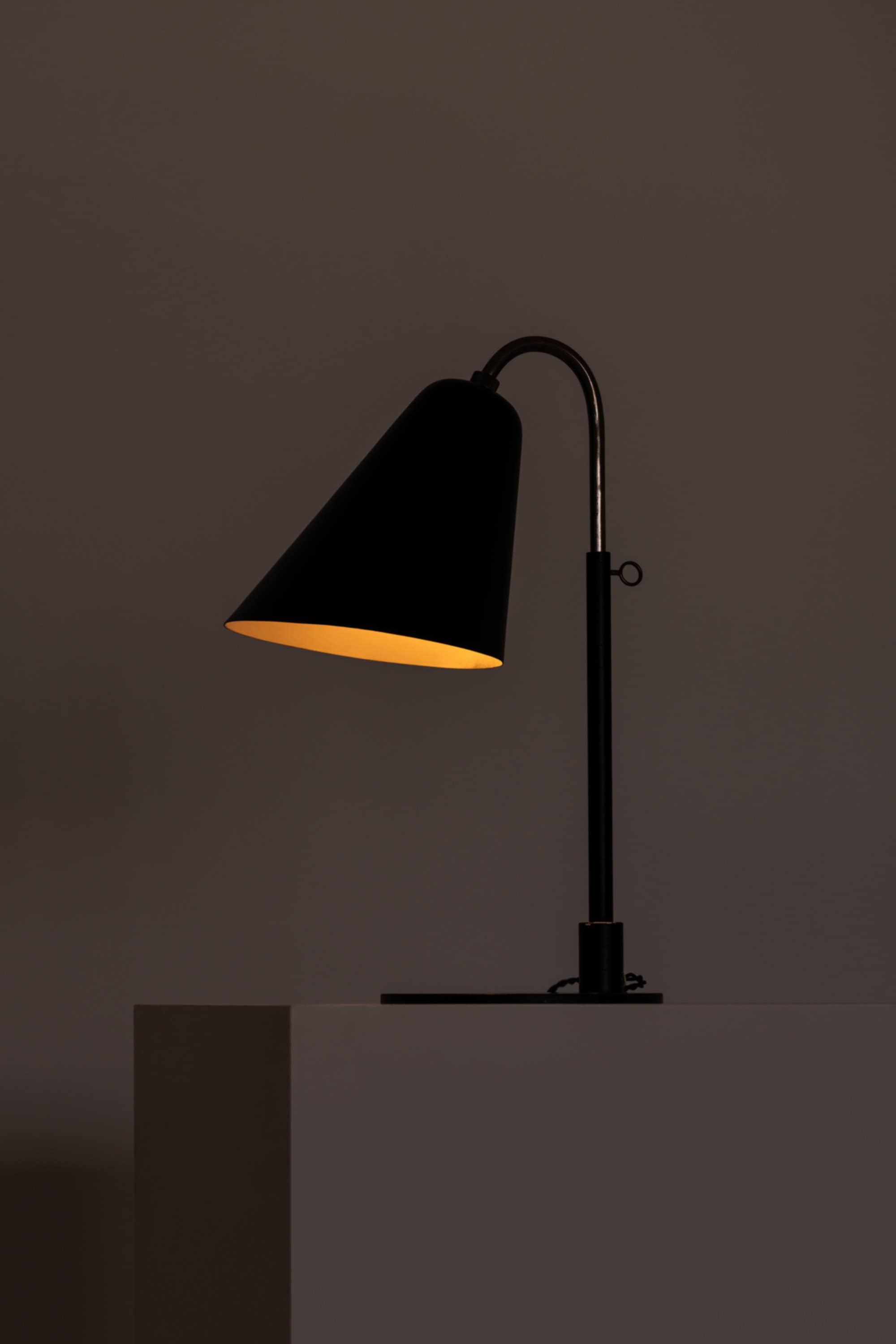
The lamp is constructed from nickel-plated and black-lacquered metal. Its composition is defined by a broad circular black base supporting a slender cylindrical stem, from which a nickel-plated tube rises and bends through a continuous arch towards the shade. A small ring-shaped screw at the side of the stem allows the height to be adjusted. The large asymmetrical cone-shaped shade is finished in black externally and white internally, concentrating and reflecting the light downwards onto the working surface.
The contrast between the restrained black surfaces and the aged nickel-plated metal gives the lamp a distinctly architectural character. Rather than concealing its construction, the design makes the stem, adjustment mechanism, curved support and shade into clearly legible individual elements. The simple geometry and absence of applied decoration are characteristic of the functionalist ideas emerging in Danish architecture and design around the end of the 1920s.
Frits Schlegel and Vilhelm Lauritzen were both important figures in the development of Danish modern architecture. Their work was closely associated with the transition away from historical styles towards a more functional approach in which construction, materials and purpose determined the appearance of an object. Lauritzen would become one of Denmark’s leading functionalist architects, responsible for major projects including Daells Varehus, Radiohuset and the first terminal at Copenhagen Airport. Alongside architecture, he designed furniture, fittings and lighting as integral components of his interiors.
Schlegel similarly worked at the intersection of architecture, furniture and applied design. The collaboration represented by this lamp predates many of the objects now associated with post-war Danish modernism and demonstrates how ideas of functionalism were already being translated into domestic objects during the late 1920s. The design is documented in period and later literature concerning Danish furniture and Frits Schlegel, including Sigurd Schultz’s discussion of Danish furniture craftsmanship in Nyt Tidsskrift for Kunstindustri from 1929 and Vibeke Andersson Møller’s monograph Arkitekten Frits Schlegel.
This example was manufactured for Fritzsche’s Glashandel during the 1930s. Surviving examples of the model are uncommon, and documented versions show variations in dimensions and finish. An example with the same nickel-plated and black-lacquered construction and white interior was likewise catalogued as a 1930s production for Fritzsche’s Glashandel.
The lamp remains in good vintage condition with visible traces of its age and use. The black lacquer displays scattered marks, scratches and surface wear, particularly on the circular base, while the nickel-plated components have developed oxidation, discoloration and an uneven natural patina. These signs of use are consistent with the lamp’s age and contribute to the preserved historical character of the piece rather than giving it the appearance of a newly refinished object.
The adjustable construction allows the overall height to vary from approximately 46 to 63 cm (18.1 to 24.8 in). The lamp measures approximately 21 cm (8.3 in) in width and 35 cm (13.8 in) in depth. Its combination of an adjustable working light, strongly directional conical shade and economical geometric construction places it firmly within early Danish functionalism and makes it an unusually early example of the principles that would later become central to Scandinavian modern lighting design.
Dimensions (cm) | W: 21 / D: 35 / H: 46 Highest: H: 63 |
| Producer | Fritzsche Glashandel |
| Color | Black |
| Decade | 1930s |
| Country | Denmark |
| Style | Danish modern, Scandinavian Modern |
| Material | Lacquer, Nickel plated metal |
| Designed in | 1928 |
| Item Number | 250757 |
Frits Schlegel
Frits Schlegel (1896–1965) was a Danish Functionalist architect and designer, active during a formative period in the development of modern architecture in Denmark. Working in the early to mid-20th century, he played a key role in the transition...
Read moreVilhelm Lauritzen
Vilhelm Lauritzen (1894–1984) was a Danish architect and designer and a leading figure in the development of Danish functionalism. His work is characterised by clarity of structure, refined proportions, and a strong sensitivity to light, materia...
Read more