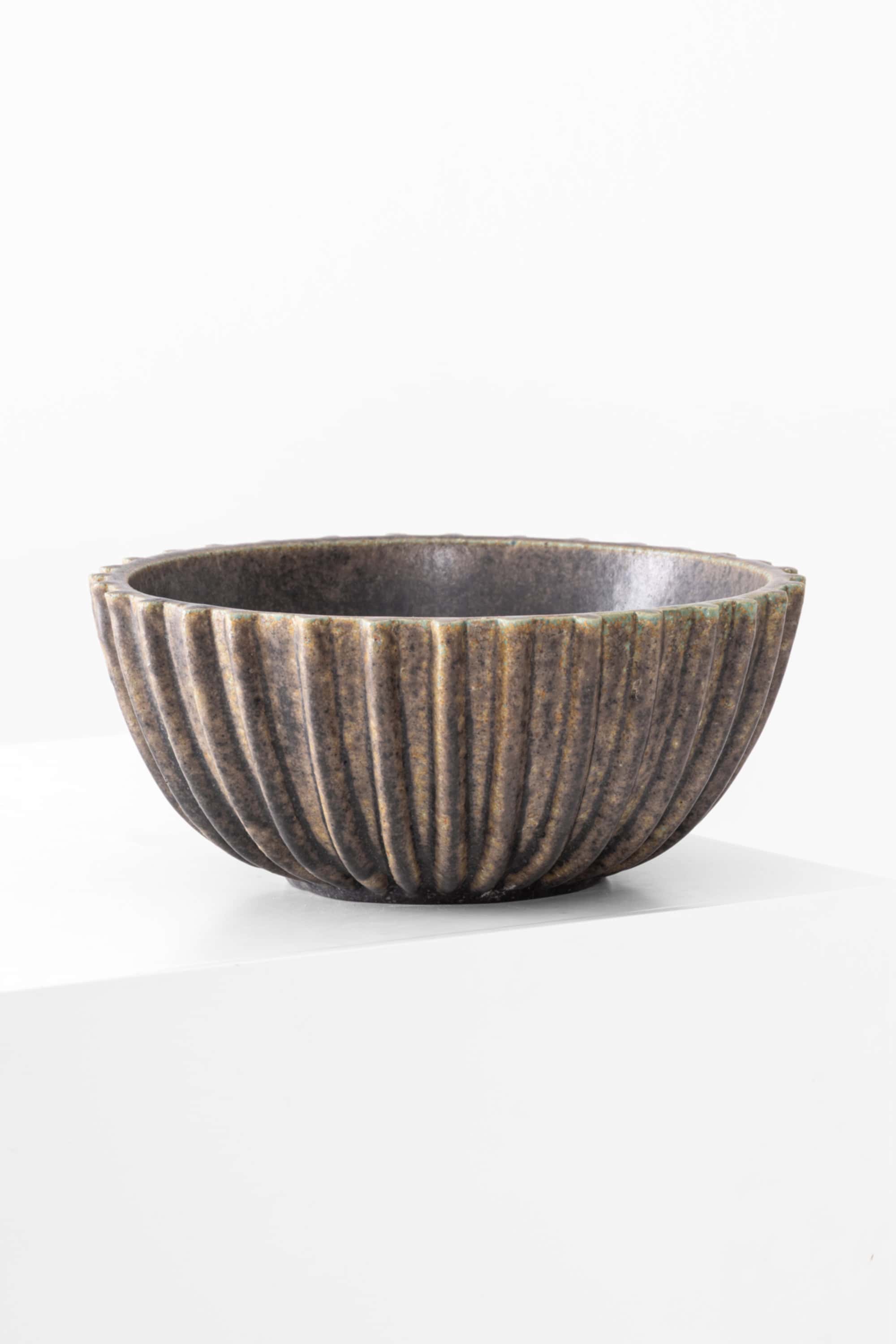
Arne Bang
Arne Bang (1901–1983) was a Danish sculptor and ceramic artist, best known for his distinctive stoneware and his long association with Holmegaard. Trained as a sculptor, he brought a strong sense of form and proportion to functional ceramics, becoming an important figure in twentieth-century Danish applied arts.
Biography
Bang studied sculpture at the Royal Danish Academy of Fine Arts in Copenhagen under Einar Utzon-Frank. A formative experience came in 1925, when he travelled to Paris with his brother, the glass designer and architect Jacob E. Bang, to work on Kay Fisker’s Danish pavilion at the International Exhibition. His encounter with Japanese art and craft during the exhibition would become an important influence on his later work.
In 1926, Bang established the ceramic workshop KBS Copenhagen Stentøjsbrænderi together with ceramicist Carl Halier. Although the workshop operated only briefly, their stoneware attracted considerable attention. Bang later returned to the Academy and completed his studies in 1929.
That same year, he joined Holmegaard Glassworks, where his brother Jacob was artistic director. Bang was placed in charge of stoneware production and developed a broad range of vases, bowls, dishes and other objects intended to combine artistic quality with functional, relatively accessible design. His ceramics often feature substantial sculptural forms, incised or ribbed decoration and richly coloured matte glazes.
Alongside his ceramic work, Bang remained active as a sculptor. His works include A Fallen Warrior, conceived as his graduation project, and the monumental Fladså Troll from 1944. He also taught during the later part of his career, including at Holmegaard’s technical school.