Erik Bertil Karlén
Bertil Karlén (1912–1991) was a Swedish architect and designer whose work contributed to the built environment of Stockholm’s suburbs during the 1940s, 1950s, and 1960s. He is known both for architectural projects and for furniture associated with Swedish modern interiors, where comfort, craftsmanship, and restrained form were central. His work reflects a practical and carefully considered design language, shaped by the relationship between architecture, interiors, and everyday use.
Biography
Erik Bertil Karlén was born in 1912 and trained as an architect at the Royal Institute of Technology in Stockholm during the 1930s. In 1940, he was employed as an architect at the Barracks Office of the Fortifications Administration, where one of his major early assignments was the design of the Svea Life Guards’ barracks at Sörentorp in Solna, completed in 1946.
The Sörentorp project is characterized by a simple but carefully developed architecture. The buildings were mainly constructed in red brick, with some elements combining brick and dark-stained wooden panelling. Larger hall buildings were built with timber arch structures and vaulted roofs, showing Karlén’s ability to combine functional planning with material sensitivity.
Karlén later became associated with several architectural projects in the Stockholm region, where his work helped shape residential and public environments during the postwar decades. His architecture was marked by clarity, modest detailing, and an emphasis on durable materials and practical use.
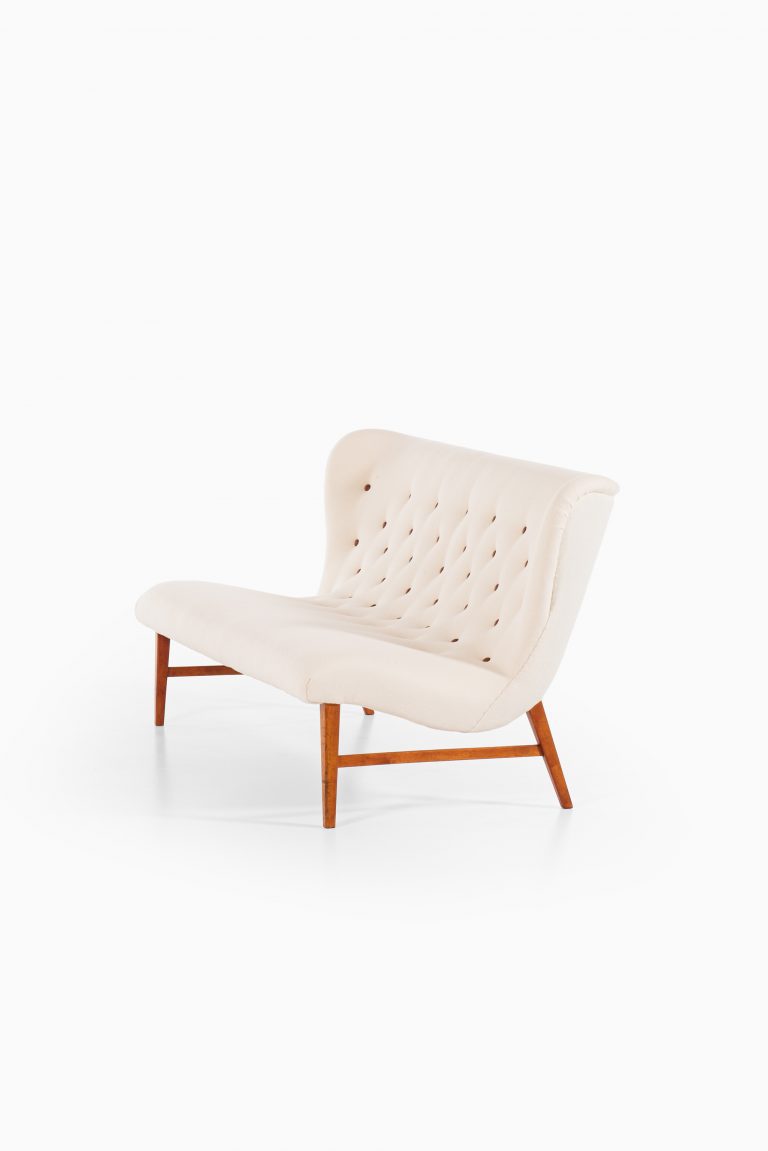
In addition to his architectural work, Karlén is also connected to furniture design, including seating furniture produced for Firma Rumsinteriör. His furniture is generally associated with the Swedish Modern tradition, combining well-balanced proportions, comfort, and high-quality craftsmanship. Sofas and armchairs attributed to him often show a restrained elegance suited to both private interiors and more formal settings.
Today, Bertil Karlén is remembered as a Swedish architect and designer whose work bridged architecture and interior design. His contribution lies in a quiet but consistent approach to form, material, and function, reflecting the broader ideals of mid-20th-century Swedish design.