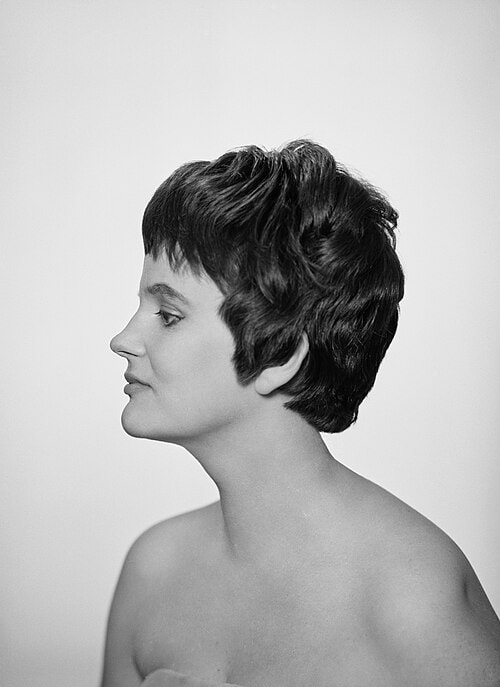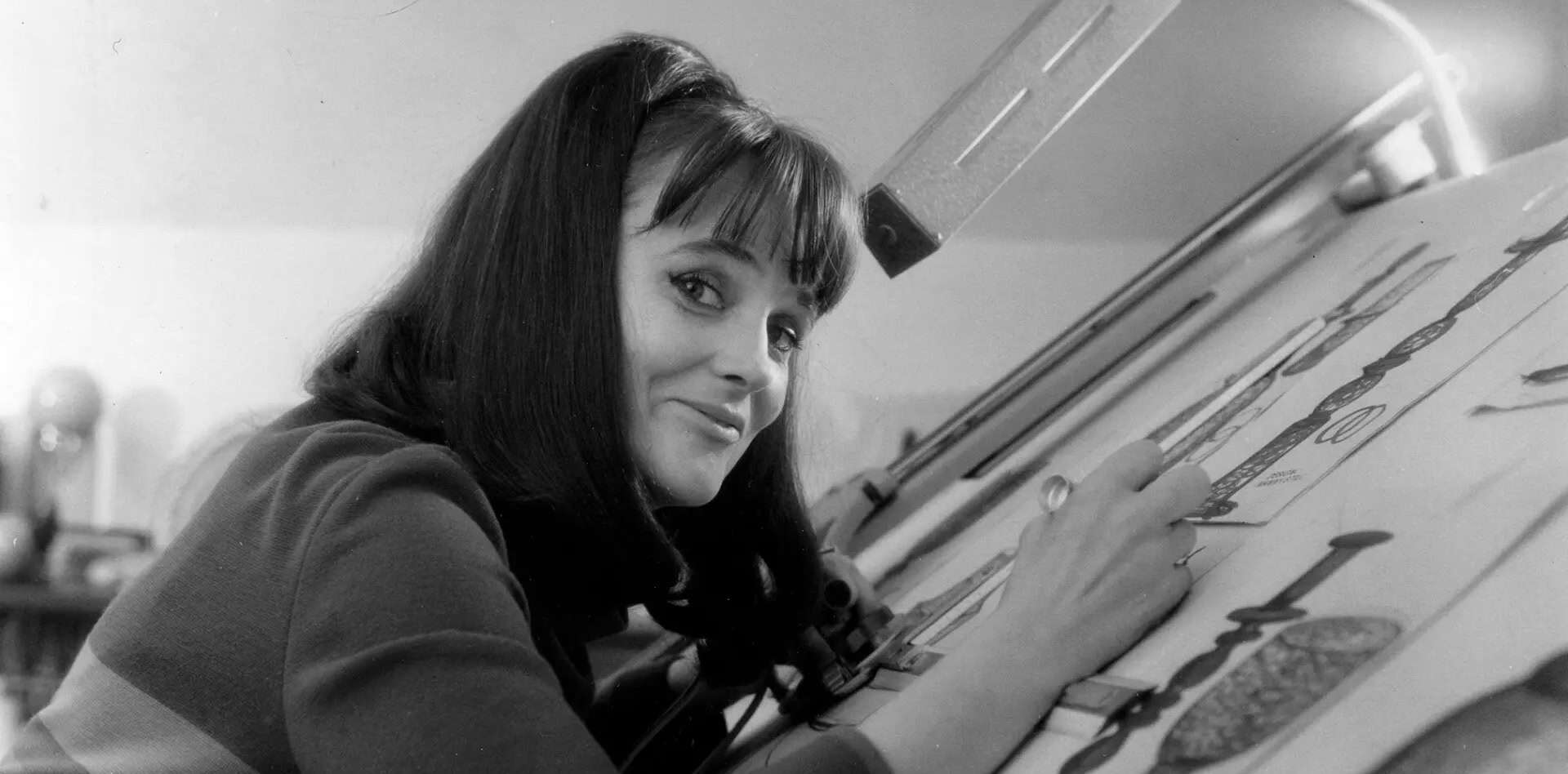
Nanny Still
Nanny Still (1926–2009) was a Finnish industrial designer and glass artist, regarded as one of Finland’s most influential designers of the postwar period. She is best known for her work in glass, where bold colours, clear geometric forms, and strong technical control became defining features of her design language. Although primarily associated with Riihimäki Glass, her career also included work for international manufacturers such as Rosenthal, as well as designs in ceramics, metal, cutlery, and jewellery.
Biography
Nanny Still was born in Helsinki in 1926. She studied design at the Central School of Industrial Arts in Helsinki between 1945 and 1949. Shortly after graduating, she joined Riihimäki Glass, becoming one of the company’s first female designers and remaining associated with the factory for more than twenty-five years.
At Riihimäki, Still developed a distinctive approach to glass design, combining simple forms with vivid colour and a strong understanding of manufacturing techniques. Her work often included bottles, vases, bowls, jars, and tableware, where functional objects were given a clear and expressive visual identity.
One of her best-known designs is the Harlekiini glassware series from 1958, recognized for its simple geometric shapes and deep blue colour. The series reflects Still’s ability to create objects that were both practical and visually striking, using colour and proportion as central design elements.
Still became known for her bold use of colour and her willingness to experiment with unconventional forms. Although glass remained her main field, she worked across several materials throughout her career, designing objects in ceramics, wood, steel, aluminium, and other materials. After Riihimäki stopped producing art glass in the 1970s, she continued to work for manufacturers both in Finland and abroad, including Rosenthal in Germany.
From the 1990s onward, Still increasingly focused on glass sculpture, often using the pâte de verre casting technique. Today, Nanny Still is remembered as a central figure in Finnish glass and industrial design, valued for her technical skill, confident use of colour, and ability to combine everyday function with a strong artistic presence.