


Finn Juhl & The Cabinetmaker Tradition
The Birth of a Partnership
When Finn Juhl made his debut at the Copenhagen Cabinetmakers’ Guild Exhibition in 1937, few could have imagined that this young architect would soon transform the landscape of Danish design. Working in close collaboration with master cabinetmaker Niels Vodder, Juhl viewed furniture not merely as function, but as architecture on a smaller scale – spatial, organic, and deeply human.
The annual Guild Exhibition became their shared laboratory, a stage for experimentation where architects and craftsmen could merge precision with imagination. It was here that Juhl began to redefine furniture as an artistic discipline rooted in proportion, balance, and the tactile qualities of material. Juhl’s early furniture also reflected his deep engagement with modern art. Strongly influenced by the abstraction of artists such as Jean Arp and the geometric compositions of Jean Deyrolle, he translated painterly and sculptural principles into spatial design.
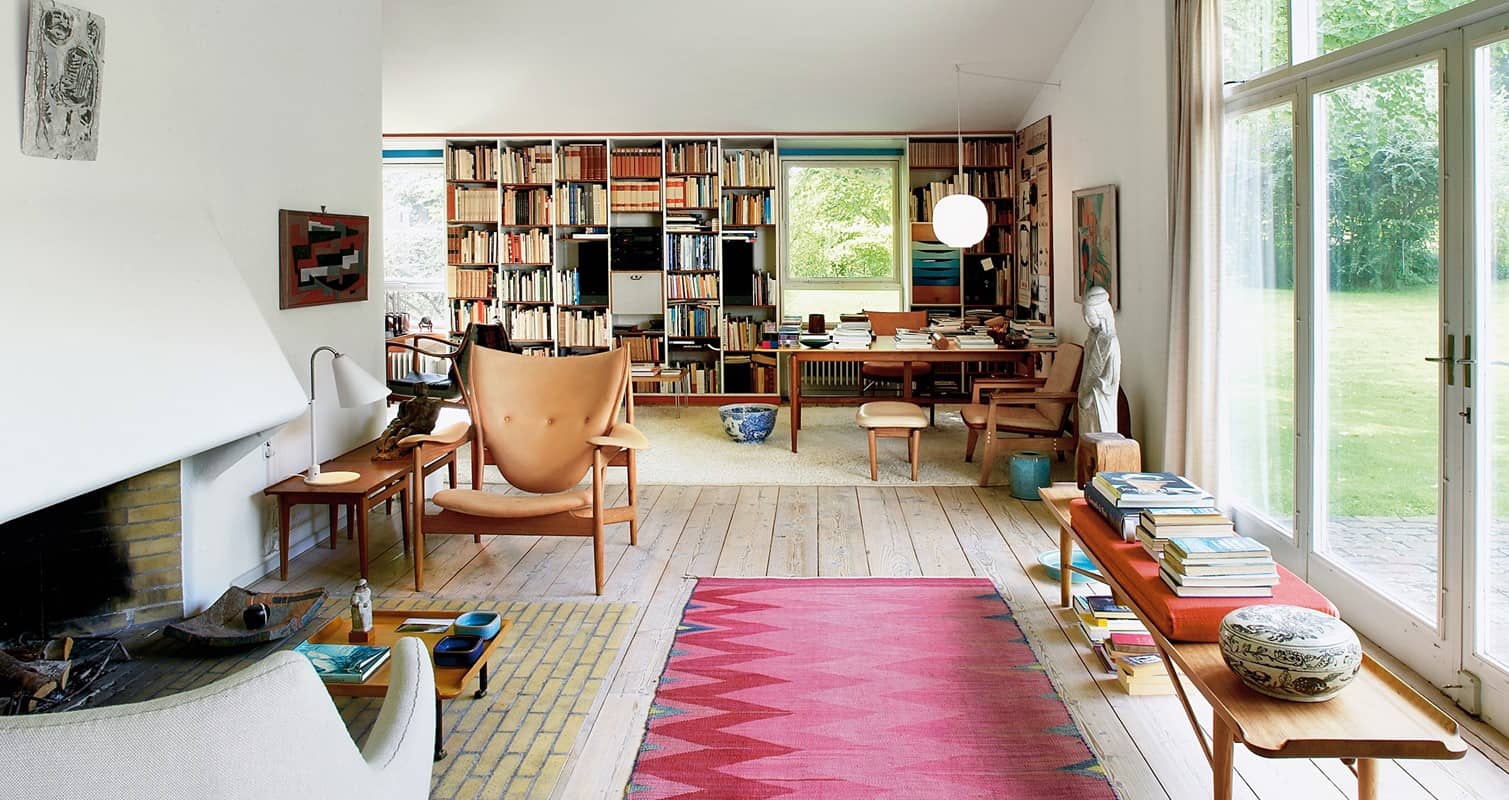
Photo: House of Finn Juhl ™
NV-45 – The Break from Tradition
In 1945, Juhl presented one of his earliest masterpieces: the NV-45 easy chair, crafted by Vodder in solid rosewood. By detaching the seat and back from the frame, Juhl introduced the idea of “floating elements” – a visual and structural lightness that gave his furniture an organic vitality unseen in earlier functionalism.
The NV-45’s curved armrests flow seamlessly into the back supports, creating an unbroken line that recalls both anatomy and movement. Every curve is refined by Vodder’s technical mastery, the joinery executed with near-invisible precision. The result was a chair that appeared alive, simultaneously delicate and strong – a pure expression of postwar optimism rendered in wood and leather.
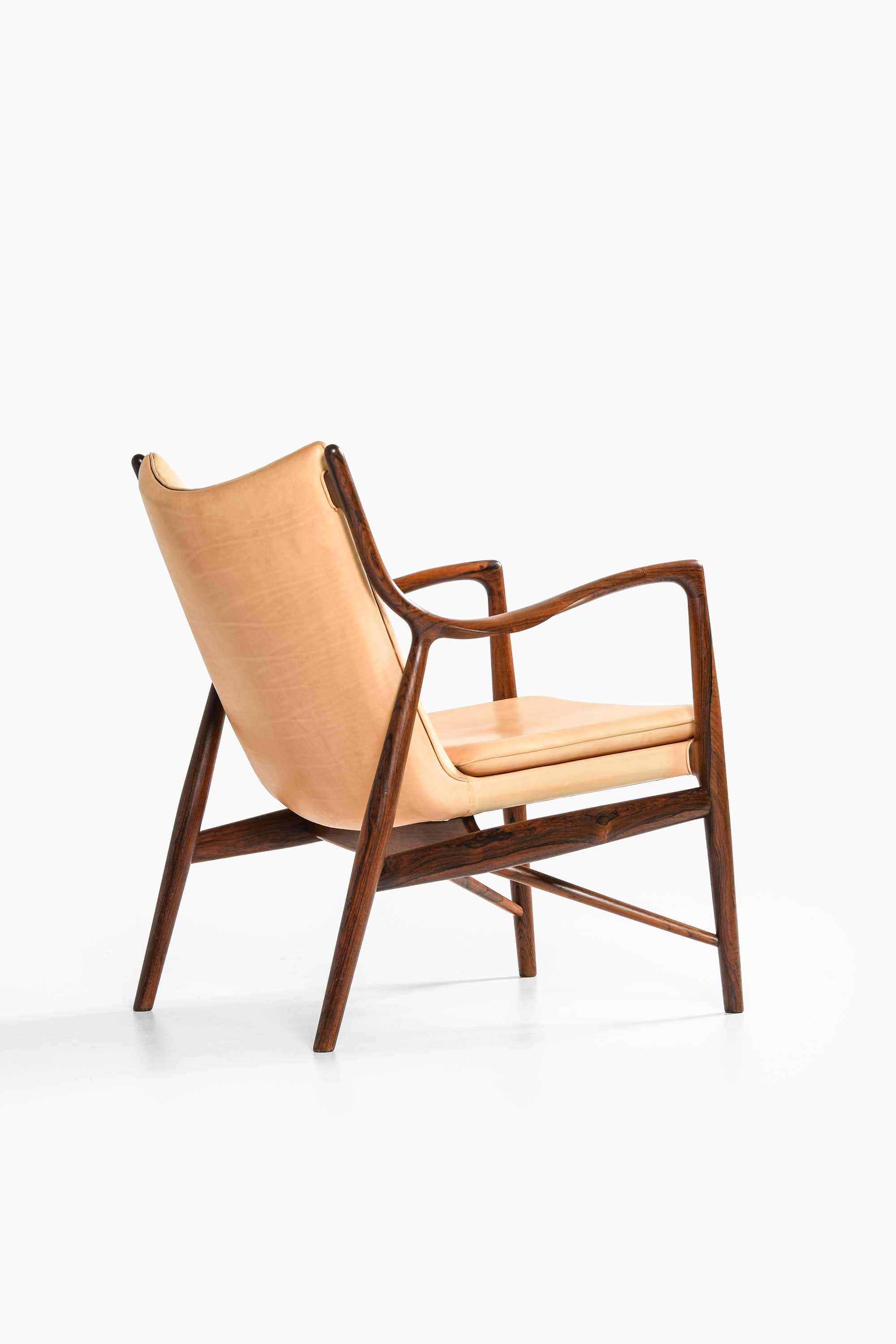
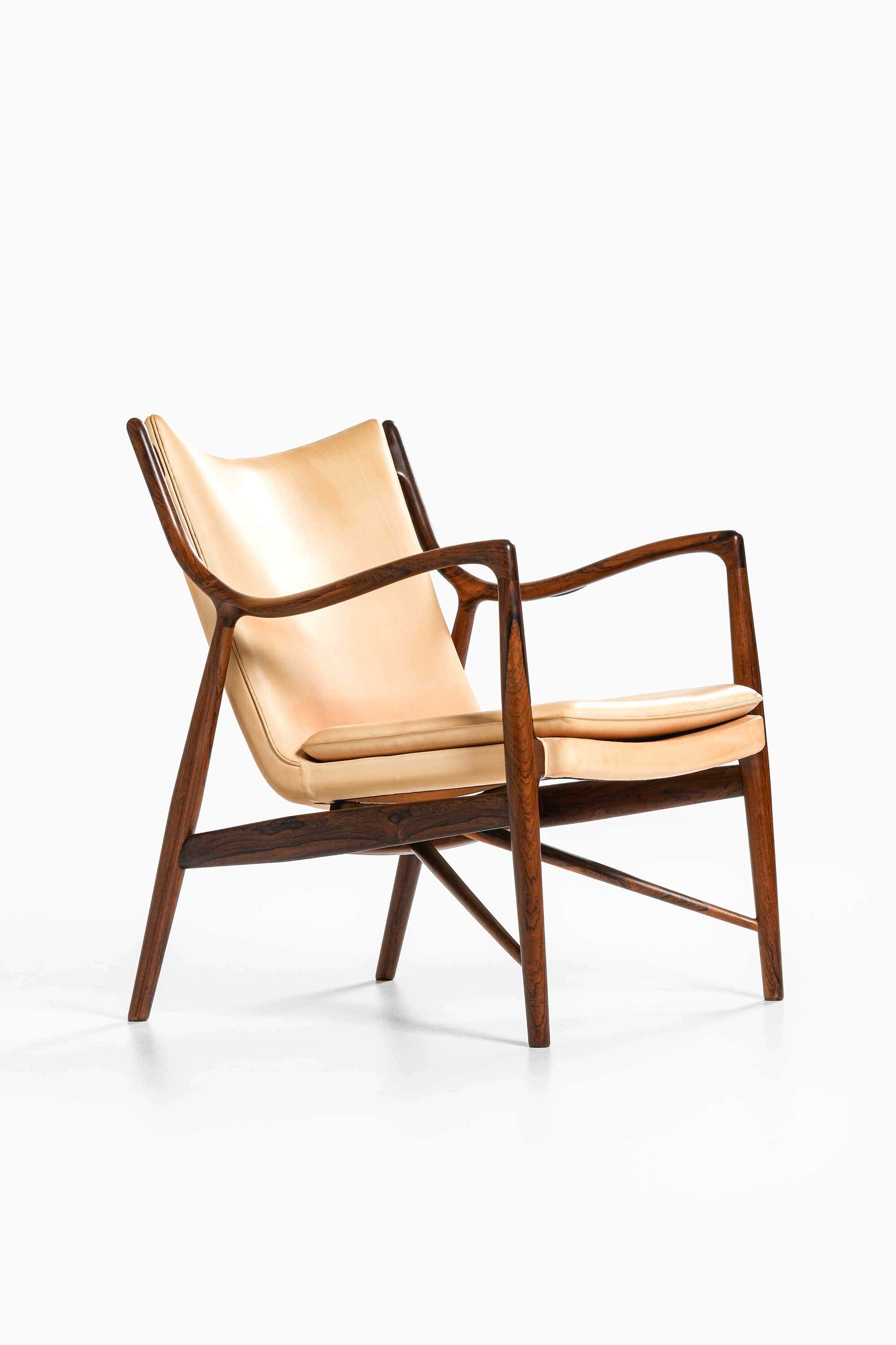
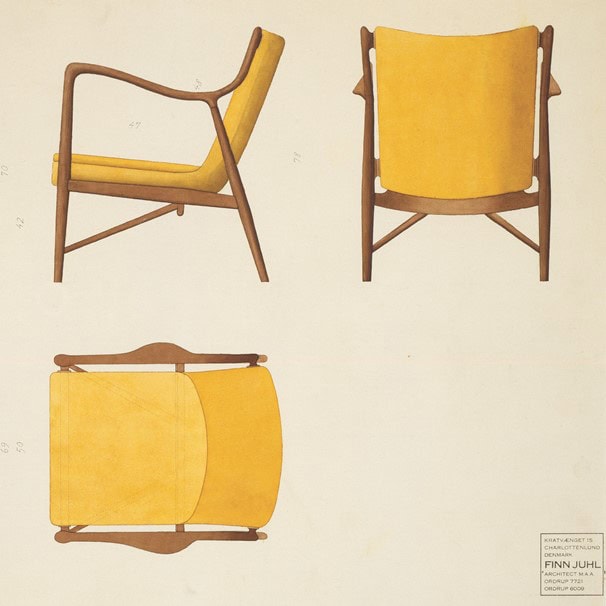
Image: House of Finn Juhl ™
NV-46 – The Cabinetmaker’s Precision
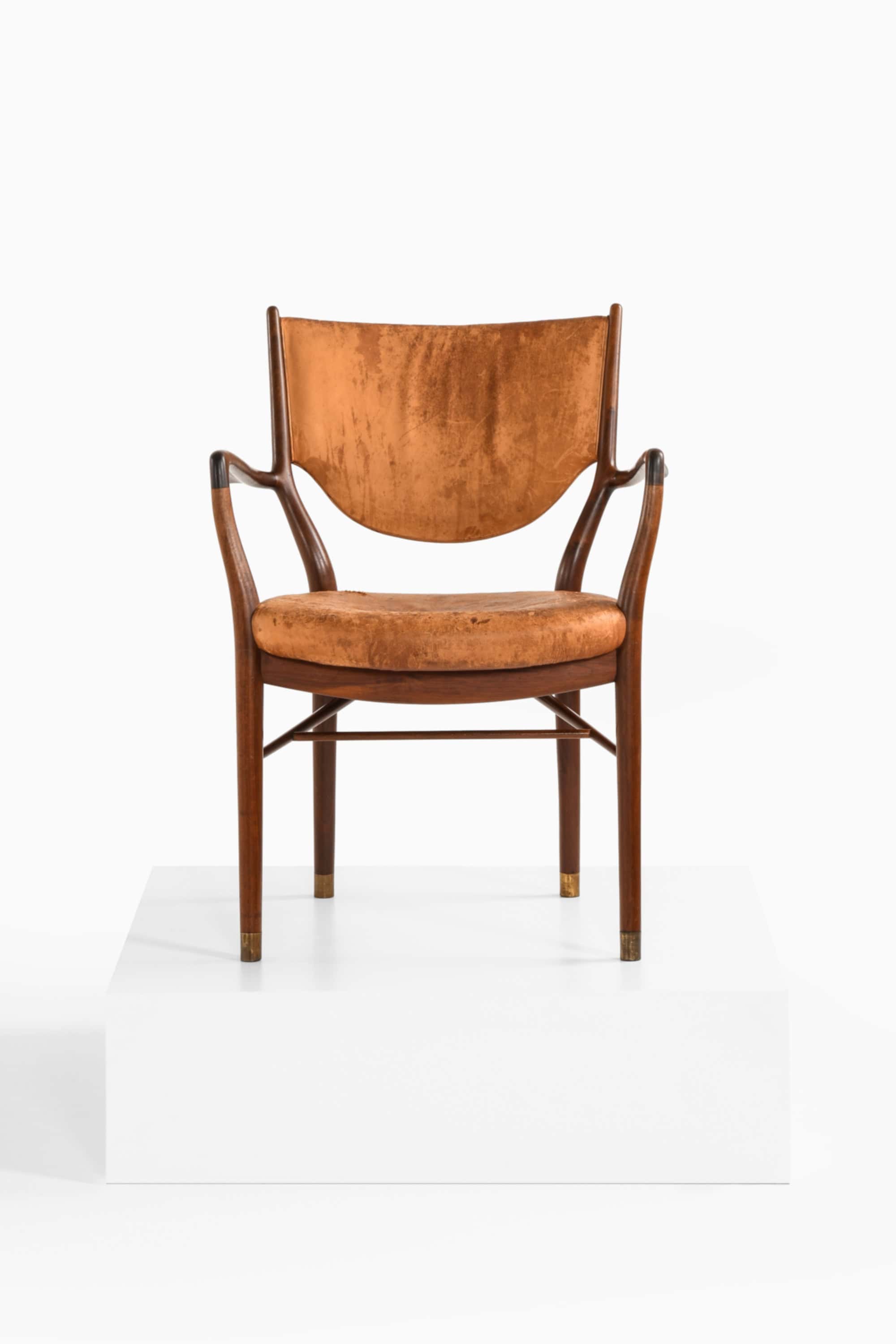
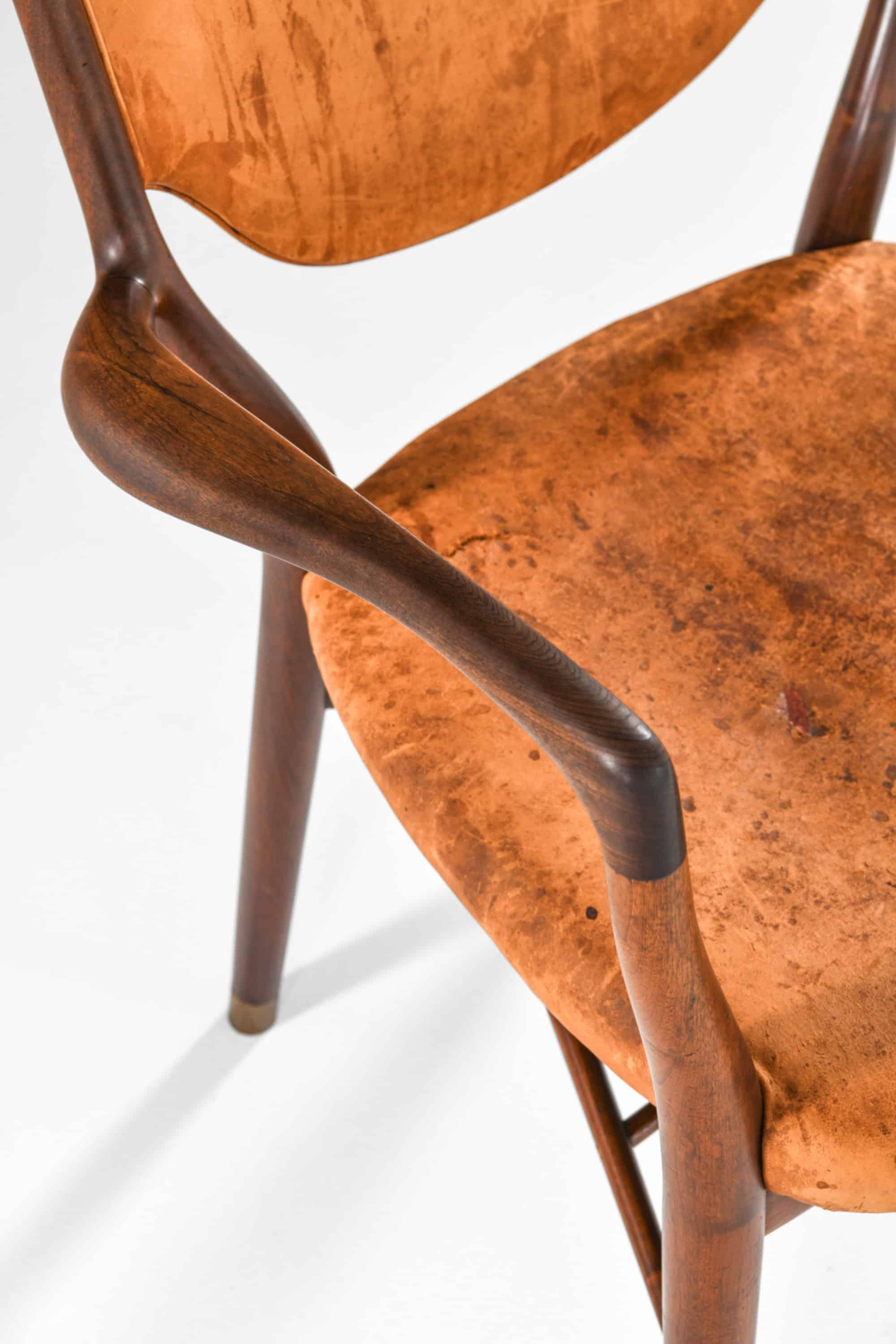
One year later, Juhl unveiled the NV-46 armchair – a natural progression of the ideas introduced with the NV-45. Produced in Copenhagen by Vodder, the chair reflects the quiet precision and tactile refinement that defined their early collaborations. Crafted in walnut with rare brass shoes found only on the first editions, it reveals an extraordinary attention to proportion and joinery detail. Bearing Vodder’s workshop mark and provenance directly from Niels Vodder himself, this example stands as both an artifact of their partnership and a testament to the uncompromising artistry at the core of Danish modern design.
The Egyptian Chair – Ancient Inspiration, Modern Form
At the 1949 Cabinetmakers’ Guild Exhibition, Juhl revealed a design that bridged ancient and modern worlds: the Egyptian Chair. Inspired by his visit to the Louvre, Juhl reinterpreted ceremonial Egyptian seating into a contemporary idiom defined by structural clarity and grace.
He later admitted, with characteristic humor, “I stole the construction,” yet the transformation was entirely his own. The chair’s bearing frame and floating seat articulate the dialogue between support and suspension that became central to Juhl’s design philosophy. Through Vodder’s craftsmanship, the form achieves both balance and tension – a silhouette of extraordinary refinement.
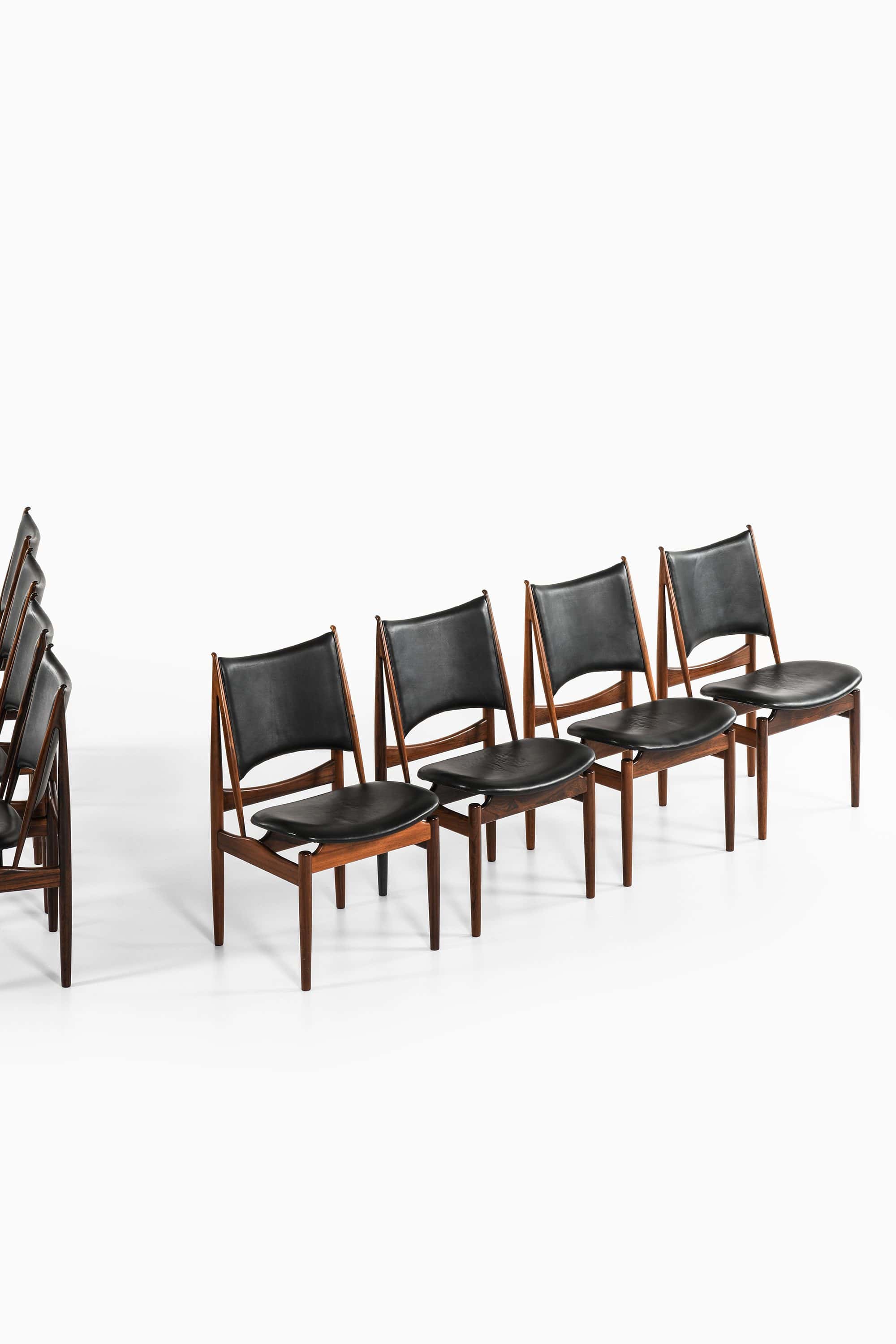

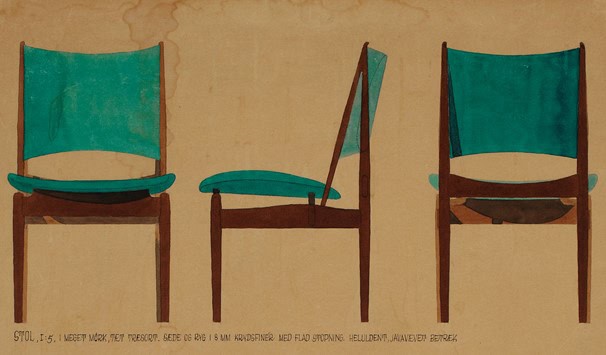
Image: House of Finn Juhl ™
The Chieftain Chair – A Monument in Wood and Leather
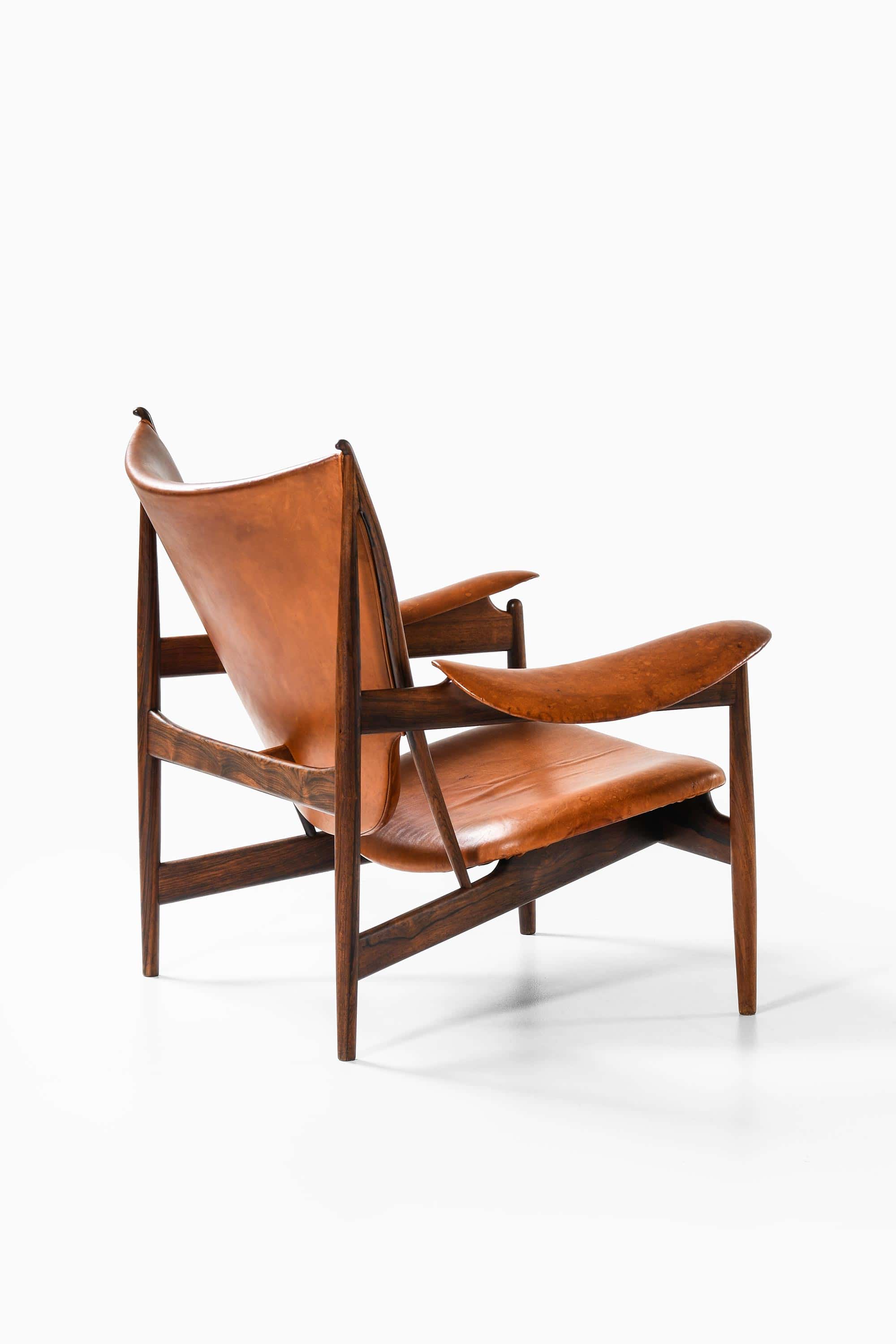
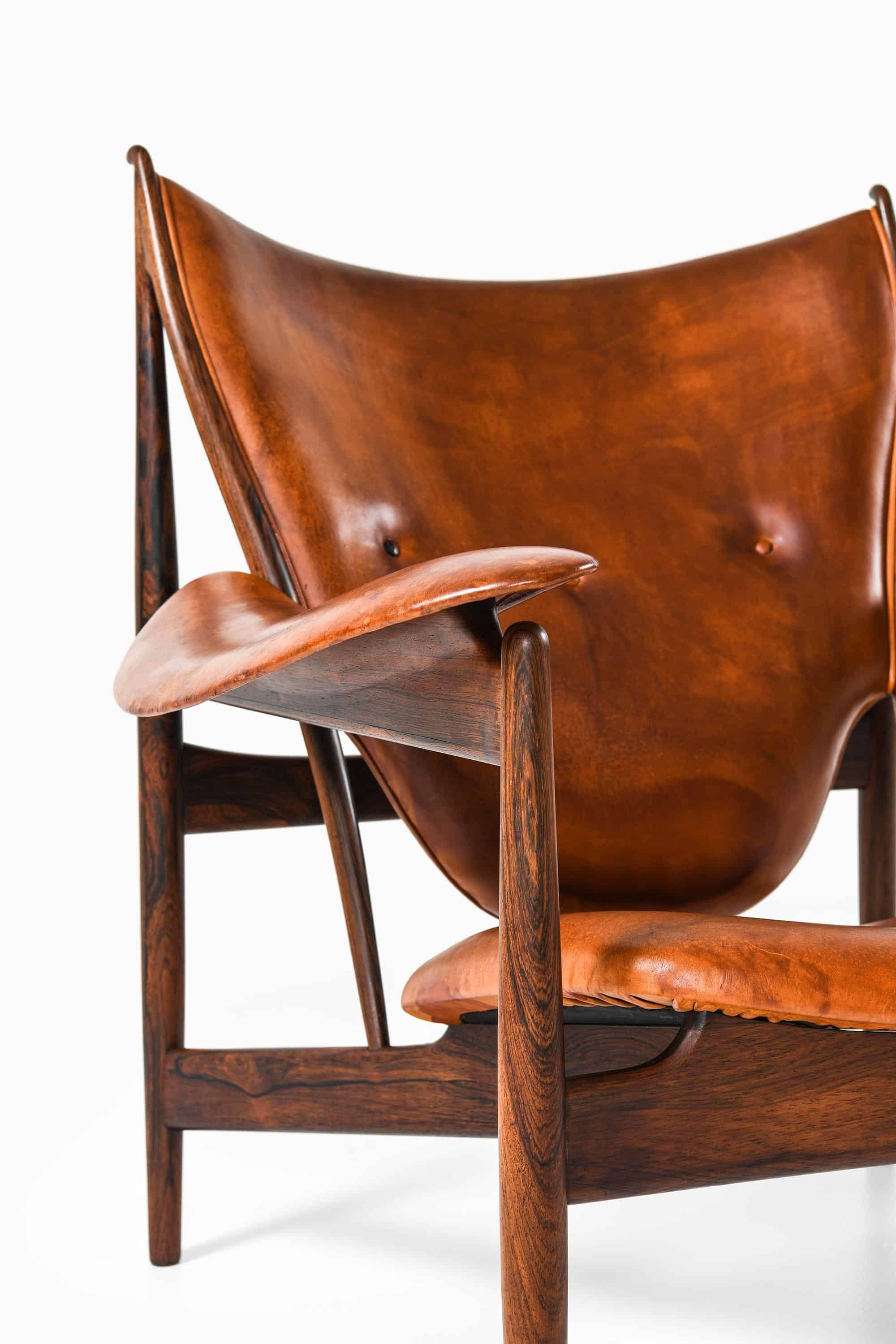
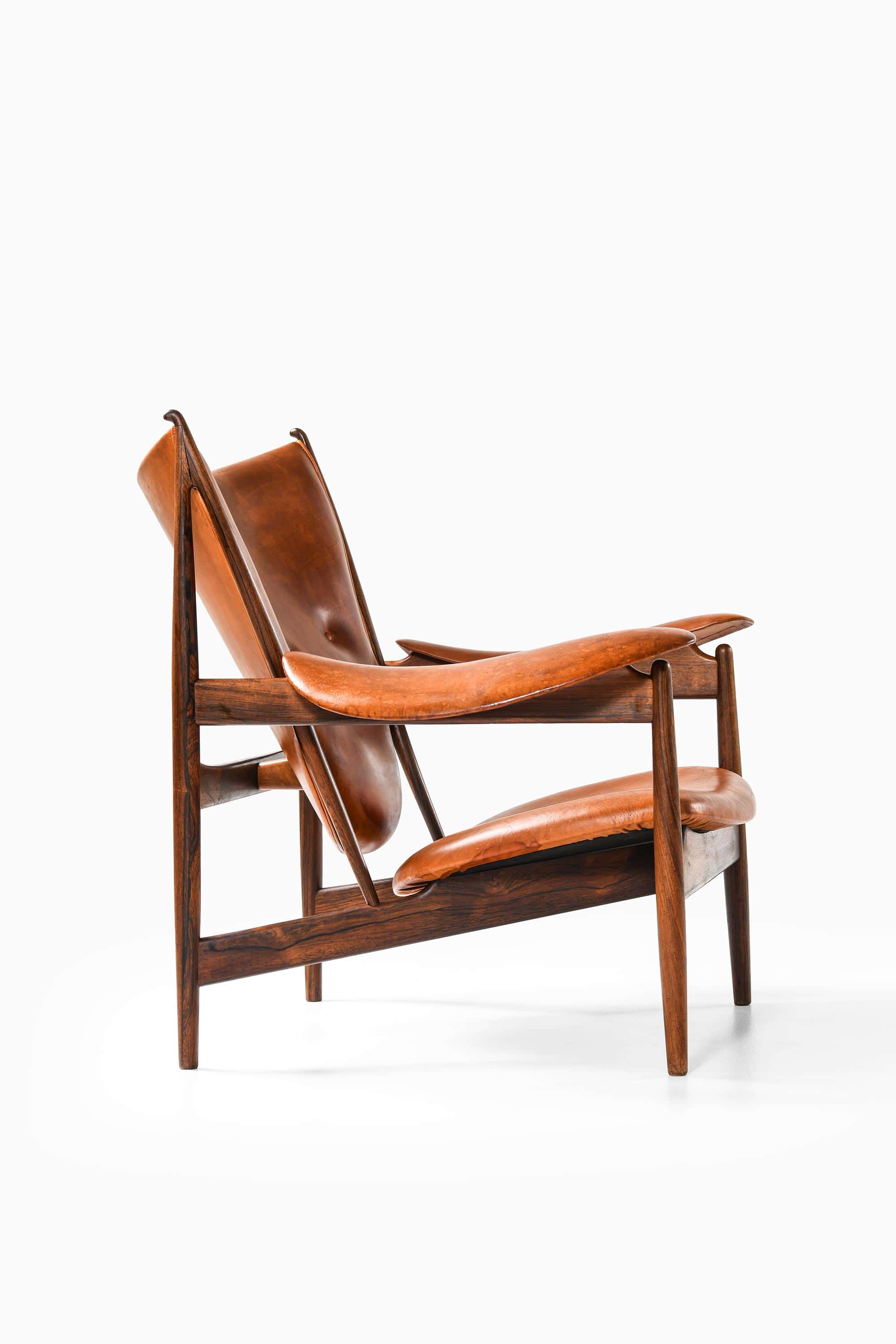
That same year, Juhl unveiled his most iconic creation: the Chieftain Chair. Monumental yet fluid, it captured the full maturity of his artistic language. Carved from richly grained rosewood and upholstered in cognac leather, the chair combines organic curves with architectural strength. Produced by Vodder in extremely limited numbers, perhaps no more than twenty examples in rosewood, it stands today as one of the defining icons of Scandinavian modernism. Every surface reflects Vodder’s craftsmanship: seamless joints, sensuous transitions, and an effortless balance between mass and motion. The Chieftain chair from our collection originates from the estate of a passionate Danish collector and close acquaintance of Niels Vodder. The piece bears the personal signature of Niels Vodder, marked ‘Niels Vodder Allerød Danmark’ on the underside – a mark of provenance that connects it directly to the inner circle of Danish design’s golden age.

Late Experiments – The Low Table of 1961
By the early 1960s, Juhl’s design language had become increasingly refined, marked by a quiet balance between structure and fluidity. The low table, originally conceived in 1961 and later produced in the mid-1990s by cabinetmaker Niels Roth Andersen, reflects this mature phase of his work.
Executed in lacquered European cherry with bronzed steel legs and solid brass castors, the table captures Juhl’s ability to unite organic warmth with industrial precision. Though a later edition, it remains exceptionally rare – a testament to the enduring appeal and precision of Juhl’s late modernist sensibility. The softly curved tabletop edges and contrasting metal base embody the same dialogue between craftsmanship and innovation that defined his original creations.
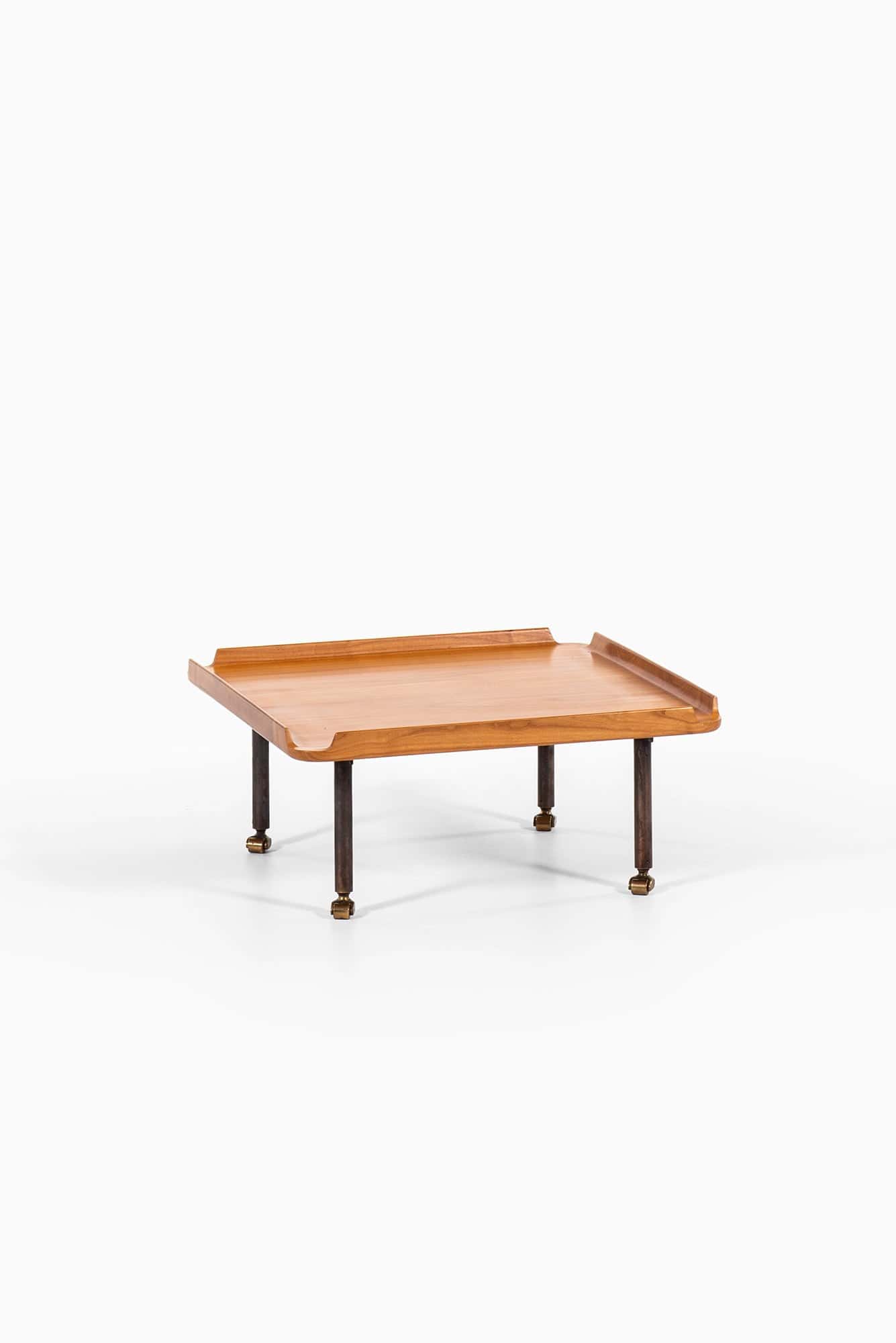

Photo: House of Finn Juhl ™
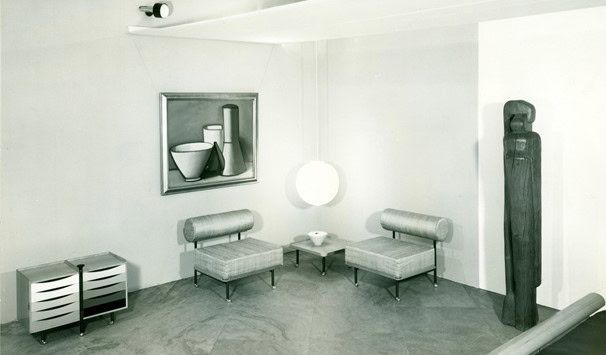
Photo: Designmuseum Denmark
Legacy
Through his collaboration with Niels Vodder and other master cabinetmakers, Finn Juhl redefined the possibilities of furniture design. He rejected the rigid rationalism of early modernism and introduced a new language – one rooted in the human body, sculptural form, and emotional resonance.
The Cabinetmakers’ Guild Exhibitions provided the framework, but it was Juhl’s imagination and Vodder’s hands that gave shape to a distinctly Danish ideal: furniture as living architecture. Their partnership remains one of the most enduring expressions of Scandinavian modernism – a dialogue between mind and material, intuition and mastery.