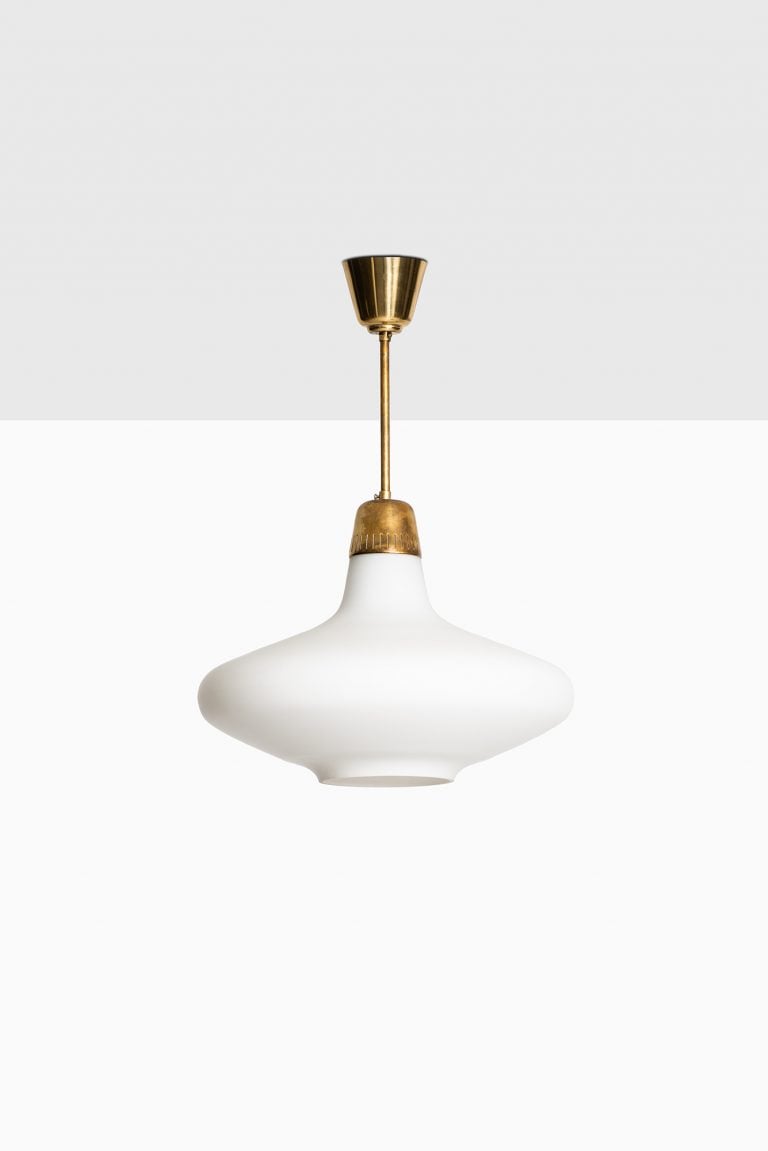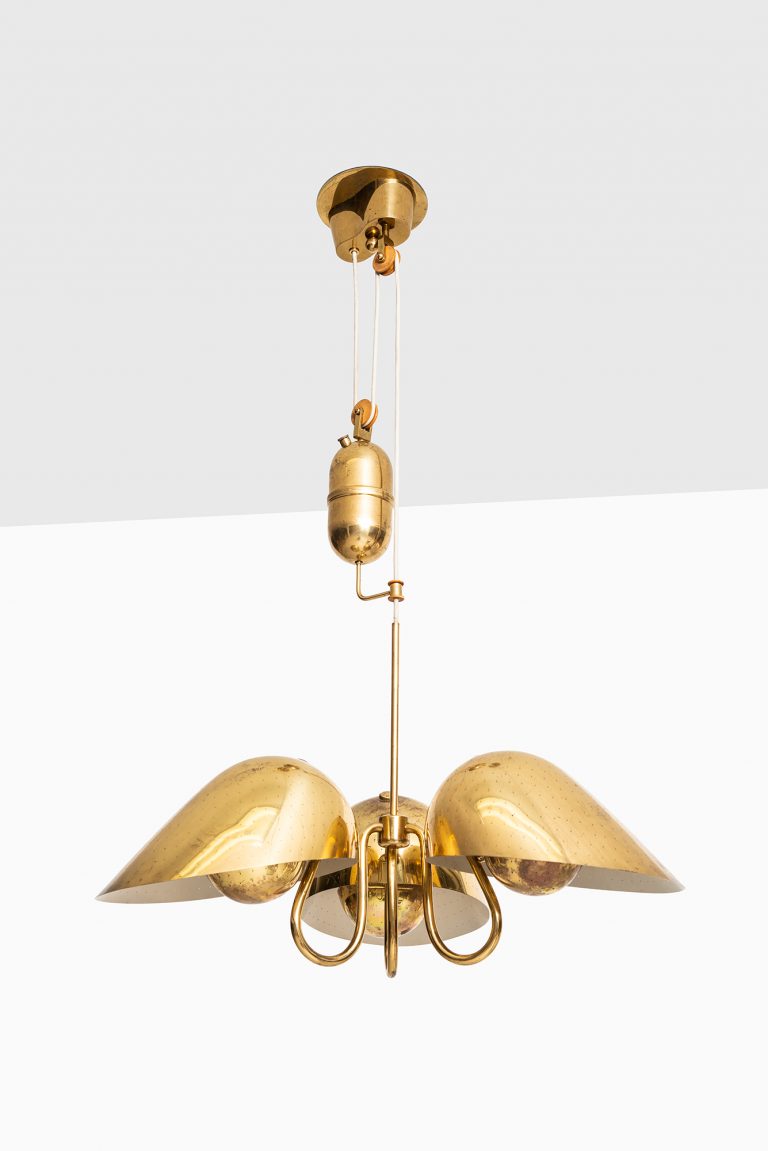
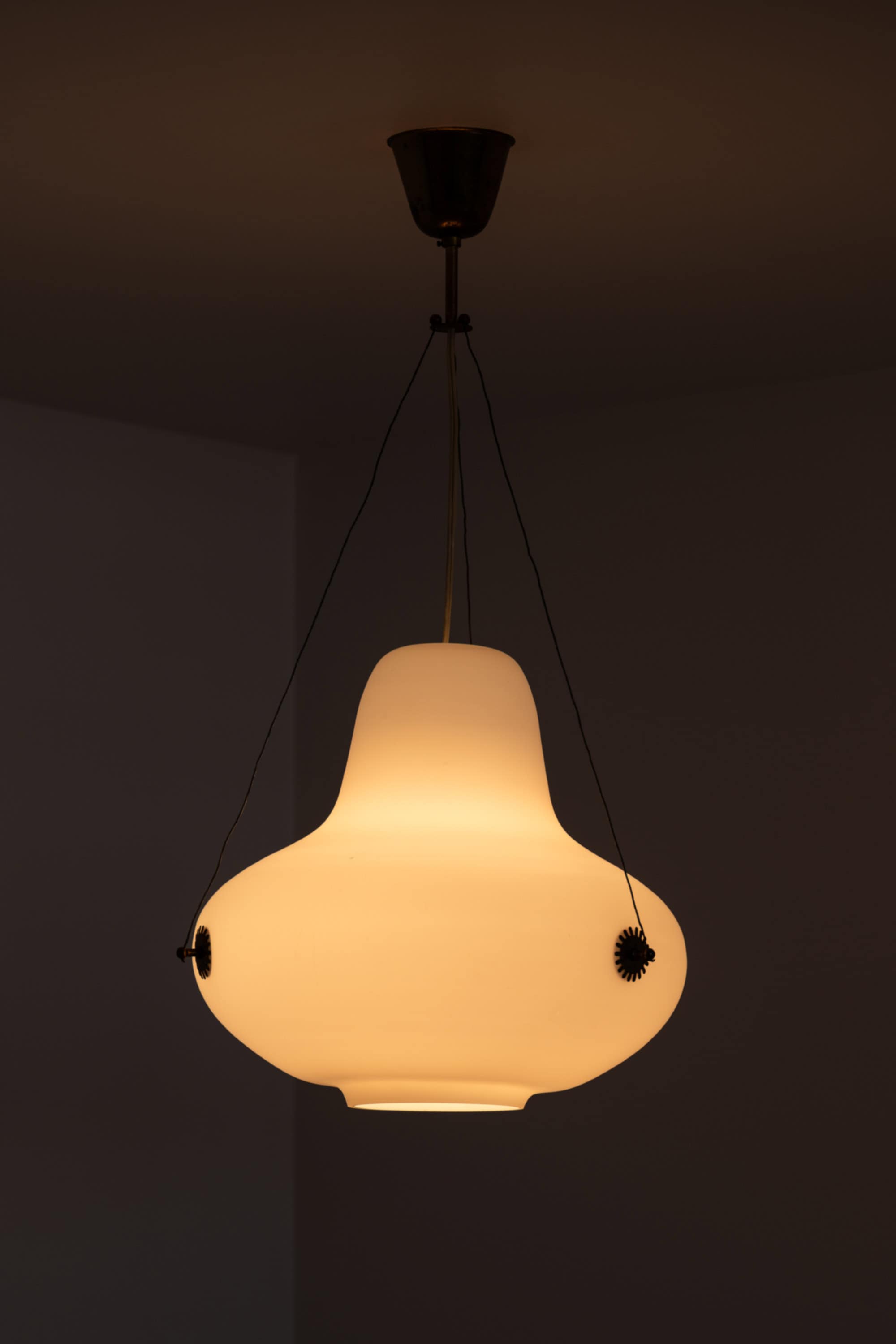

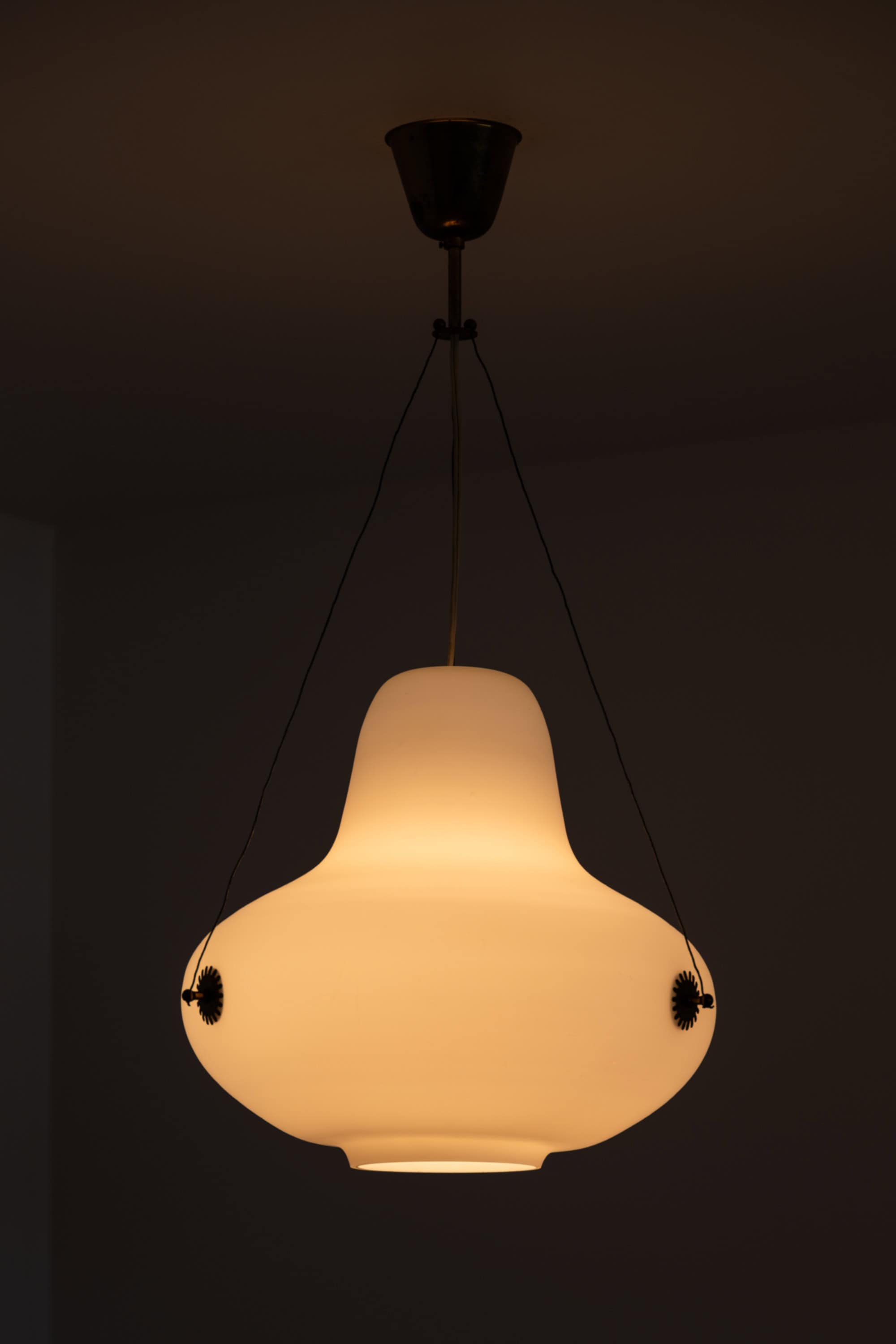
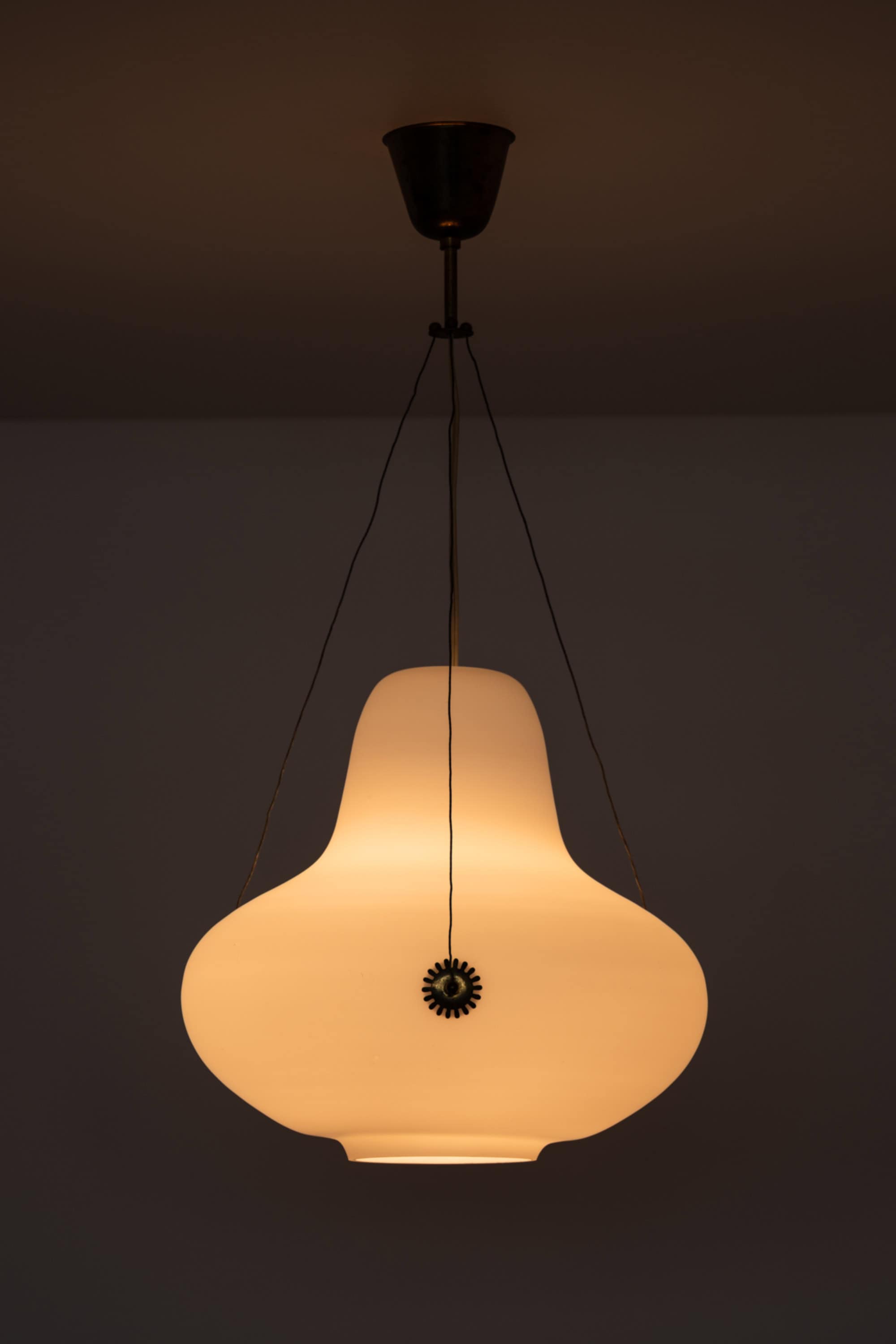
Carl-Axel Acking ceiling lamp
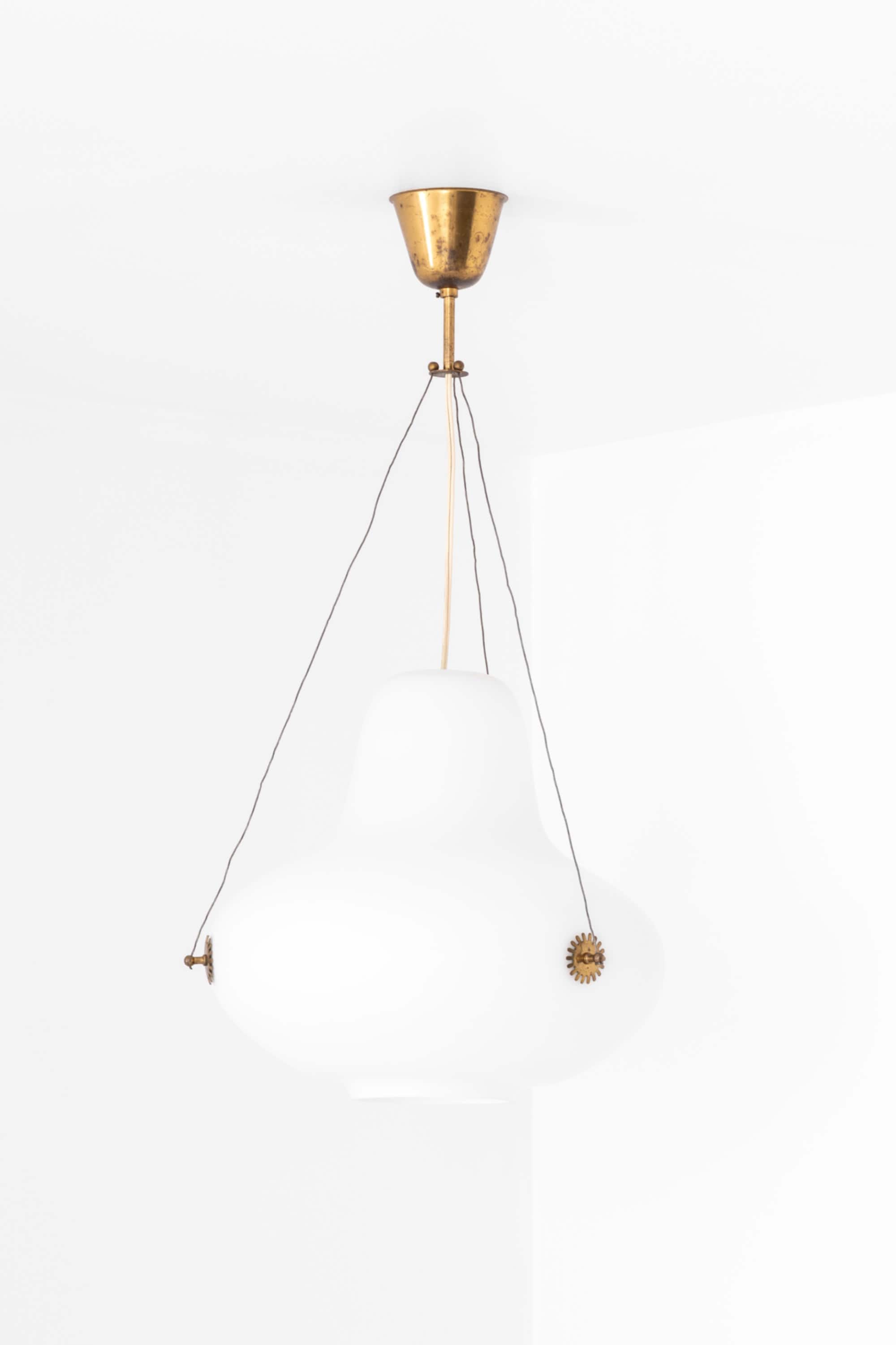
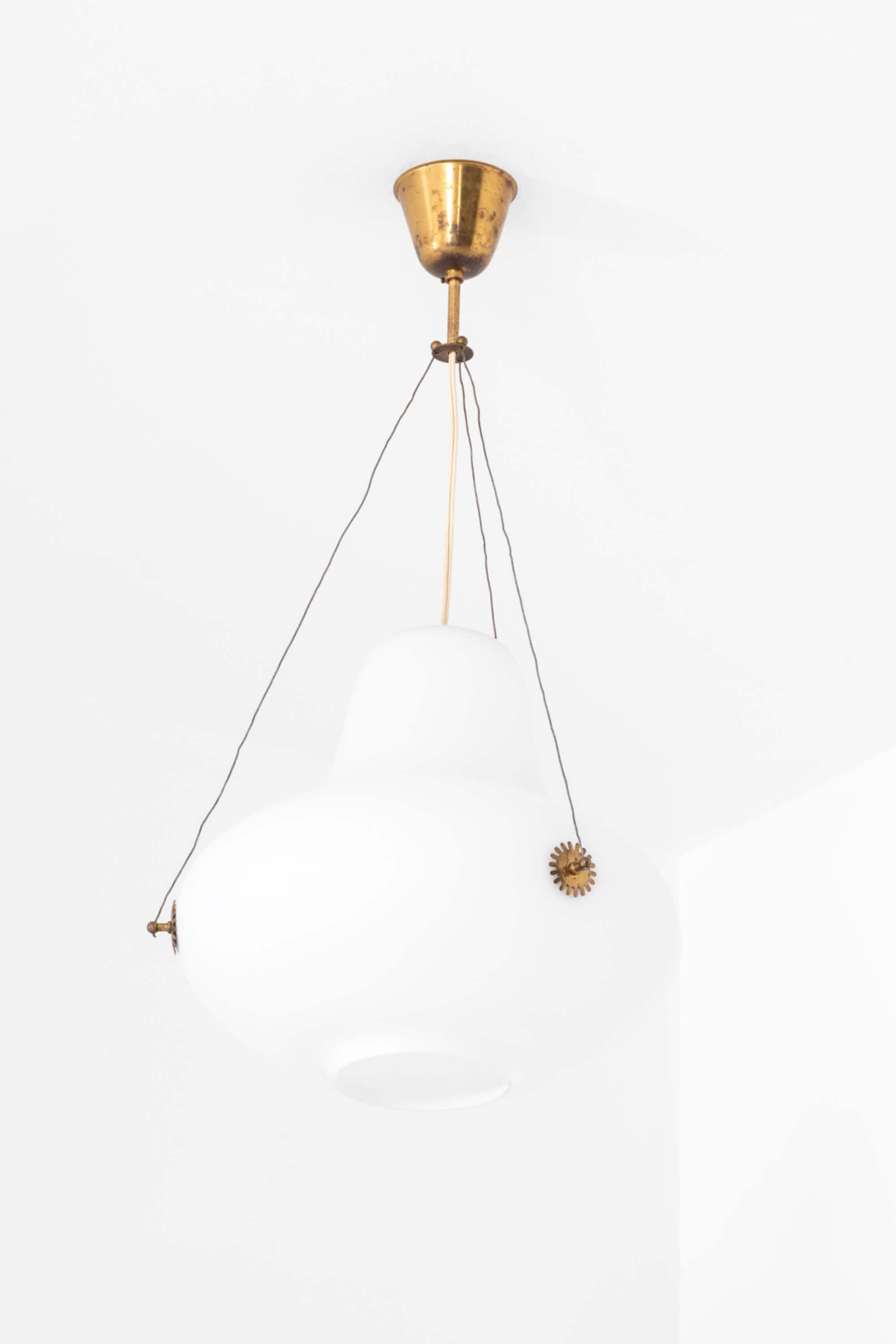
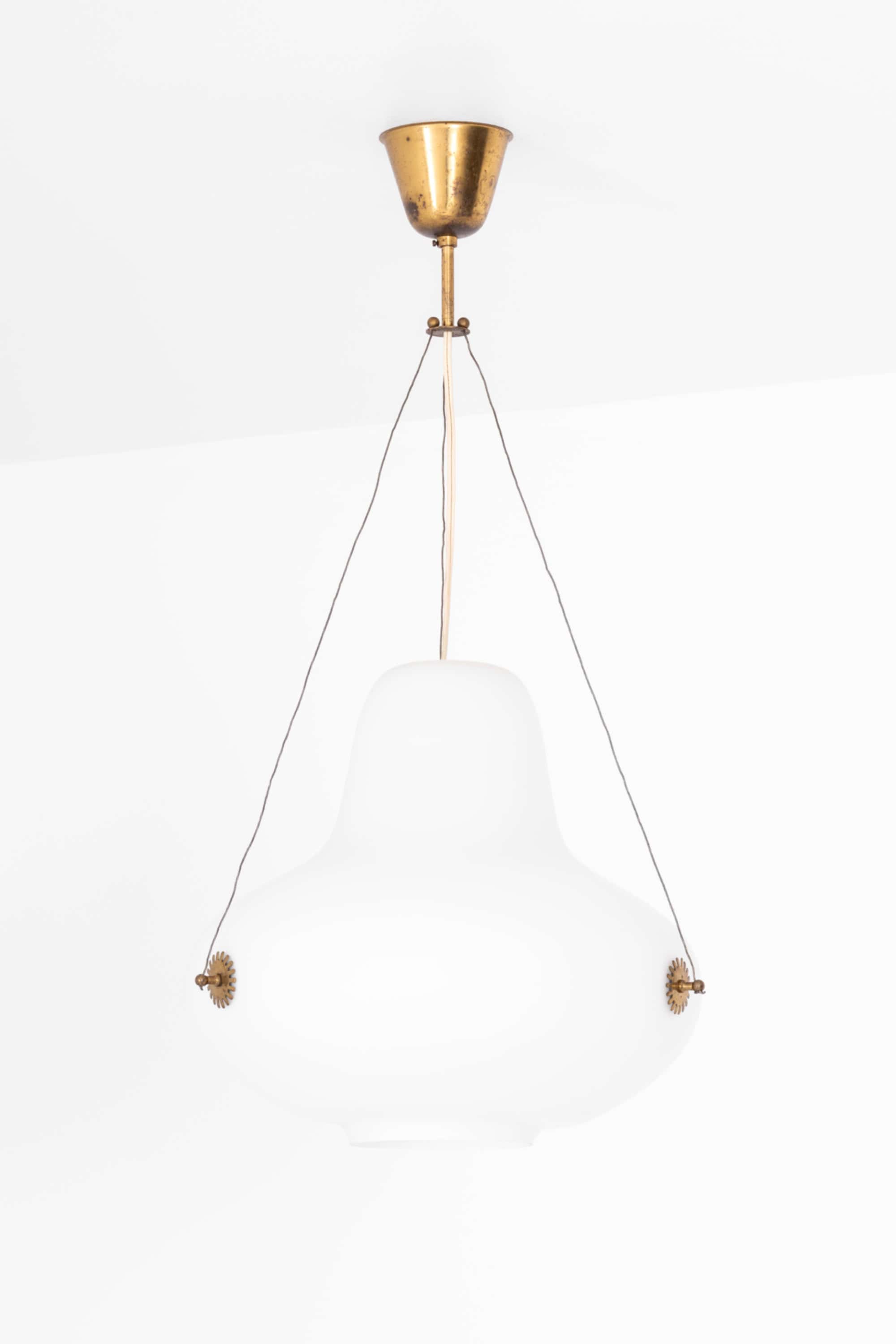
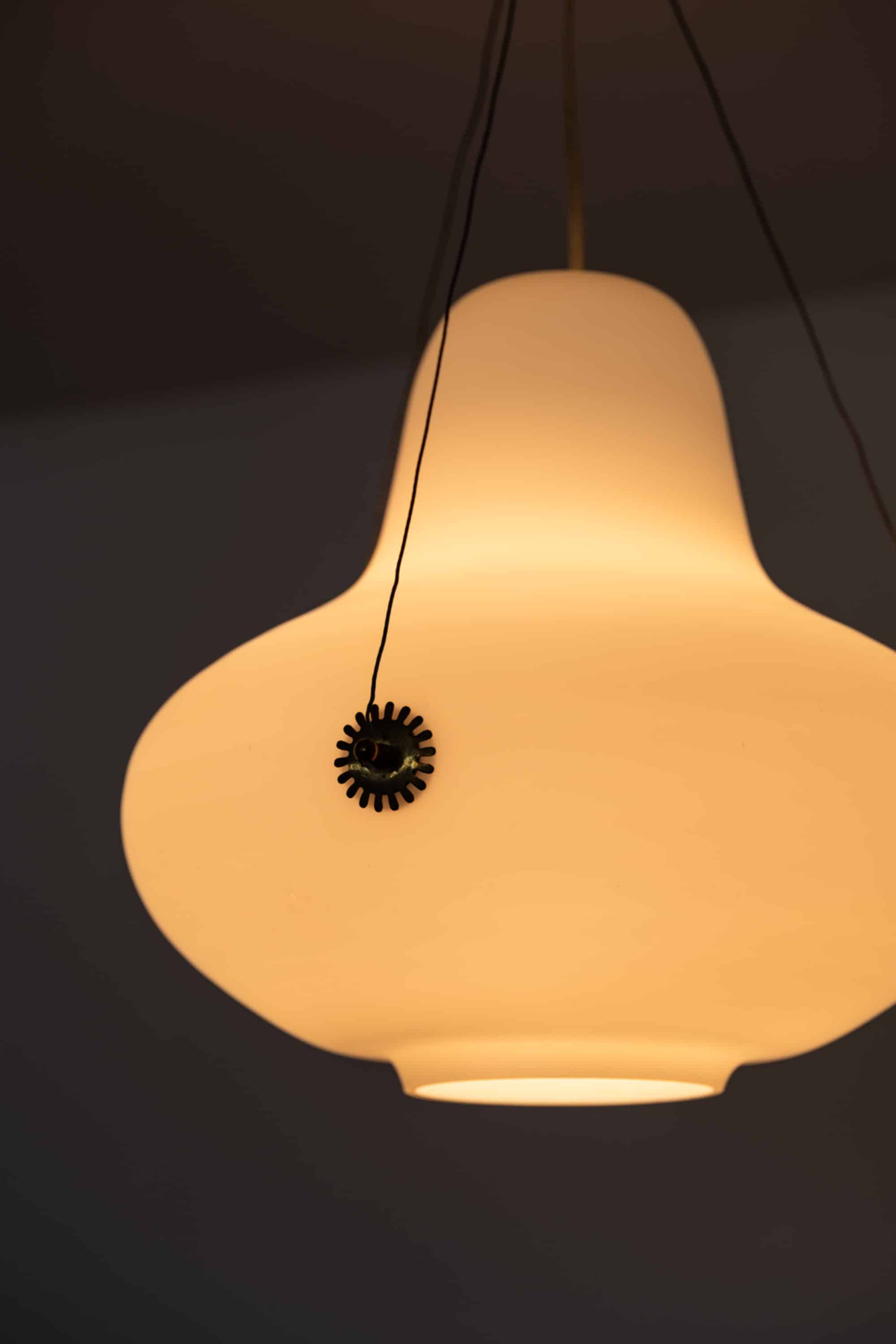
Rare ceiling lamp designed by Carl-Axel Acking and produced in Sweden during the 1940s. The lamp features a sculptural handblown opaline glass shade suspended by delicate tension wires with decorative brass attachments and a matching brass canopy. The softly rounded silhouette, tapering neck, and balanced proportions reflect Acking’s refined interpretation of Scandinavian modernism, where functional clarity is combined with an elegant organic form.
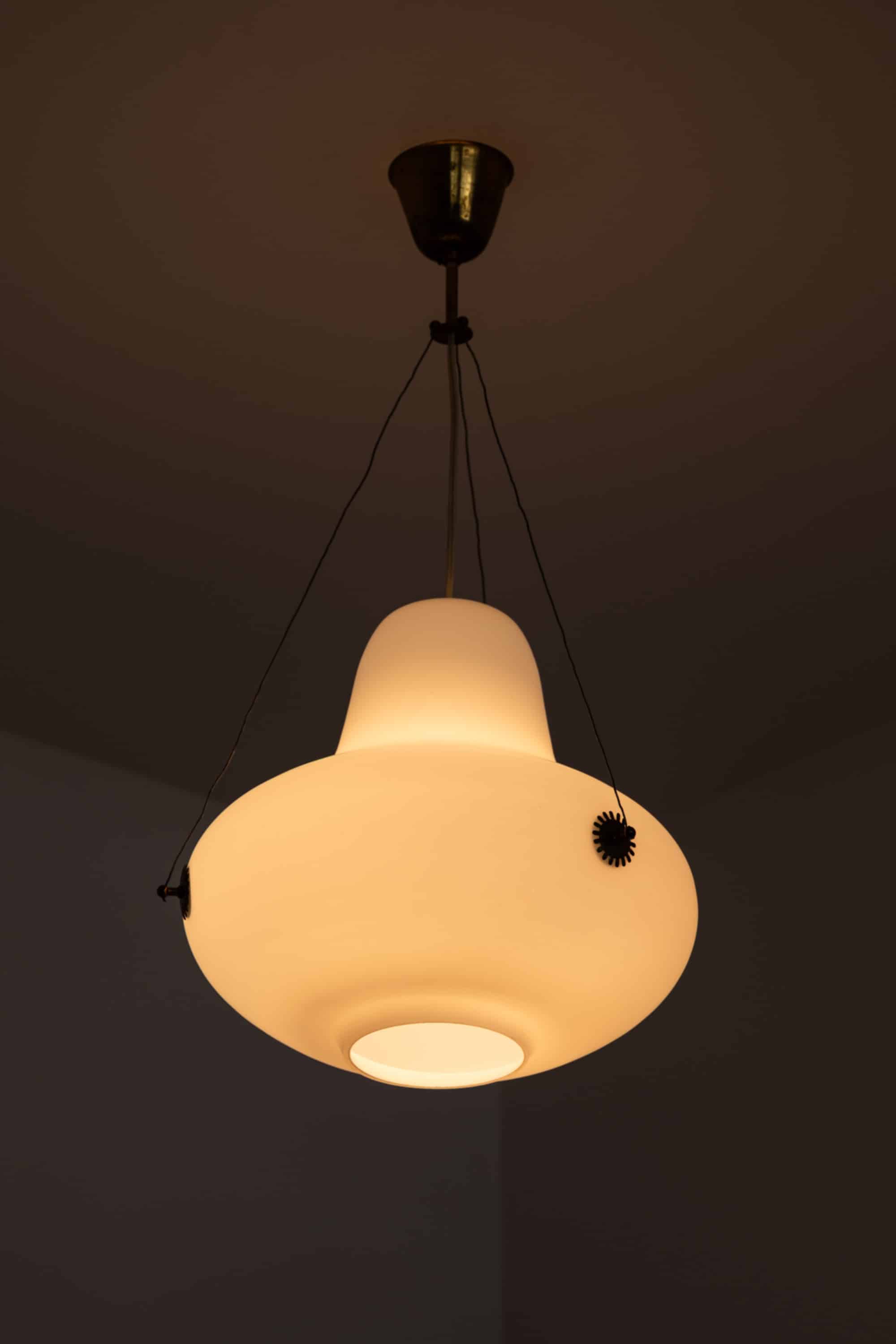
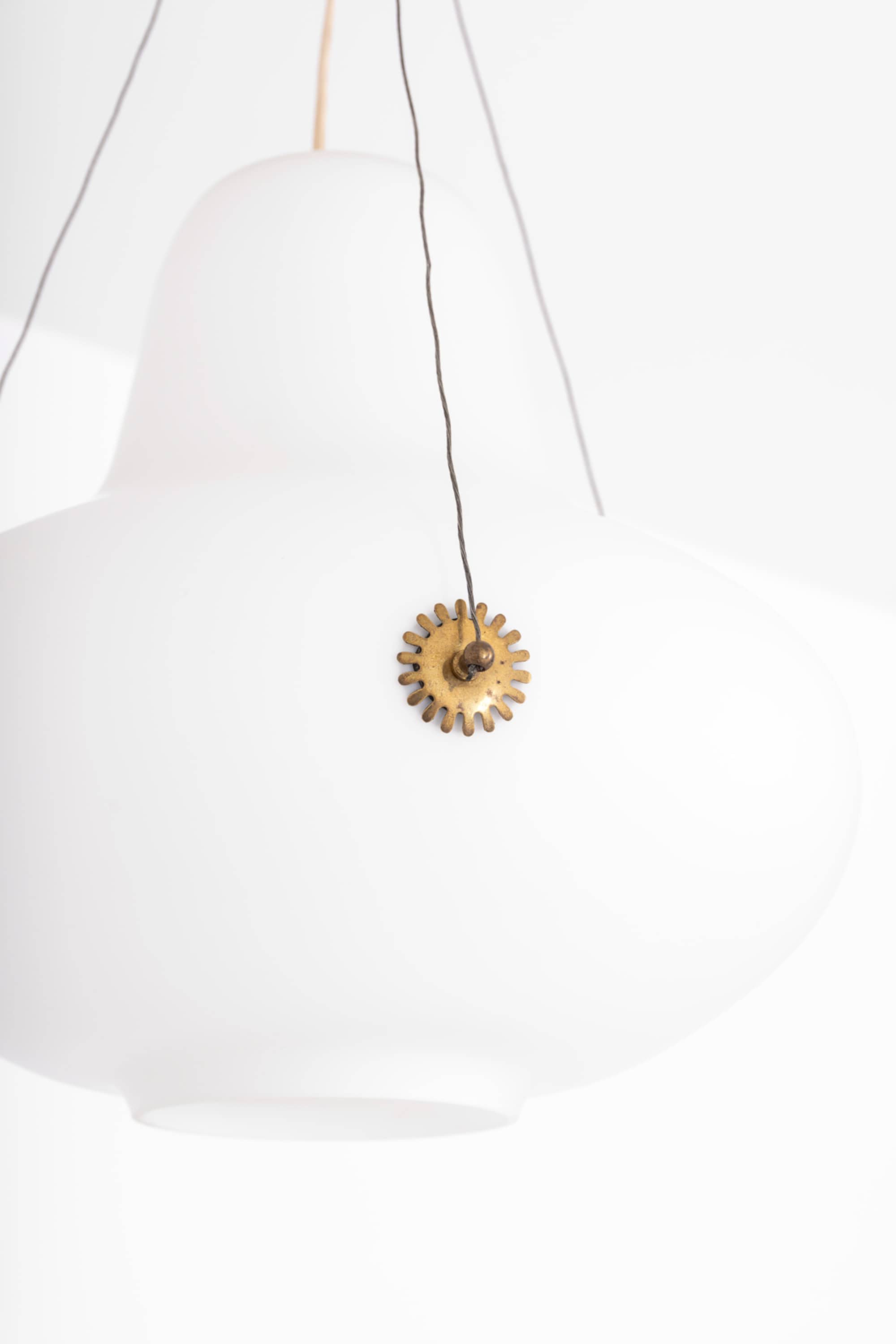
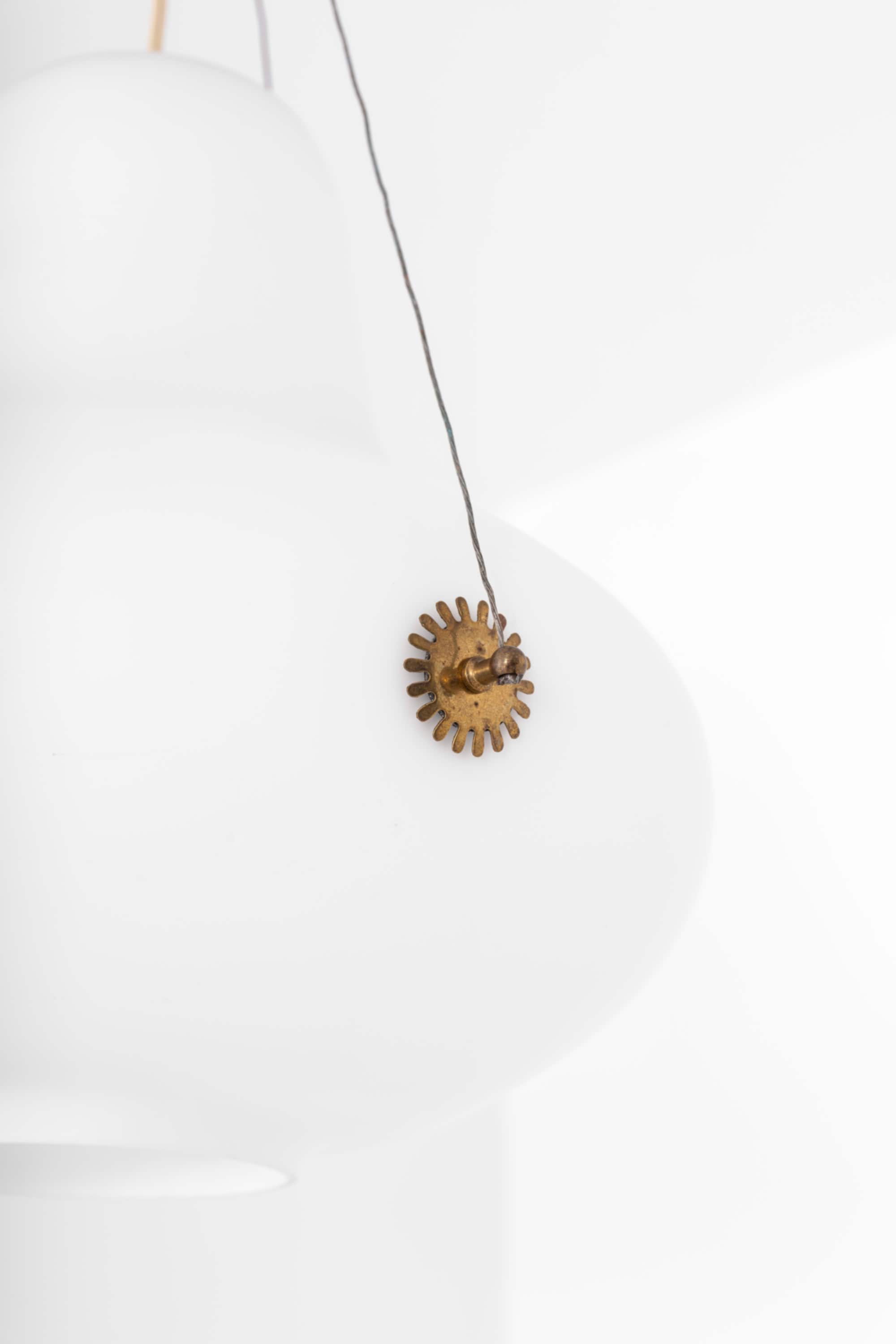
The shade is executed in white opaline glass with a smooth matte surface that diffuses the light evenly and creates a warm atmospheric glow when illuminated. The suspension system, with its exposed tension wires and finely detailed brass fittings, adds a subtle technical character while maintaining a light and floating appearance. The decorative brass rosettes provide a distinctive visual detail and emphasize the careful craftsmanship of the period.
This model formed part of the interior designed by Carl-Axel Acking for the Swedish Employers’ Association at Yxtaholm, connecting the lamp to one of Acking’s important architectural and interior commissions of the era. The design demonstrates his ability to merge architectural restraint with sculptural softness, characteristics that made him one of the leading figures in Swedish mid-century design.
Good vintage condition with small signs of age and use. Minor patina and wear to the brass components consistent with age. The opaline glass remains in good condition.
Literature
The model is depicted in the Journal of the Swedish Crafts Association, Stockholm, 1951, 4/5, p. 107.
Dimensions (cm) | H: 79.5 / ⌀: 42 |
| Color | White |
| Decade | 1940s |
| Country | Sweden |
| Style | Mid Century, Scandinavian Modern |
| Material | Brass, Opaline glass |
| Designed in | 1940s |
| Item Number | 250673 |
Carl-Axel Acking
Carl‑Axel Acking was a Swedish architect, interior architect, product designer, educator, and author. He studied at Konstfack in Stockholm (1931–34) and at KTH Royal Institute of Technology (1935–39). Early in his career he worked as assista...
Read more