Kaare Klint easy chairs
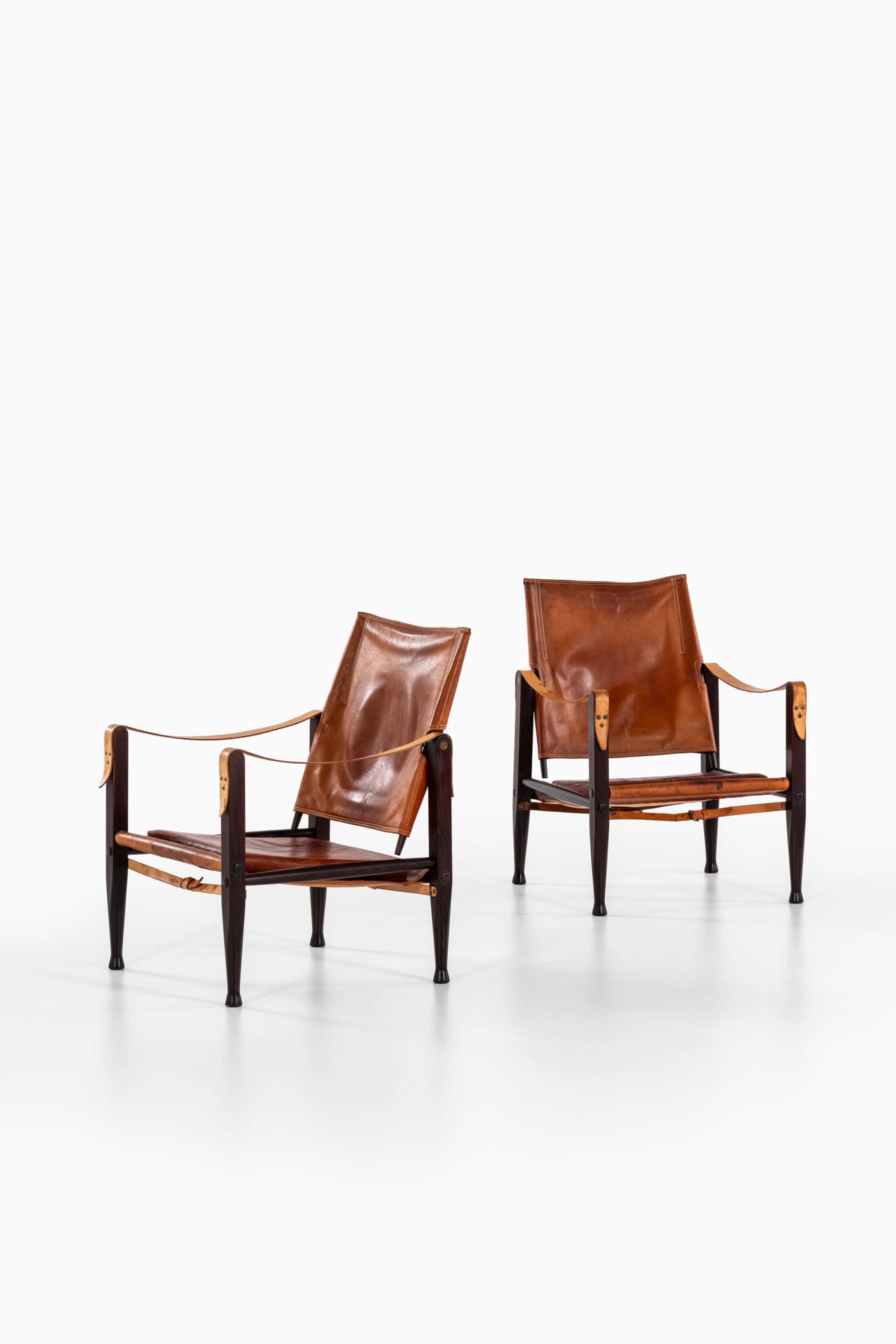
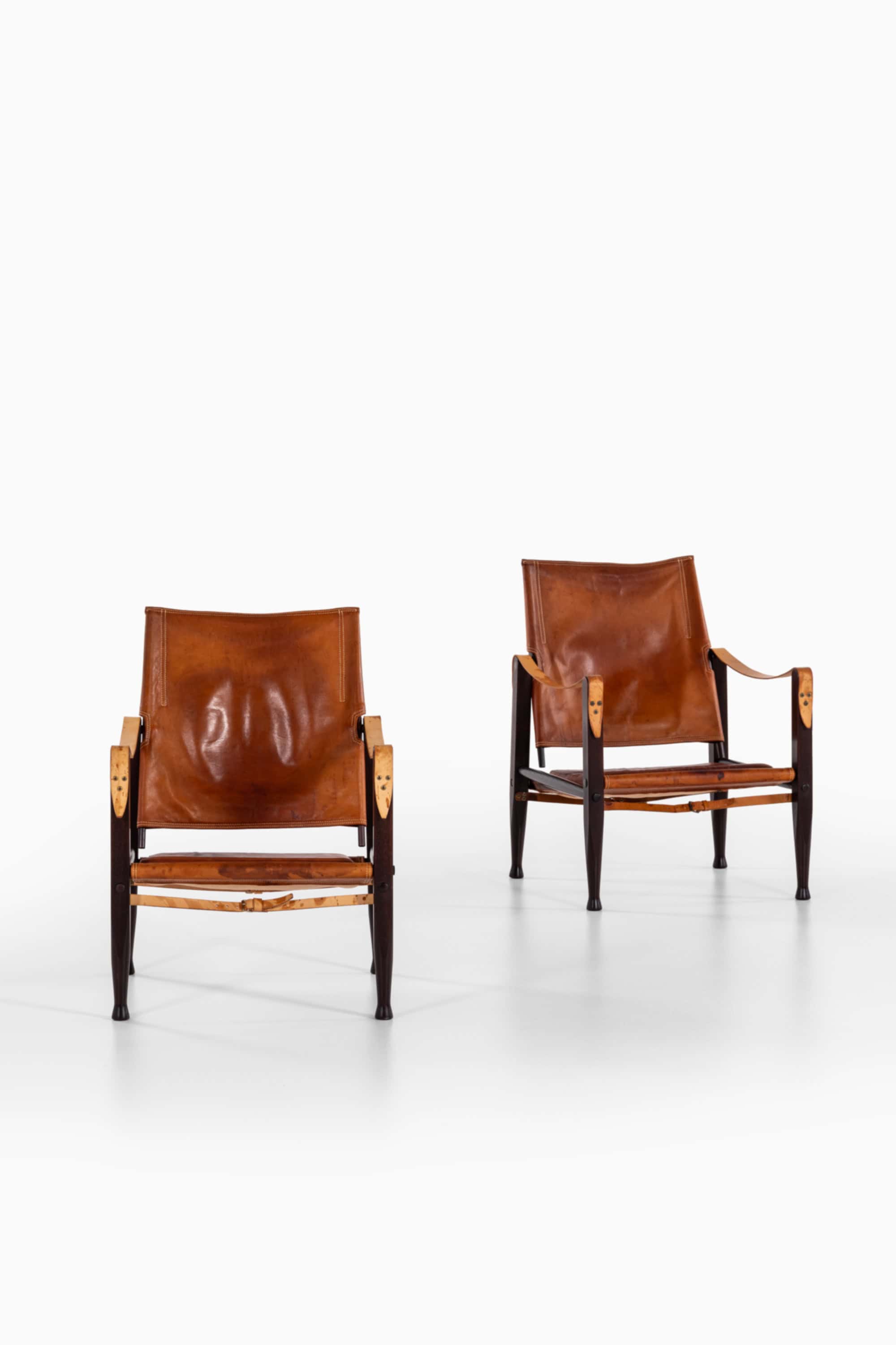
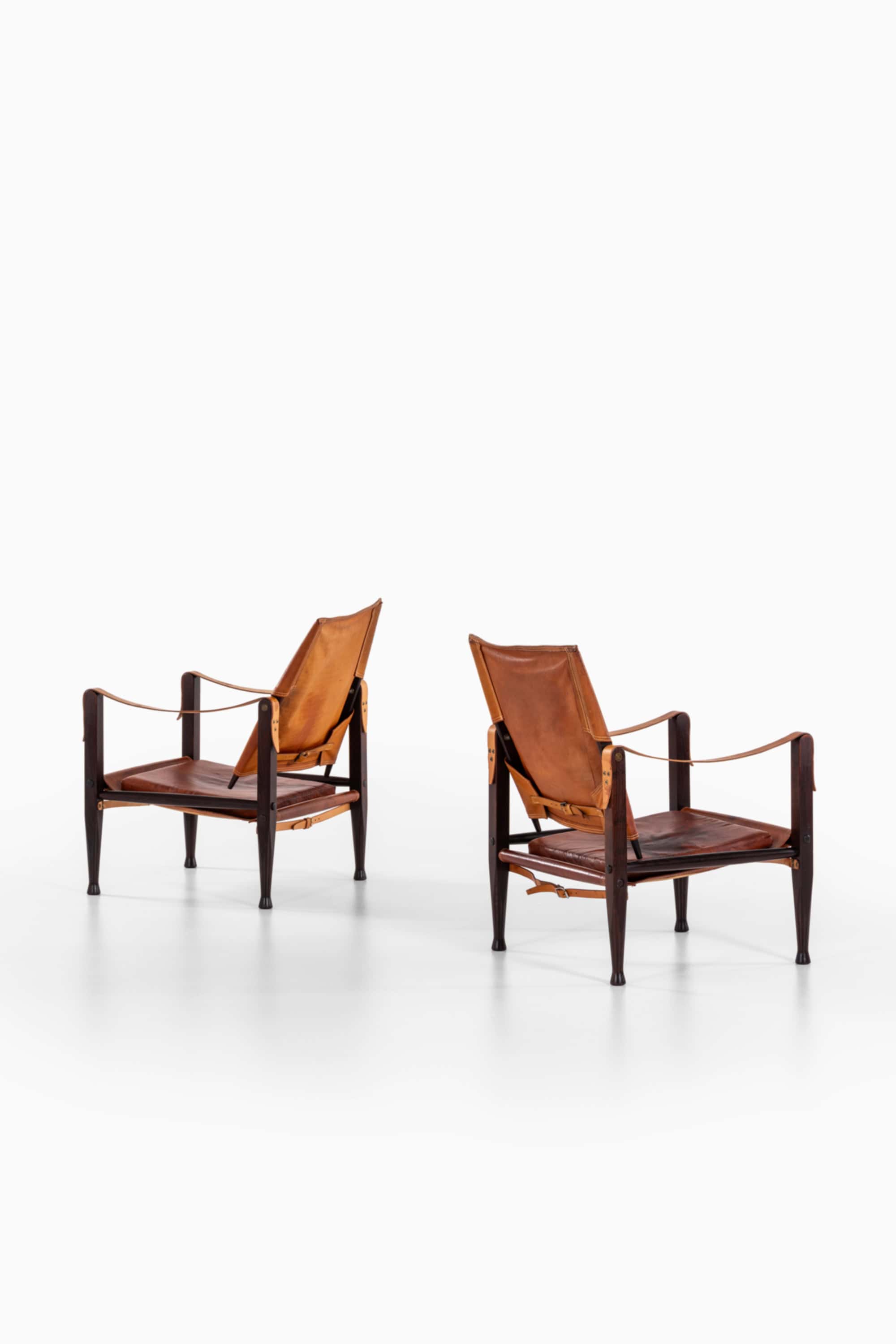
Rare pair of Safari easy chairs designed by Kaare Klint in 1933 and produced by Rud Rasmussen in Denmark. The Safari chair is one of the most influential pieces in early Danish modern design, representing Klint’s analytical approach to furniture based on historical precedents and functional clarity.
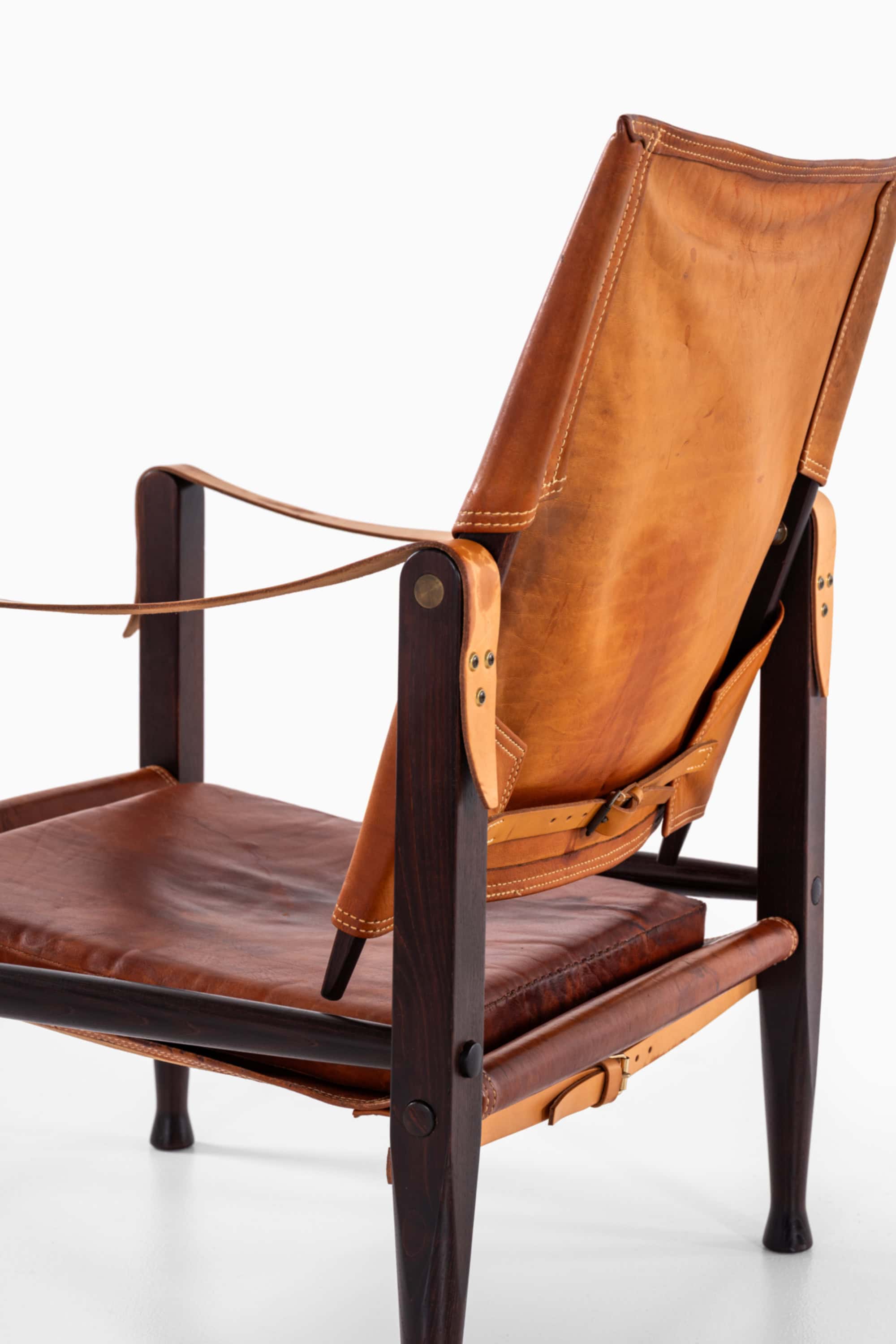
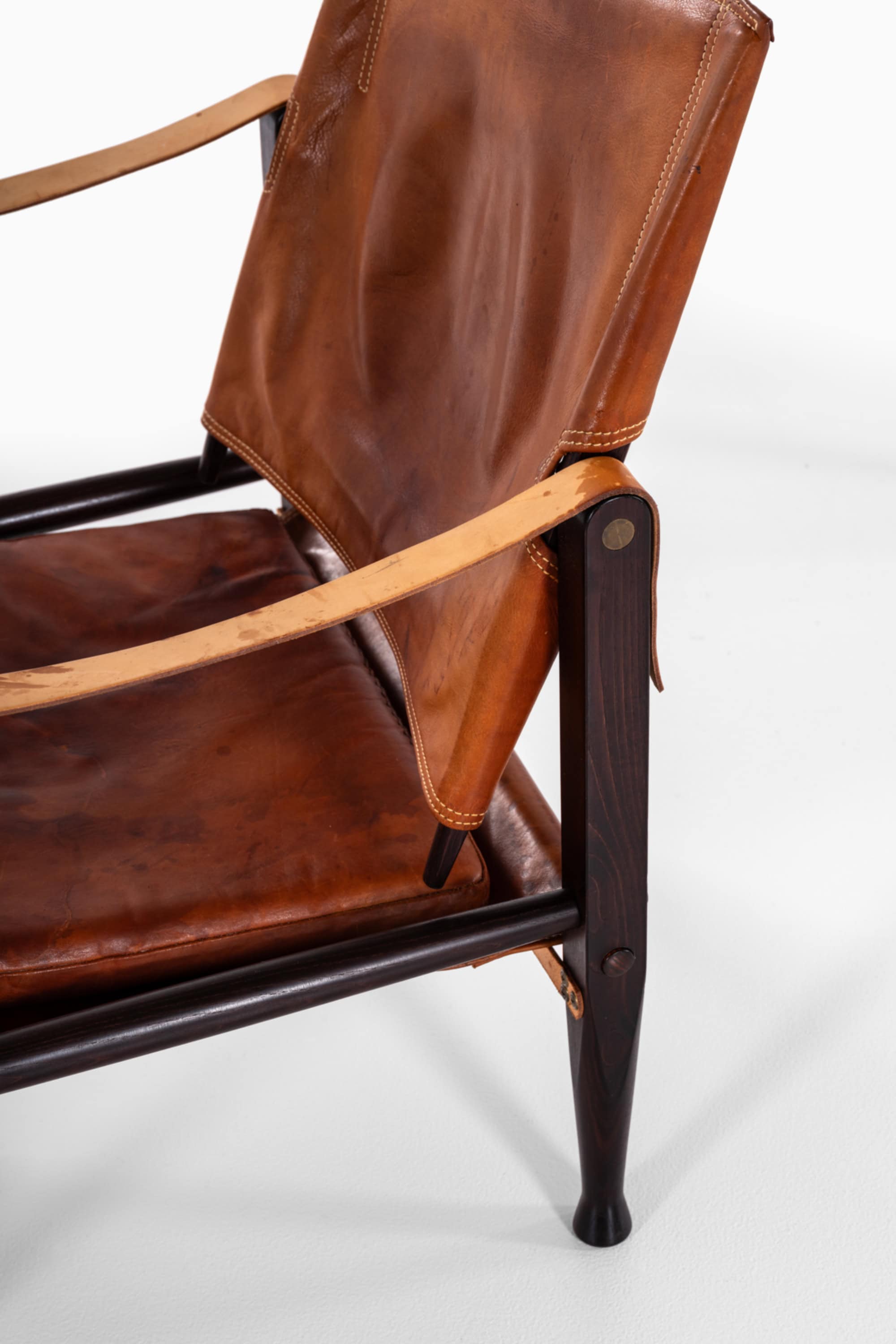
The chairs are constructed in ash with a dark-stained frame that emphasizes the clean structural lines and visible joinery. The legs are slightly tapered with rounded feet, connected by cylindrical stretchers that support the suspended leather seat. The construction is based on a knock-down principle, inspired by traditional campaign and safari furniture, allowing the chair to be assembled without complex joinery. Brass fittings and exposed metal discs secure the structure, functioning both as technical components and subtle decorative accents.
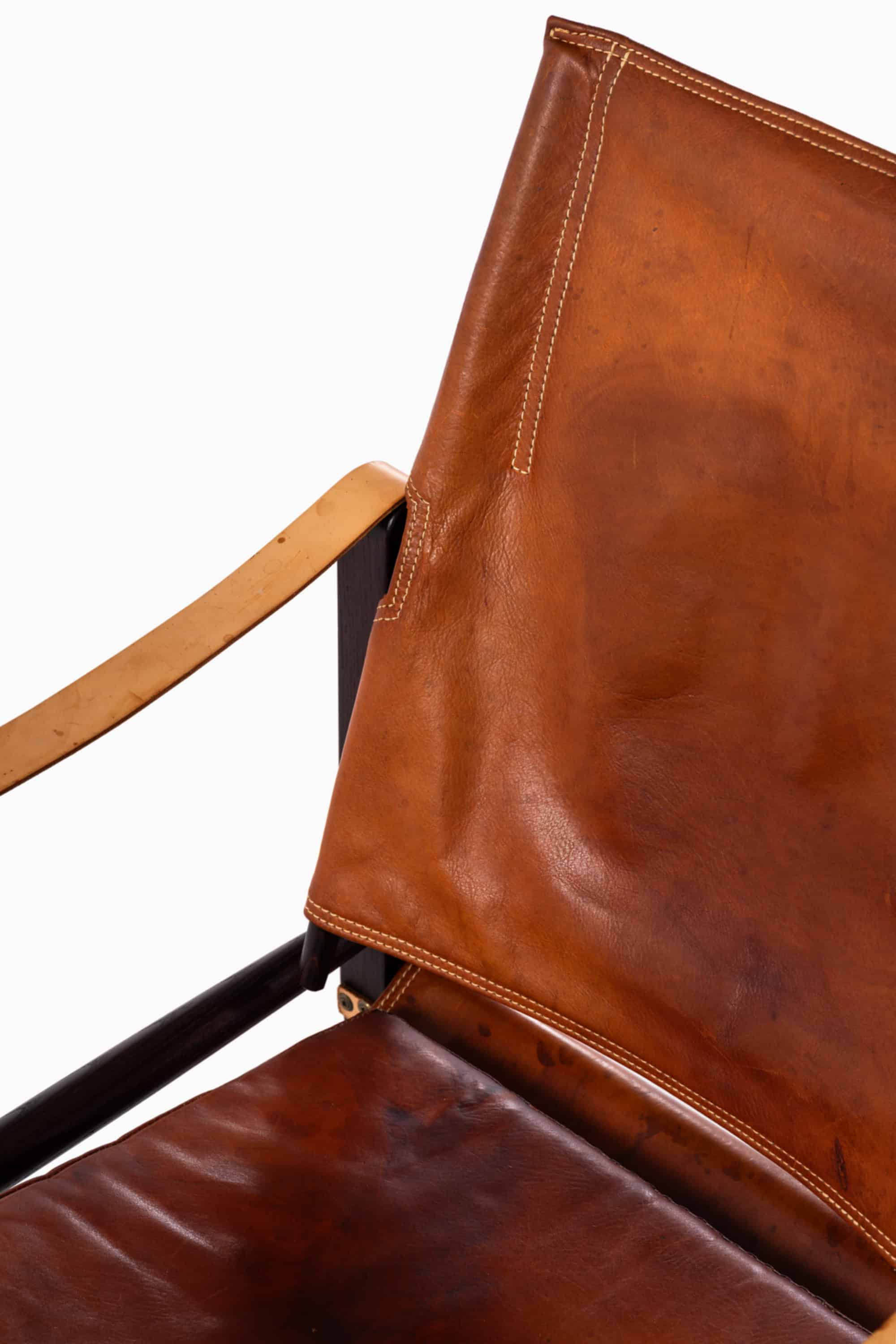
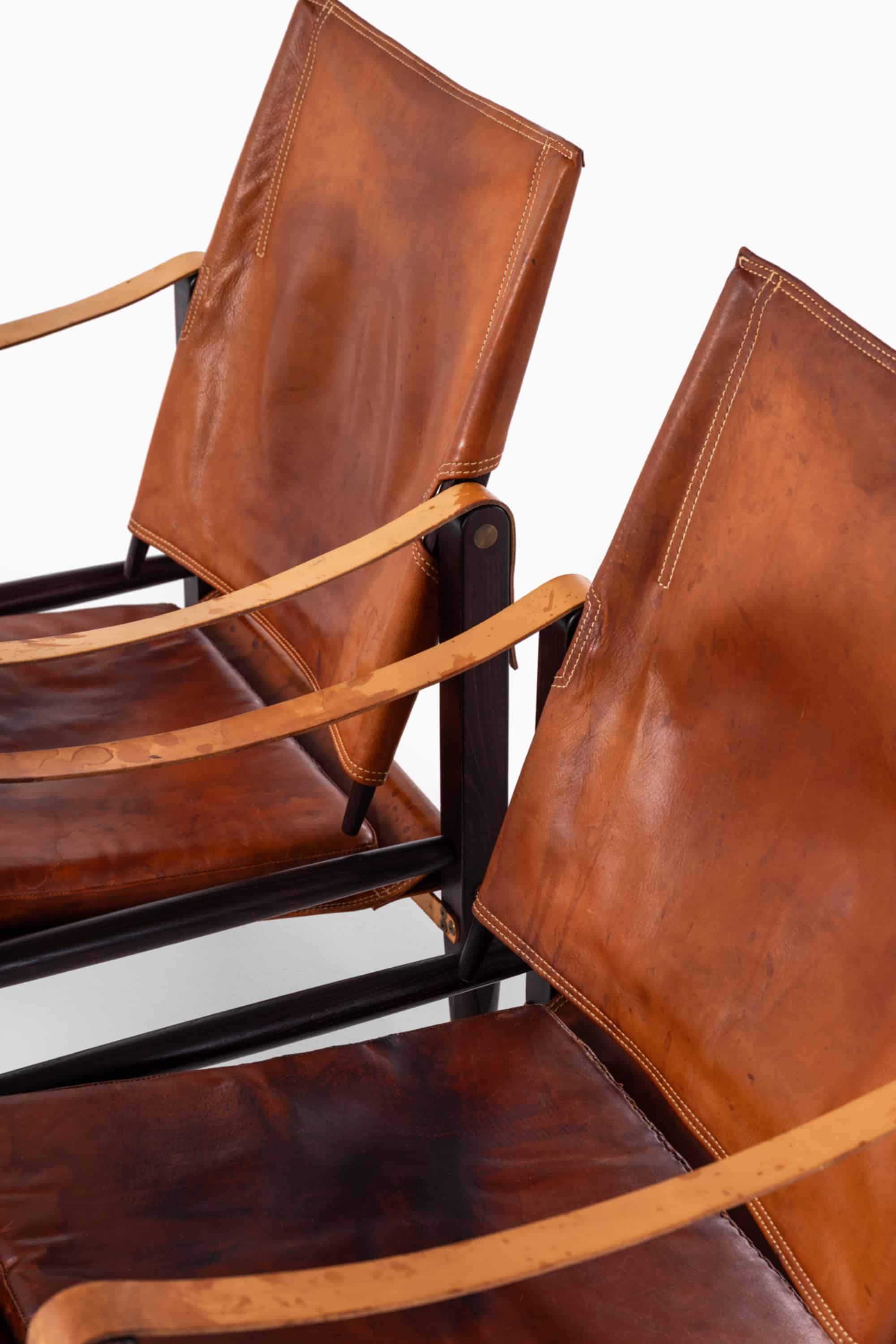
The seat and back are executed in thick saddle leather in a warm cognac-brown tone. The leather back is suspended from the frame and slightly reclined, forming a natural curve that adapts to the body. The seat cushion rests within the lower frame and shows significant patina, with darker tonal variations, surface creasing, and marks consistent with age and use. The armrests are made of natural vegetable-tanned leather straps, lighter in tone, developing visible wear and darkened areas that reflect long-term handling. The contrast between the darker stained ash, the warm brown leather, and the aged brass creates a balanced material composition.
Kaare Klint, often regarded as the father of modern Danish furniture design, based his work on precise studies of human proportions and historical furniture types. The Safari chair, designed in 1933, reinterprets British campaign furniture through a Scandinavian lens, reducing the form to essential structural elements while maintaining comfort and durability. Klint’s work laid the foundation for subsequent generations of Danish designers through his teaching at the Royal Danish Academy of Fine Arts.
Rud Rasmussen was one of Denmark’s most respected cabinetmakers, known for producing high-quality furniture in collaboration with leading designers. The workshop was recognized for its craftsmanship, precision, and commitment to material integrity, making it a natural partner for Klint’s technically refined designs.
The chairs are in good vintage condition. The leather upholstery shows heavy patina on the seat cushions, including creasing, darker wear marks, and tonal variation. The leather remains structurally sound, and the frames are stable with minor signs of age-related wear. The brass fittings show natural oxidation consistent with age.
Dimensions: 57.5 cm width, 65 cm depth, 79 cm height (22.64 x 25.59 x 31.10 inches). Seat height: 32 cm (12.60 inches).
Literature
Grete Jalk: ‘Dansk møbelkunst gennem 40 aar Københavns Snedkerlaugs møbeludstillinger 1927-1966’. Vol. 1, p. 169.
Dimensions (cm) | W: 57.5 / D: 65 / H: 79 / Seat H: 32 |
| Producer | Rud Rasmussen |
| Decade | 1950s |
| Country | Denmark |
| Style | Mid Century, Scandinavian Modern |
| Material | Ash, Brass, Leather |
| Designed in | 1933 |
| Item Number | 250571 |
Kaare Klint
Kaare Klint (1888–1954) was a foundational figure in modern Danish design, often referred to as the father of modern Danish furniture design. Trained initially as a painter and later as an architect, Klint combined rigorous craftsmanship, archit...
Read more