Mogens Voltelen easy chair
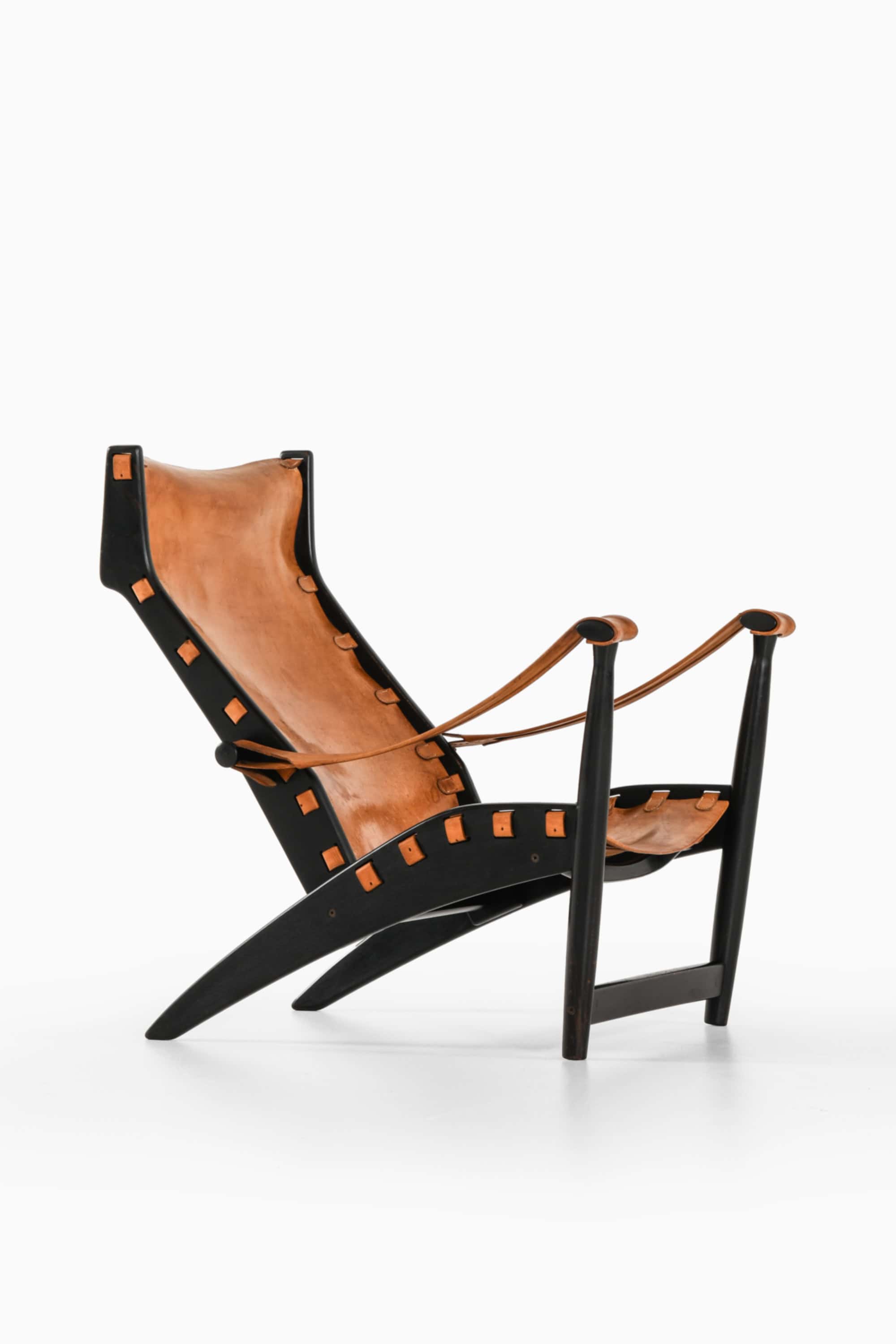
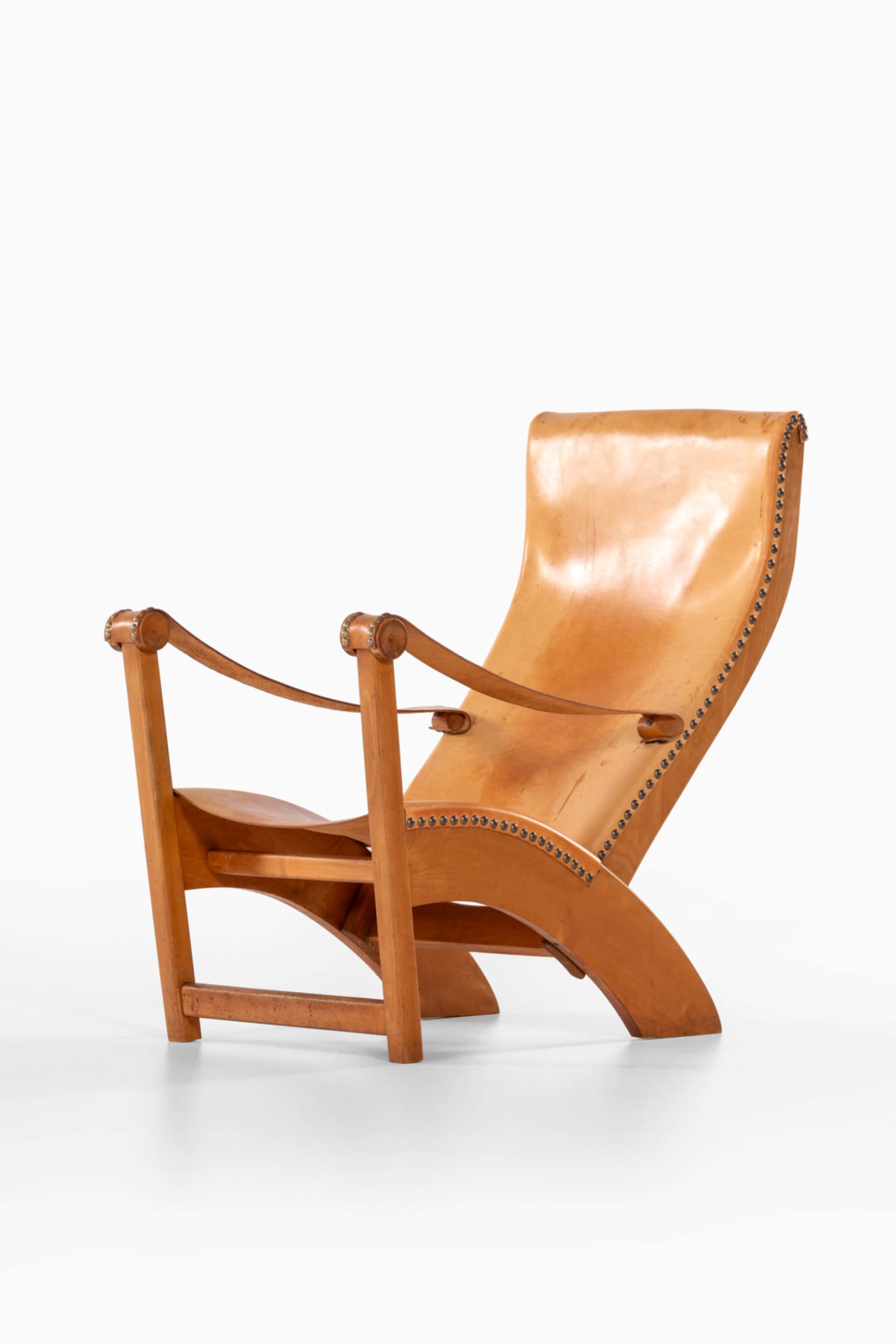
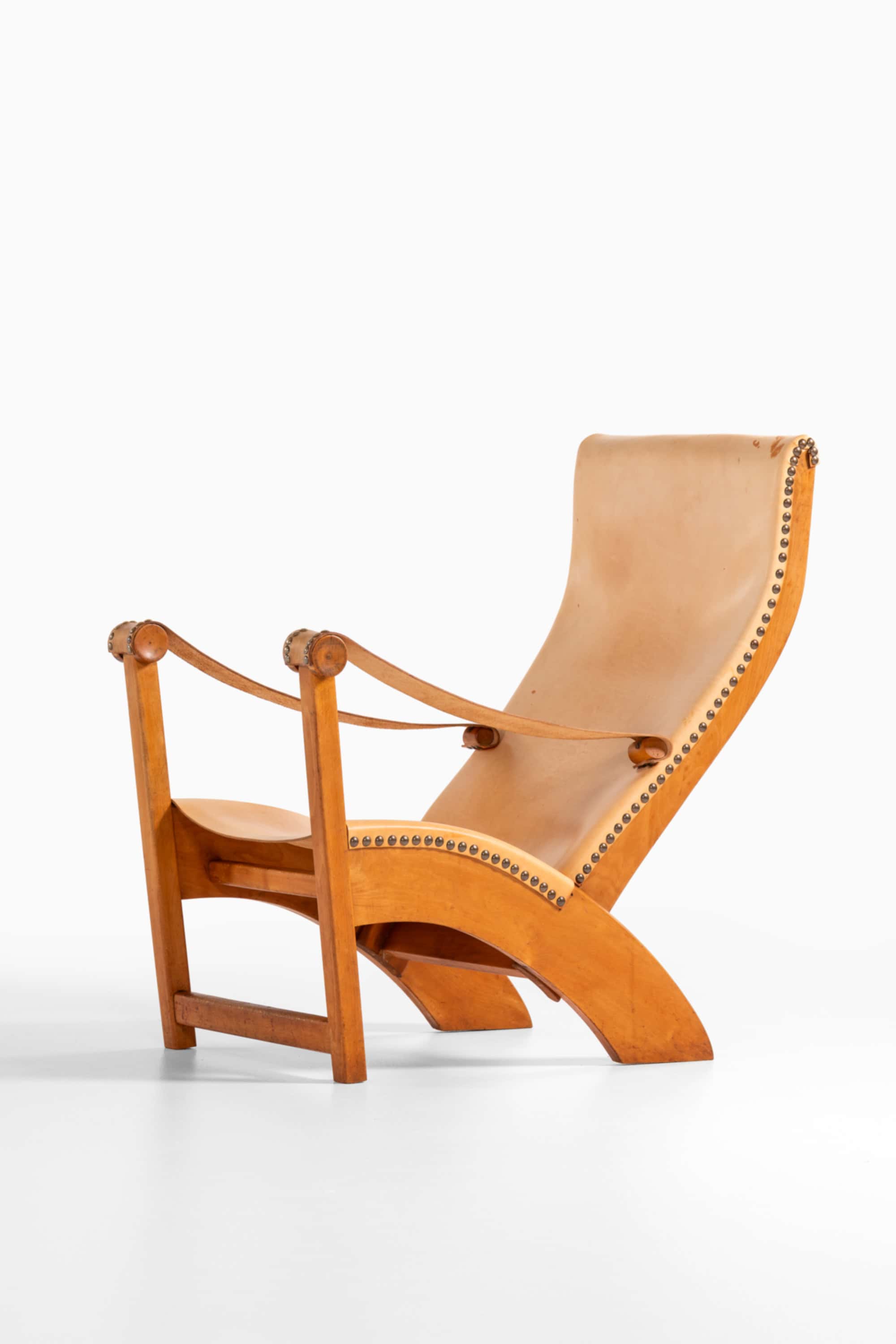
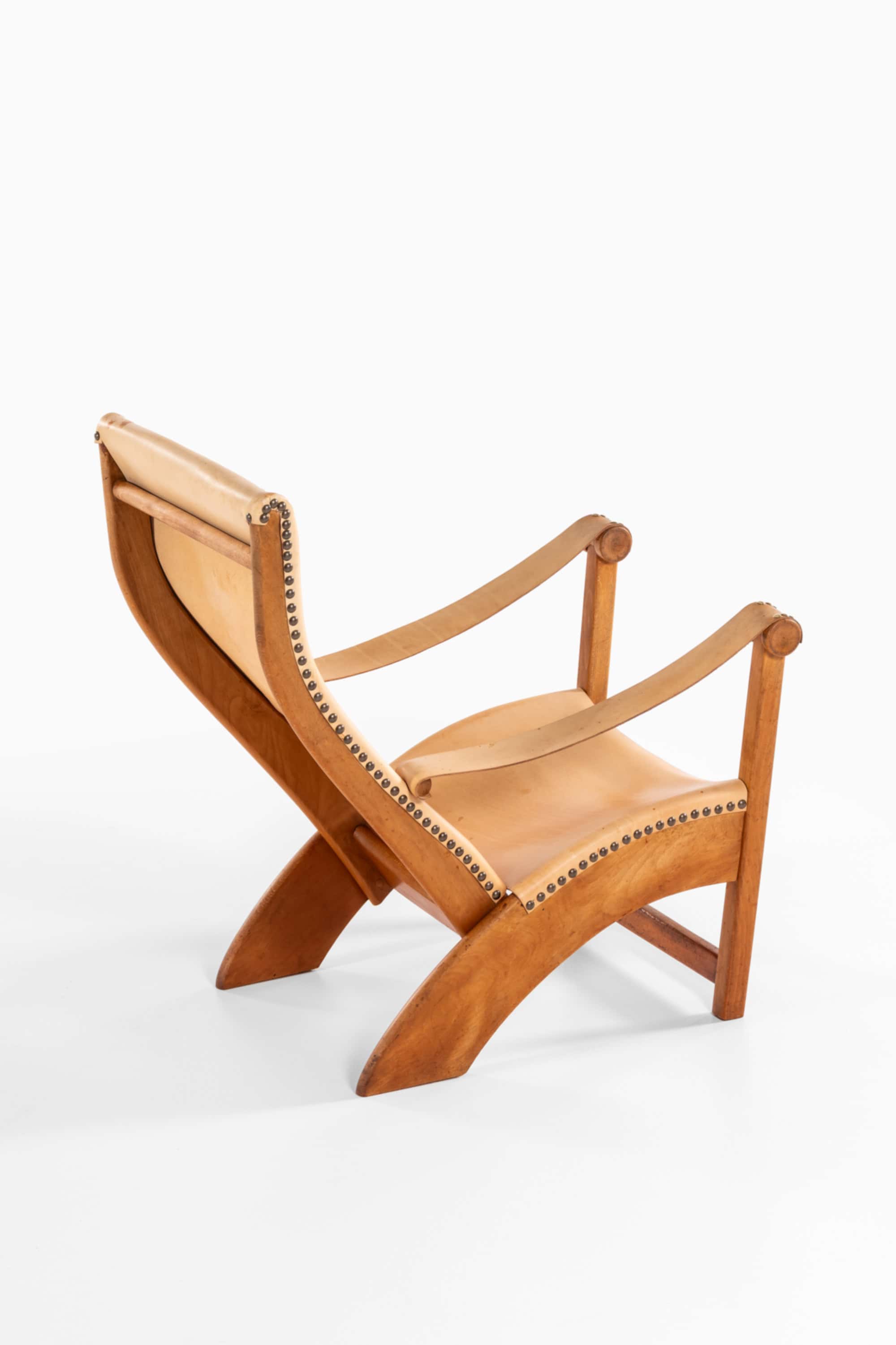
Very rare easy chair designed by Mogens Voltelen and produced by master cabinetmaker Niels Vodder, Denmark. The model was presented at the Copenhagen Cabinetmakers’ Guild Exhibition in 1936, one of the most important forums for the development of Danish furniture design during the twentieth century. The annual exhibitions served as a platform where architects and designers collaborated with highly skilled cabinetmakers to explore new forms, materials, and construction methods. This chair represents an early example of the sculptural and organic direction that would later become a defining characteristic of Danish Modernism.
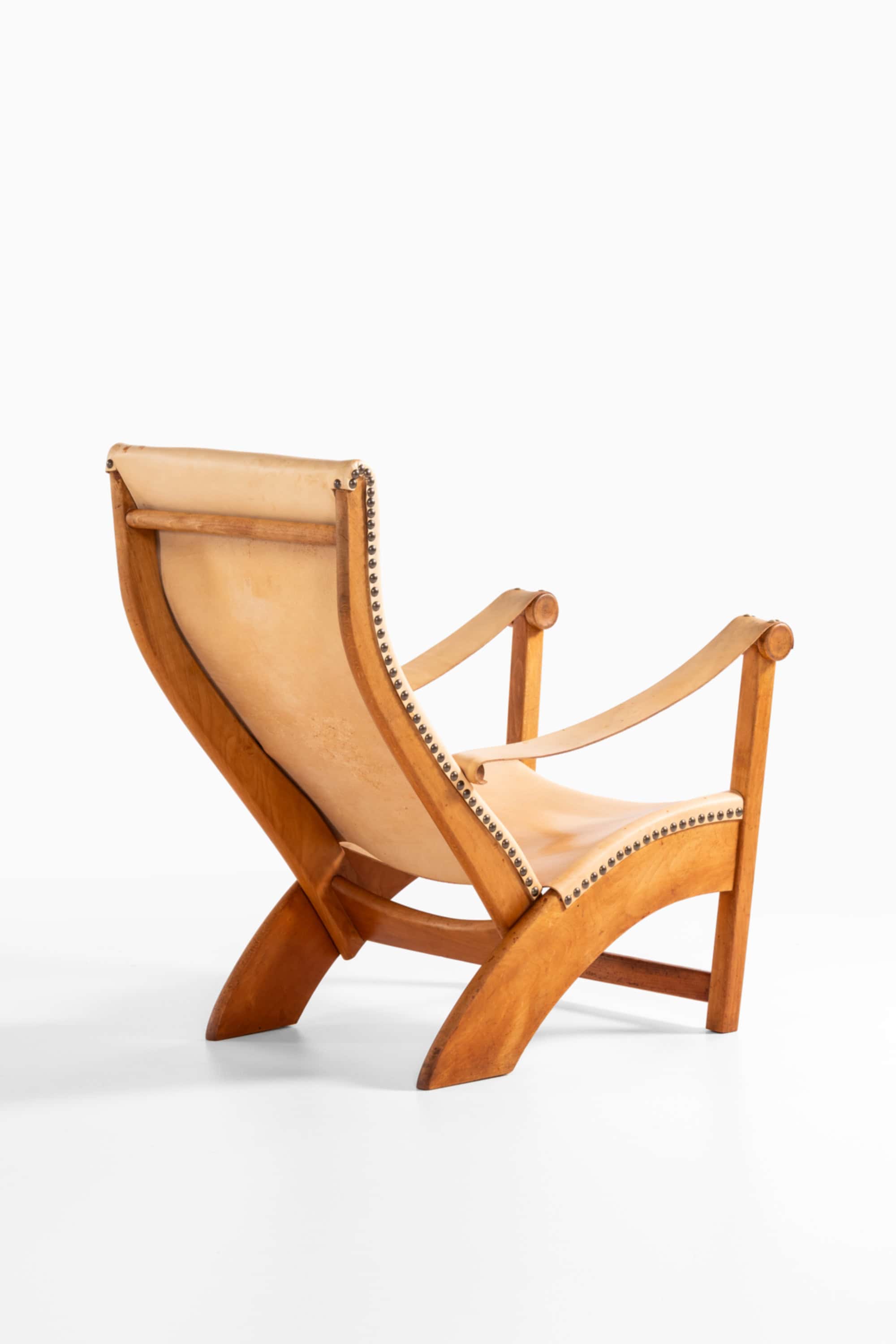
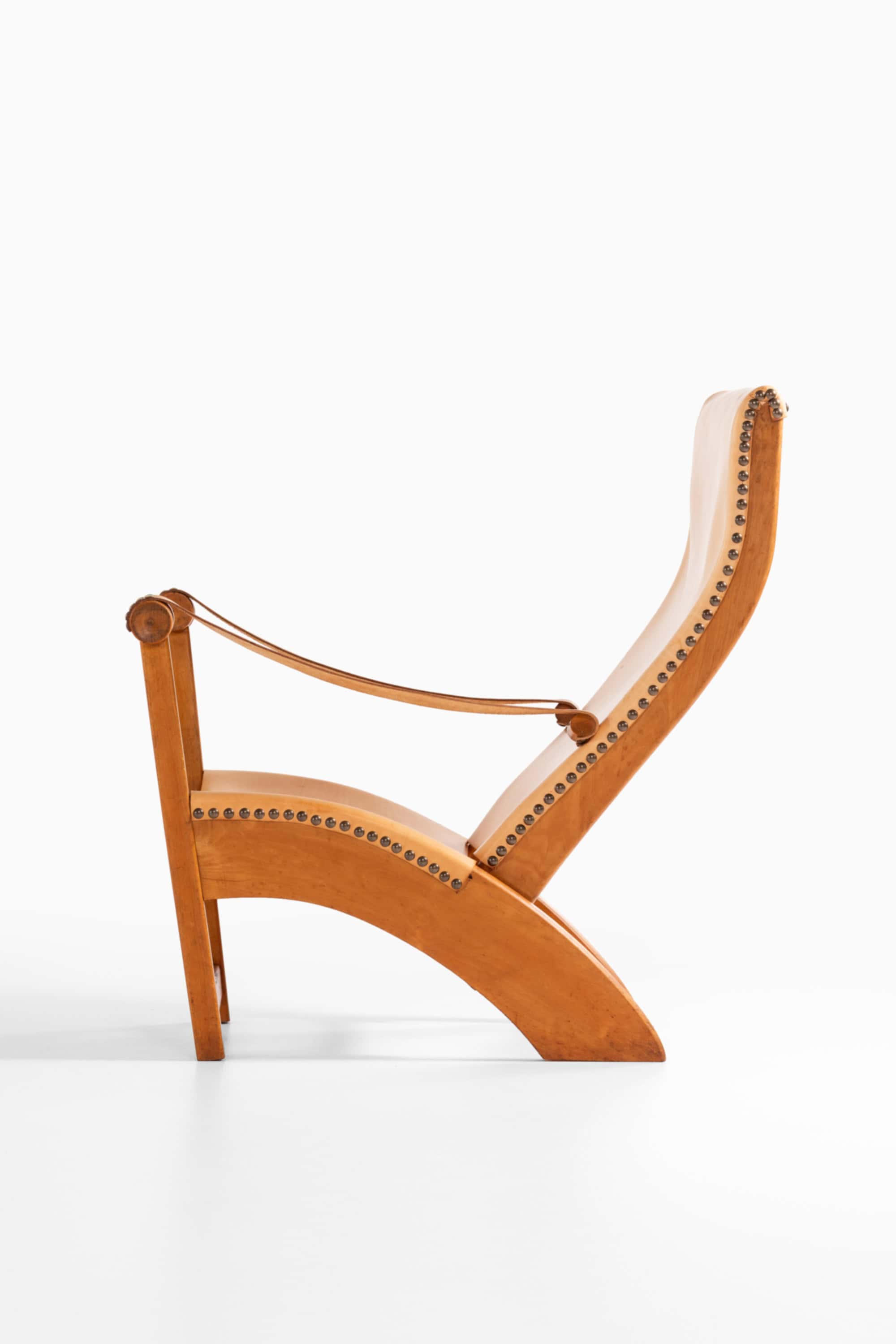
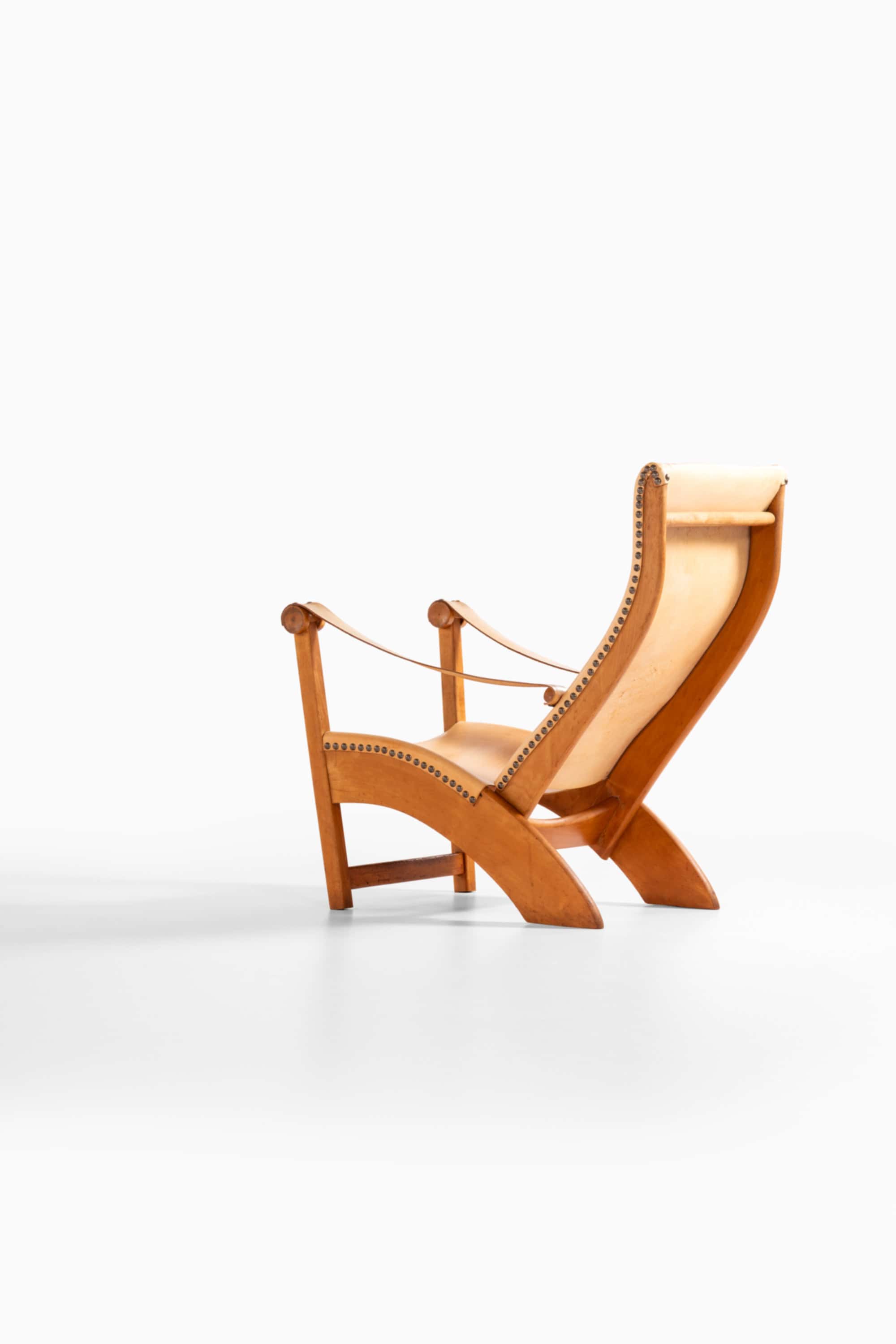
The chair is executed in beech with a warm honey-toned finish that highlights the natural grain and craftsmanship of the timber. Its construction is defined by a series of sweeping curves and carefully balanced proportions. The dramatically arched side supports form both the visual and structural foundation of the piece, creating a dynamic silhouette that appears simultaneously robust and lightweight. The design departs from traditional upholstered armchairs of the period, instead embracing an exposed structural expression where every component remains visible and contributes to the overall composition.
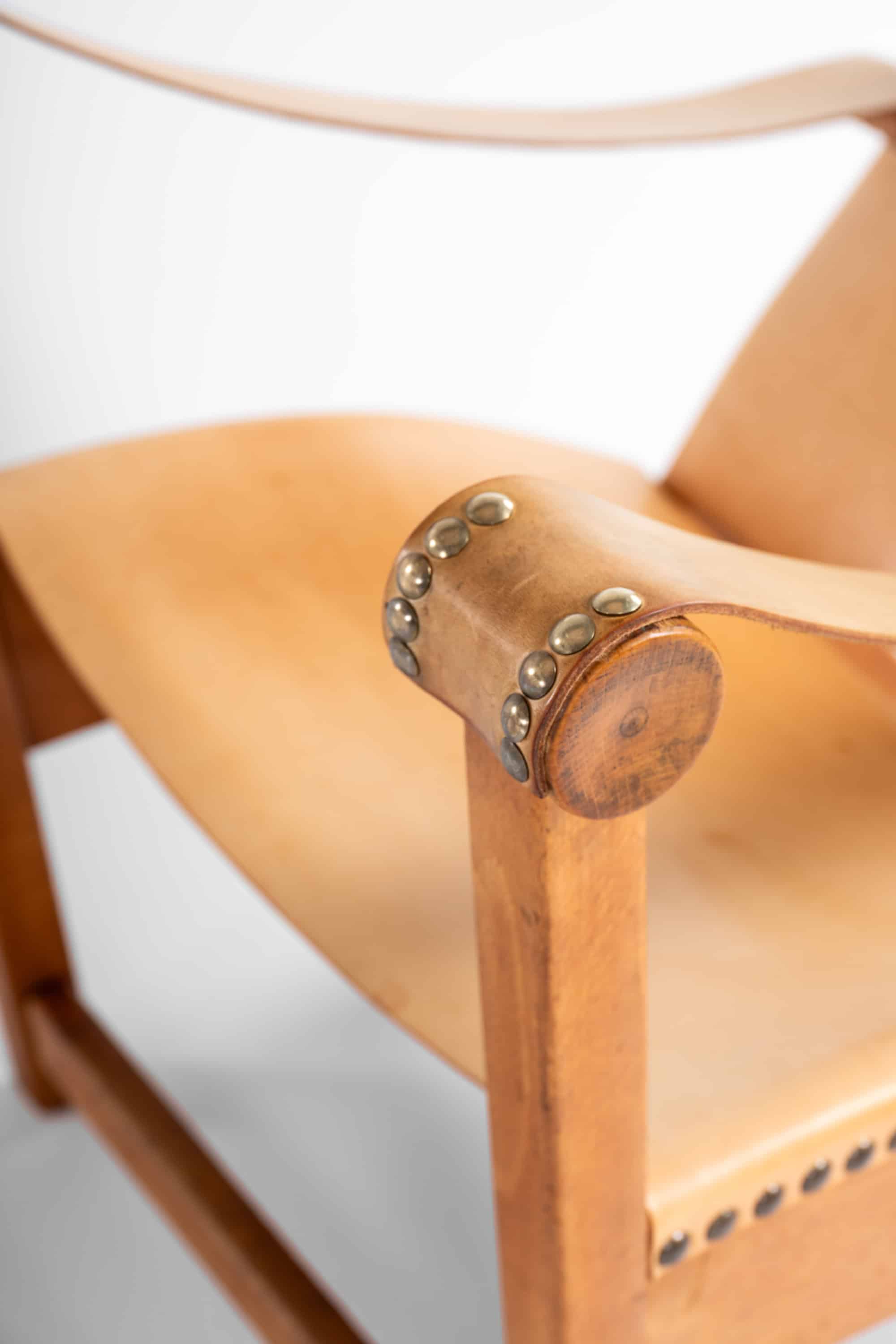
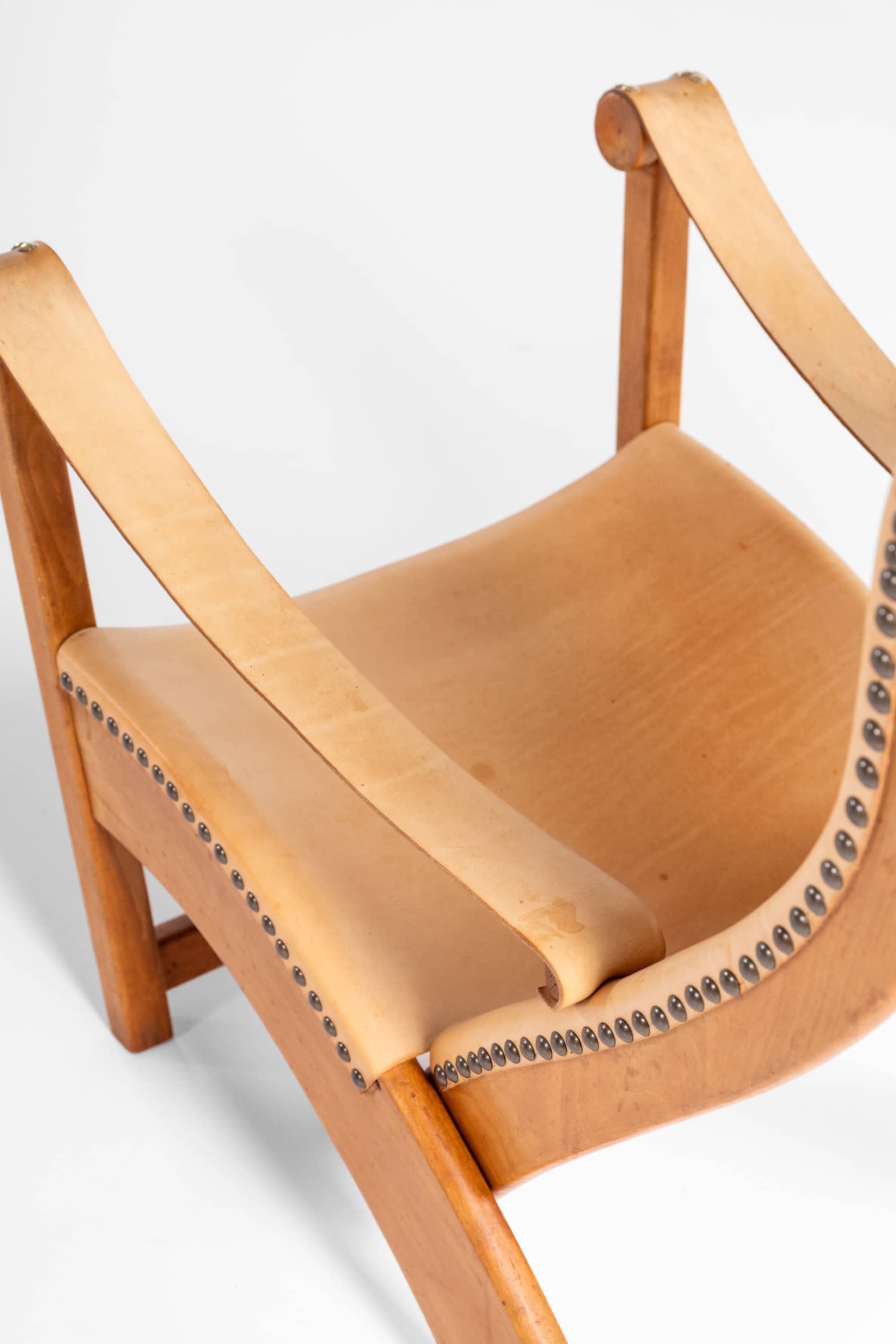
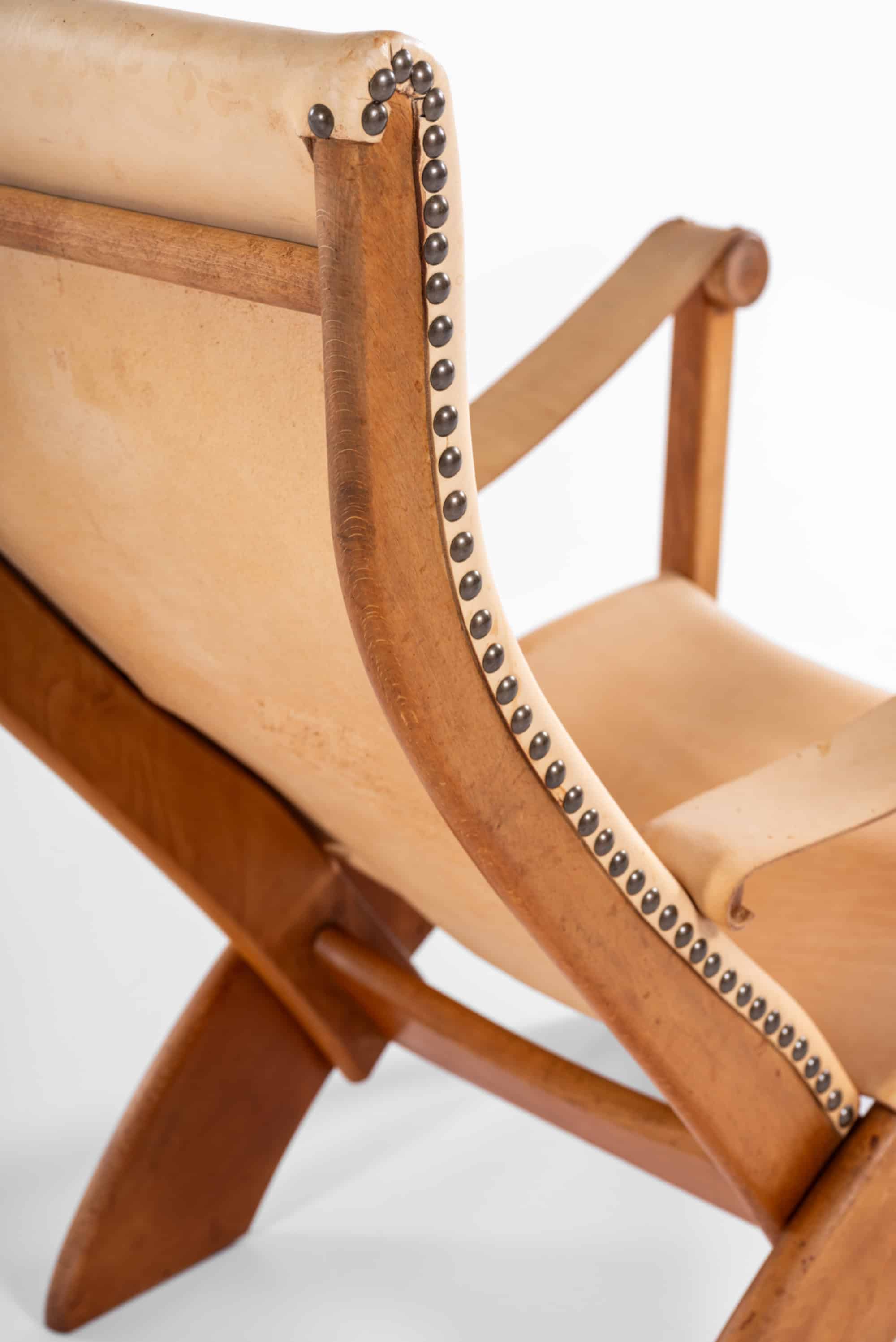
The seat and back are upholstered in thick natural grain leather in a light tan colour. Rather than functioning as conventional upholstery, the leather is stretched and suspended within the wooden framework, creating a hammock-like seating surface that conforms naturally to the body. The leather arm straps continue this suspended construction and are secured to cylindrical wooden mounts at the front uprights. Rows of evenly spaced brass nails trace the contours of the seat and back, emphasizing the chair’s flowing lines while introducing a subtle decorative element. The contrast between the pale leather, warm beech, and darkened brass tacks contributes to the chair’s distinctive visual character.
Mogens Voltelen belongs to the generation of Danish designers who helped establish a more organic and human-centred approach to furniture design during the 1930s. His work is considerably rarer than that of many of his contemporaries, and surviving examples produced by Niels Vodder are especially sought after. Vodder was among the most respected cabinetmakers in Denmark and is best known for his collaborations with Finn Juhl, although his workshop also produced furniture for several important architects and designers. The quality of execution seen in this chair reflects the exceptional standards associated with the Copenhagen cabinetmaking tradition.
The chair remains in good vintage condition with signs of age and use consistent with its history. The beech frame displays minor wear, surface marks, and a developed patina acquired over decades of use. The leather upholstery has been replaced at a later date and shows light patination, variations in tone, minor staining, and gentle creasing. The brass nails have acquired a natural aged surface. Overall, the chair presents well while retaining the character and authenticity expected of an early Danish cabinetmaker-produced piece.
Width 61 cm (24.0 in.), Depth 85 cm (33.5 in.), Height 92 cm (36.2 in.), Seat height 33 cm (13.0 in.).
Literature
Grete Jalk [ed.]: “40 Years of Danish Furniture Design”, vol. 1, p. 264.
Dimensions (cm) | W: 61 / D: 85 / H: 92 / Seat H: 33 |
| Producer | Niels Vodder |
| Color | Tan |
| Decade | 1930s |
| Country | Denmark |
| Style | Scandinavian Modern |
| Material | Beech, Brass, Leather |
| Designed in | 1936 |
| Item Number | 250712 |
Mogens Voltelen