Otto Schulz cabinet
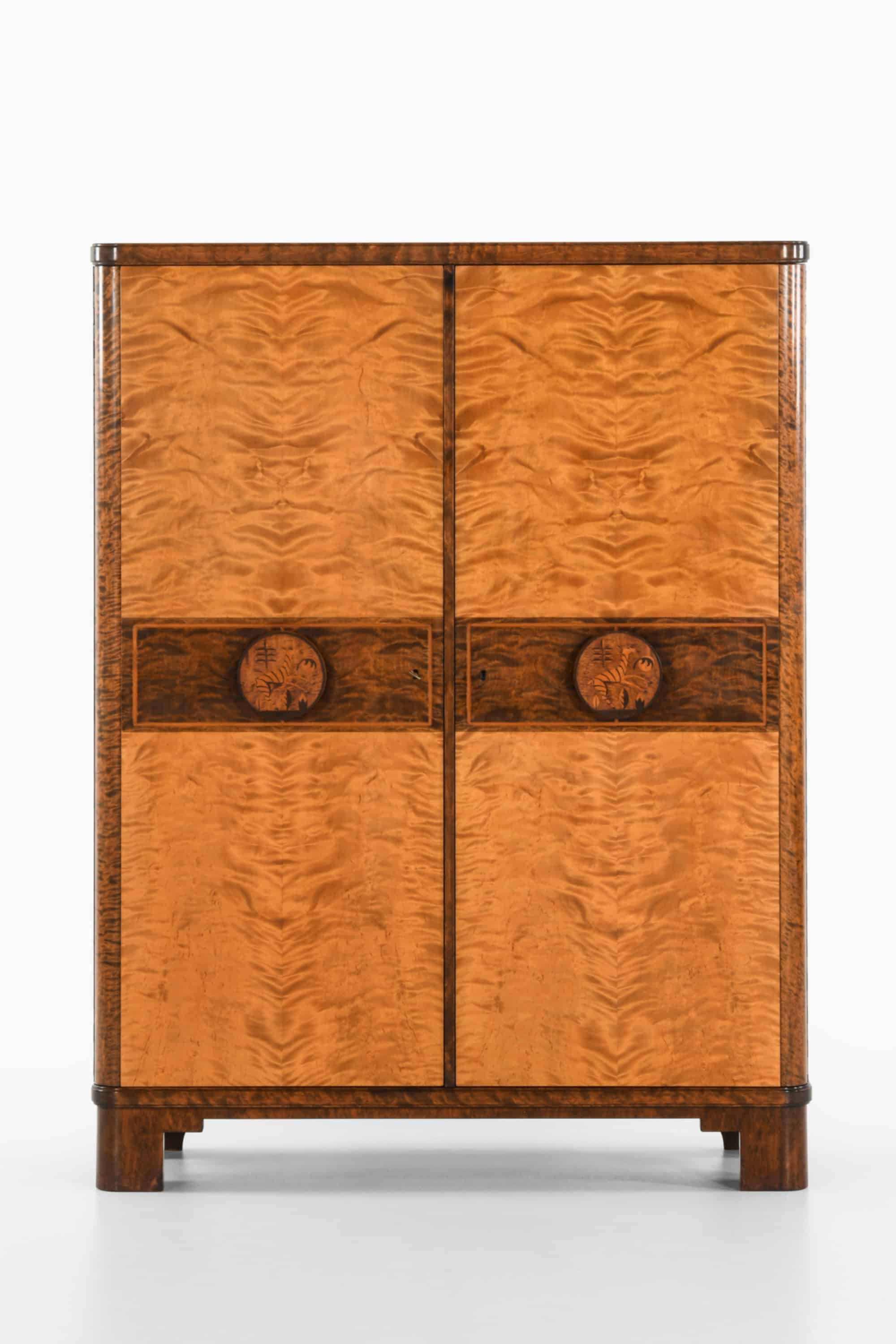
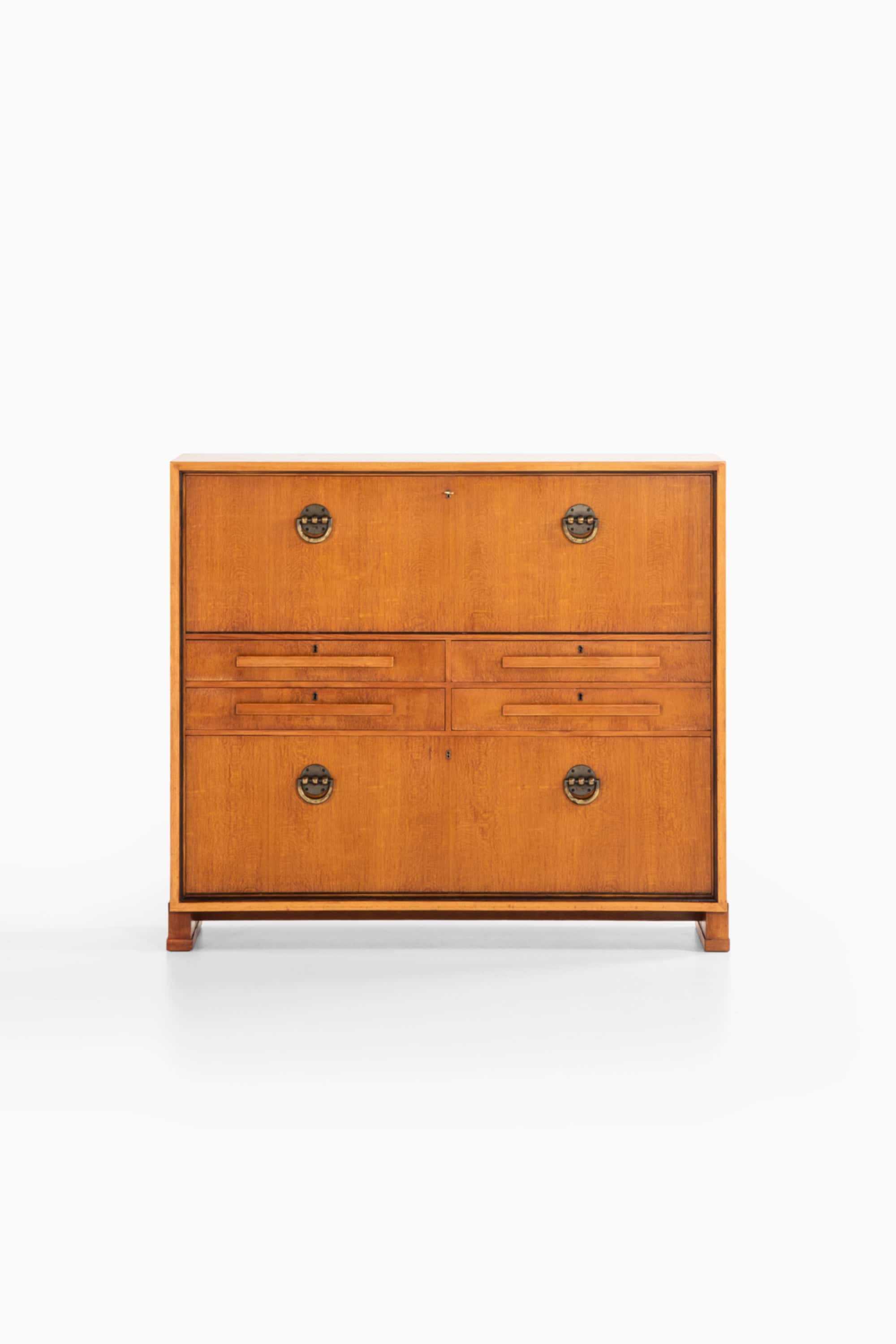
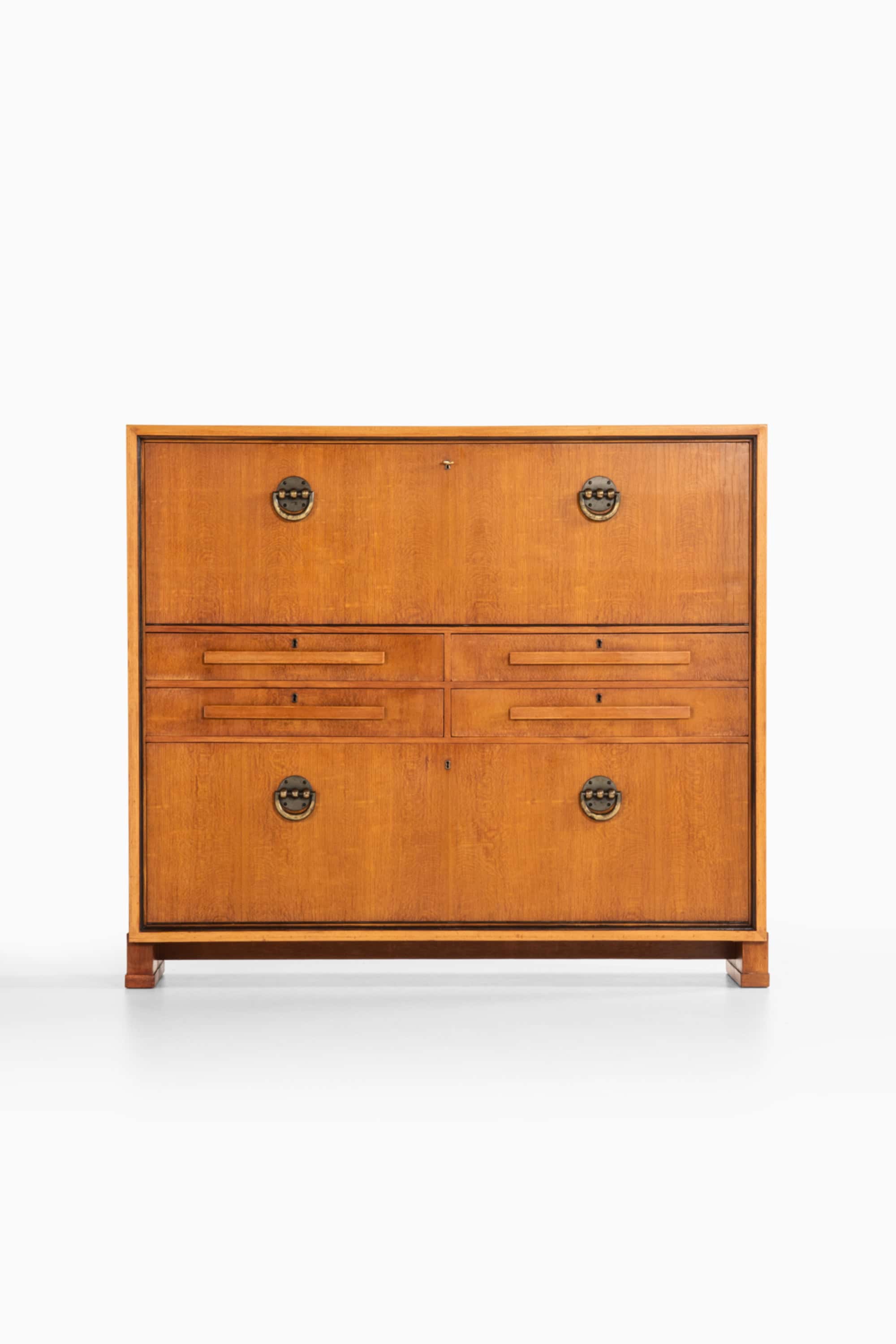
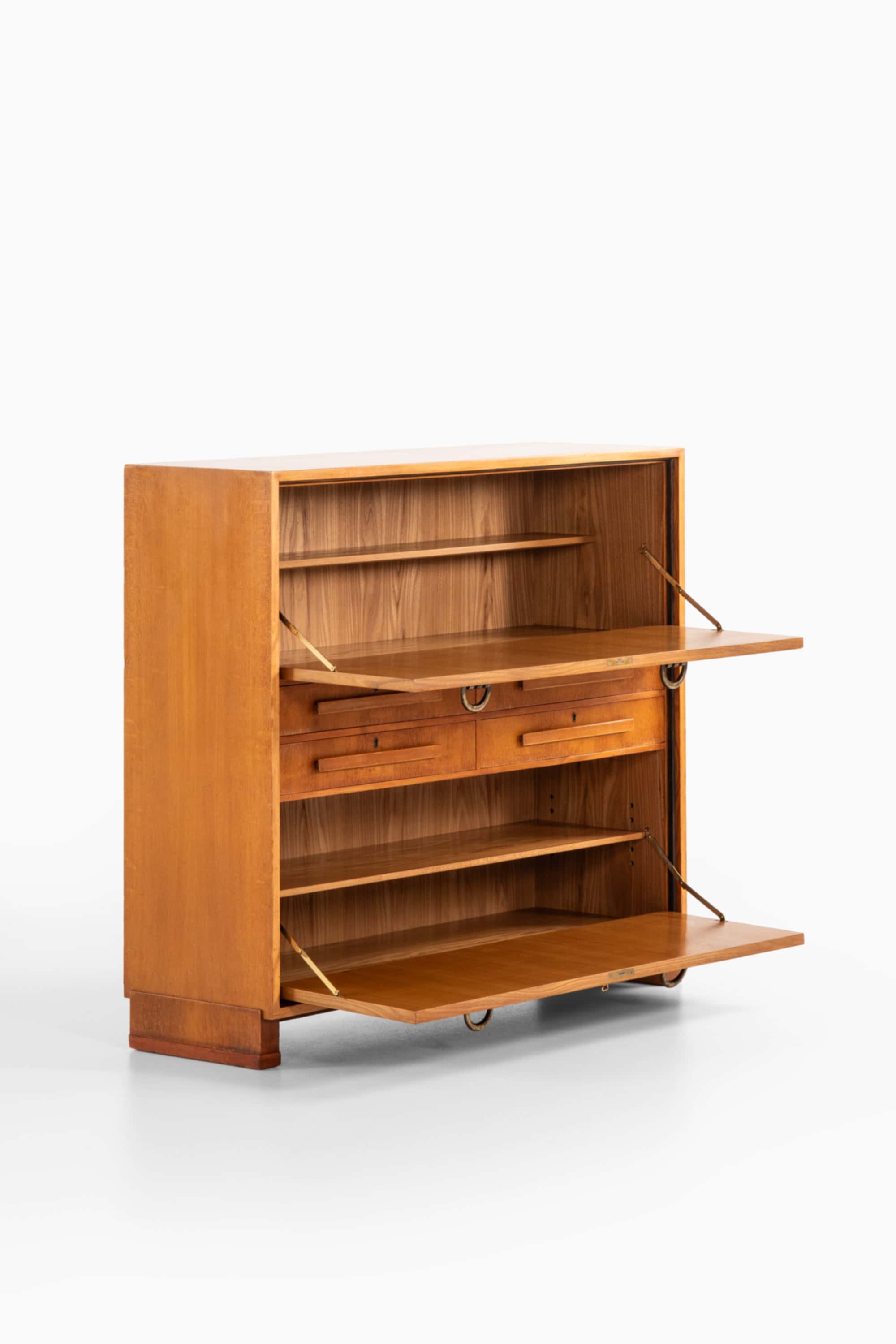
This very rare cabinet was designed by Otto Schulz and produced by Boet in Sweden during the 1930s. The piece represents an early and highly characteristic example of Schulz’s refined interpretation of Scandinavian modernism, where traditional craftsmanship is combined with a restrained, architectural form language.
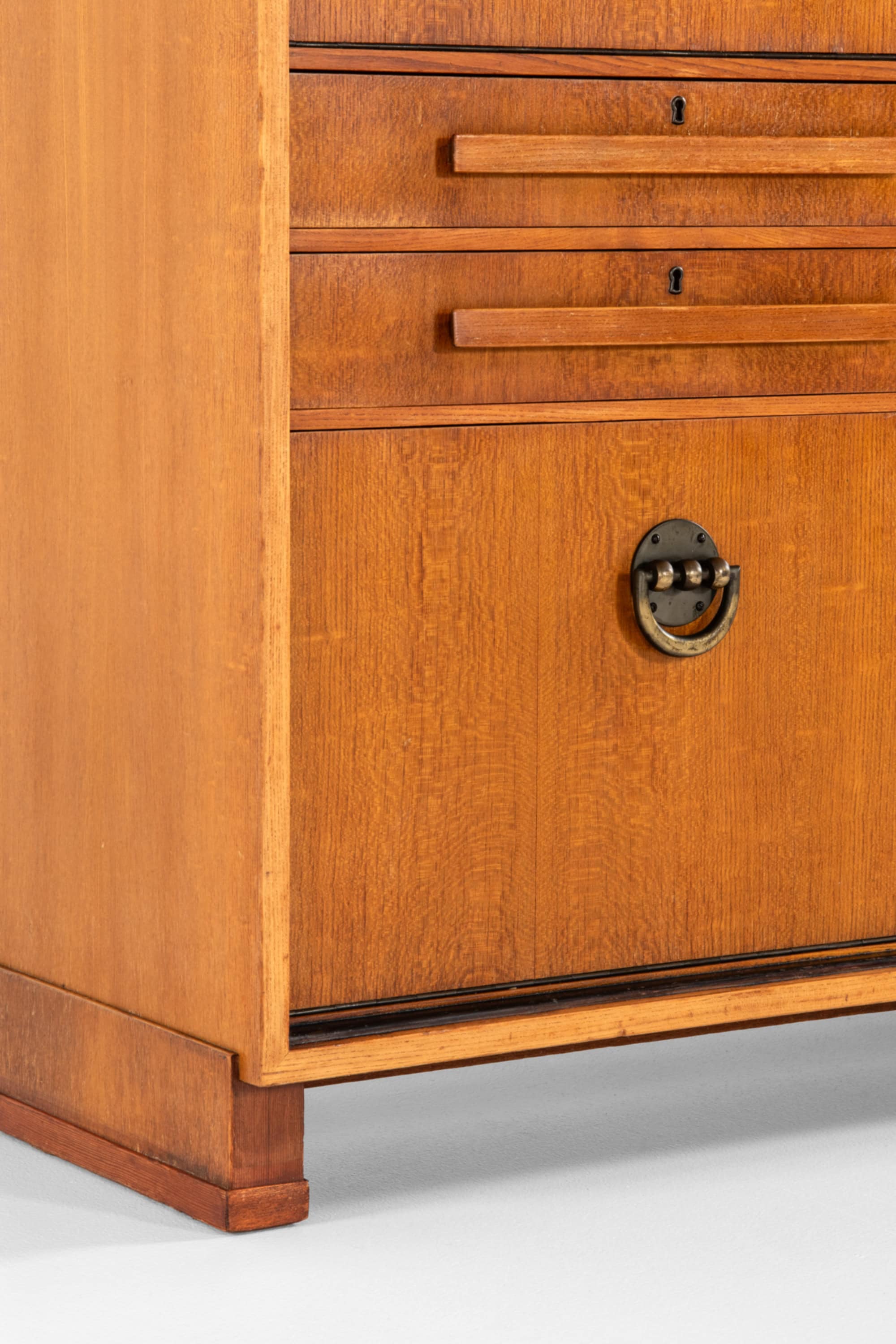
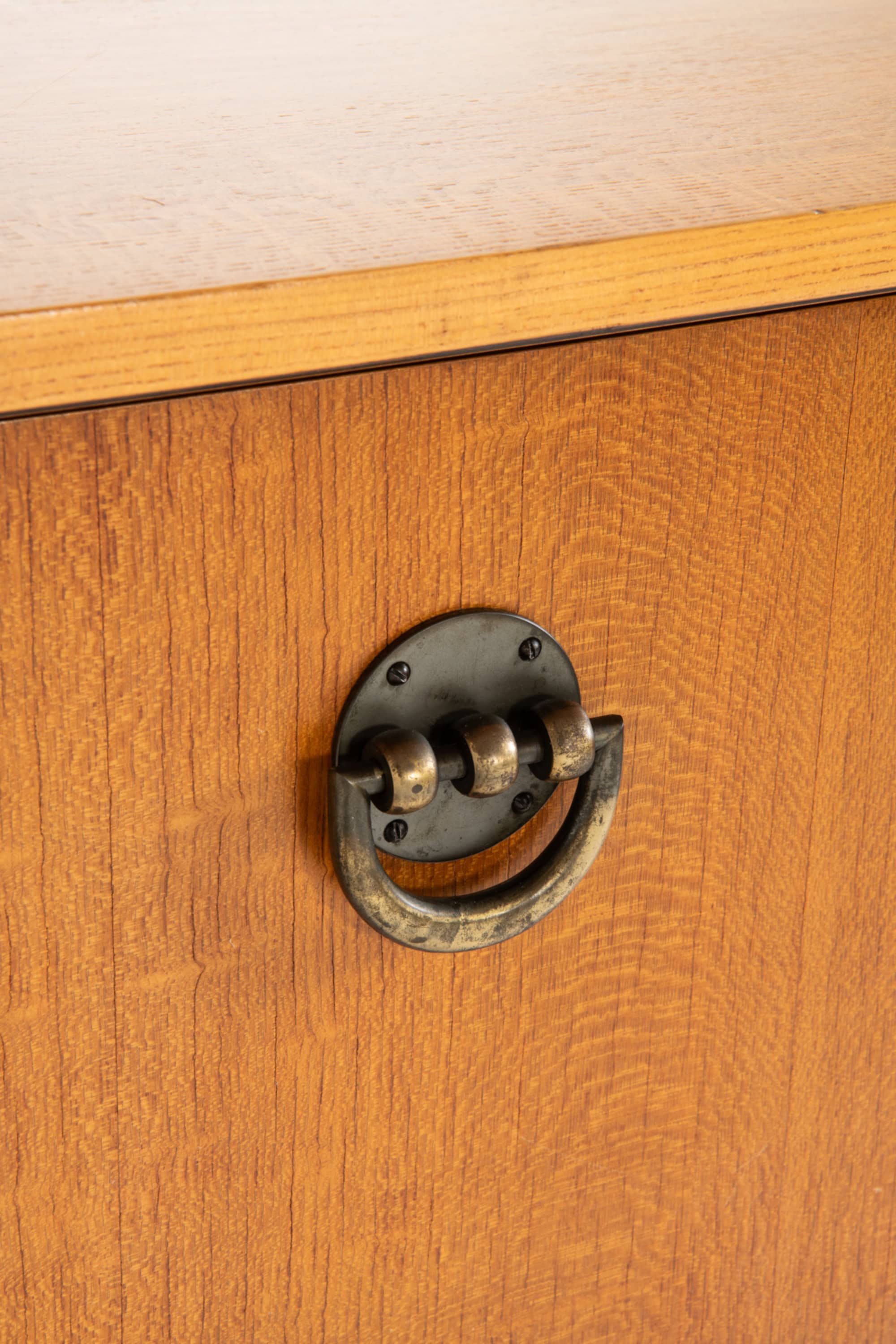
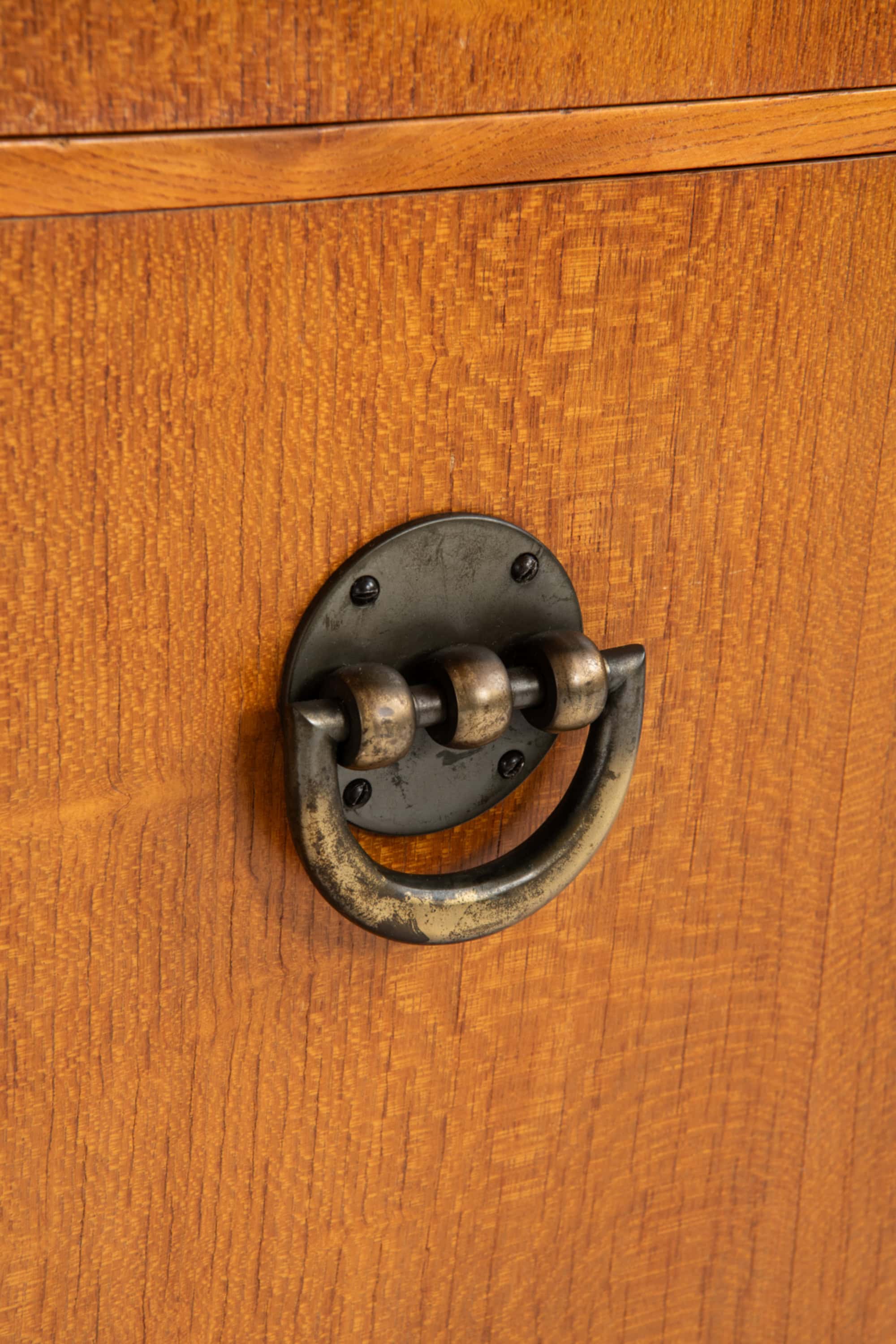
The cabinet is constructed in elm, displaying a warm honey-brown tone with a clearly visible, lively grain pattern throughout the surfaces. The form is rectilinear and balanced, resting on a slightly recessed plinth base that gives the piece a grounded yet elegant stance. The front is organized into two large drop-front compartments, one above and one below, separated by a central section of four drawers arranged symmetrically. The drawers are fitted with elongated wooden pulls, while the larger doors are equipped with distinctive circular brass ring handles mounted on round backplates, a recurring detail in Schulz’s furniture from this period.
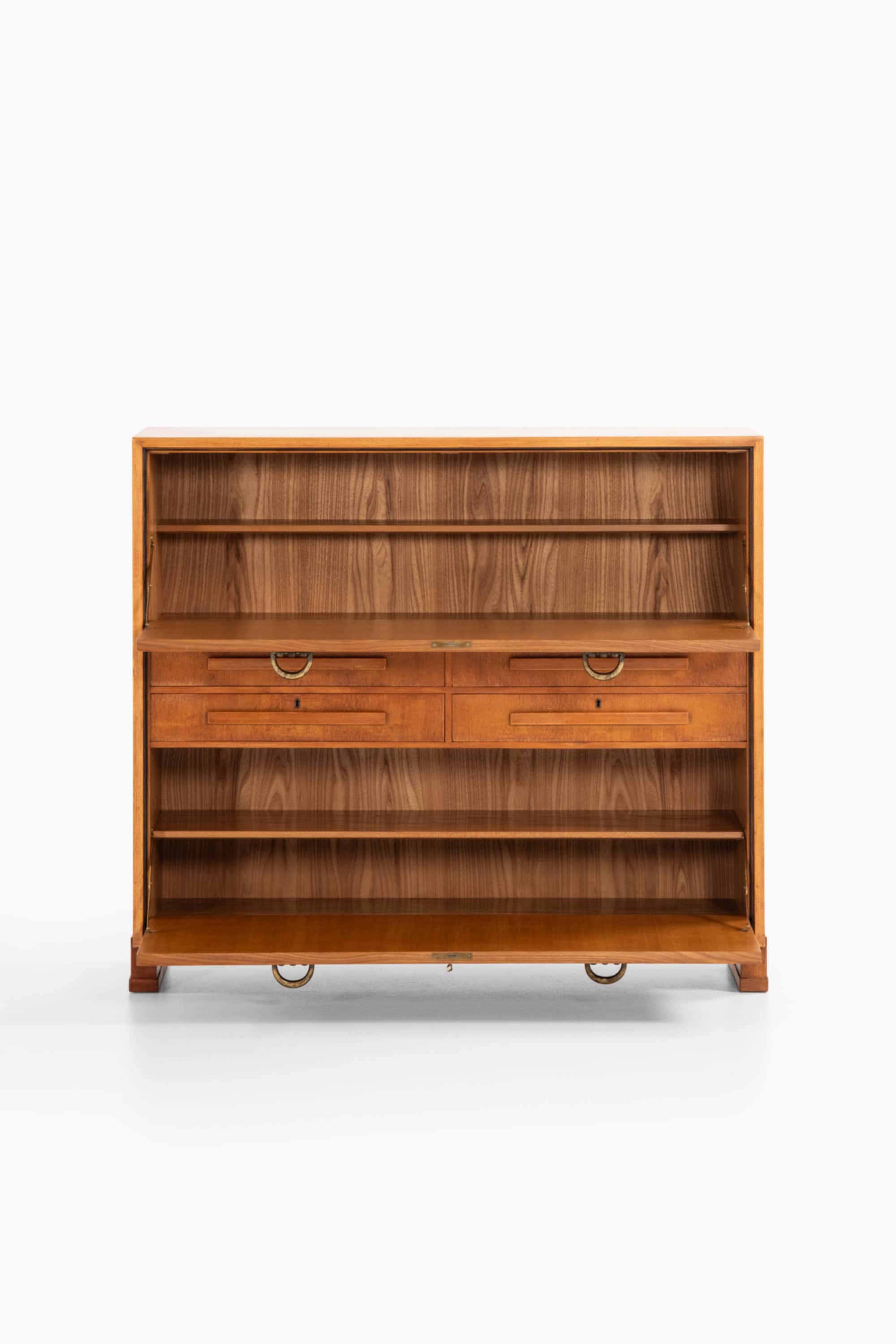
When opened, the cabinet reveals a carefully planned interior with shelves and storage compartments finished in matching wood. The drop-front doors are supported by brass stays, allowing them to function as horizontal surfaces when open. The interior construction emphasizes functionality and precision, reflecting the high standards of cabinetmaking associated with Boet. The contrast between the smooth exterior planes and the articulated interior adds depth to the overall design.
Otto Schulz was a German-born cabinetmaker and designer who became a central figure in Swedish furniture design after settling in Gothenburg. His work is known for exceptional craftsmanship, refined proportions, and an ability to merge traditional woodworking techniques with modernist aesthetics. During the 1920s and 1930s, Schulz developed a distinctive style that bridged classicism and functionalism, often employing luxurious woods and finely detailed metal fittings.
Boet was one of Sweden’s most respected furniture manufacturers in the early 20th century, closely associated with Otto Schulz and responsible for producing many of his most important designs. The company was renowned for its uncompromising approach to materials and construction, producing furniture intended for long-term use and architectural interiors. Cabinets from this collaboration are today considered rare and highly significant within Scandinavian design history.
The cabinet is in good vintage condition with signs of usage and age-related patina. There is surface wear consistent with careful use over time, including minor marks and variations in tone that enhance the authenticity of the piece. The brass fittings show natural oxidation and wear, while the structure remains solid and fully functional.
The dimensions are approximately 130 cm in width, 40 cm in depth, and 115 cm in height, corresponding to about 51.2 inches wide, 15.7 inches deep, and 45.3 inches high.
Literature
The model is depicted in a watercolor titled “Living room for H. Johnsson, Linköping” in the Otto Schulz collection preserved at the Röhsska Museum in Gothenburg, inventory number RKM 37:322-1970.
Otto Schulz (ed.), “The Nest”, 1938, the model depicted p. 26.
Dimensions (cm) | W: 130 / D: 40 / H: 115 |
| Producer | Boet |
| Decade | 1930s |
| Country | Sweden |
| Style | Scandinavian Modern |
| Material | Brass, Elm |
| Designed in | 1930s |
| Item Number | 250538 |
Otto Schulz
Otto Schulz (1882–1970) was a German-born designer who became a leading figure in Swedish interior and furniture design. Trained in Berlin and Charlottenburg, he moved to Sweden in 1907 and brought with him a refined approach to craftsmanship, d...
Read more