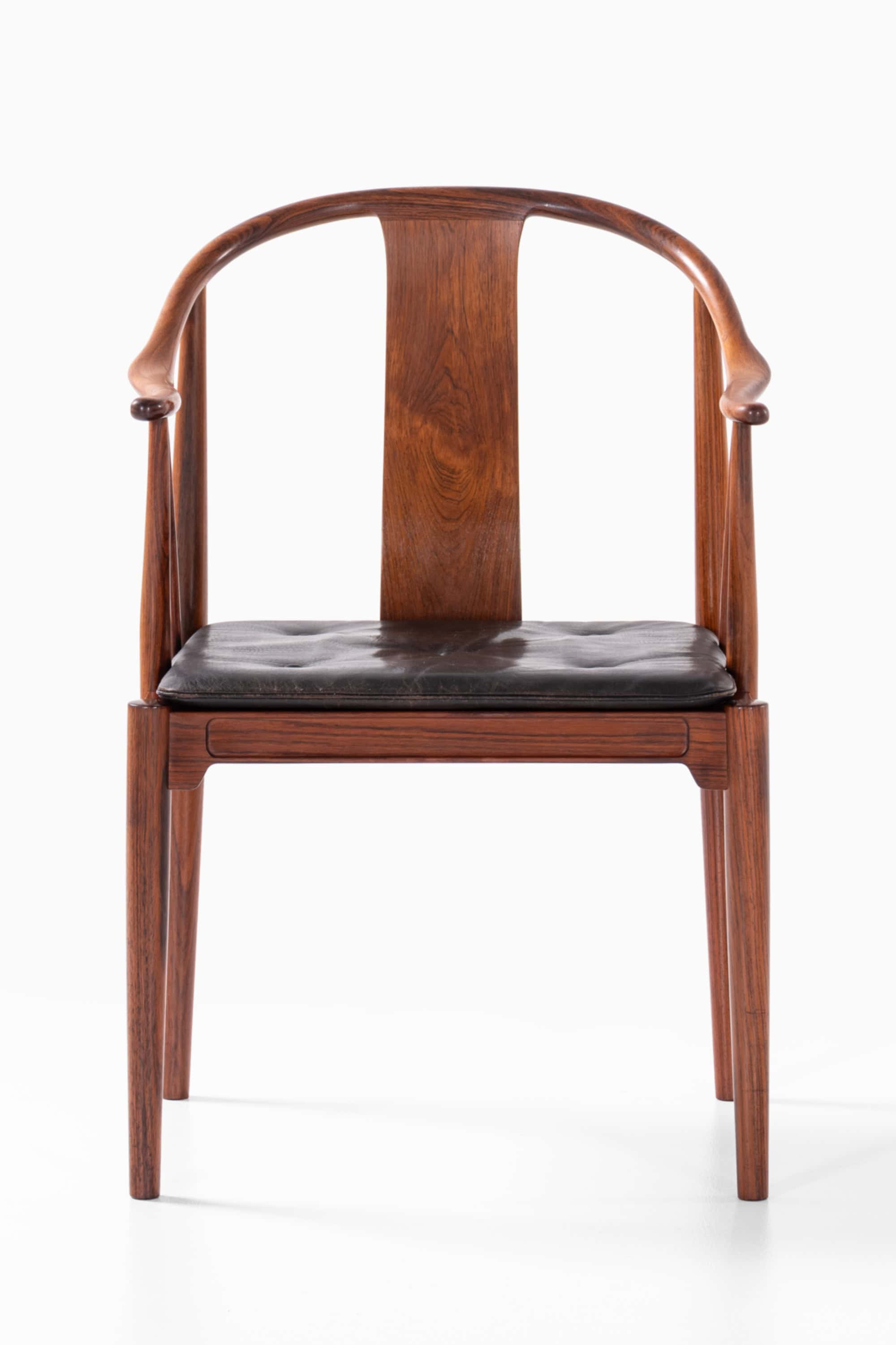
Hans Wegner armchair
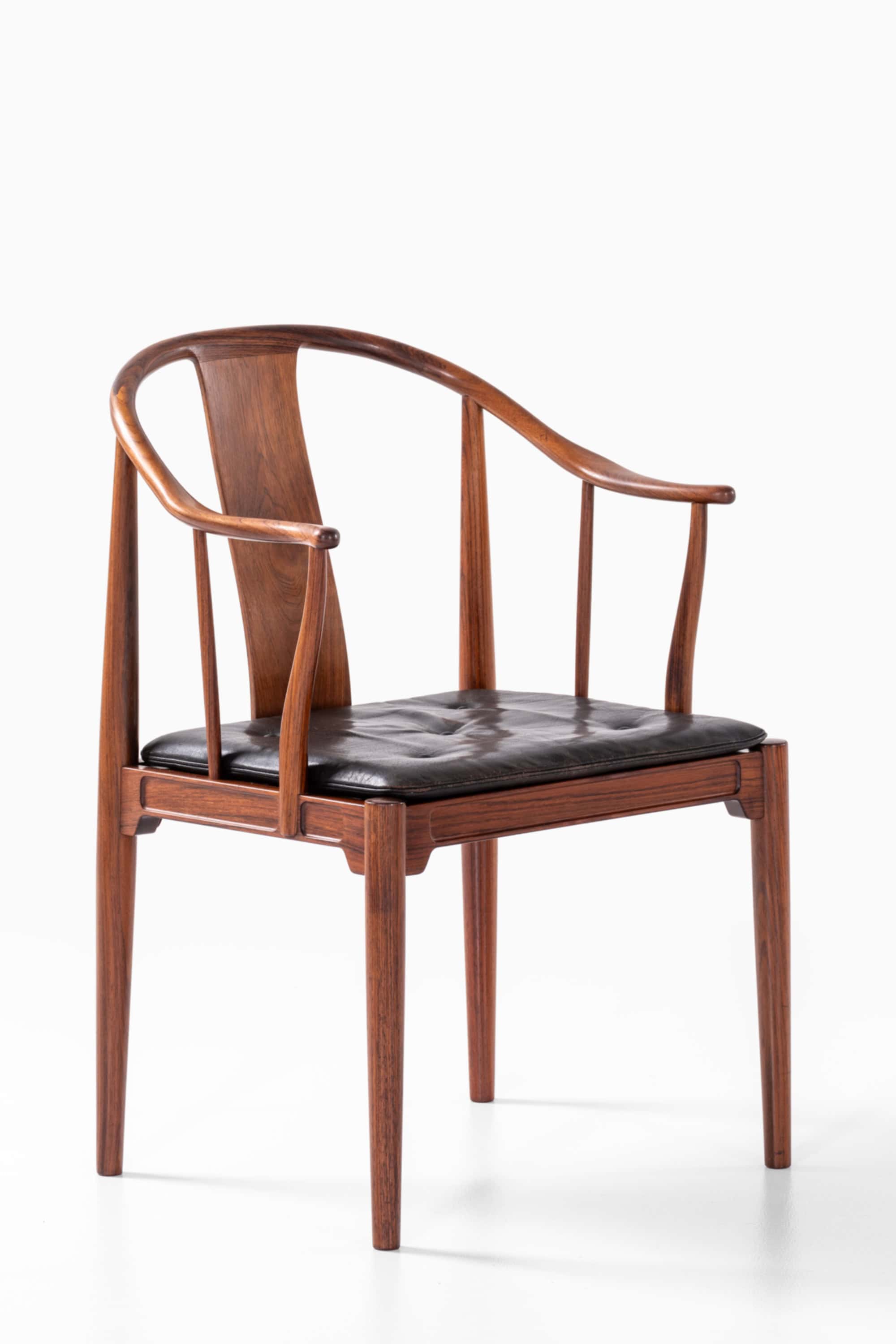
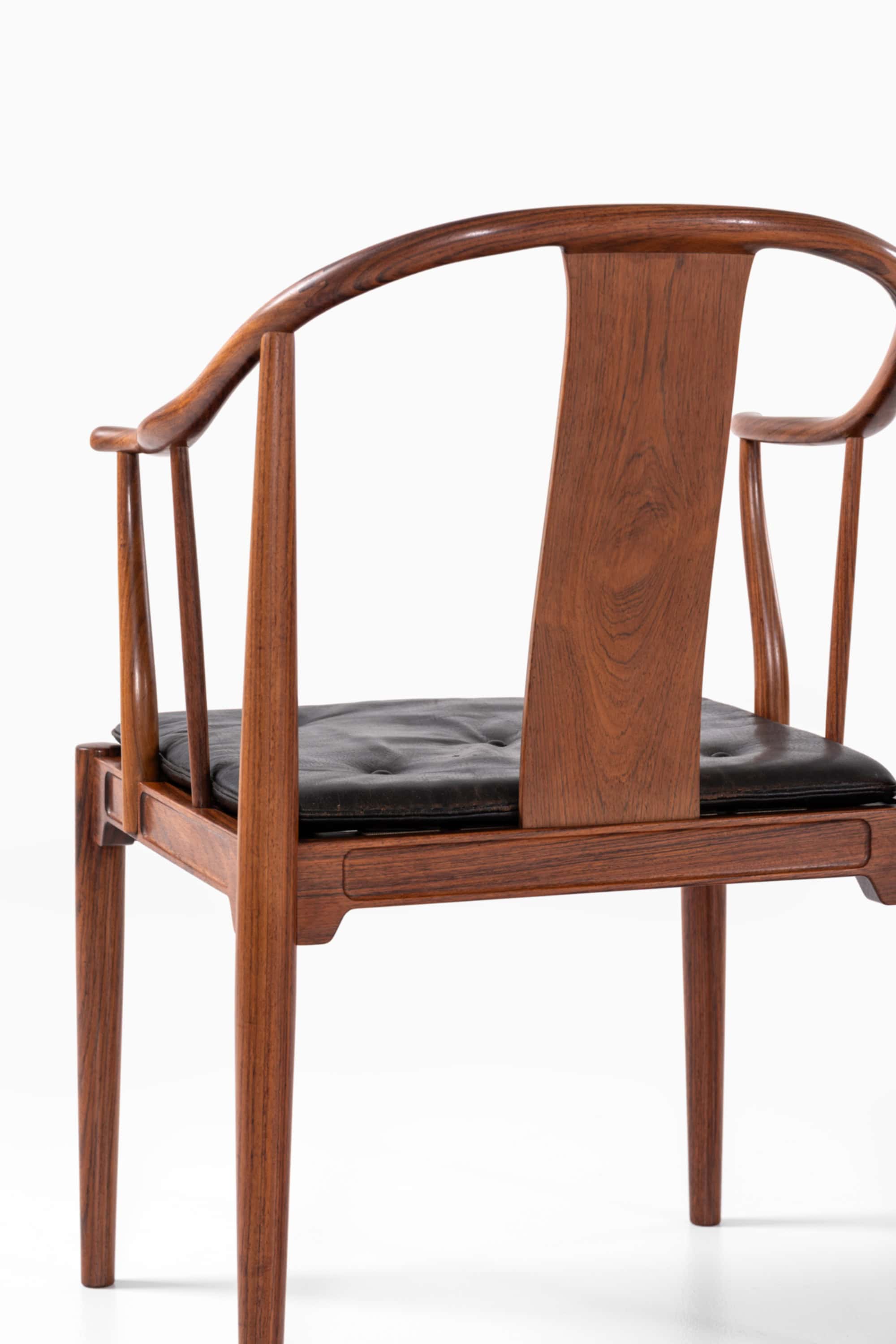
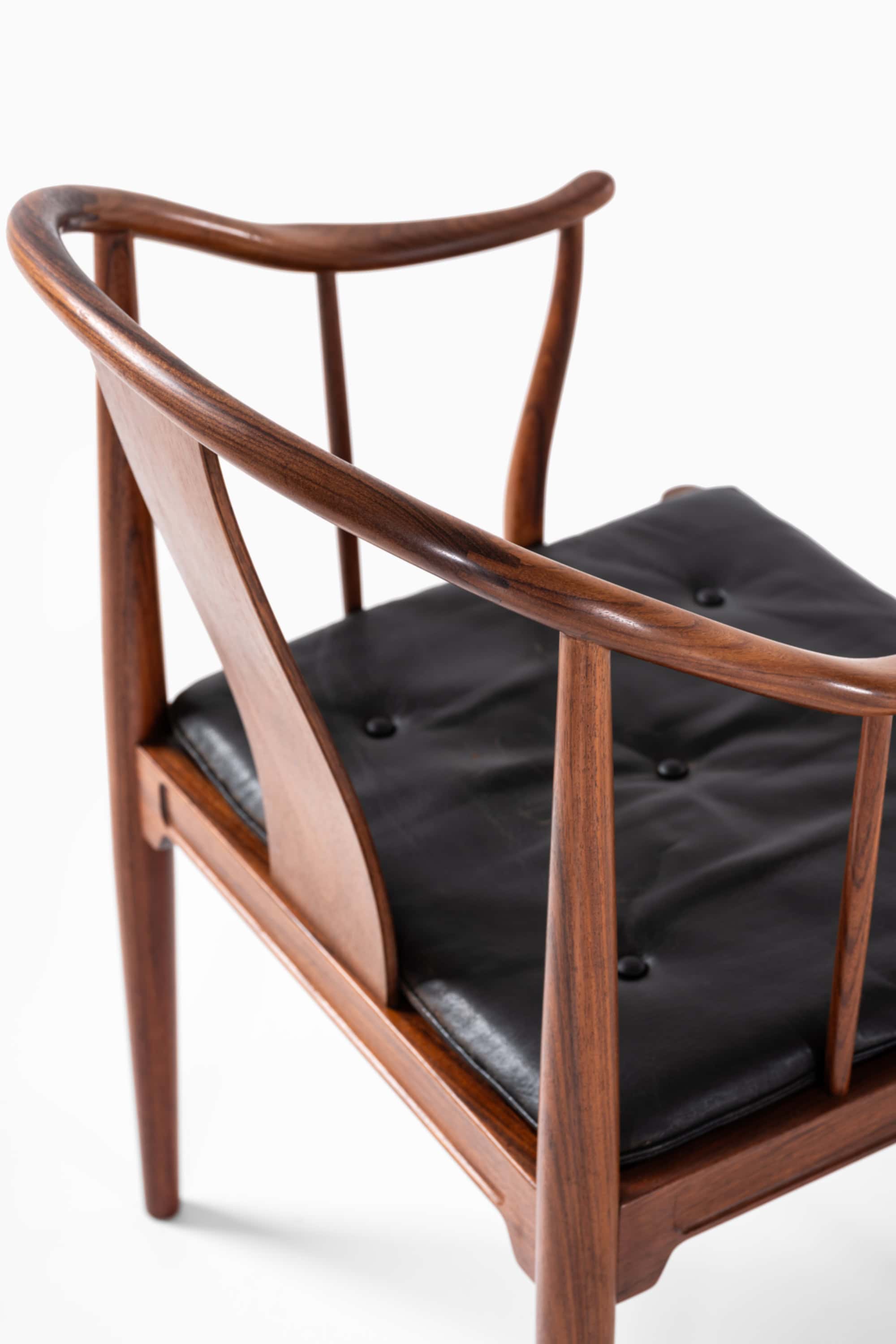
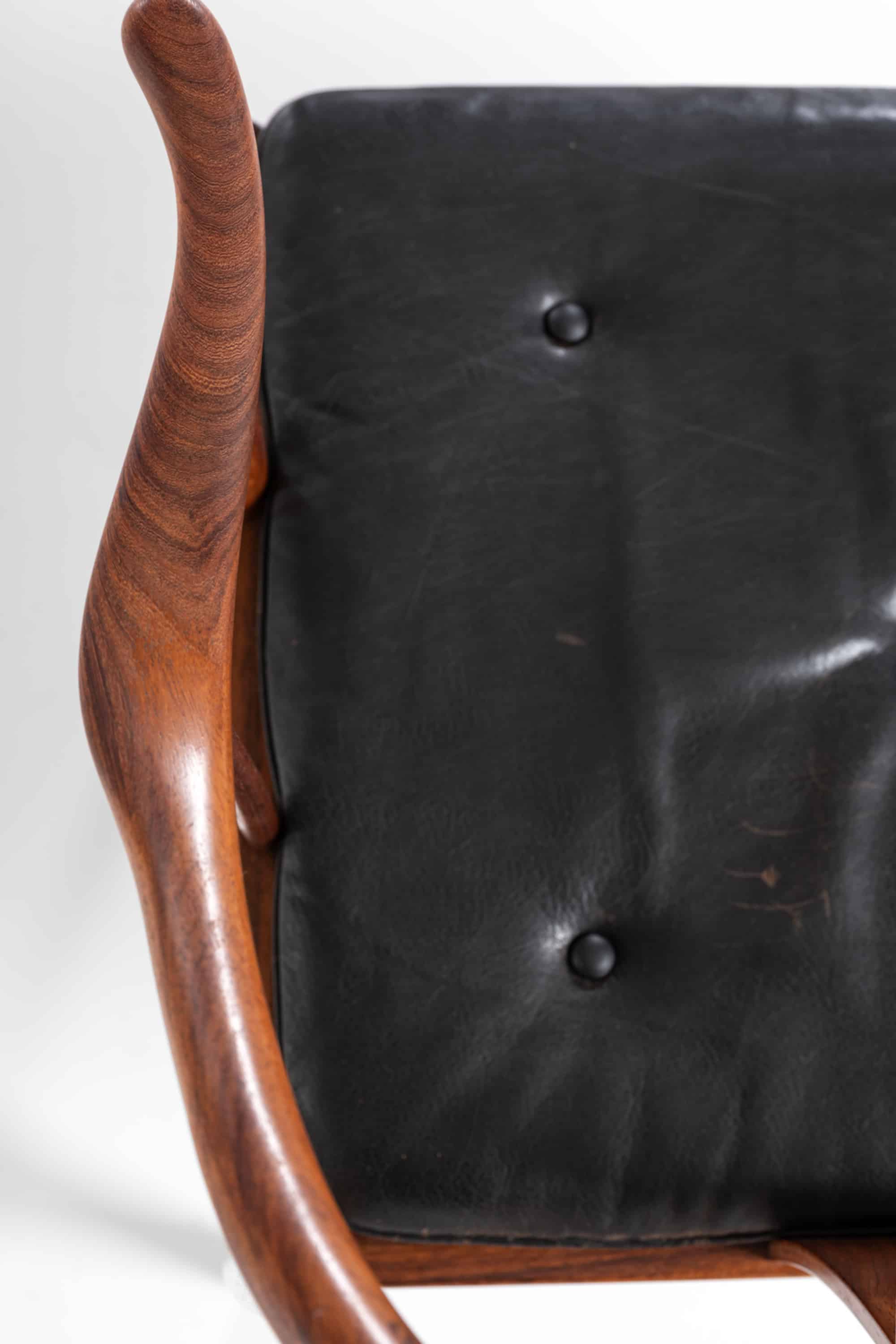
Hans J. Wegner’s China armchair, model 4283, was designed in 1944 and produced by Fritz Hansen in Denmark. This example dates from 1970 and is executed in richly figured rosewood with its original black leather seat cushion. The combination produces a restrained palette of warm reddish and dark brown timber against black leather, with the pronounced grain of the rosewood forming an important visual element of the chair.
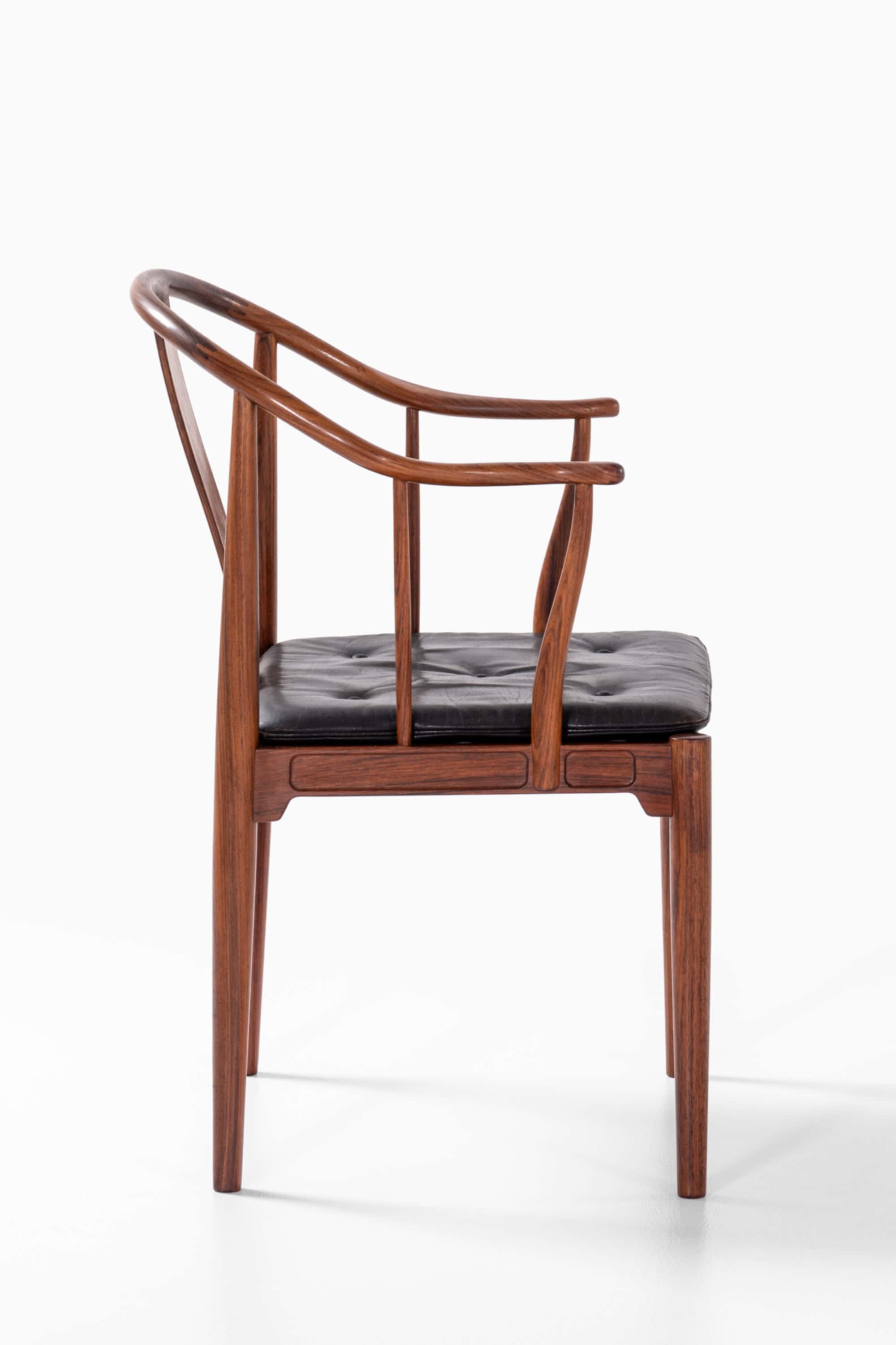
The design belongs to an early and important period in Wegner’s exploration of historical Chinese furniture. During the 1940s, he studied traditional Chinese seating forms and translated their construction and proportions into a distinctly modern Danish vocabulary. Rather than reproducing historical ornament, Wegner concentrated on structural principles: the continuous horseshoe-shaped back and arm rail, relatively open framework, vertical supports and broad central back splat. These elements relate the chair to the Chinese yoke-back and horseshoe-back chair traditions while the reduced detailing, ergonomic shaping and carefully resolved joinery place it firmly within twentieth-century Scandinavian design.
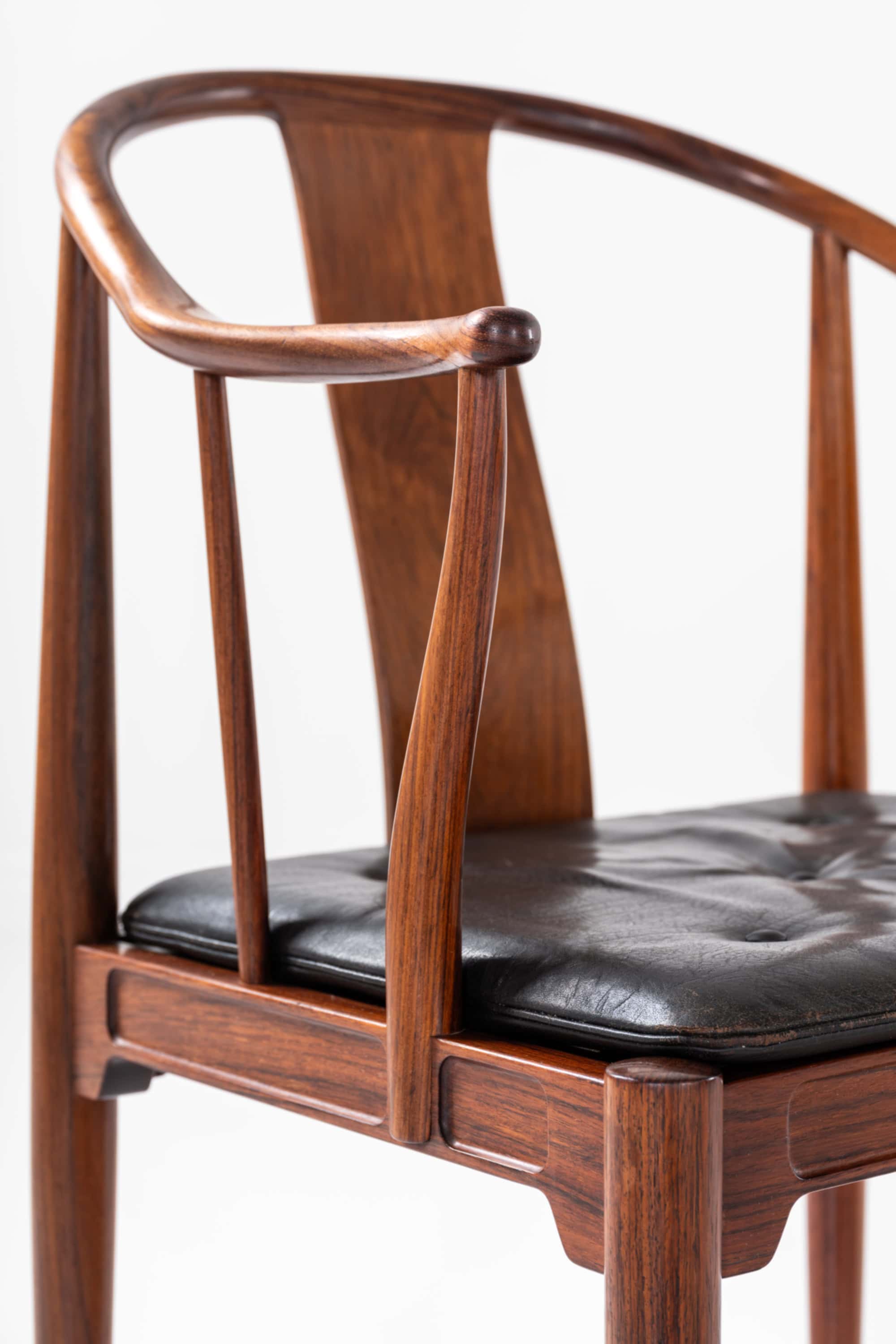
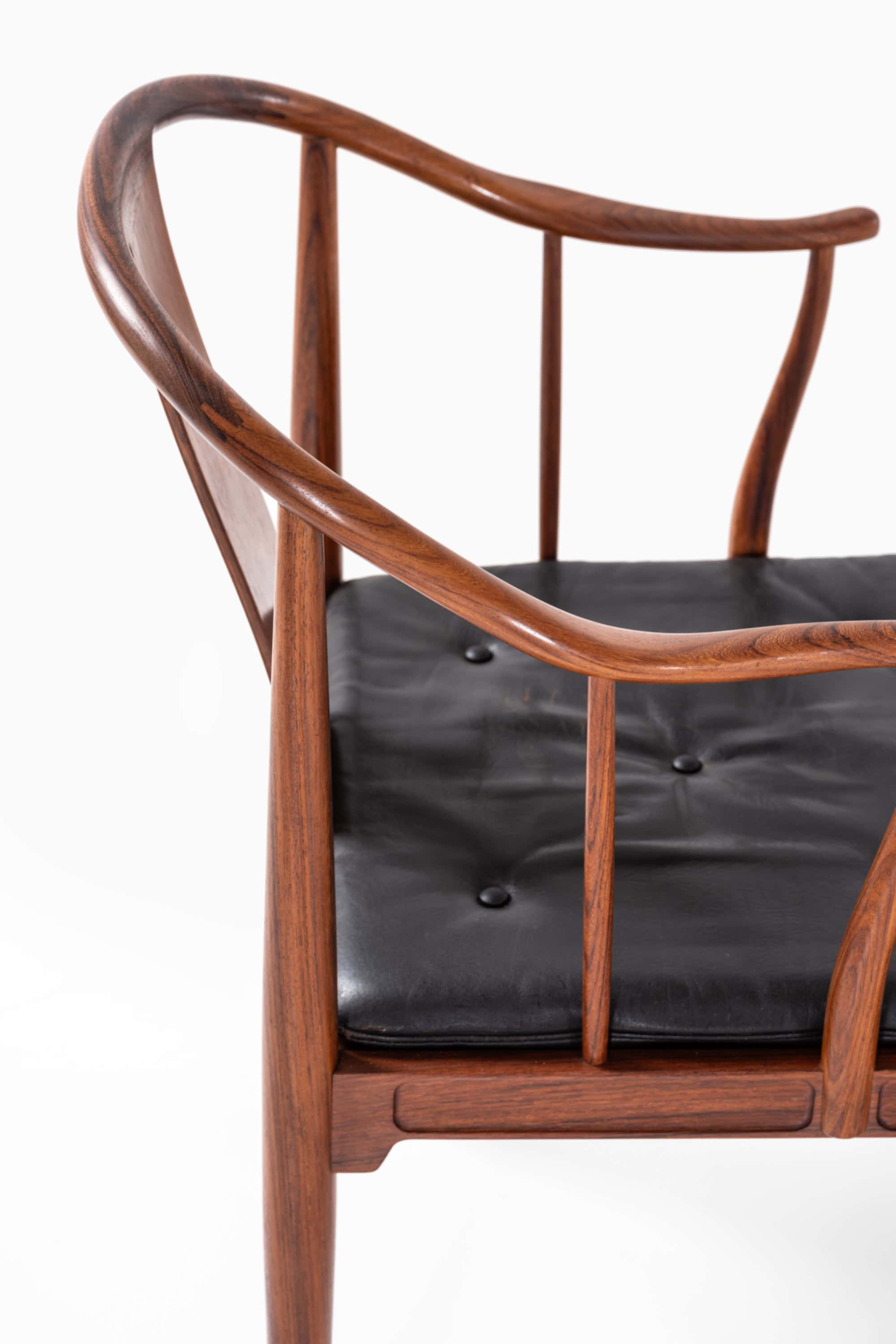
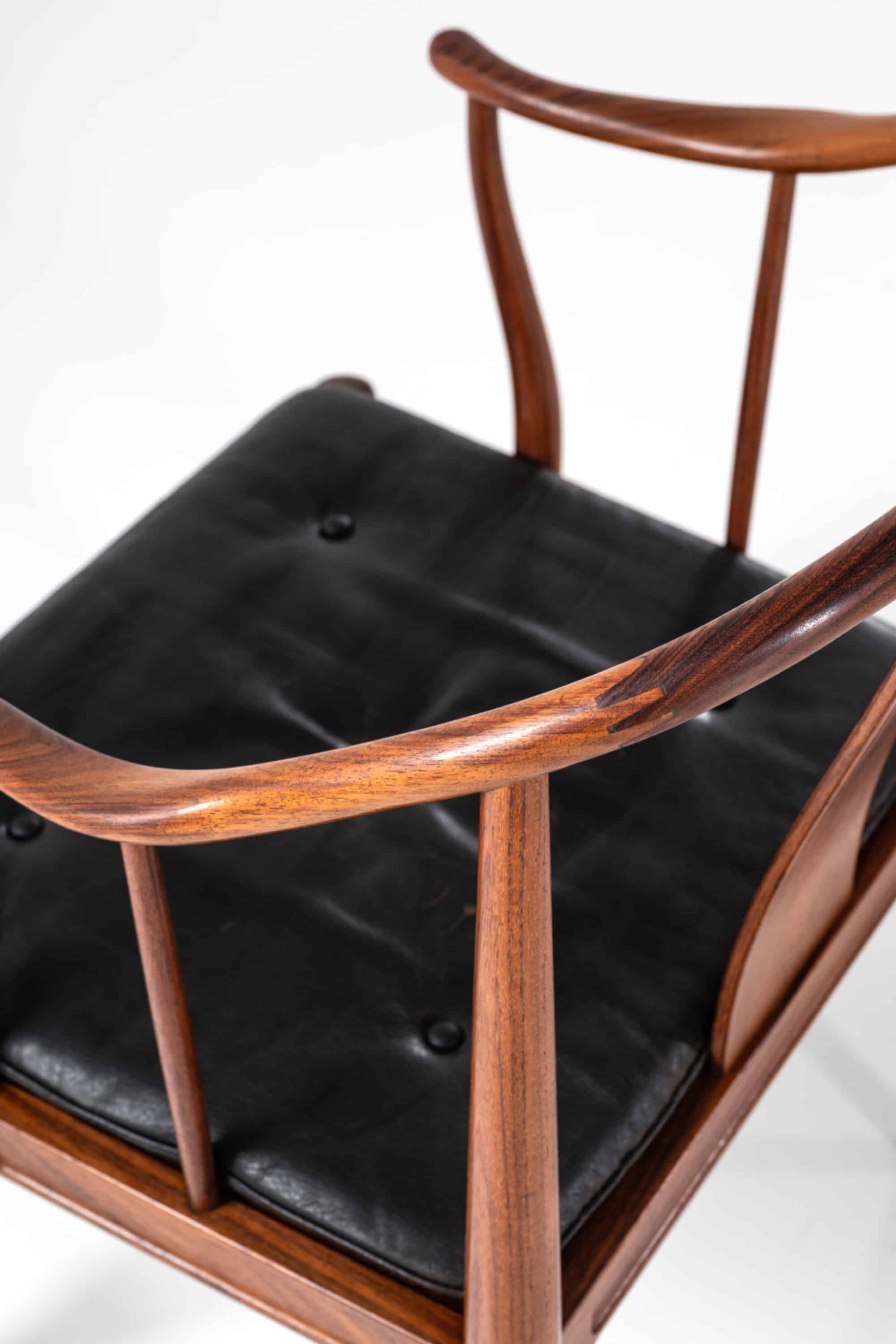
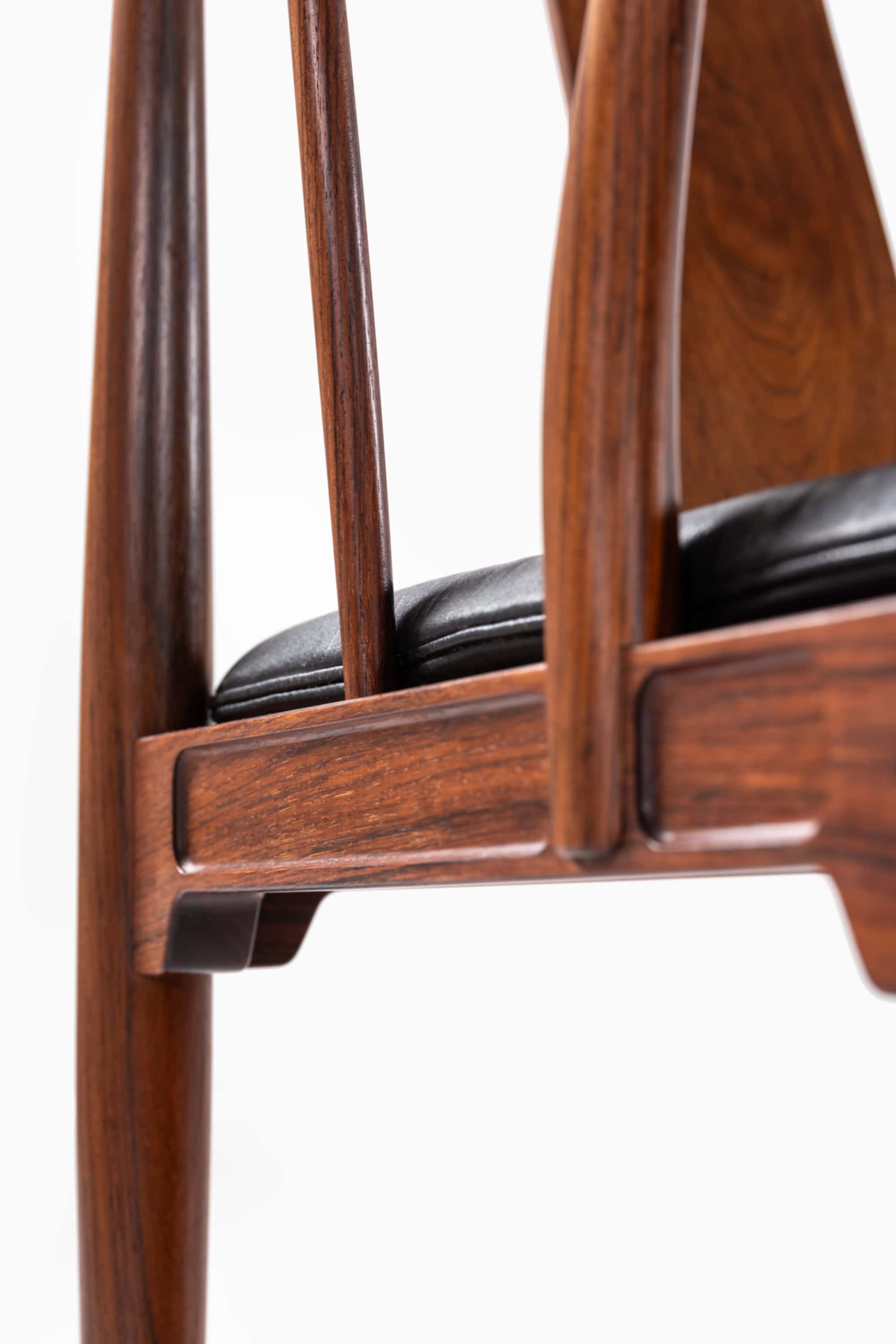
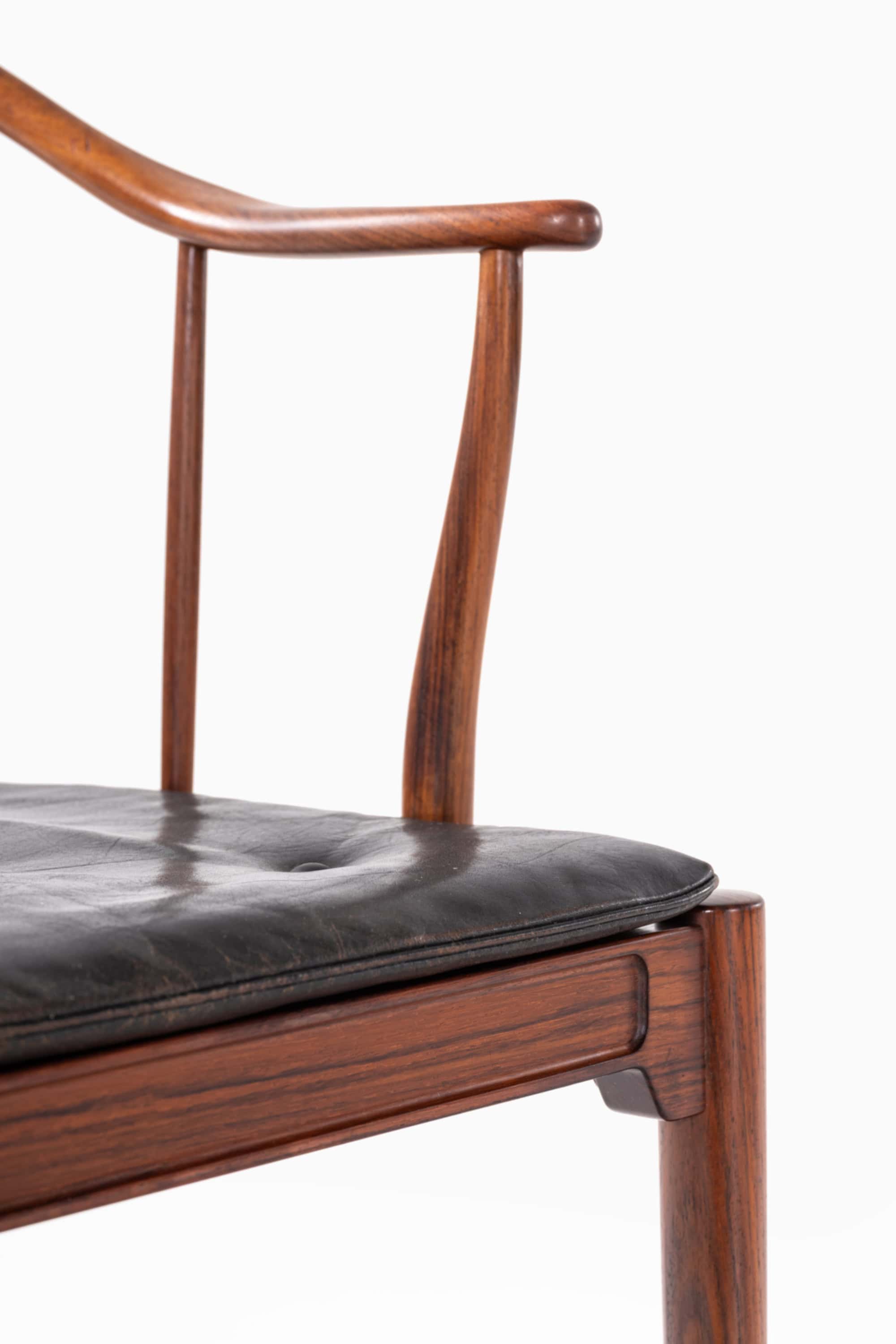
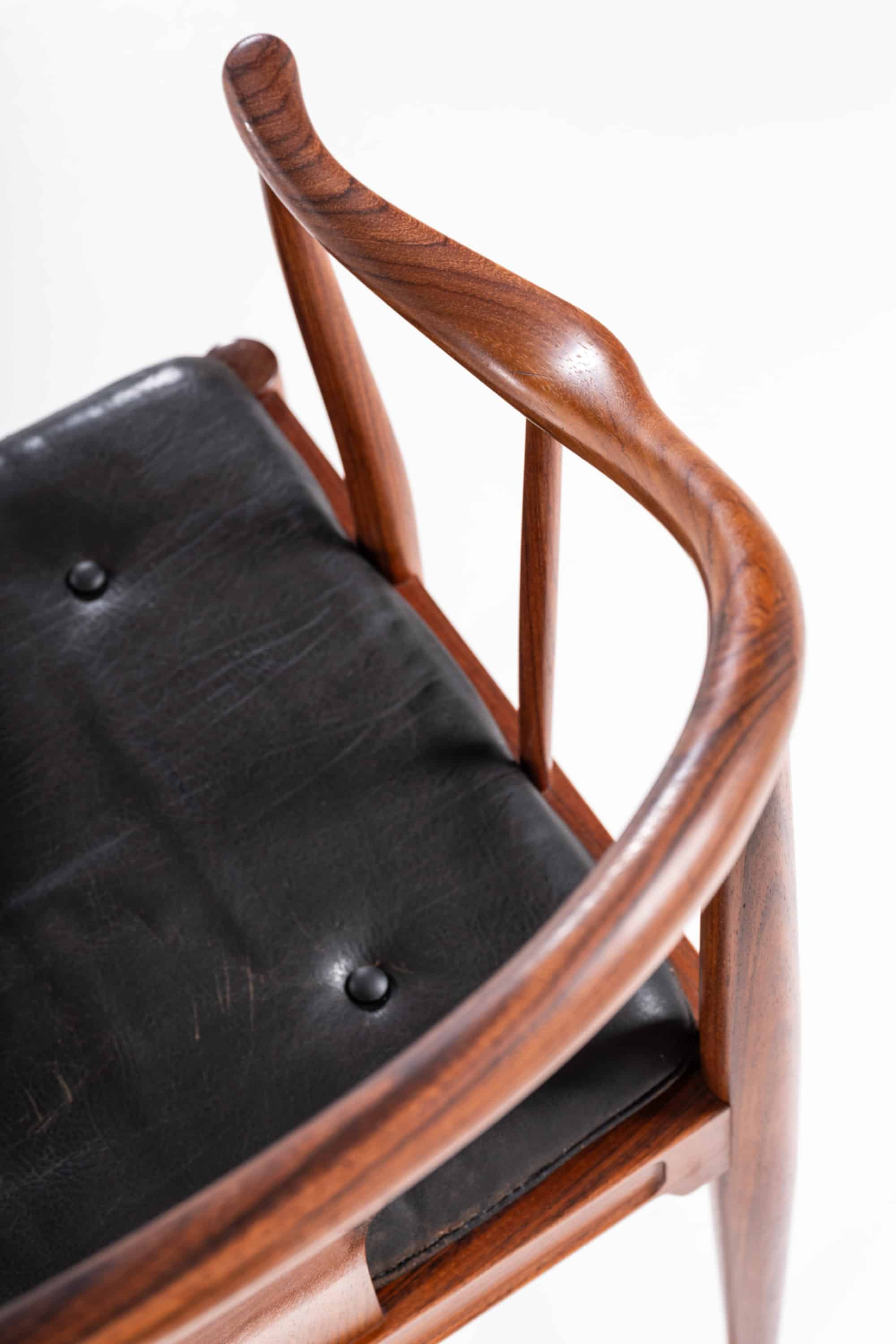
The chair has a light, architectural construction despite the density of the rosewood. Four slender legs support a rectangular seat frame with subtly recessed decorative panels along the rails. Above it, narrow vertical members support the sculpted arm and back rail, which describes a continuous curve around the sitter. The rail changes section and curvature according to its function, broadening where the arms naturally rest and narrowing through the transitions. A wide, slightly shaped central back splat provides support to the spine while leaving much of the back visually open. The loose black leather cushion is softly padded and button-tufted, introducing a pliable surface against the precisely worked hardwood structure.
Hans J. Wegner (1914–2007) was trained as a cabinetmaker before studying at the School of Arts and Crafts in Copenhagen. His understanding of traditional cabinetmaking remained fundamental throughout his career, particularly his treatment of joints and his tendency to allow structural elements to determine the visual character of a piece. Wegner became one of the principal figures associated with post-war Danish modernism and developed numerous chair types in which ergonomics, woodworking technique and historical furniture traditions were reconsidered through modern production methods. His Chinese-inspired experiments of the 1940s were particularly significant to this development and preceded several of the chair designs for which he later became internationally known.
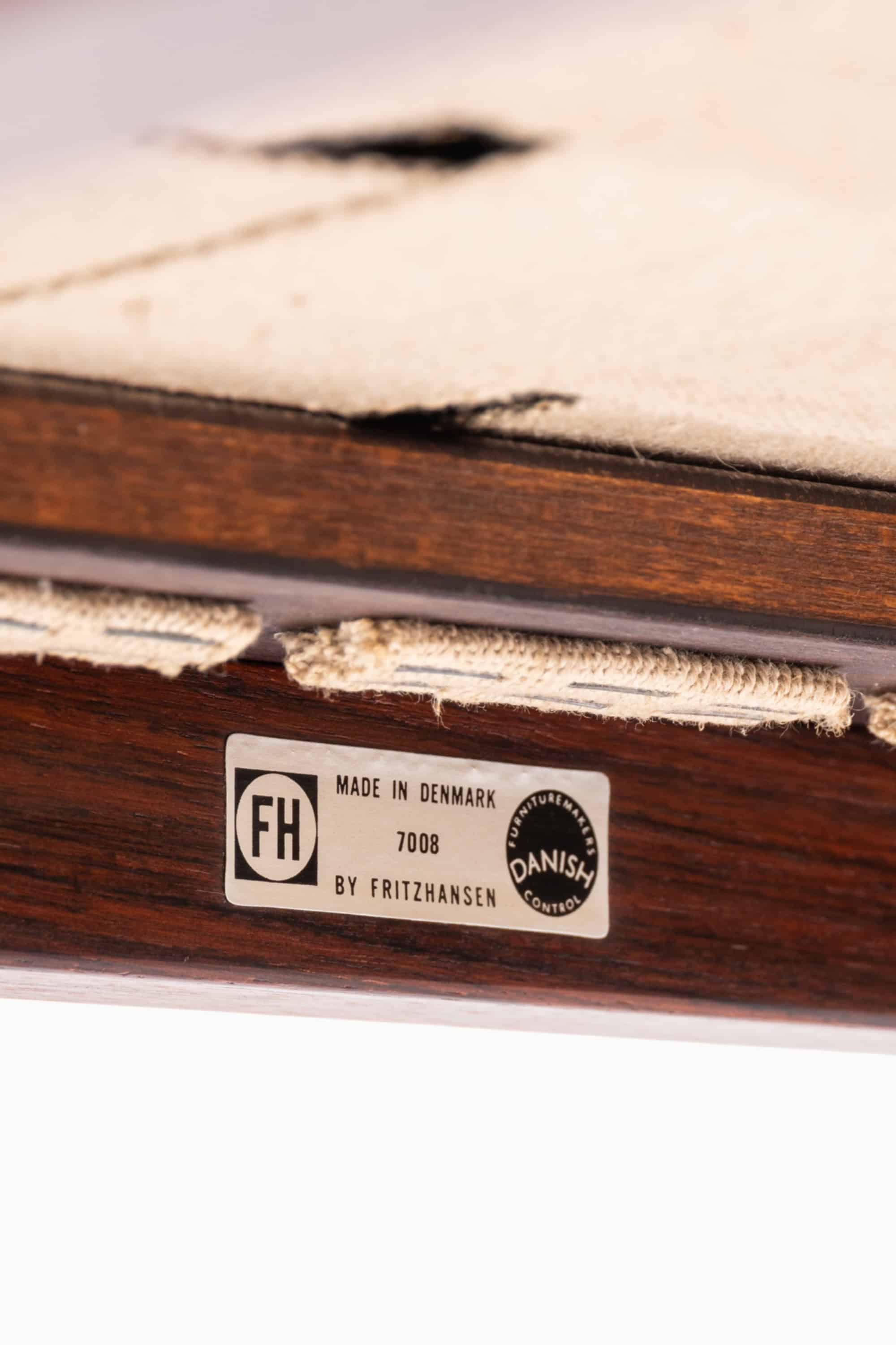
Fritz Hansen, founded in Denmark in 1872, developed from a cabinetmaking workshop into one of Denmark’s significant manufacturers of modern furniture. During the twentieth century the company collaborated with architects and designers while combining industrial manufacturing with demanding woodworking and upholstery techniques. The manufacturer’s label retained beneath this chair identifies Fritz Hansen, Denmark, and carries the number 7008 together with the Danish Furnituremakers Control mark. The latter was used in connection with Danish furniture made according to established standards of workmanship and materials.
The use of rosewood is particularly characteristic of high-quality Scandinavian furniture from this period. Its dense structure permits finely shaped sections and smooth transitions, while its naturally contrasting grain ranges here from medium reddish brown to deep chocolate and almost black figuring. The sculpted rail makes especially effective use of this variation, with the grain following and emphasizing its changing curves. Together with the black leather upholstery, the material gives the otherwise visually light framework considerable depth.
The chair is preserved in good vintage condition with age-appropriate signs of use. The rosewood retains a warm, developed patina and shows minor surface marks and variations consistent with its age. The original black leather displays creasing, light scratches, rubbing and localized wear, particularly across the seating surface and edges. These traces have produced a natural patina without obscuring the form or construction of the upholstery. The surviving original upholstery and manufacturer’s label are relevant elements of the chair’s historical integrity.
The overall dimensions are 56.5 cm wide × 56 cm deep × 81.5 cm high, equivalent to approximately 22.2 × 22.0 × 32.1 inches. The seat height is 45 cm, or approximately 17.7 inches, and the arm height is 68 cm, or approximately 26.8 inches.
Dimensions (cm) | W: 56.5 / D: 56 / H: 81.5 / Seat H: 45 / Armrest H: 68 |
| Producer | Fritz Hansen |
| Color | Black |
| Decade | 1940s |
| Country | Denmark |
| Style | Danish modern, Mid Century, Scandinavian Modern |
| Material | Leather, Rosewood |
| Designed in | 1944 |
| Item Number | 250817 |
Hans Wegner
Hans Jørgensen Wegner (1914–2007) was a Danish furniture designer globally renowned for his exceptional craftsmanship, deep understanding of materials, and sculptural, organic forms. A central figure in the Danish modern movement, Wegner design...
Read more