Alvar Aalto chair
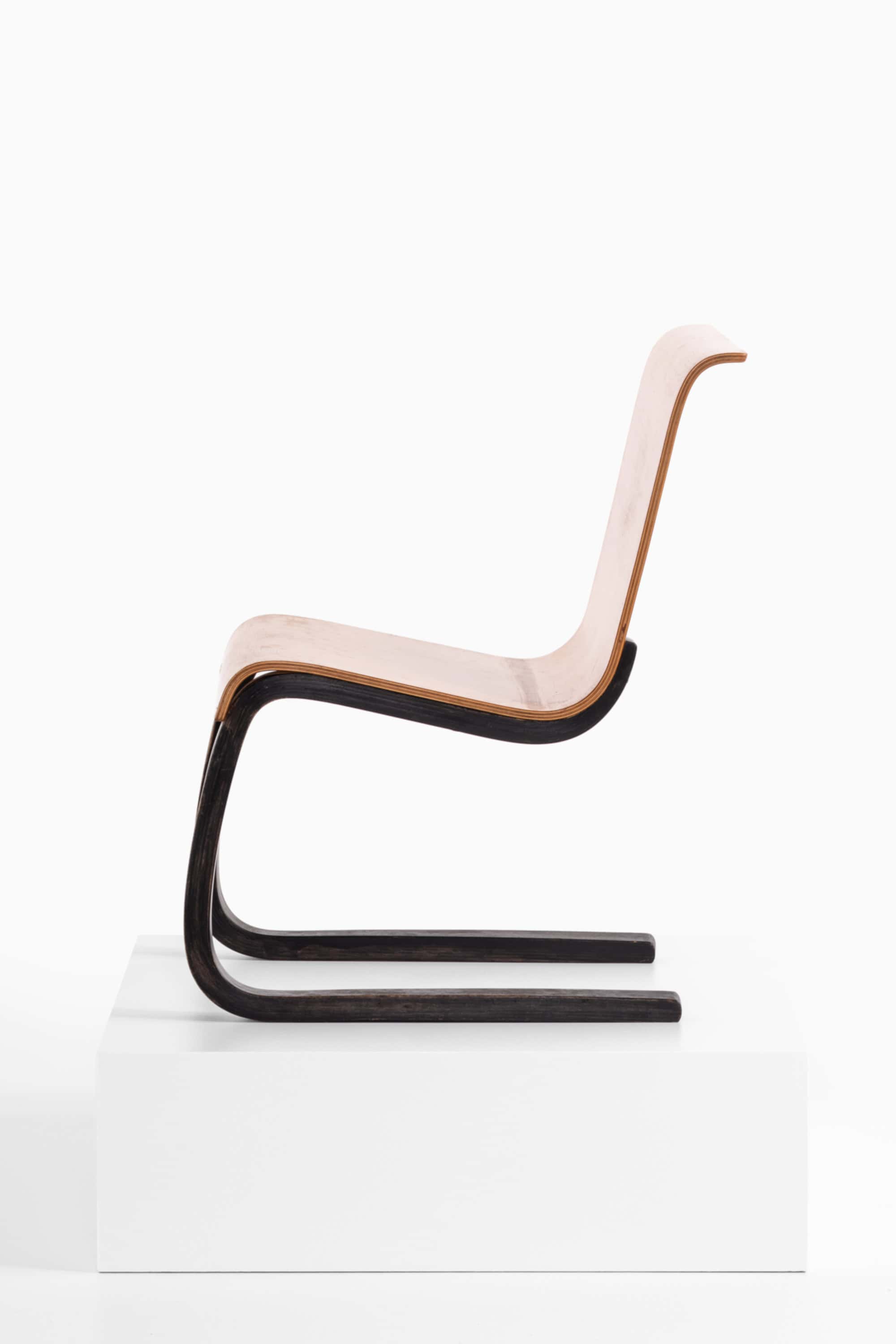
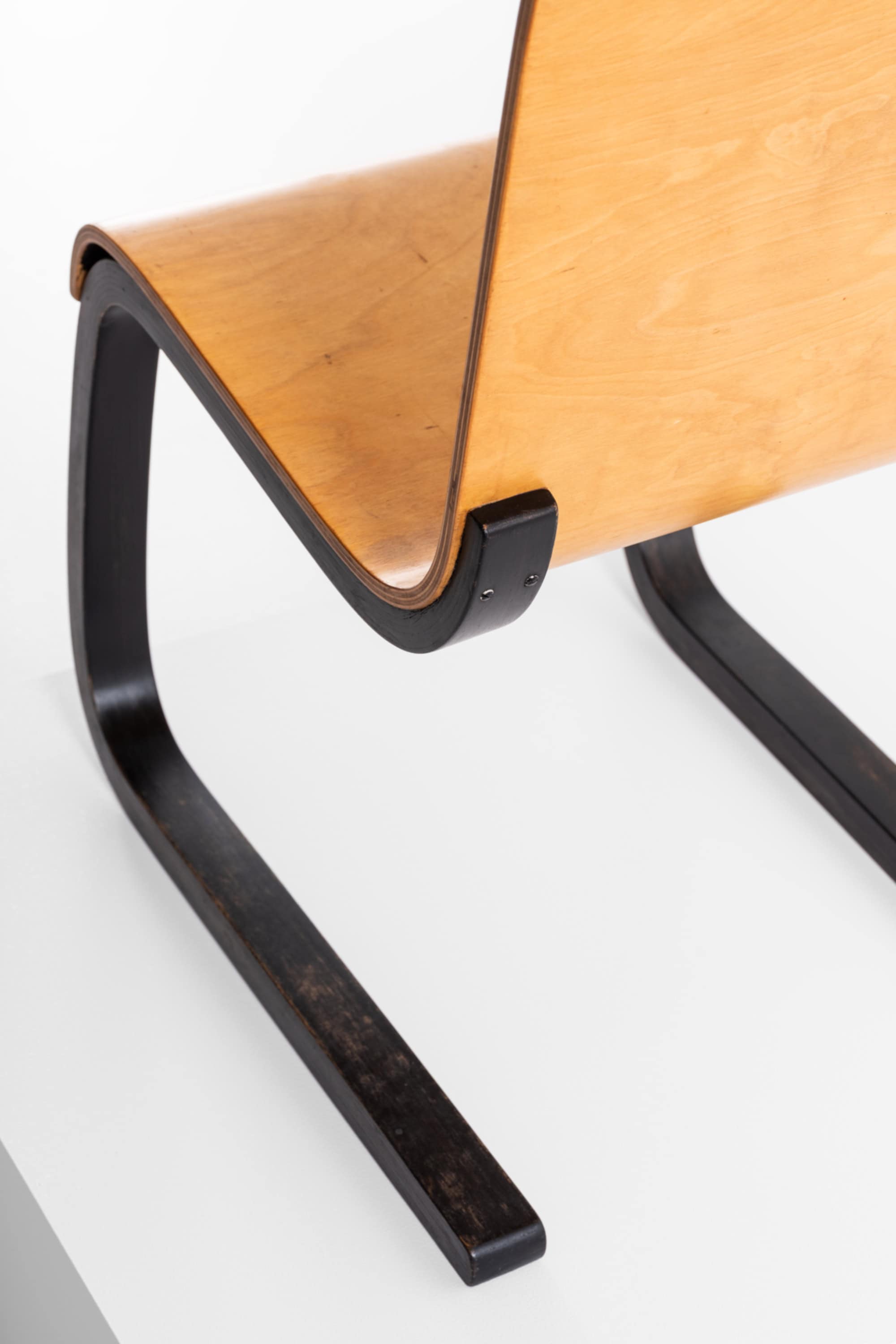
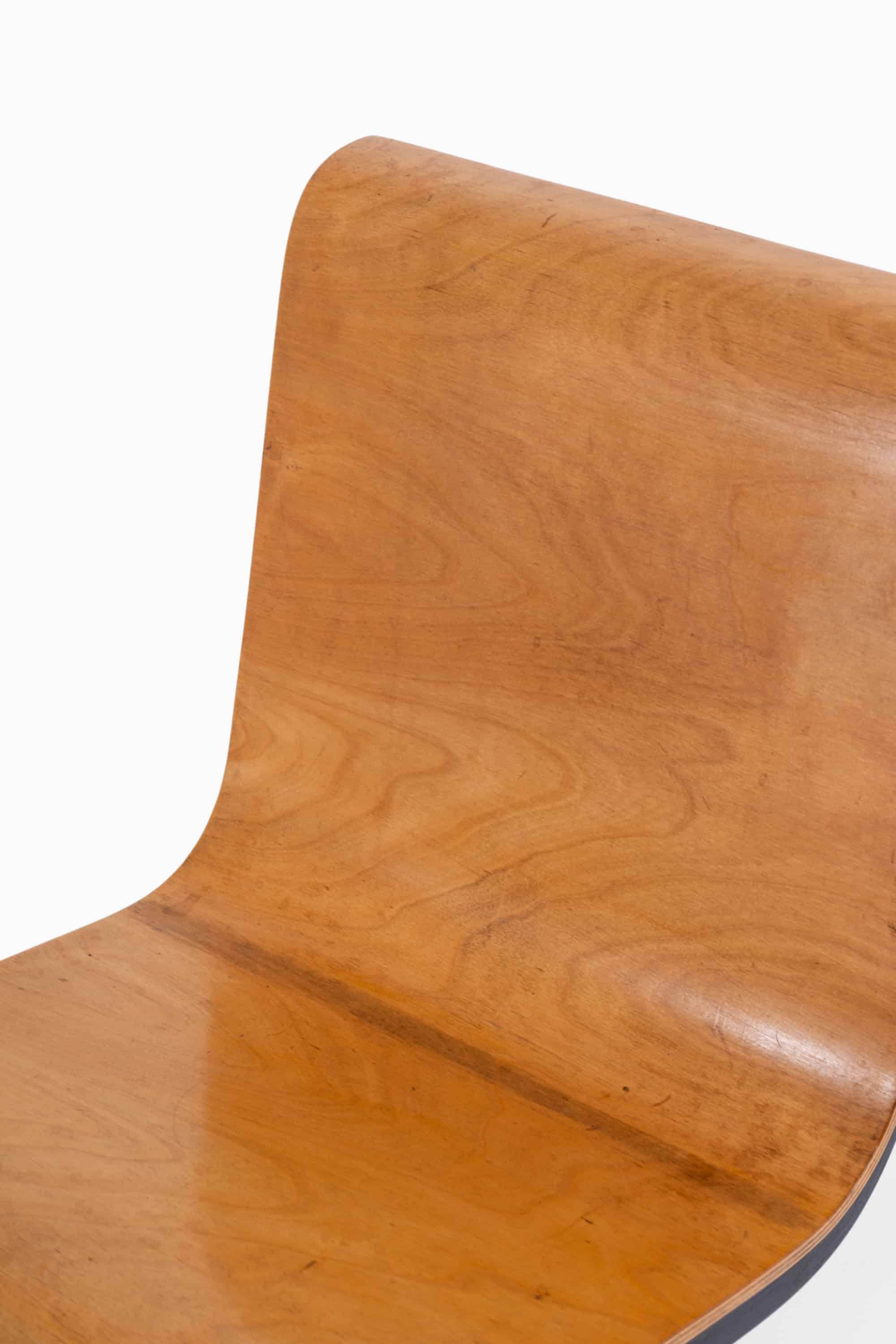
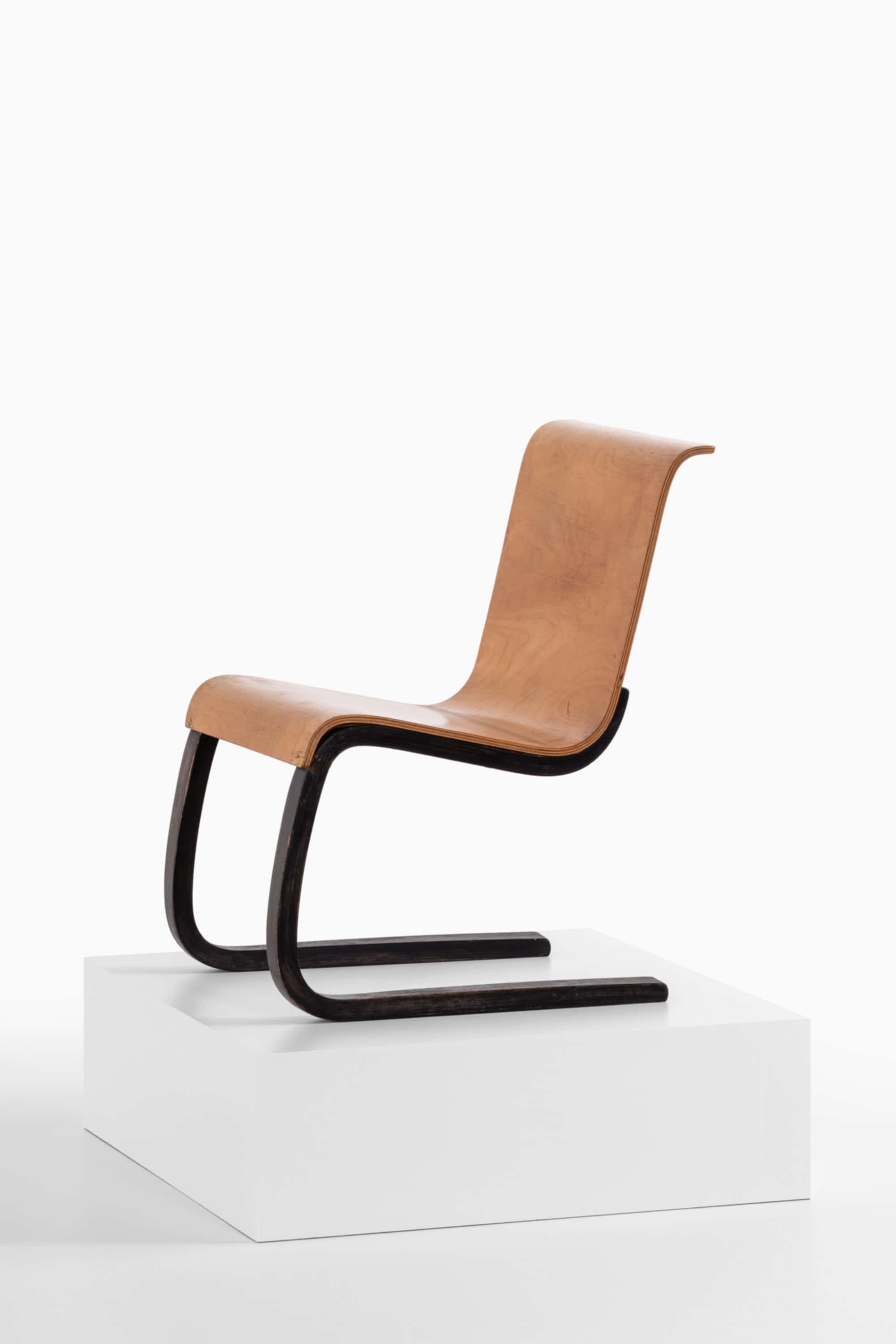
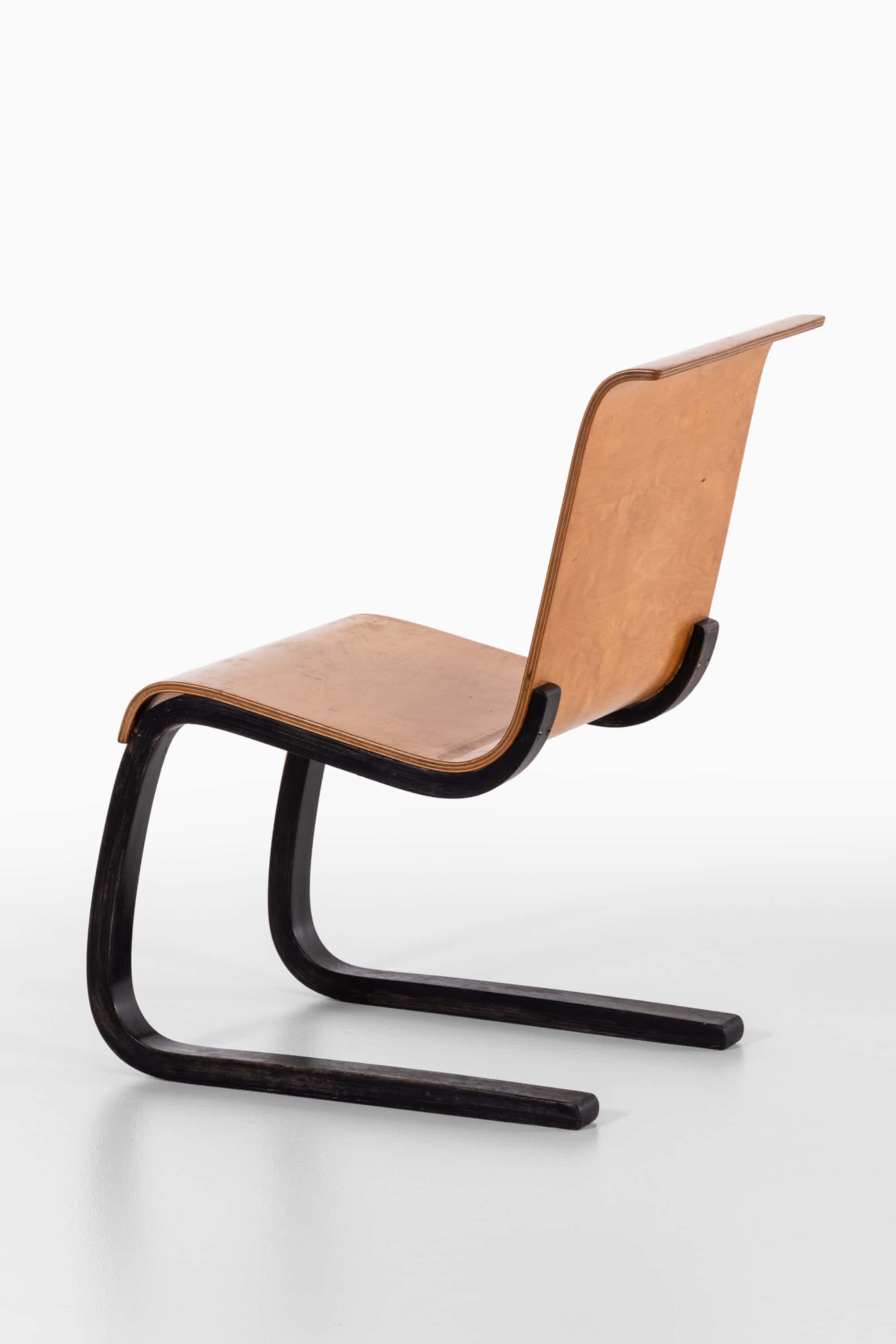
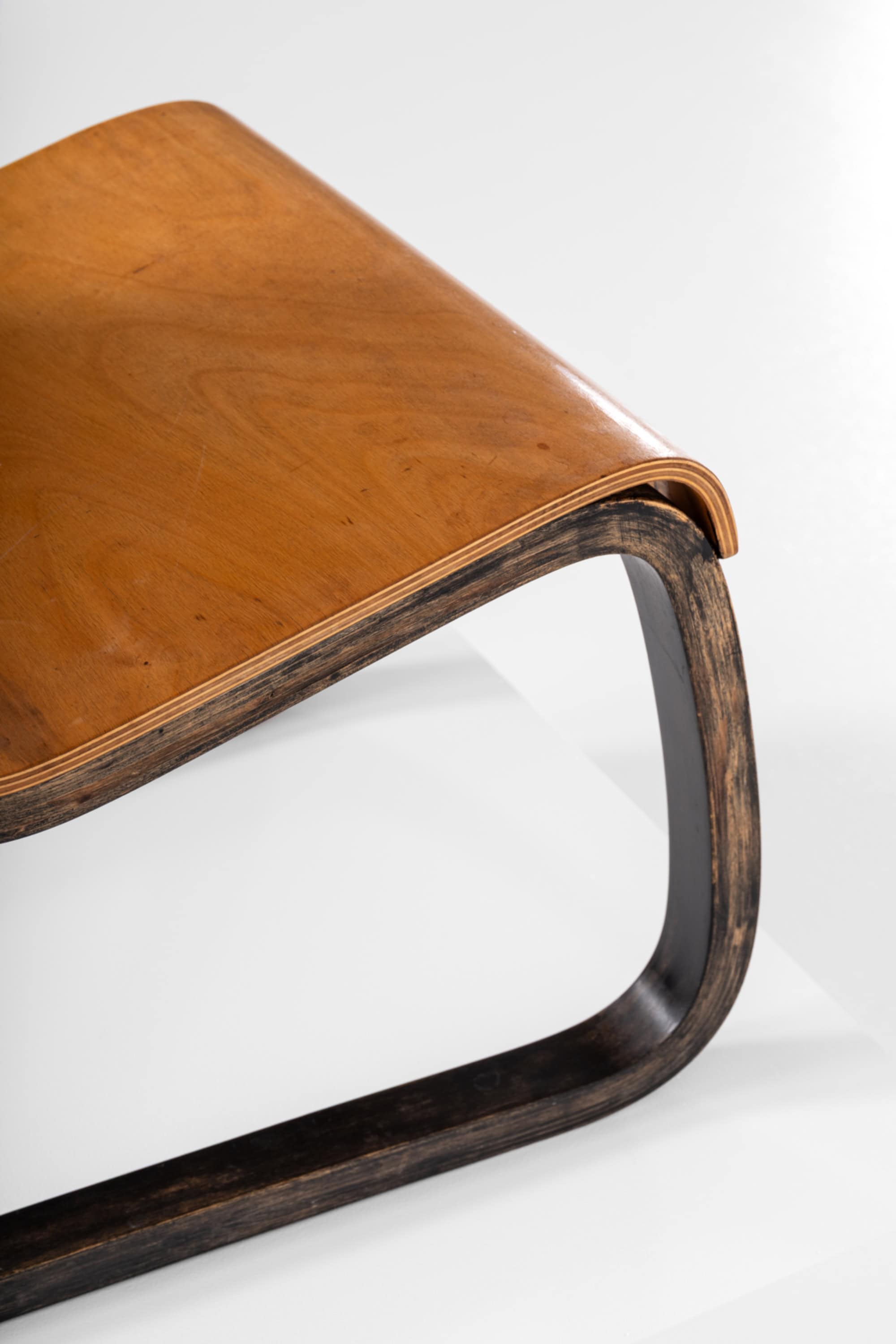
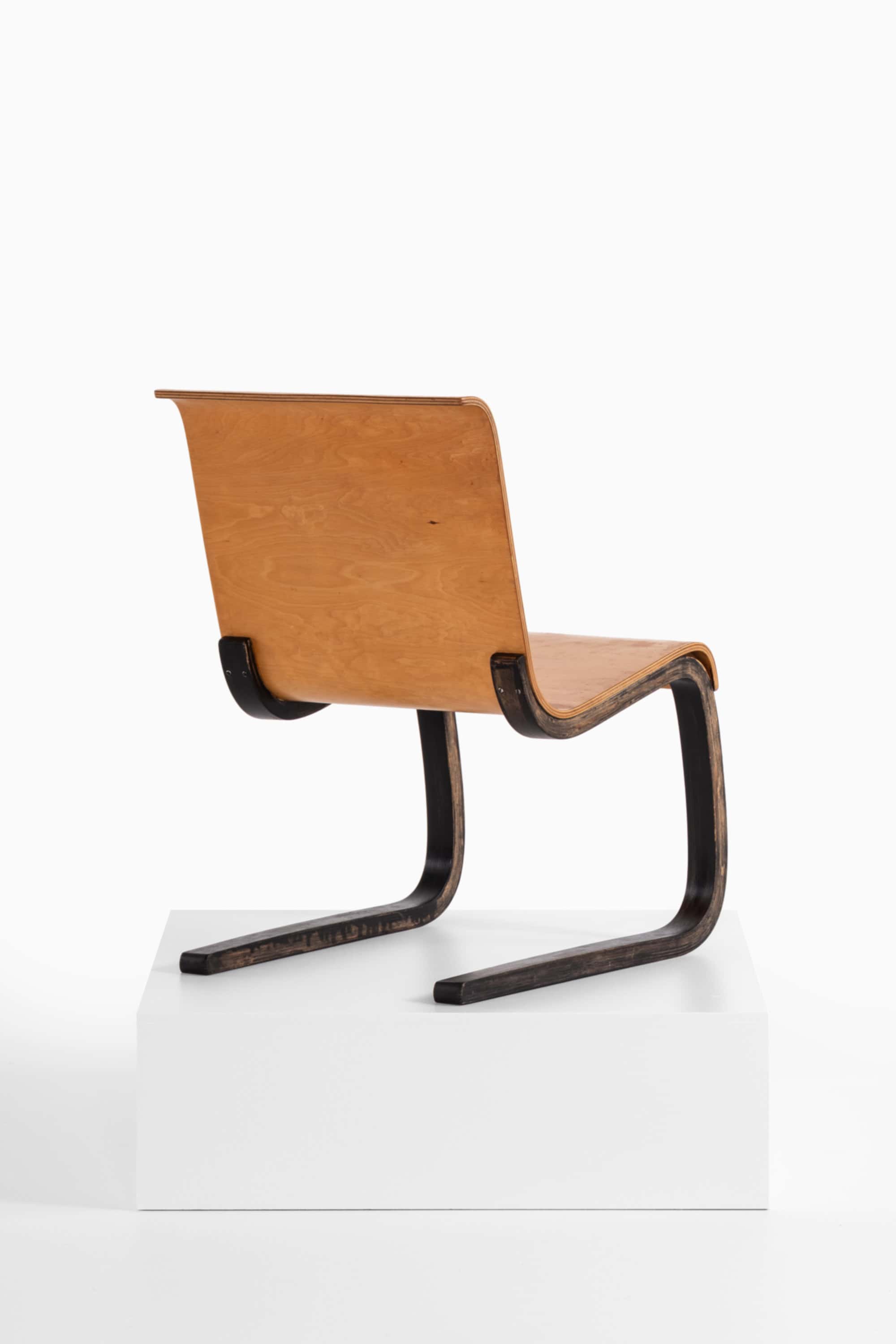
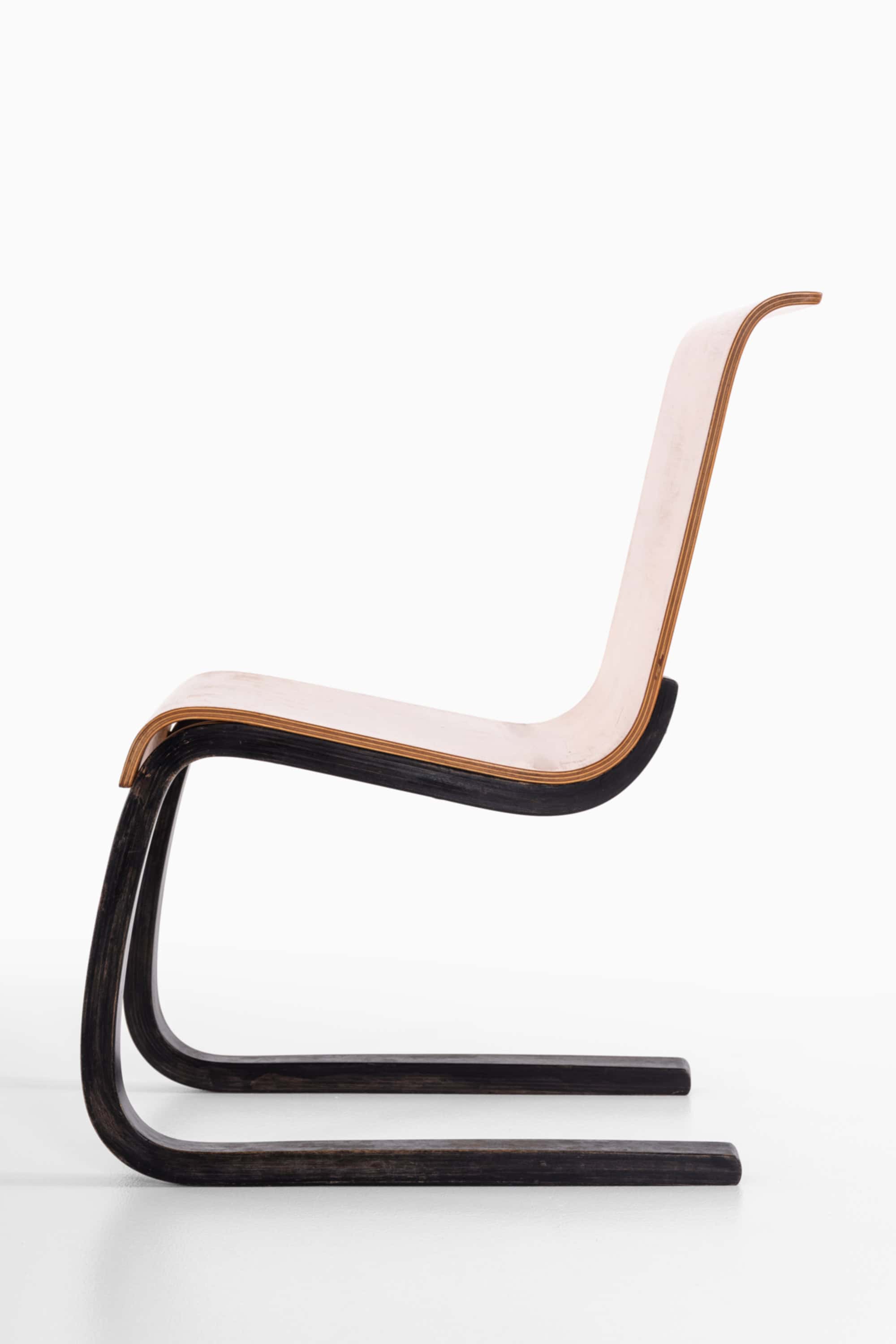
The chair consists of a continuous moulded plywood shell forming both the seat and backrest, supported by two black-stained laminated birch cantilever frames. The seat has a gently inclined profile with a downward-curving front edge, transitioning into the slightly reclined backrest through a pronounced rounded bend. The upper edge of the backrest curves backwards, completing the continuous, flowing silhouette. The exposed layers of plywood along the edges emphasize the material’s laminated construction.
The supporting structure consists of two parallel bentwood elements with elongated horizontal feet, rounded front sections and curved extensions supporting the lower part of the backrest. The absence of conventional rear legs creates an open, visually lightweight construction while allowing the laminated wooden frame a degree of natural flexibility. The seat shell is mechanically secured to the supporting structure with screws.
The natural birch surface has developed a warm golden-brown and amber coloration, with visible organic grain patterns and subtle variations in tone. The dark, nearly black finish of the supporting frame provides a distinct contrast to the lighter plywood shell, emphasizing the separation between the structural and seating elements.
Alvar Aalto (1898–1976) was a Finnish architect and designer whose work played a fundamental role in the development of twentieth-century modernism. During the late 1920s and early 1930s, Aalto conducted extensive experiments with bent and laminated birch, investigating the structural and ergonomic possibilities of wood. His approach offered an alternative to the tubular steel constructions associated with European functionalism, introducing natural materials, organic geometry and greater consideration for physical comfort.
Artek was founded in Helsinki in 1935 by Alvar Aalto, Aino Aalto, Maire Gullichsen and Nils-Gustav Hahl, with the purpose of promoting modern furniture, architecture and visual arts. The company became instrumental in the international distribution of Aalto’s furniture. During the 1940s, production in Hedemora, Sweden, formed part of Artek’s manufacturing history in response to the difficulties affecting Finnish production during the wartime period.
Designed in 1933, model 22 belongs to a formative period in the development of Scandinavian functionalism. Its cantilever construction, continuous plywood shell and reduced geometric vocabulary reflect the modernist principles of material efficiency, structural innovation and functional simplicity, combined with Aalto’s more organic interpretation of furniture design.
The chair is in good vintage condition with signs of usage and a well-developed natural patina. The birch plywood displays surface scratches, minor marks and age-related variations in coloration. The black-stained frame shows areas of finish wear, particularly along the edges and horizontal feet, where the underlying wood is partially visible.
Dimensions: 48.5 × 64 × 78.5 cm (19.1 × 25.2 × 30.9 in). Seat height: 42 cm (16.5 in).
Dimensions (cm) | W: 48.5 / D: 64 / H: 78.5 / Seat H: 42 |
| Decade | 1930s |
| Country | Finland |
| Style | Scandinavian Modern |
| Material | Birch |
| Designed in | 1933 |
| Item Number | 250950 |
Alvar Aalto
Alvar Aalto (1898–1976) was a Finnish architect and designer and one of the most influential figures in modern architecture and design. His work is distinguished by a humanistic approach to modernism, where functional clarity is softened by orga...
Read more