Aksel Kjersgaard
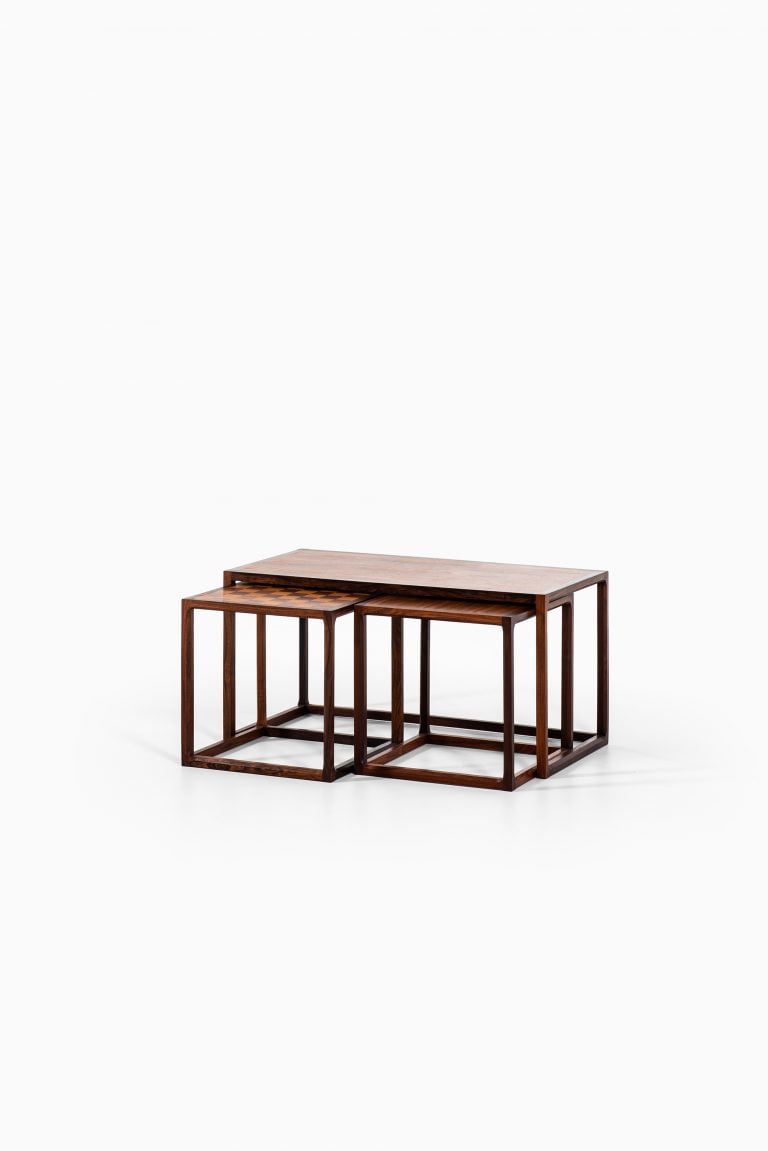
Aksel Kjersgaard (1921–1997) was a Danish cabinetmaker, furniture designer, and manufacturer, known for his restrained wooden furniture associated with Danish modern design. As both designer and producer, he founded Aksel Kjersgaard A/S in Odder and created furniture defined by clean lines, balanced proportions, and careful attention to wood grain, construction, and finish.
Biography
Aksel Kjersgaard was born in Denmark in 1921. After working and travelling in Europe and Morocco, he returned to Denmark in the early 1950s and established his own production company, Aksel Kjersgaard A/S, in Odder. By the mid-1950s, the company had begun producing finely crafted furniture, including cabinets, desks, sideboards, consoles, tables, and seating.
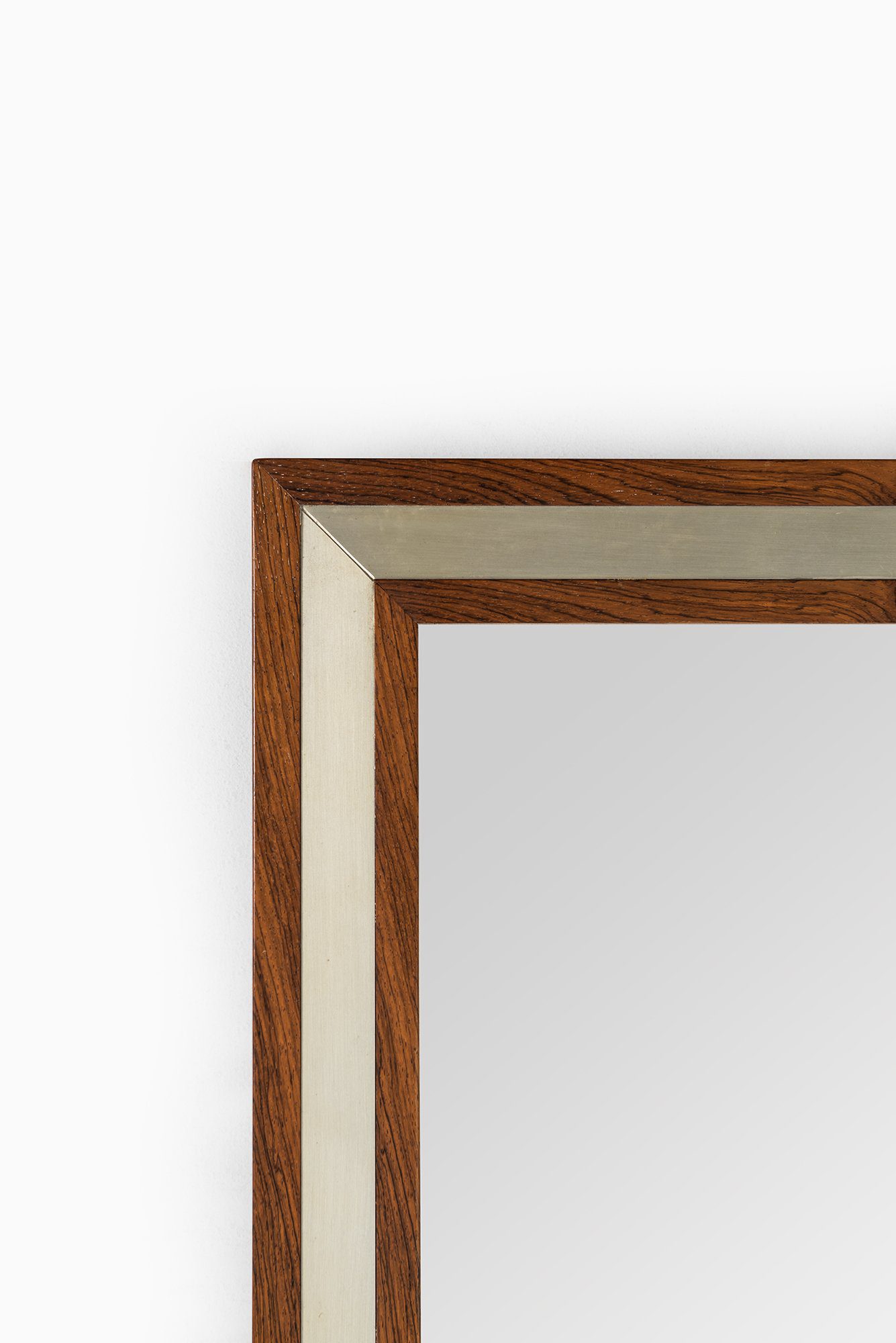
Kjersgaard’s work is closely connected to the Danish modern tradition, where simplicity, function, and material quality were central. His furniture was often made in woods such as teak, rosewood, oak, and beech, with an emphasis on solid craftsmanship and minimal detailing. Rather than relying on ornament, his designs highlighted proportion, joinery, and the natural character of the material.
One of his best-known designs is the wall-mounted Model 314 desk, a compact and functional piece that reflects his ability to combine practical use with a clear, refined form. His cabinets and sideboards are also highly regarded for their restrained design language, precise construction, and elegant use of richly grained wood.
Kjersgaard also collaborated with several Danish designers, including Kai Kristiansen during the 1950s and 1960s, and later Ebbe Gehl and Søren Nissen from around 1970. These collaborations helped broaden the company’s range while maintaining its focus on high-quality wooden furniture and carefully resolved forms.
Many vintage pieces by Aksel Kjersgaard are stamped or numbered, and the mark “Odder” often refers to the place of production rather than to a model name. Today, his work remains sought after on the vintage market and is valued for its clarity, craftsmanship, and understated expression within mid-century Danish design. The company’s legacy continues through the later development of the Naver Collection.