


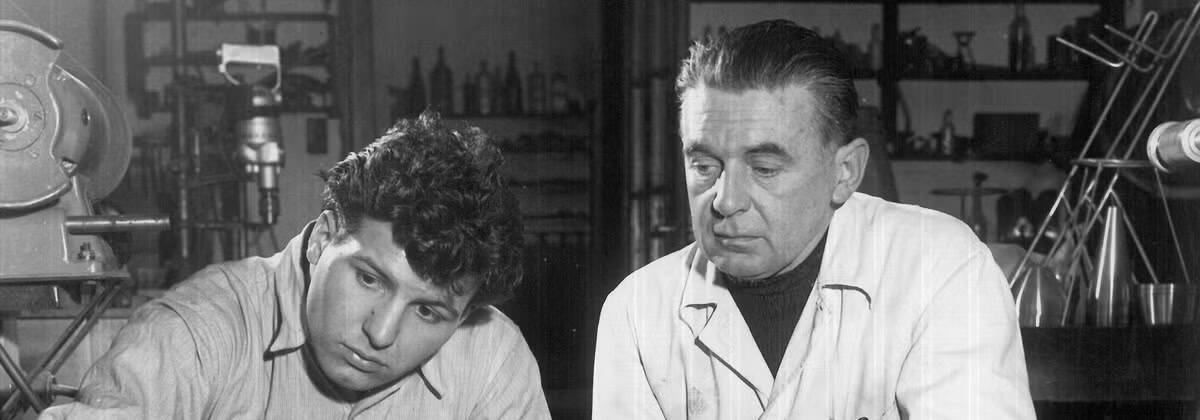
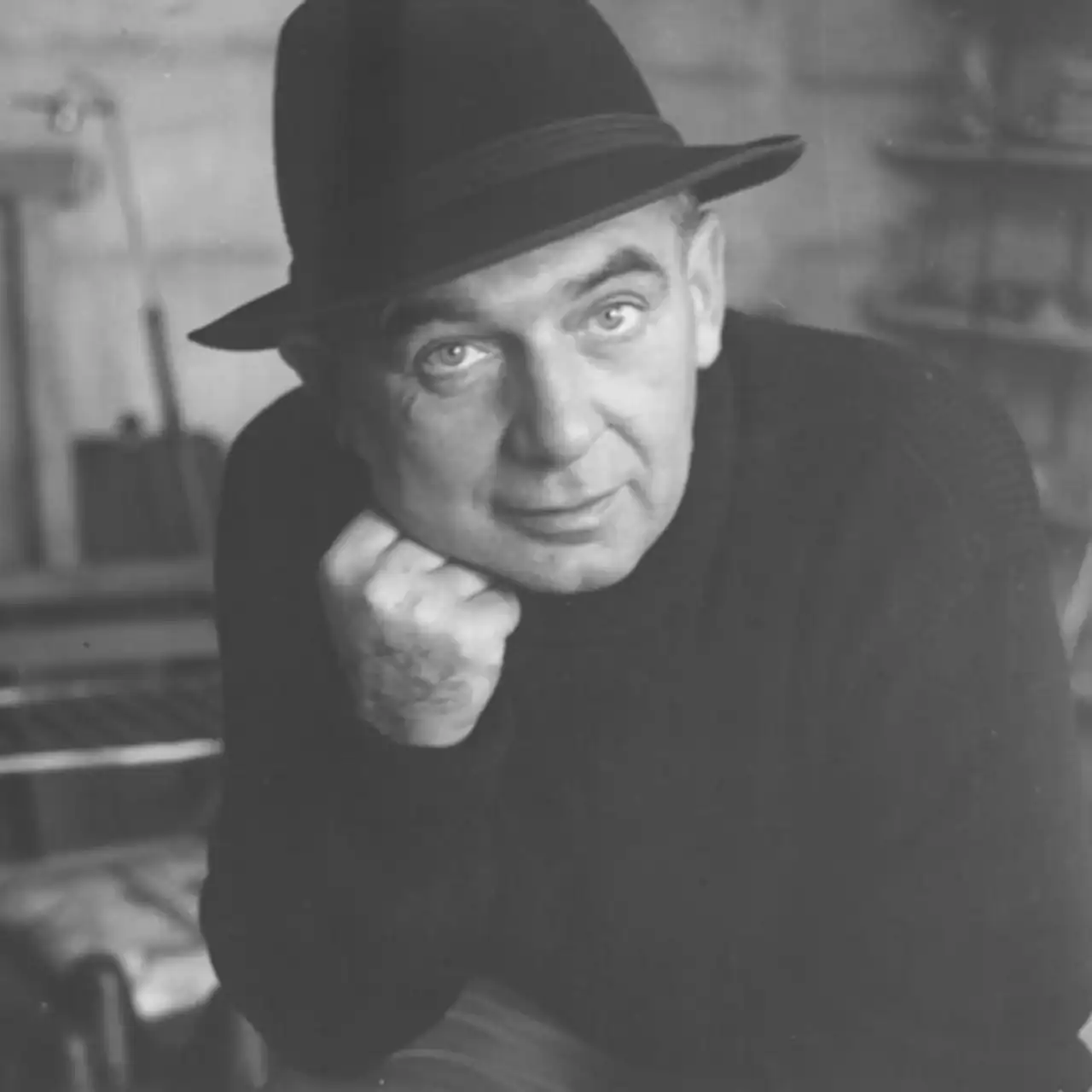
Carl Auböck
Carl Auböck II (1900–1957) was an Austrian designer and metalworker whose work occupies a distinctive position within mid-century modern design. Trained in both sculpture and metalwork, Auböck combined Viennese craftsmanship with modernist clarity, creating objects that are at once playful, refined, and rigorously constructed.
Biography
Auböck studied at the Bauhaus in Weimar in the early 1920s, where he encountered progressive ideas about material honesty and functional form. After returning to Vienna, he took over the family workshop, Werkstätte Carl Auböck, originally founded by his father in the 19th century. Under his direction, the workshop evolved into one of Austria’s most important producers of modern decorative and functional objects.
His work spans brass desk accessories, sculptural paperweights, bookends, mirrors, trays, and small furniture pieces. Characterised by clean silhouettes and carefully proportioned forms, Auböck’s designs often transform everyday objects into subtly surreal compositions — stylised hands, abstracted animals, or minimalist interpretations of natural forms.
Brass was his signature material, frequently left with a brushed or patinated surface that emphasised warmth and tactility. Many pieces combine brass with leather, cane, or wood, reinforcing a balance between industrial precision and artisanal finish.
Unlike mass-produced industrial design, Auböck’s work retained a strong workshop identity. Objects were handcrafted in limited quantities, reflecting both modernist discipline and Viennese decorative tradition.
Today, Carl Auböck’s designs are highly collectible and remain in production through the continued operation of the Werkstätte in Vienna, underscoring the enduring relevance of his material-driven and sculptural approach to modern design.
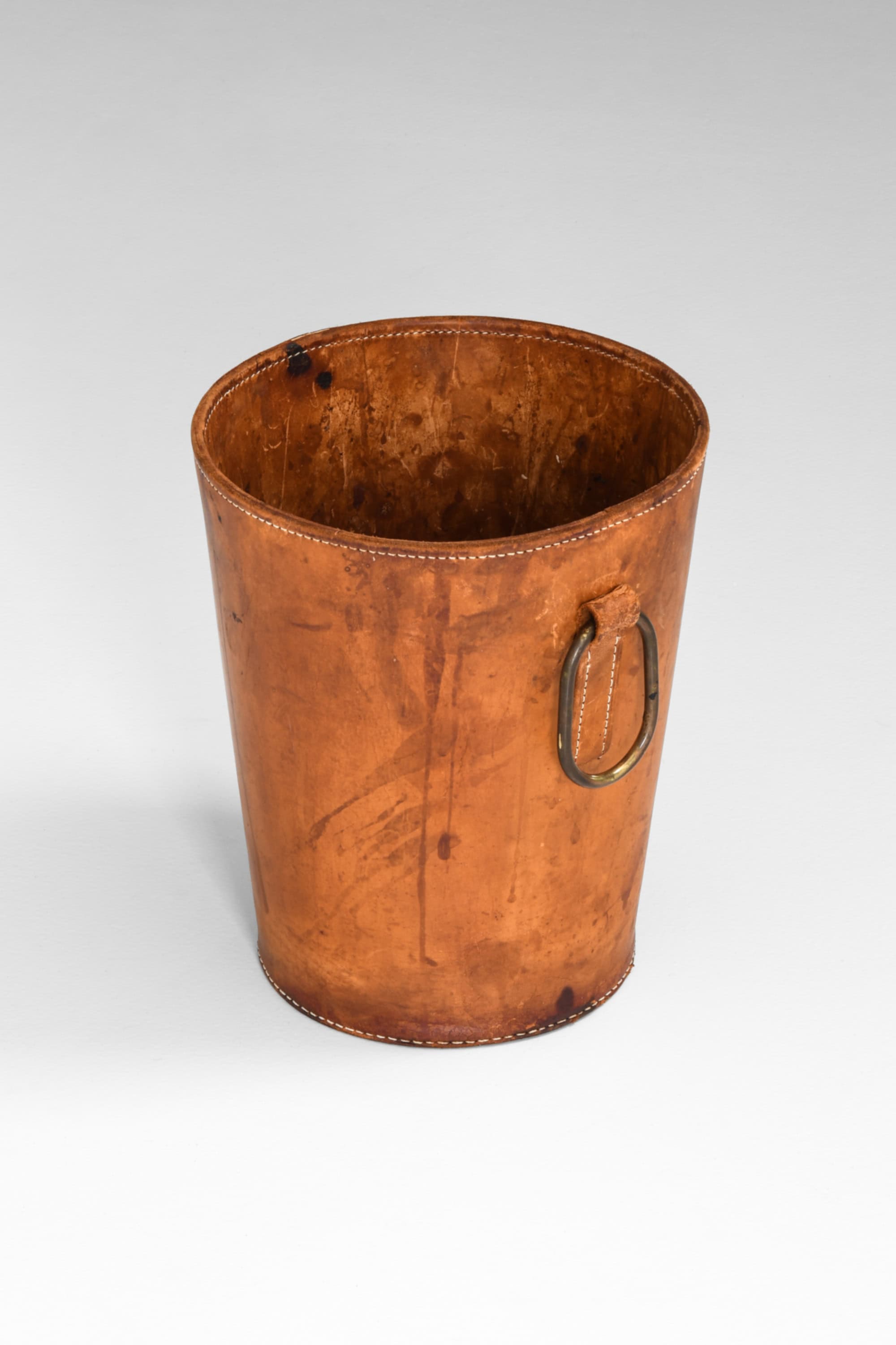
Carl Auböck wastebasket

Carl Auböck wastebasket

Carl Auböck ice bucket

Carl Auböck magazine rack

Carl Auböck watering can

Carl Auböck pincer

Carl Auböck pipe rack

Carl Auböck watering can

Carl Auböck wastebasket
