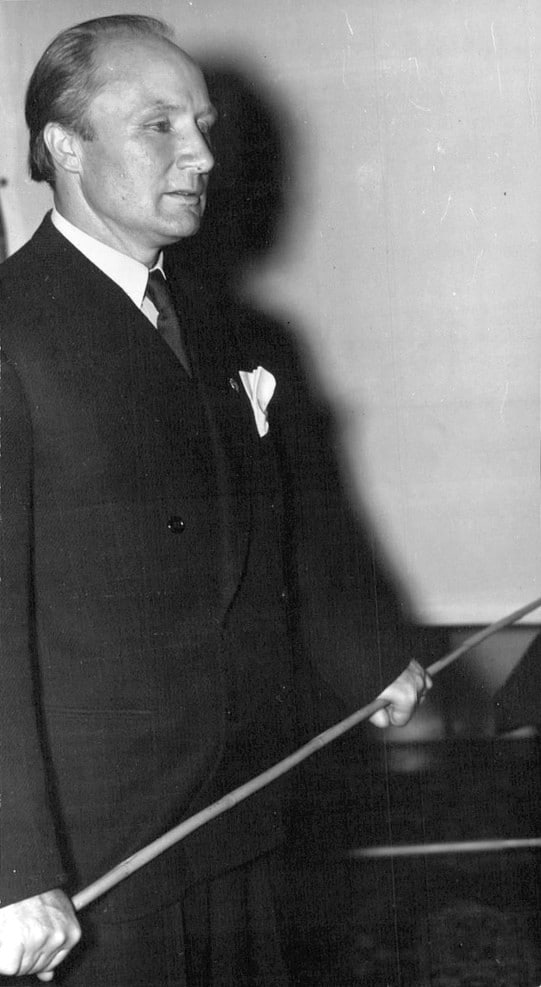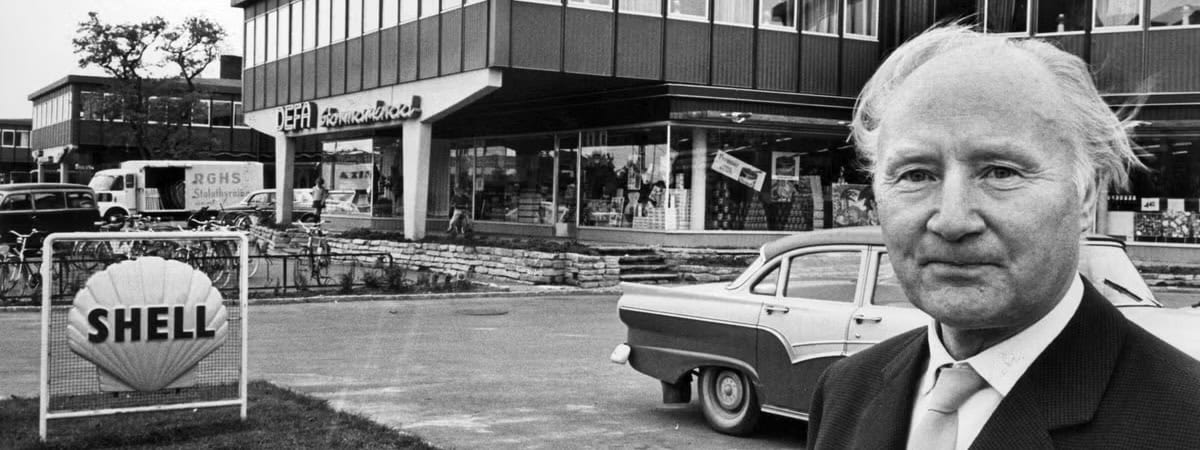
Eric Sigfrid Persson
Eric Sigfrid Persson (1898–1983) was a Swedish builder, designer, and entrepreneur, regarded as one of the most influential figures in Swedish functionalist housing during the 20th century. Working primarily in Malmö, he developed several important residential areas that combined modern planning, practical construction, and a strong interest in everyday living. Later in his career, he also designed furniture in extruded aluminium, extending his functionalist approach from architecture into object design.
Biography
Eric Sigfrid Persson was born in Tomelilla, Skåne, in 1898. He began his working life at a young age, first as a carpenter’s apprentice and later as a bricklayer. He continued his studies in the evenings and also spent time working and studying in Denmark before returning to Sweden, where he founded his own construction company in the 1920s.
Persson became active in Malmö, where he designed and built several highly regarded modern housing areas during the 1930s and 1940s. Among his best-known projects are Malmgården, Riberhus, and Friluftsstaden. These developments reflected the ideals of functionalism, with attention to light, air, practical planning, and improved living conditions.
Friluftsstaden, built during the 1940s, became one of Persson’s most important projects. The area was presented at the exhibition “Vi bo i Friluftsstaden” in Malmö in 1944 and represented a modern approach to residential planning, where homes were connected to green surroundings and everyday comfort. On this project, Persson worked with Erik Bülow-Hübe.
During the 1950s and 1960s, Persson continued to design residential areas in other Swedish towns, including Södertälje, Huskvarna, and Nykvarn. His work helped shape Swedish housing culture during the postwar period and contributed to a broader understanding of modern, practical, and socially aware residential design.
After reducing his work as an architect and builder in the late 1960s, Persson turned increasingly to furniture design. In the 1970s, he created furniture in extruded aluminium for manufacturers such as Möbelkultur and Expo Nord, including the resting chair Lysmasken and Sitting Typ E3. His furniture was shown at Form/Design Center in Malmö and later received recognition at the Innovation Fair in Geneva.