Muuratsalo: A Place for Experiment
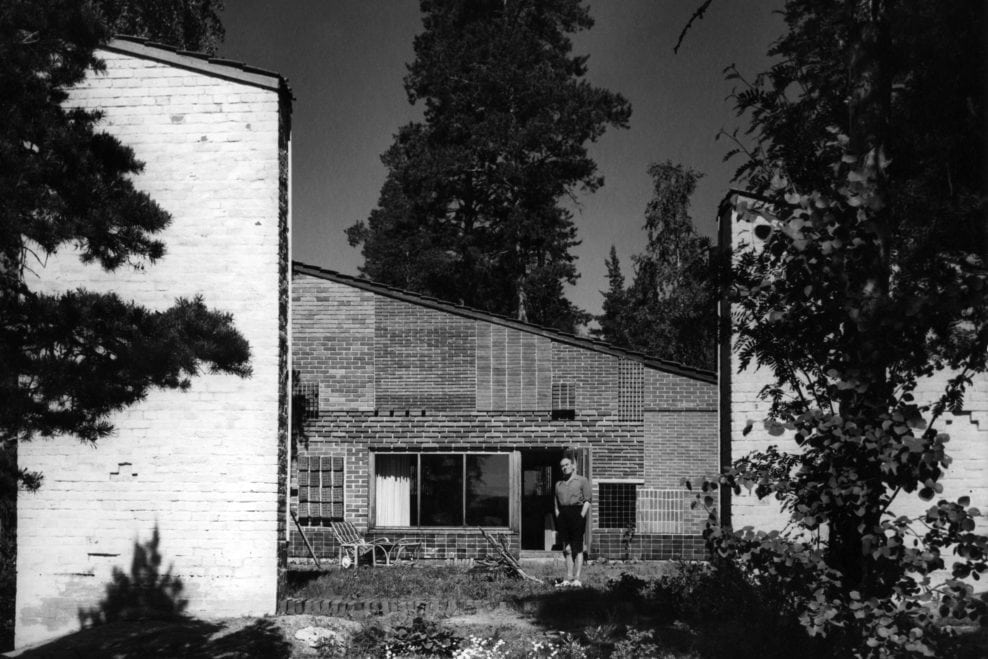
Hidden among pine trees on the rocky shores of Lake Päijänne lies the Experimental House in Muuratsalo – designed in the early 1950s by Alvar Aalto and his wife Elissa Aalto as a summer residence and architectural testing ground. Neither a manifesto nor a retreat in the traditional sense, the house occupies a position somewhere in between: a place where architecture could be questioned, tested, and lived with.
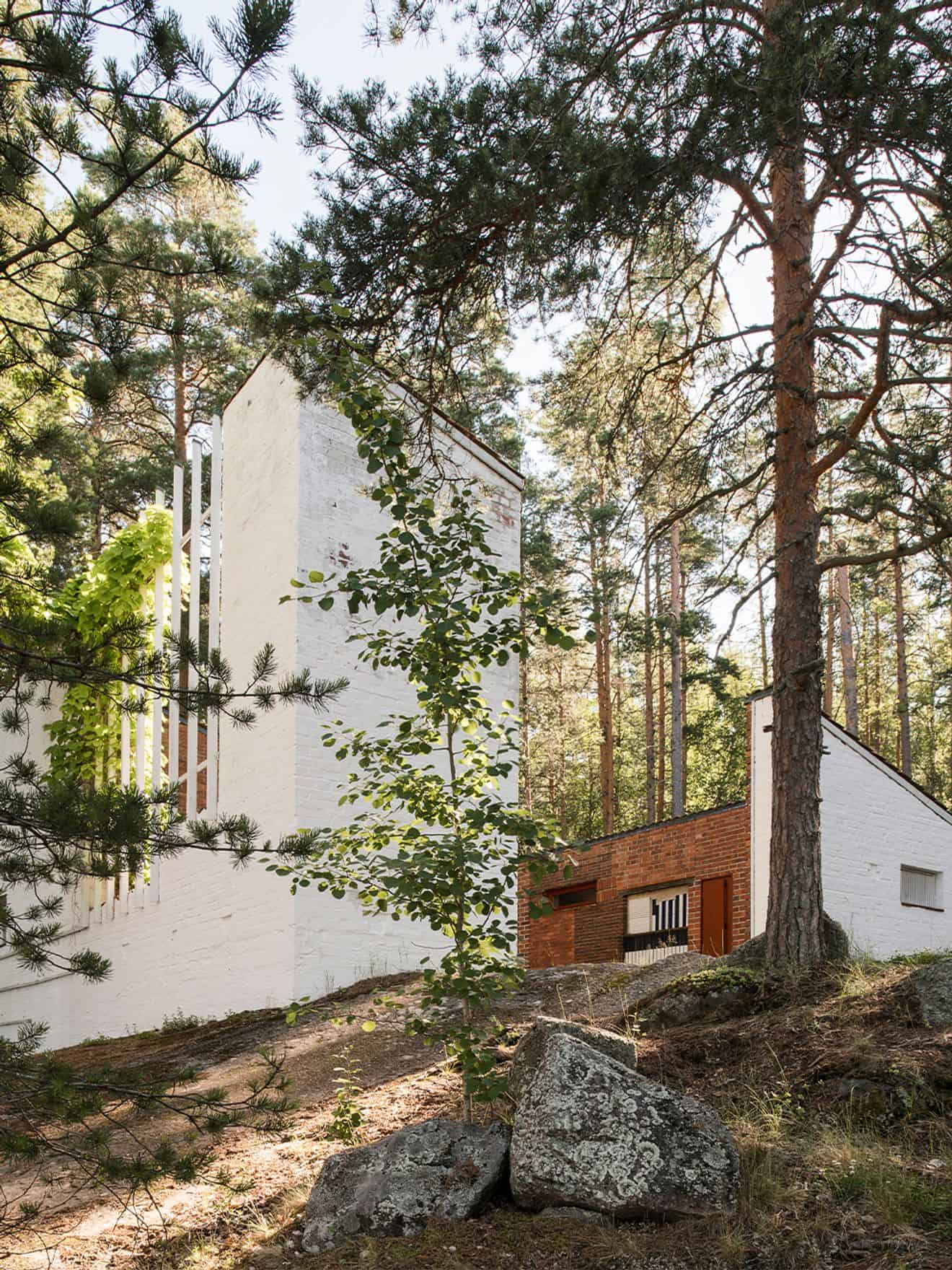
Approached via a winding path through the forest, the building reveals itself gradually. It rests lightly on the terrain, adapting to the rocky landscape rather than dominating it – an approach deeply rooted in Aalto’s understanding of nature as a collaborator rather than a backdrop.
A Laboratory in Brick and Plaster
The Experimental House was conceived as a full-scale laboratory. Built during the same period as Säynätsalo Town Hall, the house shares its material language – brick, plaster, and timber – but translates it into a more intimate, domestic scale. Here, Aalto allowed himself a rare degree of freedom, experimenting with structure, surface, and construction without the constraints of a public commission.
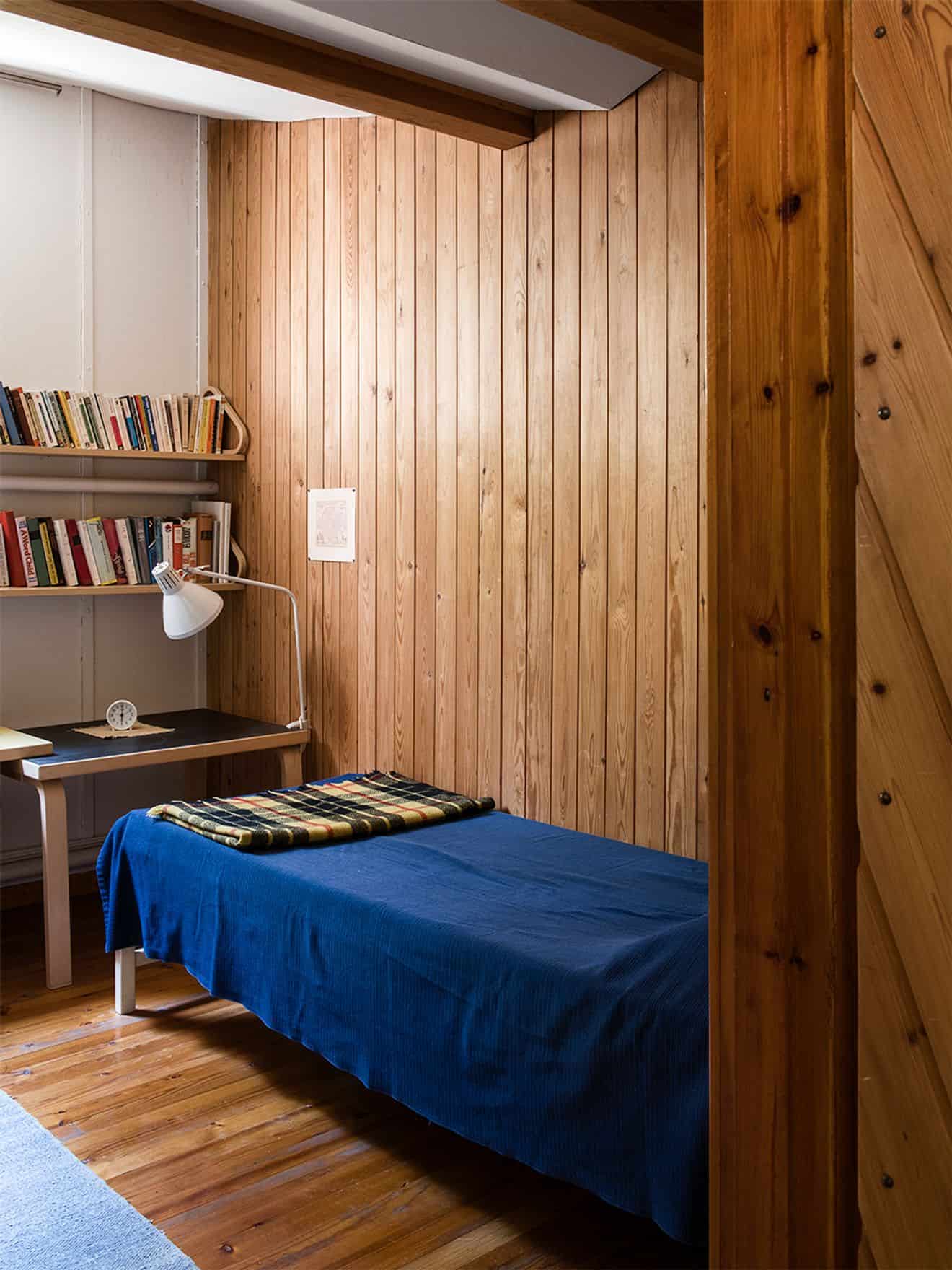
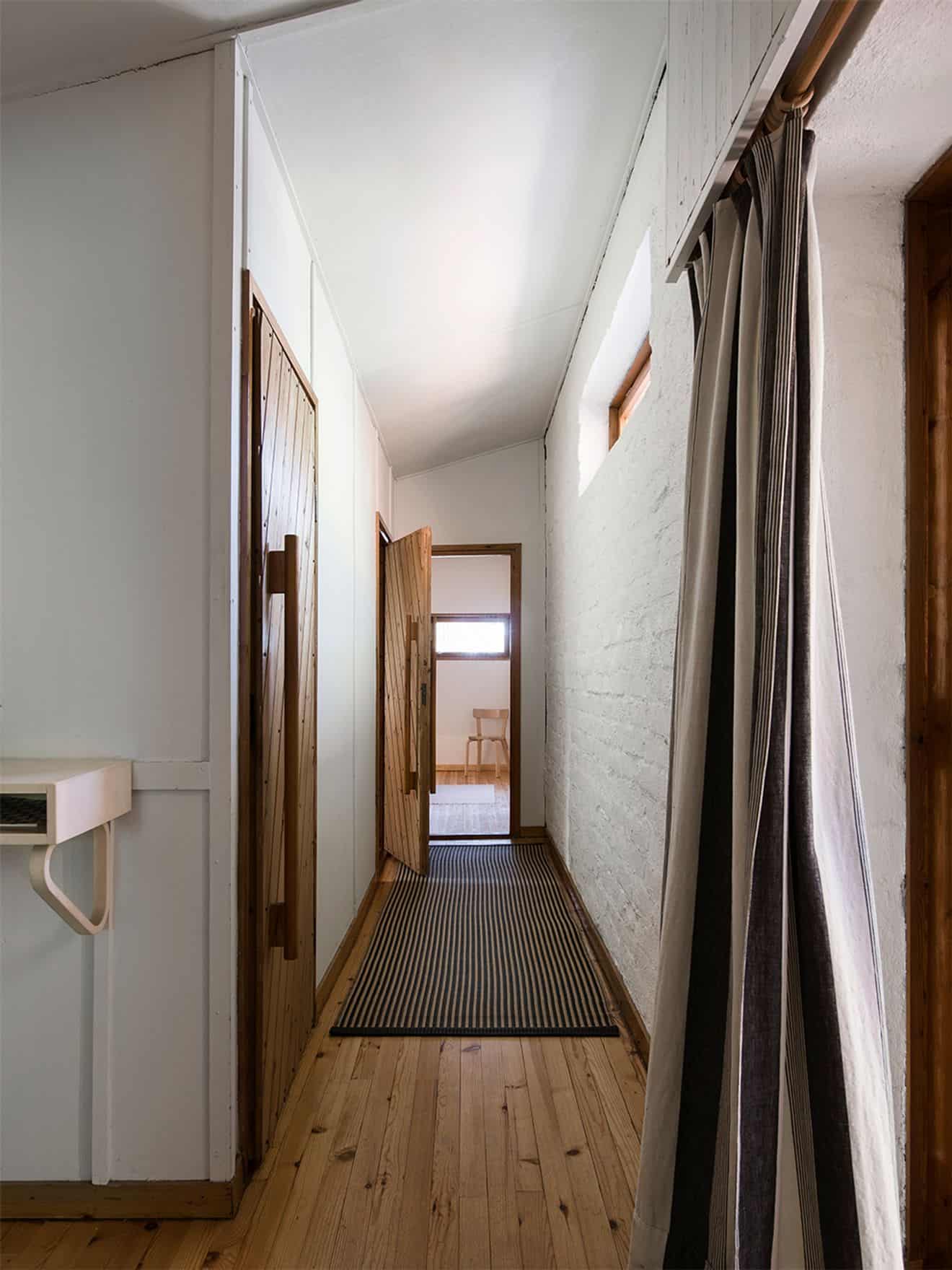
The tallest volume, plastered in white, anchors the composition. Adjacent to it sits a lower wooden wing containing compact sleeping quarters for guests – spaces pared down to their essentials, almost resembling cabins aboard a boat.
The Atrium: Architecture Turned Inward
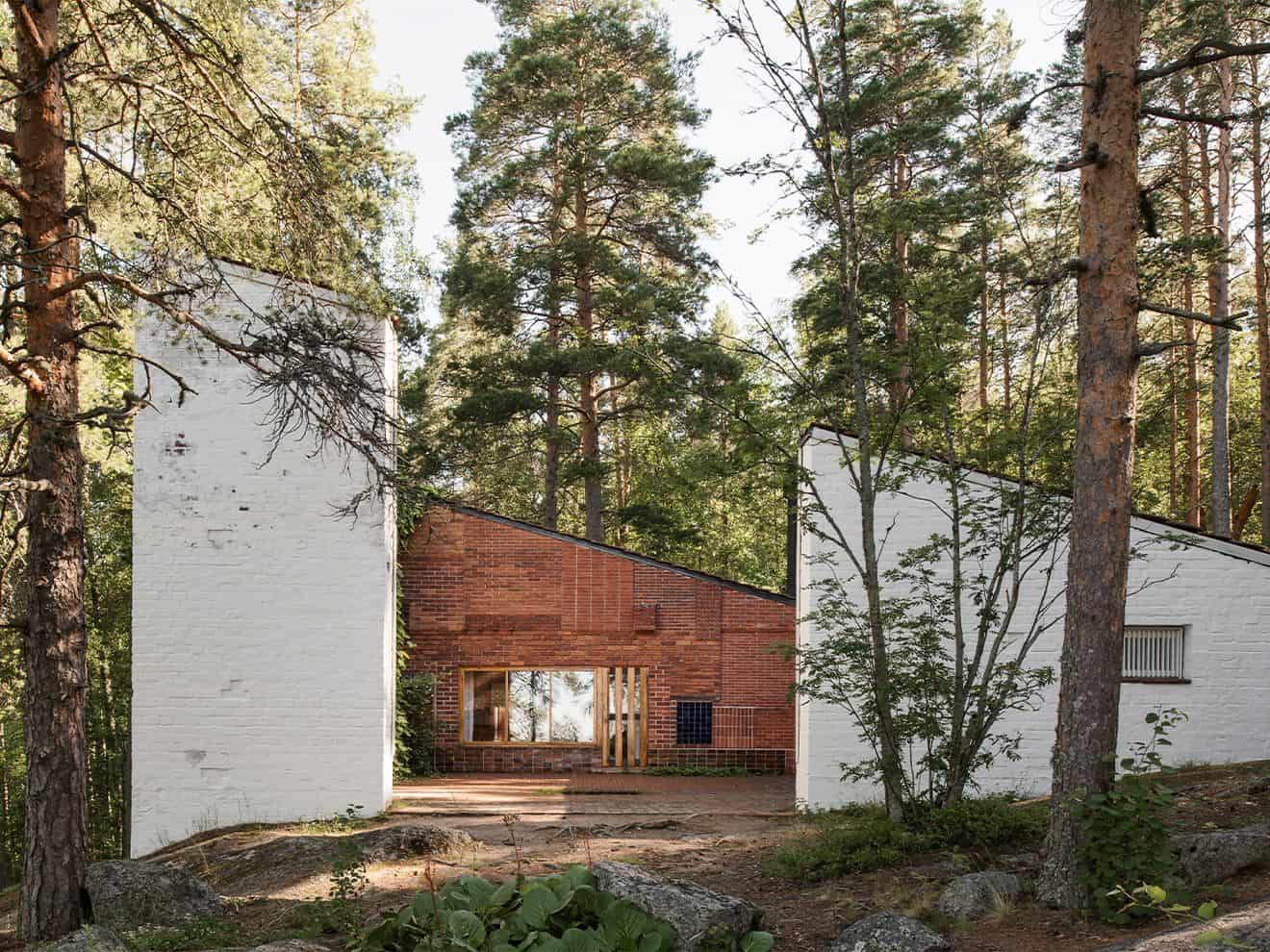
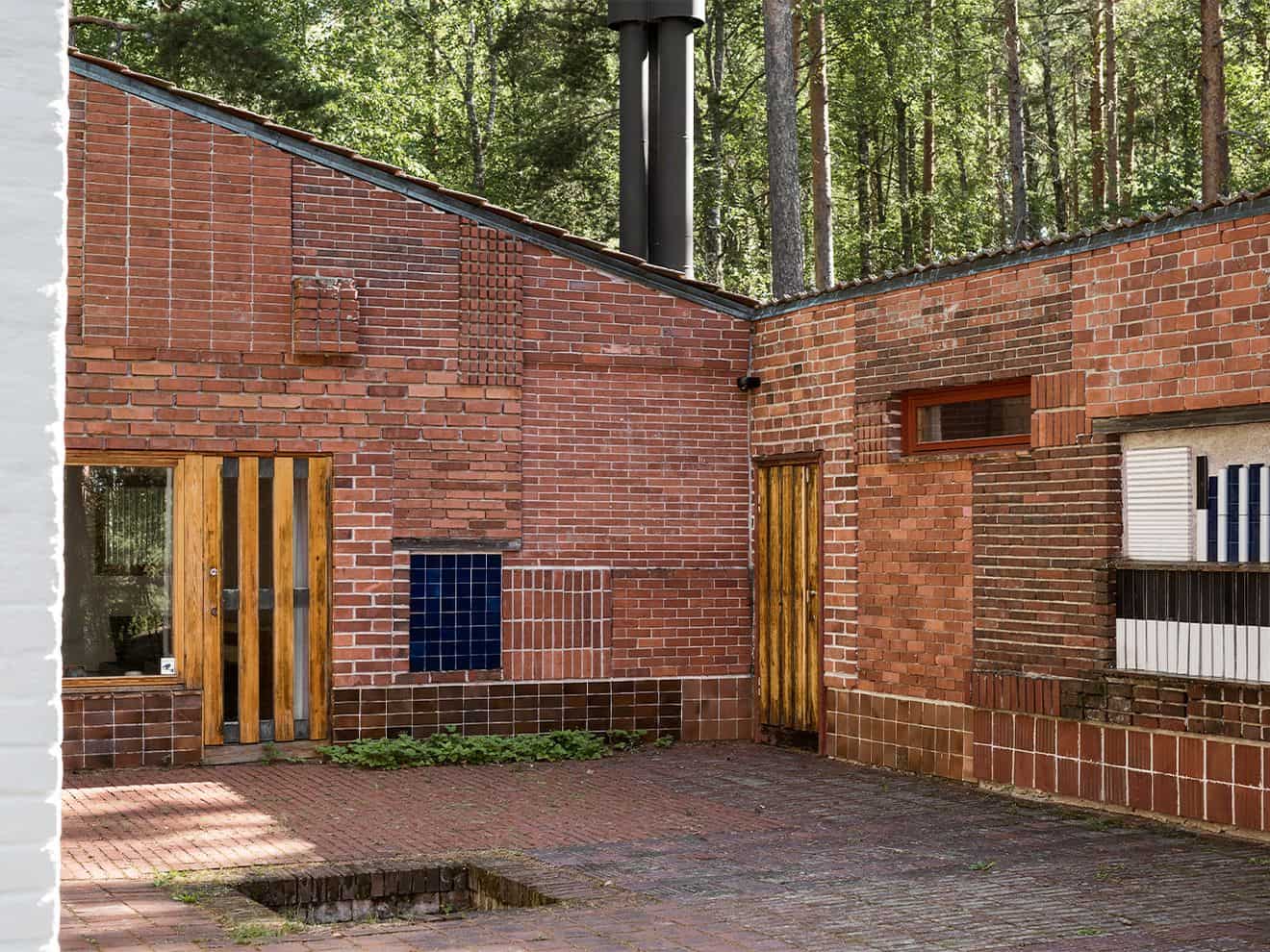
At the heart of the house lies the atrium – an outdoor room enclosed by red brick walls. This is the true core of the Experimental House. A fire pit sits at its center, transforming the space into a place for gathering, conversation, and reflection as daylight fades.
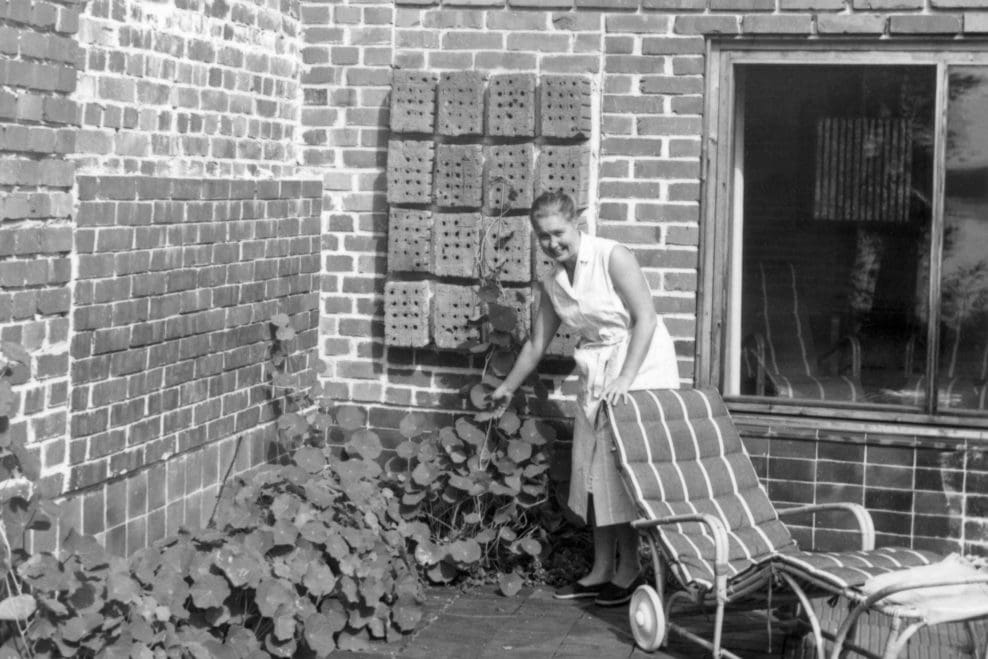
The surrounding walls function as a material archive: more than fifty variations of brick and tile are laid out in different patterns and combinations. Some are rough, others refined. Together they read less like decoration and more like a lesson in masonry – an architectural notebook written in clay and mortar.
Interior Spaces: Light as Structure
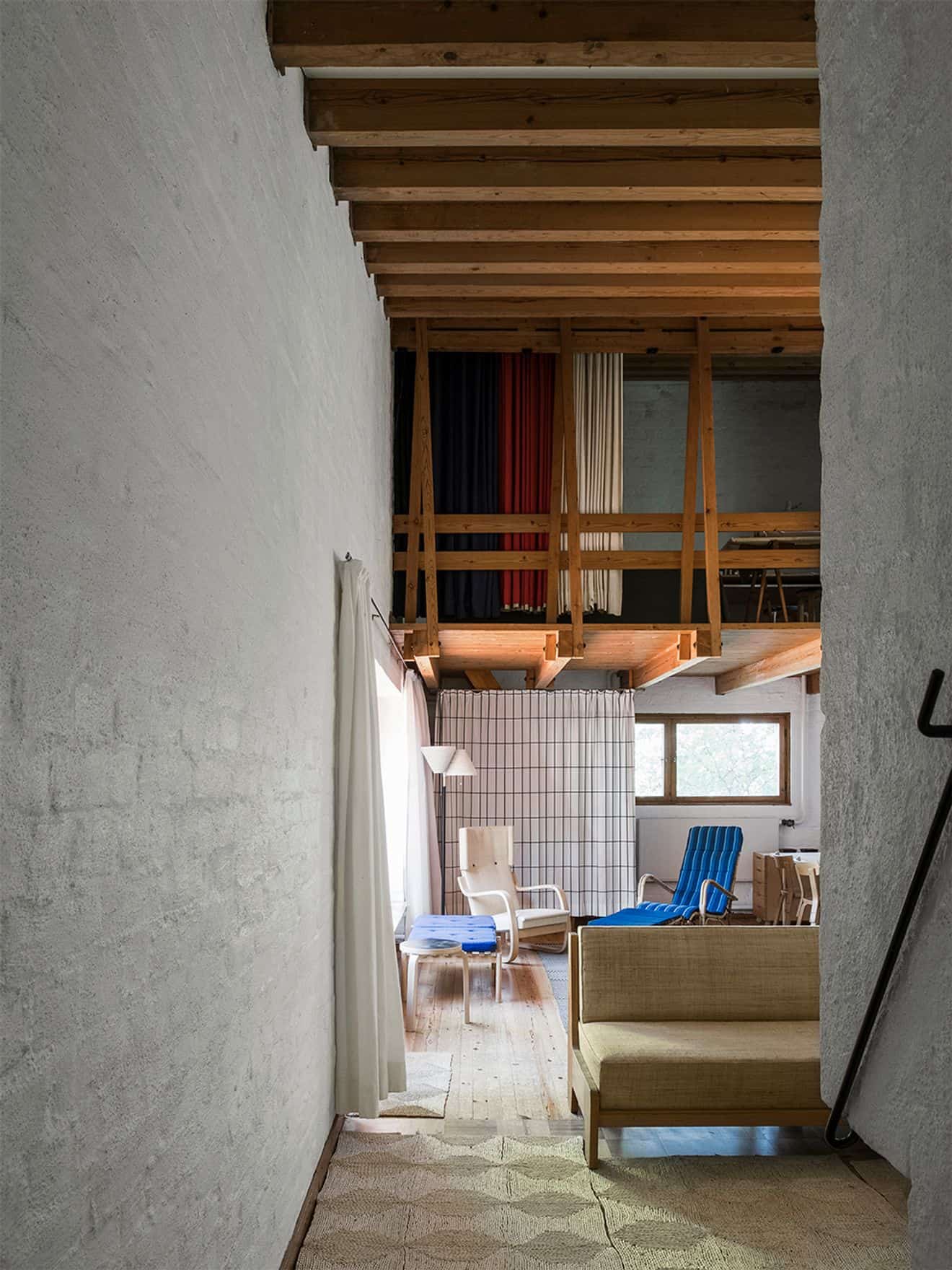
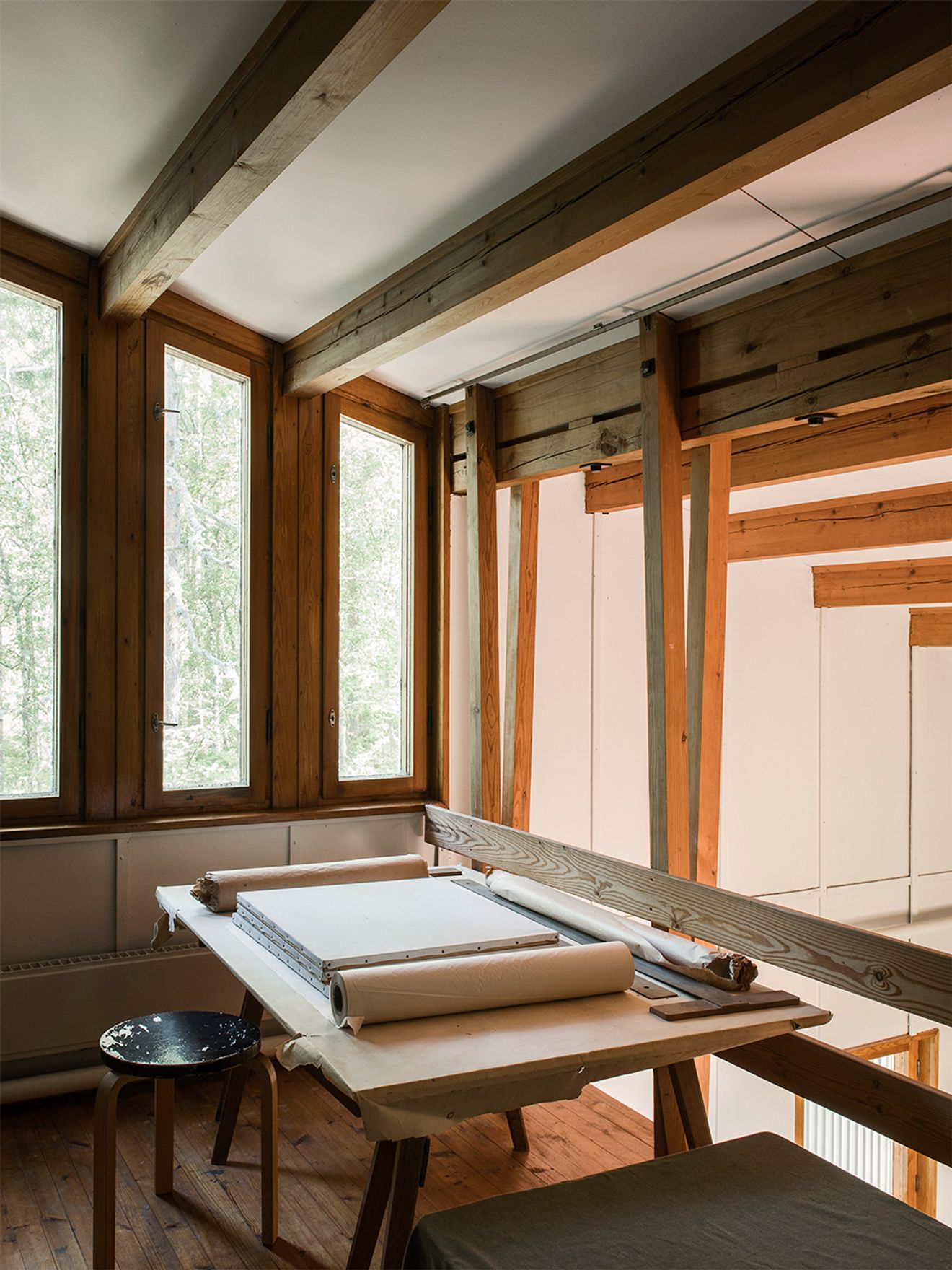
Inside, the main living space opens beneath a high, slanted ceiling. It served multiple purposes: dining, lounging, and working, all within a single, fluid volume. At its highest point, a loft was inserted – Aalto’s summer workspace, where he drew, painted, and developed ideas in relative isolation. Light is treated as an architectural element rather than an accessory, carefully calibrated to support the proportions and rhythm of the space rather than compete with it.
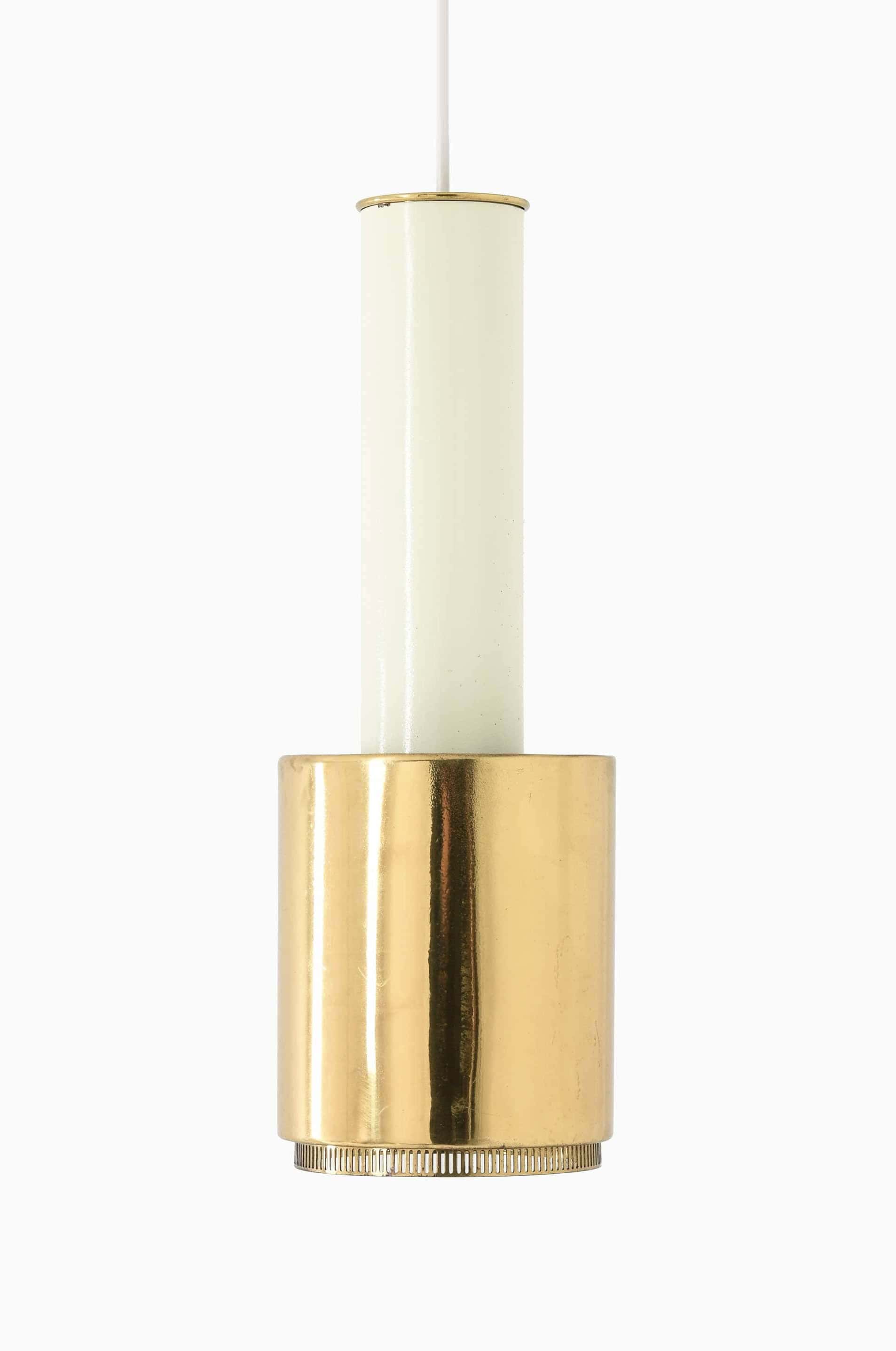
This approach is clearly reflected in Aalto’s ceiling lamps, which appear as quiet, suspended forms – designed to distribute light evenly while remaining visually restrained. Among them is the pendant model A110, often referred to as the ’Hand Grenade’, originally designed in 1952 for the Finnish Engineers Association in Helsinki. The lamp reflects Aalto’s architectural approach: a simple, almost industrial form refined through material sensitivity and precise detailing.
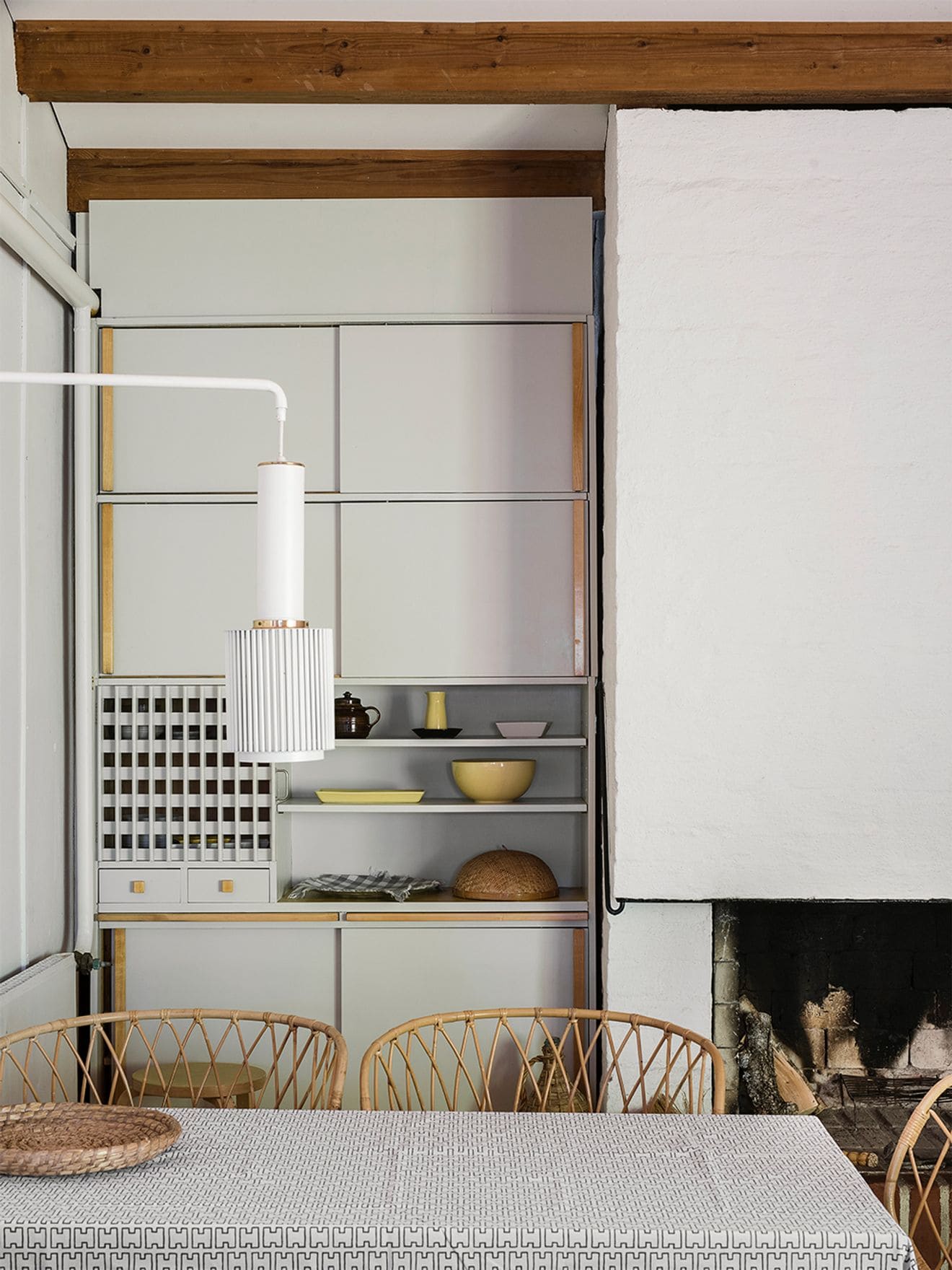
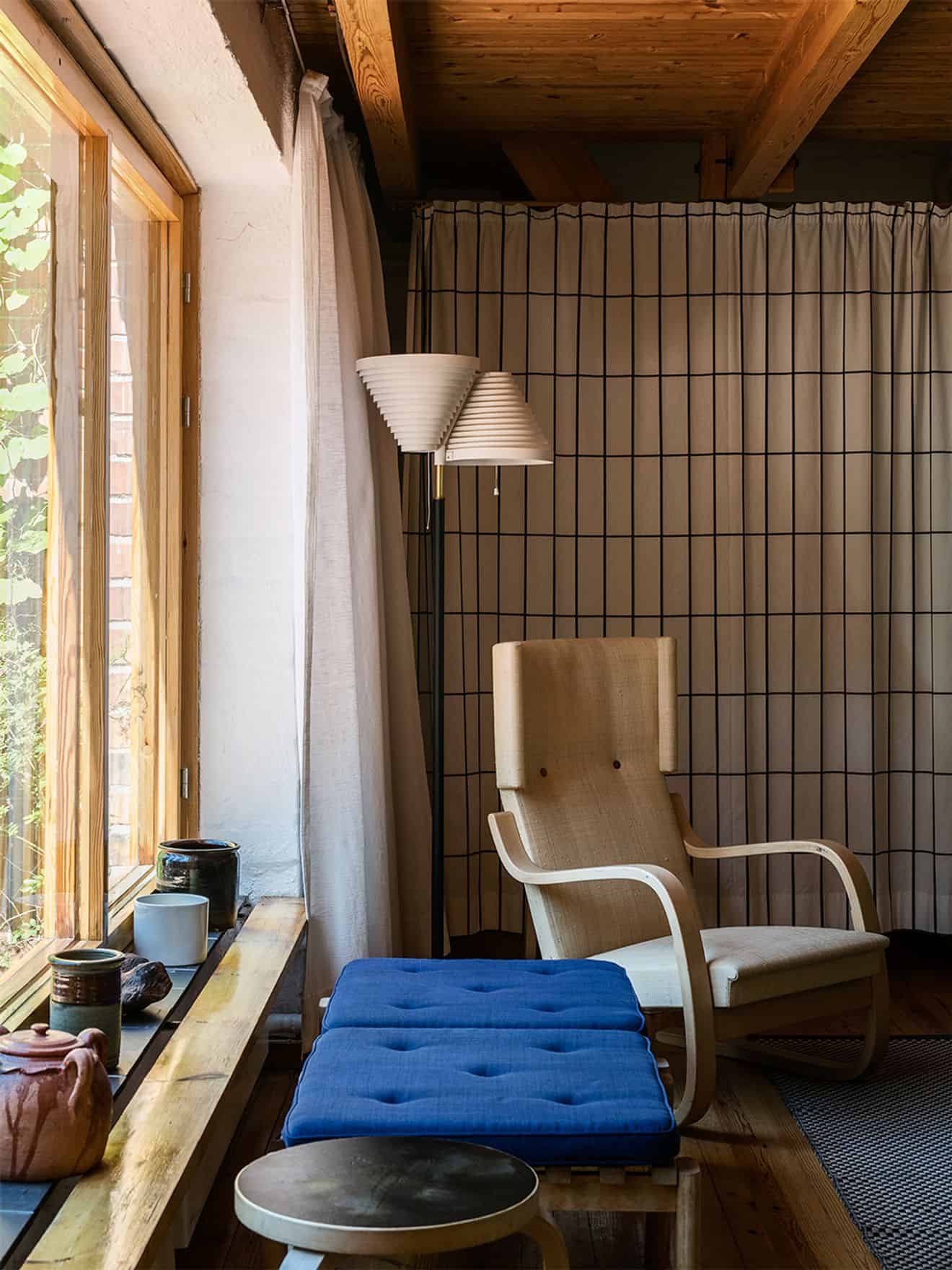
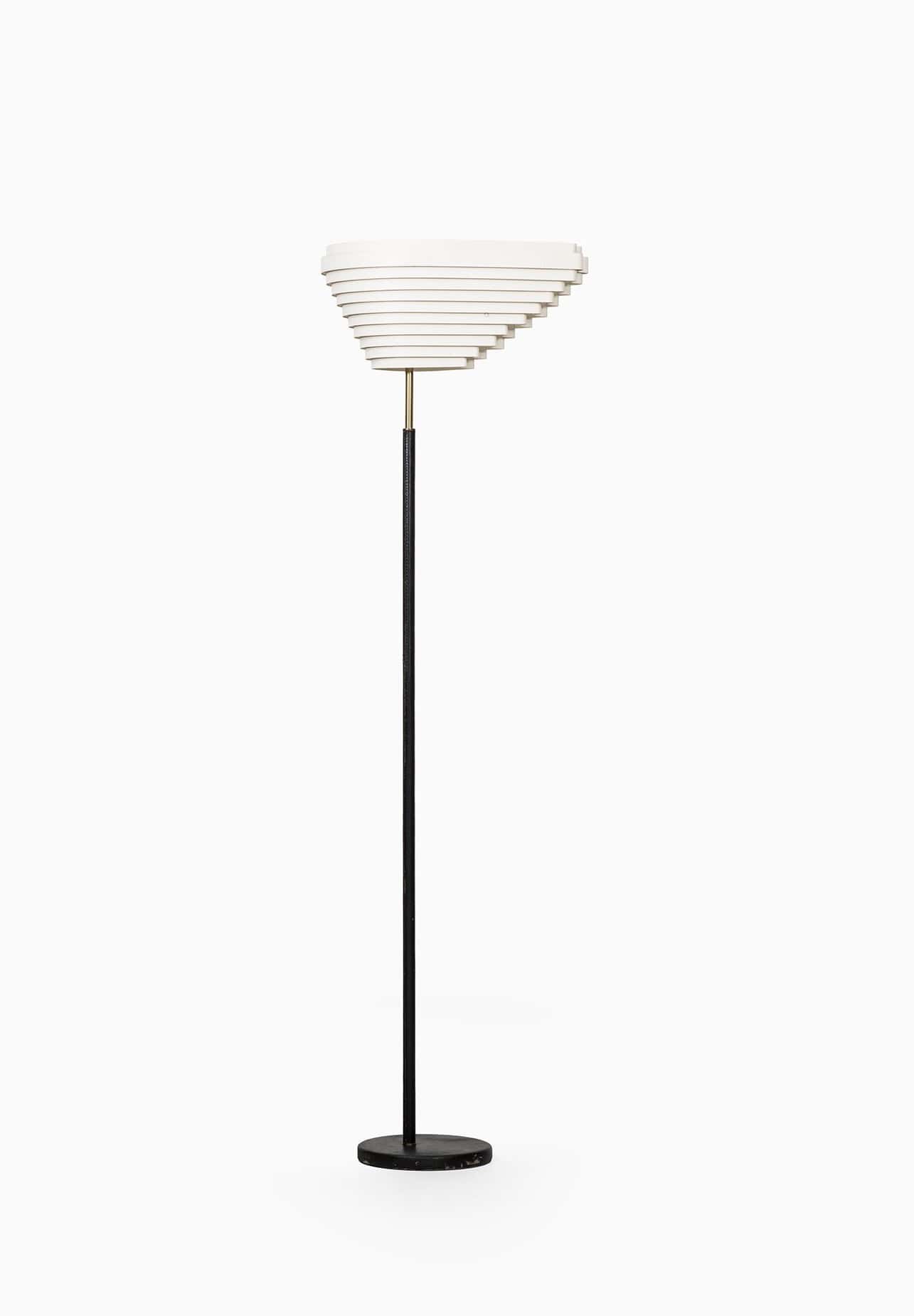
Alongside fixed lighting, movable floor lamps introduce a softer, more personal layer of light, allowing the atmosphere to shift with use, time of day, and season. Similar to the one in Muuratsalo, Aalto’s early A805 floor lamp, often referred to as the ’Angel Wing’, reflects this approach through its sculptural, layered shade in white-painted metal.
Designed in the 1950s, the overlapping metal strips diffuse light upward and outward, creating a warm, indirect glow that feels both functional and atmospheric – quietly supporting the space rather than defining it.
Furniture as Architecture in Miniature
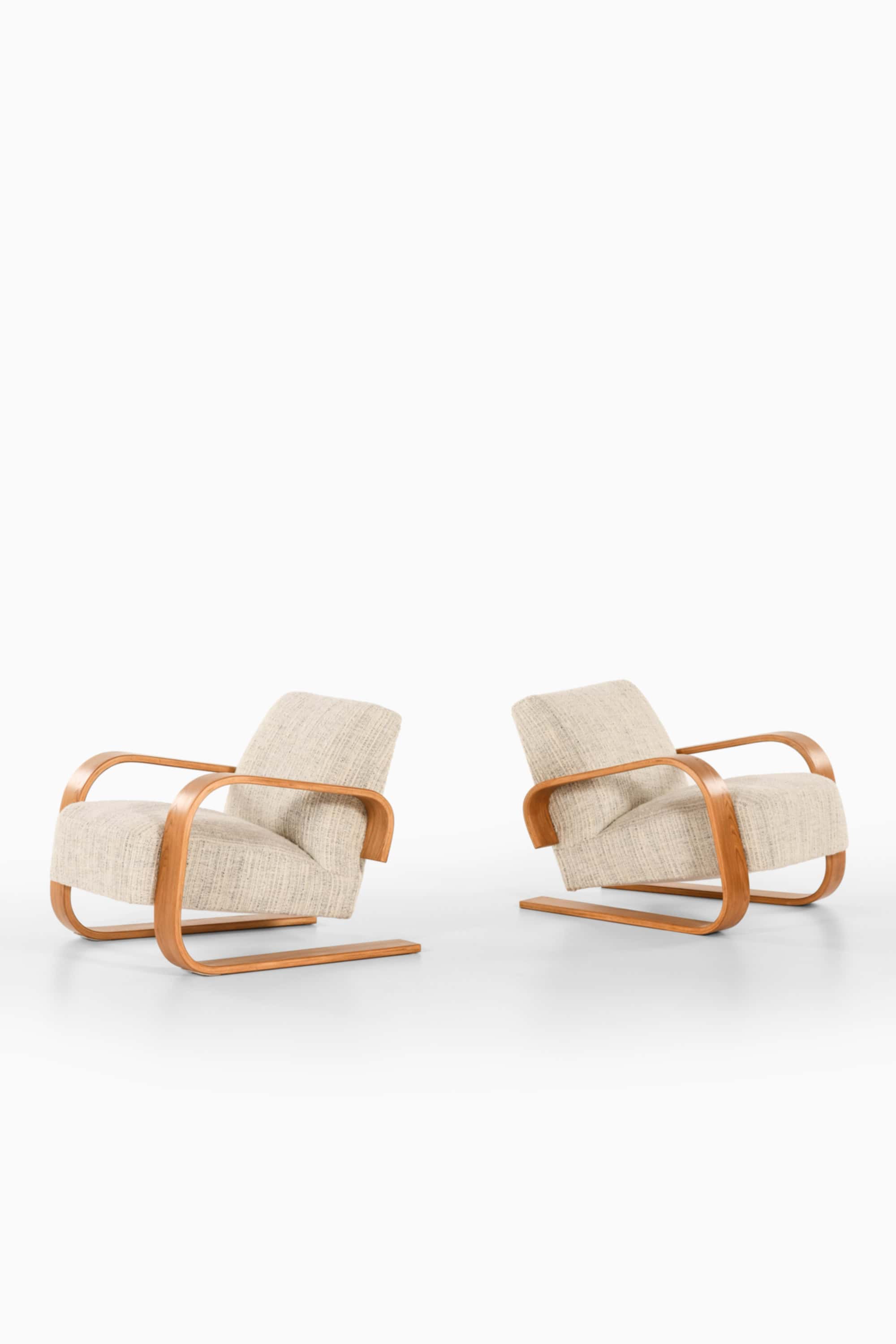
Furniture in the Experimental House is never ornamental. Each piece is shaped by the body and by use – long hours of sitting, reading, resting, and conversation. Rather than standing apart from the architecture, the furniture works with it, reinforcing scale and proportion.
Aalto’s easy chairs follow the same philosophy: low, generous, and ergonomically precise. They act almost as architectural elements in their own right – supporting the human body with the same care that the building supports daily life.
Living with Objects
Storage throughout the house is kept deliberately open. Books, ceramics, and everyday objects remain visible and within reach, reinforcing the sense that this was a place meant to be used rather than staged.
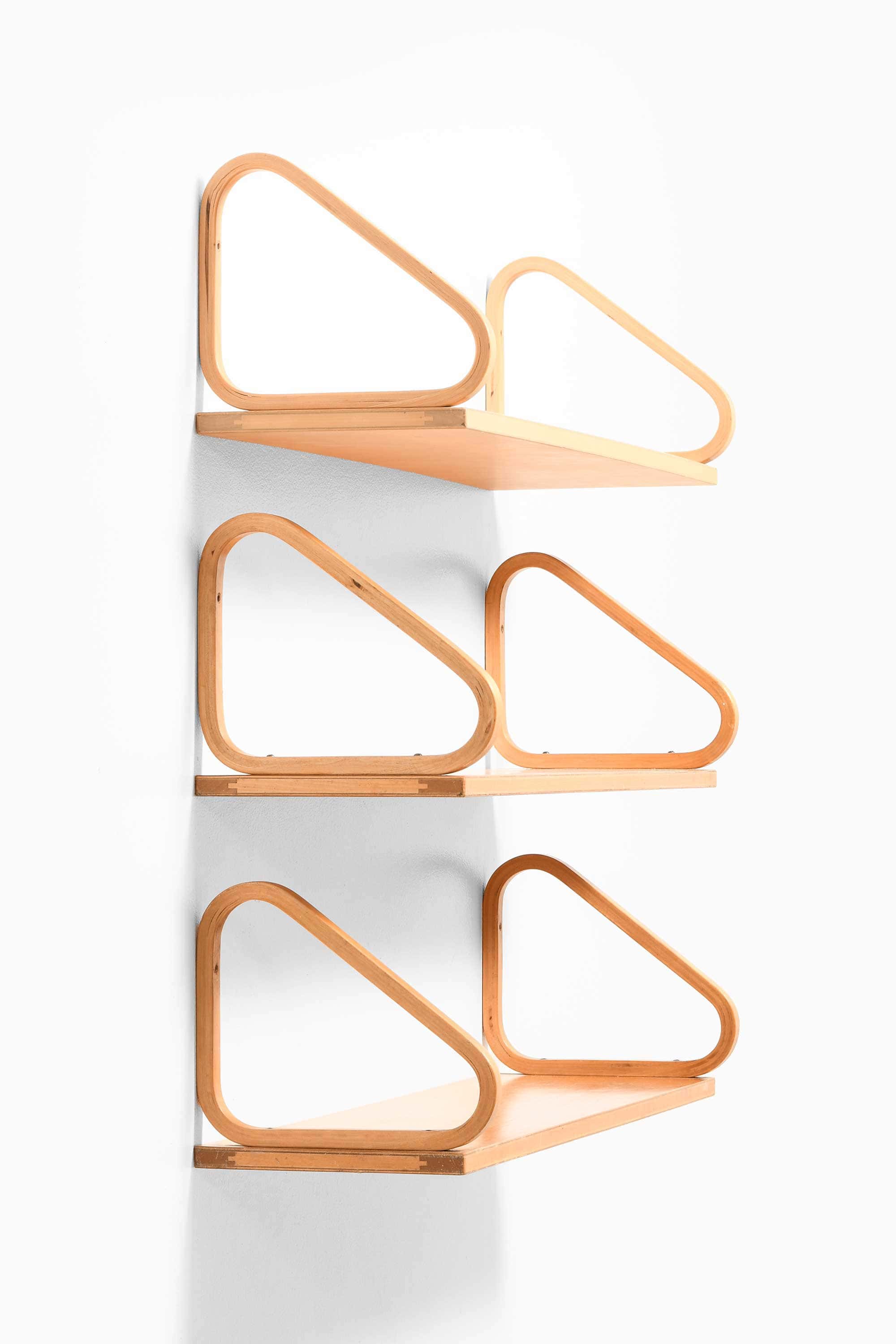
This thinking is echoed in Aalto’s wall-mounted shelving systems, where lightness and flexibility allow the architecture, and its inhabitants, to take precedence. The shelves from our collection are crafted in solid birch and floats cleanly against the wall.
A Place Apart
For Alvar and Elissa Aalto, Muuratsalo became a place of retreat and renewal. Titles were left behind. Days were spent swimming, painting, hosting friends, and thinking freely. Many architects from Aalto’s international circle passed through during the summers, drawn by both the setting and the spirit of the place.
Today, the Experimental House remains a rare and intimate insight into Aalto’s process – where architecture was not only designed, but lived, tested, and quietly refined over time.