


Swedish Grace: From Monument to Interior
Few buildings capture the spirit of Swedish Grace as clearly as Stockholm Concert Hall. Designed by Ivar Tengbom and inaugurated in 1926, the building stands as one of the defining expressions of Nordic 1920s Classicism – internationally known as Swedish Grace. Its blue-rendered façade and colonnade facing Hötorget combine classical dignity with a freer, more personal modern simplicity.
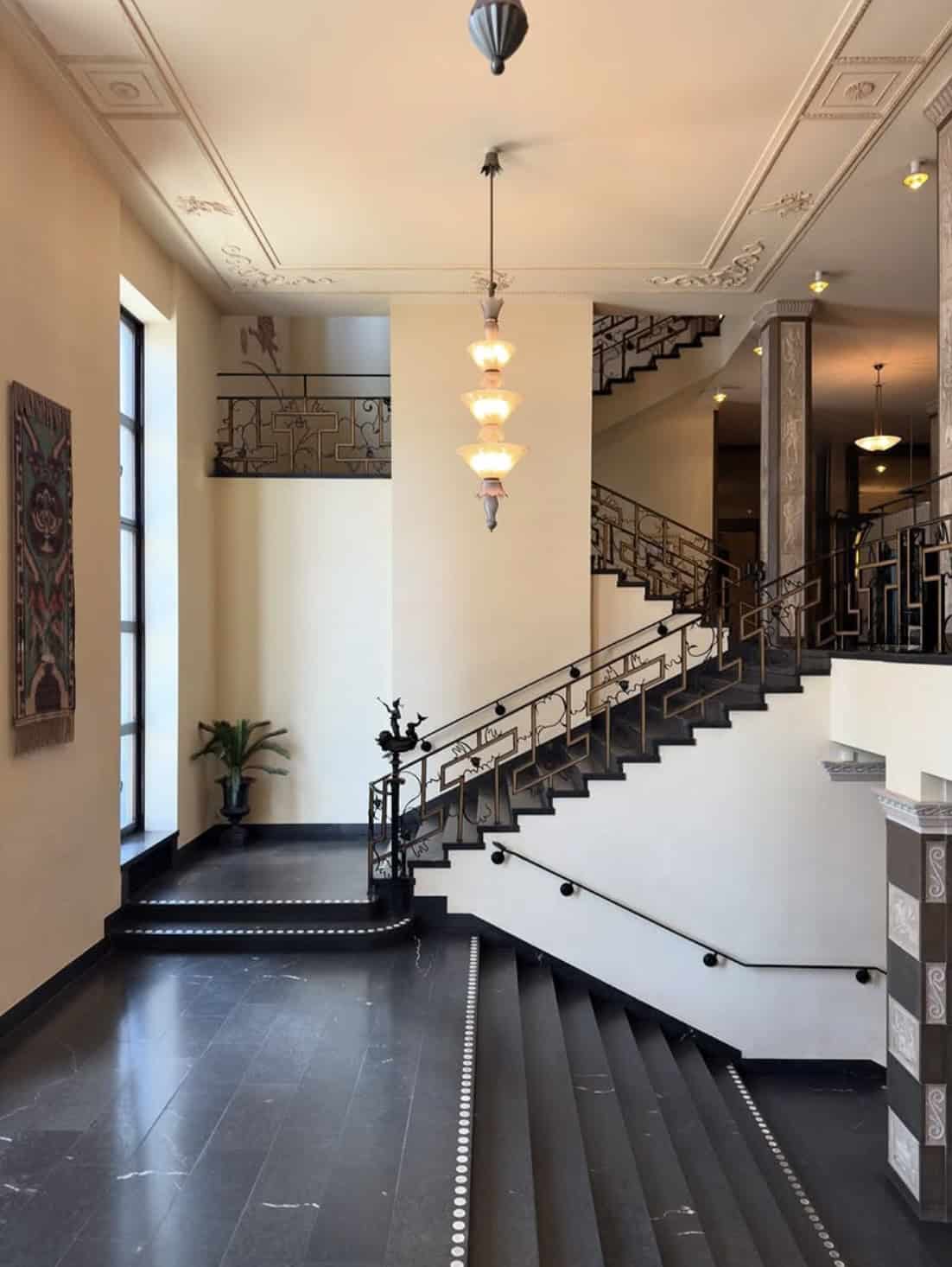
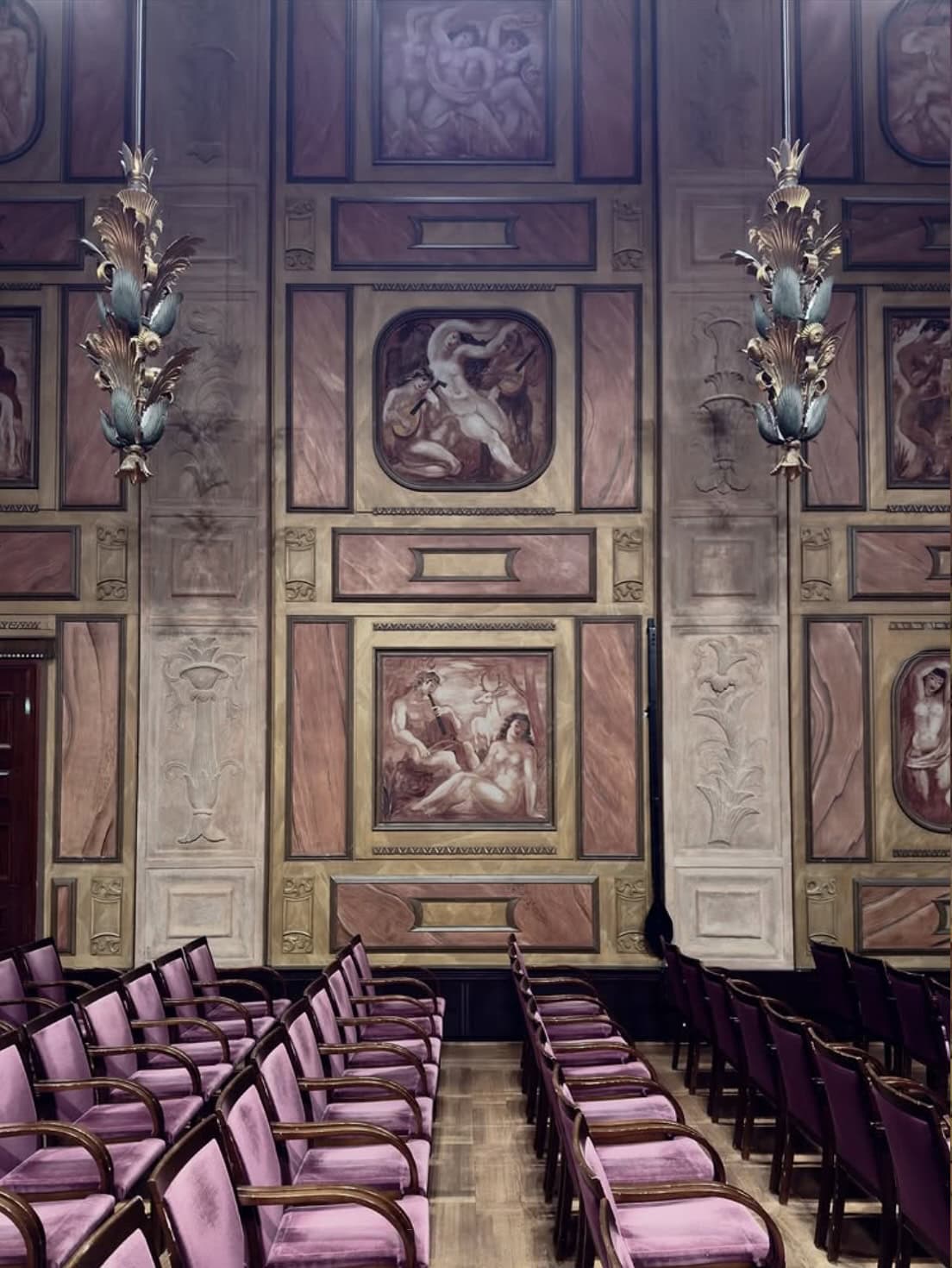
In the interiors of Stockholm Concert Hall, Swedish Grace appears not only as architecture, but as atmosphere. Staircases, railings, reliefs, lighting and decorative surfaces form a complete visual language, one in which ornament is present but held in balance by proportion and structure. This was the essence of Swedish Grace: a refined bridge between classical tradition and modern life, where historical references were softened, simplified and made distinctly Nordic.
The same sensibility extended beyond public architecture into the decorative arts. Furniture, lighting, pewter, textiles and sculpture were shaped by similar ideals: rhythm, craftsmanship, material richness and controlled ornament. Rather than treating architecture and objects as separate disciplines, Swedish Grace often understood them as parts of a coherent interior world.
Axel Einar Hjorth – The Cabinet as Façade
Axel Einar Hjorth was one of the central figures of Swedish furniture design during the early twentieth century. His work from the 1920s often reflects the language of Swedish Grace, where classical references, rich materials and sculptural detail were brought into carefully balanced compositions. The cabinet shown here exemplifies this architectural sensibility. Executed in richly figured birch, it is elevated on a sculptural stand with turned and fluted legs resting on a platform base, giving the piece both visual height and ceremonial presence.
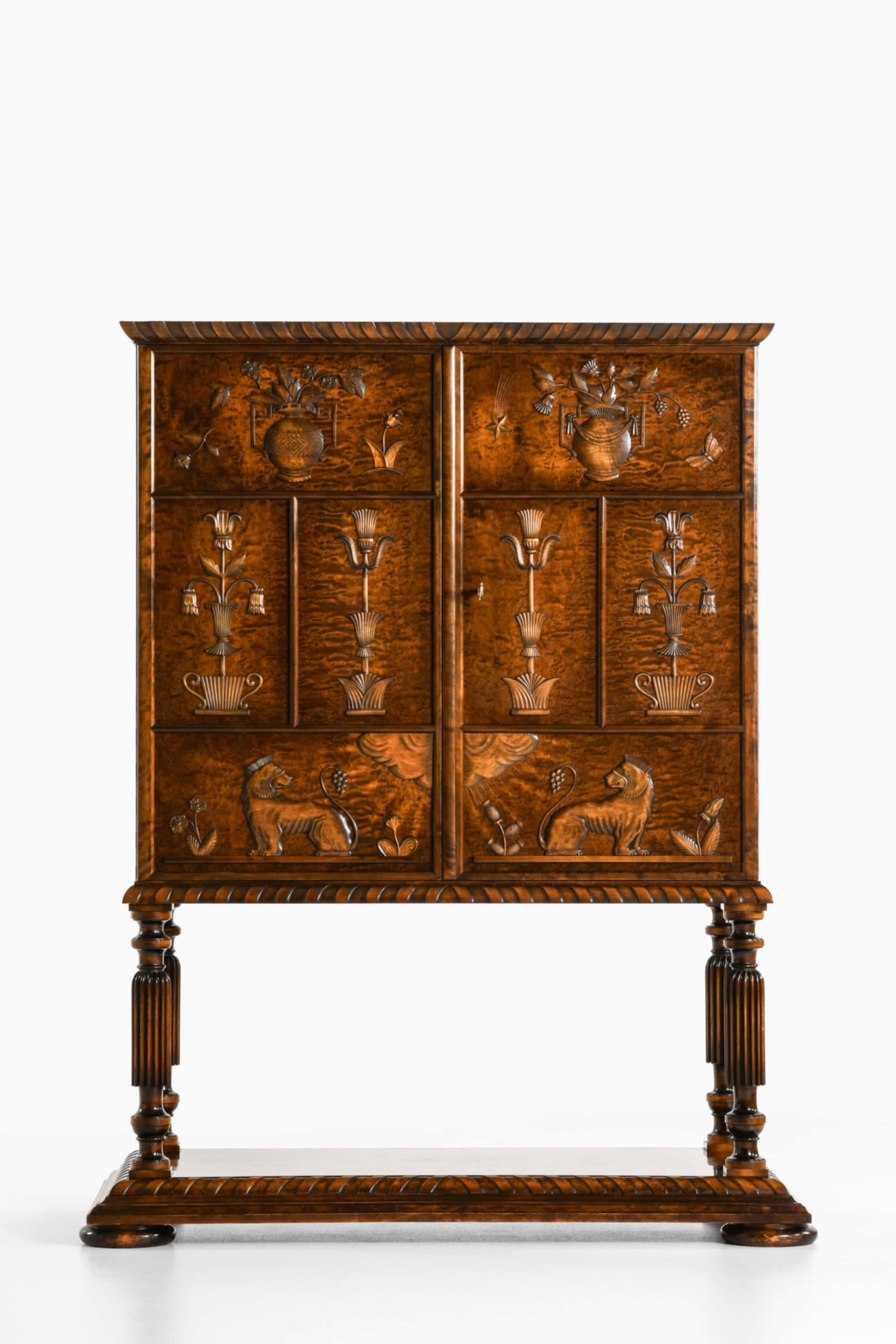
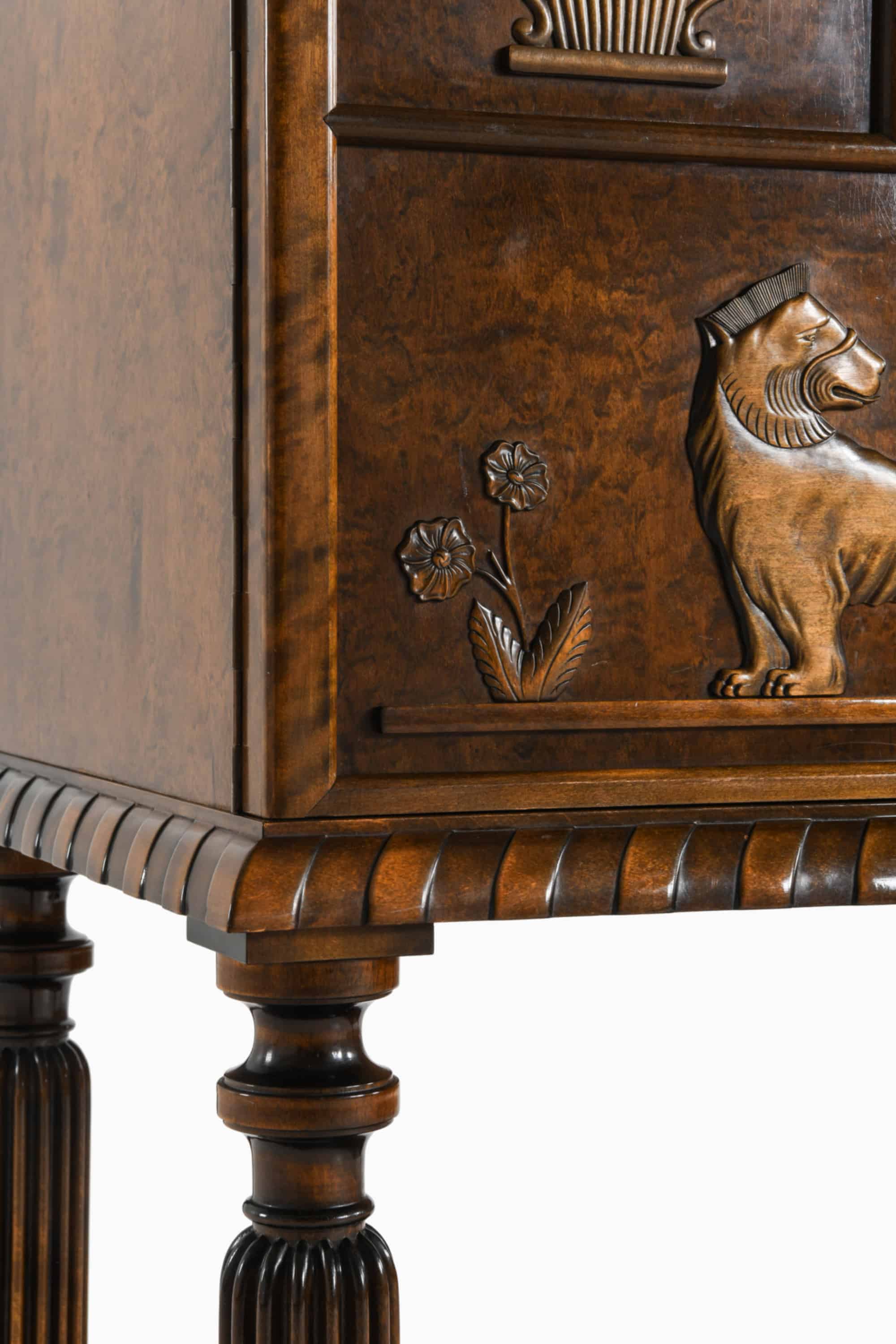
The front is arranged with strong symmetry, its carved panels depicting stylized floral arrangements, classical vessels, stars and heraldic lions. These motifs are decorative, but never uncontrolled. They are placed within a clear structural order, creating a rhythm of framed surfaces, vertical supports and ornamental fields. In this sense, the cabinet reads almost like a miniature façade.
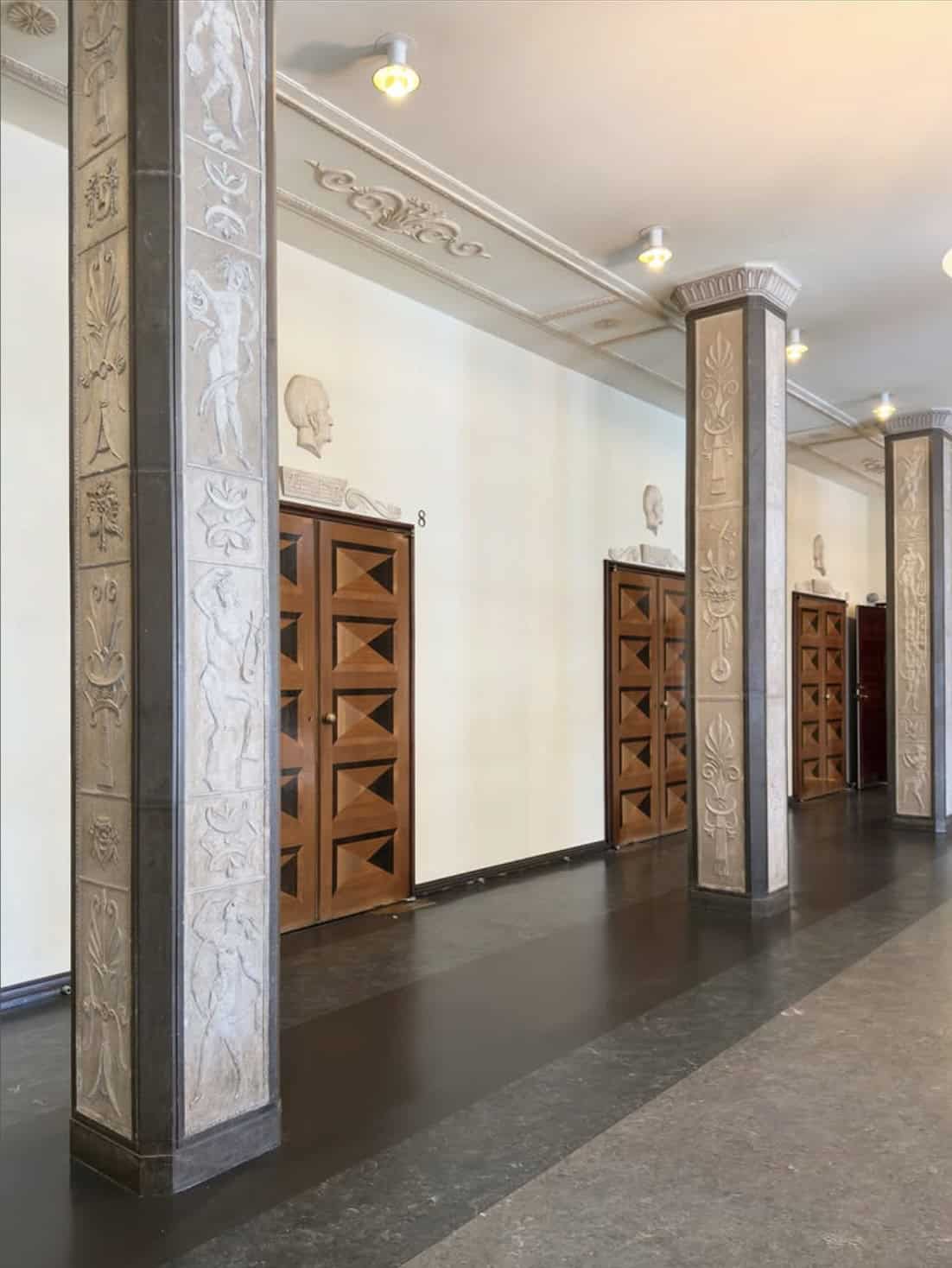
The architectural comparison is most visible here. In the concert hall’s interiors, doors, pilasters and relief decoration are arranged as part of a larger composition. Hjorth’s cabinet operates in a similar way on the smaller scale of furniture: a base, vertical supports, carved fields and ornamental detail brought together through proportion and restraint.
Anna Petrus – Sculpture and Symbol
Anna Petrus was a pioneering Swedish sculptor and designer whose work helped define the expressive character of Swedish Grace metalwork. Her rare pewter lion, designed in 1926 and produced by Svenskt Tenn, reflects the period’s fascination with archaic, mythological and heraldic imagery. Cast in pewter, the sculpture is compact yet commanding, with exaggerated musculature and a voluminous mane formed from rounded, cone-like shapes.
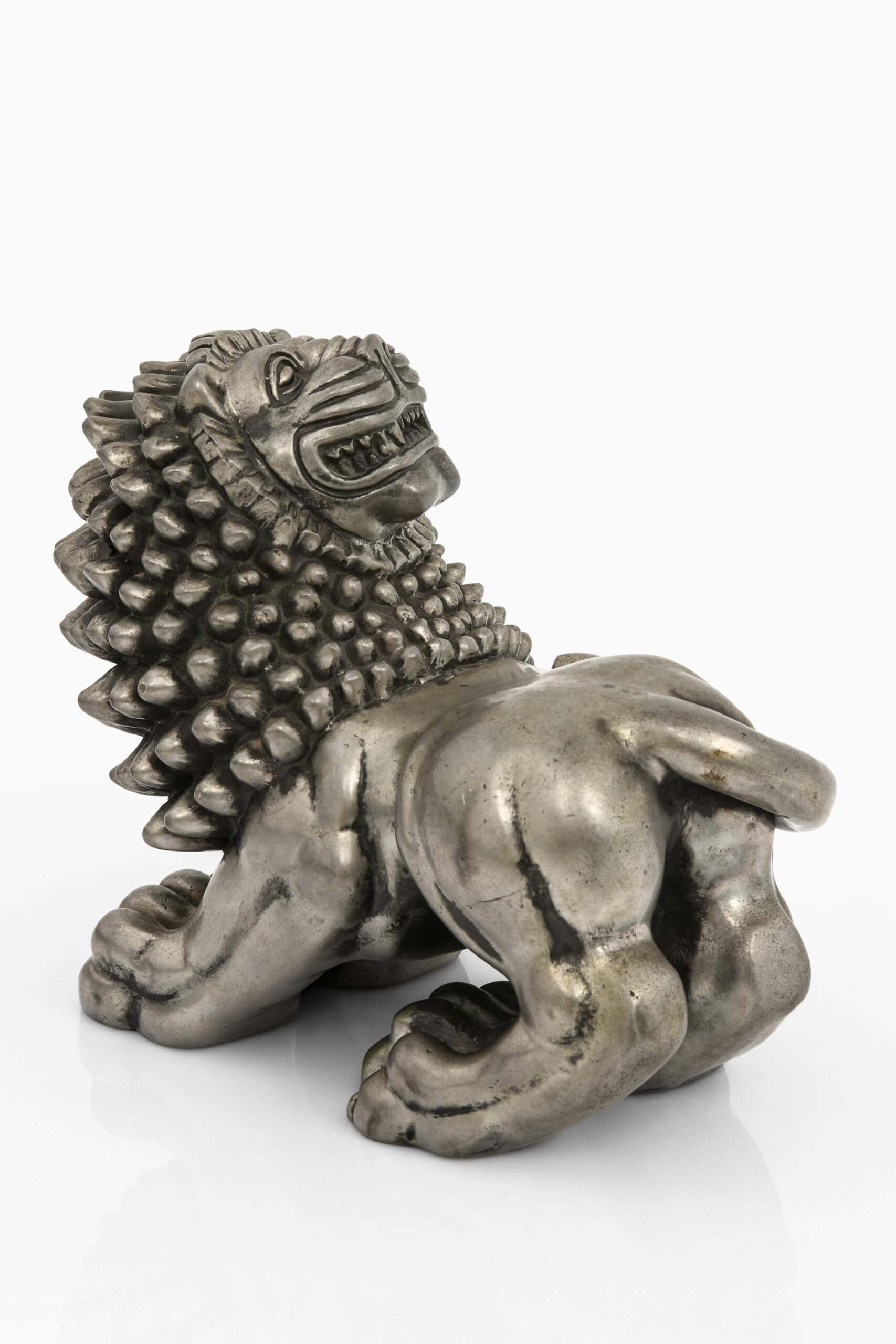
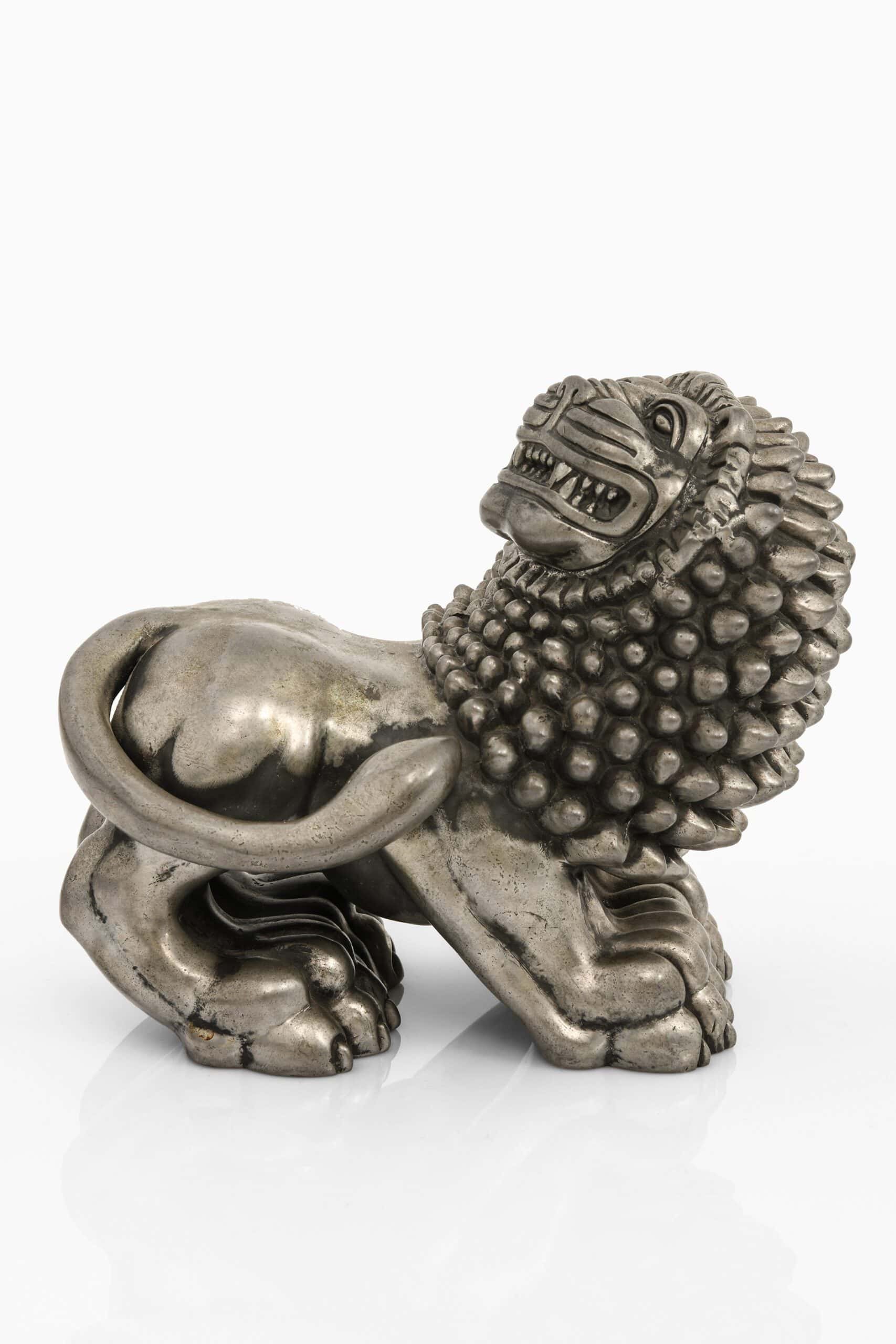
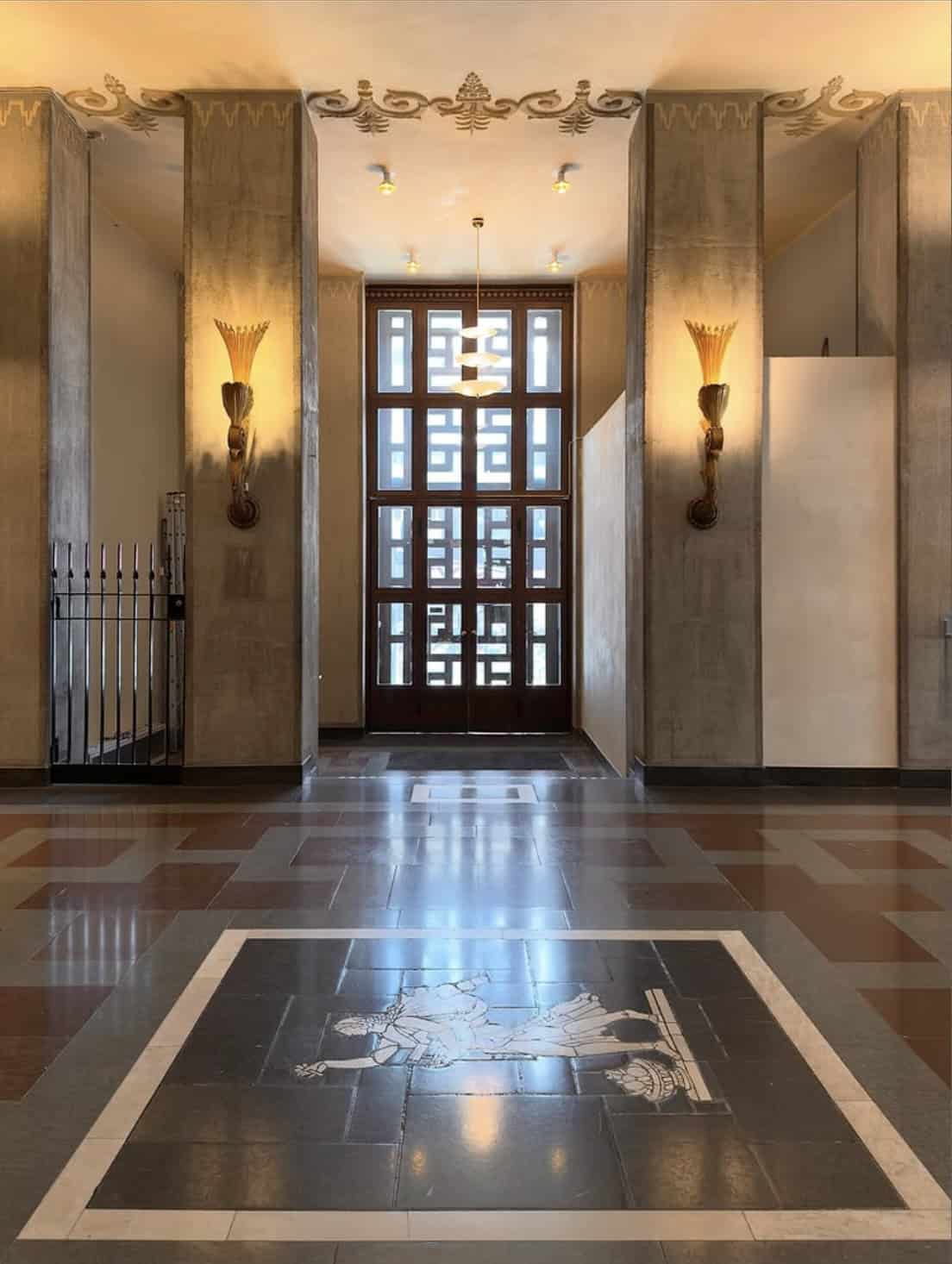
Placed in relation to the symbolic and figurative decoration of Swedish Grace interiors, Petrus’ lion belongs to a wider visual culture in which historical motifs were transformed into modern decorative art. It carries the weight of tradition, but its expression is sharp, compact and unmistakably of its time.
Harald Notini – Architecture for Light
Lighting played a central role in Swedish Grace interiors, where lamps were often conceived not merely as functional objects, but as architectural elements in miniature. Harald Notini’s ceiling lamp, model 6051, produced by Arvid Böhlmarks Lampfabrik during the 1920s–1930s, demonstrates this refined balance between structure, atmosphere and ornament.
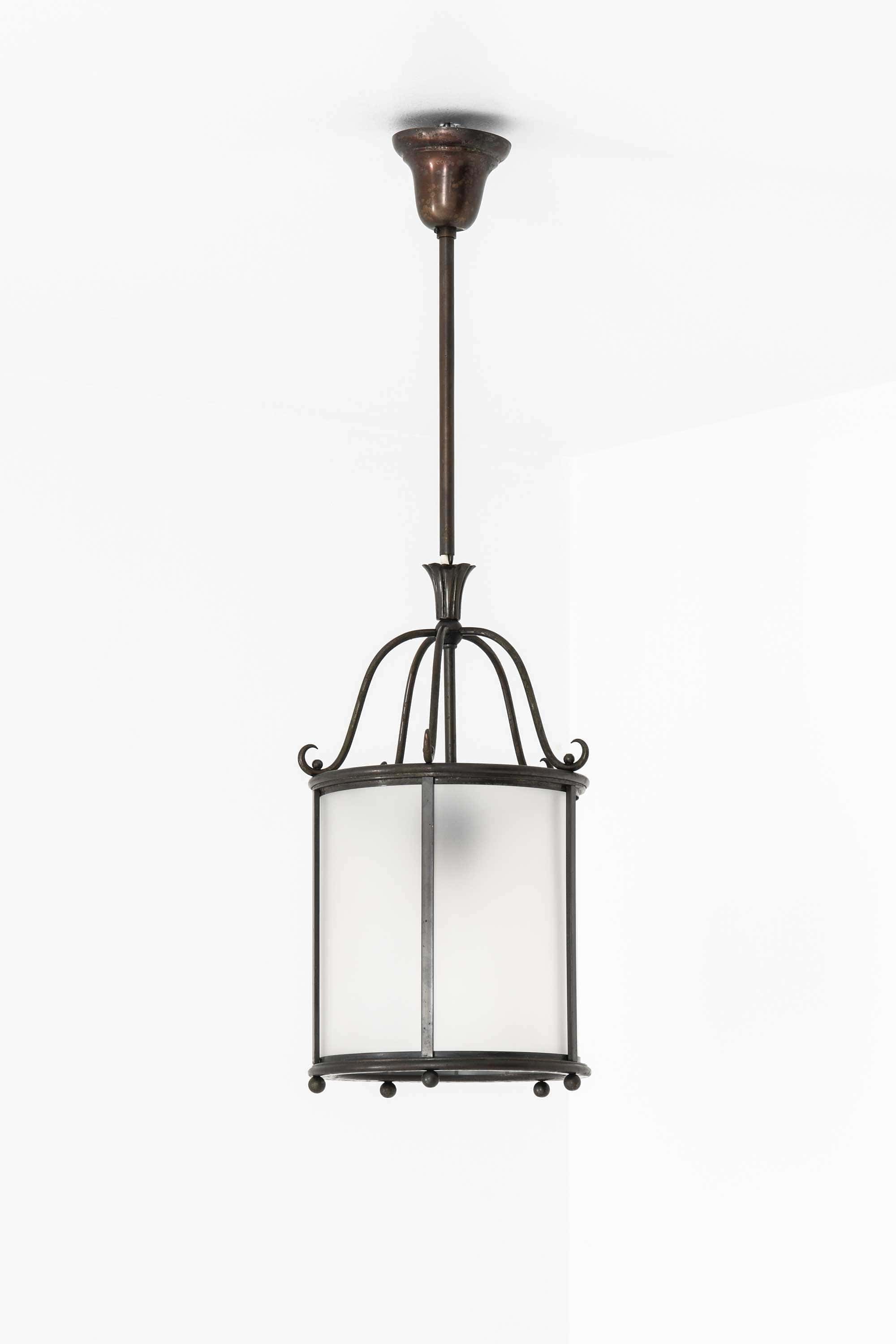
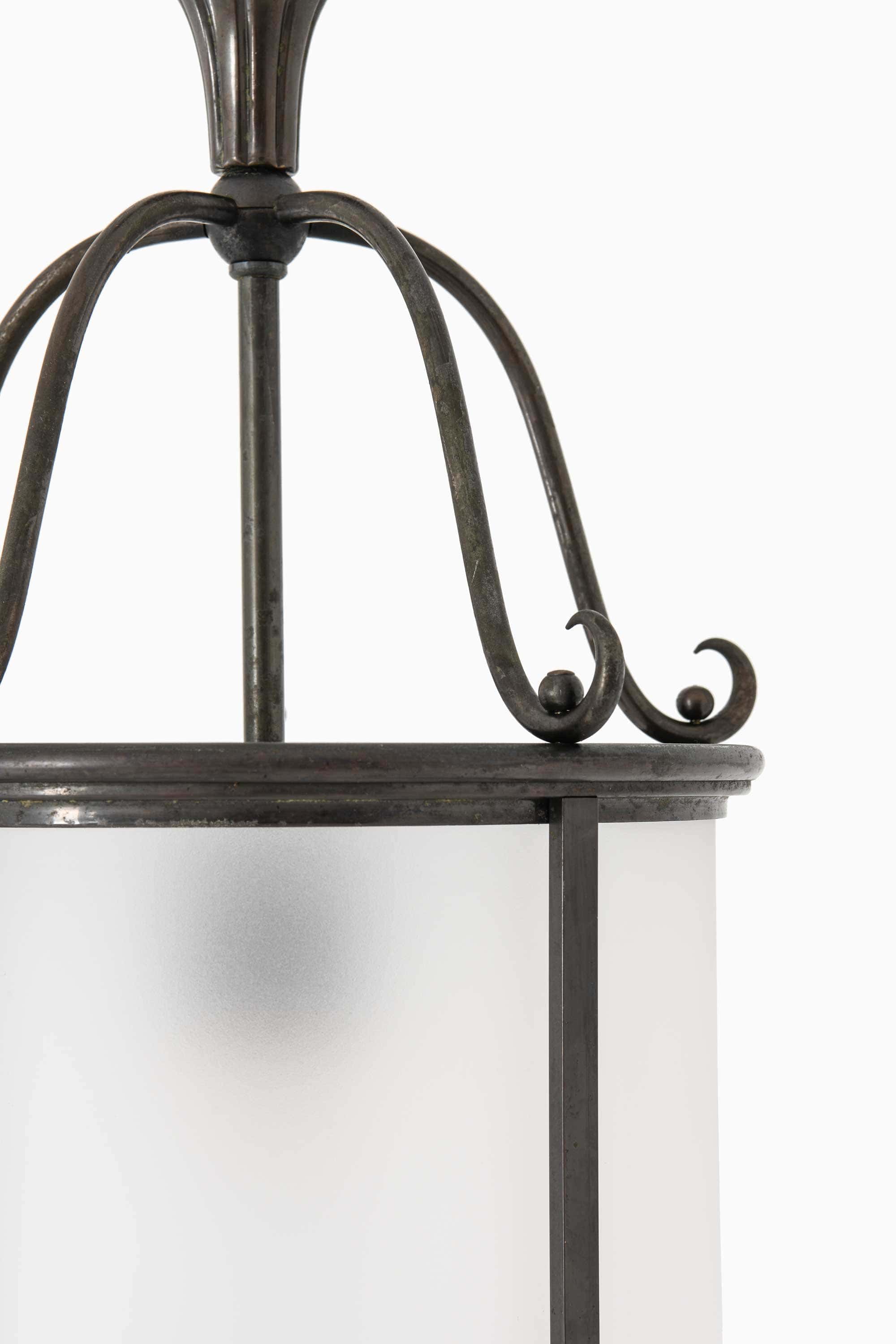
The lamp is composed as a vertically elongated lantern, its patinated brass frame enclosing a frosted glass shade segmented into five panels by vertical brass supports. Above, five curved arms arch upward and converge in a fluted brass collar, while the lower ring is finished with evenly spaced brass spheres. The form is decorative, but its expression remains restrained and structural.
Carl Hörvik – Neoclassical Form Reimagined
Carl Hörvik’s neoclassical stool offers another expression of Swedish Grace’s ability to reinterpret historical forms through modern restraint. Designed in the 1920s and produced in a very limited edition for Elsa Gullberg’s textile and interior design studio, the stool brings together forged iron, decorative textile art and classical furniture references in a highly distinctive composition.
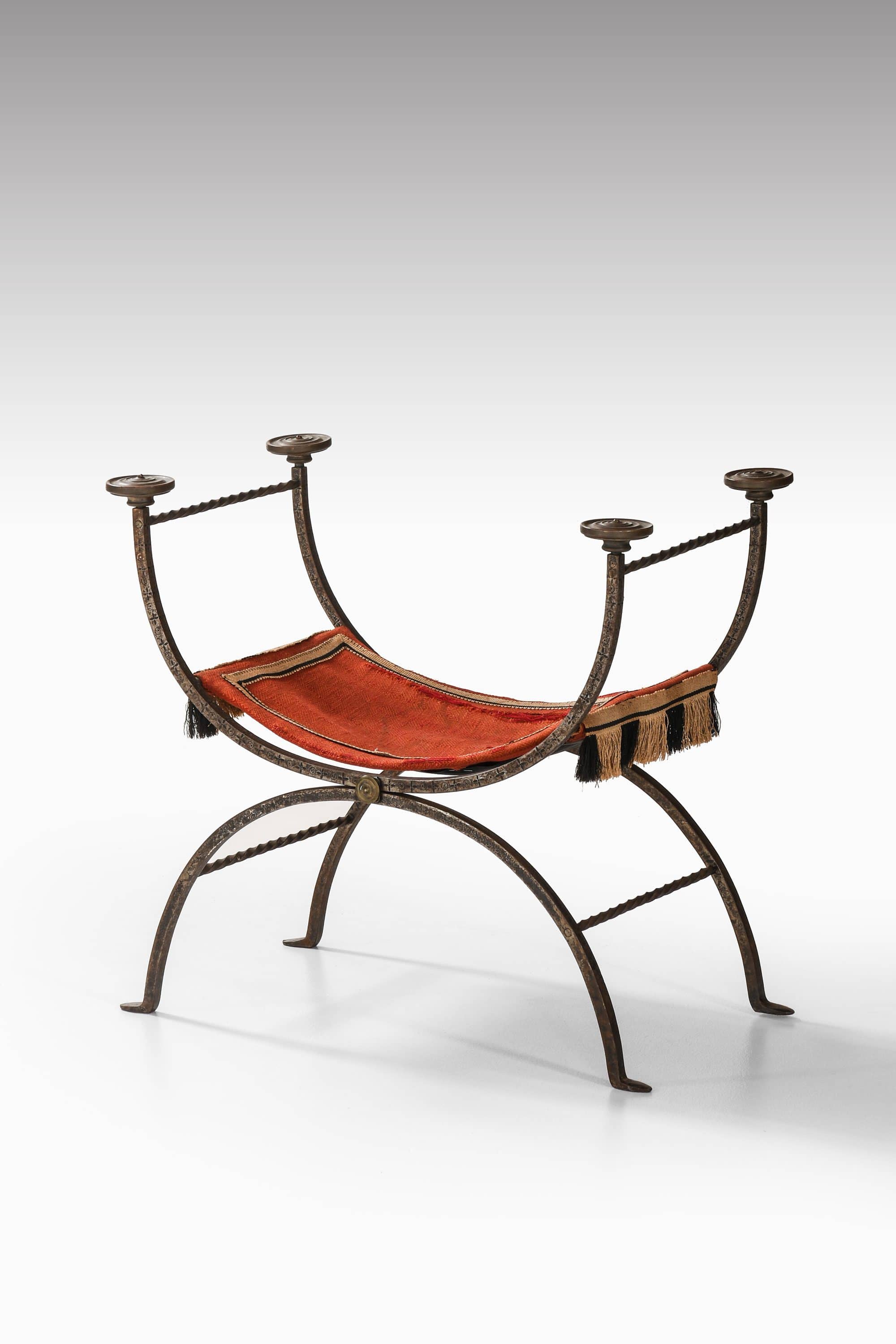
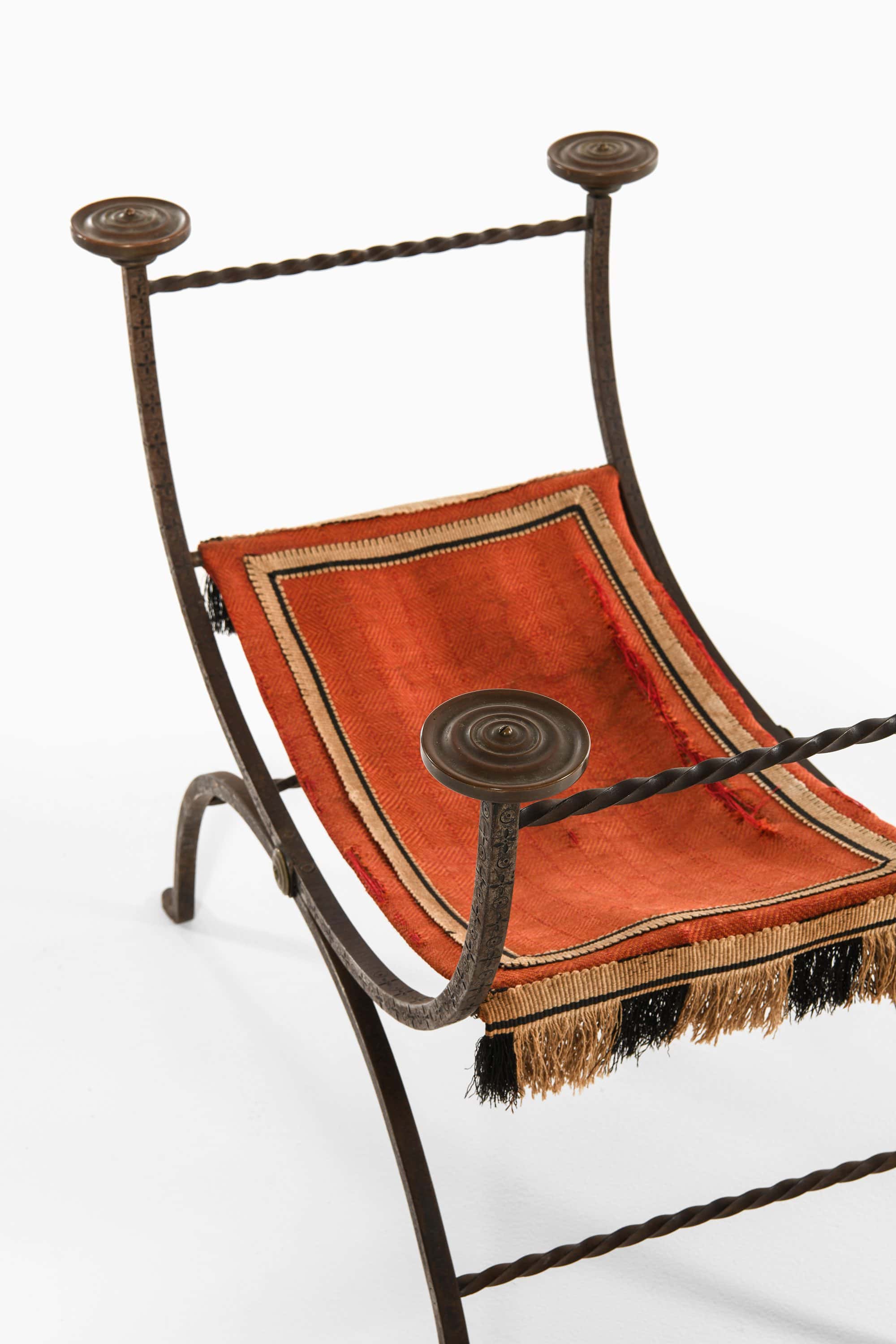
Its frame is composed of curved iron supports and intersecting crossbars beneath the seat, creating an X-shaped structure with a ceremonial, almost antique quality. Yet the design is light and graphic rather than heavy. The ironwork is finished with a rich patina and detailed with ornamental motifs, twisted bars, brass knobs and spherical accents. These elements give the stool a decorative presence while preserving the clarity of its underlying form.
The original rust-orange textile seat, with embroidery in black and gold threads and a fringed edge, further connects the piece to the Swedish Grace idea of the complete interior. Furniture, textile and metalwork are not treated separately, but brought together as a unified expression. This synthesis was central to the period: design was not only about individual objects, but about the relationship between object, room and atmosphere.
Conclusion
Together, these works reveal Swedish Grace as more than a decorative style of the 1920s. It was a complete visual language that moved between architecture and the decorative arts, from public monuments to the intimate scale of the interior. Stockholm Concert Hall represents this language at civic scale, while the cabinet, lion, lamp and stool show how the same ideals could be transformed into furniture, sculpture, lighting and textile-based design.