Josef Frank coffee table
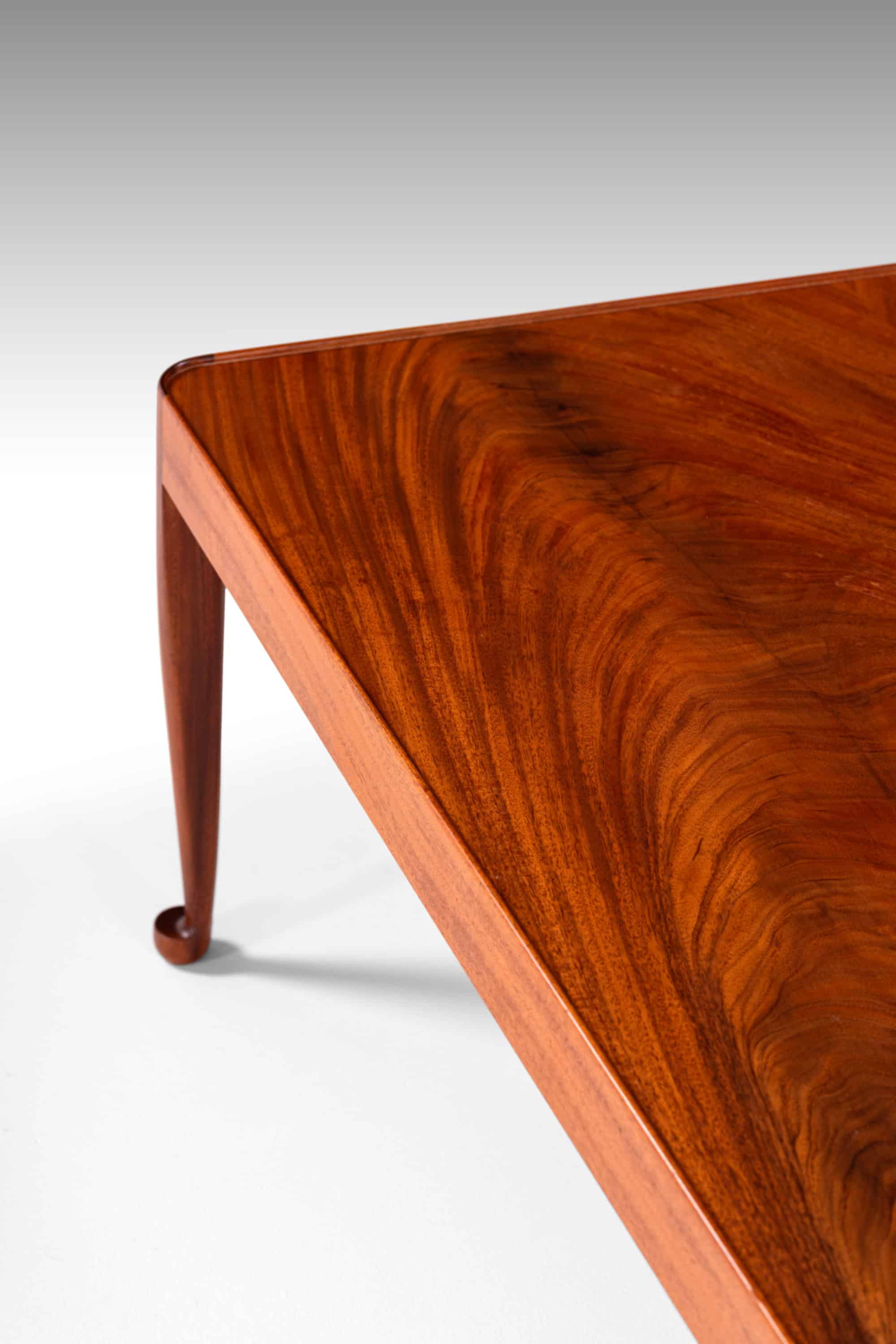
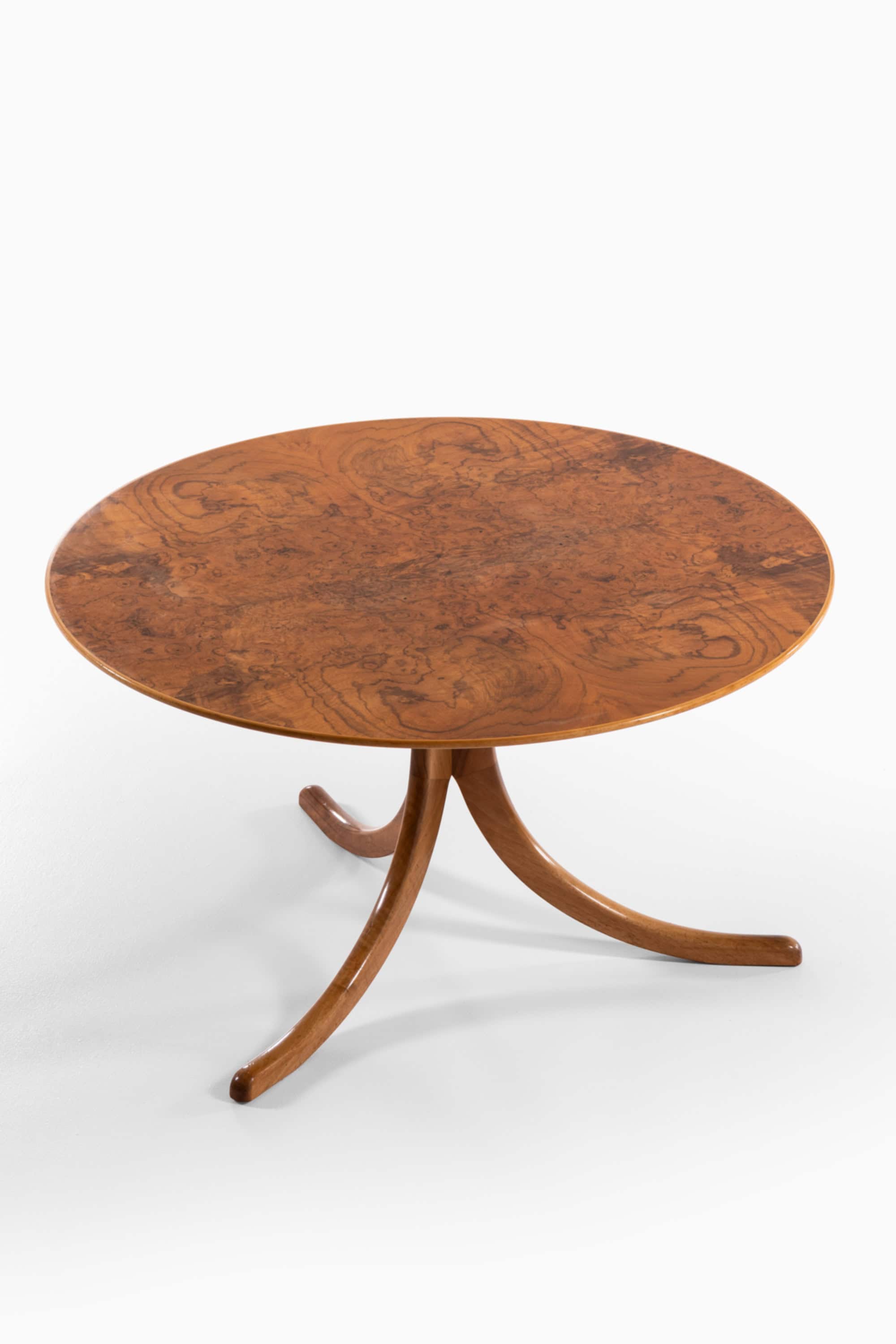
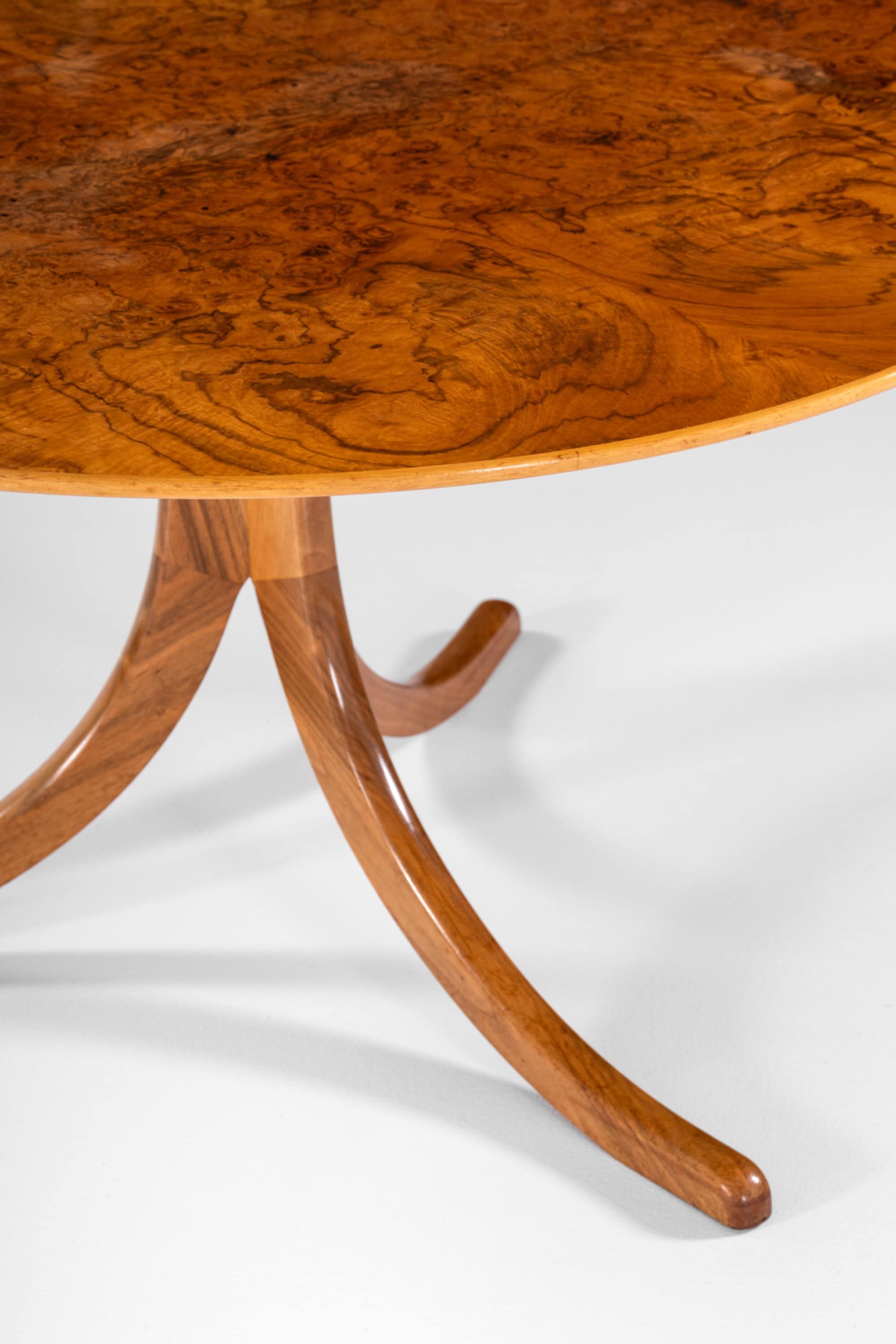
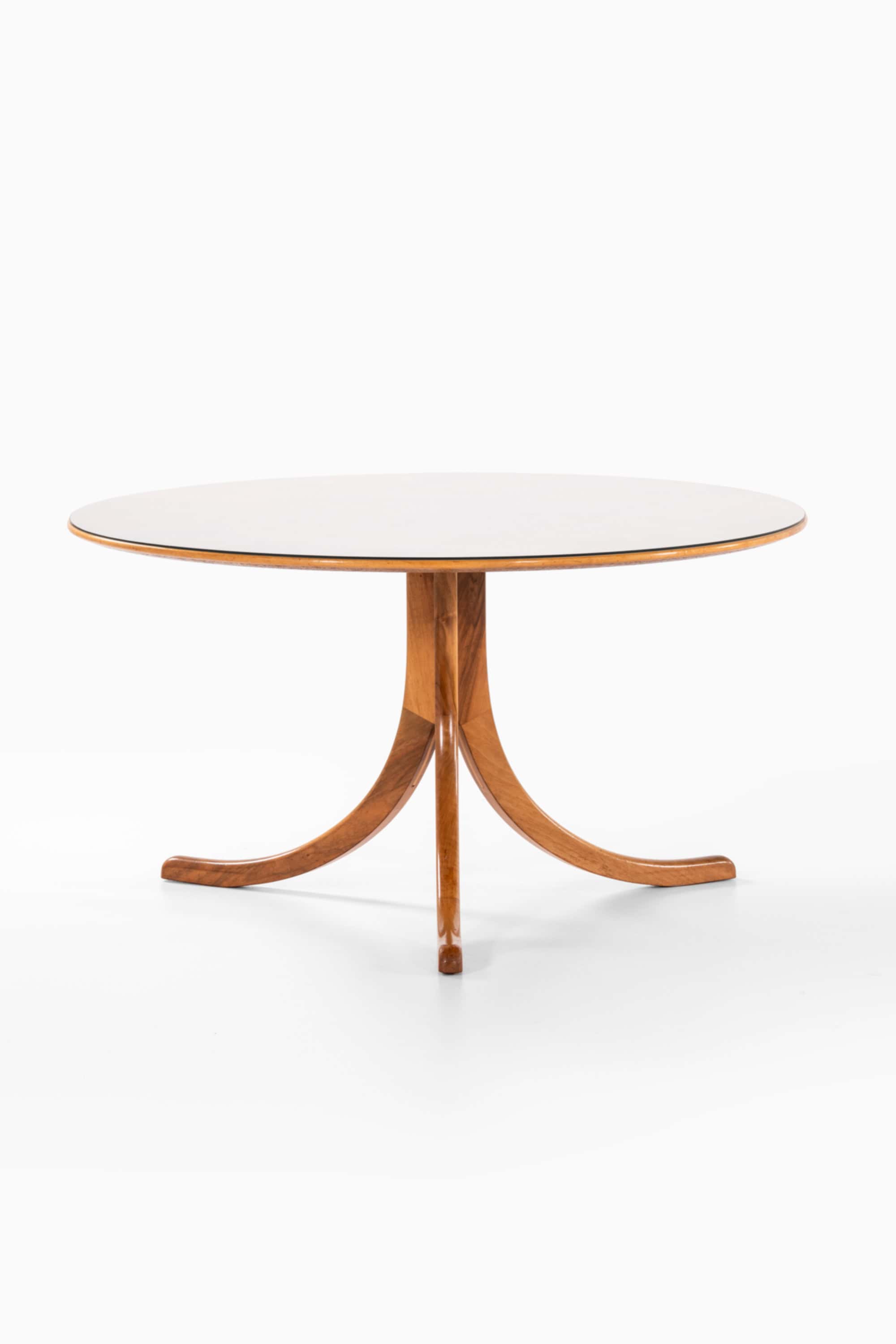
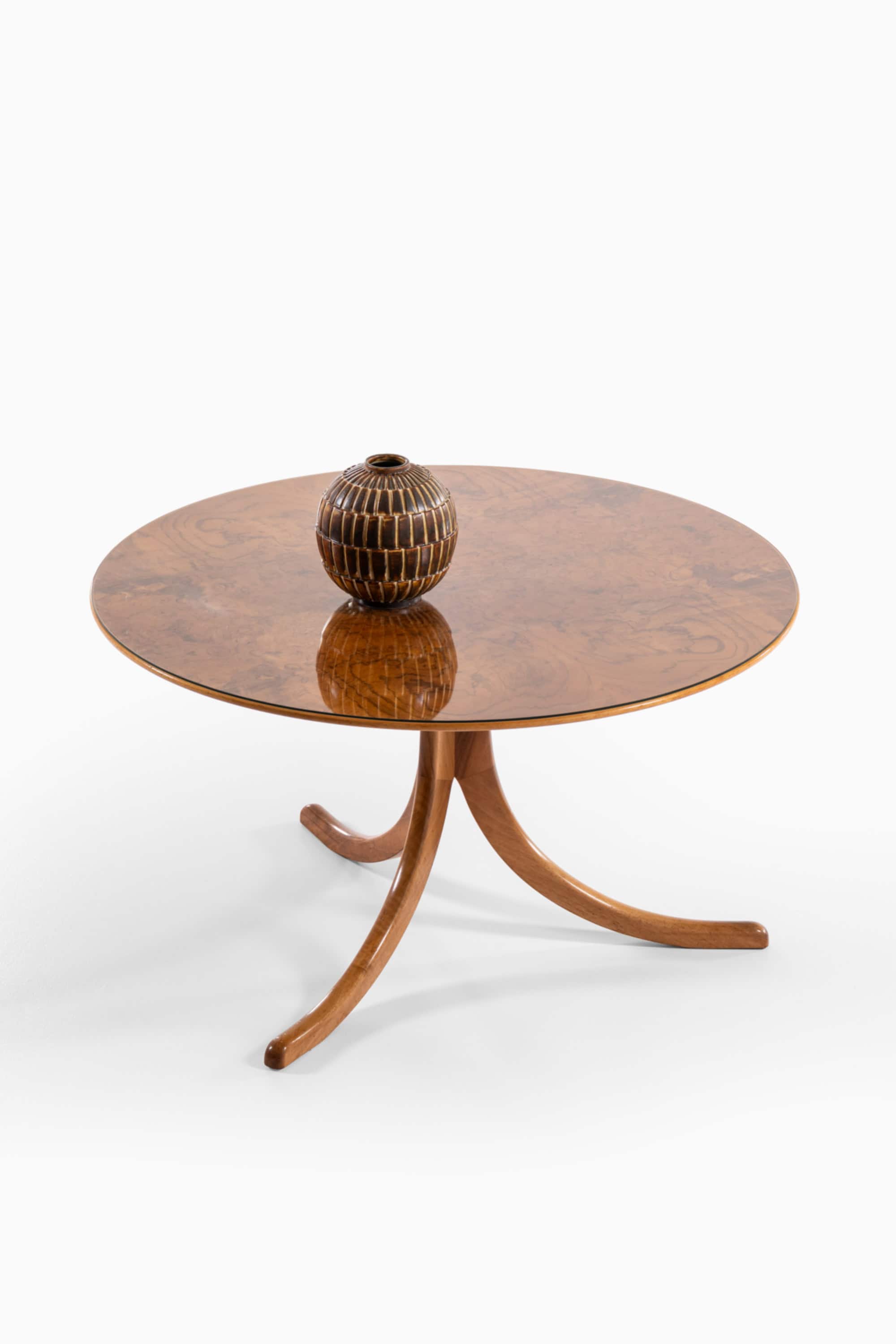
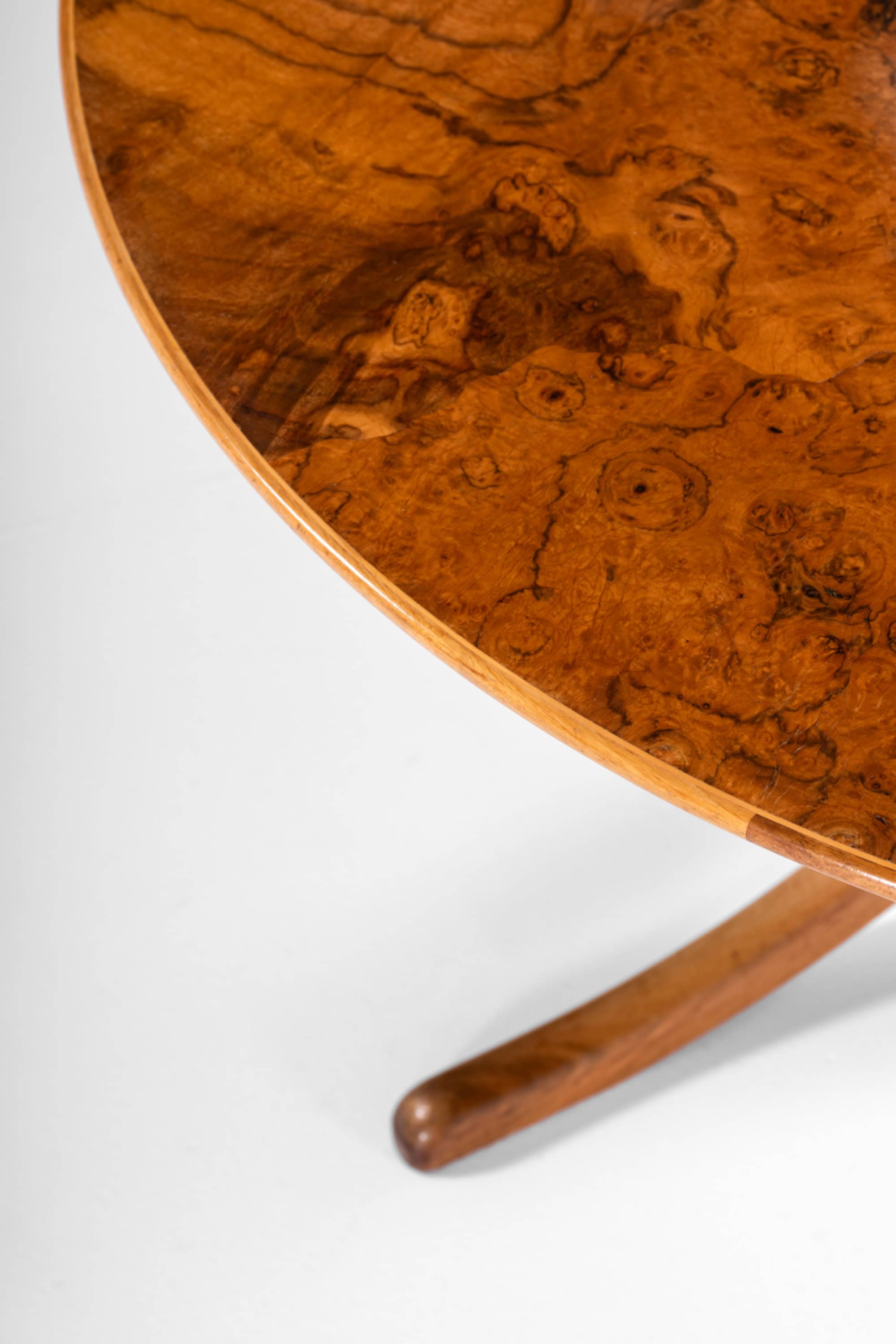
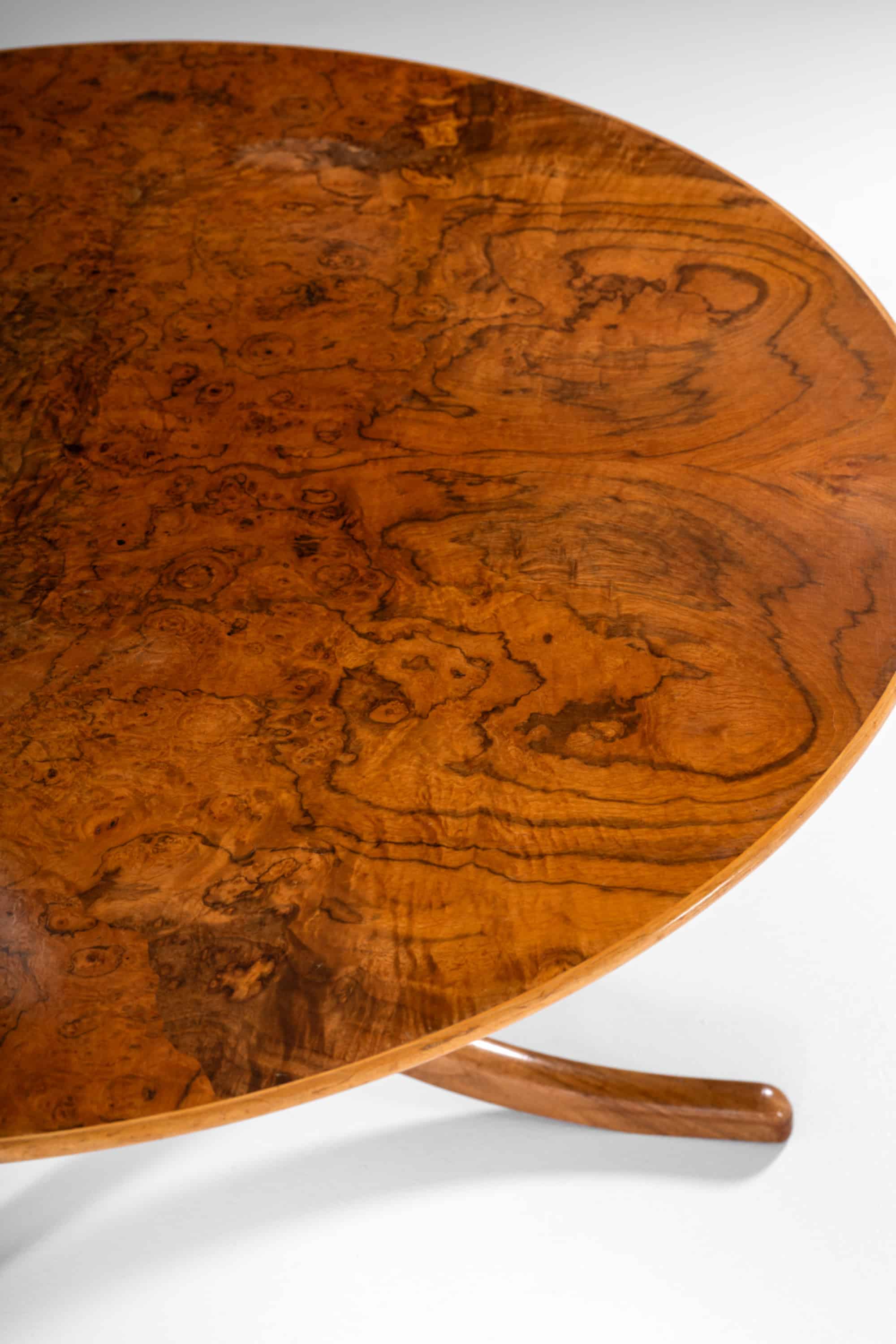
Model 1028 is a rare coffee table designed by Josef Frank in 1940 and produced by Svenskt Tenn, Stockholm. The table exemplifies Frank’s distinctive approach to furniture design, in which elegant proportions and organic forms are combined with an emphasis on craftsmanship and material richness. Executed in walnut with a highly decorative walnut root veneered top, the table presents a warm palette of golden-brown and deep amber tones, highlighted by the dramatic natural figuring of the veneer. A fitted glass top protects the surface while allowing the intricate grain patterns to remain fully visible.
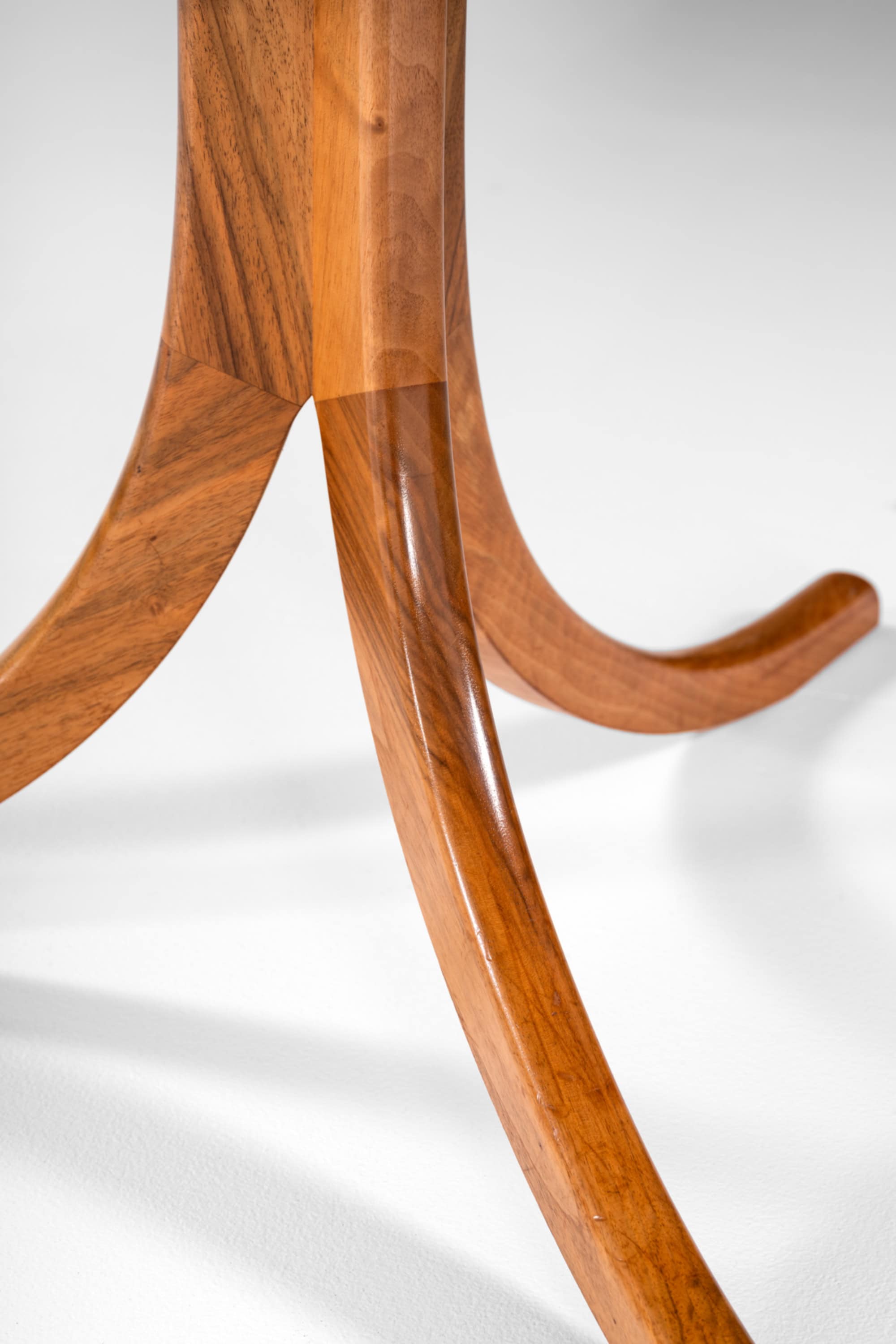
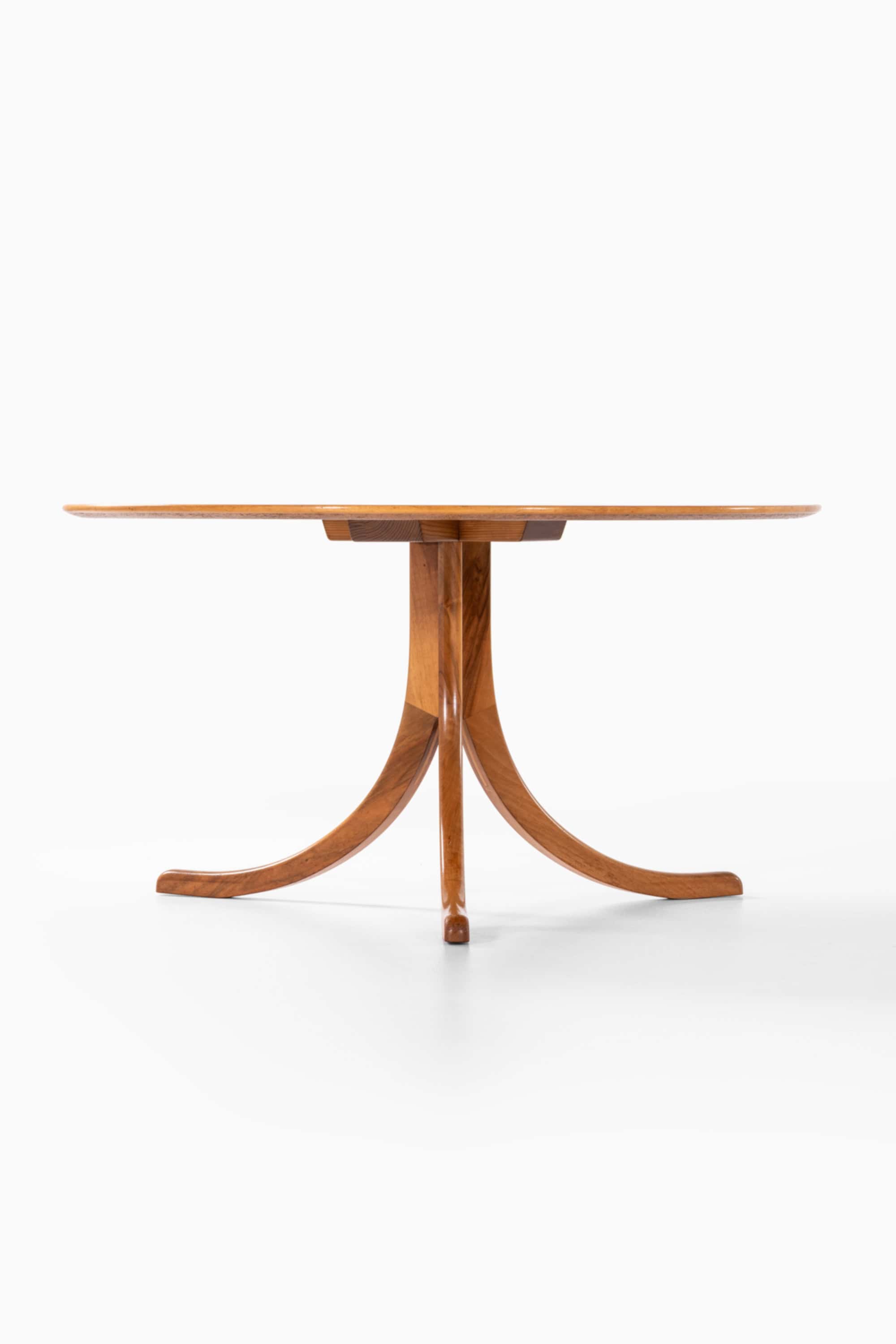
The circular tabletop is supported by a sculptural pedestal base composed of four gently curved legs that radiate outward from a central column. The construction demonstrates a sophisticated understanding of form and balance, with the flowing, almost botanical profile of the base creating a sense of lightness despite the table’s substantial dimensions. The walnut root veneer displays a remarkable variety of swirling grain formations, knots, and naturally occurring patterns, producing a highly expressive surface that contrasts with the restrained geometry of the circular top. The additional glass top enhances practicality while preserving the visual depth and complexity of the veneer beneath.
Josef Frank (1885–1967) remains one of the most influential designers associated with twentieth-century Scandinavian design. Born in Austria, Frank emigrated to Sweden in the 1930s and began his long collaboration with Svenskt Tenn. His work represented an alternative to the stricter functionalist ideals of the period, favouring comfort, individuality, and organic expression. While Frank is widely celebrated for his textiles and interiors, his furniture designs are equally significant, characterized by inventive forms, refined proportions, and an exceptional sensitivity to materials. His furniture continues to be regarded as some of the most important contributions to Swedish design history.
Svenskt Tenn was founded in Stockholm in 1924 by Estrid Ericson and developed into one of Sweden’s most influential design companies. The collaboration between Ericson and Frank established a unique design philosophy that combined traditional craftsmanship with modern living ideals. Furniture produced by Svenskt Tenn was manufactured to exceptionally high standards, often utilizing carefully selected veneers and complex joinery techniques. Original examples from the mid-twentieth century are increasingly sought after due to their quality, rarity, and historical significance within Scandinavian design.
Designed during the early 1940s, model 1028 reflects Frank’s ability to integrate decorative materials into a modern furniture vocabulary without compromising functionality. The combination of circular geometry, expressive walnut root veneer, and elegantly curved pedestal base creates a composition that is both architecturally balanced and visually dynamic. The table remains in good vintage condition with minor signs of age and use. Light wear and small surface marks consistent with careful use over time are present, while the walnut veneer retains excellent colour, depth, and figure. The glass top remains a practical and sympathetic addition that protects the original surface.
Diameter 110 cm (43.3 in), height 59 cm (23.2 in).
Dimensions (cm) | H: 59 / ⌀: 110 |
| Producer | Svenskt Tenn |
| Decade | 1940s |
| Country | Sweden |
| Style | Mid Century, Scandinavian Modern |
| Material | Walnut, Walnut root |
| Designed in | 1940 |
| Item Number | 250719 |
Josef Frank
Josef Frank (1885–1967) was an Austrian-born architect, furniture designer, and textile artist who became a central figure in Swedish modernism. He is best known for his vividly patterned textiles and distinctive approach to furniture and interi...
Read more