


Poul Henningsen floor lamp
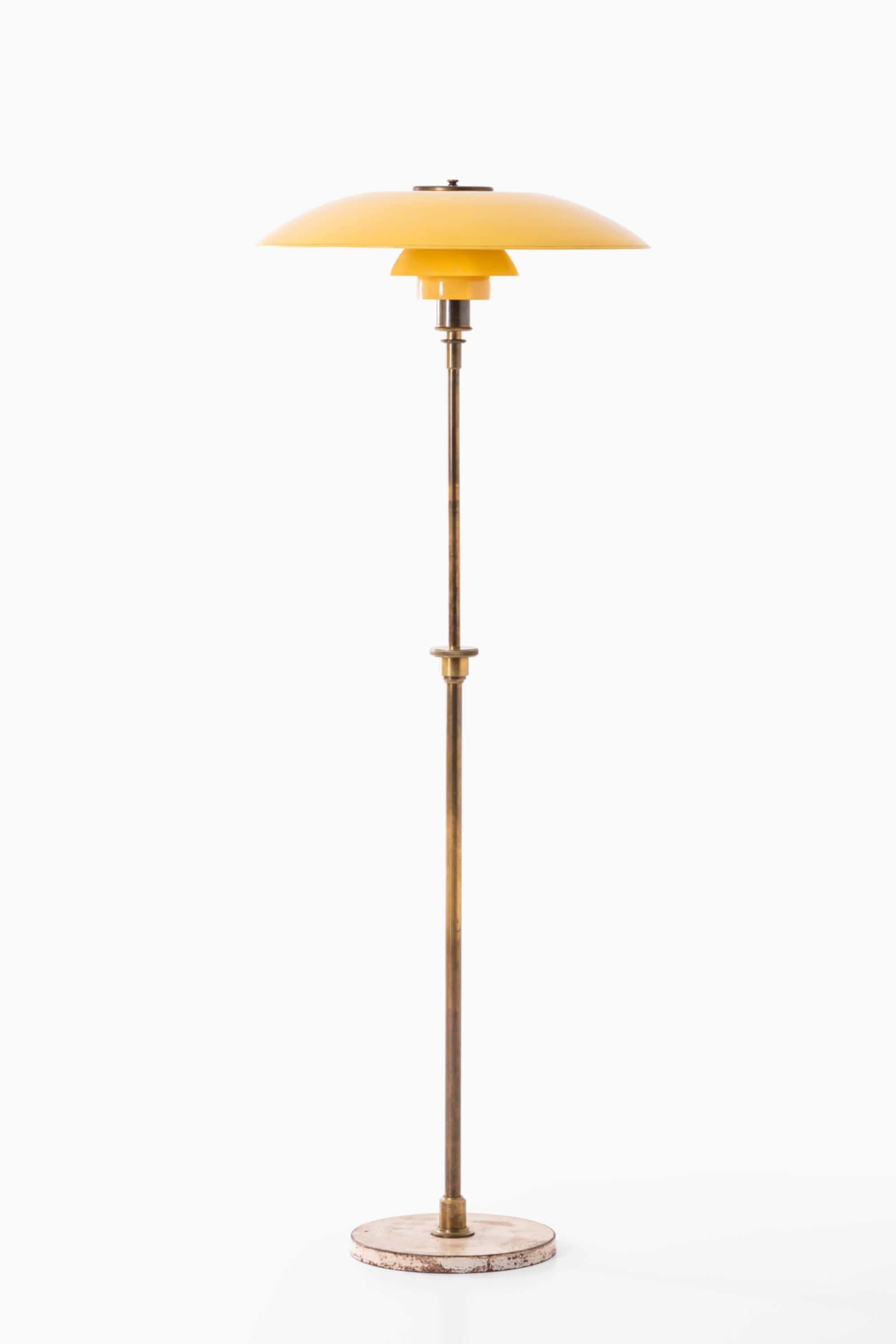
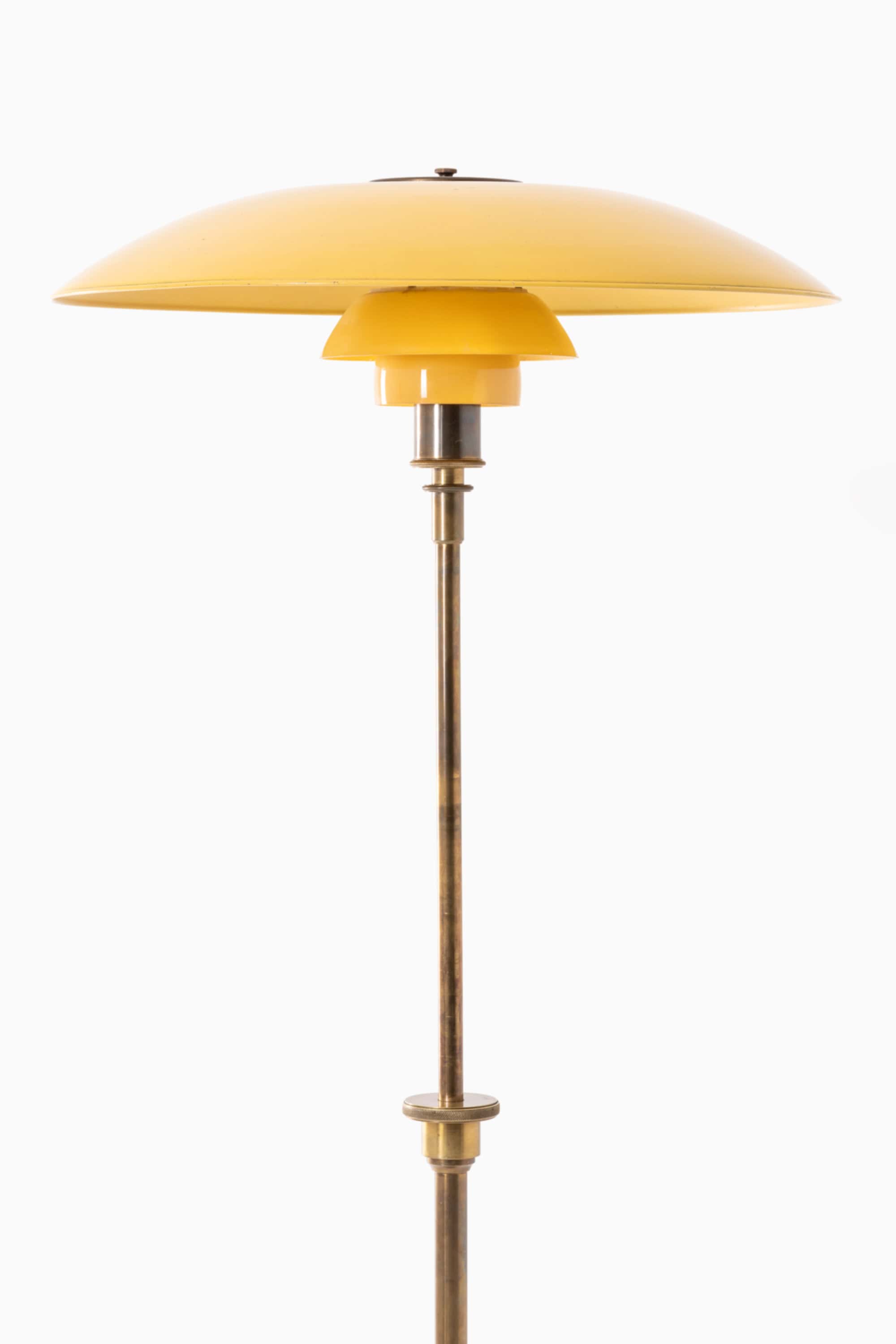
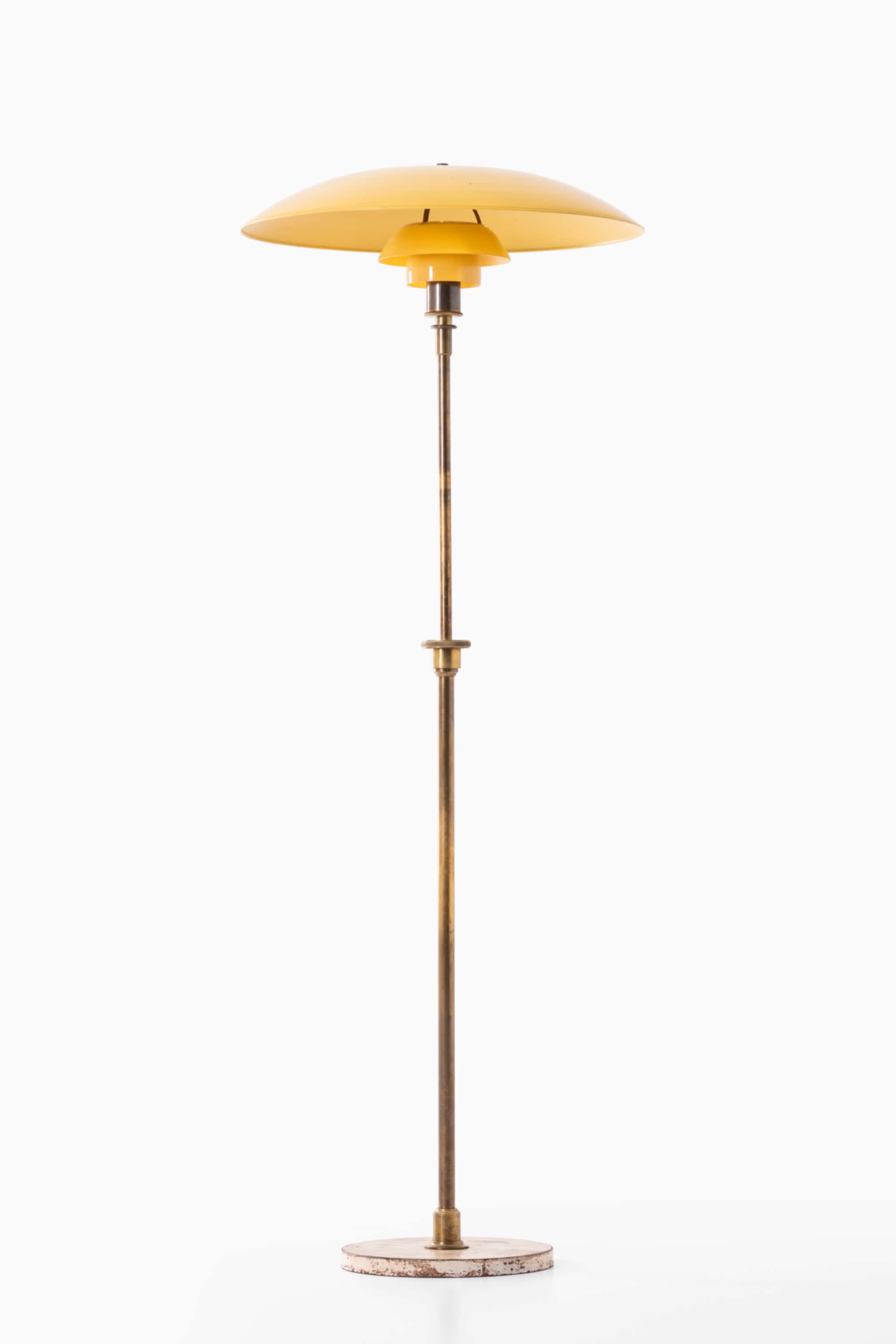
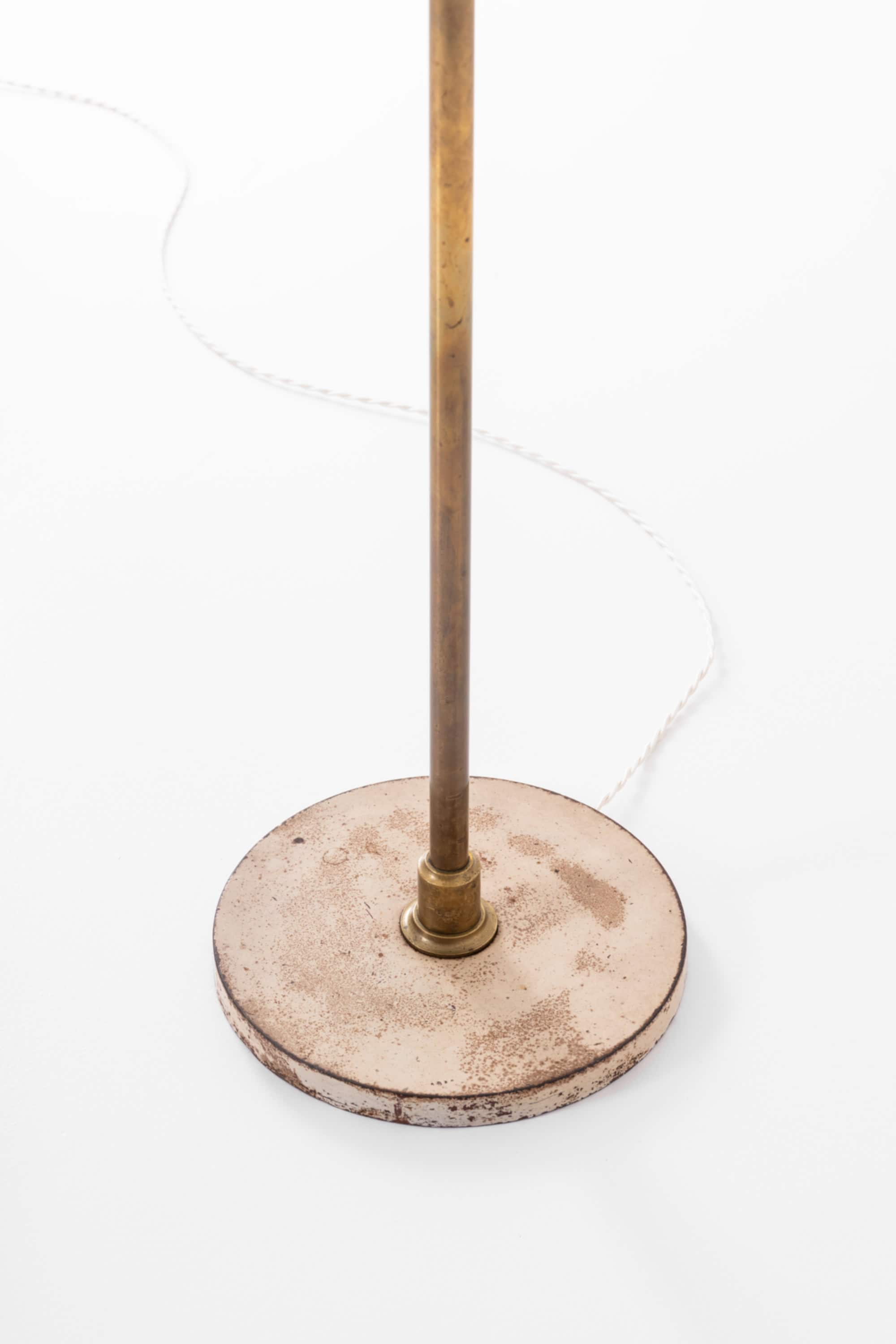
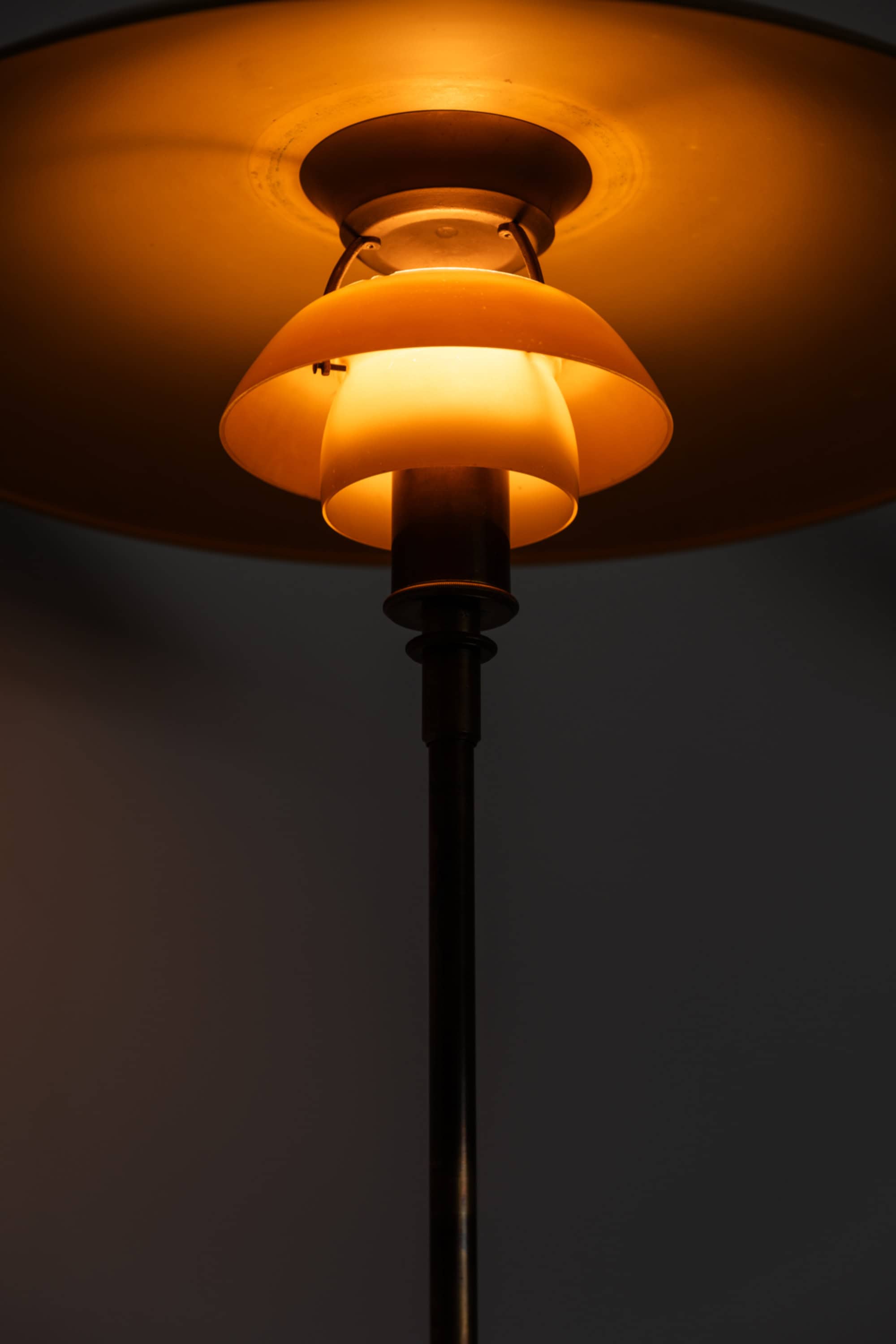
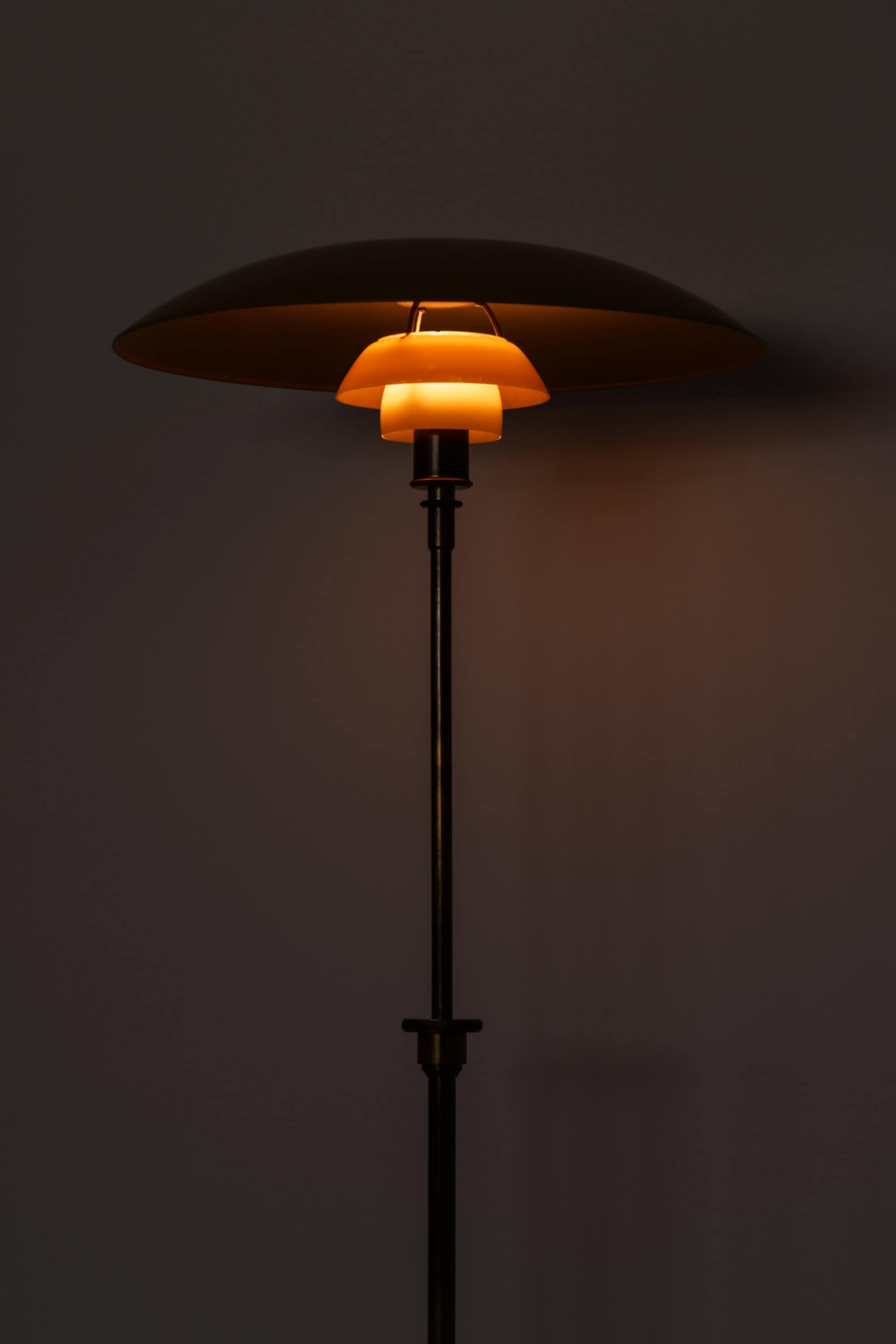
A rare height-adjustable PH 6/3 floor lamp designed by Poul Henningsen and produced by Louis Poulsen in Denmark, dating from the 1930s. The lamp combines a slender patinated brass structure with a white lacquered circular metal base and a distinctive yellow shade assembly. Its construction is strongly vertical and mechanically articulated, with a telescopic brass stem allowing the overall height to be adjusted from approximately 120 to 170 cm (47.2 to 66.9 in). The large upper shade measures approximately 60 cm (23.6 in) in diameter.
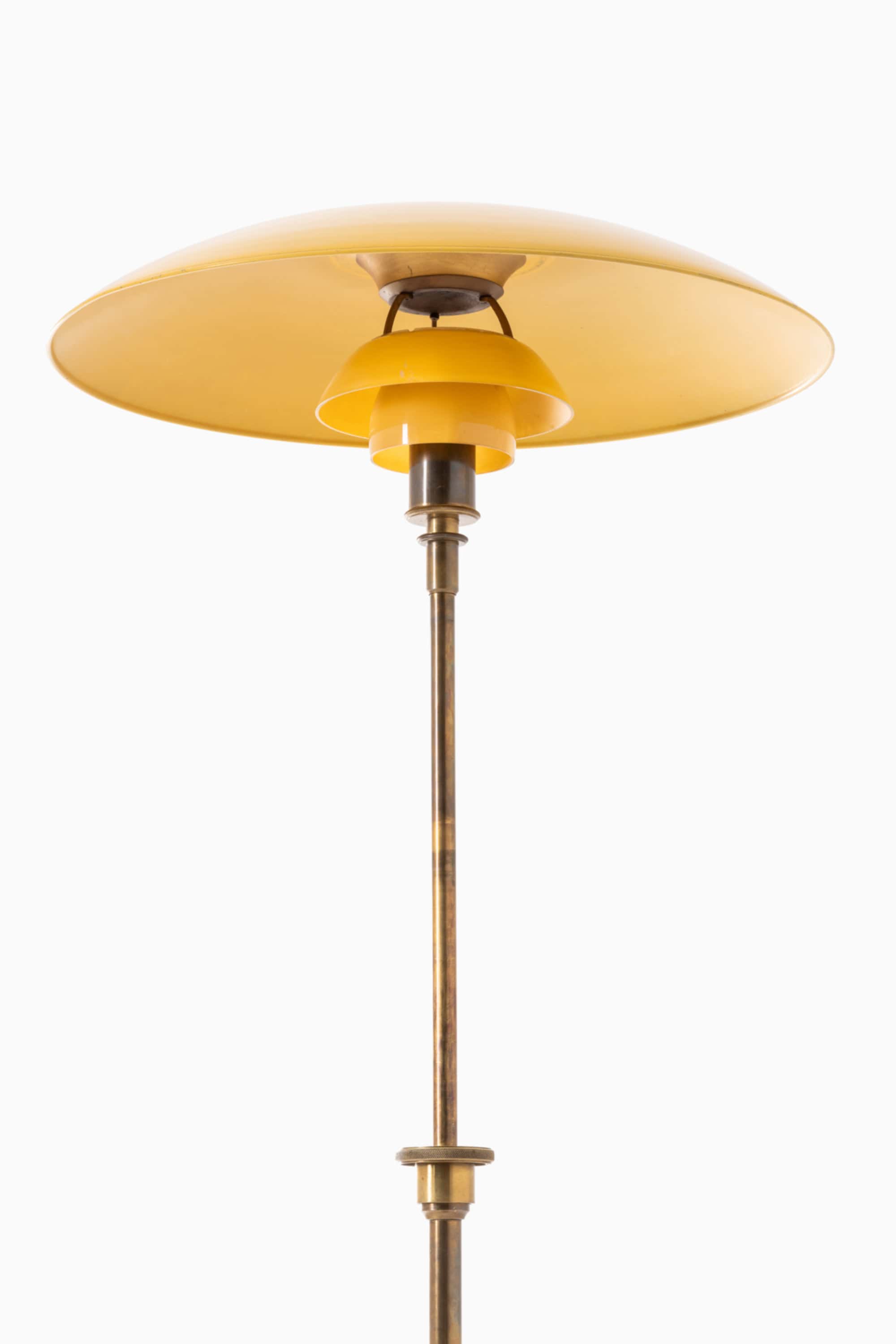
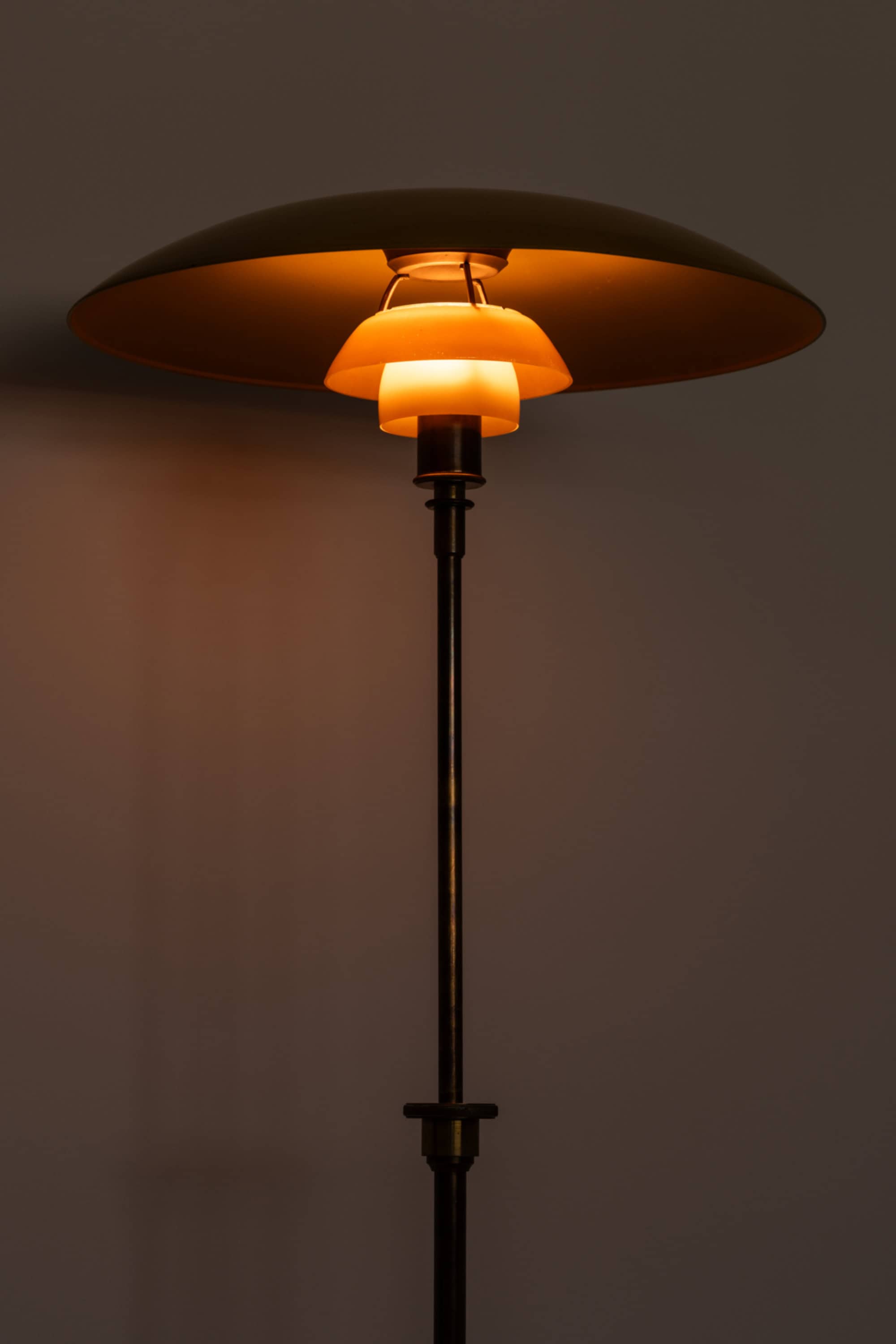
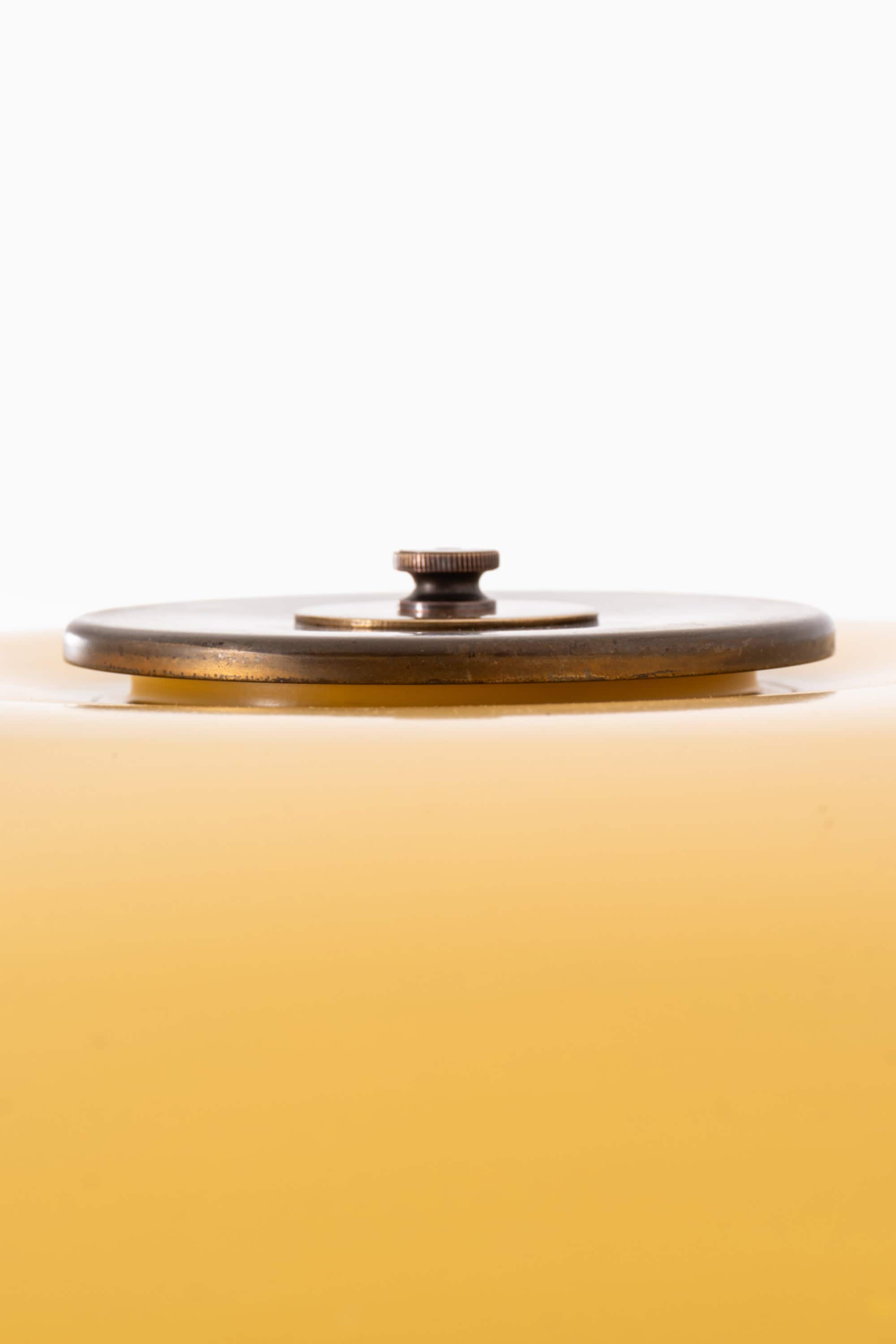
The lighting assembly consists of a broad, shallow-domed upper shade in yellow lacquered copper, combined with yellow lacquered frosted-glass middle and lower shades. The three elements are positioned concentrically around the light source, producing the characteristic layered profile of Henningsen’s PH system. Rather than functioning simply as decorative shades, the individual components control the direction, reflection and diffusion of the light. When illuminated, the yellow surfaces produce a particularly warm amber-toned light, while the frosted glass softens the transition between the light source and its surroundings.
The PH system was developed by Poul Henningsen during the 1920s as a systematic response to the glare produced by the relatively new electric incandescent lamp. Henningsen based the system on carefully calculated curved shade profiles, using the logarithmic spiral as a basis for controlling reflection and distributing illumination. The principle was intended to shield the bulb from direct view, reduce glare and create a more even transition between illuminated and shadowed areas. Louis Poulsen dates the development of the three-shade system to 1925–1926, with the first examples created in connection with an exhibition in Paris. Over subsequent decades, the system developed into an extensive family of table, wall, floor and ceiling lamps.
The designation PH 6/3 belongs to Henningsen’s modular system of shade dimensions. The first figure relates to the approximate diameter of the principal upper shade, while the second identifies the proportional family used for the lower shades. This approach allowed Henningsen and Louis Poulsen to combine different shade sizes and materials according to the required distribution and character of the light. Period PH 6/3 models are documented from the late 1920s; an early PH 6/3 floor lamp manufactured by Louis Poulsen in 1926–1928 is recorded with a height-adjustable browned-brass stand, while a circa-1927 PH 6/3 ceiling model is documented with a 60 cm (23.6 in) upper shade.
Poul Henningsen (1894–1967) was a Danish designer, architect, writer and cultural critic whose work with artificial light became one of the most influential contributions to twentieth-century Scandinavian lighting design. His collaboration with Louis Poulsen began during the 1920s and continued until his death in 1967. Rather than treating the lamp primarily as a sculptural object, Henningsen approached lighting through optics, reflection and the physiological experience of brightness, developing fixtures around the quality and distribution of the emitted light. His three-shade principle remains fundamental to the PH series.
Louis Poulsen was established in Copenhagen in 1874 and developed from an electrical-goods business into one of Denmark’s principal manufacturers of architectural and decorative lighting. Its collaboration with Henningsen became central to the company’s identity and to the development of modern Danish lighting. The early PH system was particularly significant because it approached the electric lamp as an engineered lighting instrument: shade geometry, surface finish, colour and material could all be varied to modify reflection, diffusion and colour temperature. Historical PH lamps were consequently produced in numerous combinations of metal, glass, painted surfaces and different shade dimensions.
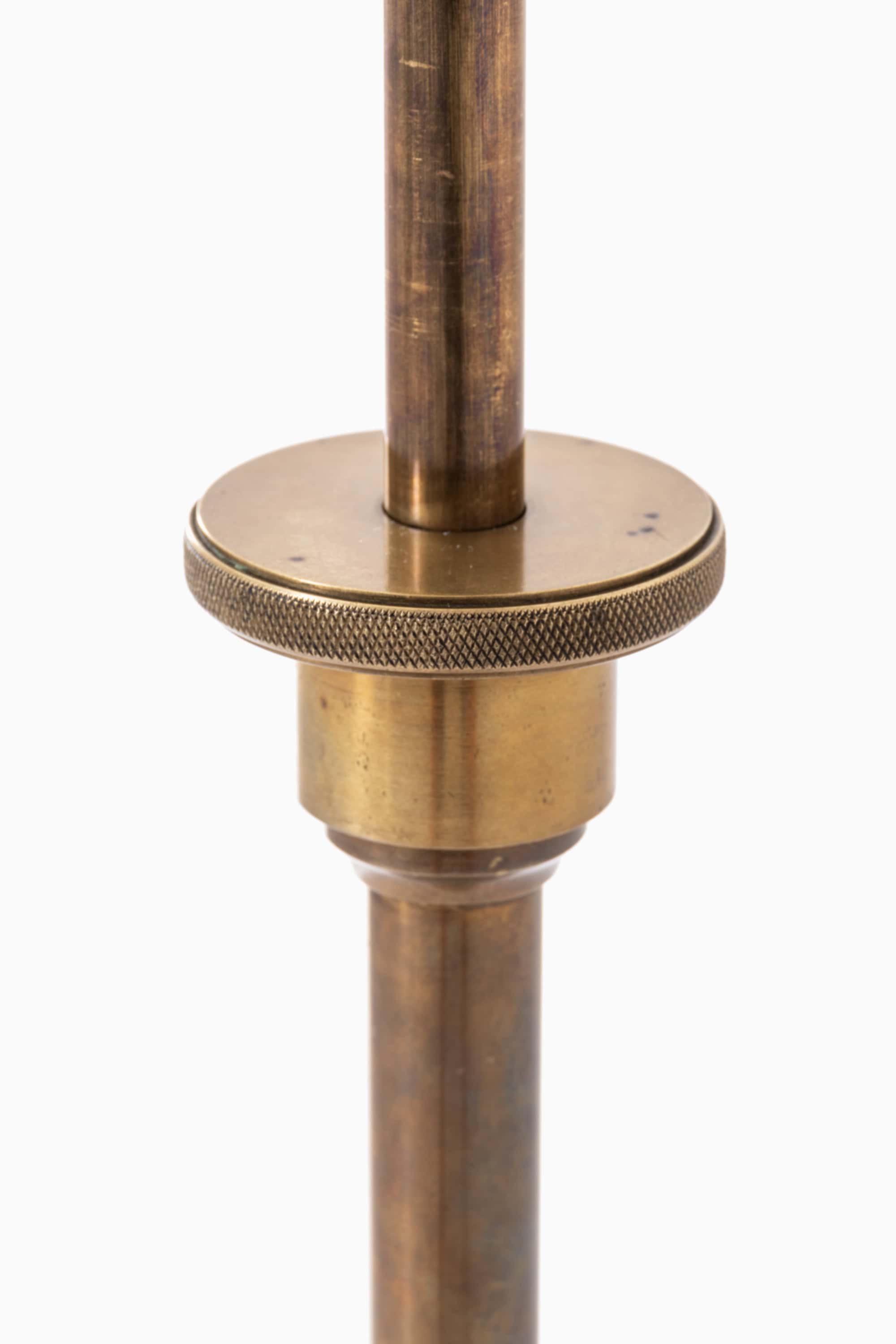
Stylistically, the lamp belongs to the functionalist direction of early Danish modernism. Its visual character results from the contrast between the extremely thin vertical brass stem and the broad horizontal disc of the upper shade. Decorative elements are largely subordinate to construction and function, although details such as the finely knurled adjustment collar, turned brass fittings and concentric shade arrangement demonstrate the precision associated with early Louis Poulsen production. The adjustable stem further reflects the functional character of the design, allowing the relationship between the light source, shade and surrounding interior to be altered according to use.
The lamp is preserved in good vintage condition with visible signs of age and use. The brass stem and fittings display substantial natural oxidation, darkening, surface marks and variations in patination. The white lacquered circular base shows pronounced wear, losses to the painted surface, spotting and oxidation, particularly around its perimeter. The yellow shades retain a strong colour, with smaller marks, scratches and localized surface wear consistent with age. These traces have not been visually homogenized and form part of the object’s historical surface character.
Dimensions: adjustable height approximately 120–170 cm (47.2–66.9 in); shade diameter approximately 60 cm (23.6 in).
Dimensions (cm) | H: 120 / ⌀: 60 Highest: H: 170 |
| Producer | Louis Poulsen |
| Color | Yellow |
| Decade | 1930s |
| Country | Denmark |
| Style | Danish modern, Scandinavian Modern |
| Material | Brass, Glass, Lacquer |
| Designed in | 1930s |
| Item Number | 250756 |
Poul Henningsen
Poul Henningsen (1894 – 1967) was born on September 9, 1894, in Ordrup, Denmark, and became one of the most celebrated figures in Danish design history. Known primarily for his innovative work in lighting design, Henningsen transformed the w...
Read more


