Cabinet
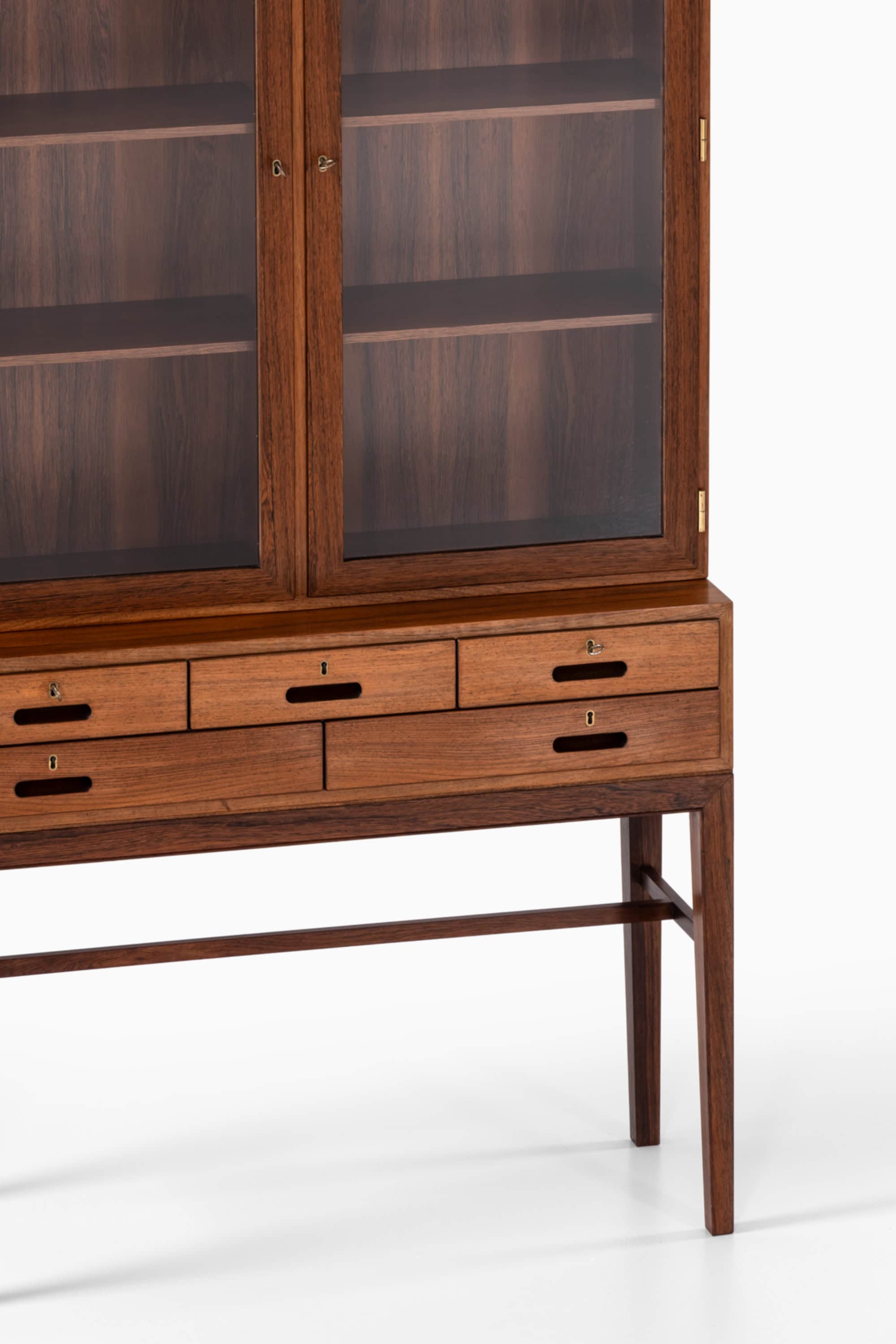
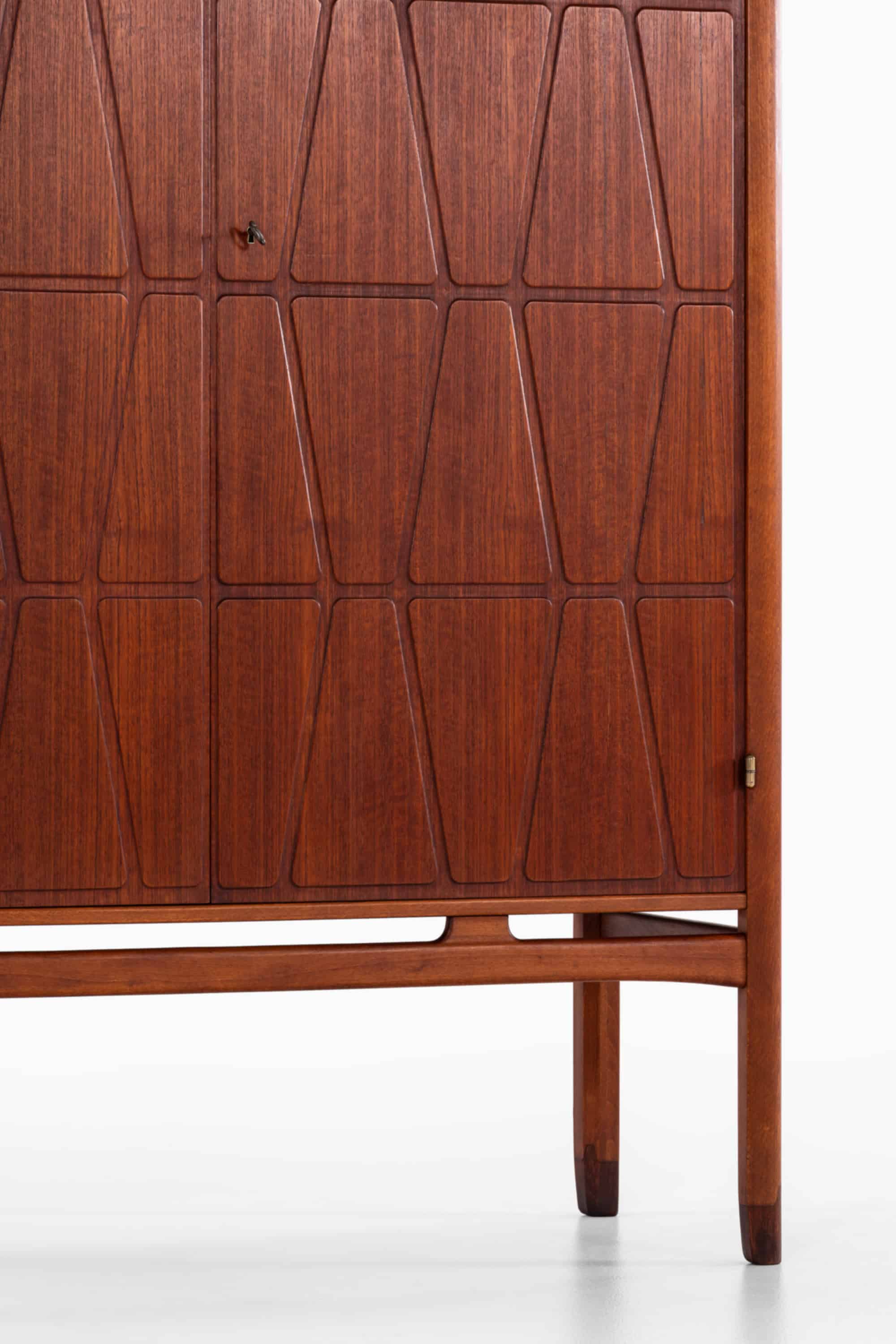
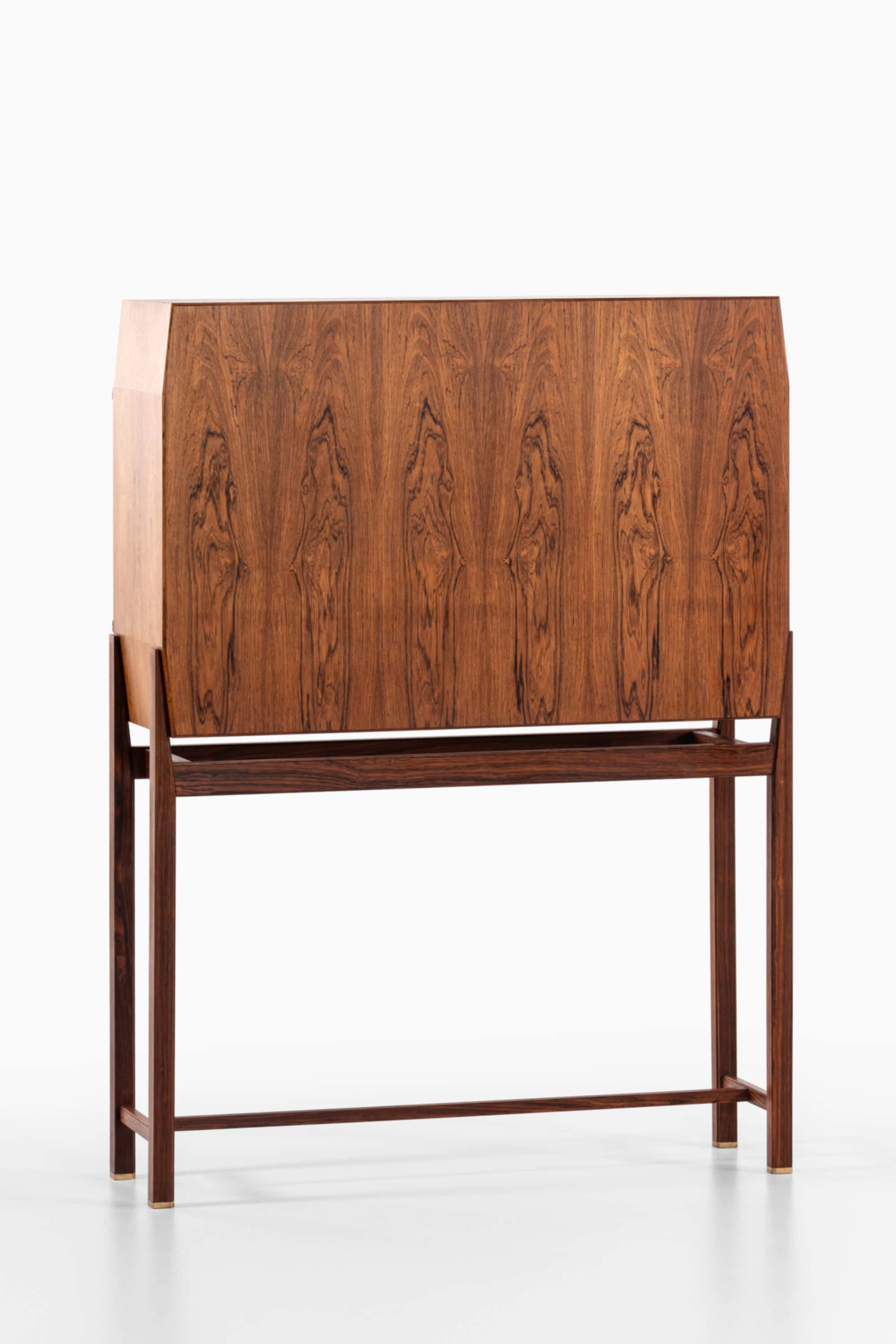
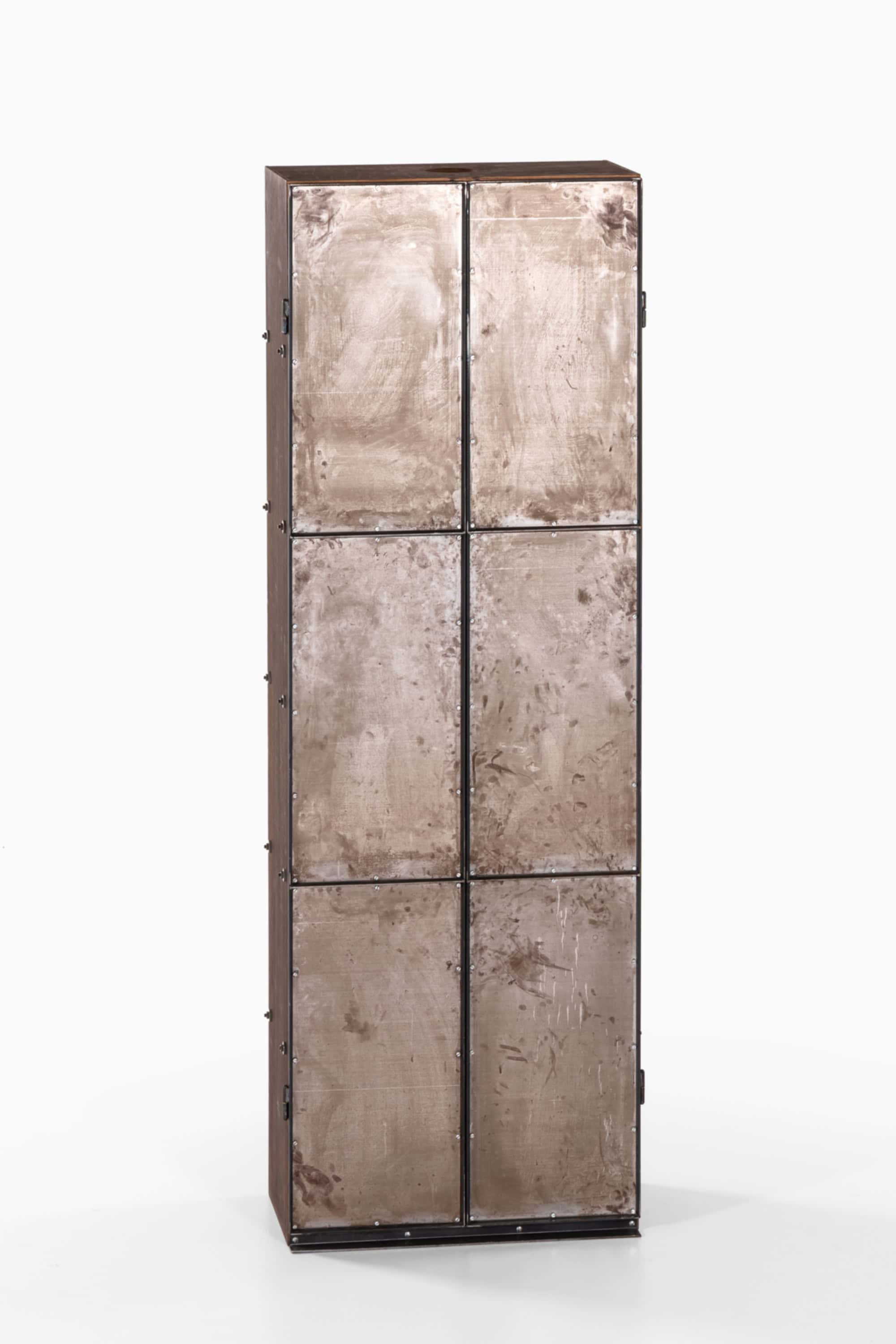
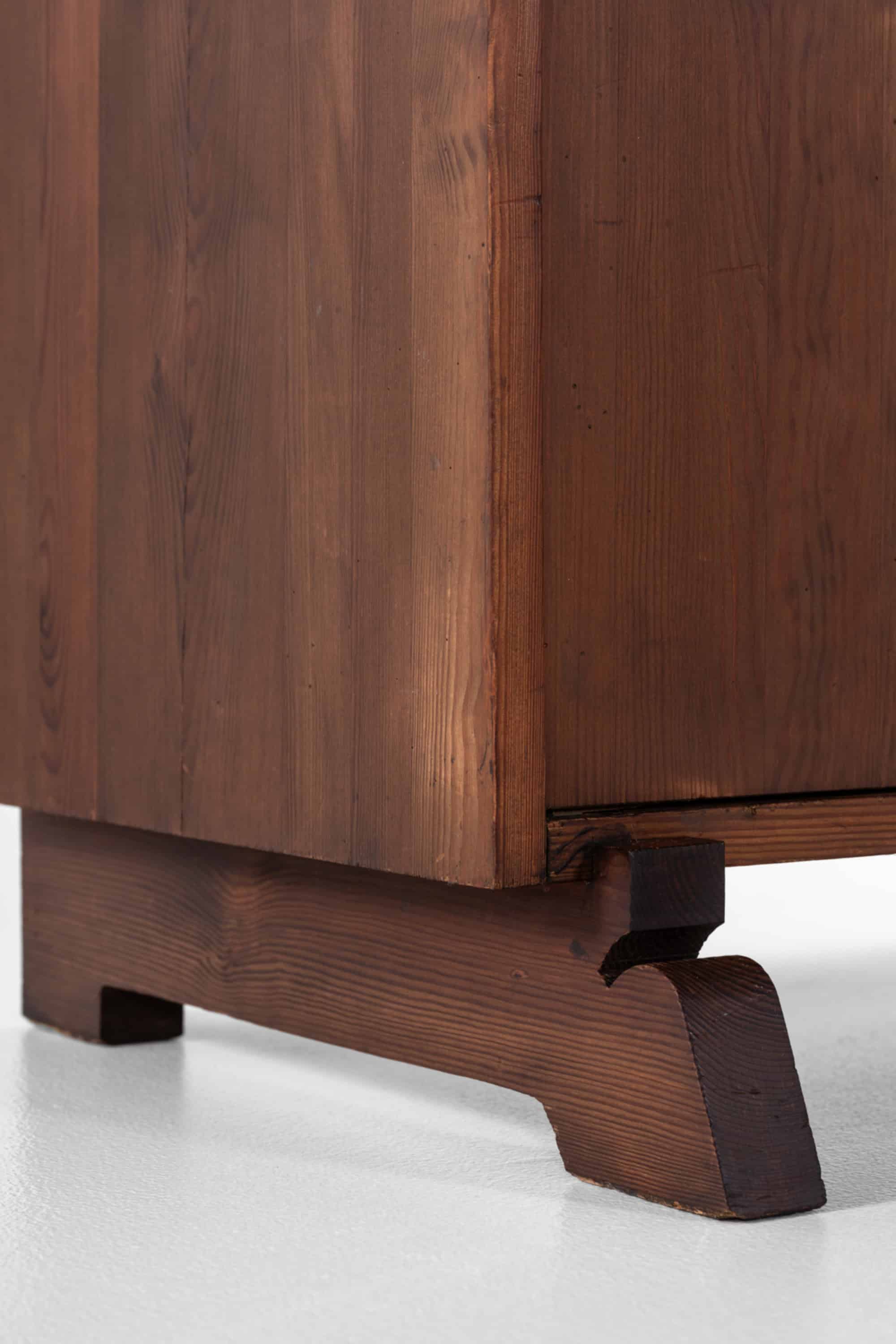
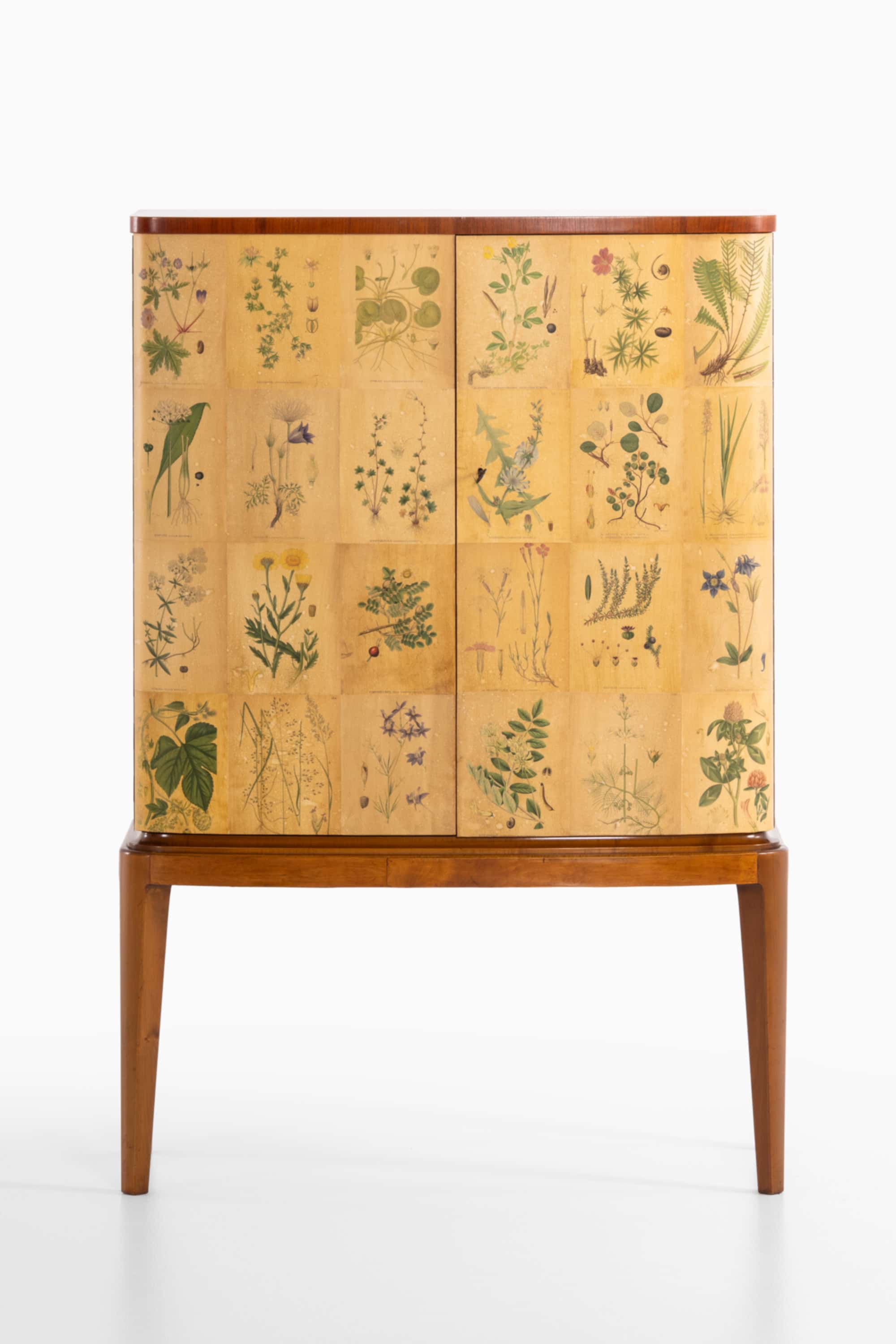
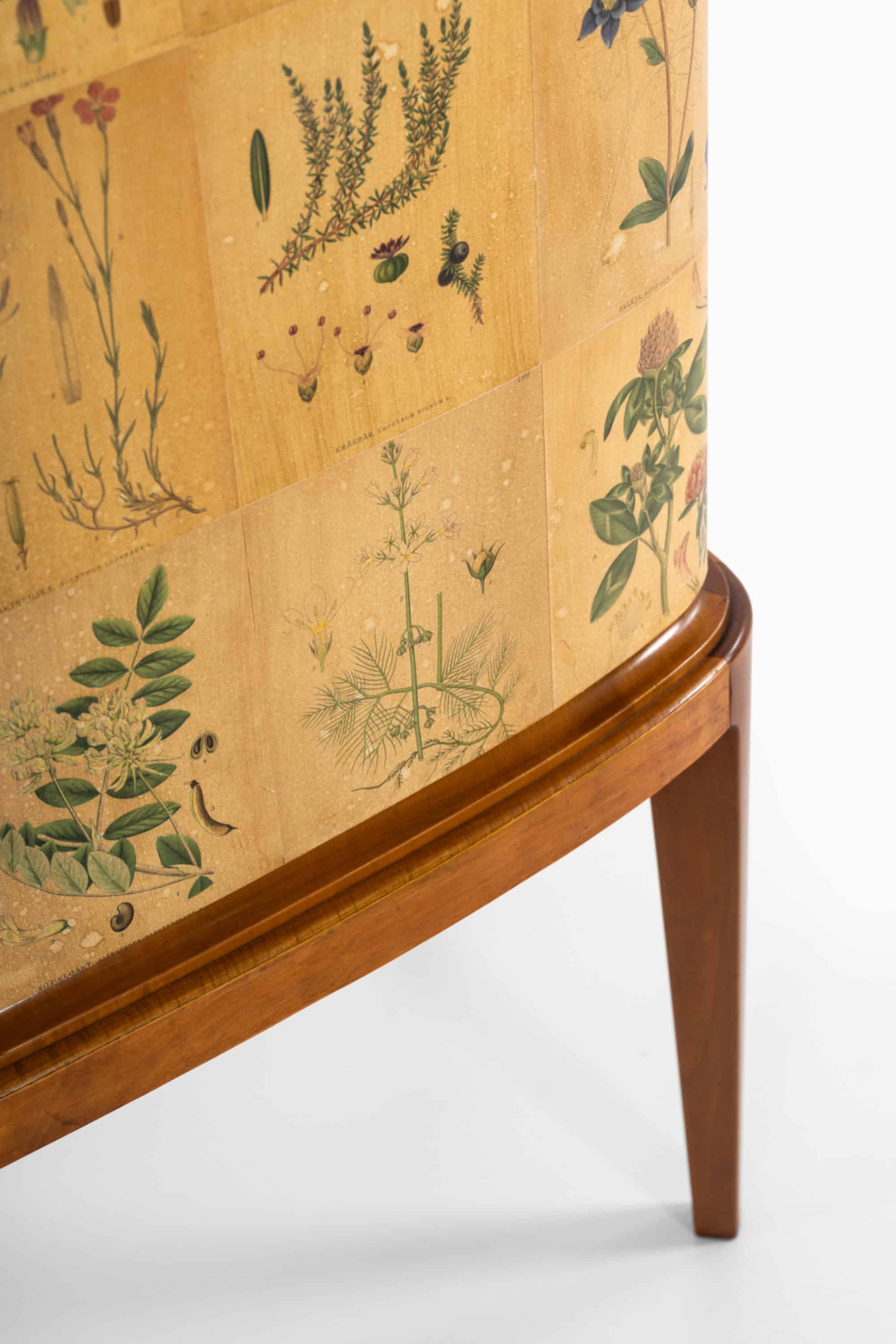
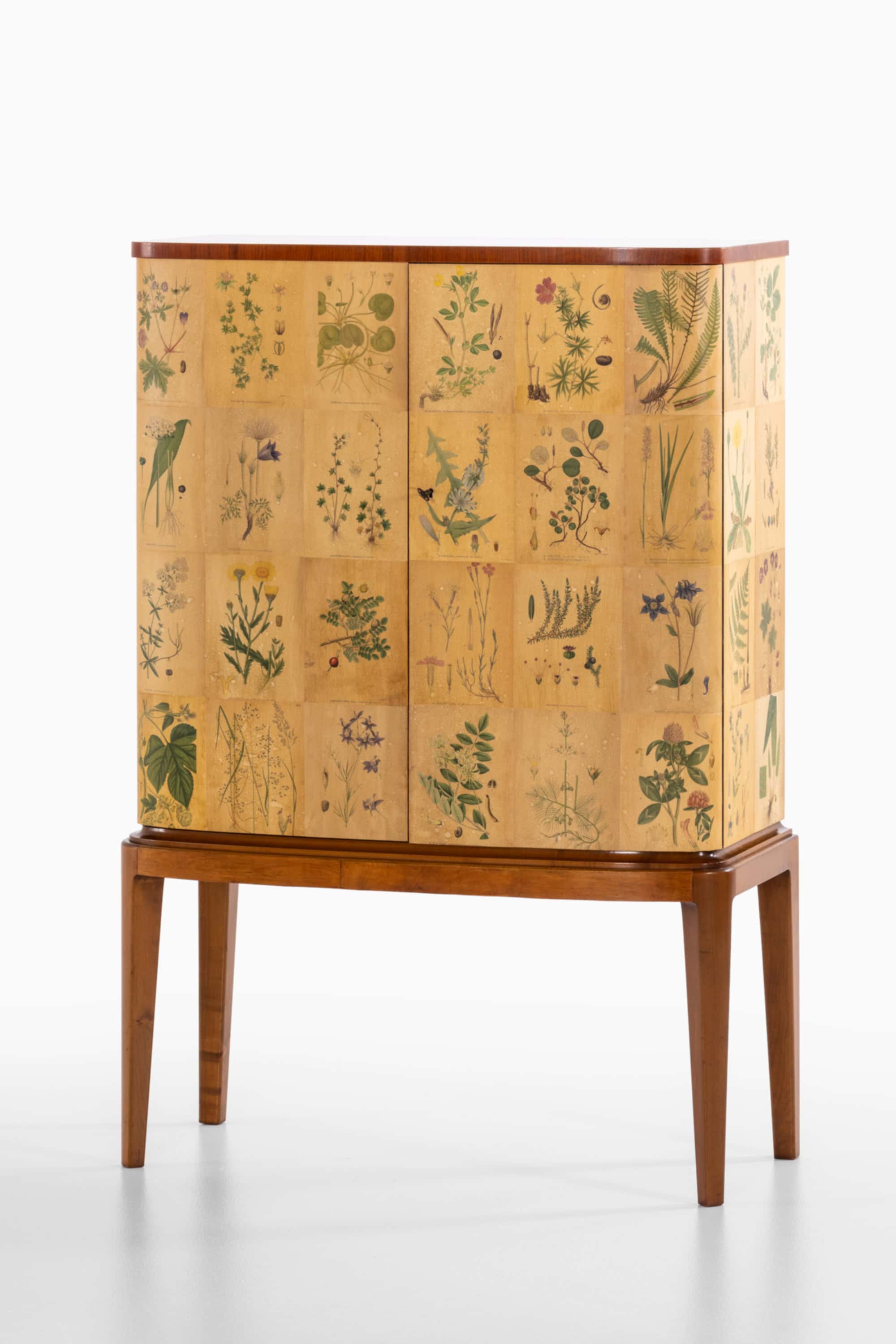
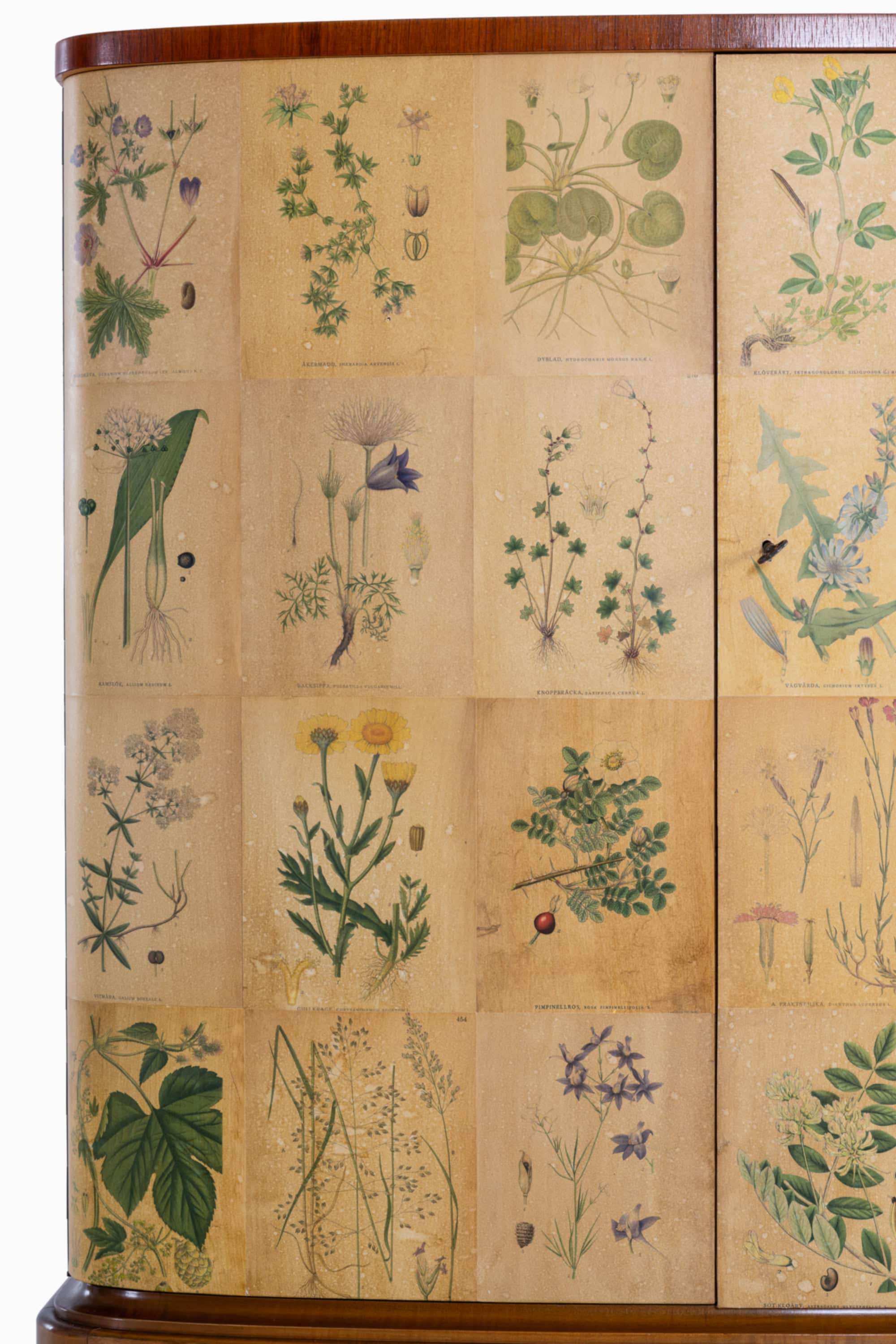
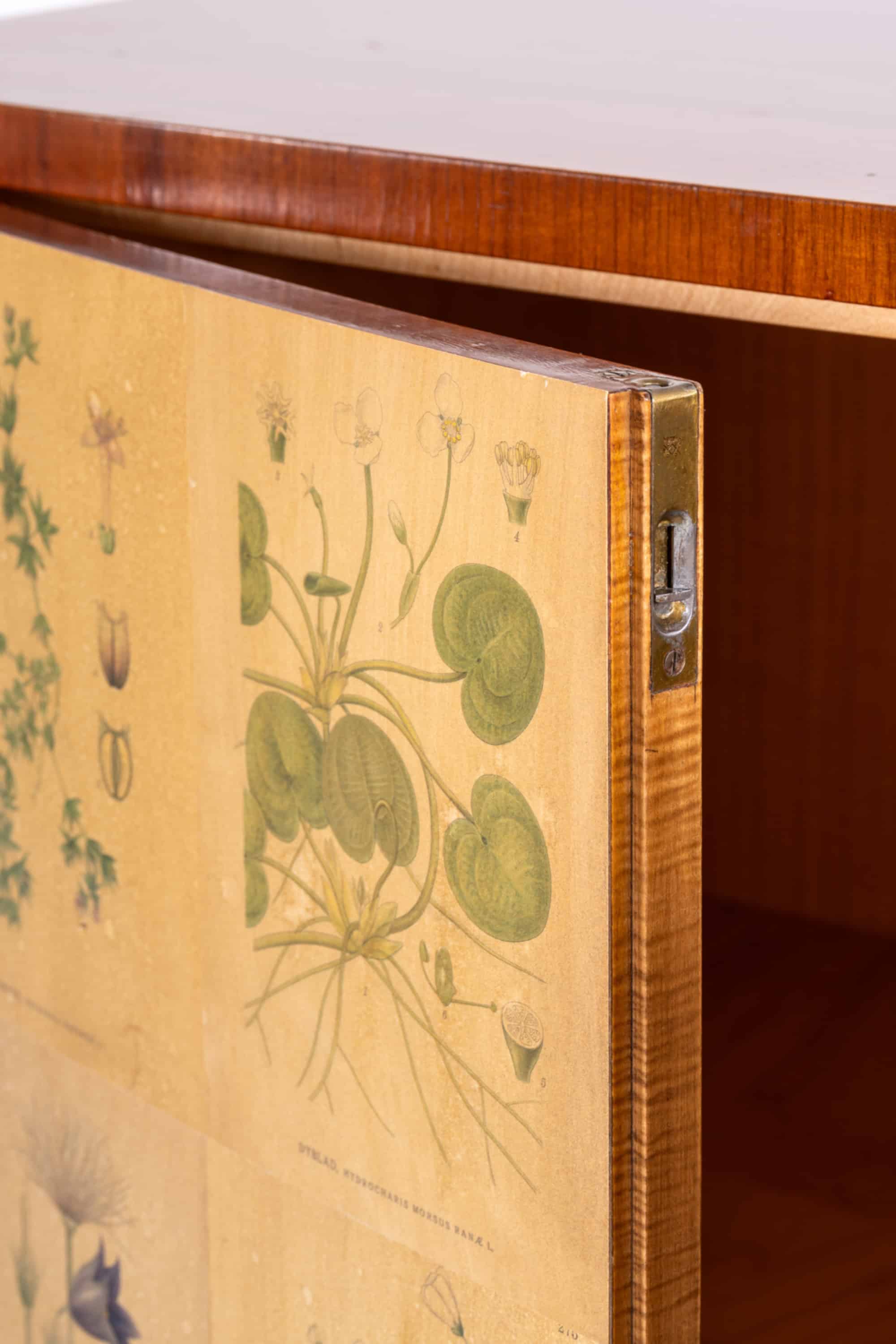
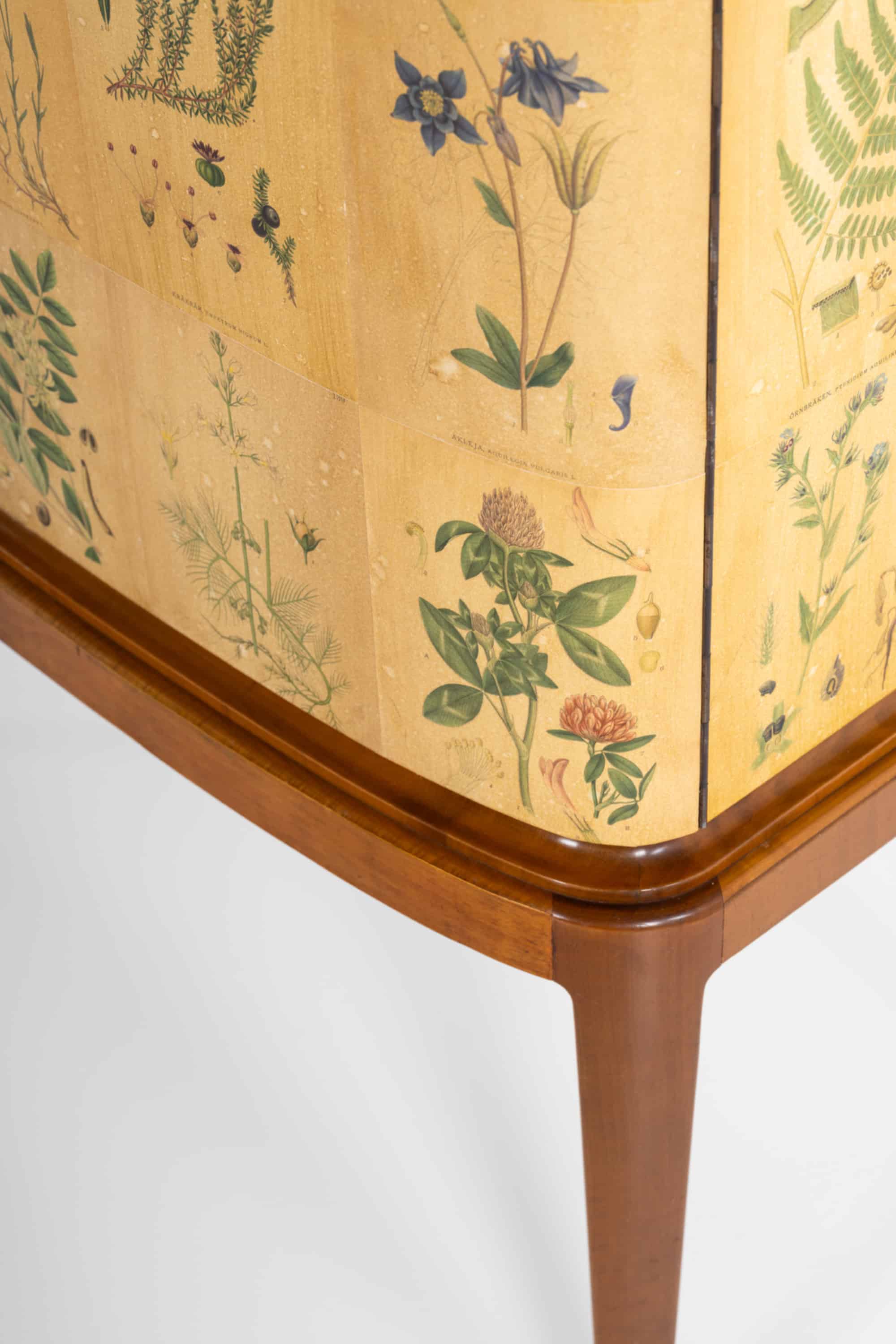
The cabinet has a rectangular body with softly rounded front corners, a slightly projecting top, and two full-height doors. It rests on a separate birch base with four tapered legs and gently curved transitions between the legs and horizontal rails. The wooden elements have a warm, honey-brown finish with visible grain patterns, contrasting with the pale yellow and ochre tones of the botanical illustrations. The exterior surfaces are covered with individual printed plates arranged in a regular grid, depicting a variety of Nordic plants, flowers, ferns, grasses, and herbs in shades of green, blue, violet, red, and yellow. Many illustrations retain their original botanical names and scientific details, emphasizing their origins in natural history publications.
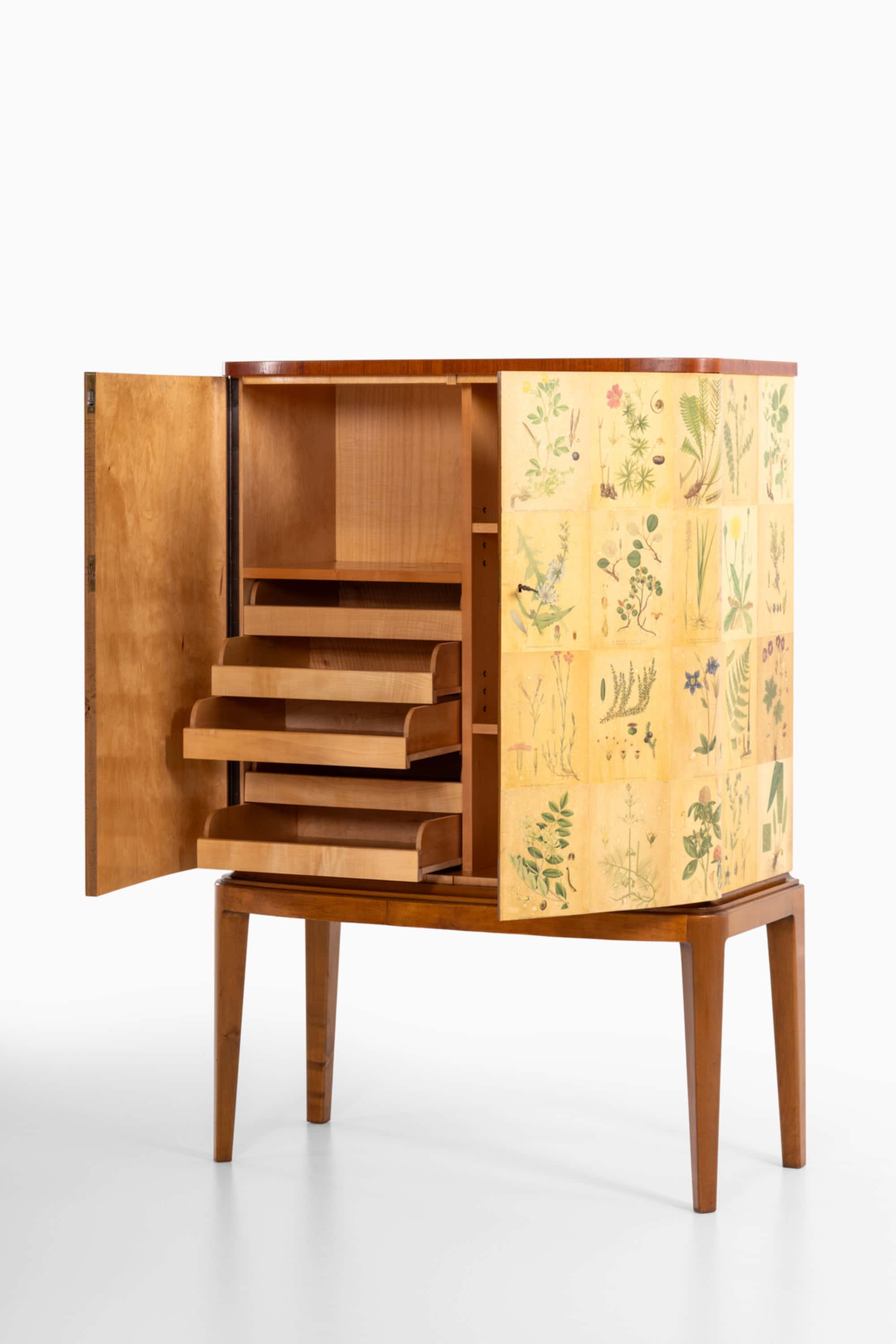
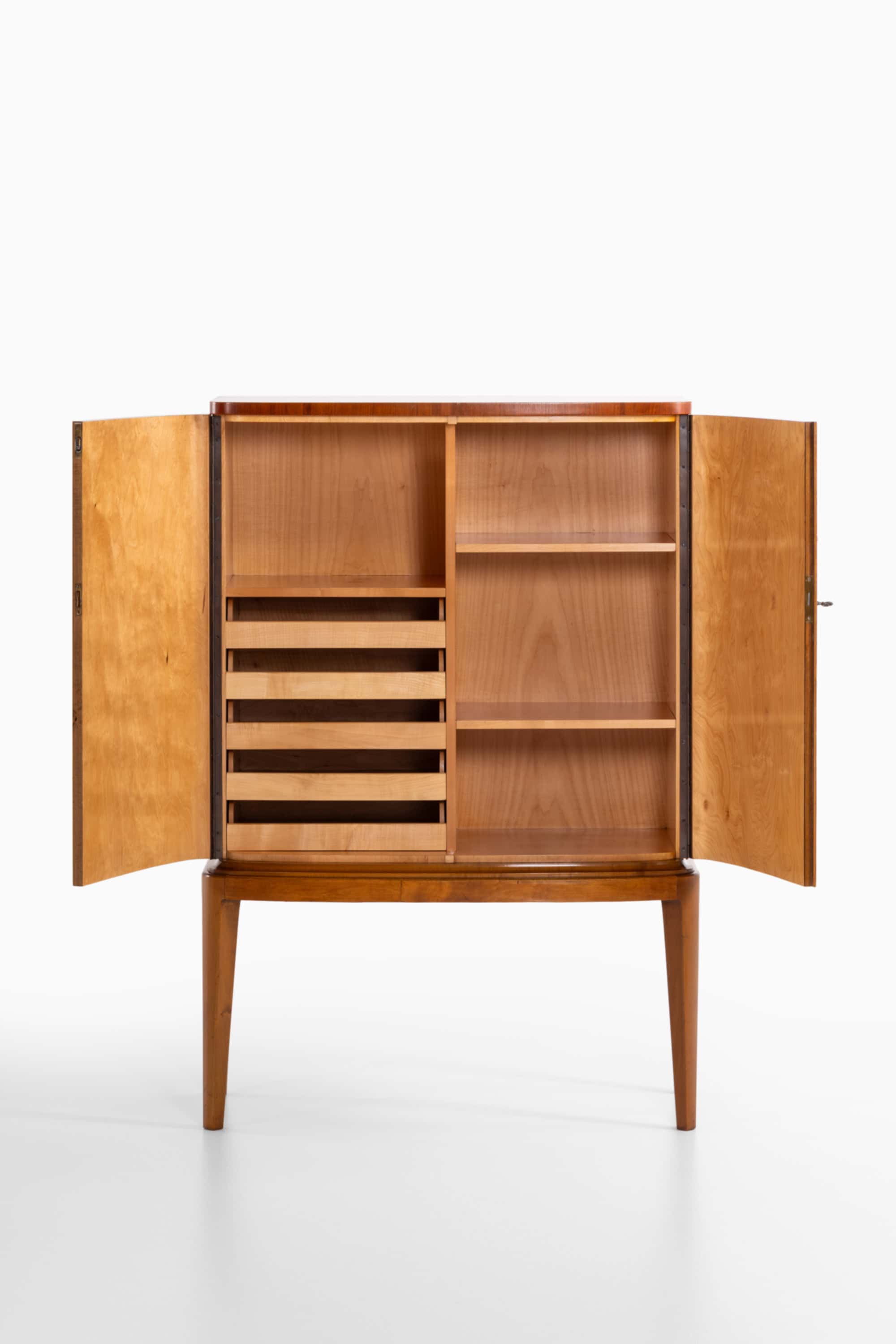
The two doors open to reveal a practical interior in light birch, divided into two vertical compartments. The left section contains an open upper storage space above five shallow pull-out trays with raised sides, while the right section is fitted with adjustable shelves. The interior retains a simple, functional character, with the natural wood surfaces providing a contrast to the richly decorated exterior. The doors are fitted with concealed metal hardware and a locking mechanism.
The decorative treatment recalls the work of Austrian-born architect and designer Josef Frank (1885–1967), who became a central figure in Swedish modern design through his collaboration with Svenskt Tenn. Frank developed a distinctive approach to interiors, combining functional furniture with expressive patterns, natural forms, and historical references. His textile and wallpaper designs frequently incorporated botanical imagery, often arranged in compositions that challenged the restrained geometric language of contemporary functionalism. Although this cabinet is not attributed to Frank, its use of botanical imagery across the furniture surfaces reflects a related decorative approach.
The botanical illustrations originate from the tradition of Scandinavian flora publications, in which plants were systematically documented through detailed color plates accompanied by scientific classifications. Such illustrations served both educational and aesthetic purposes, recording the characteristics of individual species through carefully rendered leaves, stems, flowers, and root systems. Their application to furniture creates a relationship between natural history illustration and mid-century decorative design, while the regular arrangement of the plates introduces a structured composition across the curved cabinet surfaces.
Produced in Sweden during the 1950s, the cabinet represents an individual interpretation of Scandinavian modern furniture, combining traditional cabinetmaking, functional interior organization, and botanical decoration. The contrast between the understated birch construction and the illustrated exterior is characteristic of a period when Swedish interiors accommodated both modernist simplicity and more expressive decorative elements.
The cabinet is in good vintage condition, with signs of use consistent with its age. The wooden surfaces display a warm patina, while the botanical illustrations show some discoloration, minor marks, and surface wear. These characteristics are particularly visible in the light-colored backgrounds of the printed plates.
Width 89 cm (35 inches), depth 42 cm (16.5 inches), height 129.5 cm (51 inches).
Dimensions (cm) | W: 89 / D: 42 / H: 129.5 |
| Decade | 1950s |
| Country | Sweden |
| Style | Mid Century, Scandinavian Modern |
| Material | Birch |
| Designed in | 1950s |
| Item Number | 250914 |