Ewald Dahlskog
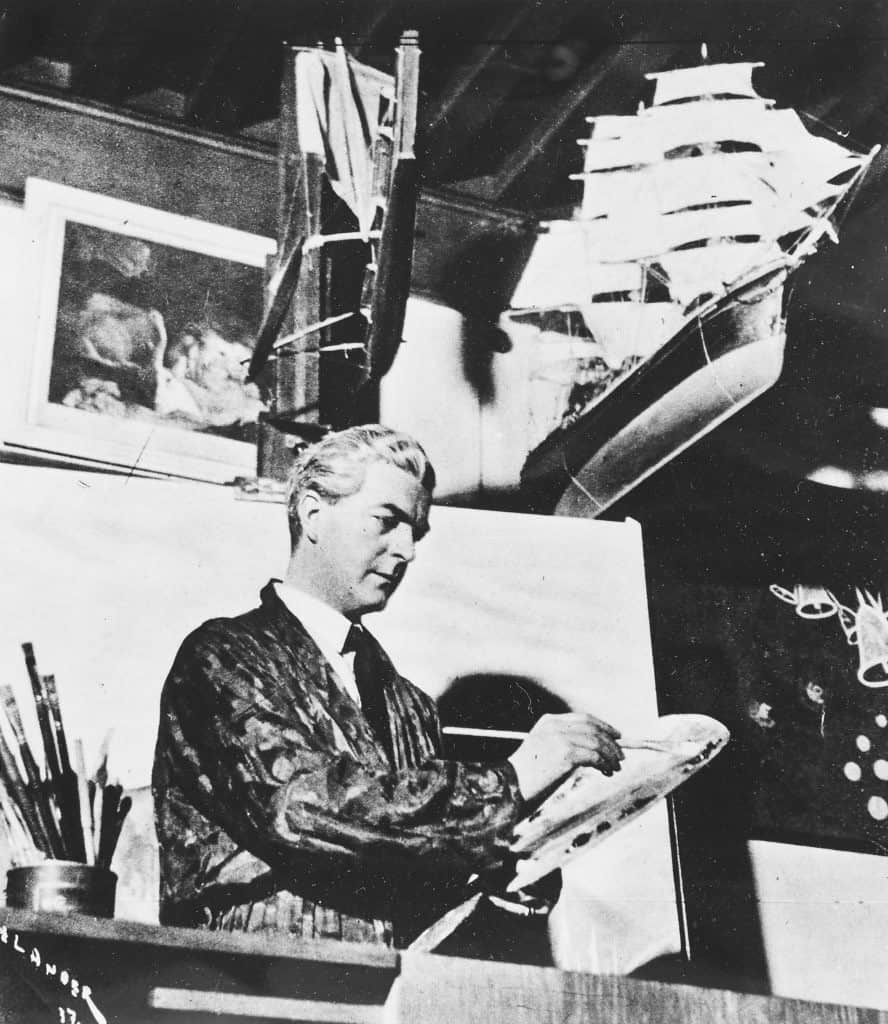
Ewald Dahlskog (1894–1950) was a Swedish artist and designer known for his wide-ranging work in glass, ceramics, intarsia, painting, and decorative arts. He is particularly recognized for his modern contribution to Swedish art glass at Kosta and for his later work at Bo Fajans, where he developed ceramic objects with geometric forms, relief surfaces, and a strong sense of material expression. His work reflects a rare versatility, moving between fine art, craft, and interior decoration with equal confidence.
Biography
Ewald Dahlskog was born in Stockholm in 1894 and trained first as a lithographer before studying at the Technical School in Stockholm, later known as Konstfack. He continued his education at the Royal Swedish Academy of Fine Arts between 1912 and 1917, where he developed a strong foundation in drawing, painting, and composition. In 1918, he received the academy’s travel scholarship, which allowed him to undertake study trips to countries including Italy, France, and Tunisia.
Dahlskog’s artistic practice was unusually broad. He worked as a painter, illustrator, stage designer, glass artist, ceramicist, and creator of intarsia compositions. His early work included major decorative commissions, among them intarsia works for the Stockholm Concert Hall and a ceiling painting for Stockholm City Hall. These projects helped establish his reputation as a versatile artist capable of working across both intimate objects and large-scale interior decorations.
Between 1926 and 1929, Dahlskog worked for Kosta, where he played an important role in renewing Swedish art glass. During this period, he developed a more modern approach to cut decoration, giving glass objects a stronger sense of movement, rhythm, and graphic clarity. His work at Kosta marked an important phase in the development of Swedish glass during the interwar period.
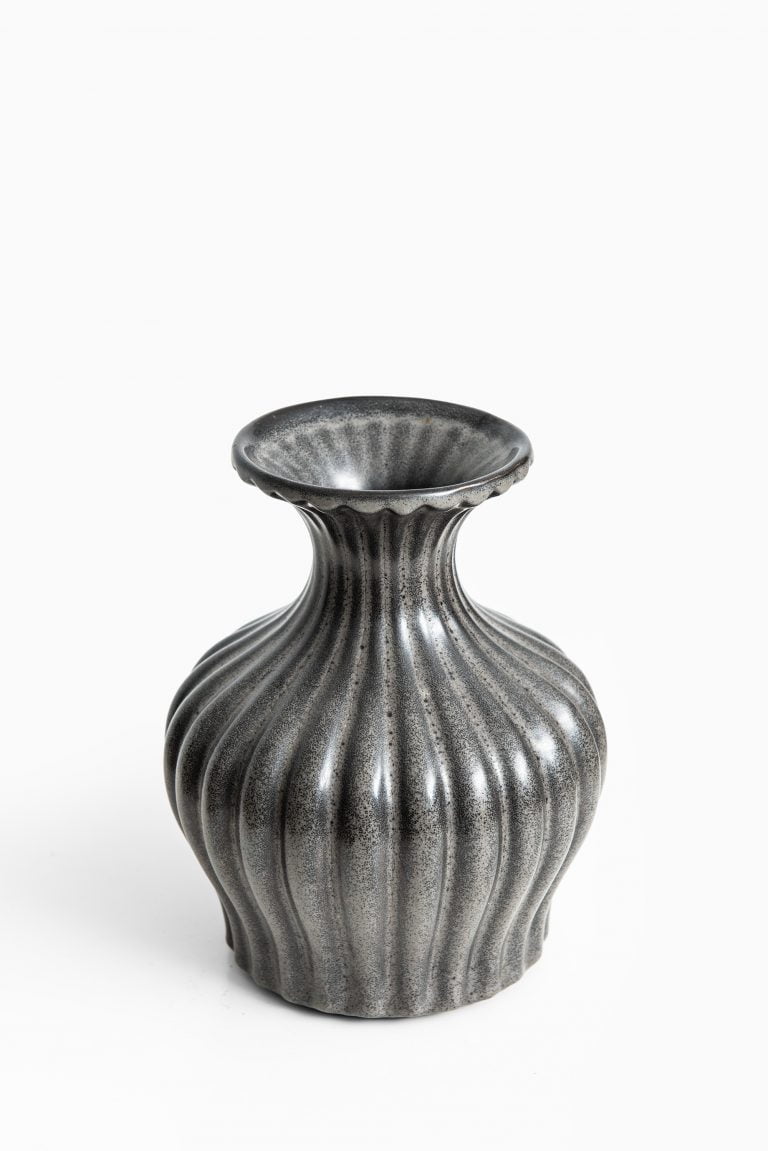
In 1929, Dahlskog became artistic director at Bo Fajans in Gävle, a position he held until his death in 1950. There, he designed vases, bowls, urns, flower pots, and other ceramic objects, often characterized by simplified forms, relief decoration, ribbed surfaces, and glazes in muted natural tones. His ceramics combined functional purpose with strong decorative presence, making them representative of the more modern and expressive direction of Swedish ceramics during the 1930s and 1940s.