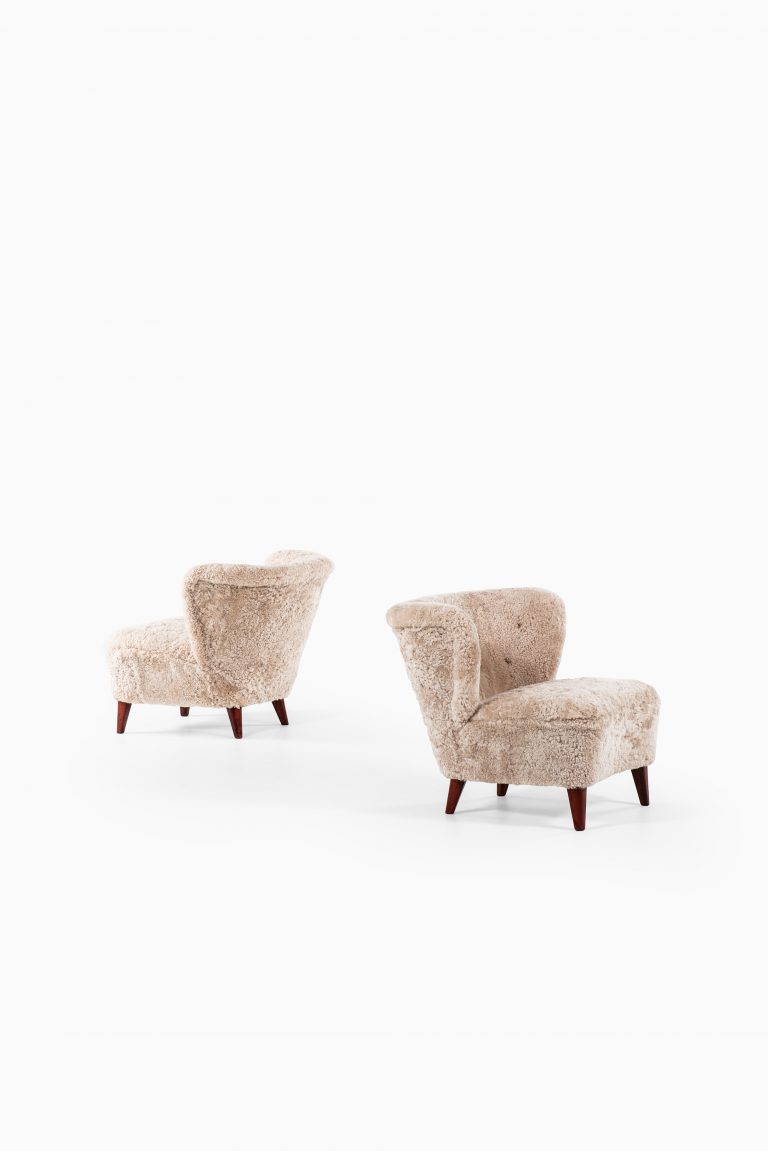
Gösta Jonsson
Gösta Jonsson (1902–1958) was a Swedish furniture designer and architect, best known for his upholstered lounge chairs and sofas from the 1940s. His designs combined the simplicity of Scandinavian modernism with generous proportions, curved forms and an emphasis on comfort. Frequently executed in wood and upholstered in sheepskin or fabric, his furniture reflects the craftsmanship and material qualities associated with Swedish mid-century design.
Biography
Born in Skåne, Sweden, in 1902, Gösta Jonsson studied architecture at the Royal Institute of Technology in Stockholm. After completing his education, he initially worked as an architect before turning his attention to furniture design. His background in architecture influenced his approach to proportion, construction and the relationship between form and function.
During the 1940s, Jonsson developed a range of upholstered seating furniture, including lounge chairs and sofas produced in Jönköping, Sweden. His designs were distinguished by their substantial yet softly rounded silhouettes, often featuring broad seats, curved backrests and short, tapered wooden legs. The combination of solid wooden frames and generous upholstery created furniture that emphasized both comfort and craftsmanship.
Among his most recognizable works are his sheepskin-upholstered lounge chairs, characterized by their enveloping backrests and carefully balanced proportions. These designs reflected a growing interest in more relaxed and comfortable domestic interiors during the mid-twentieth century. Jonsson also worked with materials such as beech, birch, leather and textiles, combining traditional furniture-making techniques with the softer forms of Swedish Modern design.
Gösta Jonsson died in 1958. His furniture continues to attract interest among collectors of Scandinavian design, particularly his lounge chairs and sofas from the 1940s. His work represents a distinctive interpretation of Swedish modernism, combining functional construction with inviting forms and natural materials.