Peter Celsing
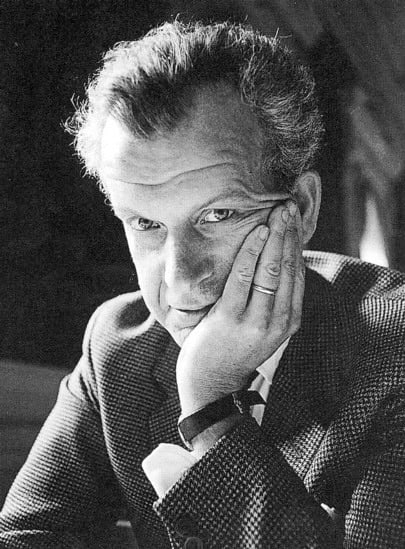
Peter Celsing (1920–1974) was a Swedish architect and professor whose work played an important role in the development of post-war Swedish modernism. Best known for his churches and major public buildings in Stockholm, he also designed interiors, furniture and lighting, approaching these elements as integral parts of the spaces he created.
Biography
Celsing was born in Stockholm in 1920 and studied architecture at the Royal Institute of Technology (KTH), graduating in 1944. He continued his studies at the Royal Academy of Fine Arts and subsequently worked for architects including Ivar Tengbom and Paul Hedqvist. Travels and periods of work in the Middle East and Mediterranean region also became important influences during his formative years.
Between 1948 and 1952, Celsing headed the architectural office of Stockholm’s public transport authority. During this period he designed several stations for the expanding Stockholm metro system, including Gubbängen, Åkeshov, Hökarängen and Blackeberg. These early projects established his interest in the relationship between architecture, materials, light and public space.
During the 1950s and 1960s, Celsing developed a highly individual architectural language. Among his best-known religious buildings are Härlanda Church in Gothenburg and the churches of St. Mark and St. Thomas in Stockholm. His work frequently employed brick, concrete and timber, with carefully controlled natural and artificial light contributing strongly to the atmosphere of the interiors.
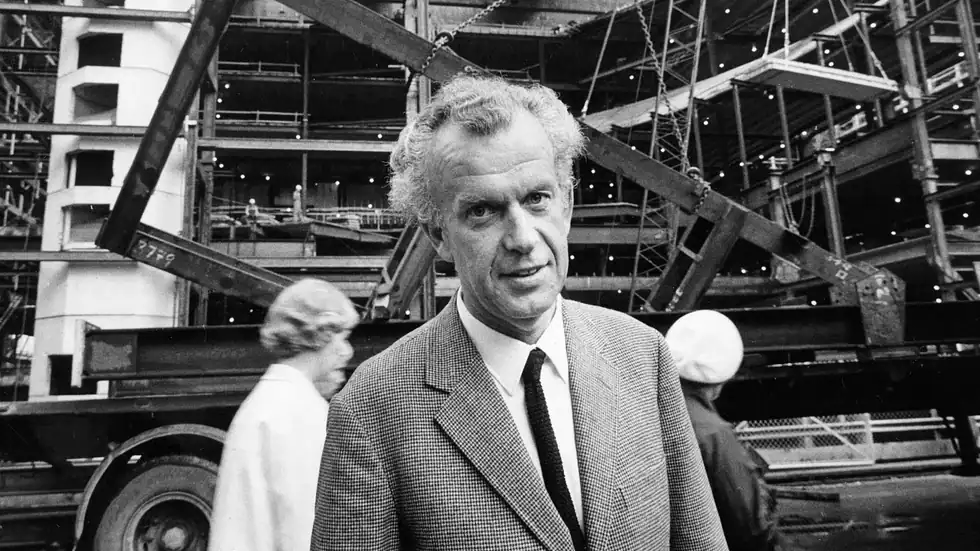
Celsing was appointed professor of architecture at KTH in 1960. His later career was dominated by major public commissions, most notably Kulturhuset at Sergels torg and the neighbouring headquarters of Sveriges Riksbank in central Stockholm. These projects became significant contributions to the extensive redevelopment of Stockholm's city centre during the post-war period.
Alongside his buildings, Celsing designed furnishings and lighting for interiors. His lighting designs include wall lamps produced by Fagerhults Belysning AB during the 1960s, characterised by restrained geometric forms and indirect light. These objects demonstrate the same attention to proportion, material and illumination that can be found throughout his larger body of work.