


Designers and Cabinetmakers – Wegner & Hansen
Introduction
In the development of Danish modern design, the relationship between designer and cabinetmaker was central. Unlike later industrial furniture production, many of the most influential pieces of Scandinavian mid-century furniture emerged through close collaborations between designers and highly skilled workshops. These partnerships allowed new ideas in form, structure, and material to be realized with extraordinary precision.
Among the most important of these collaborations was that between Hans J. Wegner and the Copenhagen cabinetmaker Johannes Hansen. Their partnership represents one of the defining relationships in Danish modern design, where architectural thinking, craftsmanship, and material sensitivity came together to produce furniture of remarkable clarity and refinement.
Designer and Cabinetmaker
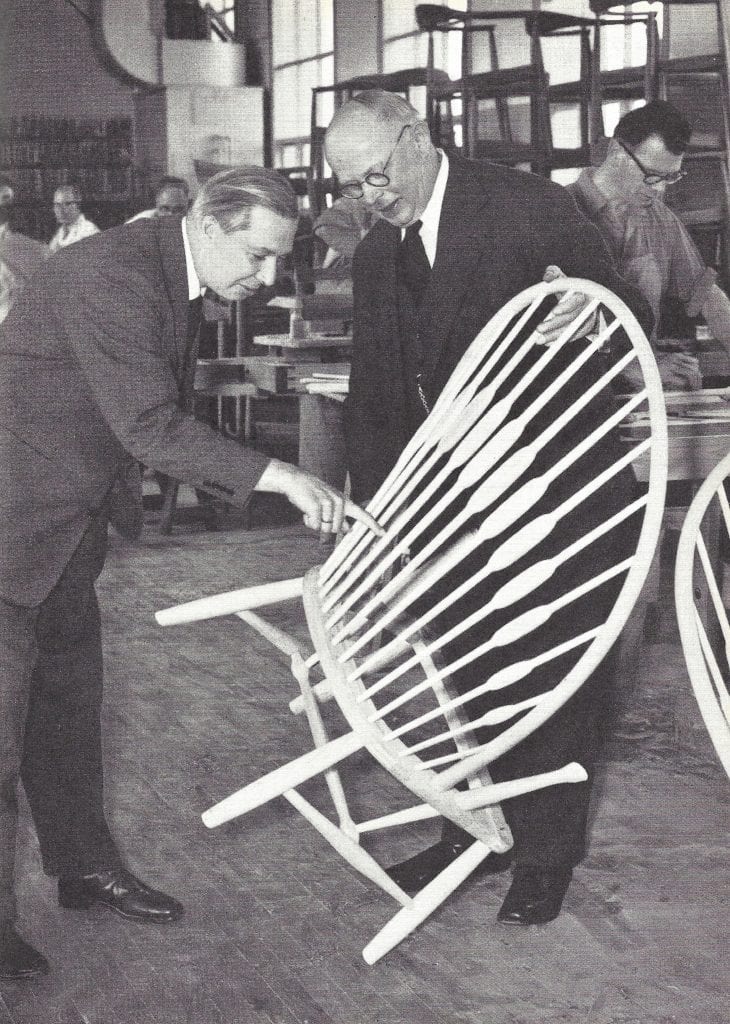
Wegner began his career as a trained cabinetmaker before studying furniture design at the Danish School of Arts and Crafts. This background shaped his approach throughout his career. Rather than treating furniture as purely stylistic form, he approached each design through the logic of construction and the properties of wood itself. Proportion, joinery, and ergonomics were inseparable parts of the design process.
Johannes Hansen’s workshop provided the ideal setting for such ideas to be realized. Established in Copenhagen in the early twentieth century, the studio gained a reputation for exceptional craftsmanship and for collaborating with progressive designers. Unlike large furniture factories, Hansen’s workshop operated on a smaller scale, allowing complex joinery and sculptural shaping of solid wood to be executed with great care.
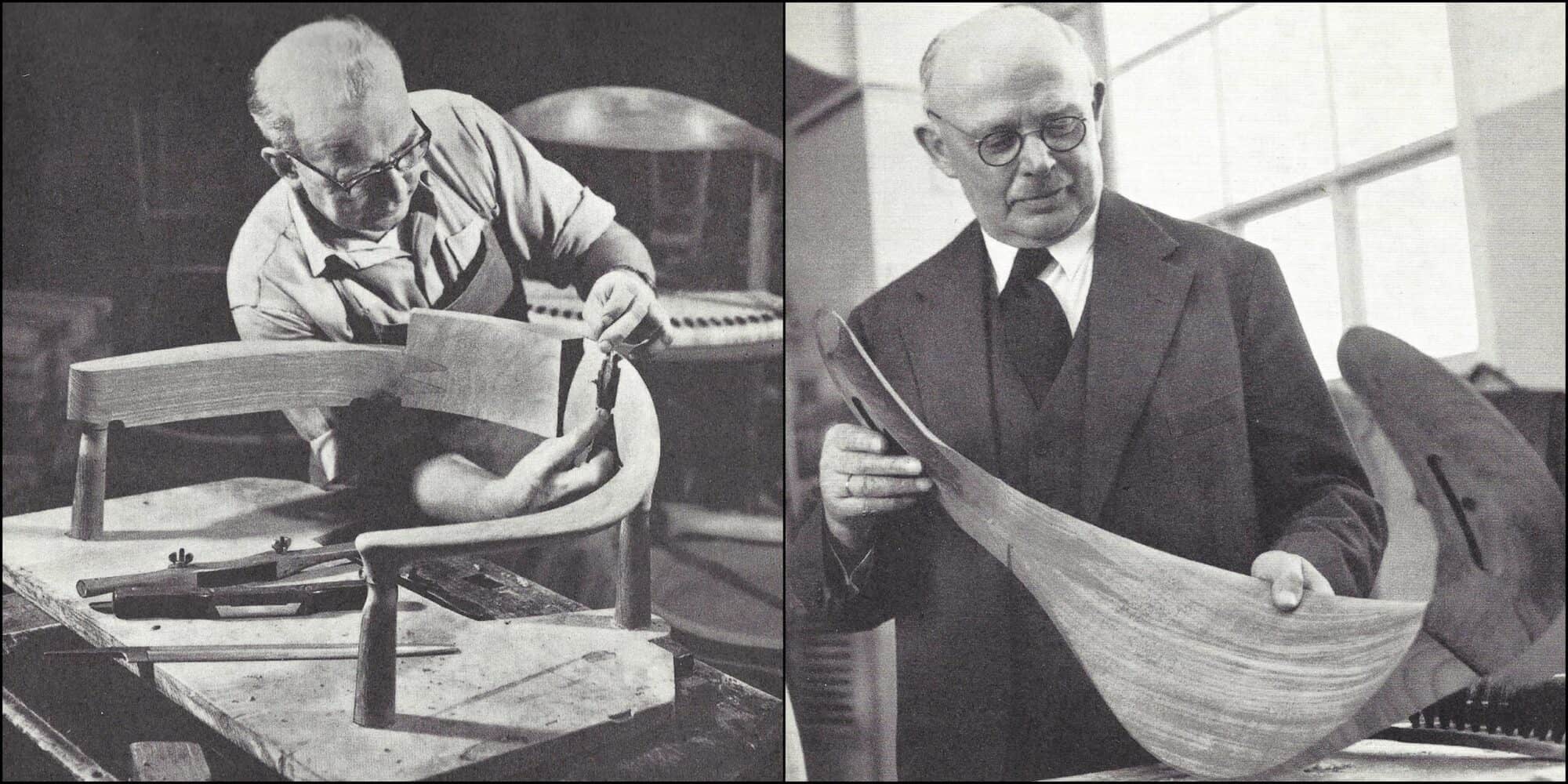
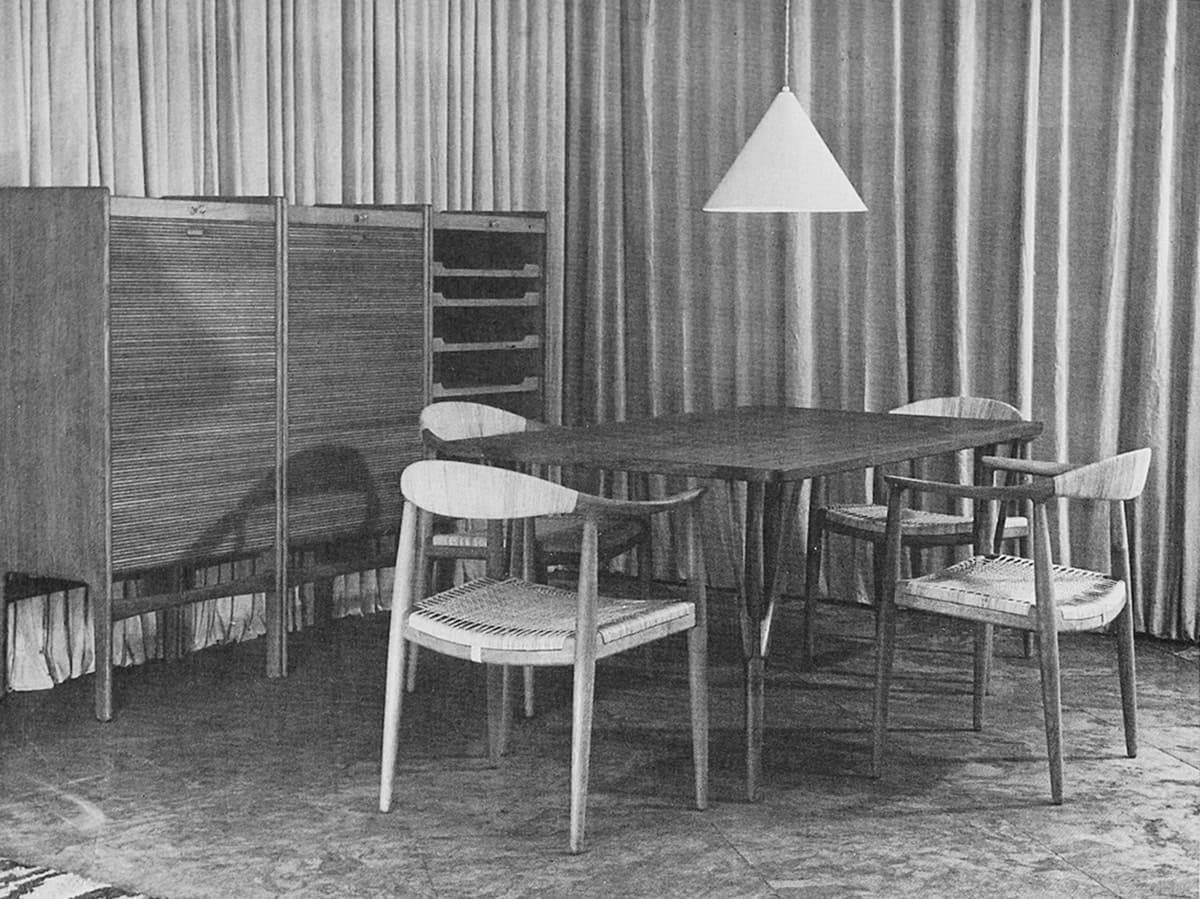
From the 1940s onward, many of Wegner’s designs were presented at the annual Copenhagen Cabinetmakers’ Guild Exhibitions, where designers and cabinetmakers jointly introduced new work. These exhibitions played a crucial role in shaping Danish modern design, demonstrating how innovation depended as much on craftsmanship as on creative vision.
The Chair
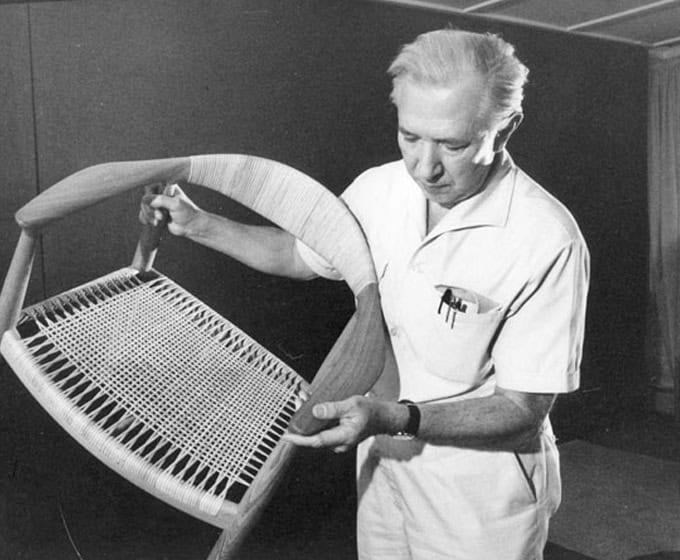
Among Wegner’s most celebrated works is the armchair JH-501, commonly known as ”The Chair”. Introduced in 1949, the design has become one of the most recognizable pieces of Danish modernism. The chair is defined by its sculpted wooden backrest, carved from a single piece of teak and continuing seamlessly into the armrests in a continuous semicircular form.
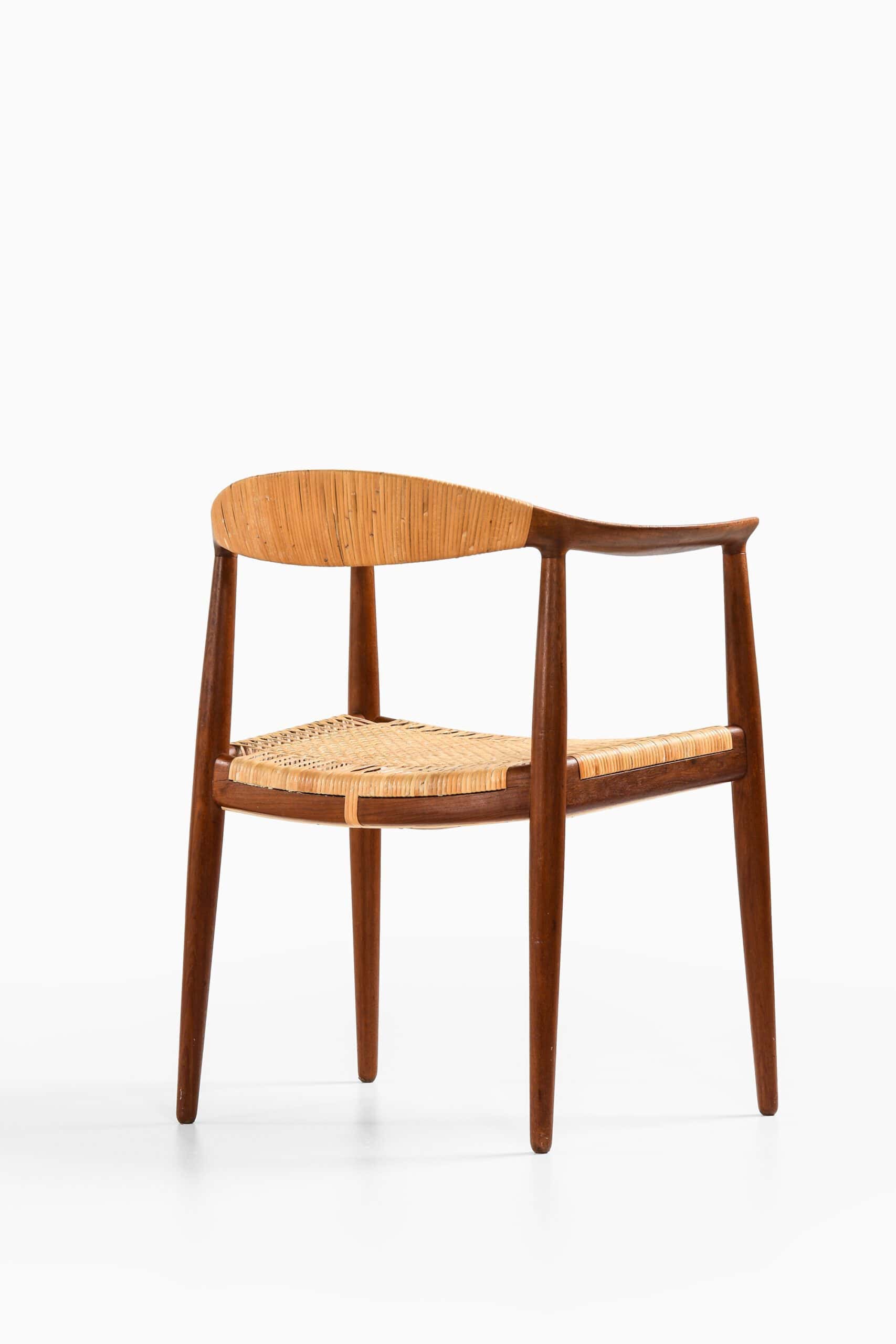
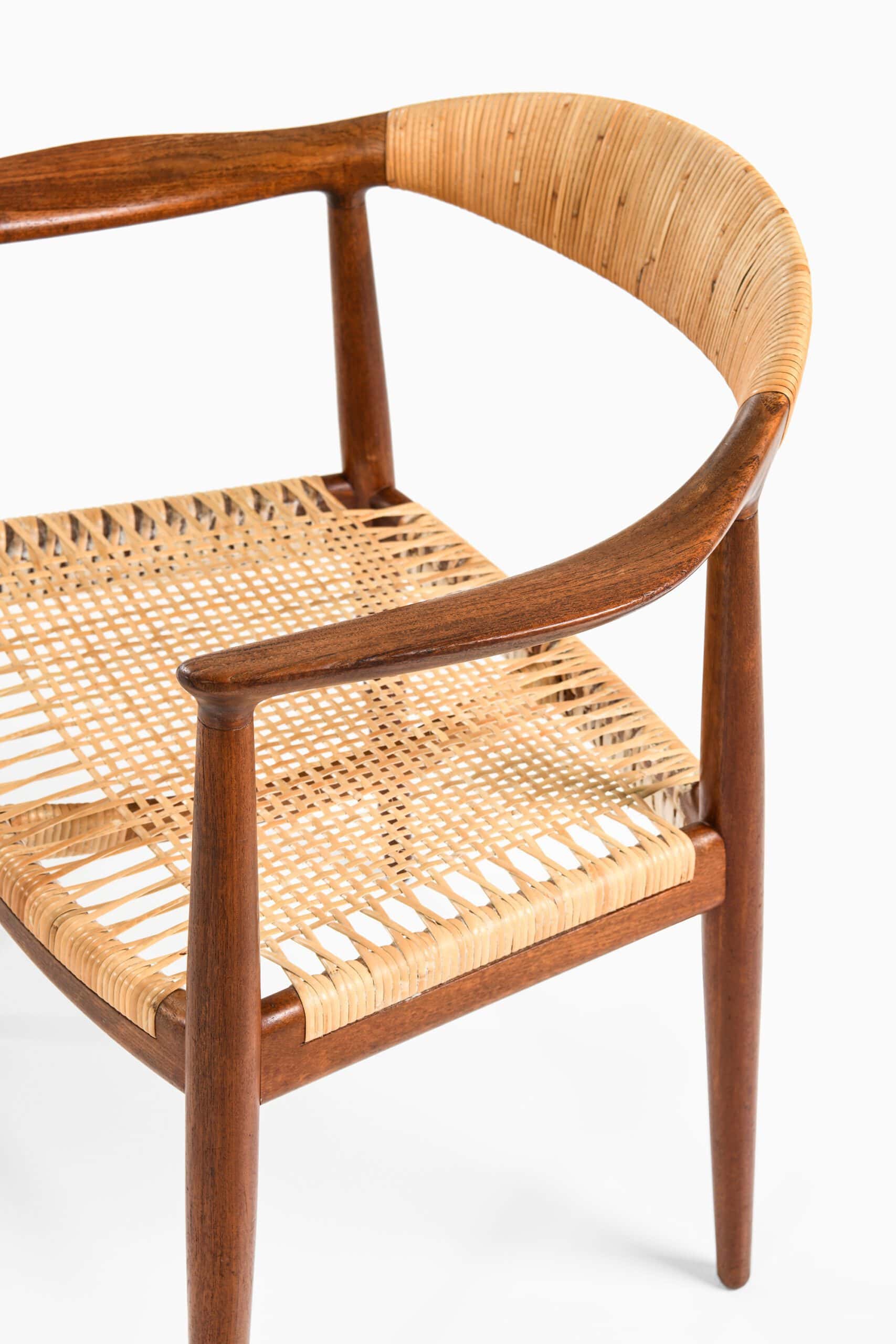
This fluid structure embraces the sitter while providing exceptional ergonomic support. The seat, woven from natural cane, contributes both lightness and resilience, reinforcing the clarity of the design. The construction relies on traditional mortise-and-tenon joinery executed with remarkable precision, illustrating the high level of cabinetmaking required to realize Wegner’s designs.
Dining Table
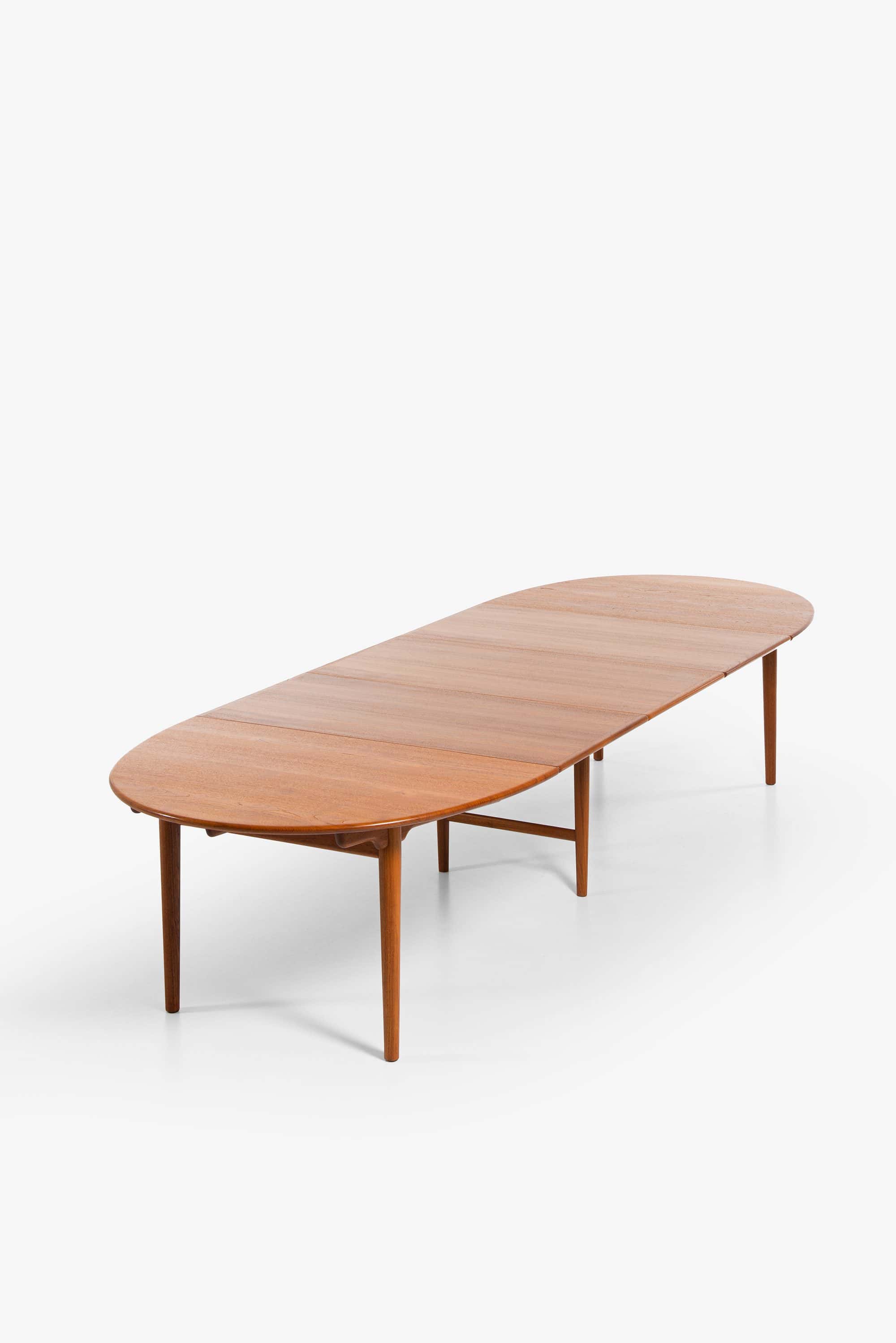
Wegner’s approach extended beyond seating to tables and architectural furniture elements. The dining table presented here reflects the same disciplined understanding of structure and proportion. Crafted in solid teak, the expansive tabletop displays a rich amber tone and pronounced grain patterns that animate the surface.
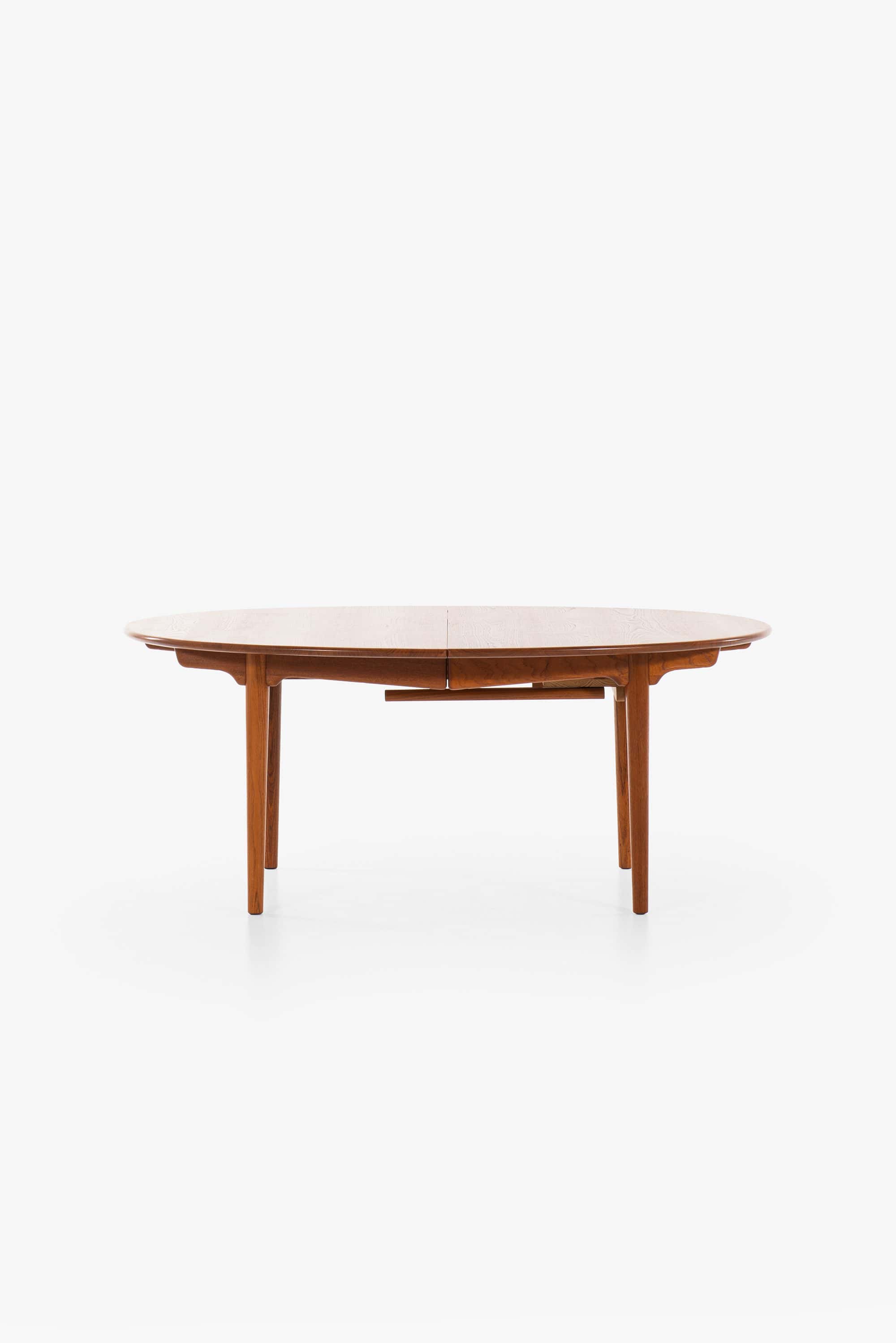
When extended, the table adopts a softly oval form that creates a balanced and generous composition. Subtle joinery details in the underframe quietly reveal the cabinetmaker’s hand, while the extension mechanism allows the table to expand without disturbing the visual continuity of the design.
Side Table
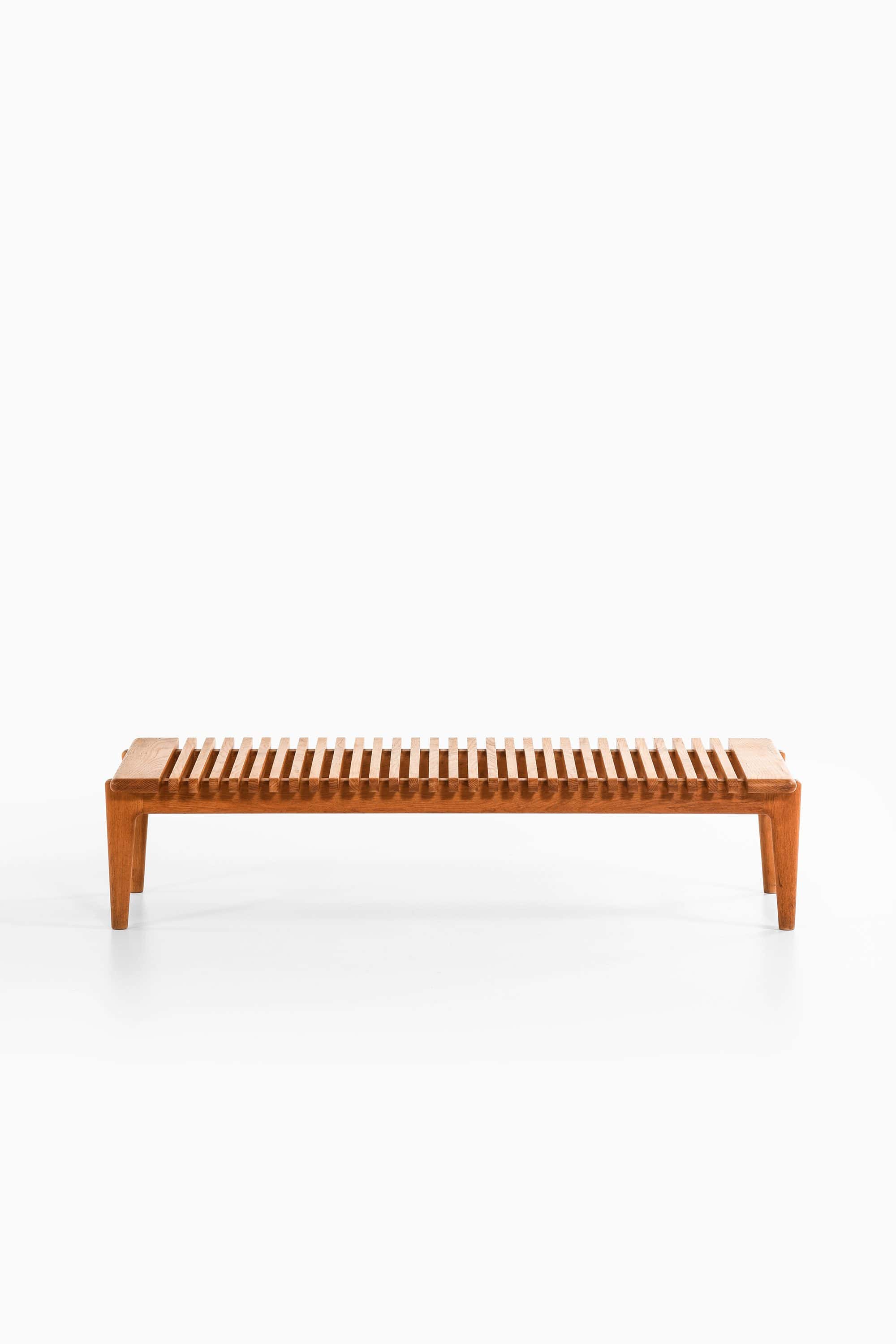
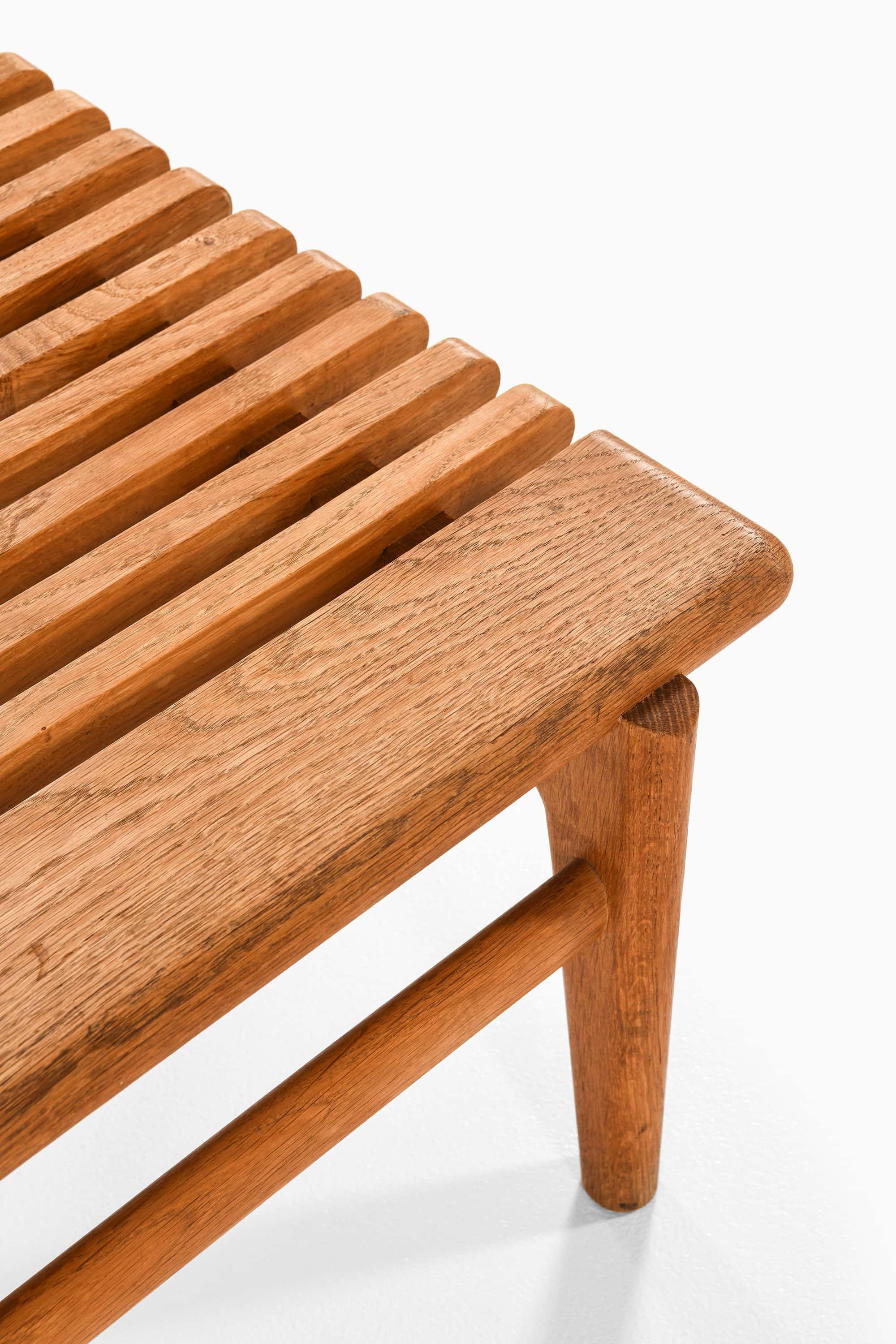
Smaller pieces often allowed Wegner to explore proportion with particular clarity. The side table presented here is crafted from solid oak and features a slatted tabletop composed of evenly spaced wooden elements. This construction introduces a sense of visual rhythm and lightness while maintaining structural strength.
Supported by gently tapered legs that angle slightly outward, the table achieves a poised architectural balance. The design remains entirely free of ornamentation, allowing material, proportion, and craftsmanship to define its character.
Architect’s Desk
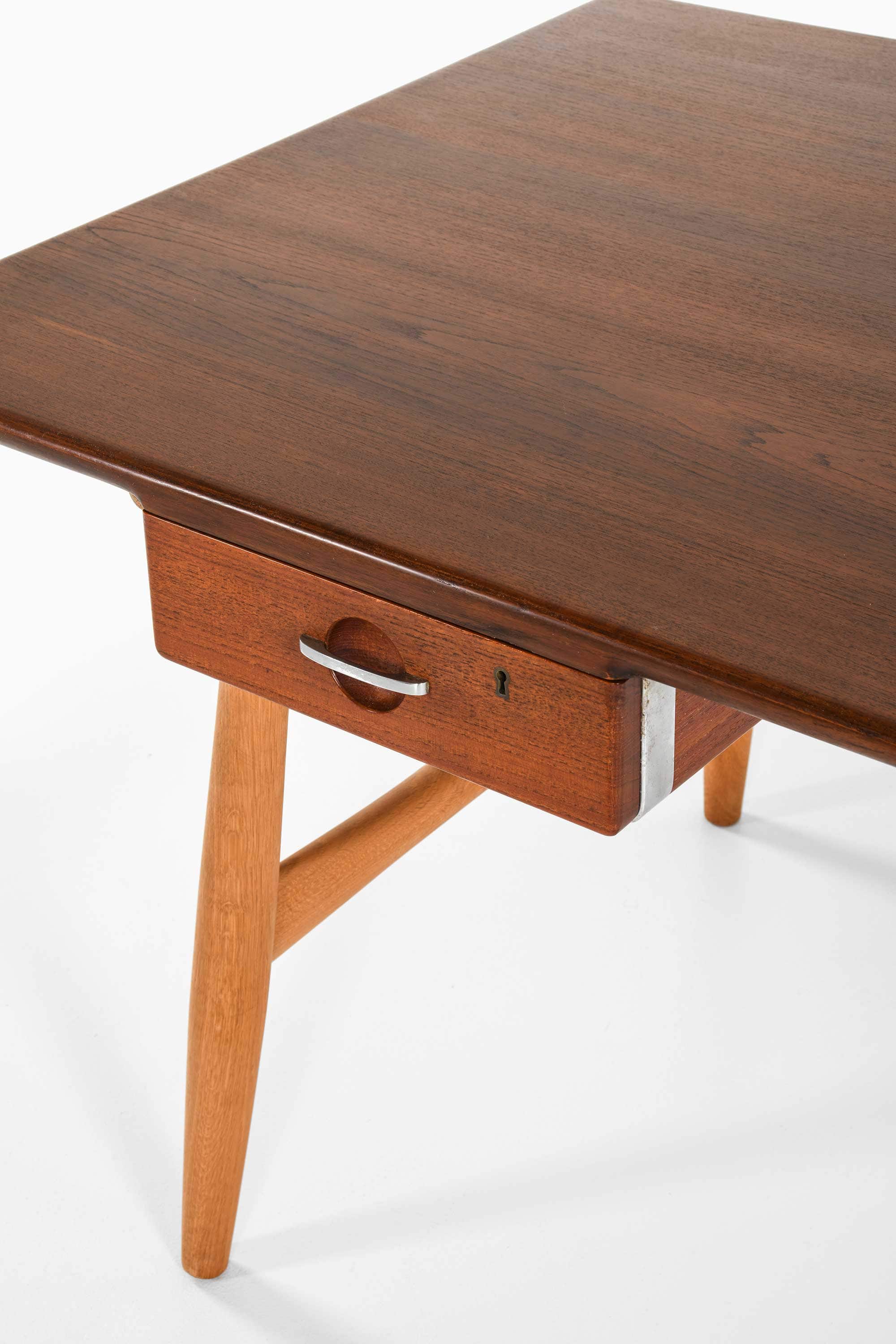
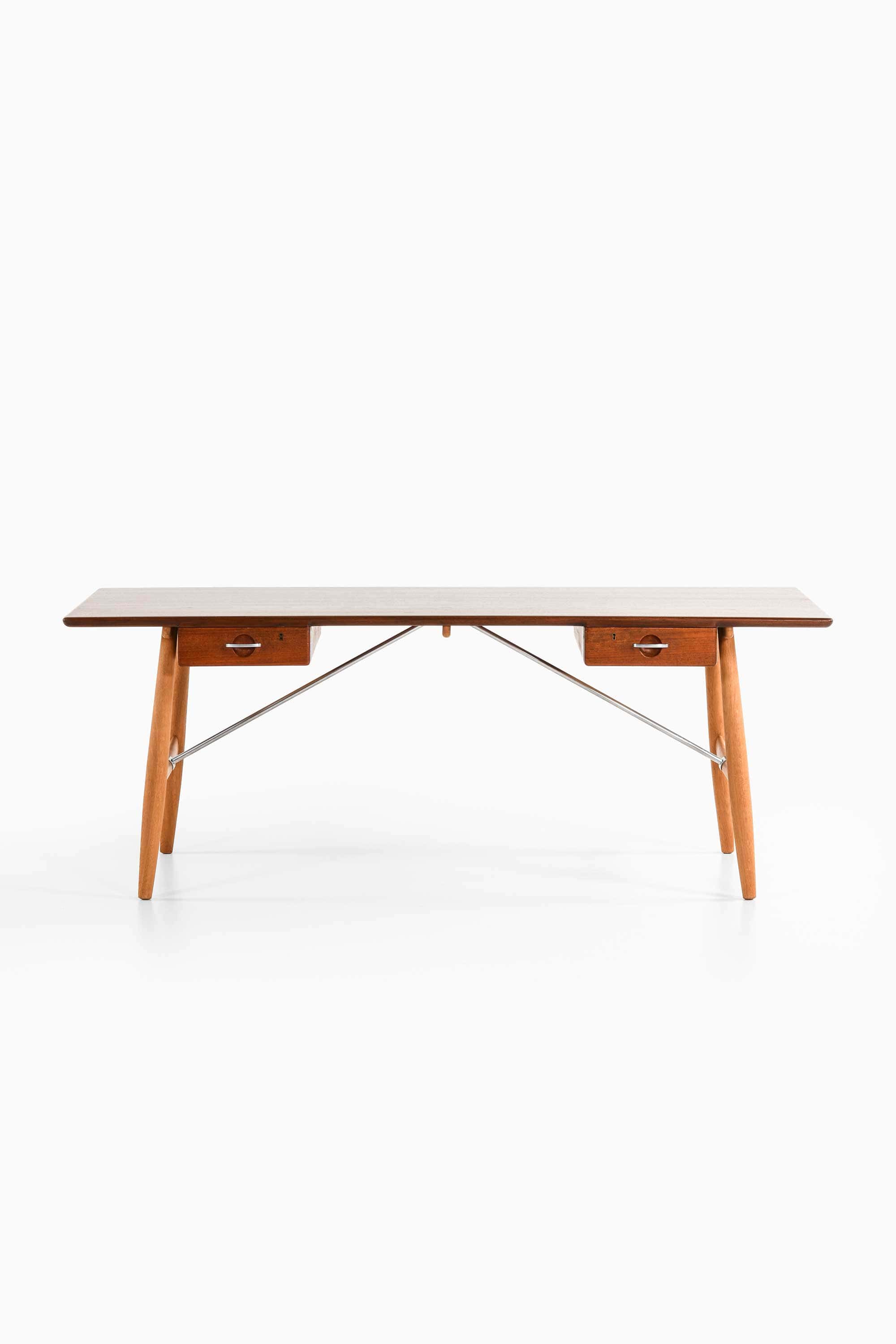
The architect’s desk demonstrates another aspect of Wegner’s design philosophy, combining practical function with refined material composition. The desk integrates a teak veneer tabletop with solid oak legs and slender steel tension rods that stabilize the structure.
The angled legs and intersecting steel supports create a dynamic yet disciplined form, reflecting the modernist vocabulary of the early 1950s. Two shallow drawers are suspended beneath the tabletop, their integrated circular pulls providing discreet storage while preserving the desk’s clean horizontal silhouette.
Conclusion
The collaboration between Hans J. Wegner and Johannes Hansen exemplifies the unique conditions that shaped Danish modern design. Rather than separating design from production, the cabinetmaker’s workshop formed an integral part of the creative process. Within Hansen’s Copenhagen workshop, Wegner’s ideas could be explored, tested, and refined through exceptional craftsmanship.
All of the pieces presented here were produced by Johannes Hansen, whose workshop played a central role in realizing Wegner’s designs. Through this close collaboration, concepts of form, structure, and material were translated into furniture of remarkable clarity and precision.
Together, designer and cabinetmaker created objects that balance structural logic, material honesty, and careful proportion – qualities that helped define one of the most influential movements in twentieth-century furniture design.