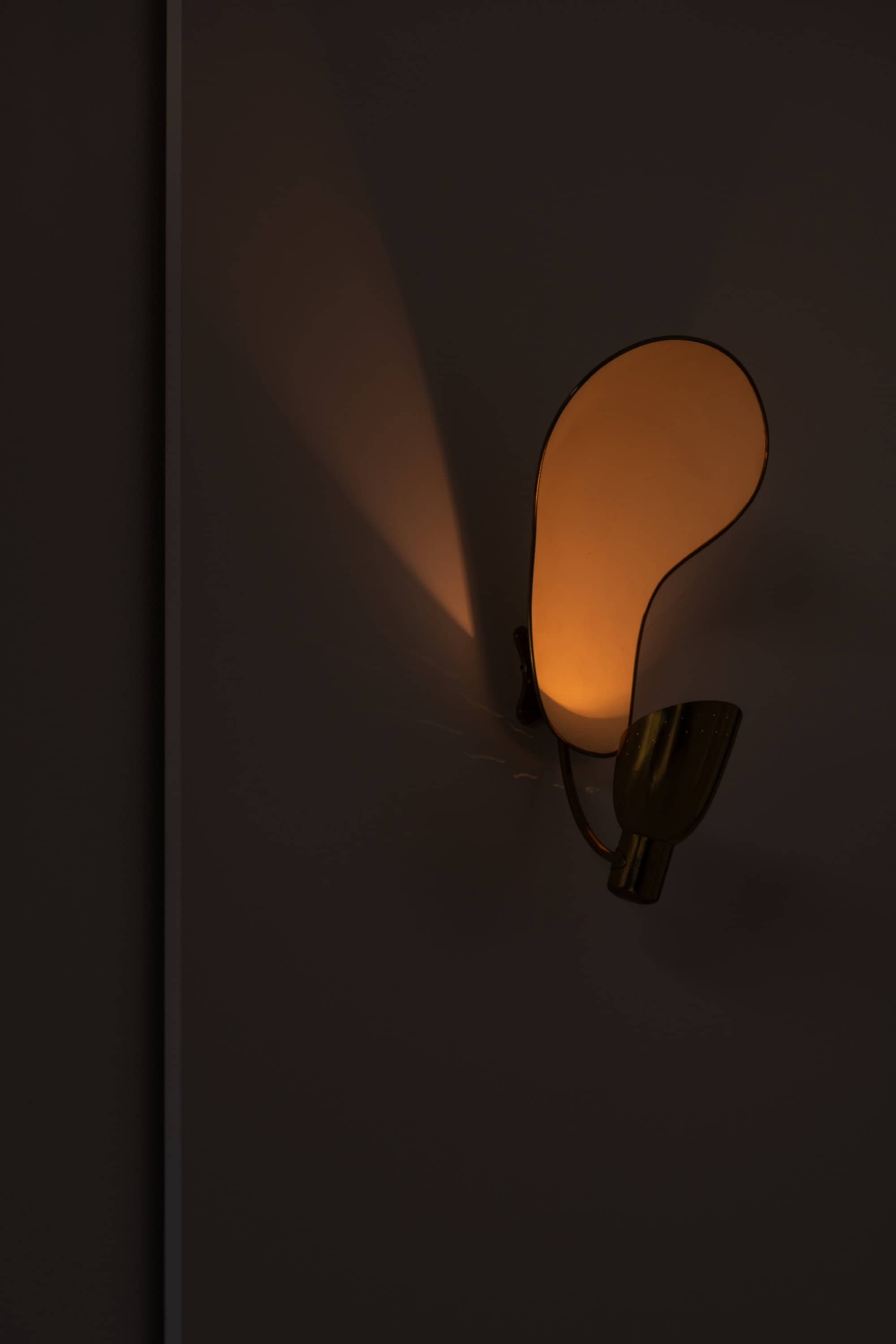
Carl-Axel Acking wall lamps
A rare model 5029 wall lamp designed by Swedish architect and designer Carl-Axel Acking for Bröderna Malmströms Metallvarufabrik in Malmö. The model is documented in a company catalogue from 1940, establishing the design at the beginning of the 1940s.
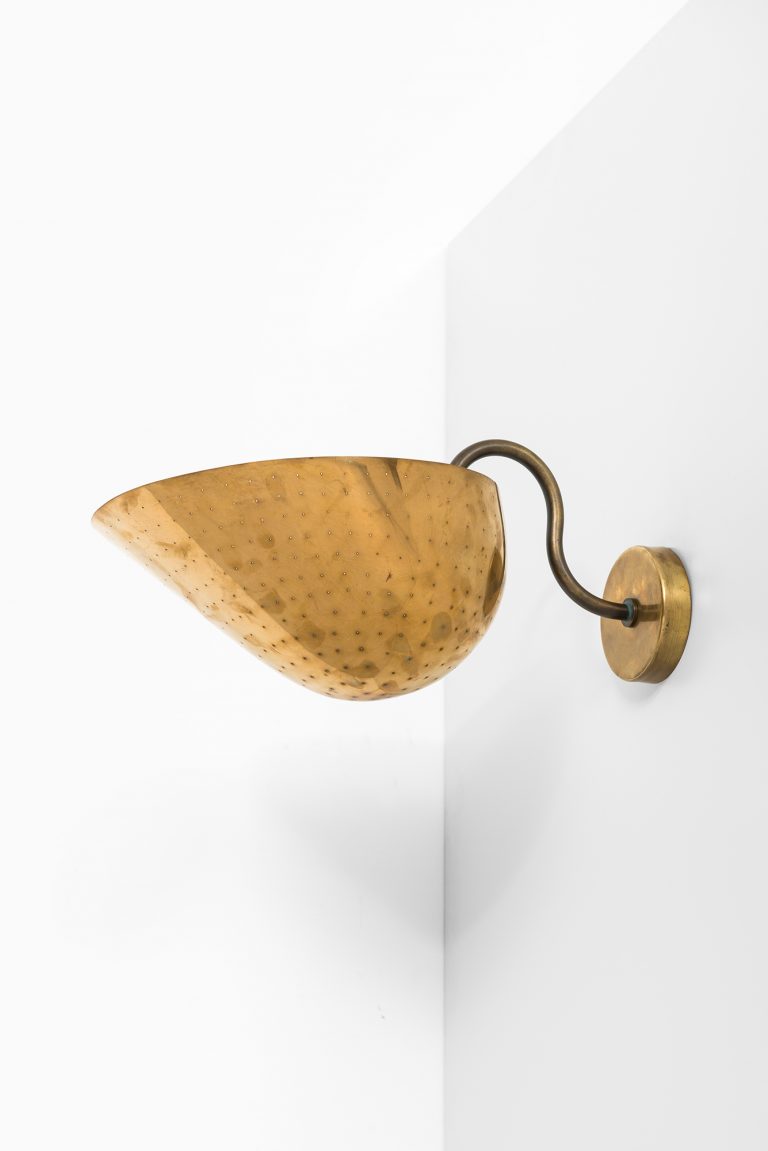
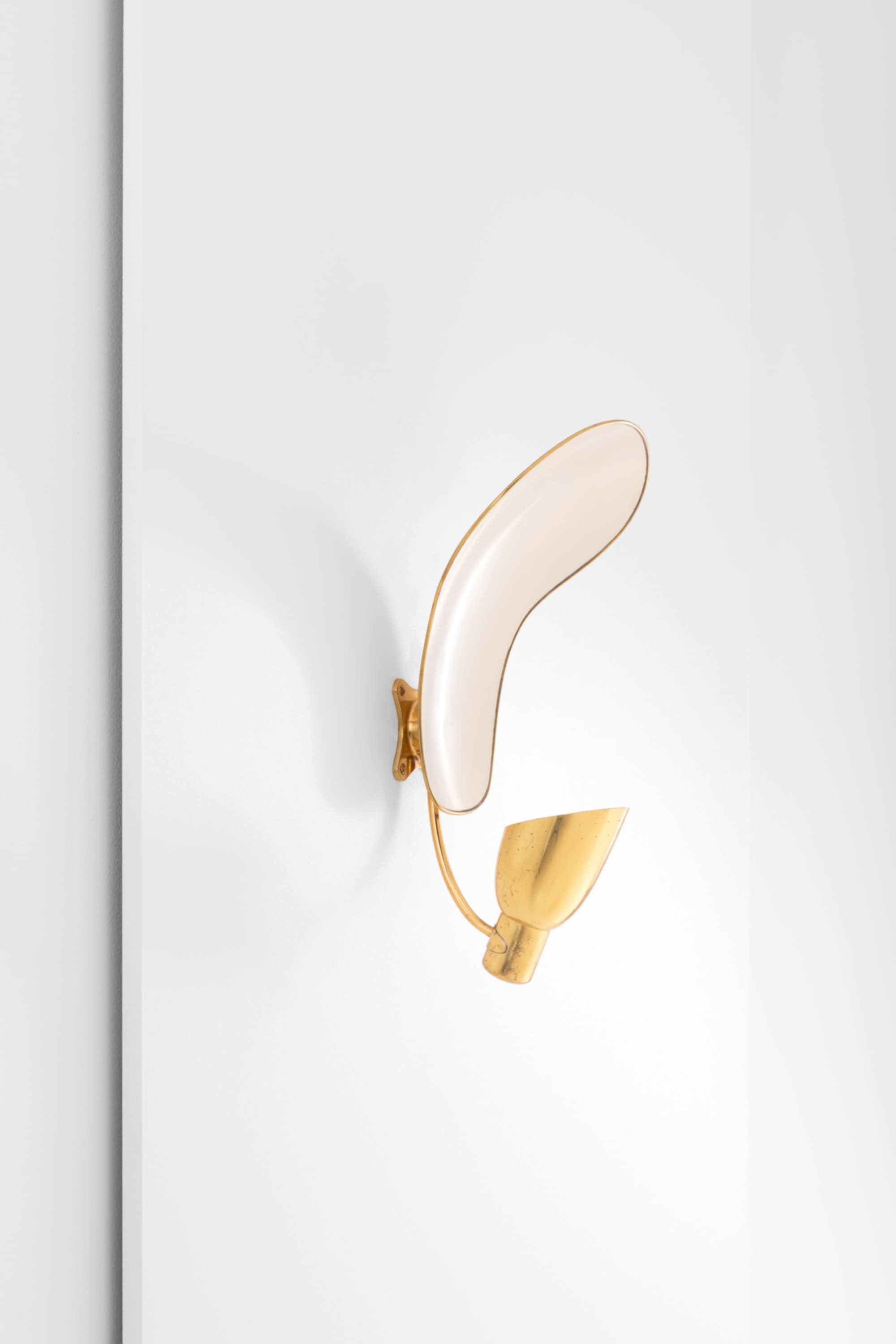
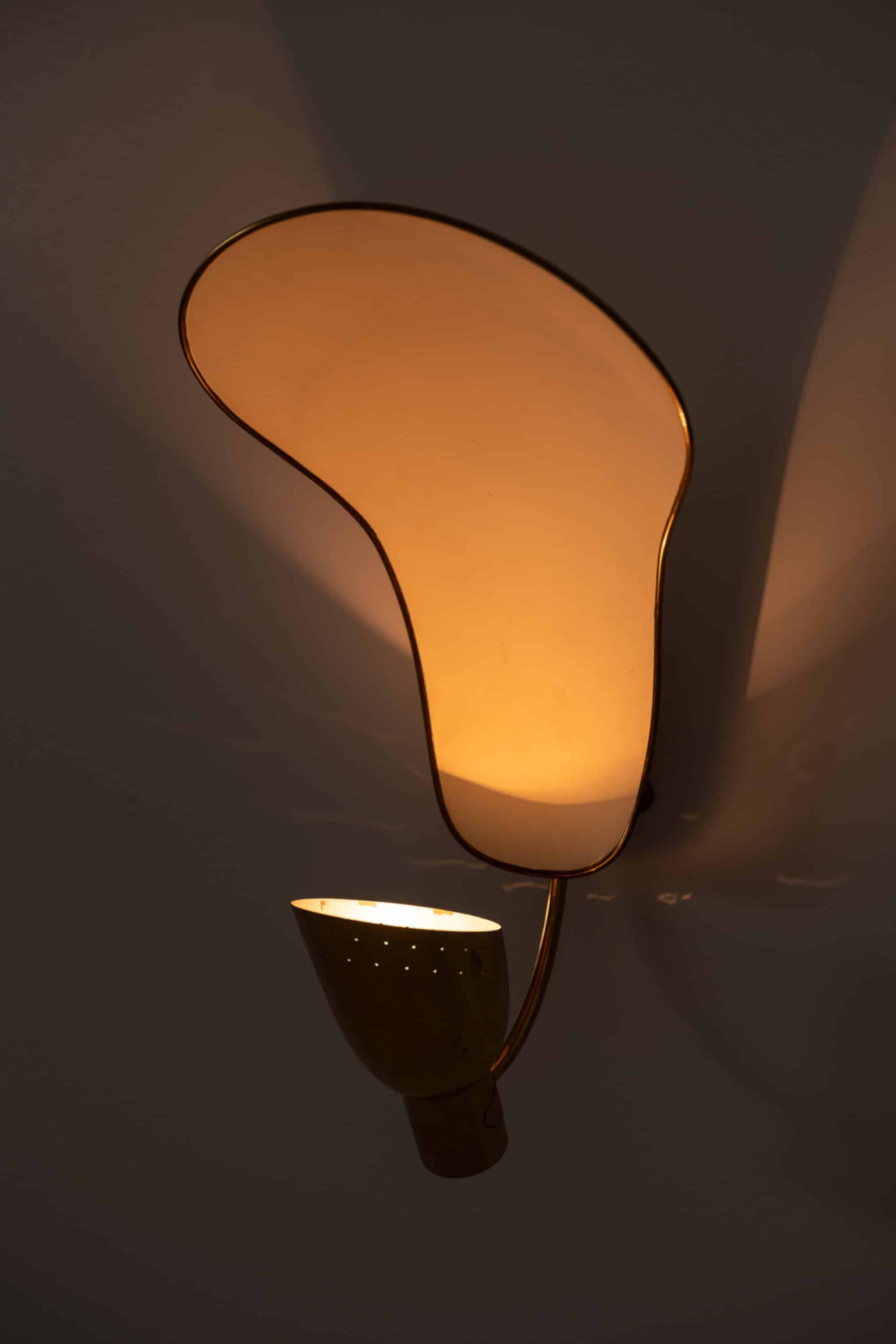
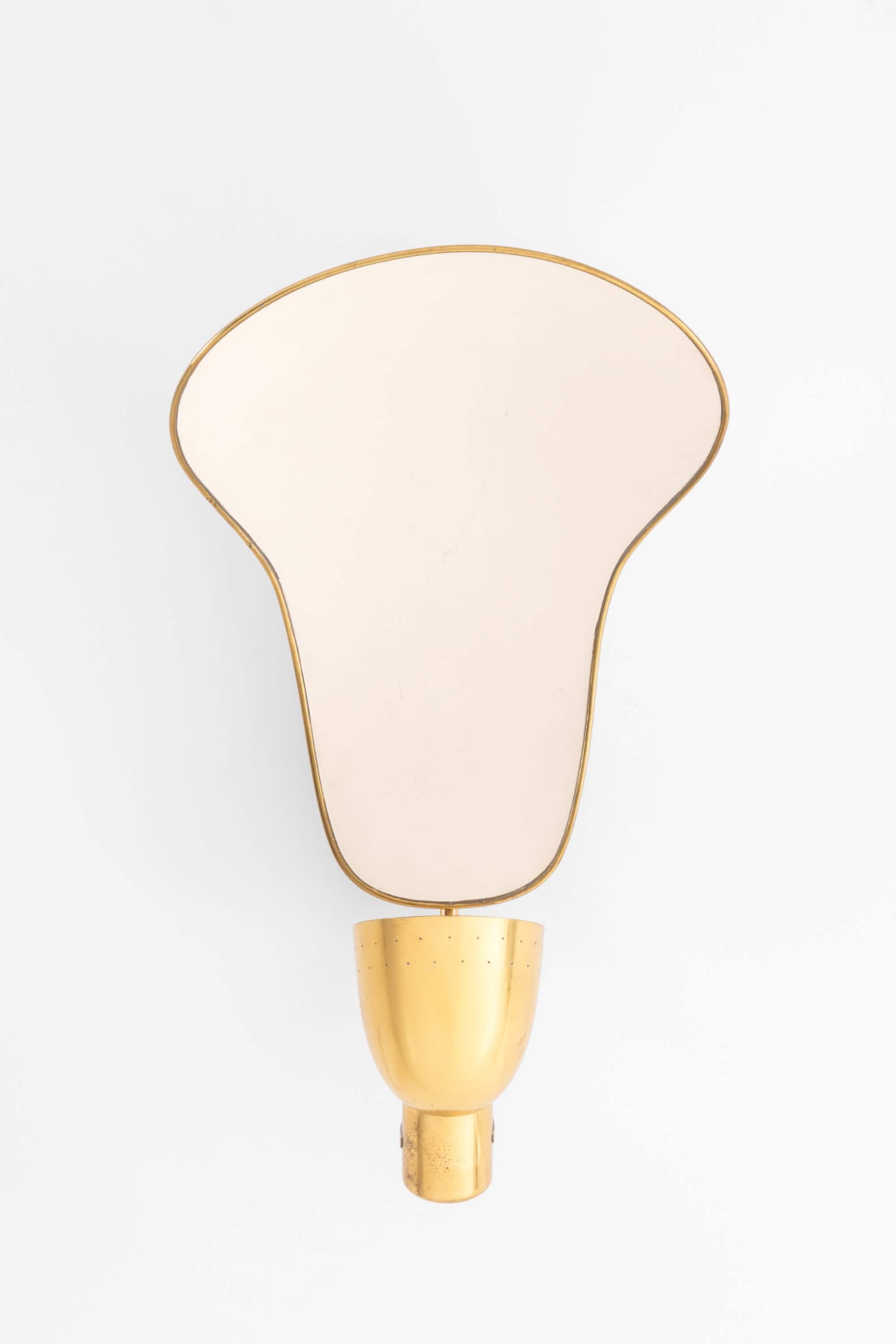
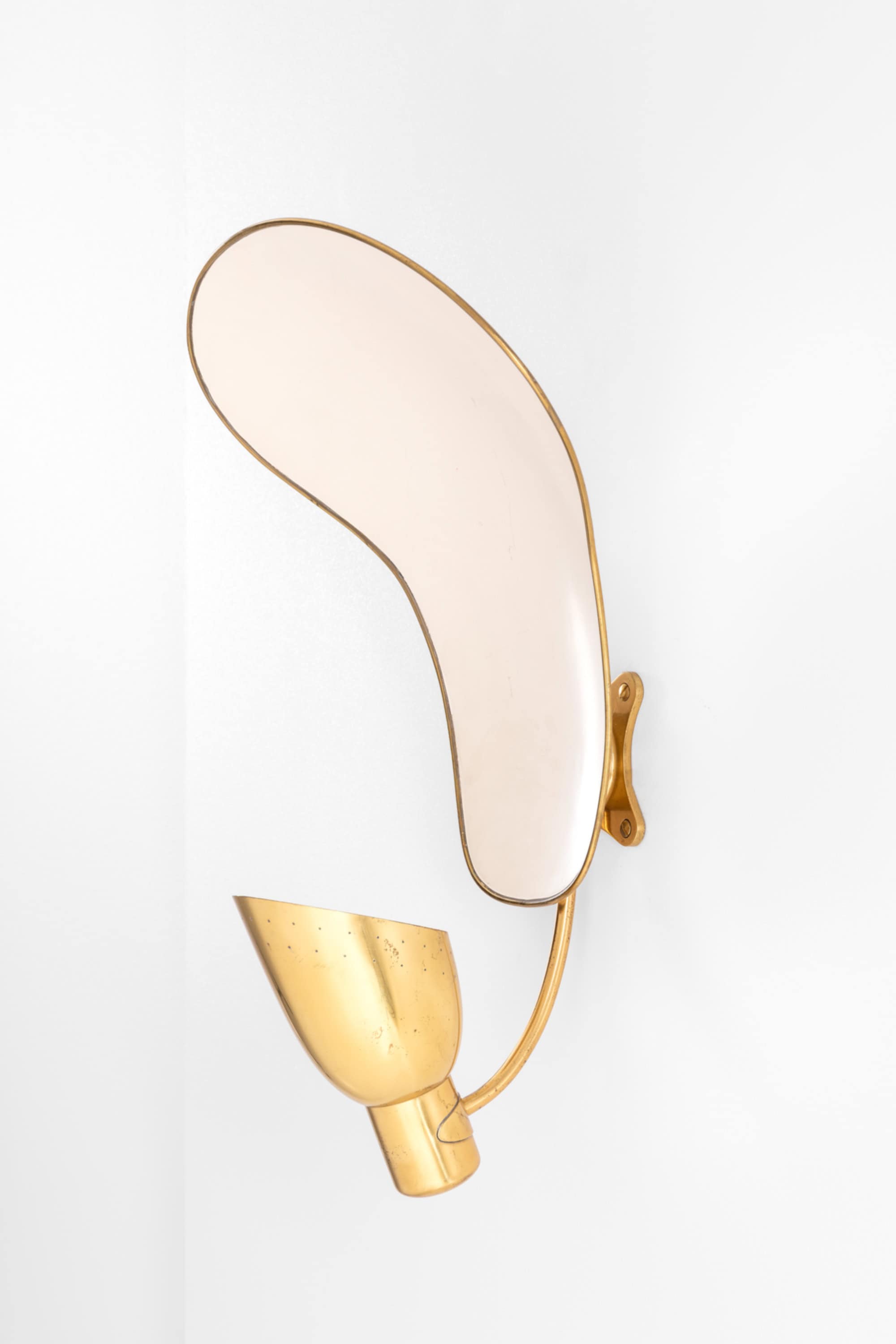
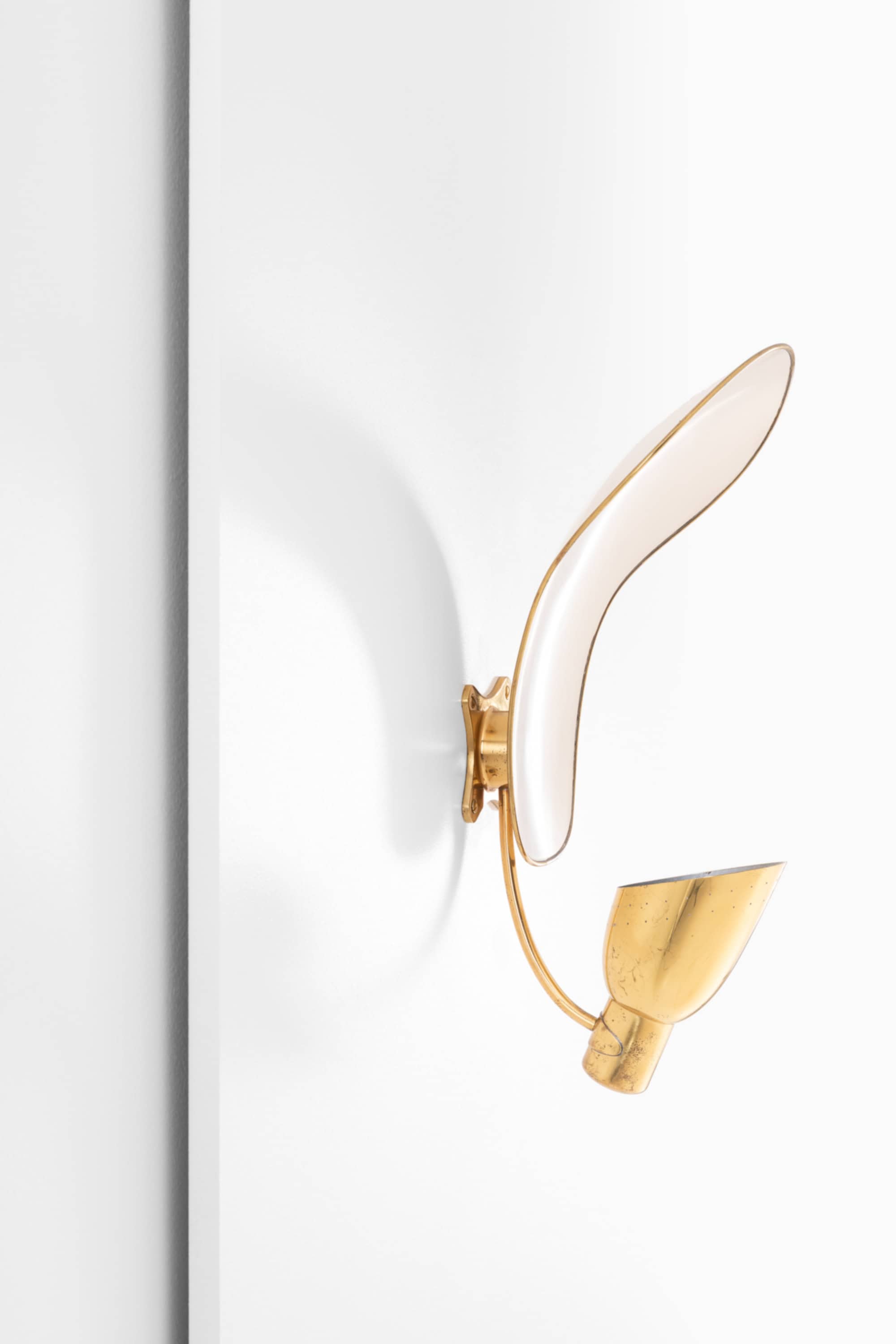
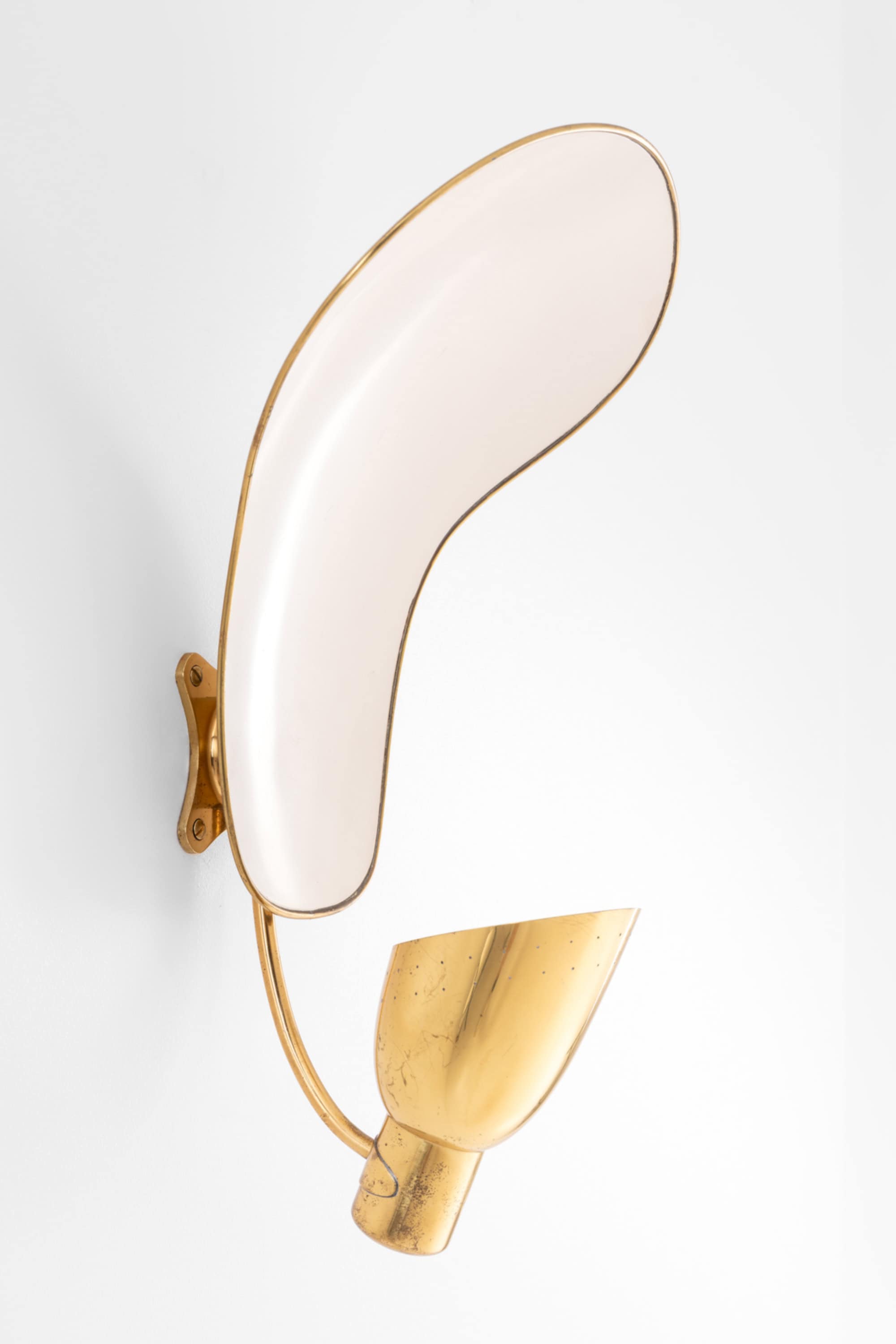
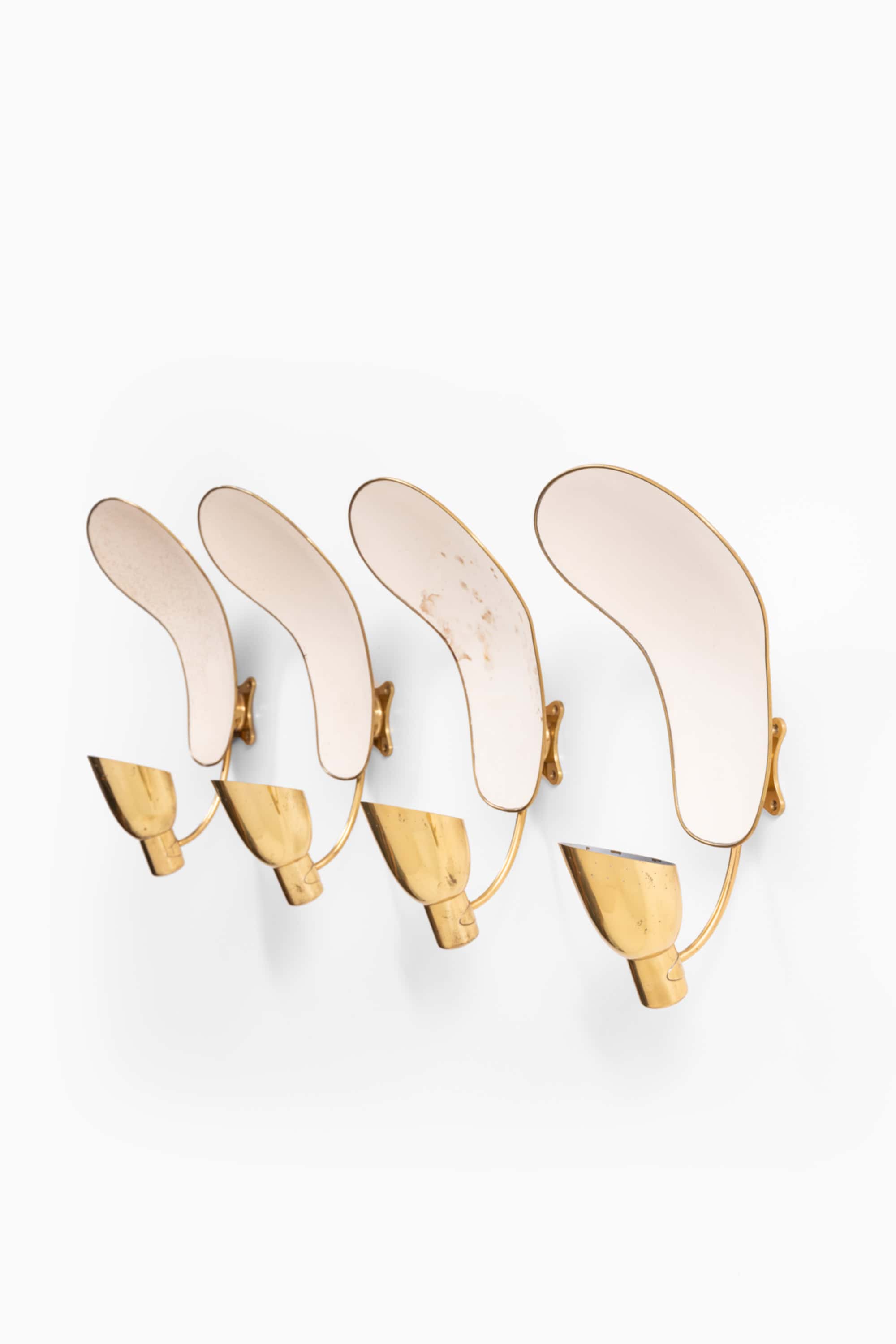
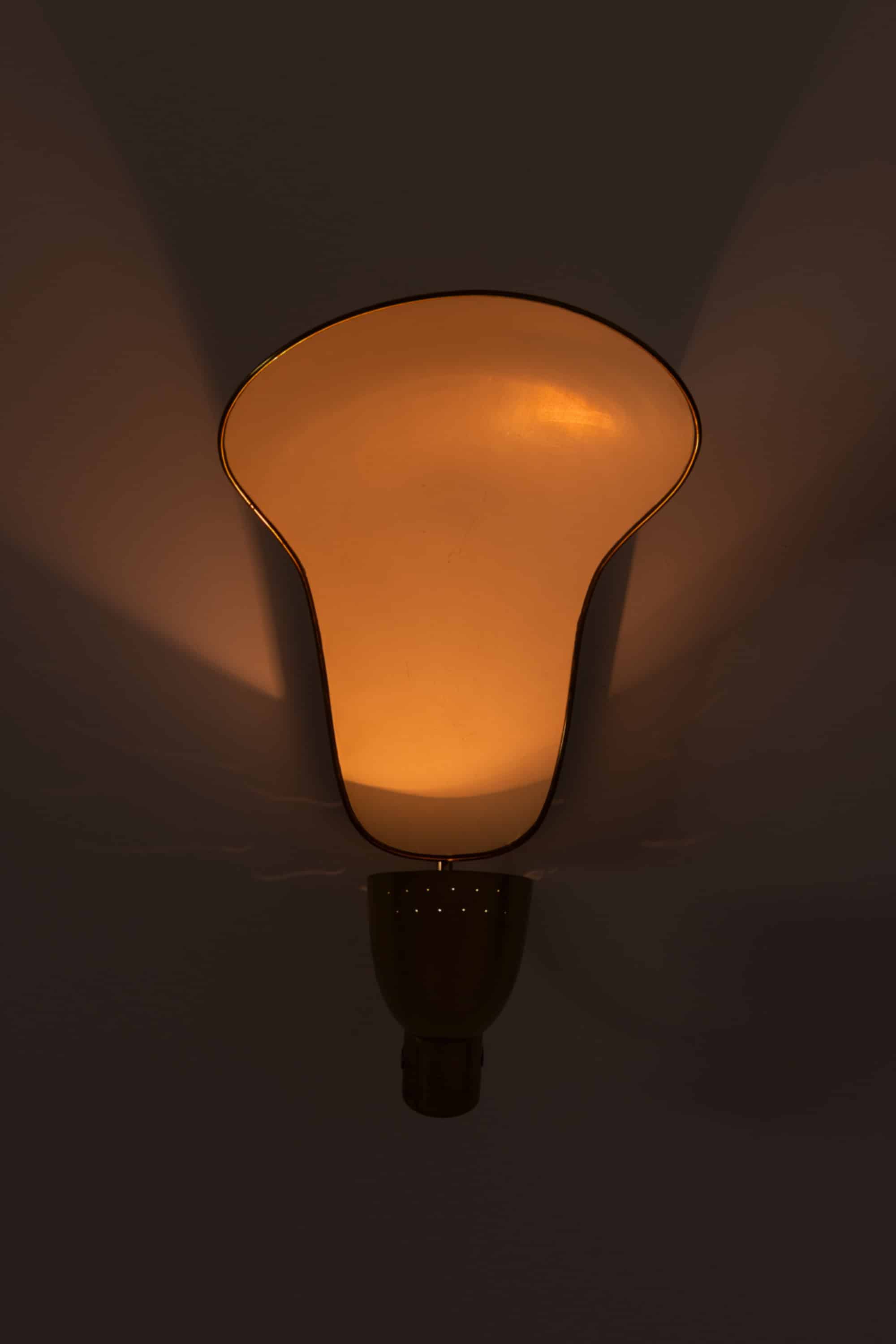
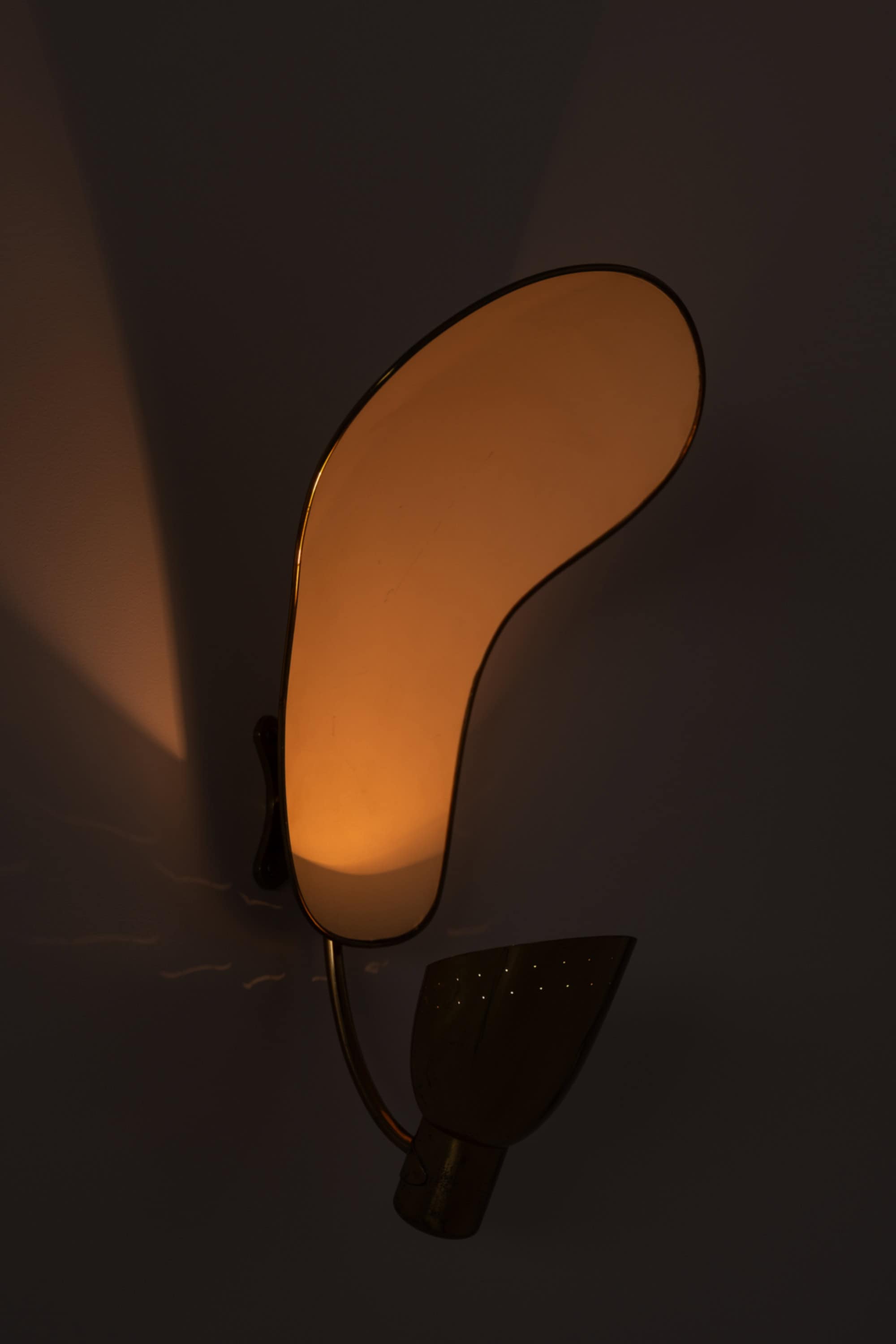
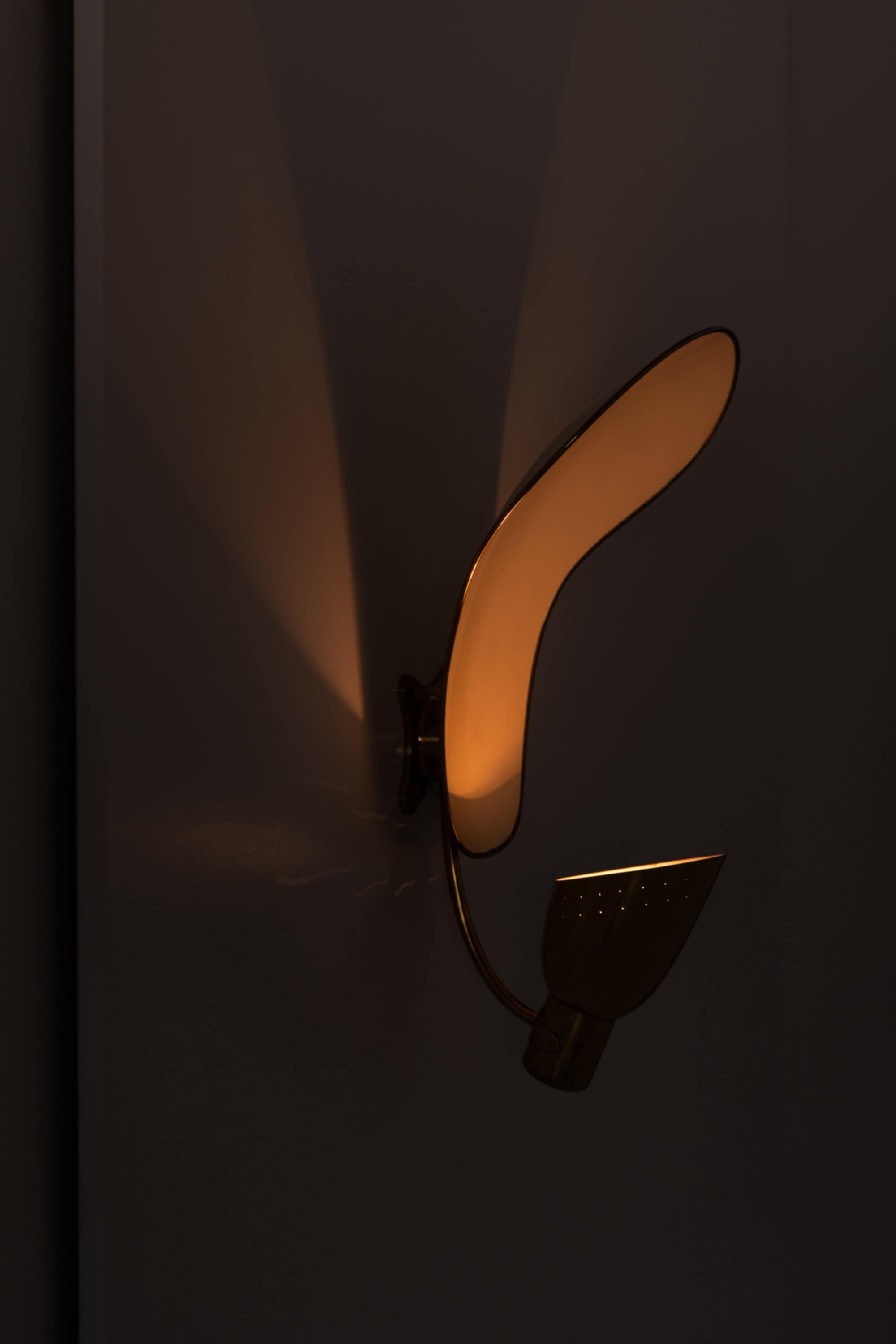
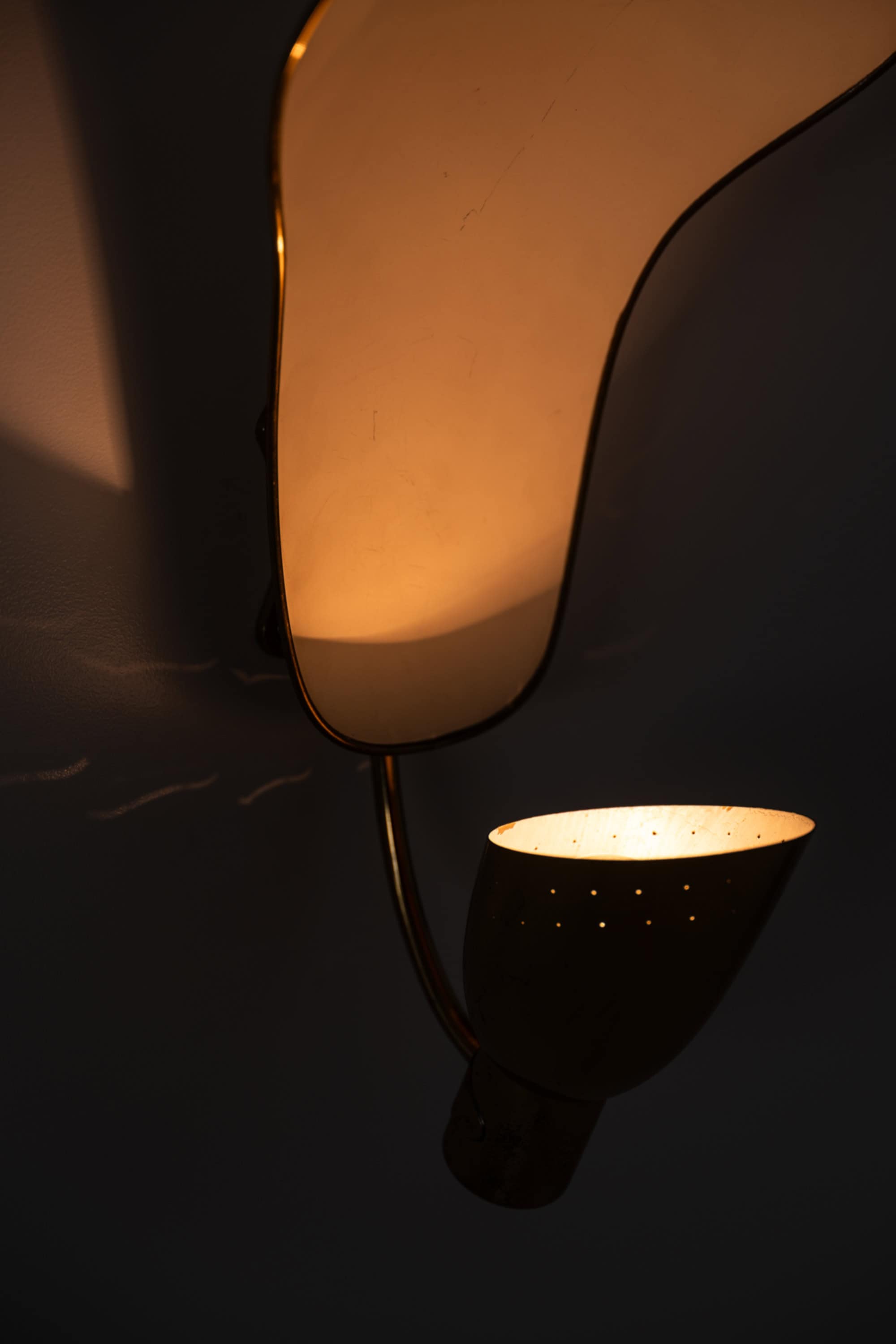
The construction combines brass with an original white lacquered reflector. Its composition is distinctly asymmetric and organic: a broad, softly curved reflector narrows toward its lower section and is enclosed by a fine brass perimeter. Below it, a curved tubular brass arm carries a separate upward-facing, cup-shaped light housing. Small perforations around the upper part of this shade allow points of light to escape laterally, while the principal light is directed upward onto the large reflector. The reflector consequently functions as an indirect lighting surface, diffusing the light and producing a warm, comparatively soft illumination rather than exposing the light source directly.
This separation of light source and reflector gives model 5029 an unusually sculptural profile. From the front, the broad reflector and compact brass shade form an almost abstract arrangement of contrasting volumes; viewed from the side, the shallow depth of the reflector and projecting curved arm become more apparent. The combination of polished golden brass, white lacquer and an irregular biomorphic outline places the lamp within the more expressive side of Swedish Modern, where functional construction was increasingly combined with softer, naturalistic forms. Acking himself developed from the Swedish functionalist movement toward the more accommodating language that became associated with Swedish Modern.
Carl-Axel Acking (1910–2001) was an important Swedish architect, interior architect and industrial designer. He studied furniture and interior design in Stockholm and subsequently architecture at KTH, and during the 1930s worked with Gunnar Asplund, including on the interiors of Gothenburg City Hall and the Woodland Crematorium. Acking participated in the Paris World Exhibition of 1937 and achieved further international recognition through the 1939 New York World’s Fair, where lighting formed part of his contribution. His practice encompassed architecture, furniture, lighting and complete interiors, and he later became professor of architecture and design at Lund University from 1964 to 1976.
Bröderna Malmströms Metallvarufabrik in Malmö was among the Swedish manufacturers that produced Acking’s lighting designs. His association with the company was significant enough to include several lighting series, while other Acking designs were manufactured by firms including Svenska Möbelfabrikerna in Bodafors and Kooperativa Förbundet.
The lamp has a particularly relevant institutional provenance from Ekshärads Folkets Hus in Värmland, a building completed in 1957. The use of Acking’s lighting in a Folkets Hus environment is characteristic of the broader Swedish mid-century emphasis on integrating modern architecture, furniture and purpose-designed lighting within public and communal interiors.
The present example remains in good vintage condition. The brass has developed an uneven natural patina with oxidation, small spots, scratches and surface wear, particularly around the lower light housing and stem. The original lacquered reflector displays scratches, marks and localized discoloration consistent with age and prolonged institutional use. These traces remain visible when illuminated and form part of the object’s original surface history. The reflectors can be repainted if a cleaner appearance is preferred, although retaining the existing lacquer preserves more of the lamp’s historical material.
Dimensions are 50 cm high × 29.5 cm wide × 21 cm deep, corresponding to approximately 19.7 × 11.6 × 8.3 inches.
Provenance
Ekshärads Folkets Hus, Värmland, built in 1957.
Literature
The model depicted in the 1940 catalog.
Dimensions (cm) | W: 29.5 / D: 21 / H: 50 |
| Producer | Bröderna Malmströms Metallvarufabrik |
| Decade | 1940s |
| Country | Sweden |
| Style | Mid Century, Scandinavian Modern, Swedish Modern |
| Material | Brass, Lacquer |
| Designed in | 1940s |
| Item Number | 250786 |
Carl-Axel Acking
Carl‑Axel Acking was a Swedish architect, interior architect, product designer, educator, and author. He studied at Konstfack in Stockholm (1931–34) and at KTH Royal Institute of Technology (1935–39). Early in his career he worked as assista...
Read more