
Emil Cederlund chair
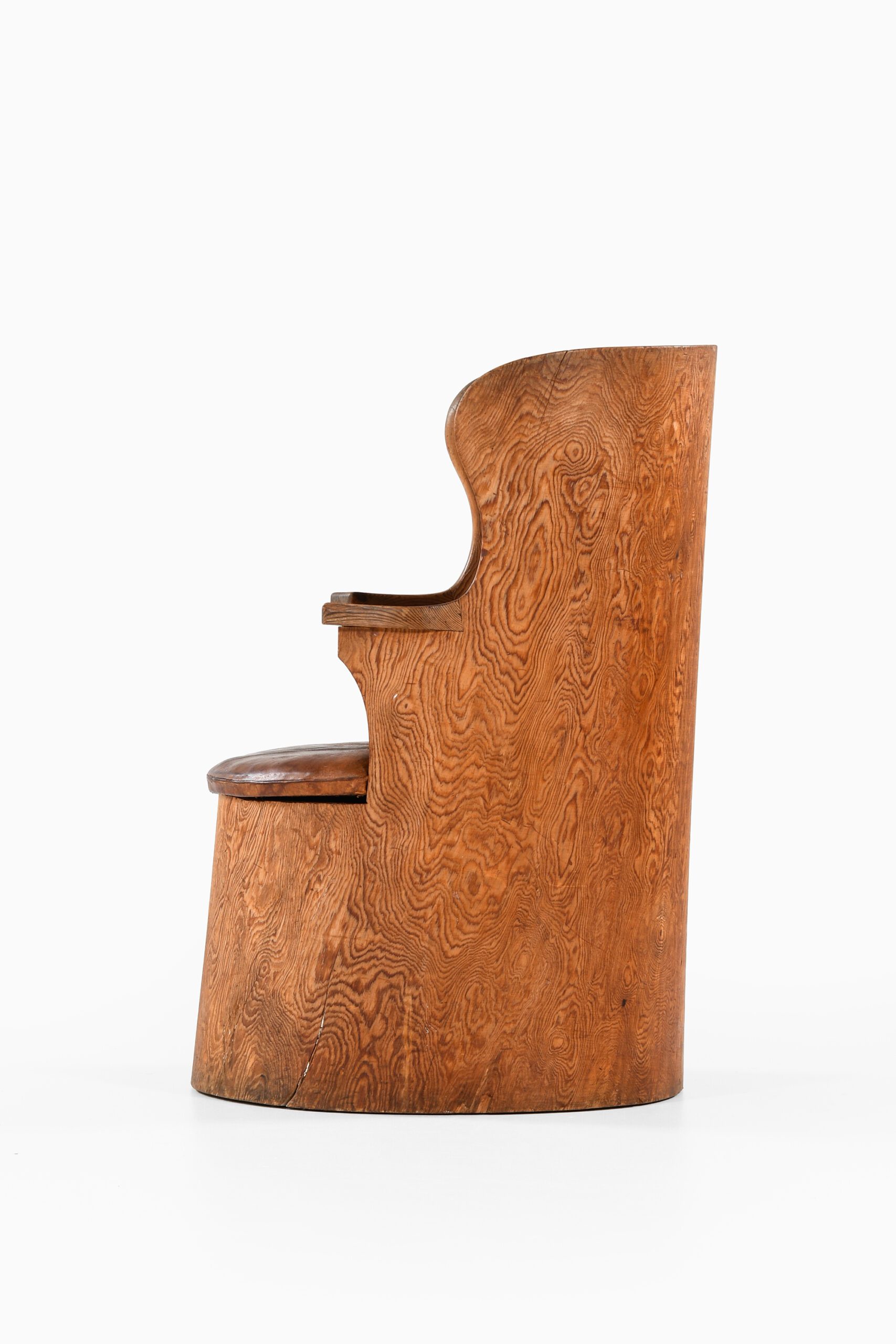
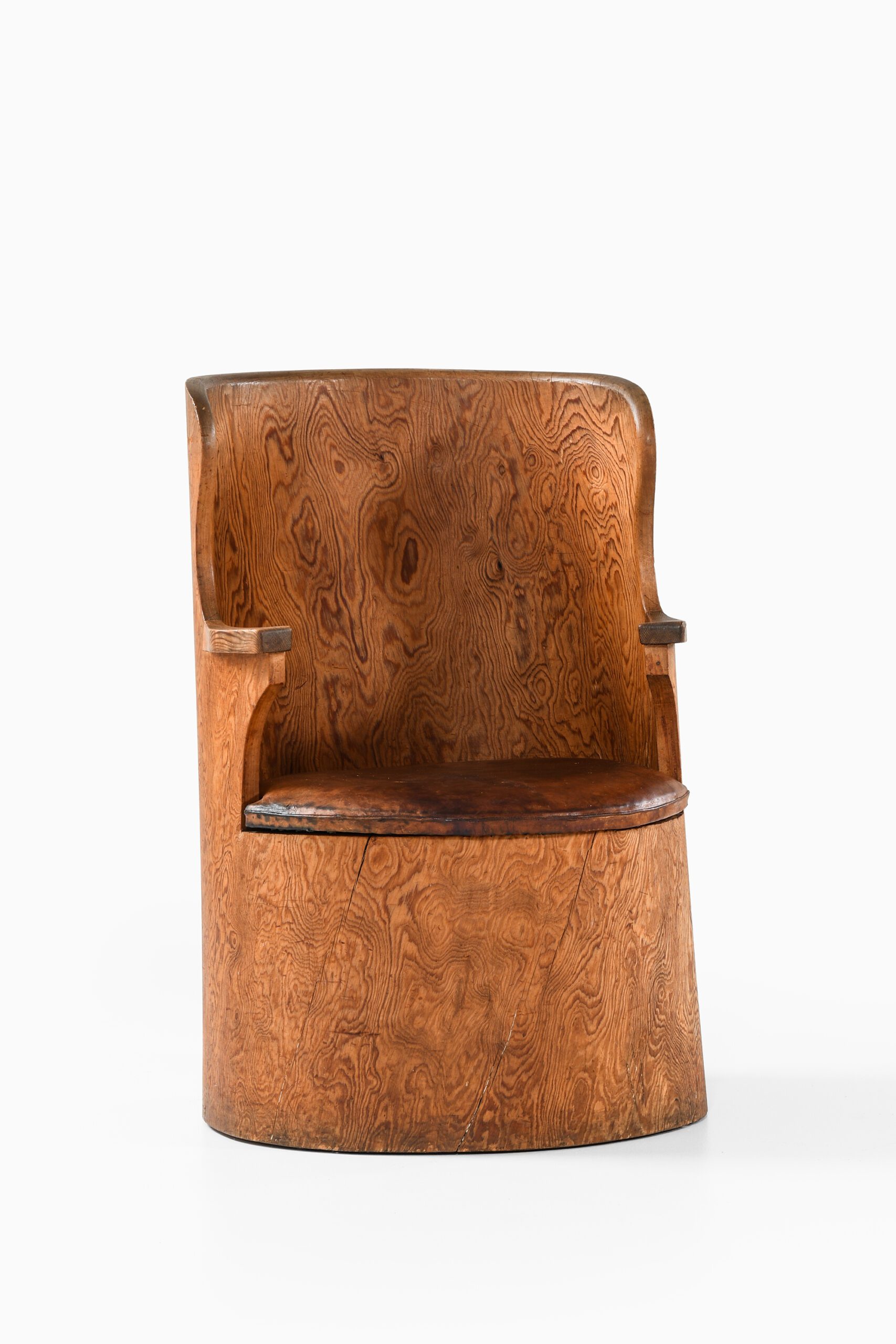
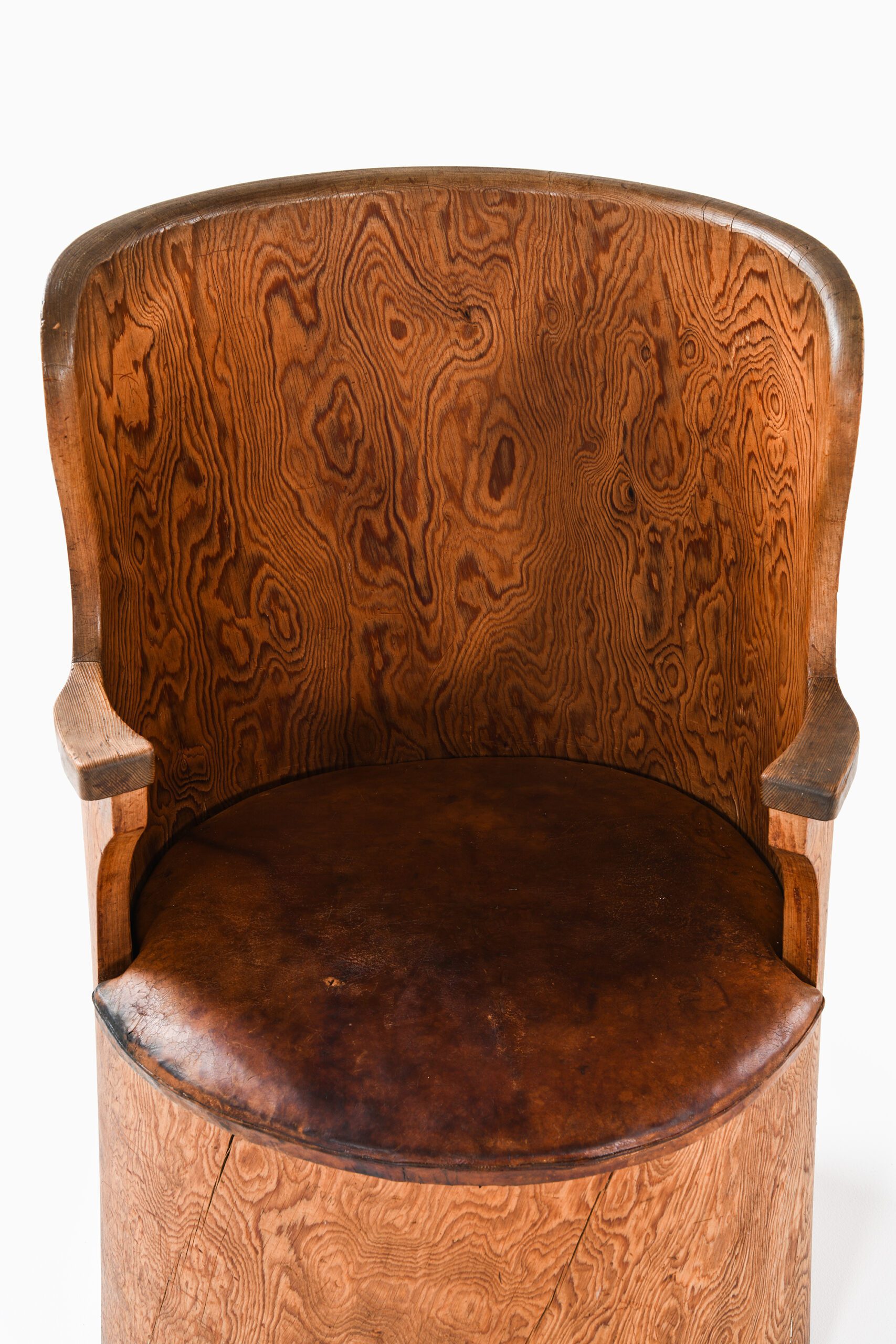
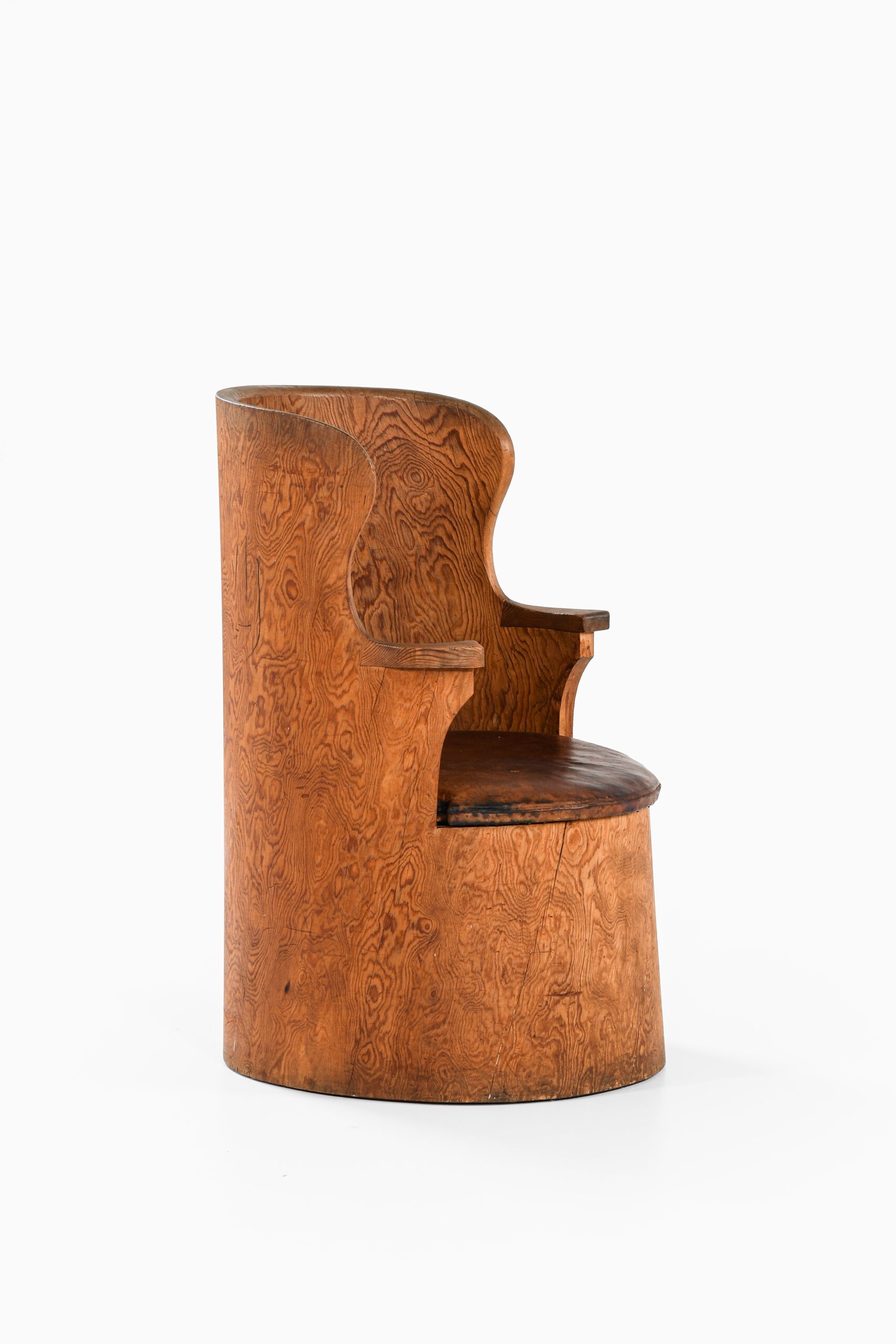
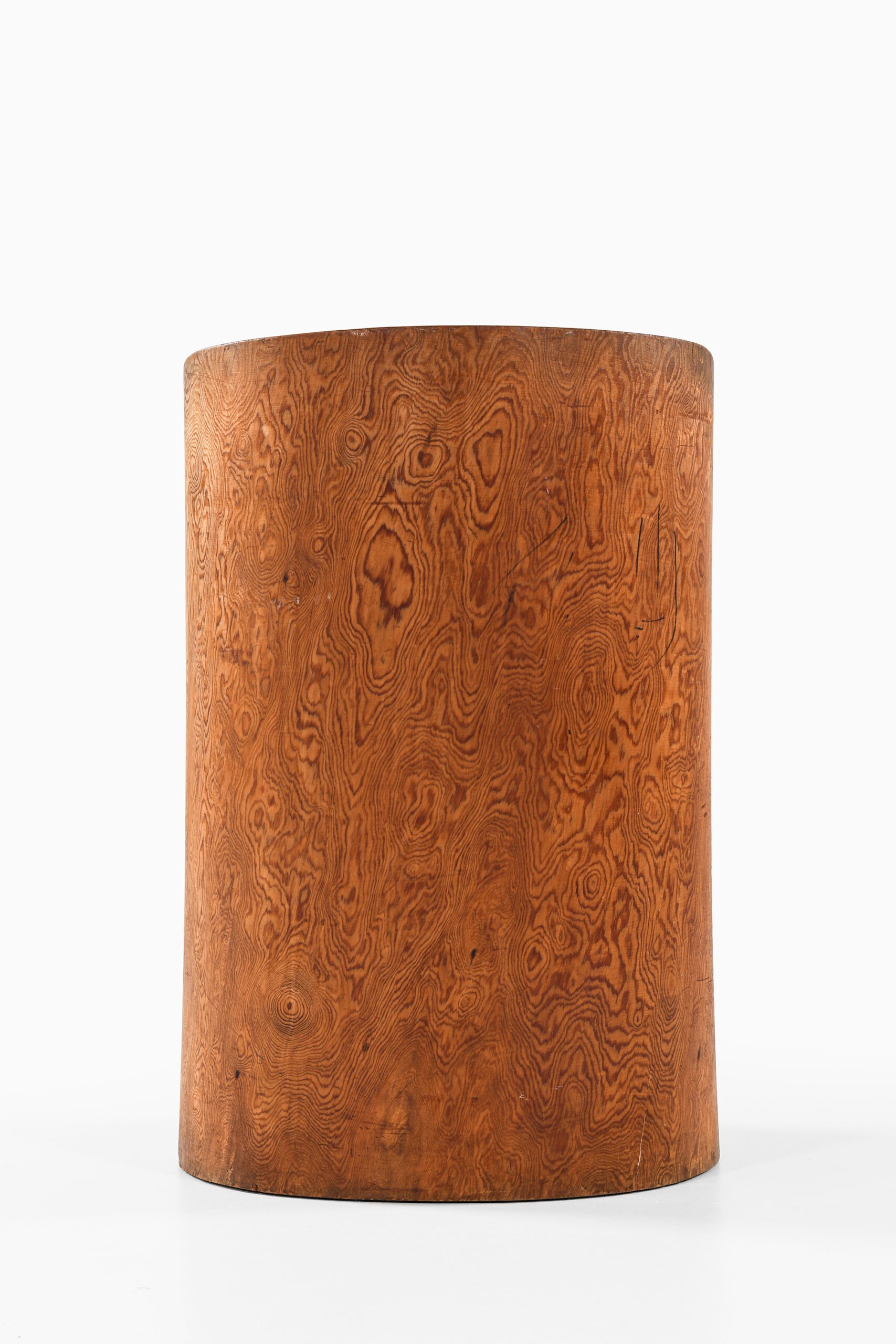
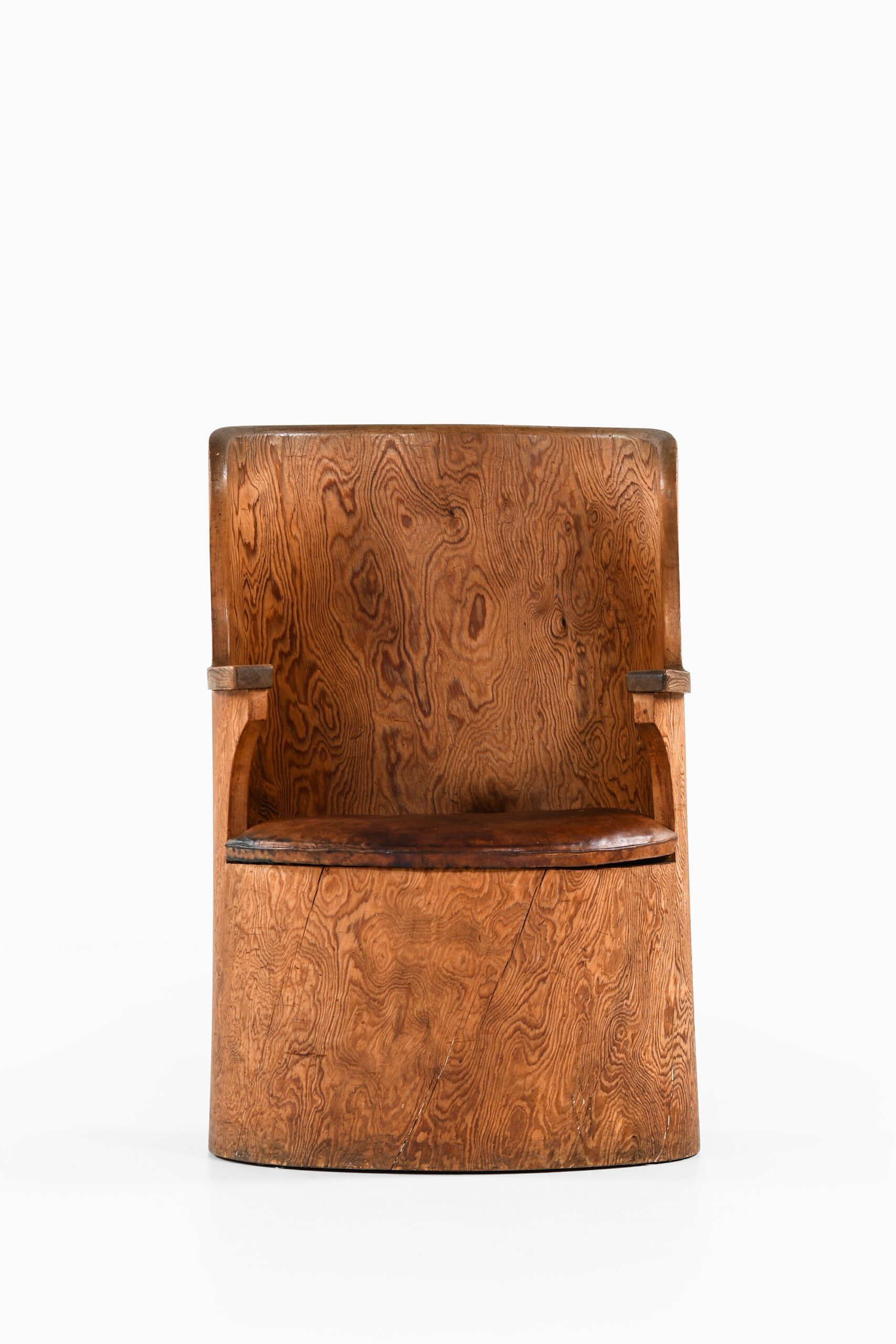
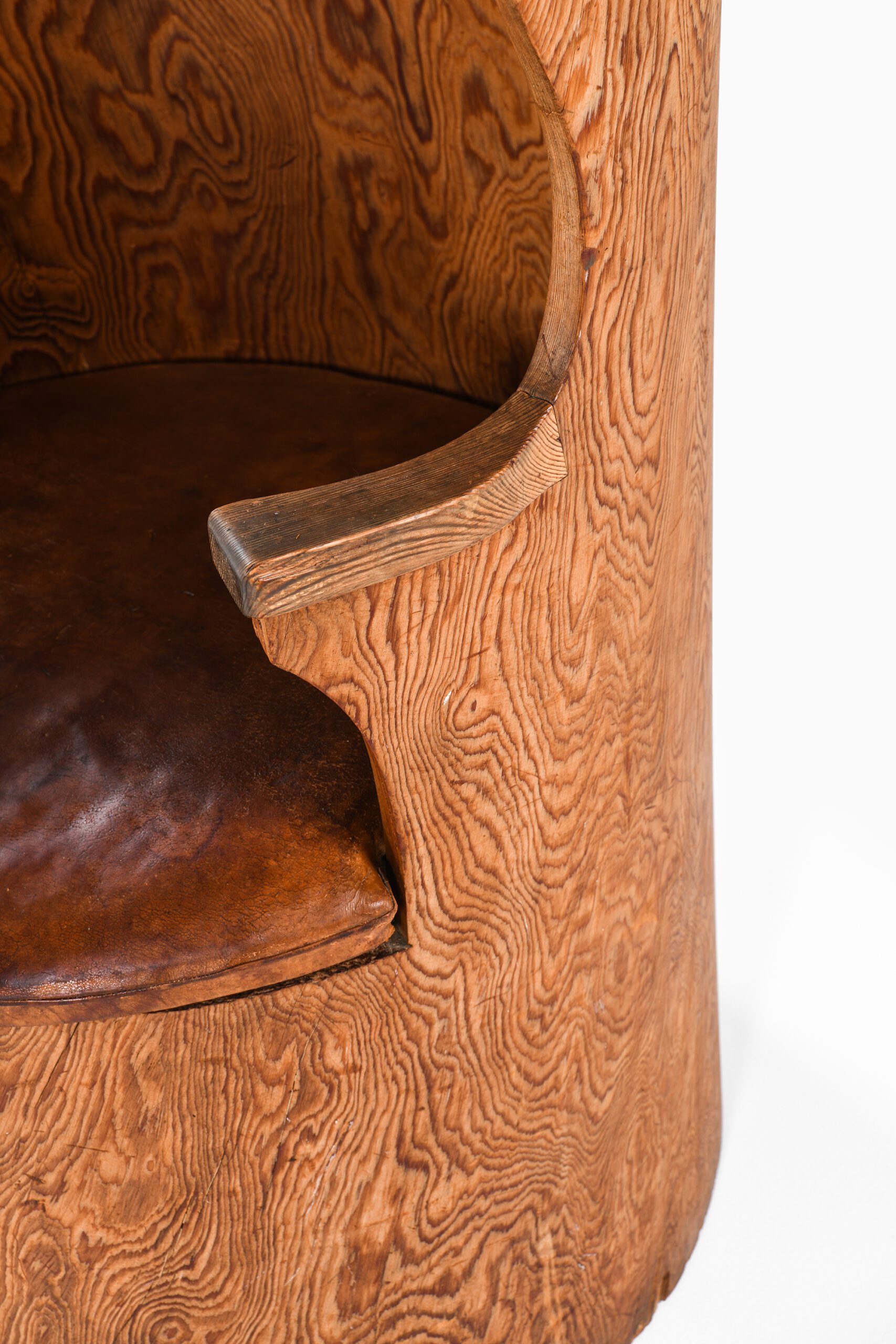
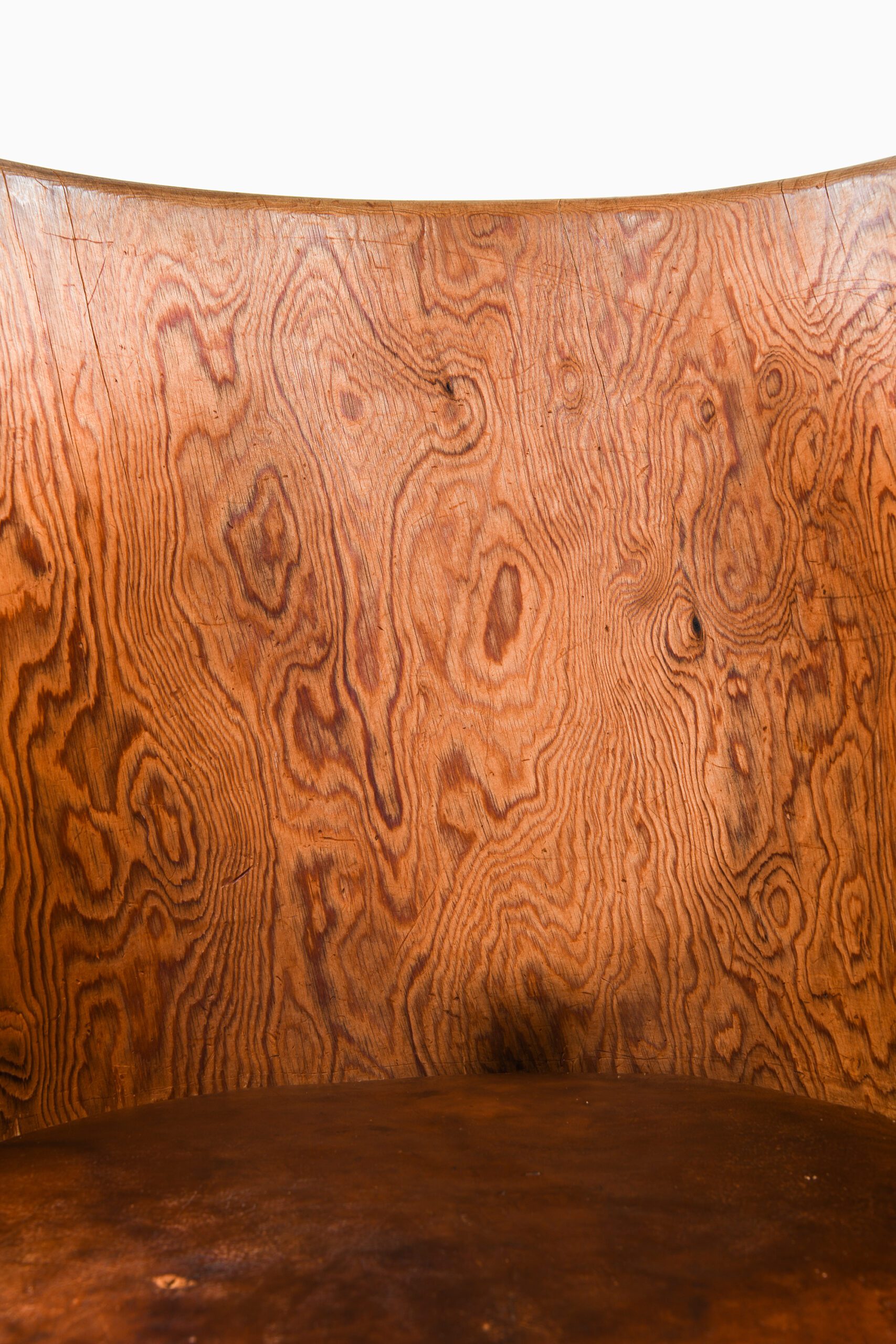
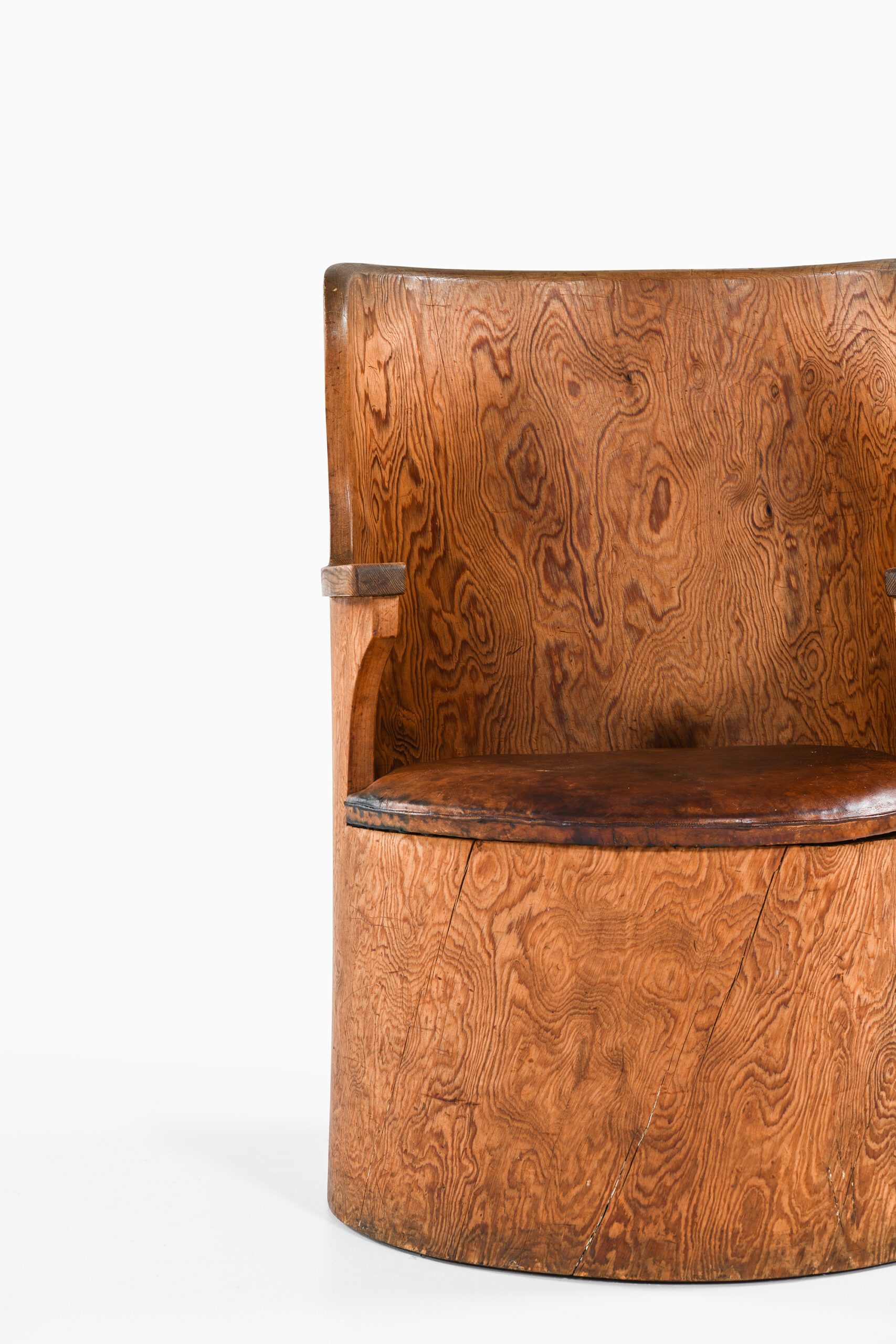
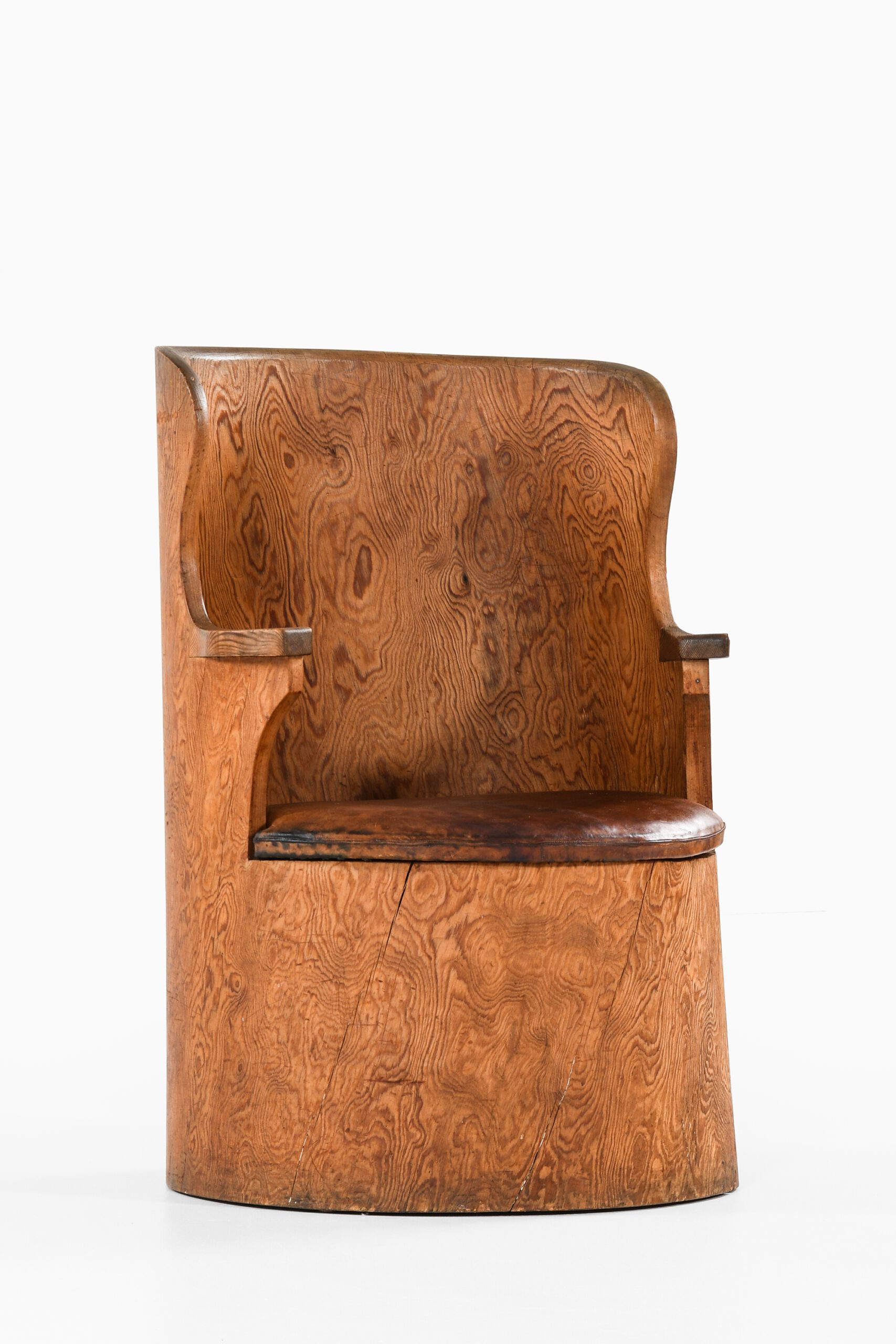
This sculptural stump chair, carved from a single solid pine trunk by Emil Cederlund in Mora, Sweden during the early 1900s, presents a powerful union of material integrity and functional form. The chair’s exterior remains a smooth cylindrical profile, its surface patinated to a warm honey tone by decades of exposure and handling. Within this outer shell, Cederlund excavated a seating cavity, carefully shaping its curved walls to cradle the sitter. The high, enveloping sides sweep upward into a broad, rounded backrest, providing both a sense of enclosure and a commanding presence in any room.
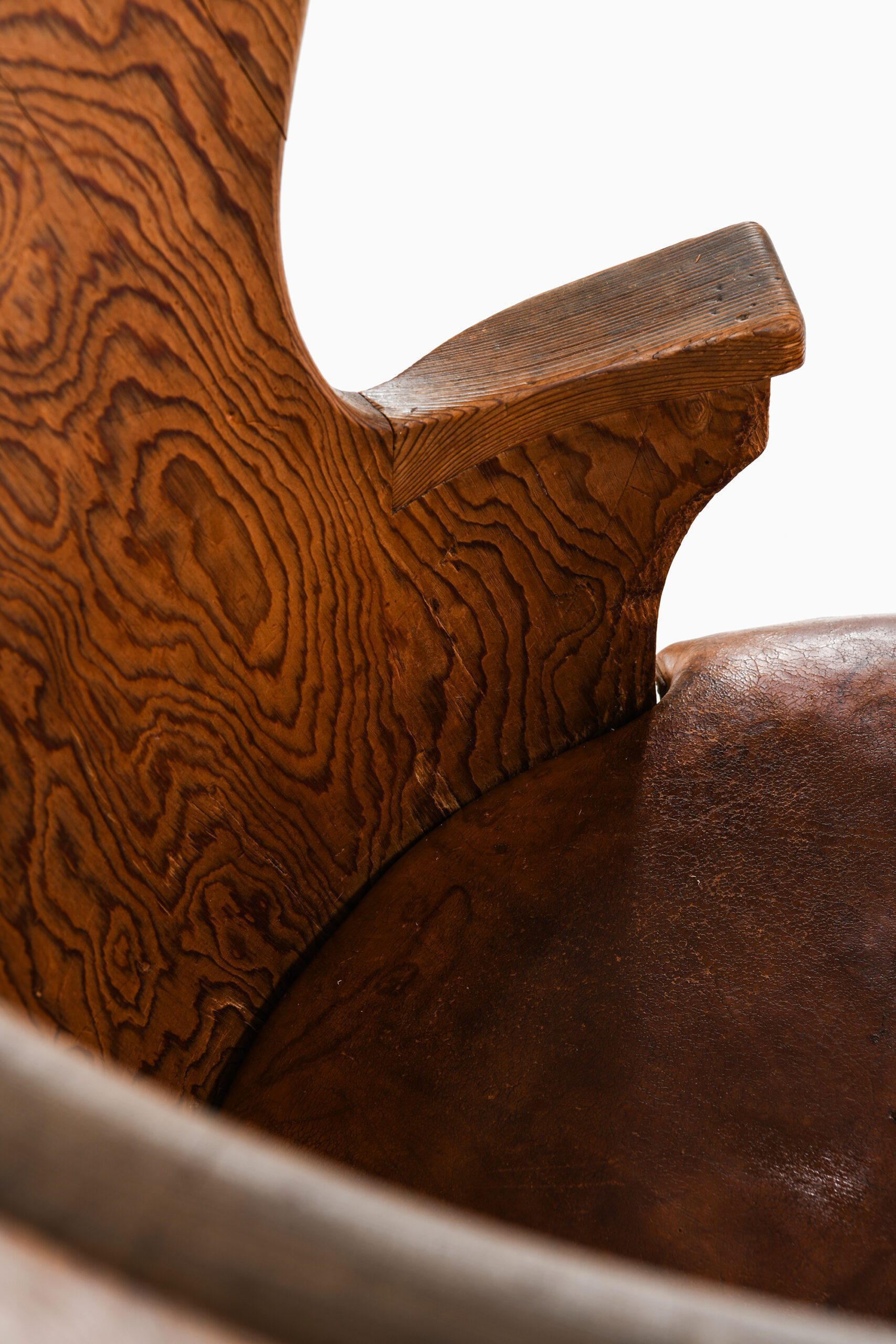
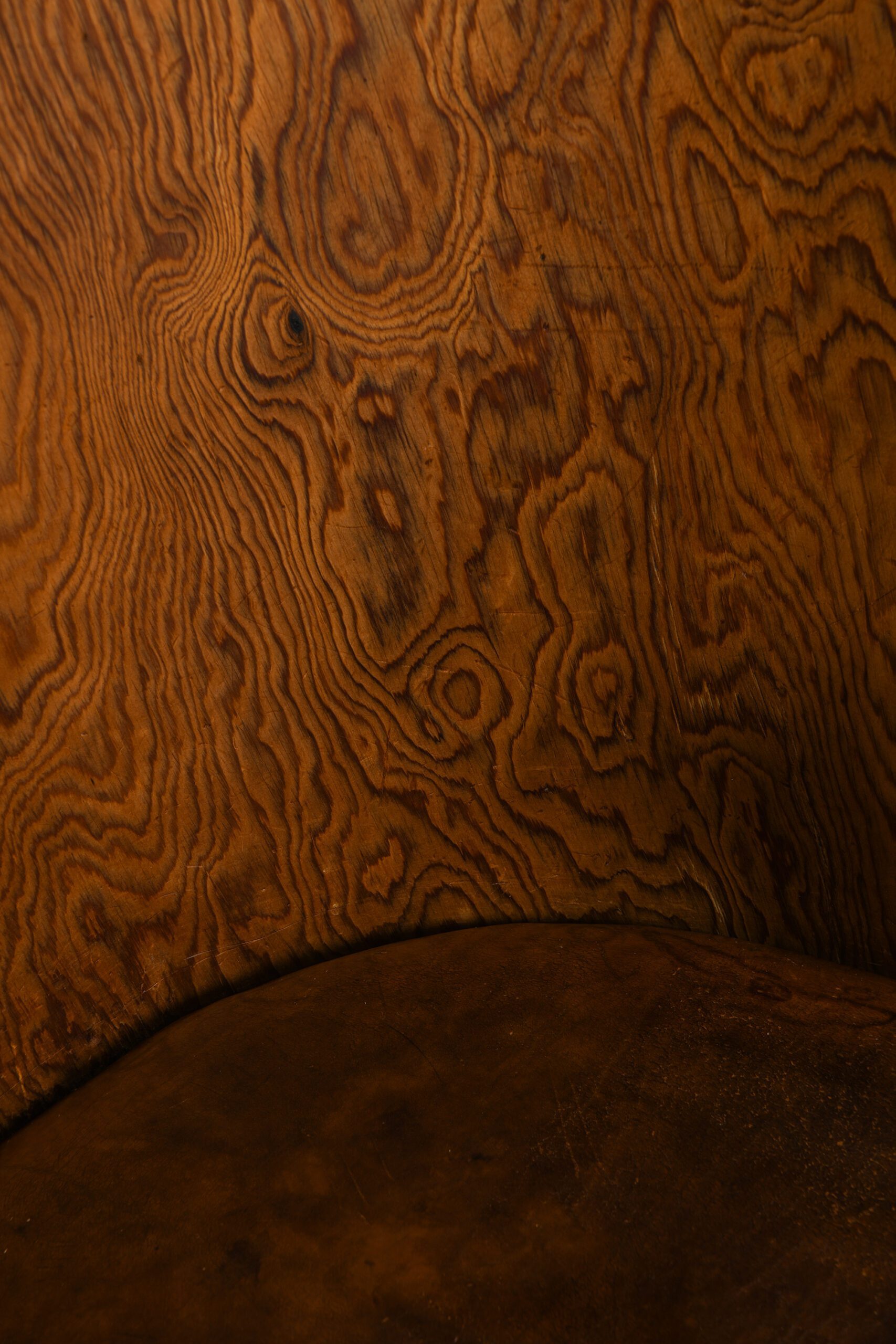
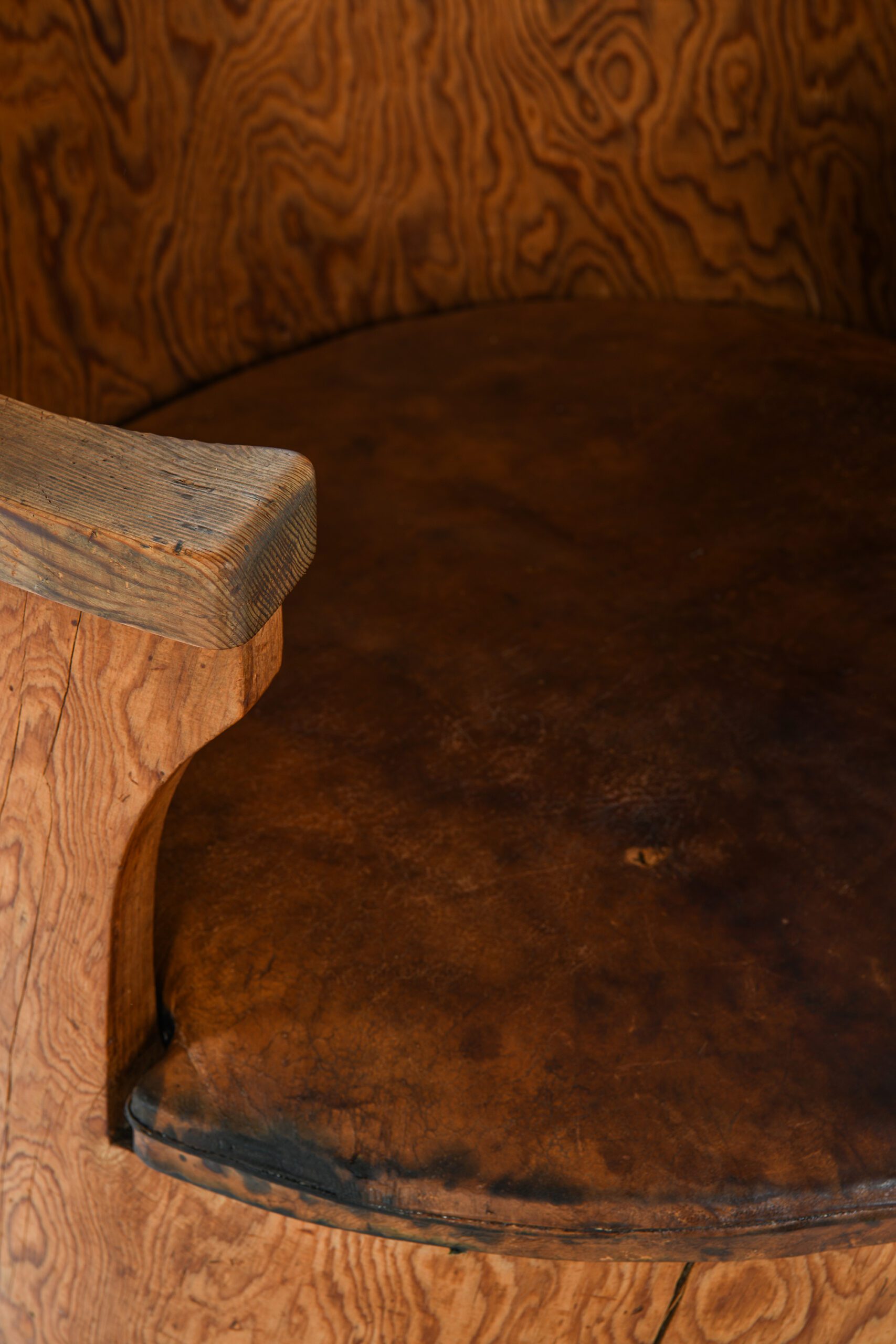
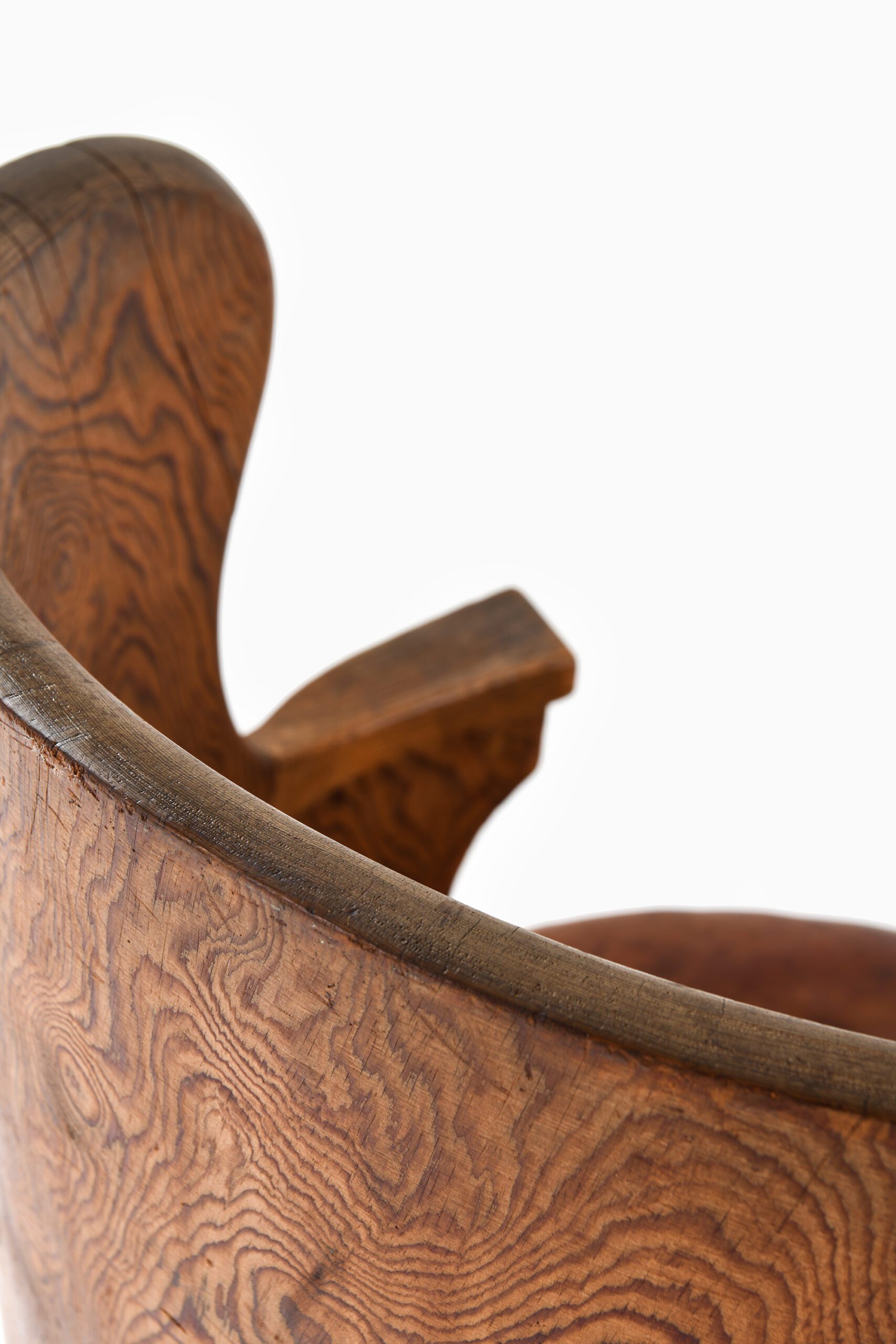
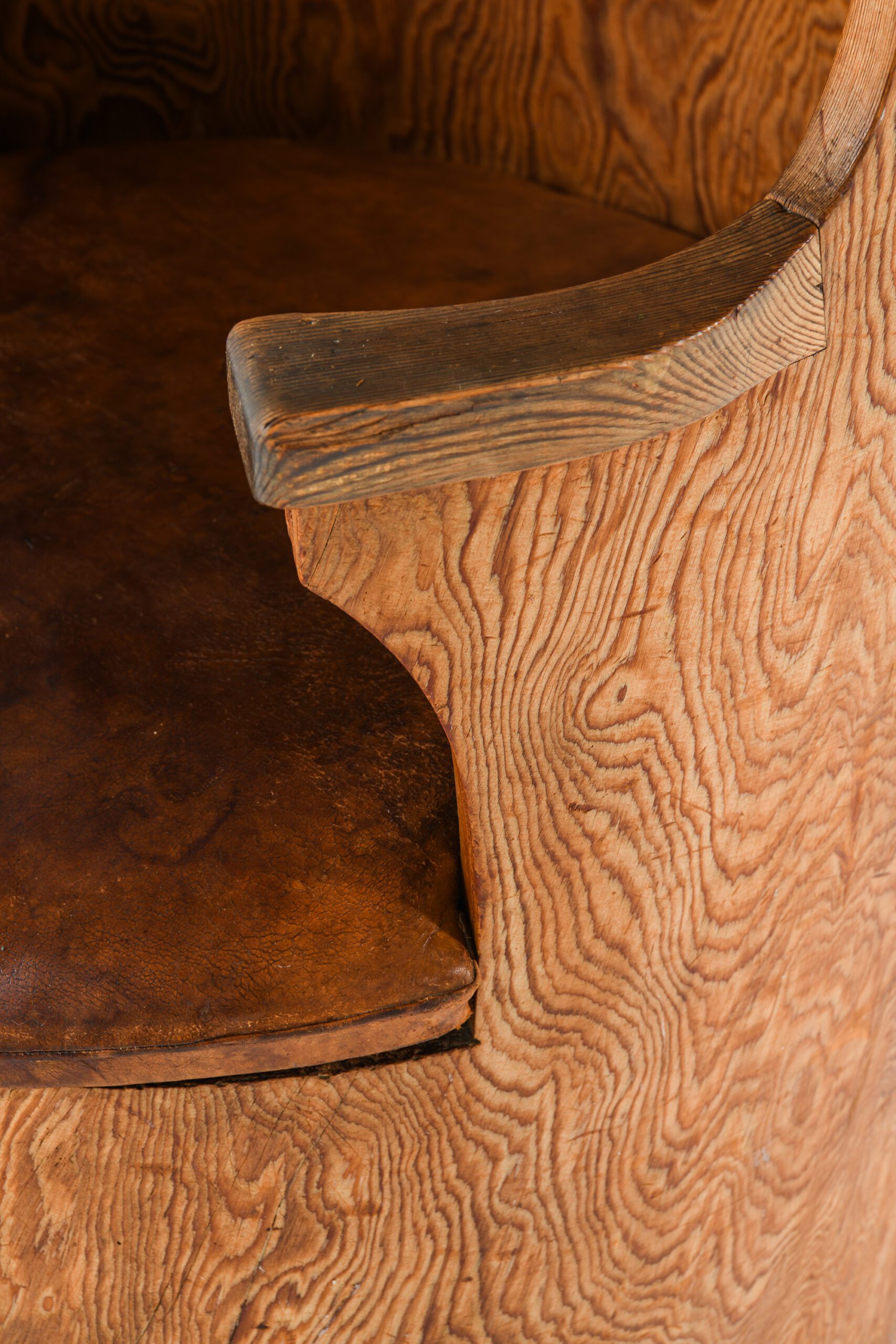
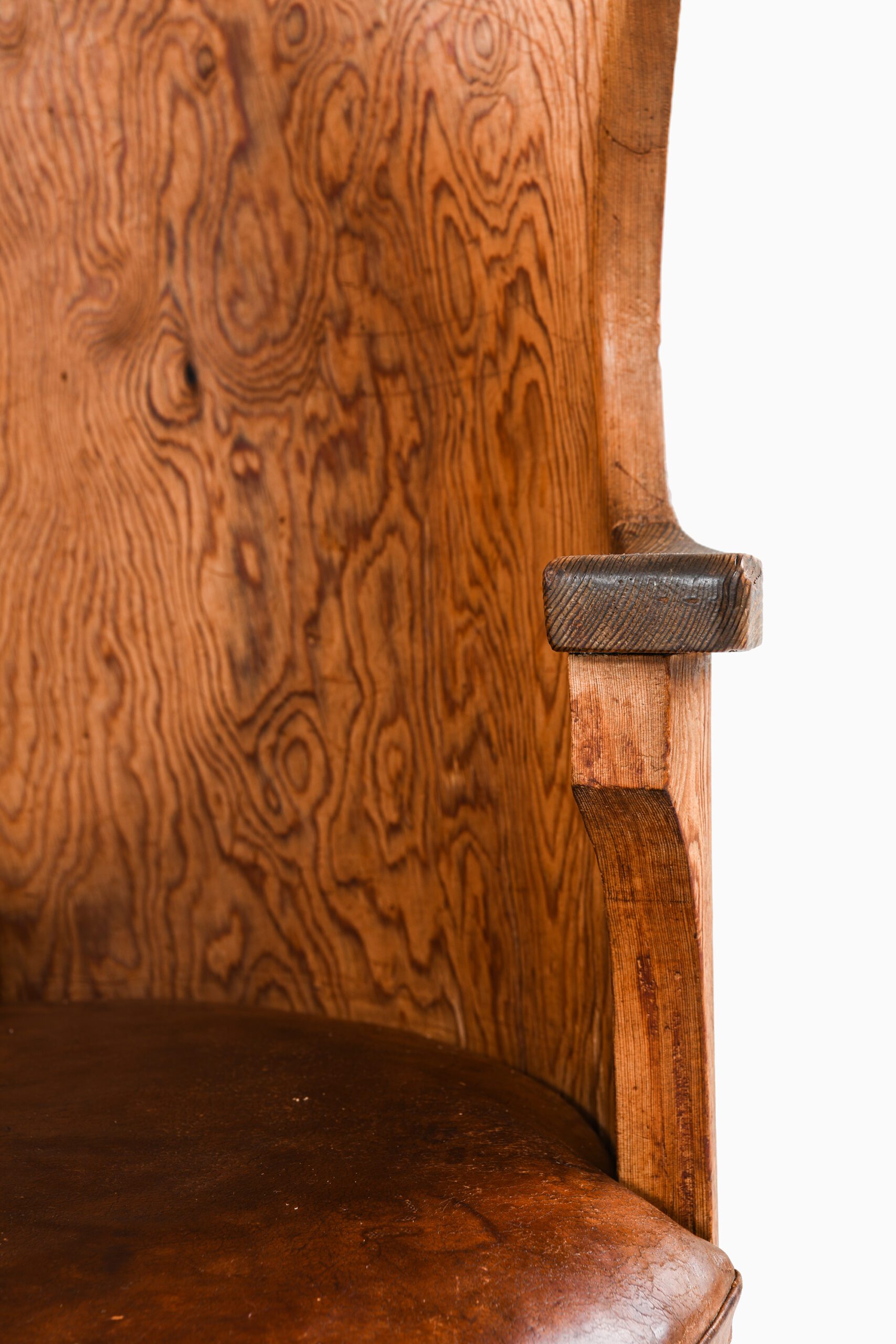
Integrated arm supports emerge organically from the chair’s sidewalls, their rounded tops echoing the chair’s overall silhouette. These supports flow seamlessly into the back, creating a fluid continuity between every surface. The grain of the pine is especially dramatic here: swirling patterns radiate outward from the carved cavity and cascade over the arm supports, highlighting the wood’s natural figure. Small checks and surface splits in the lower section attest to the piece’s age, yet remain stable and add textural interest without compromising structural integrity.
Seated within the hollowed form is the original leather cushion, its deep chestnut color now darkened to a rich, almost burnished brown. The cushion bears hand-stitched seams visible along its perimeter, and its surface shows gentle creasing and fading in areas of frequent use. This supple layer provides a tactile contrast to the hard, sculpted wood and underscores the chair’s rural origins, where comfort was woven into pragmatic design.
Emil Cederlund’s work in Mora reflected a vernacular tradition of stump furniture, in which entire tree sections dictated the object’s final shape. Rather than imposing a preconceived design, Cederlund responded to the inherent qualities of each trunk, allowing the natural form to guide his carving. This approach yields an object that is at once utilitarian and expressive, bridging folk craftsmanship and sculptural artistry.
Historically, stump chairs were common in rural Sweden as sturdy, long-lasting seating, but Cederlund’s execution elevates the form to a rare example of early 20th-century sculptural furniture. Its monolithic presence and seamless integration of material and function prefigure later modernist explorations of organic form. The chair remains in good condition: its carved surfaces retain a smooth hand-worn patina, the leather cushion is intact and supple, and the overall structure is stable, making it both a functional seat and a striking artifact of Scandinavian craft heritage.
Dimensions (cm) | W: 66 / D: 68 / H: 101 / Seat H: 43 |
| Decade | 1900s |
| Country | Sweden |
| Style | Rustic, Scandinavian Modern |
| Material | Leather, Pine |
| Designed in | 1900s |
| Item Number | 131483 |