Poul Kjærholm chair
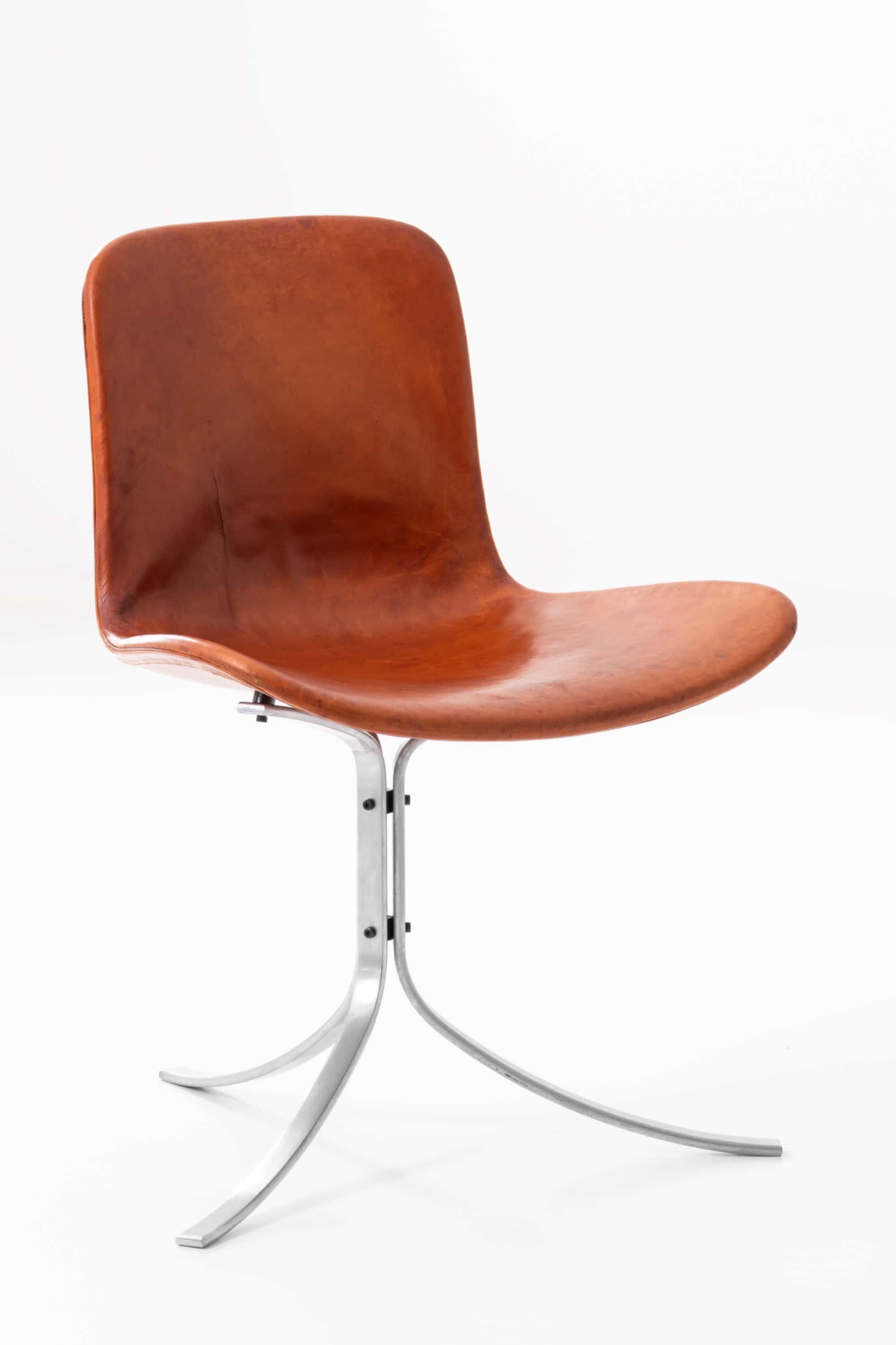
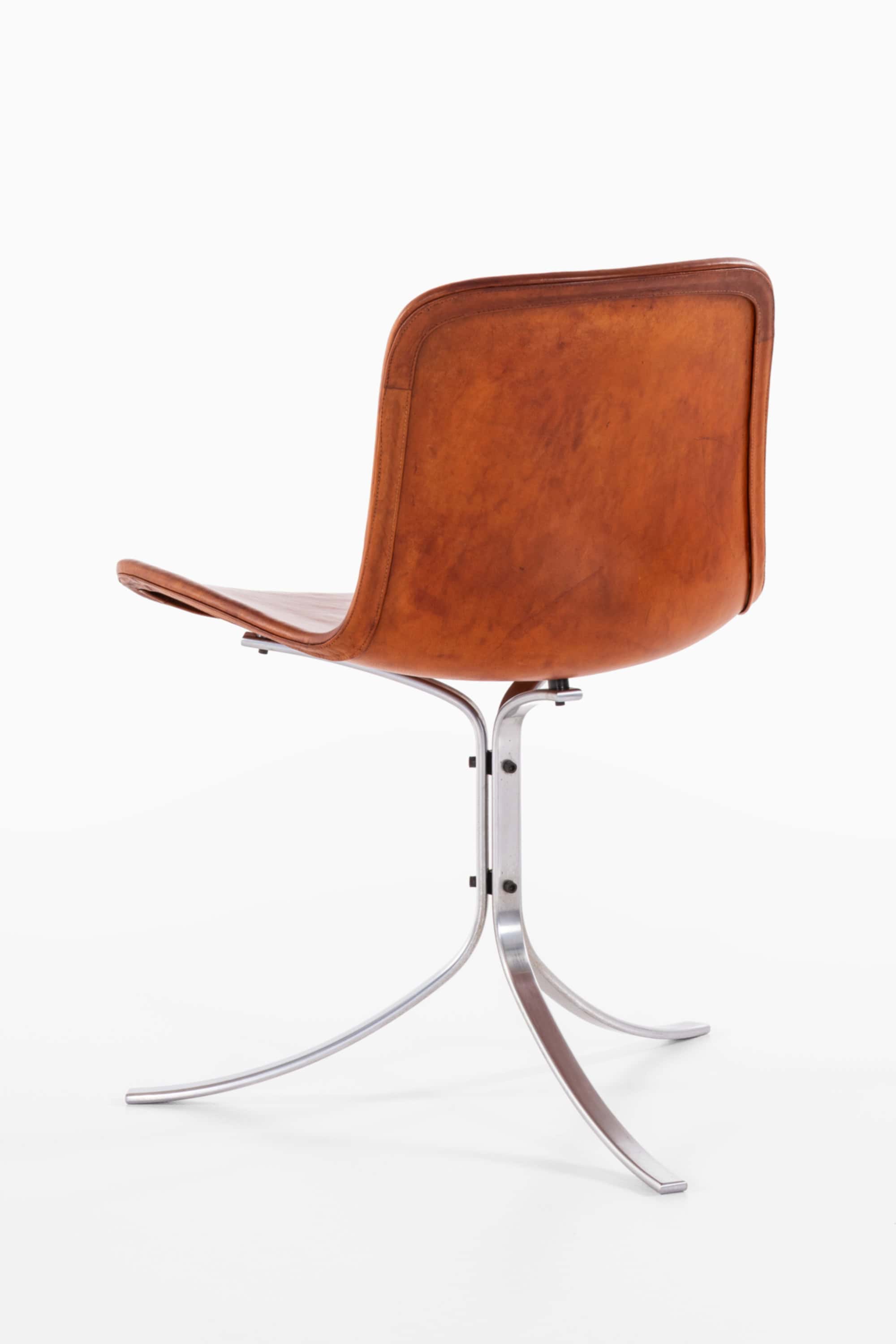
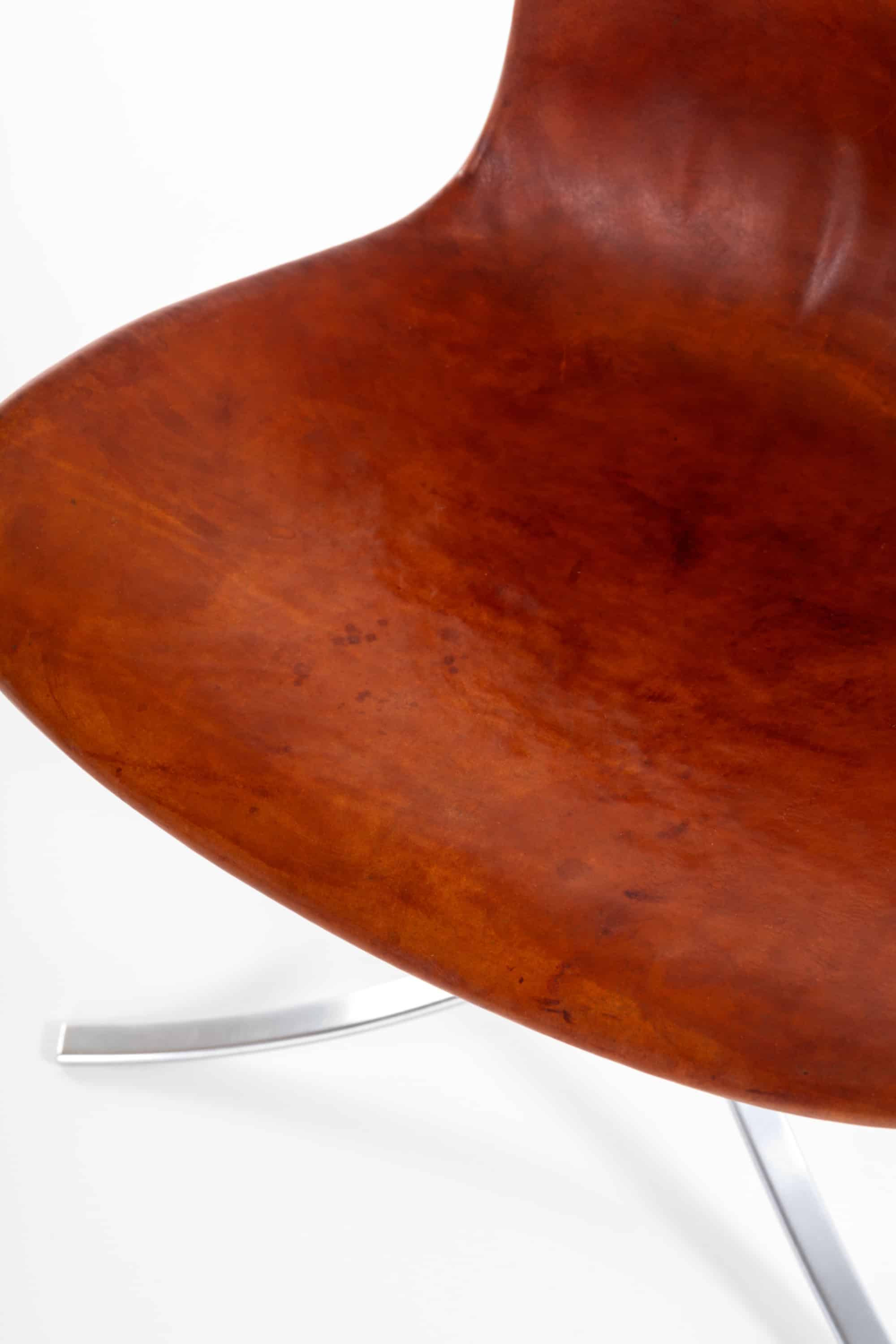
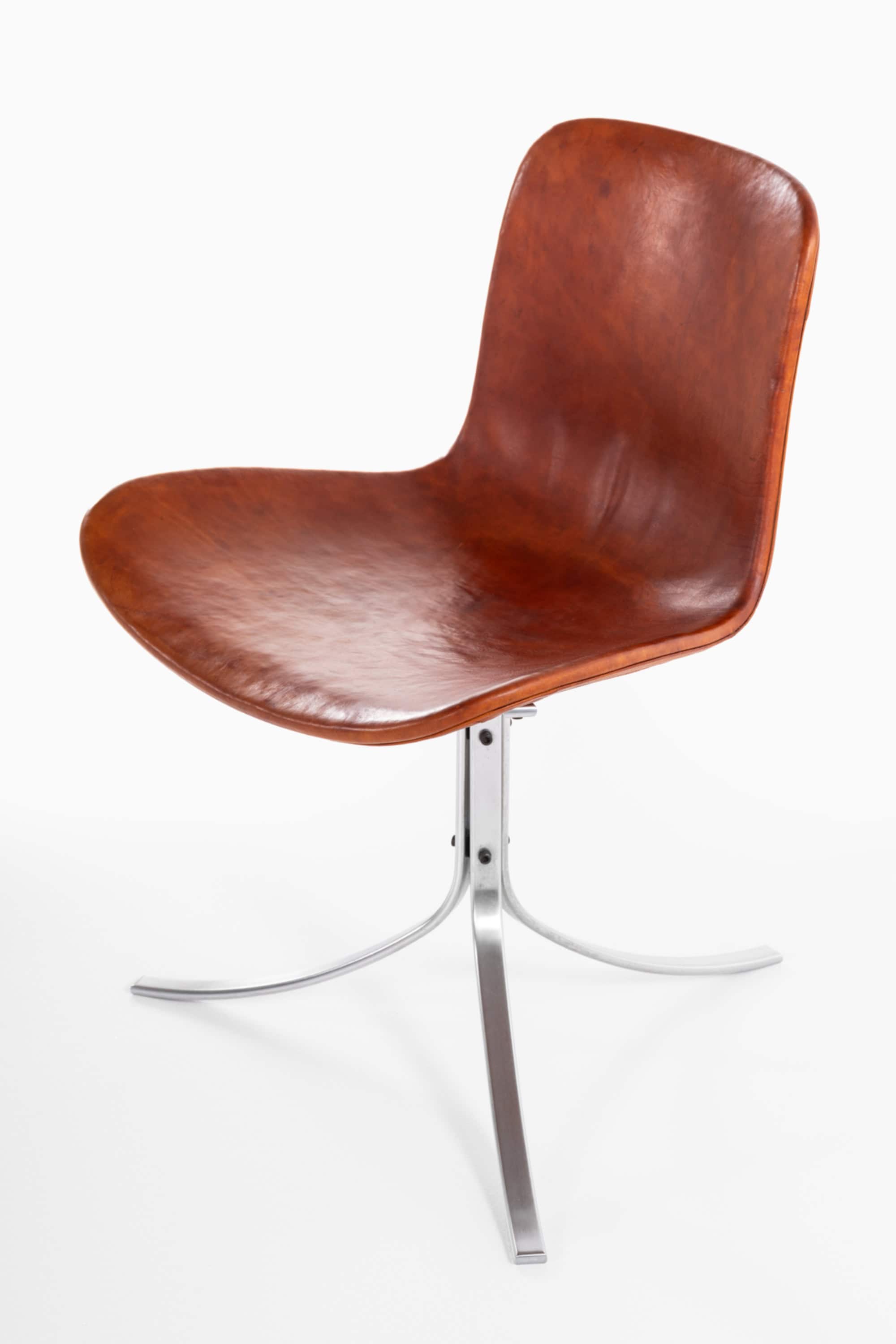
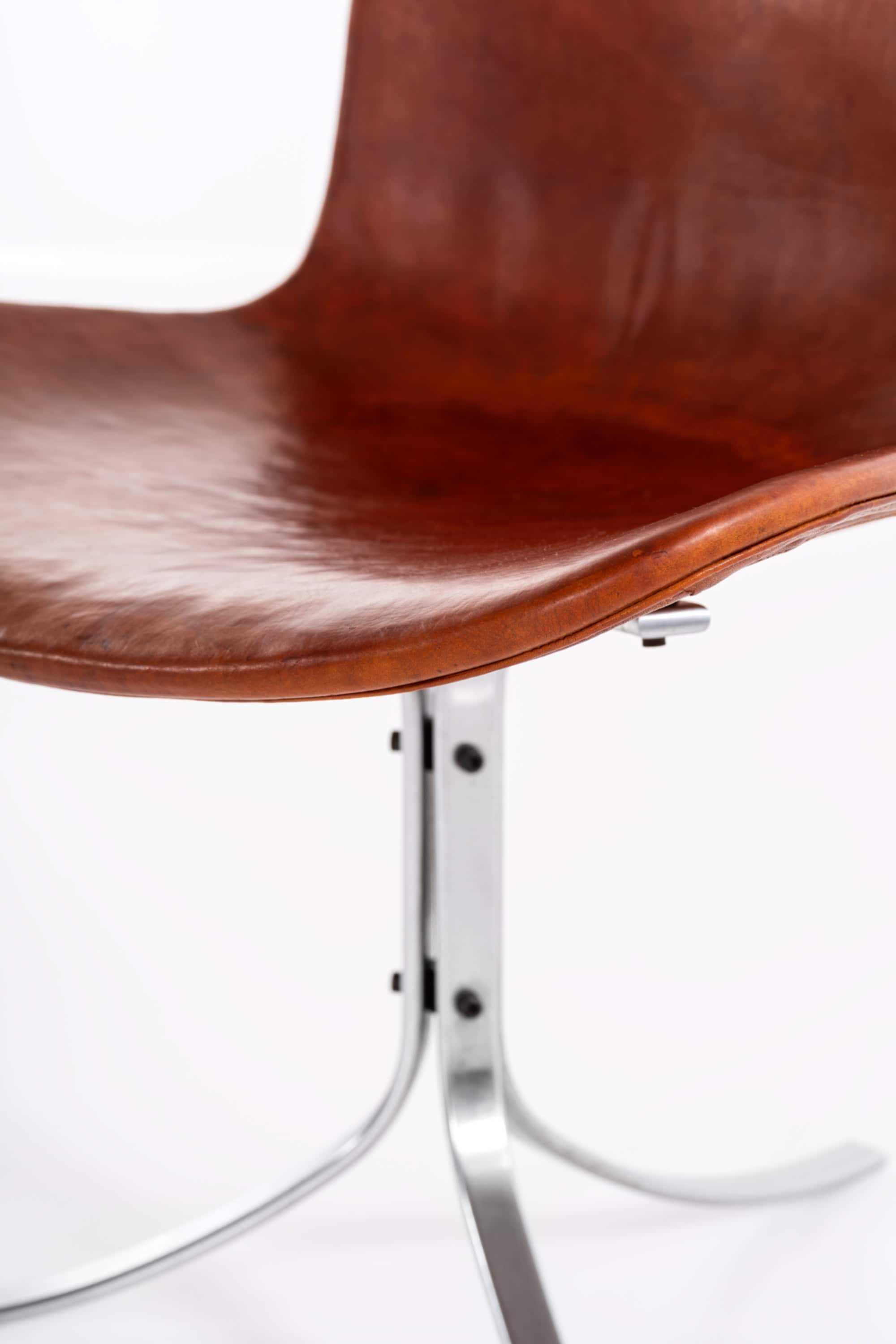
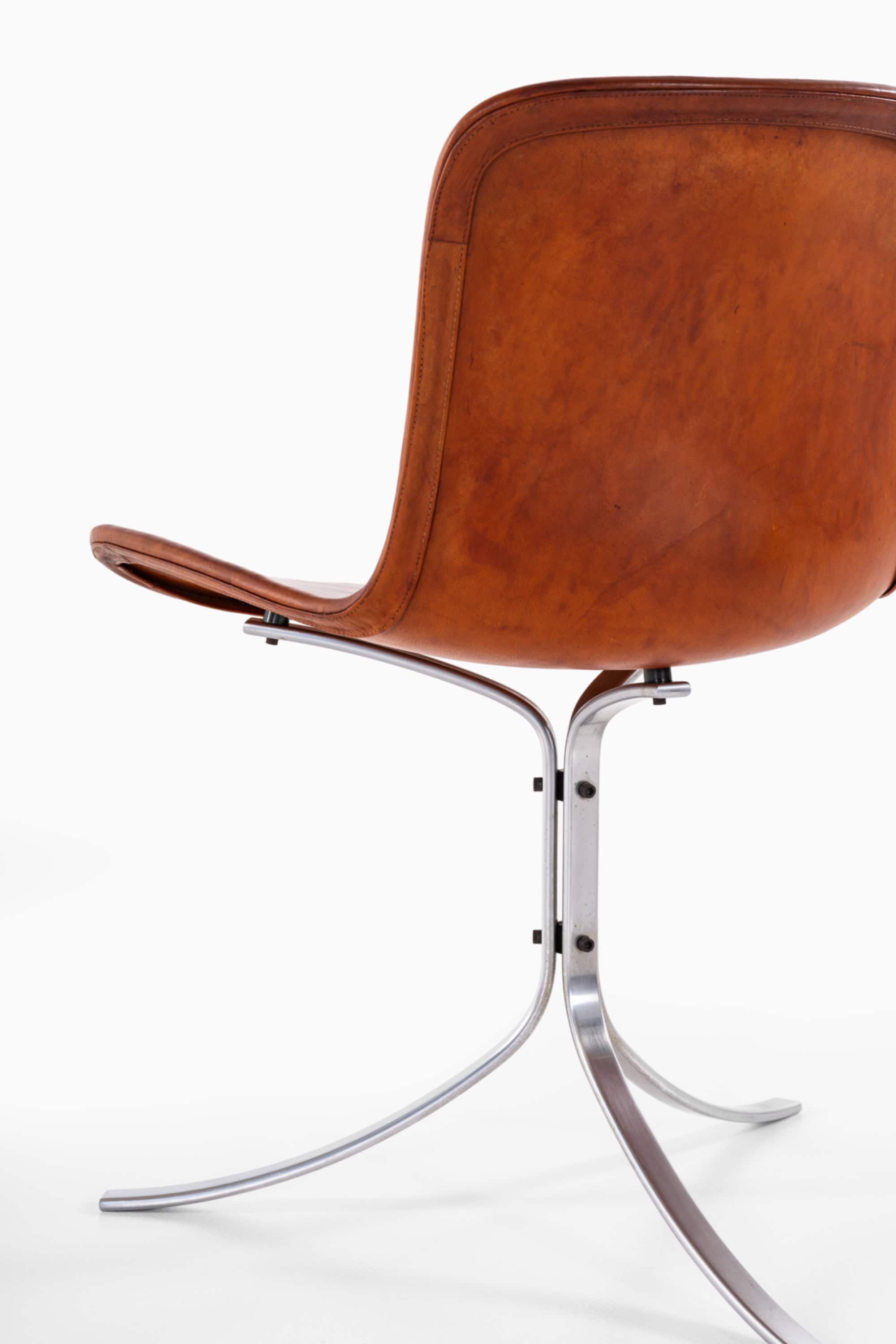
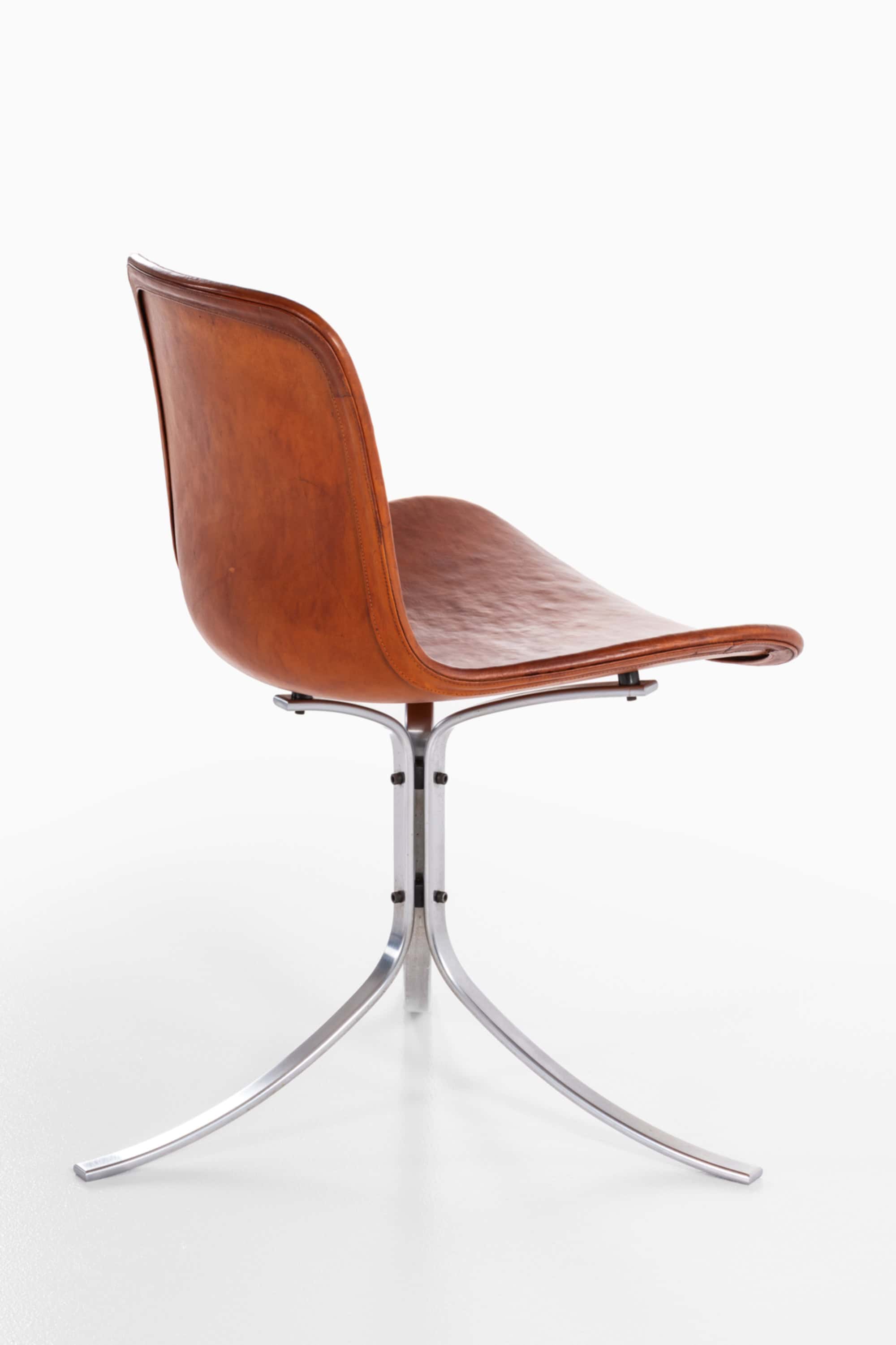
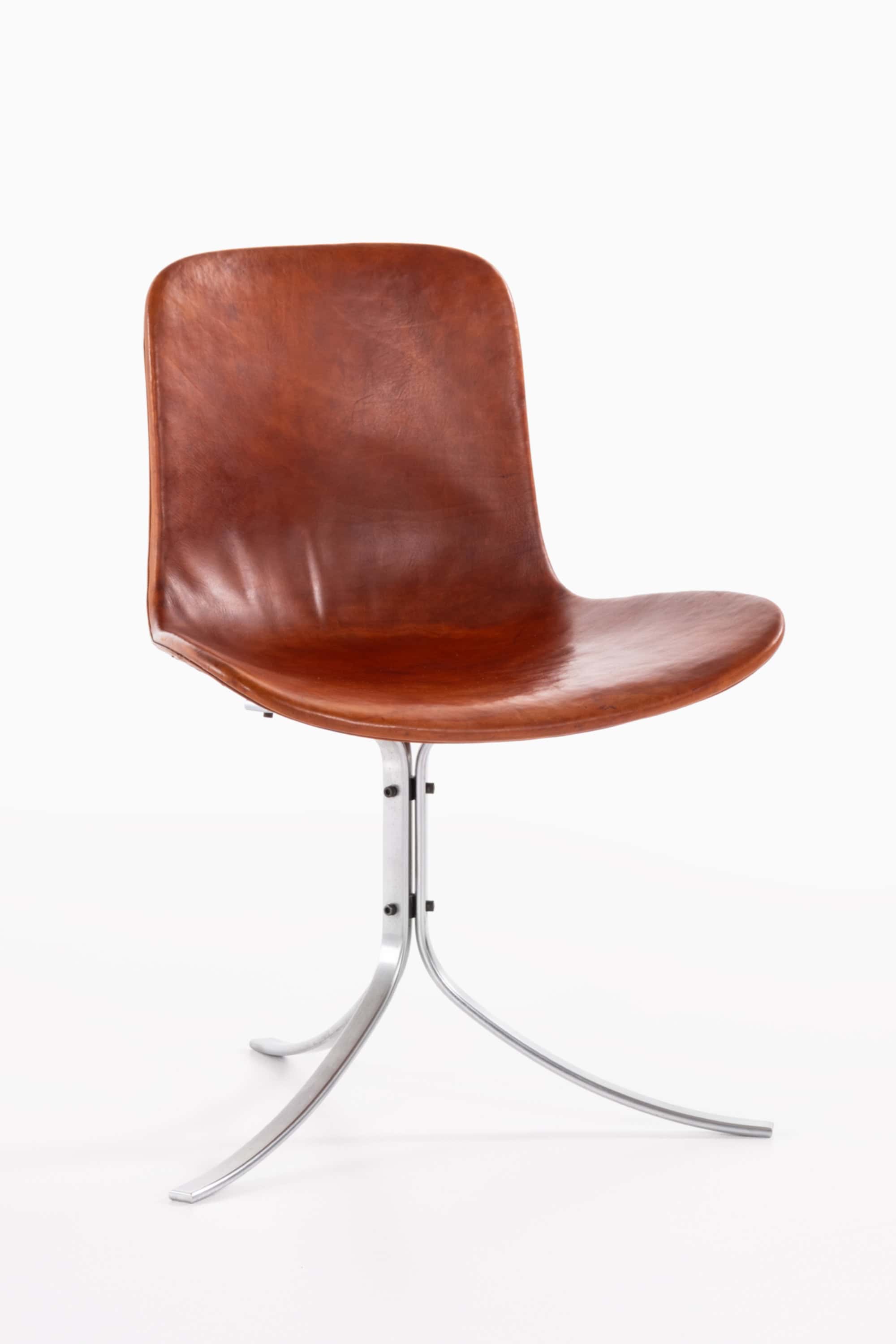
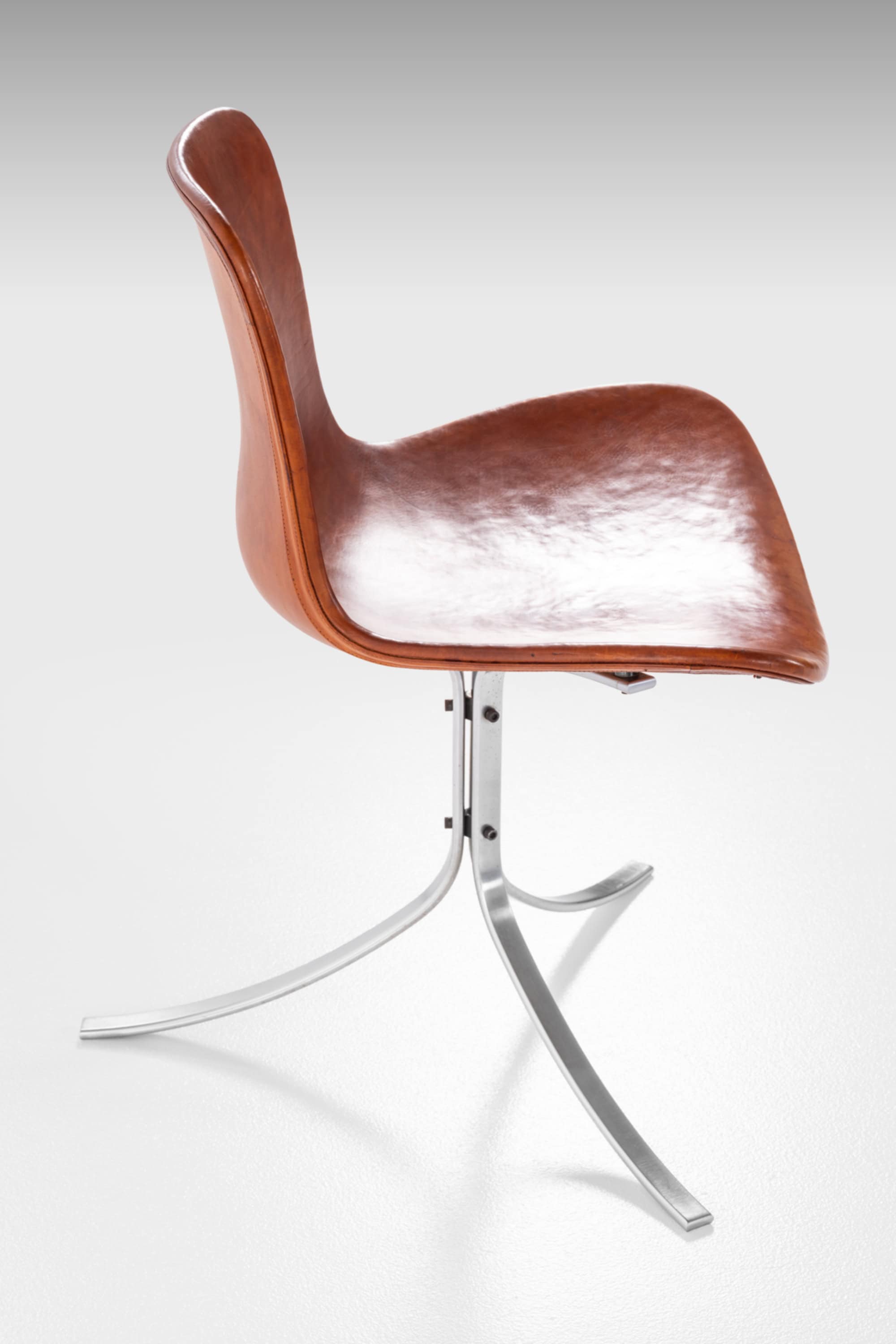
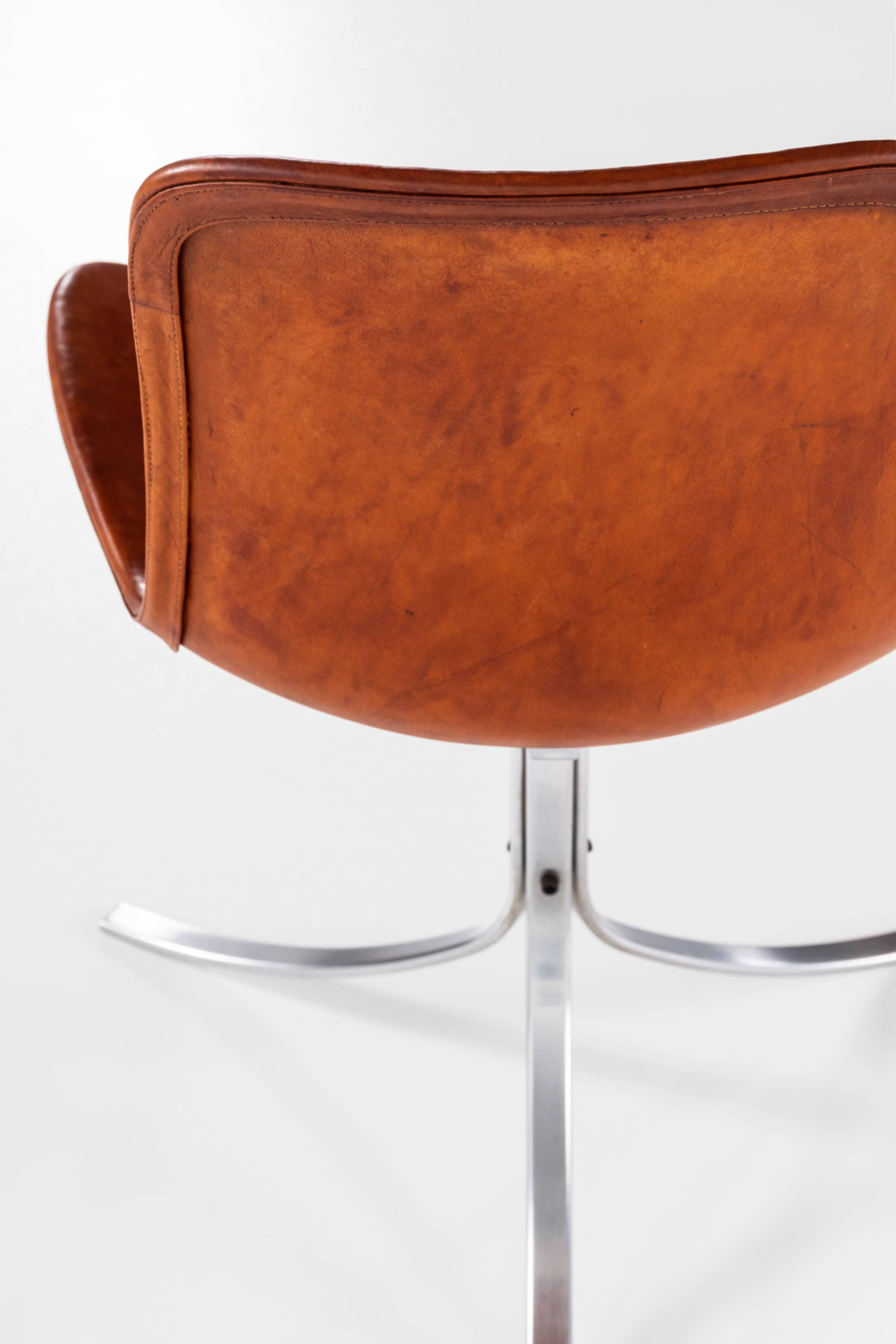
The chair is characterized by a continuous, organically curved seat and backrest forming a single upholstered shell. The leather has a warm reddish-brown tone with natural variations in color and surface texture. The generously rounded seat rises gradually into a slightly reclined backrest, providing support without the addition of armrests. The upholstery follows the contours of the shell, with carefully executed stitching and leather piping along the perimeter. The back is fully upholstered, maintaining the same material finish and visual continuity from every angle.
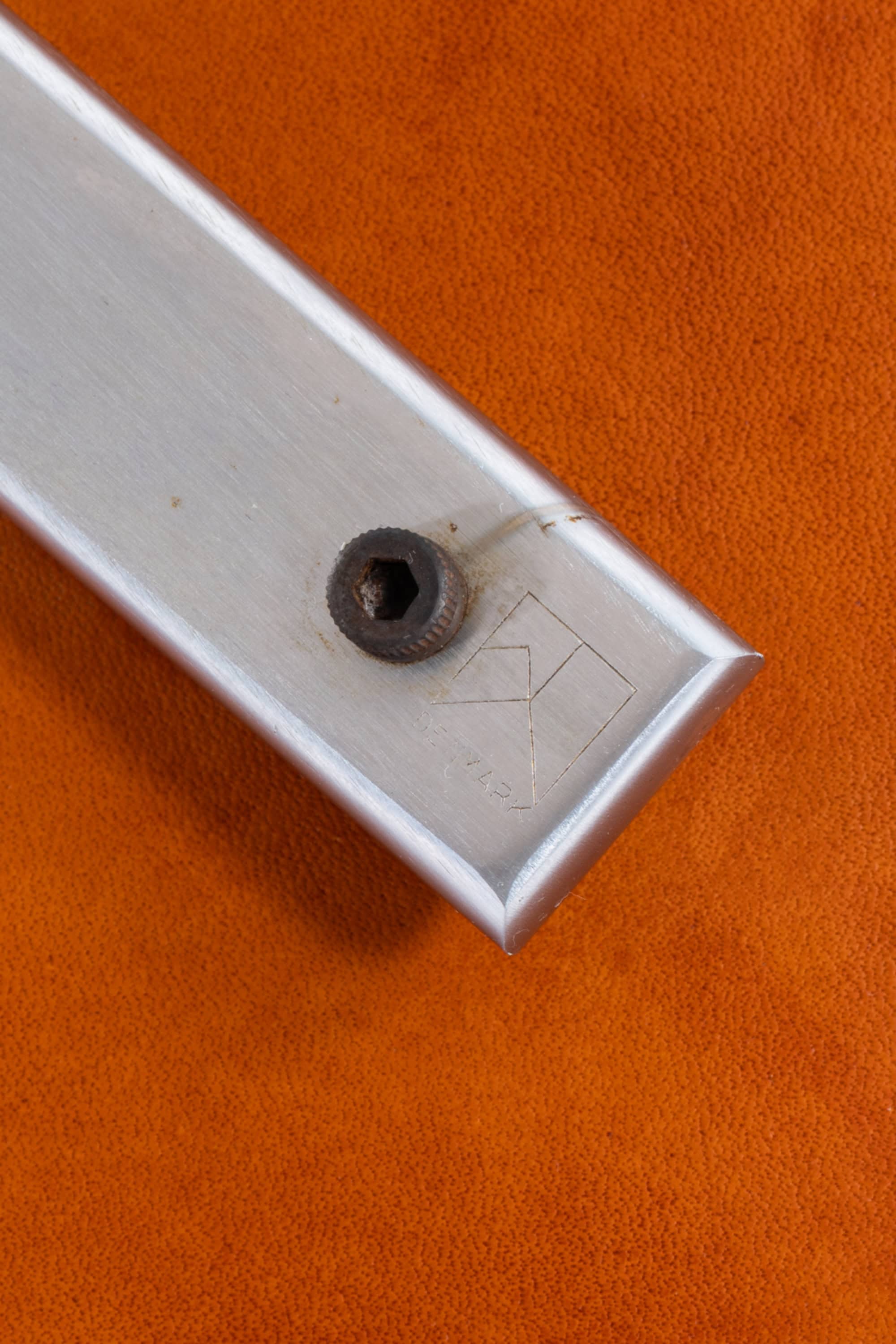
The supporting structure consists of three curved steel legs arranged around a central vertical connection. Each leg extends outward in a sweeping arc, creating a stable tripod base with a relatively light visual appearance. The steel components have a brushed, satin-like finish, contrasting with the warm leather upholstery. The construction demonstrates Kjærholm’s interest in the structural and aesthetic properties of metal, using the material not simply as a support but as an integral part of the chair’s overall composition. The underside and steel components retain the manufacturer’s marking.
Poul Kjærholm (1929–1980) was a Danish furniture designer known for his refined use of steel, leather, cane, and natural materials. Educated at the Danish School of Arts and Crafts in Copenhagen, he developed a distinctive design language influenced by both Scandinavian craftsmanship and international modernism. Unlike many of his Danish contemporaries, who primarily worked with wood, Kjærholm considered steel a material with the same artistic and structural potential as traditional cabinetmaking materials. His furniture is characterized by carefully balanced proportions, exposed construction, and a close relationship between material, form, and function.
E. Kold Christensen was a Danish furniture manufacturer and an important collaborator of Poul Kjærholm from the mid-1950s onward. The company was responsible for producing many of his most significant furniture designs, maintaining high standards of craftsmanship and material quality. The PK9, introduced in 1960, is sometimes referred to as the Tulip Chair because of the organic shape of its seat and the outward-curving arrangement of its three-legged base. The model reflects the transition toward more sculptural furniture forms during the early 1960s while retaining the structural clarity associated with Kjærholm’s work.
The chair remains in very good vintage condition, with minor signs of age and use. The original leather has developed a rich, naturally varied patina, including subtle creasing, surface marks, and variations in tone, particularly across the seat and backrest. The upholstery retains its shape, and the stitching and edge detailing appear well preserved. The steel base shows light surface wear consistent with age, while maintaining its original finish and construction.
The chair measures 55.5 cm (21.85 inches) in width, 50 cm (19.69 inches) in depth, and 76 cm (29.92 inches) in height, with a seat height of 42 cm (16.54 inches).
Dimensions (cm) | W: 55.5 / D: 50 / H: 76 / Seat H: 42 |
| Producer | E. Kold Christensen |
| Decade | 1950s |
| Country | Denmark |
| Style | Danish modern, Mid Century, Scandinavian Modern |
| Material | Leather, Steel |
| Designed in | 1960 |
| Item Number | 250910 |
Poul Kjærholm
Poul Kjærholm (1929–1980) was a Danish furniture designer celebrated for his refined minimalist aesthetic, deep respect for materials, and meticulous attention to craftsmanship. He is considered one of the leading figures of 20th-century Scandi...
Read more