Stool
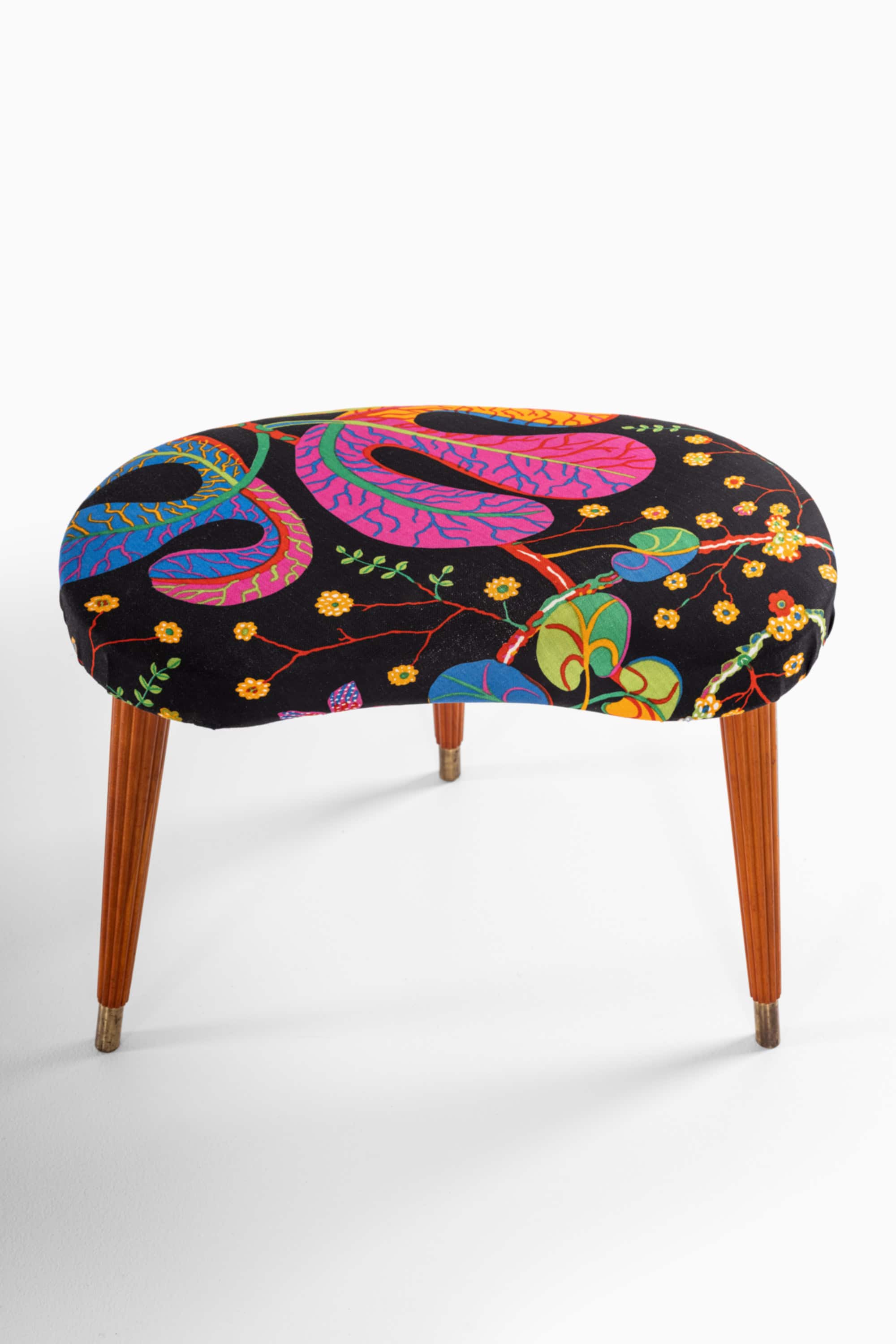
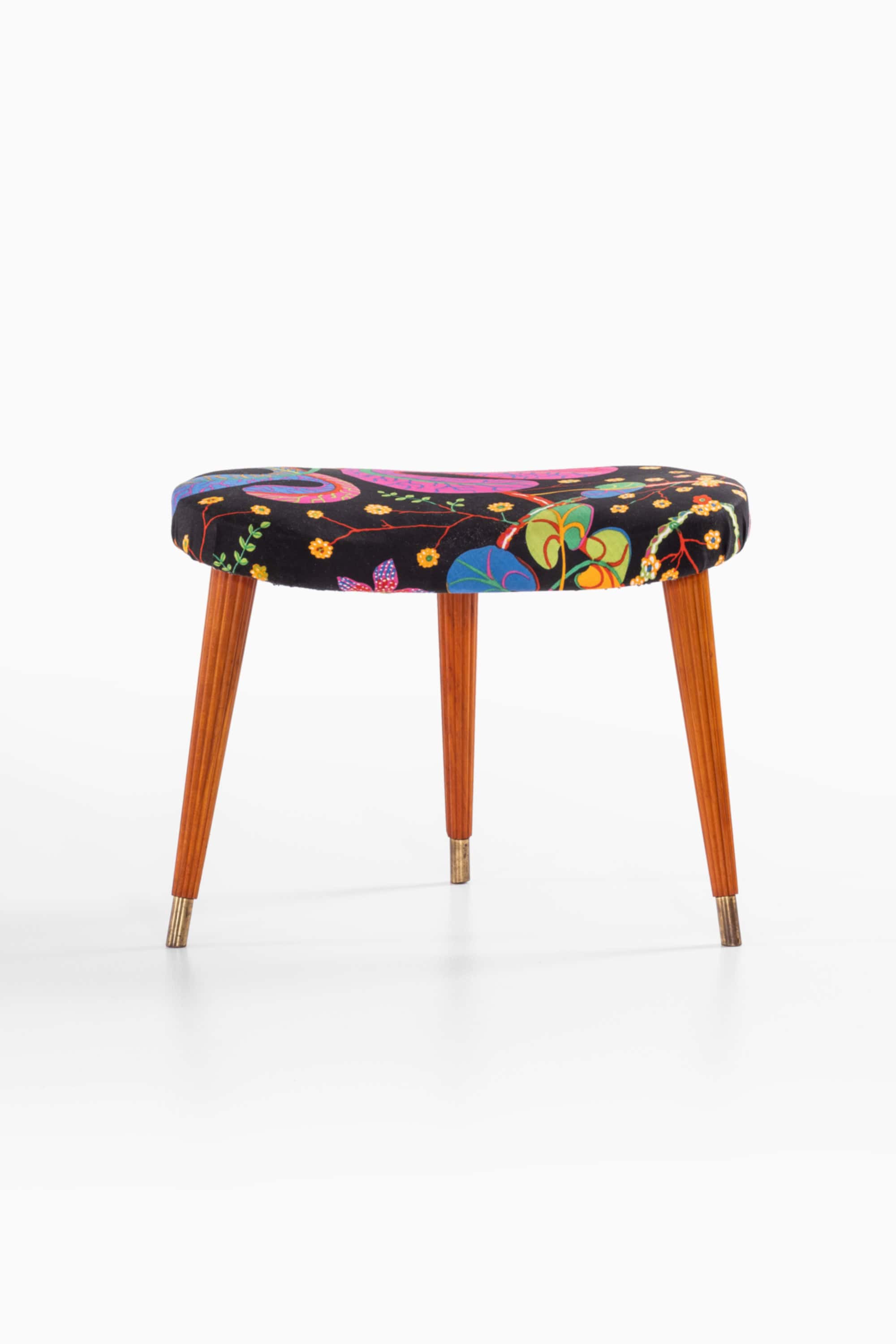
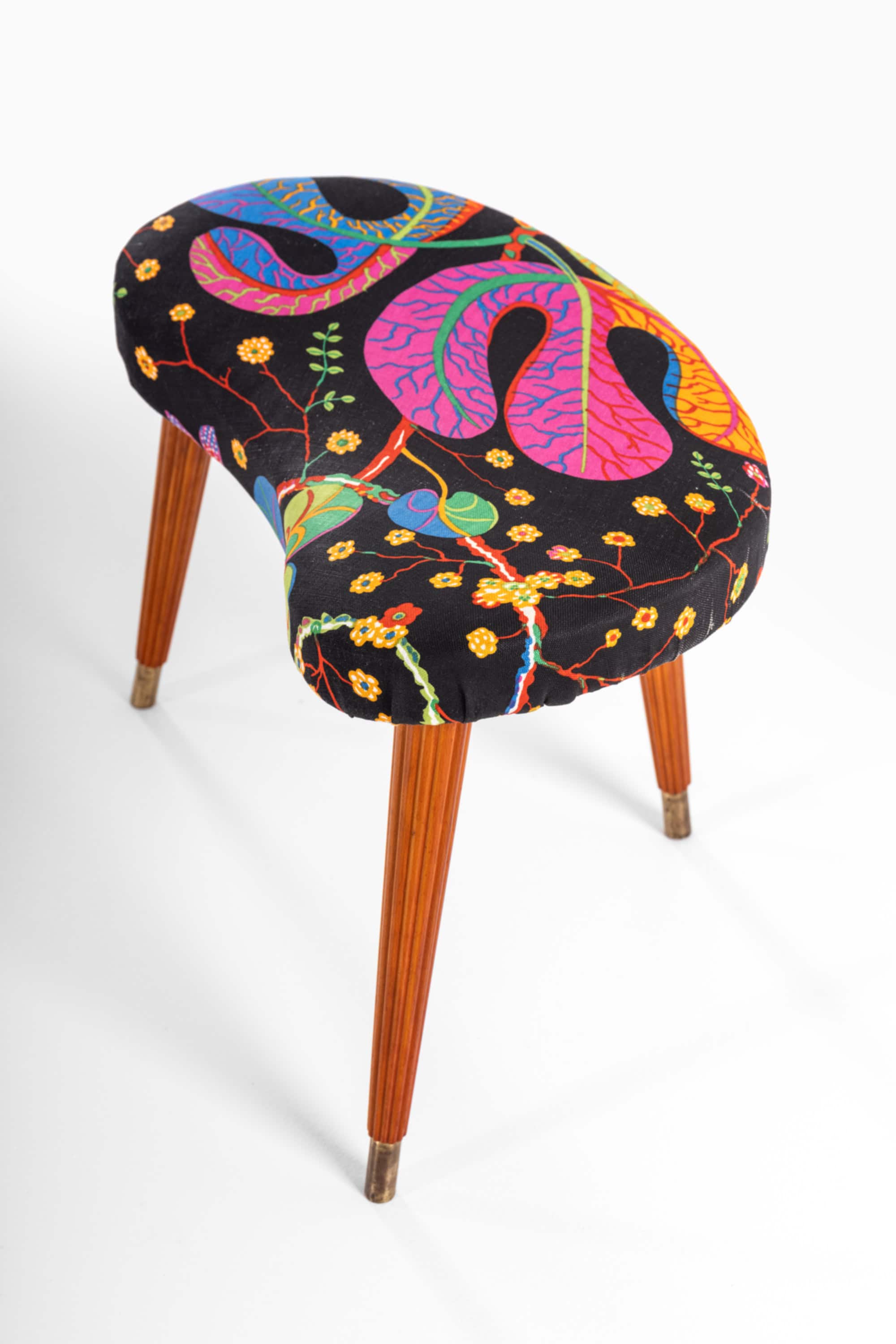
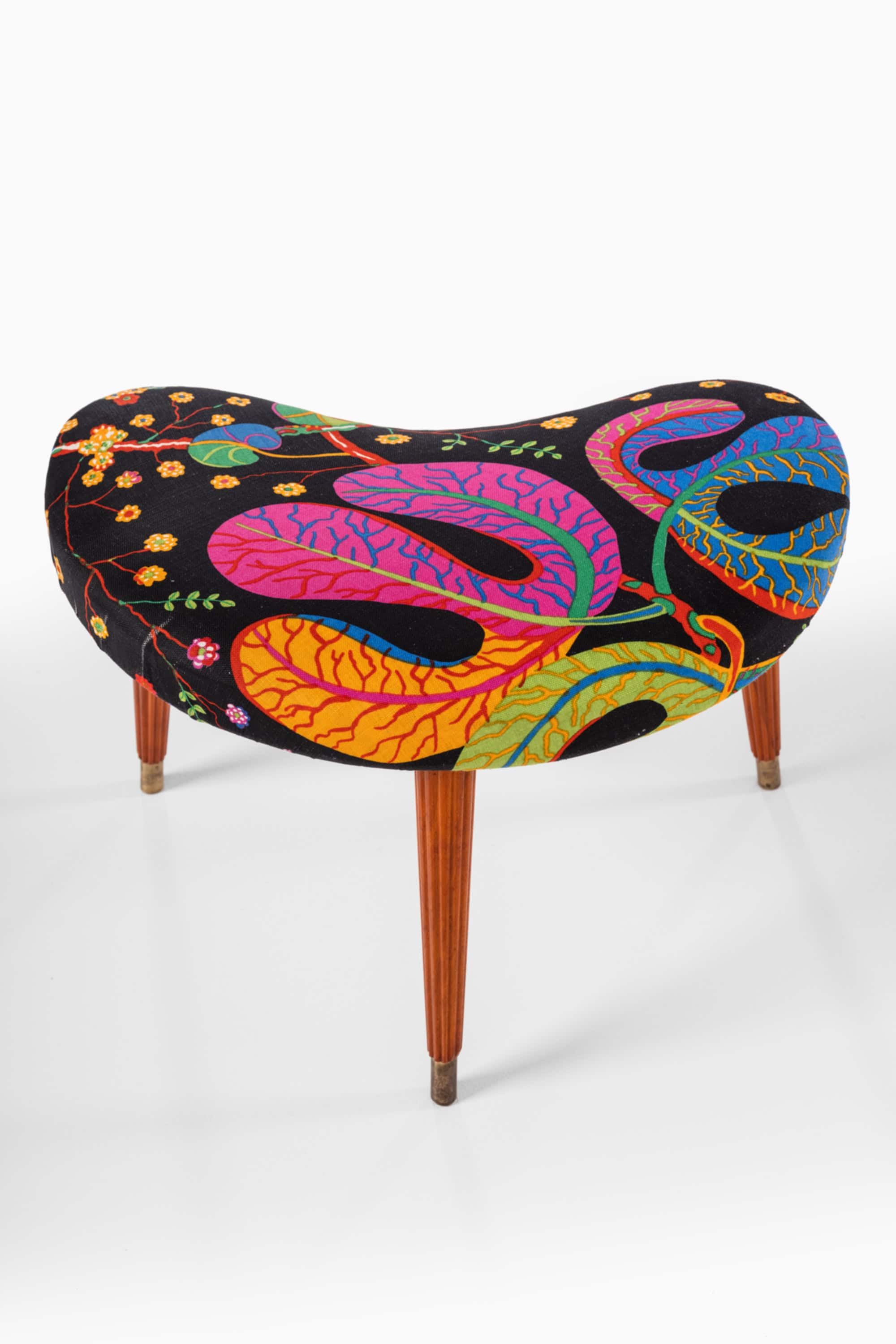
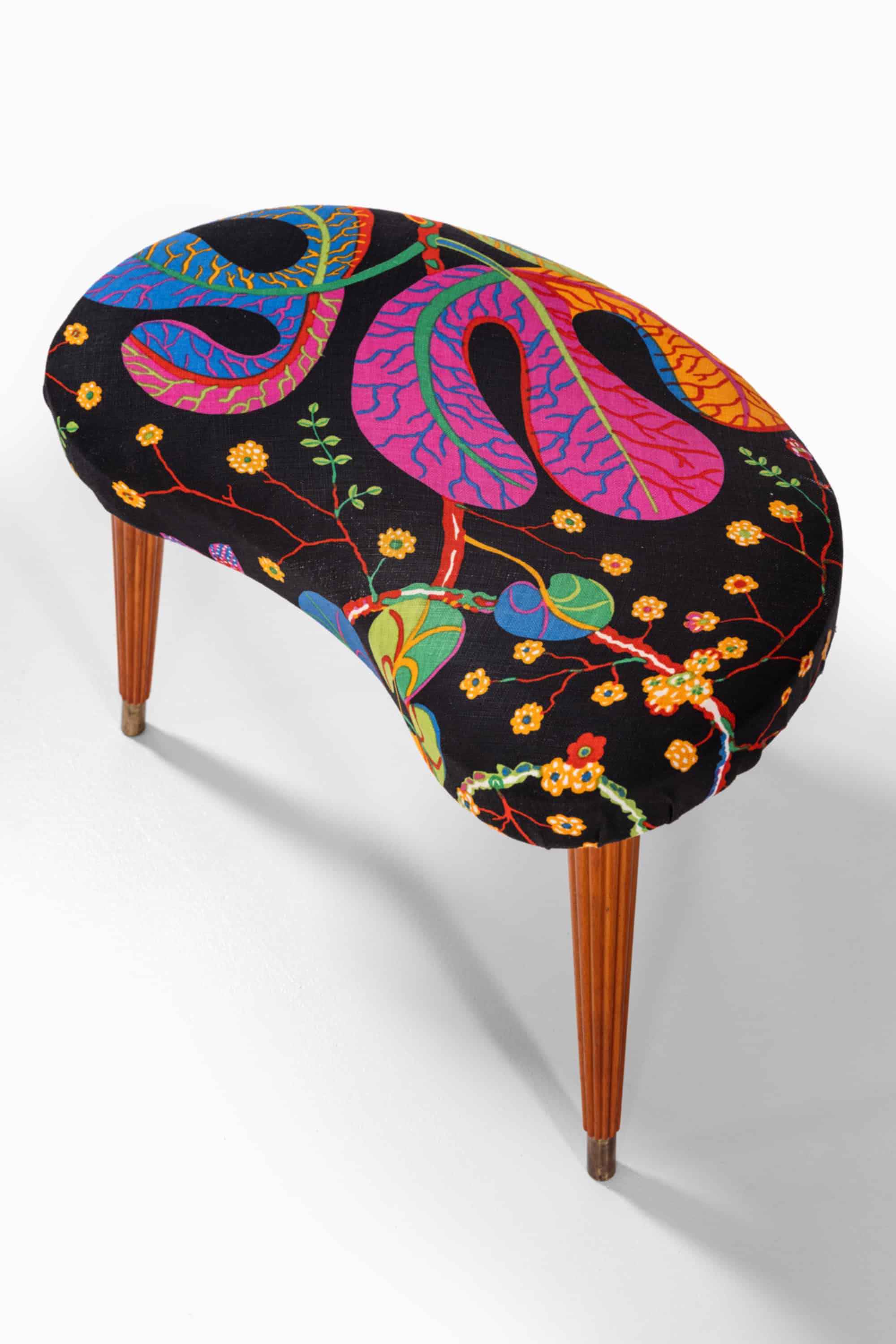
Rare three-legged stool, probably produced by Bodafors Möbelfabrik in Sweden during the 1940s. The stool combines a sculpturally shaped upholstered seat with three tapered and vertically fluted mahogany legs, each terminating in a cylindrical brass sabot. Its construction and proportions are characteristic of Swedish furniture from the transitional period between late Swedish Grace and the increasingly organic Scandinavian modernism of the 1940s. The asymmetrical, kidney-shaped seat introduces a softer and more expressive geometry than the rectilinear forms associated with earlier functionalism.
The mahogany legs have a warm reddish-brown tone and are finely tapered toward the floor. Their pronounced longitudinal fluting gives the relatively slender supports additional visual structure, while the brass feet provide both a functional termination and a characteristic decorative detail. The combination of dark hardwood, brass and upholstery reflects the continued use of sophisticated materials within Swedish interiors of the period, even as furniture design became progressively lighter and less formal.
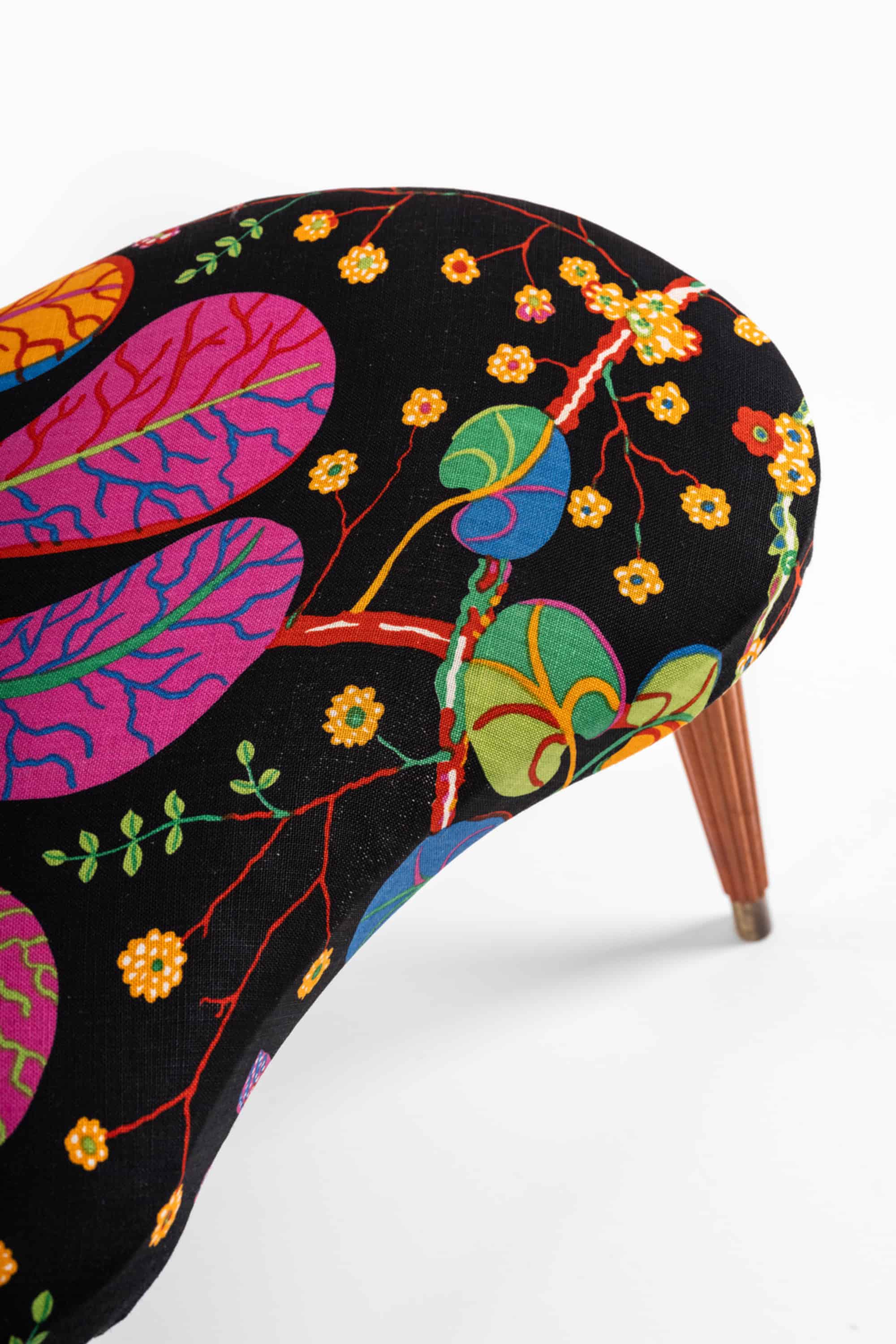
The stool has been reupholstered in Josef Frank’s “Teheran” textile. Designed for Svenskt Tenn, the pattern is characteristic of Frank’s highly individual approach to textile design, in which dense botanical imagery, strong color contrasts and freely interpreted natural forms counter the strict geometry of architectural modernism. Against a black ground, the textile incorporates large stylized leaves and smaller flowering branches in vivid pink, blue, green, yellow, orange and red. Its energetic surface forms a deliberate contrast with the restrained mahogany structure beneath.
Josef Frank (1885–1967), an Austrian-born architect and designer who settled in Sweden in the 1930s, became one of the central figures associated with Svenskt Tenn and Swedish twentieth-century interior design. Working closely with Svenskt Tenn’s founder Estrid Ericson, Frank developed an alternative interpretation of modernism based on comfort, visual richness, irregularity and the coexistence of patterns, colors and historical references. His textiles became particularly important to this approach and remain among the most recognizable elements of Svenskt Tenn’s design history.
Bodafors Möbelfabrik, to which this stool is probably attributable, was an important Swedish furniture manufacturer with roots in the nineteenth century and played a significant role in the development and industrial production of Swedish furniture during the first half of the twentieth century. The company collaborated with numerous architects and designers and produced furniture ranging from more traditional cabinetmaking to increasingly modern designs. No visible manufacturer’s mark is shown in the available photographs, and the attribution to Bodafors should therefore be regarded as probable rather than definitive.
The stool is in good vintage condition with small signs of use and age. The mahogany legs retain a warm surface and show minor wear consistent with their age, while the brass sabots have developed natural oxidation and patination. The seat has been professionally reupholstered in Josef Frank “Teheran” fabric and consequently presents in a clean condition while retaining the original vintage character of the supporting structure.
Dimensions: 56 × 33 × 43.5 cm (22.0 × 13.0 × 17.1 in).
Dimensions (cm) | W: 56 / D: 33 / H: 43.5 |
| Producer | Bodafors möbelfabrik |
| Decade | 1940s |
| Country | Sweden |
| Style | Mid Century, Scandinavian Modern |
| Material | Brass, Fabric, Mahogany |
| Designed in | 1940s |
| Item Number | 250773 |