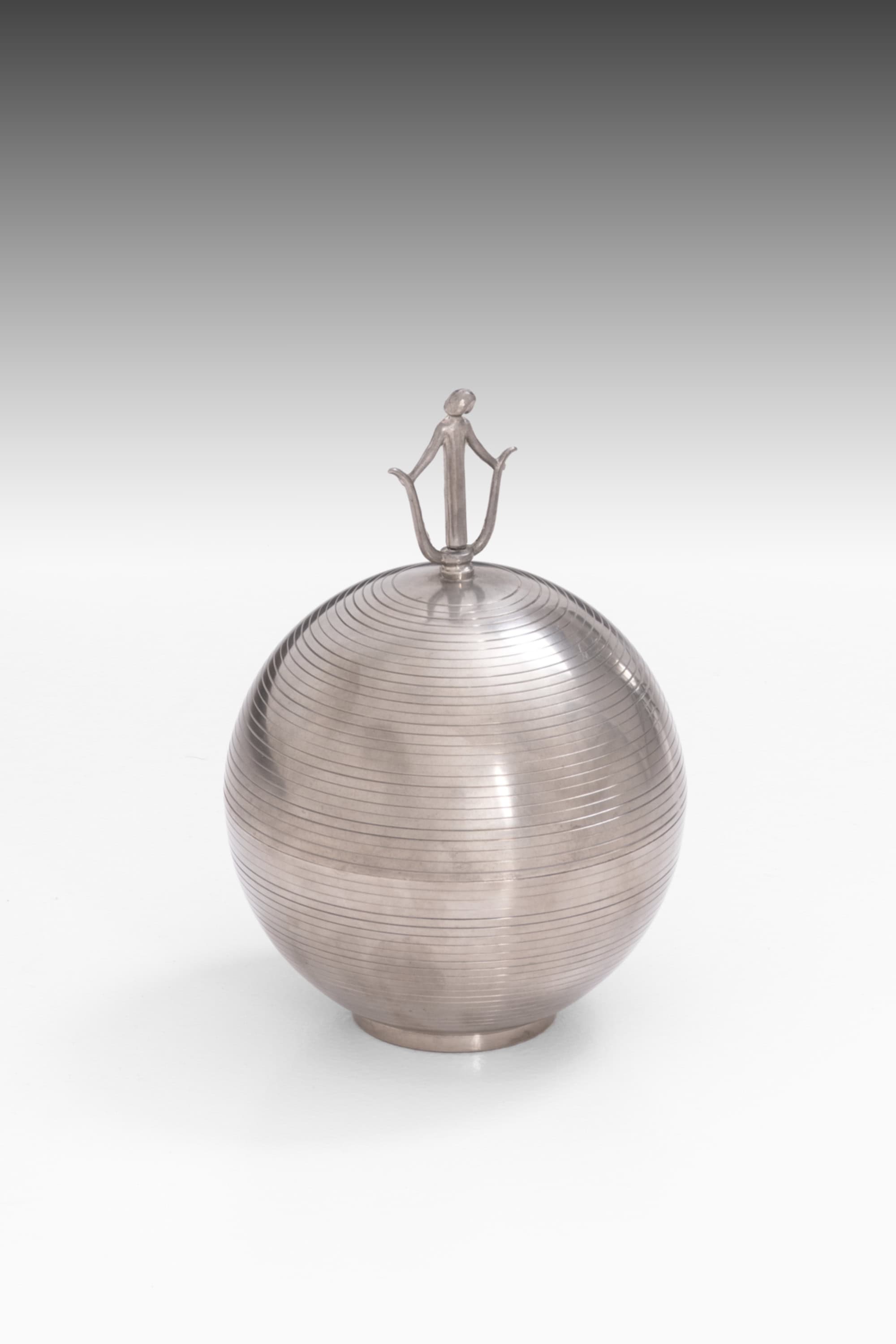
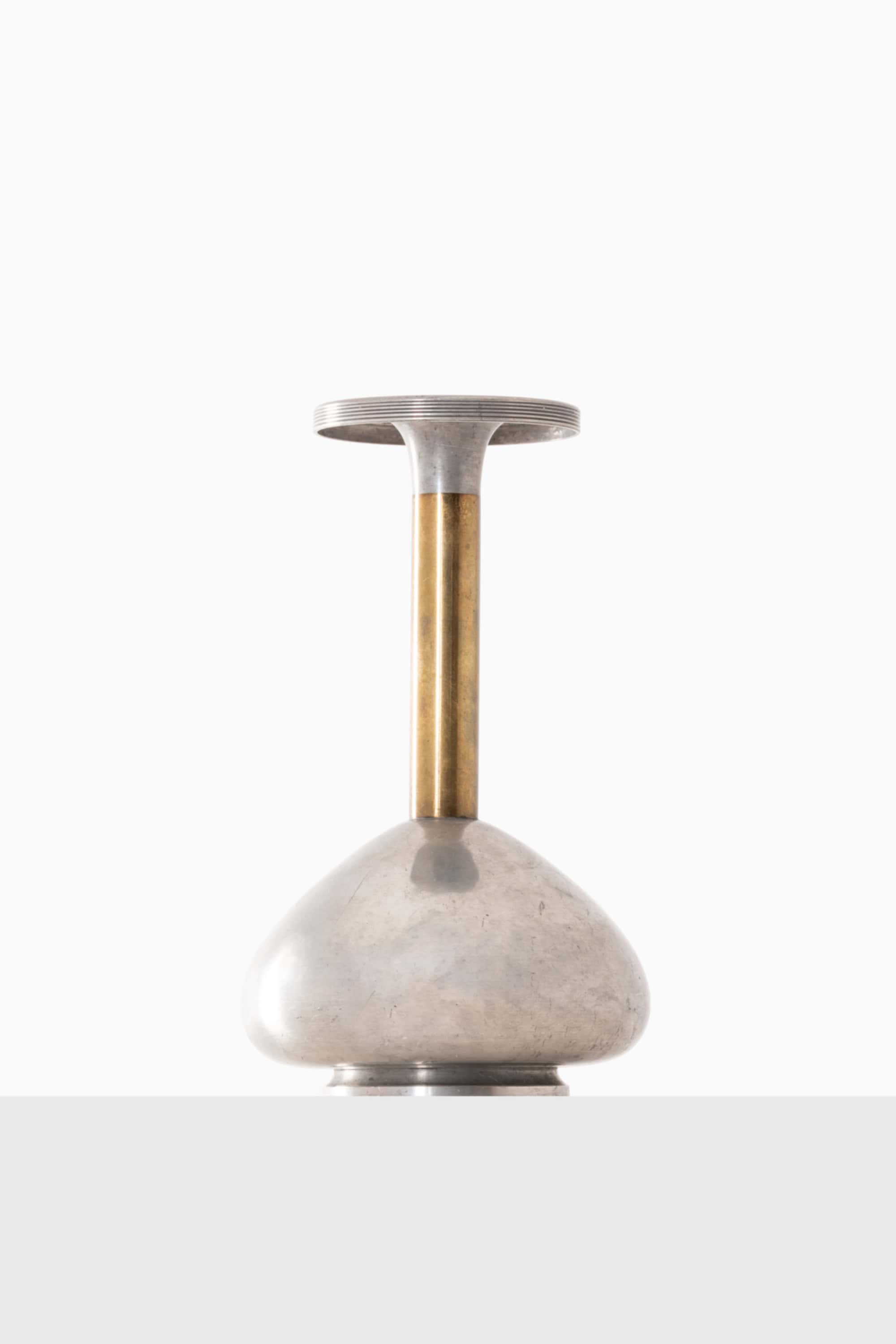
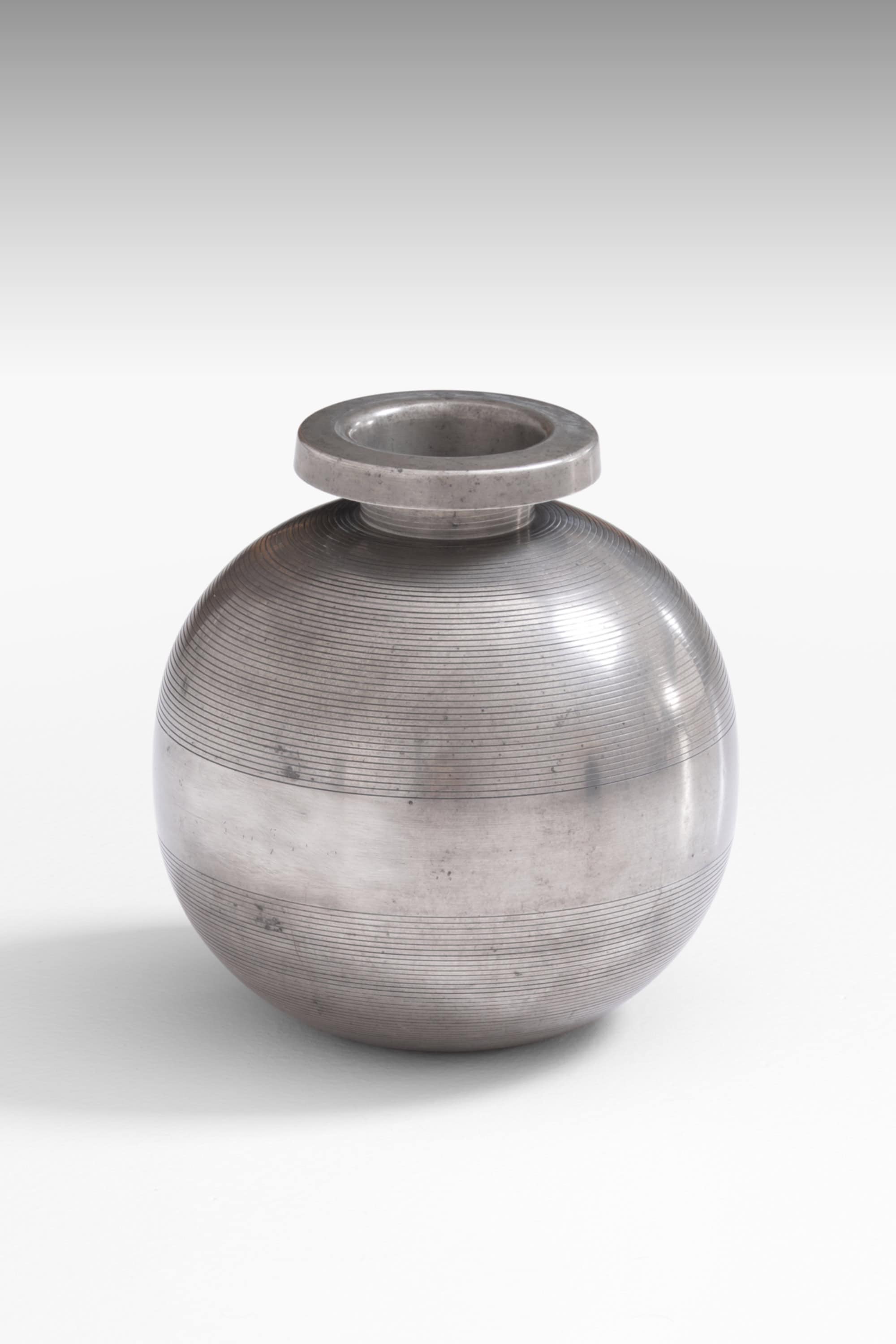
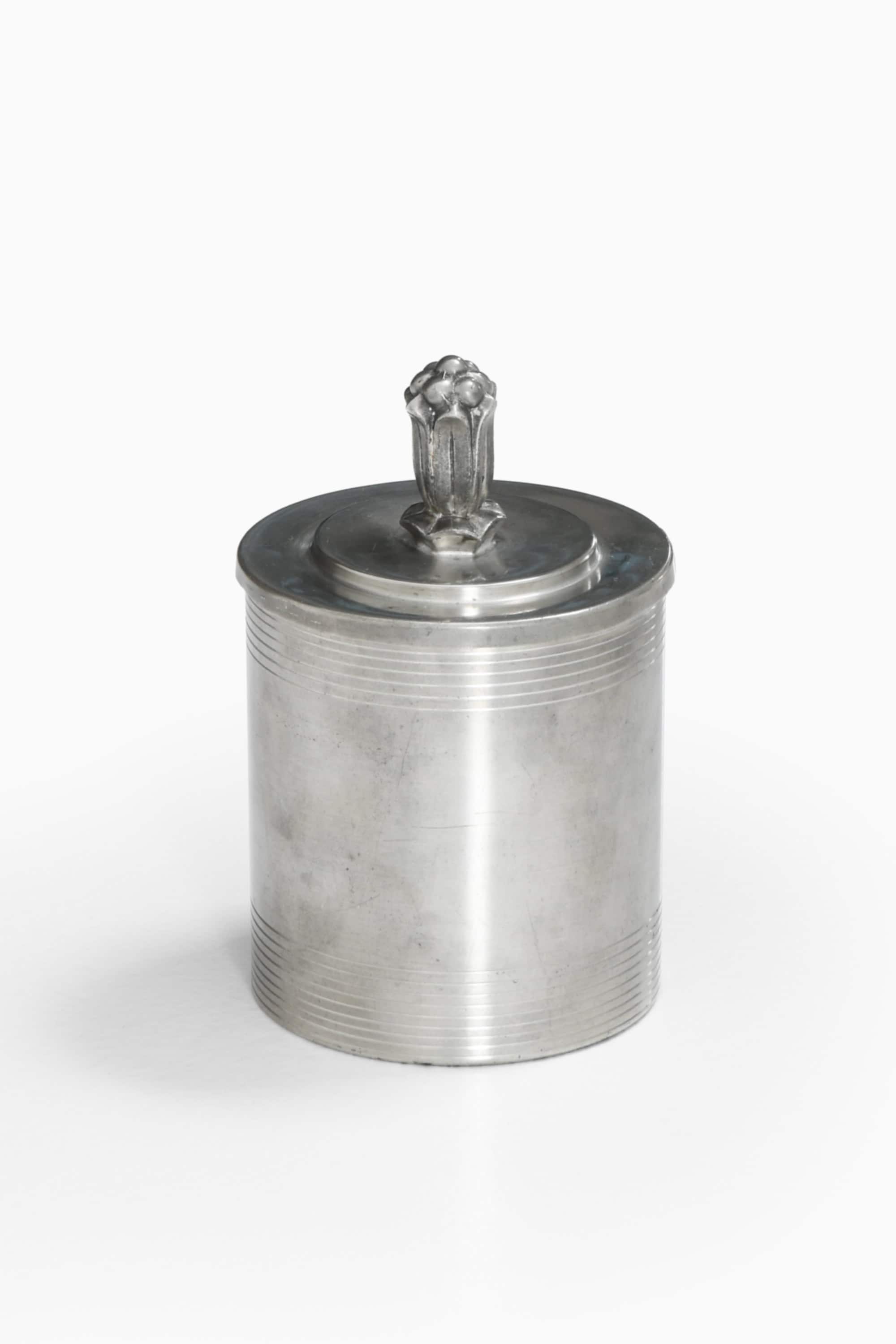
Sylvia Stave (1908–1994) was a Swedish designer and silversmith associated with the development of modern metalwork in Sweden during the early to mid-20th century. She is particularly known for her work with the company C. G. Hallberg in Stockholm, where she created silver and pewter objects distinguished by geometric clarity, refined proportions, and a restrained decorative language. Her designs reflect the transition from Swedish Grace to early functionalism, emphasizing simplicity and precision in form.
Biography
Sylvia Stave studied at the School of Arts, Crafts and Design in Stockholm (Konstfack), where she trained in metalwork and design. At a relatively young age, she was appointed artistic director at C. G. Hallberg, becoming one of the few women to hold such a position in the Swedish decorative arts industry during the 1930s. In this role, she developed a series of modern tableware and decorative objects that gained recognition for their clean lines and carefully balanced proportions.
Her work often features cylindrical and faceted forms with minimal ornamentation, reflecting the growing influence of functionalist design in Sweden during the interwar period. Stave’s designs were widely exhibited and contributed to establishing Swedish metalwork as part of the international modern design movement. Many of her objects were produced in silver, pewter, and other metals, combining traditional craftsmanship with a modern aesthetic suited to contemporary interiors.
Sylvia Stave’s contribution to Swedish design lies in her role in modernizing decorative metalwork and introducing a more rational design language to Swedish tableware and household objects. Her work remains representative of the early modern period in Swedish design, valued for its precision, material quality, and enduring formal clarity.