


Erik Chambert artwork
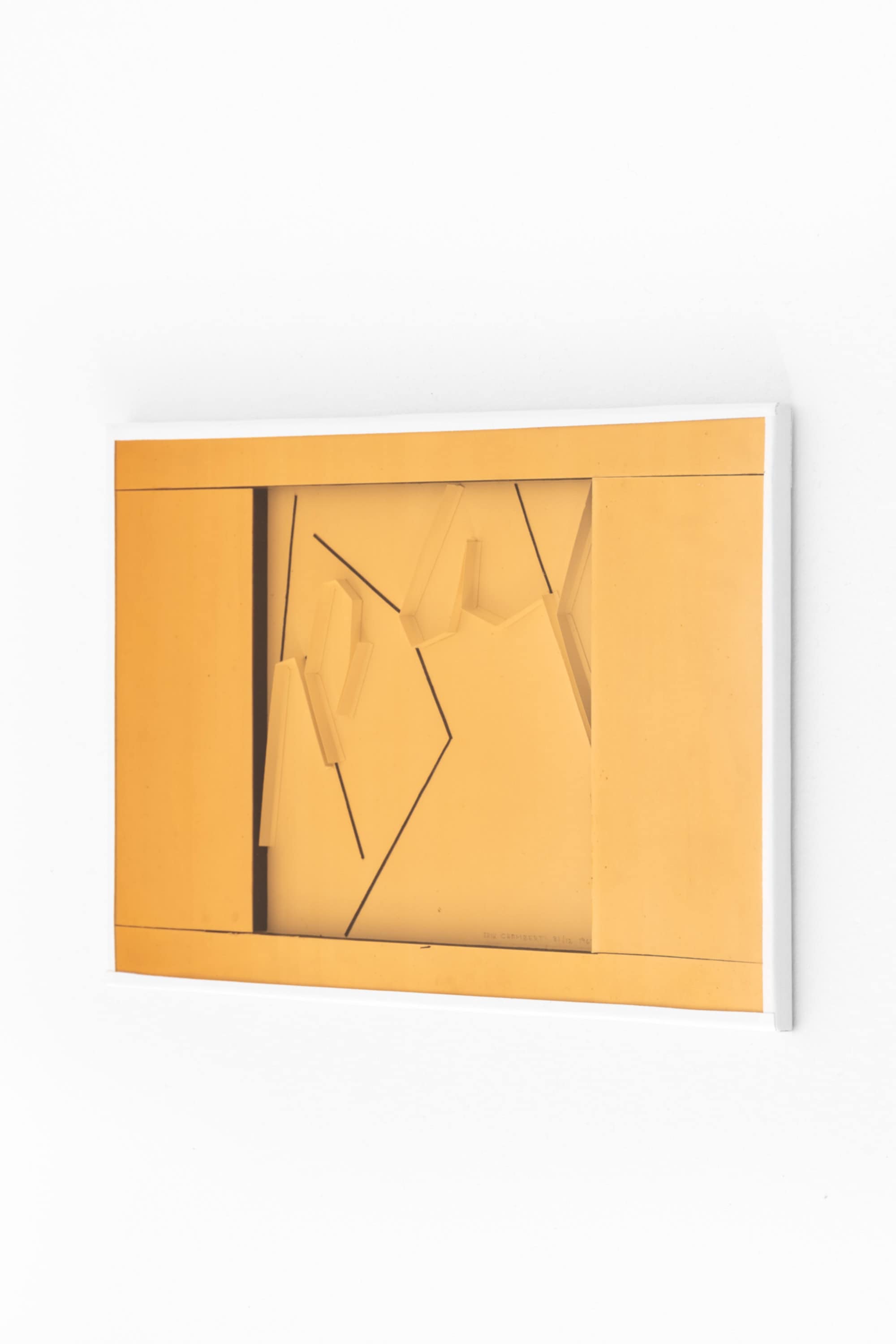
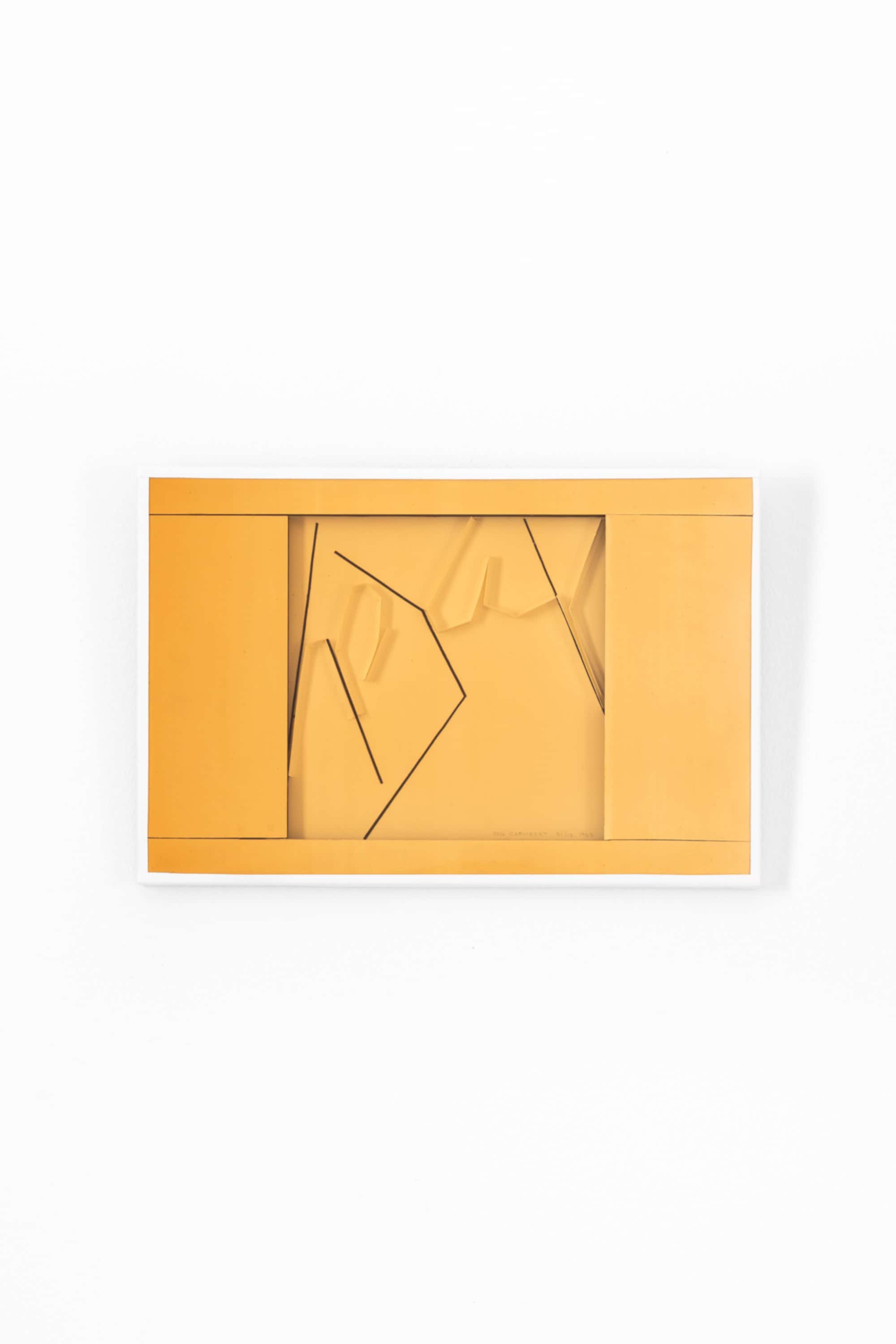
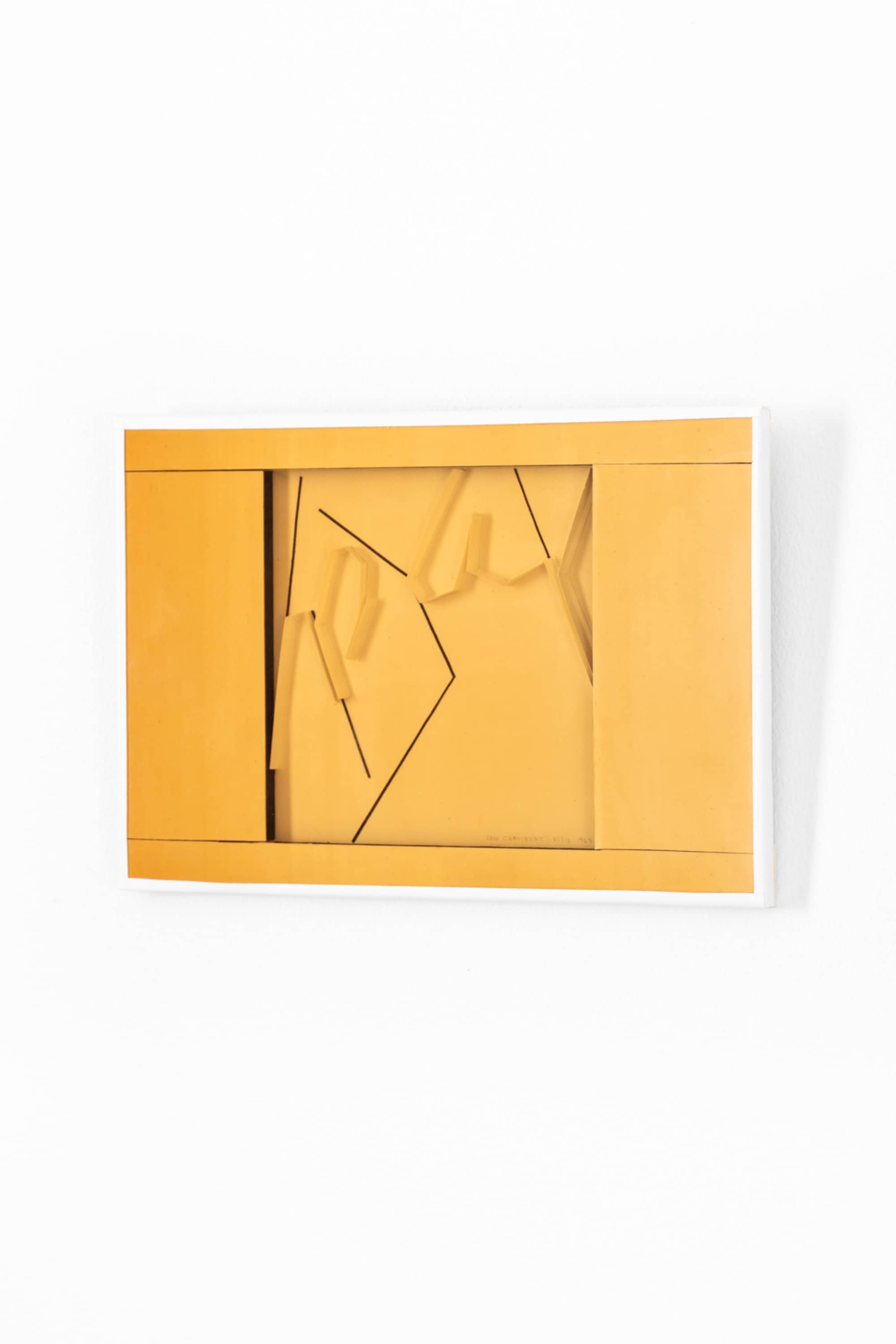
The artwork consists of a recessed central composition surrounded by broad, flat geometric borders, enclosed within a narrow white outer frame. The central field contains thin black linear elements intersecting at different angles, together with raised, irregularly shaped geometric forms in closely related shades of yellow and cream. These elements introduce subtle variations in depth, producing shadows that change according to the direction of the surrounding light. The contrast between the dark linear markings and the pale relief elements creates a layered spatial effect, while the monochromatic color scheme maintains a strong sense of visual continuity.
Erik Chambert (1902–1988) was a Swedish artist, furniture designer and interior architect associated with the development of modern Swedish design during the twentieth century. His work encompassed furniture, interiors and visual art, reflecting an interest in the relationship between artistic composition, craftsmanship and architectural space. Chambert was particularly connected to Swedish furniture and interior design, where his approach combined functional considerations with an interest in material, proportion and geometric structure. His artistic production demonstrates a parallel exploration of abstraction and the organization of form within a defined space.
The work belongs to the tradition of concrete art, an artistic movement that developed during the twentieth century and became particularly influential in European modernism after the Second World War. Unlike representational abstraction, concretism approaches lines, planes, colors and geometric forms as independent visual elements rather than as interpretations of external subjects. In Sweden, the movement gained prominence during the 1940s and 1950s and continued to influence artists working with geometric abstraction, relief construction and spatial experimentation throughout the 1960s. Chambert’s composition reflects these principles through its carefully structured arrangement of angular forms and its interaction between two-dimensional surfaces and three-dimensional elements.
The composition is particularly notable for its restrained use of color and its treatment of negative space. The broad yellow borders establish a stable rectangular framework, while the irregular arrangement of lines and raised forms within the recessed center introduces a contrasting sense of movement. The resulting interplay between order and asymmetry is characteristic of geometric modernism. The shallow relief construction also creates a connection with architectural models and modernist wall sculpture, where the relationship between solid elements, empty space and changing light becomes an essential part of the visual experience.
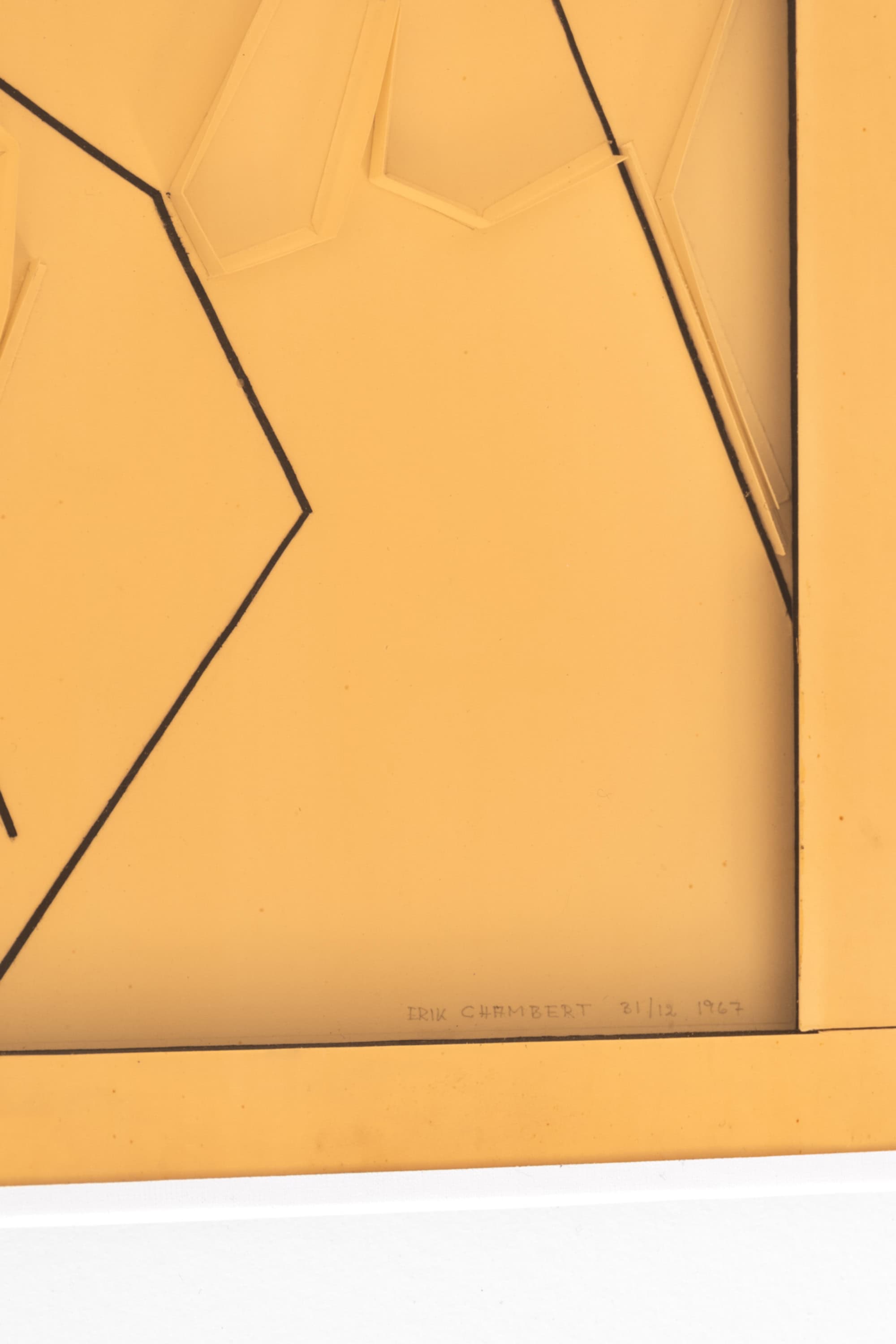
The artwork is signed Erik Chambert and dated 31/12 1967 in the lower right corner of the central composition. Its provenance is directly from the artist’s family, providing a documented connection to Chambert’s personal artistic production. The work measures 29 cm in width, 19.5 cm in height and 1 cm in depth (approximately 11.42 x 7.68 x 0.39 inches).
The artwork presents in good vintage condition, with minor surface marks, small areas of discoloration and subtle signs of age visible across the yellow surfaces and within the composition. These characteristics are consistent with its age and materials.
Provenance
The artist's family
Dimensions (cm) | W: 29 / D: 1 / H: 19.5 |
| Color | Yellow |
| Decade | 1960s |
| Country | Sweden |
| Style | Concretism |
| Designed in | 1967 |
| Item Number | 250857 |
Erik Chambert
Erik Chambert (1902–1988) was a Swedish furniture designer and cabinetmaker associated with the tradition of high-quality Swedish craftsmanship during the mid-20th century. He is closely linked to the family firm Chamberts Möbelfabrik in NorrkÃ...
Read more


