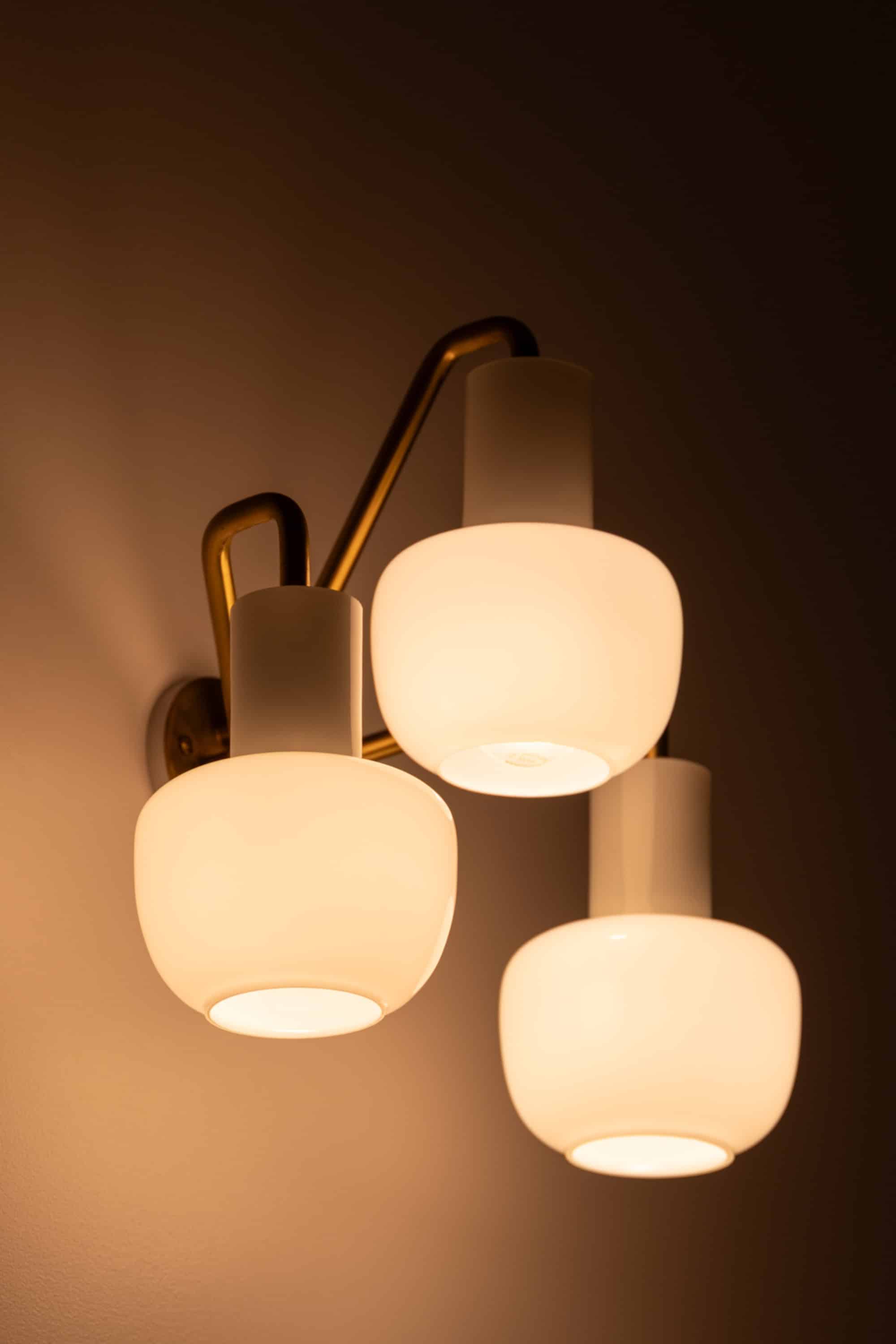
Vilhelm Lauritzen wall lamps
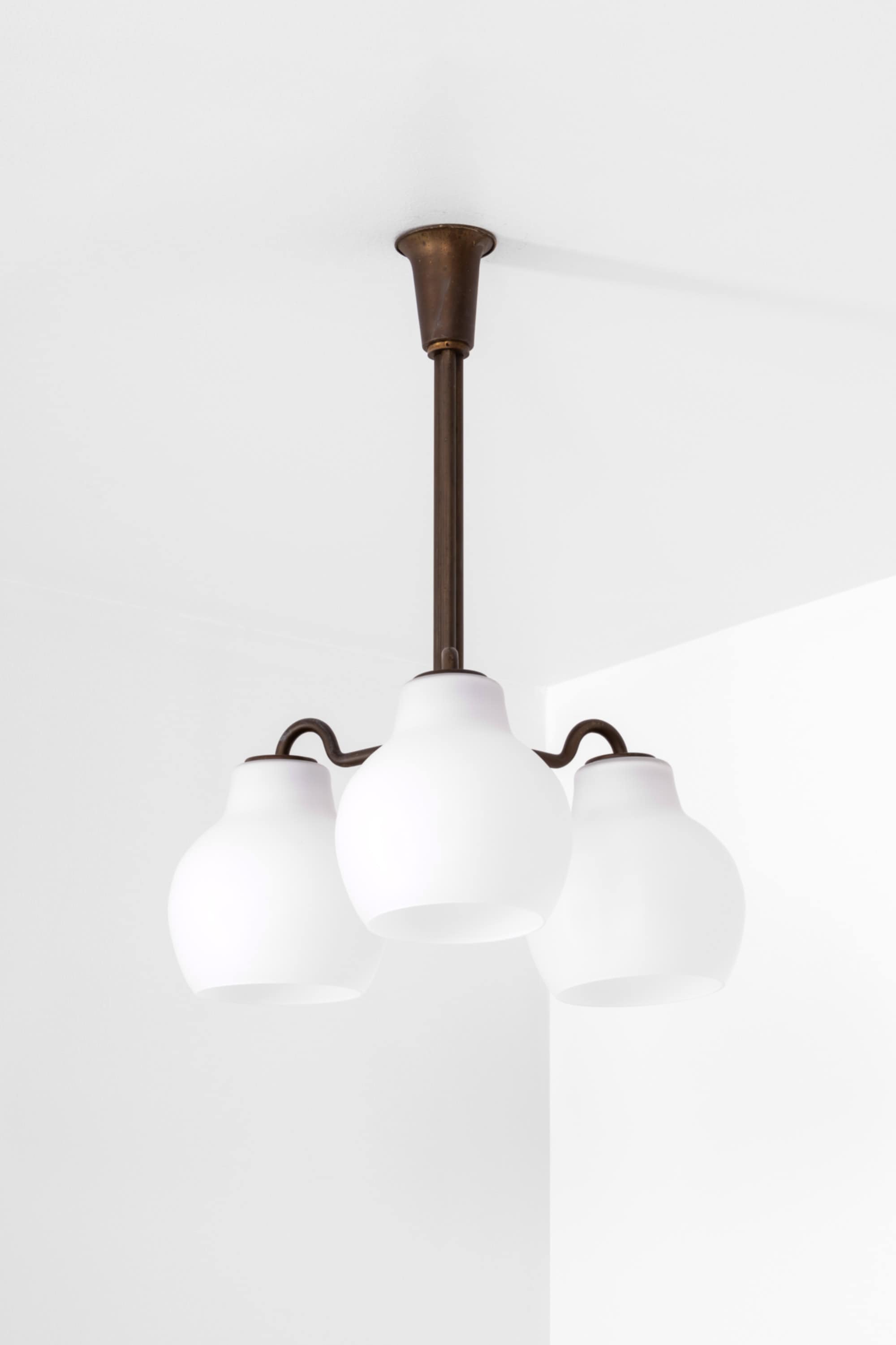
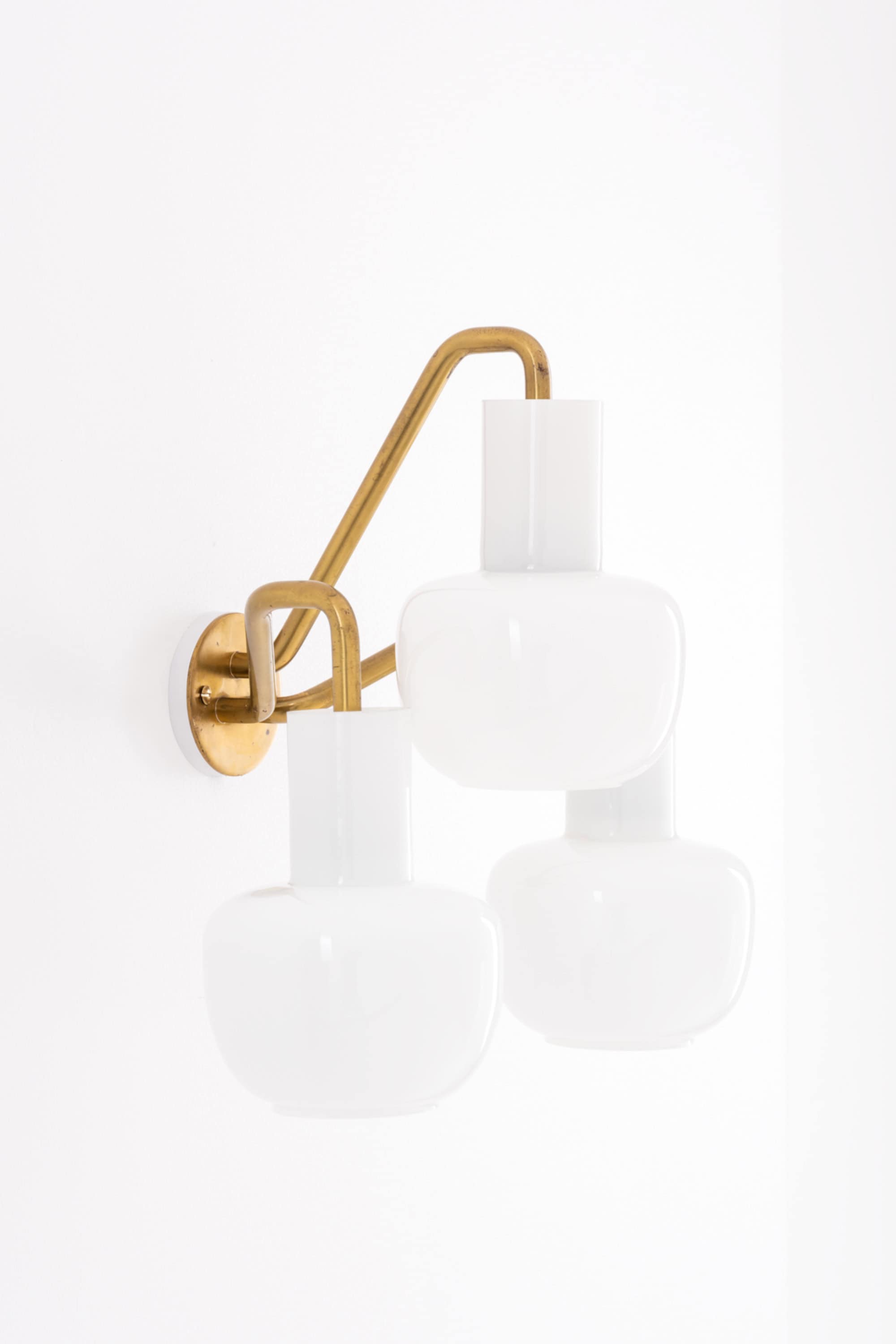
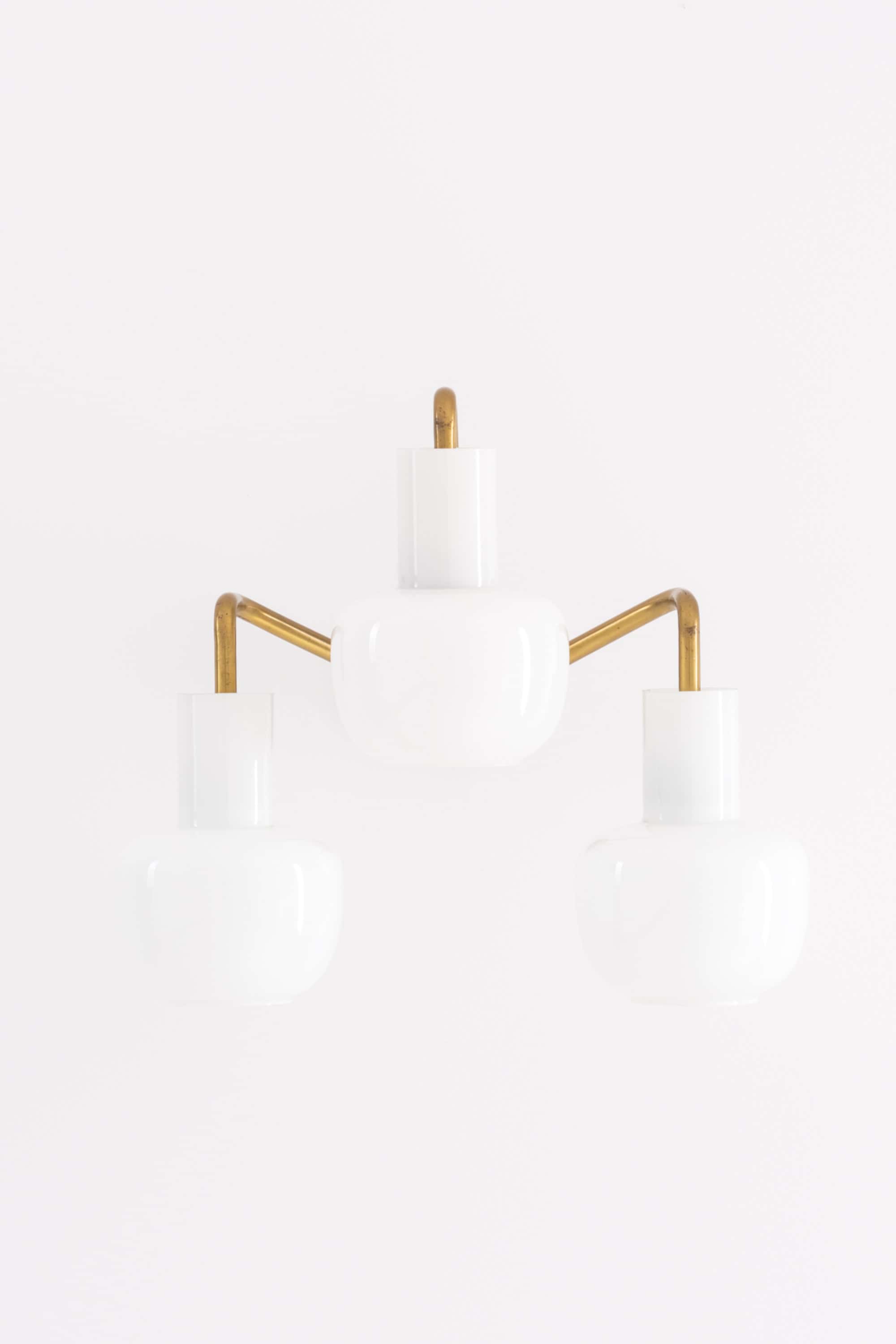
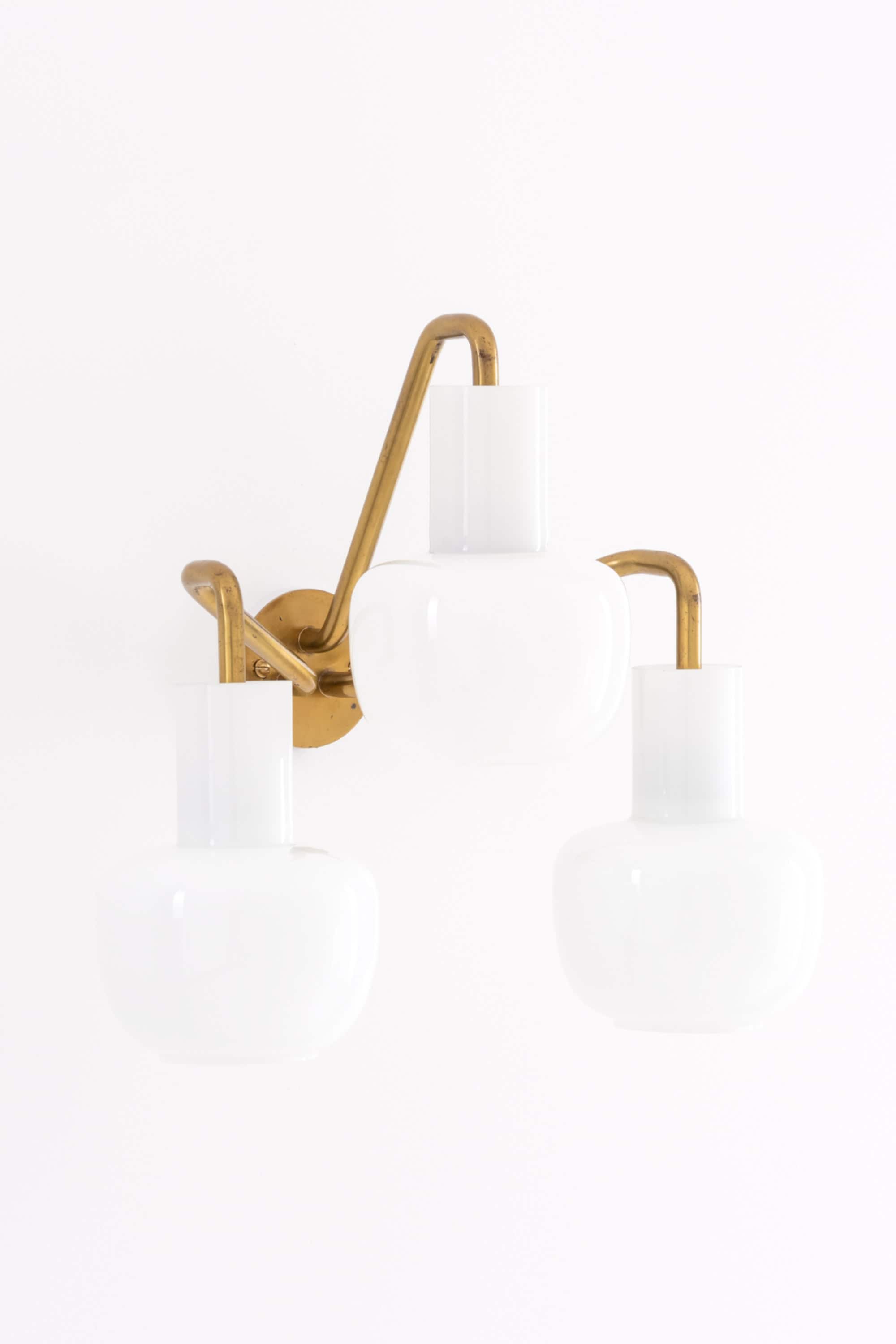
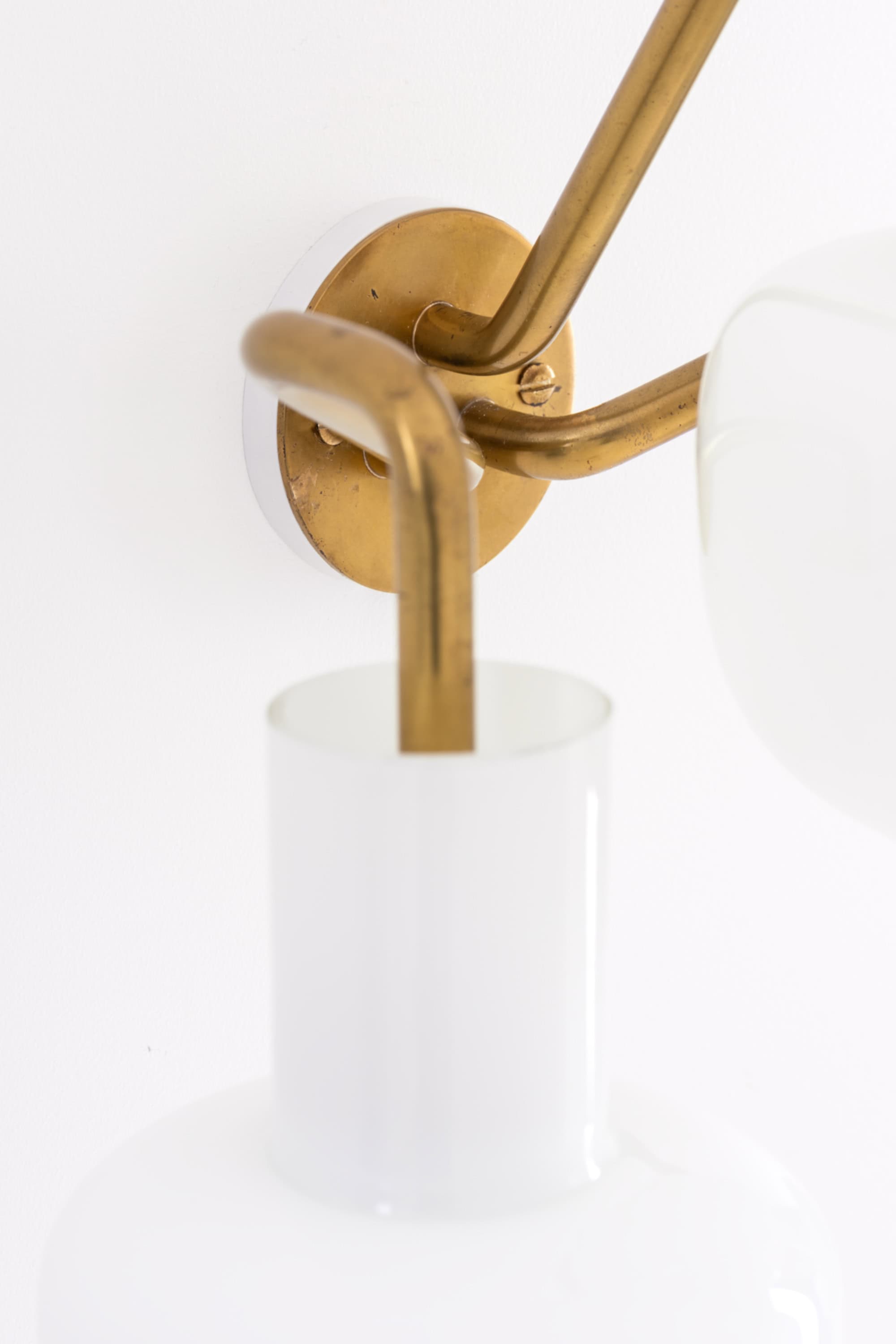
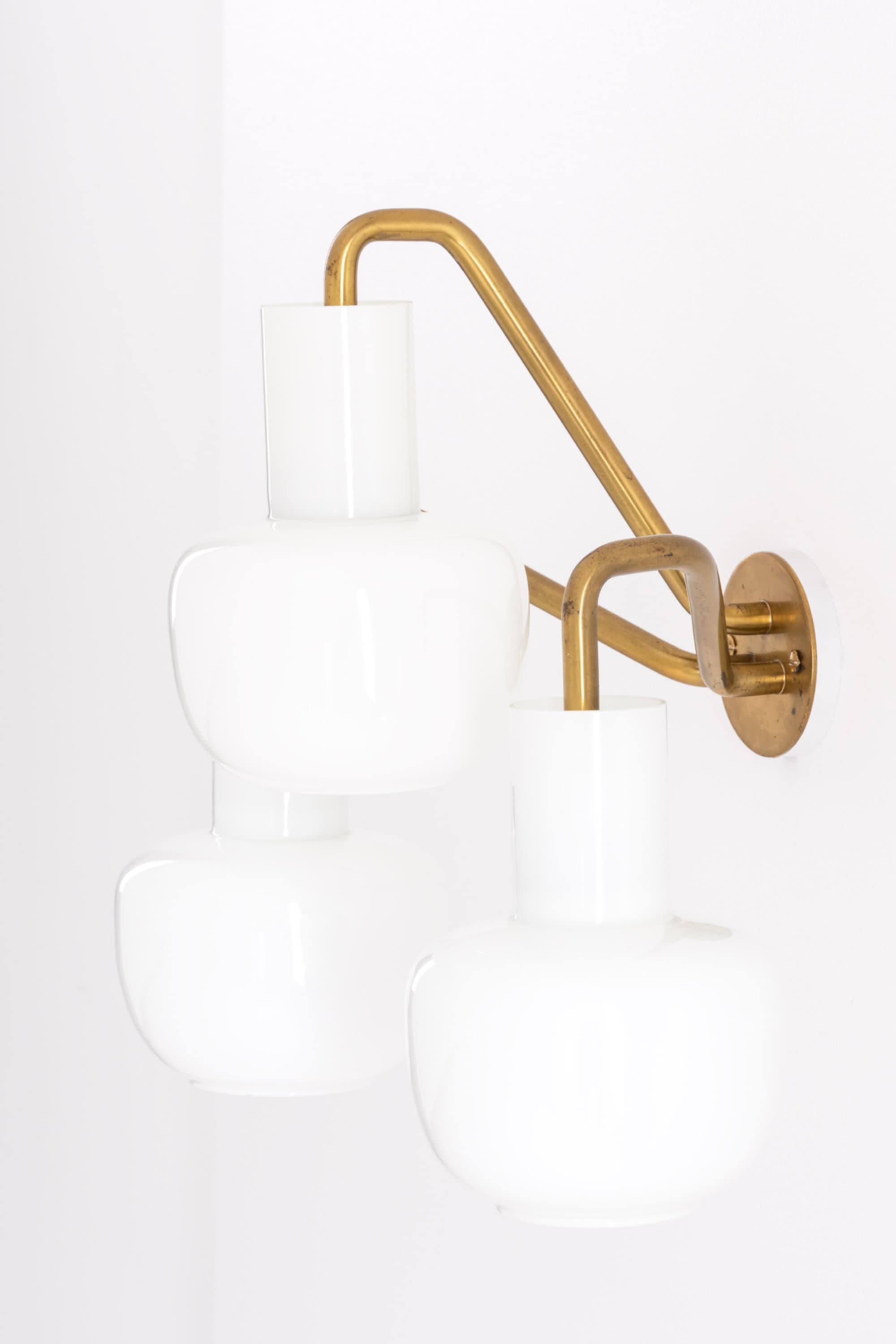
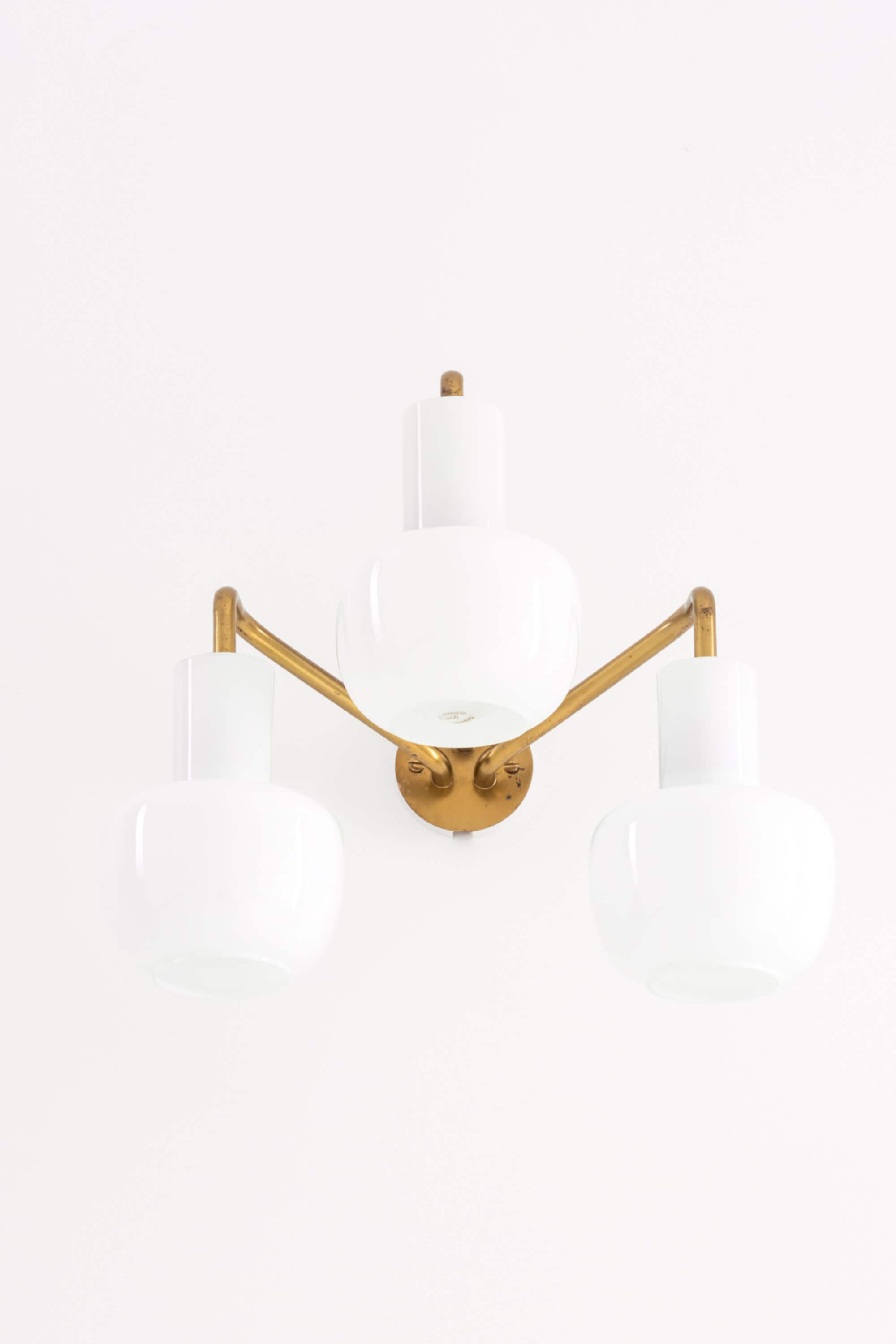
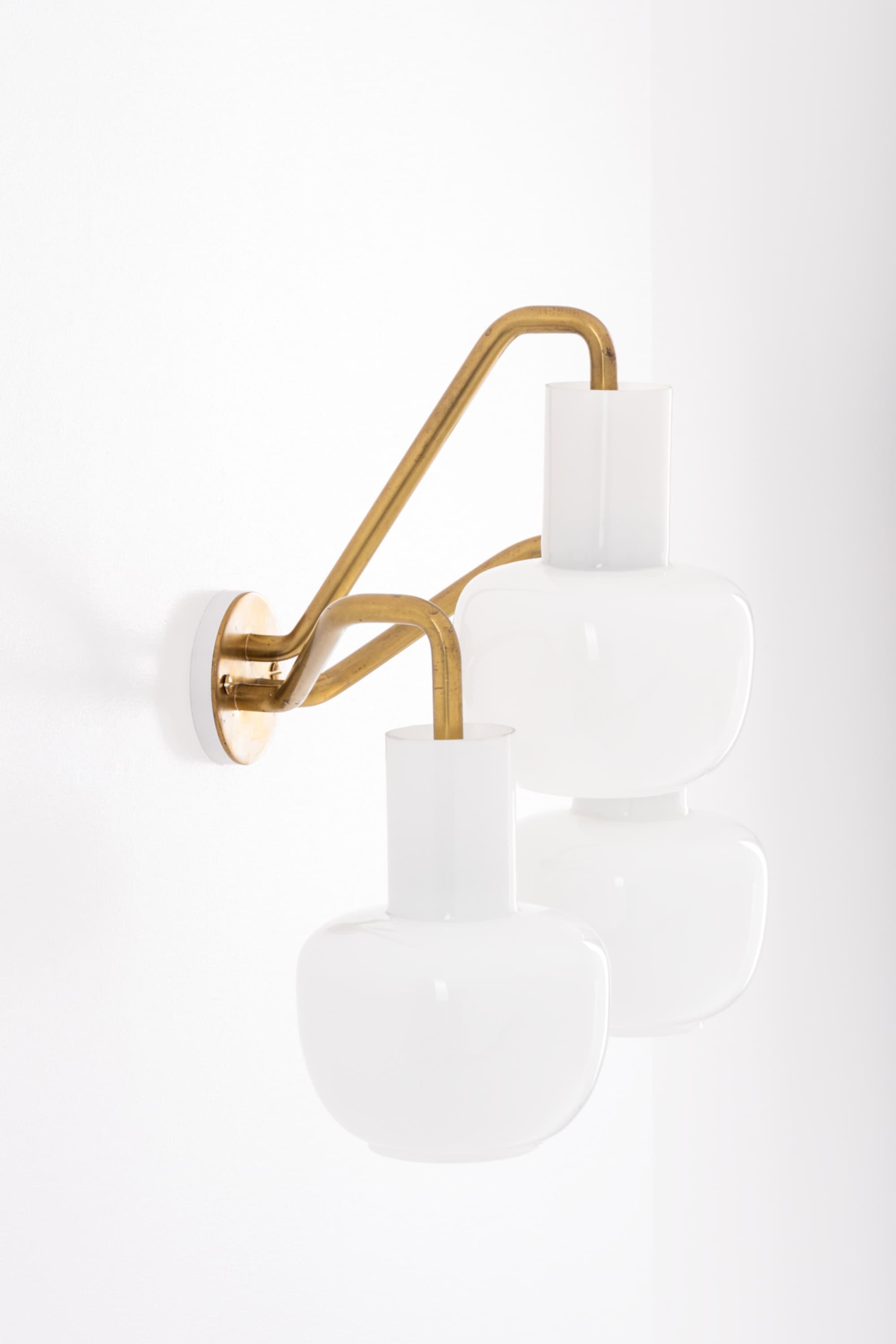
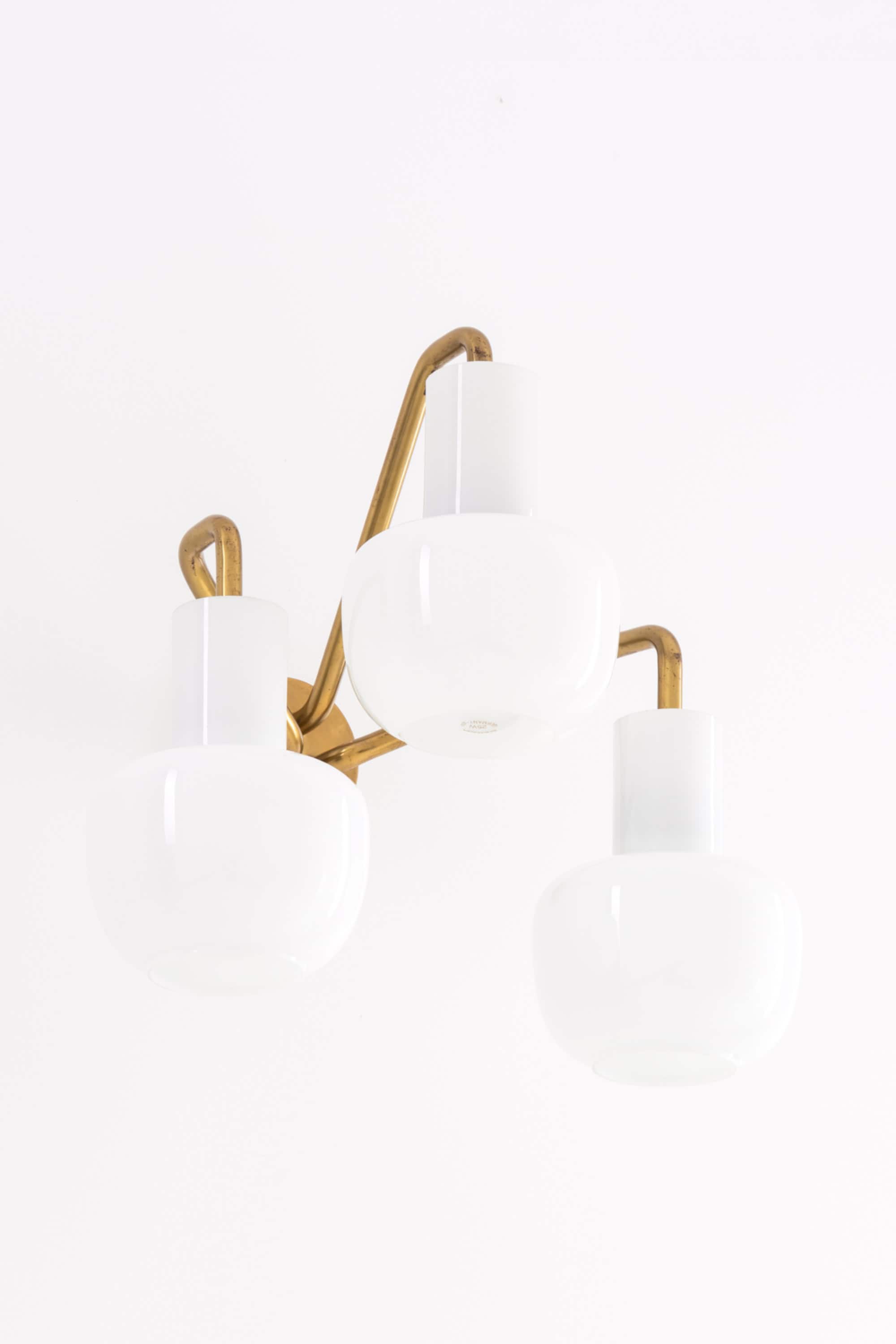
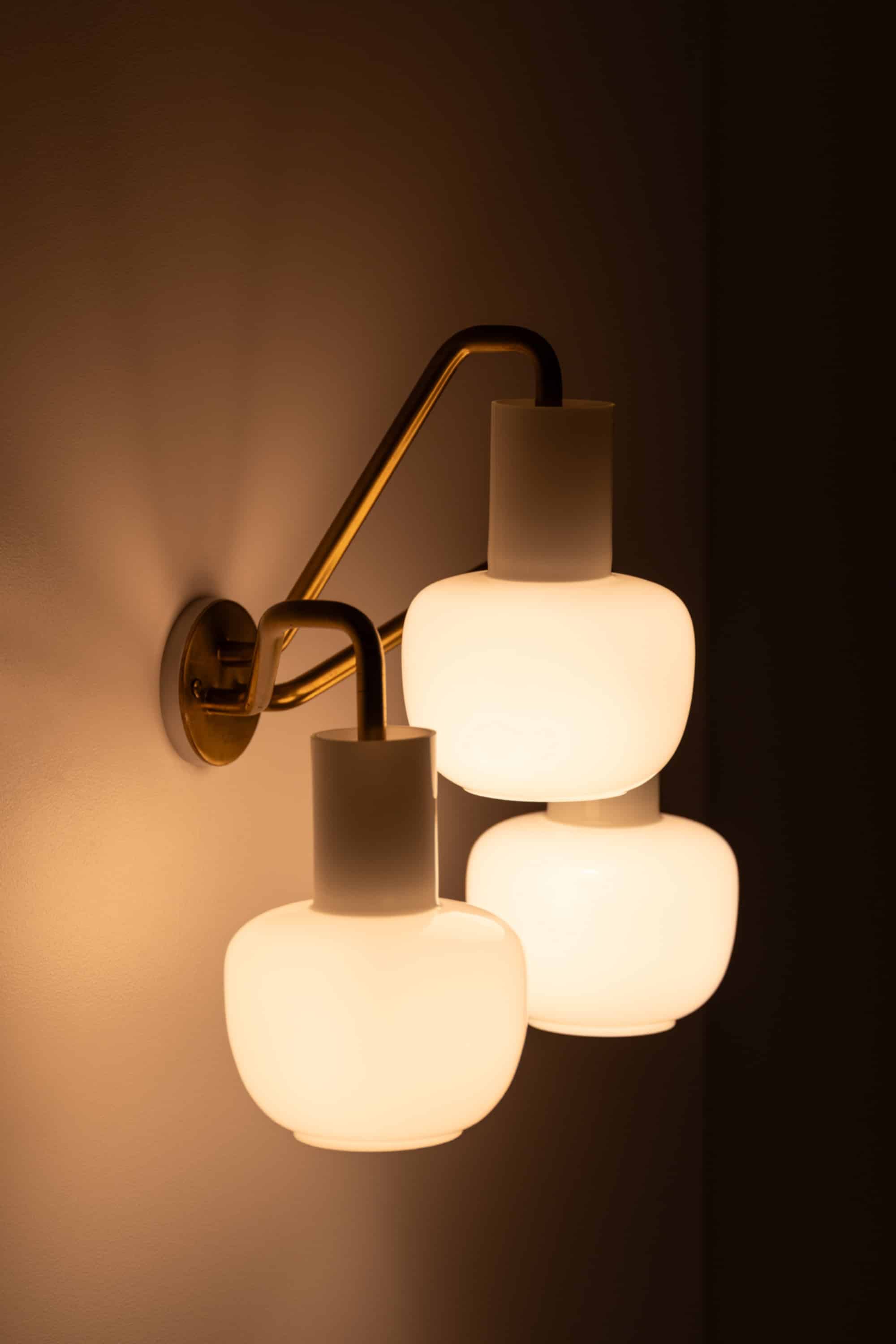
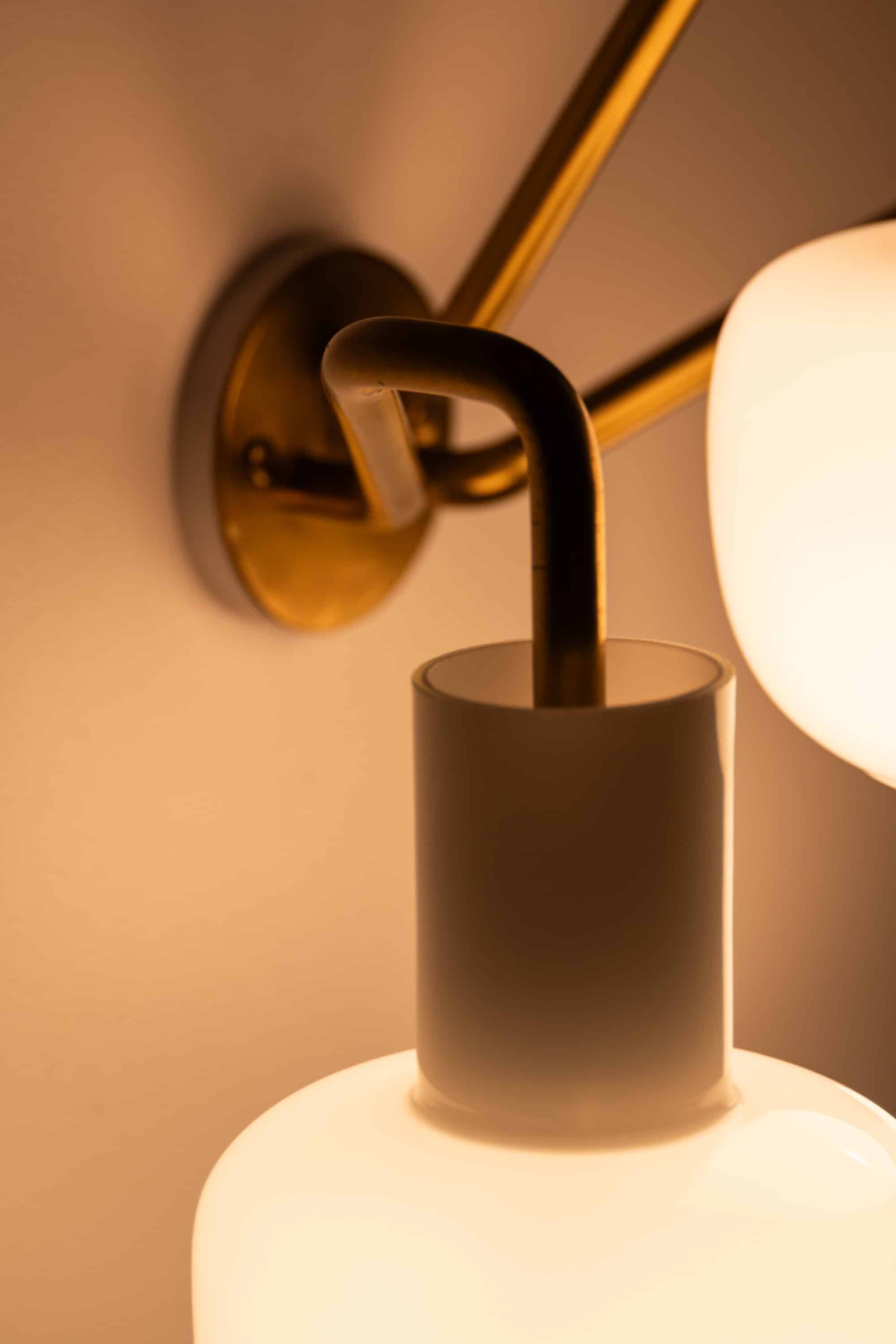
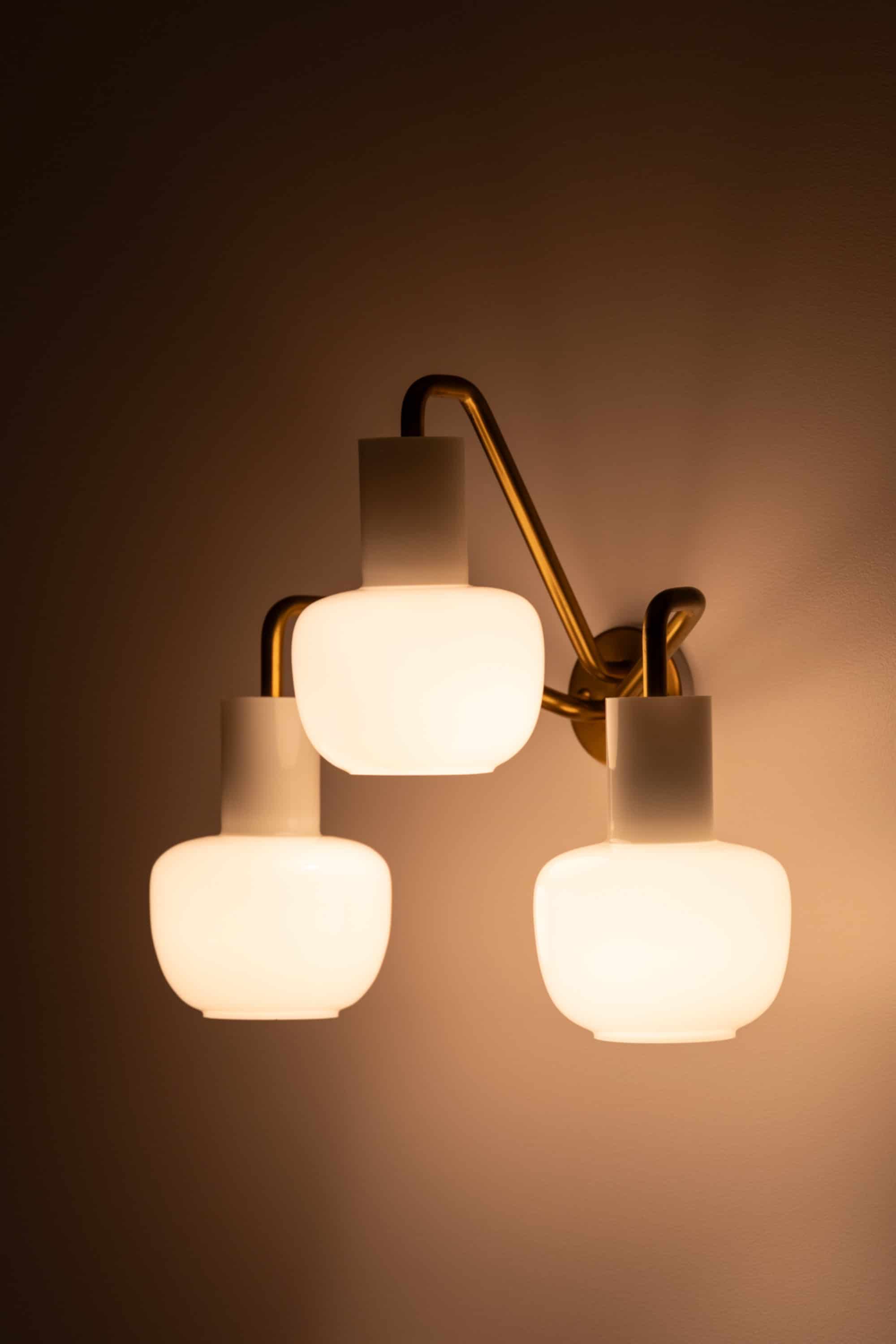
Each wall lamp features a circular brass mounting plate supporting three tubular brass arms arranged at different heights. The arms extend outward from the wall before bending downward at their ends, where the glass shades are attached. The composition creates an asymmetrical arrangement when viewed from the side, while the frontal view reveals a more balanced, almost triangular configuration. The brass has a warm golden tone with natural variations in its surface, contrasting with the smooth, glossy white opaline glass.
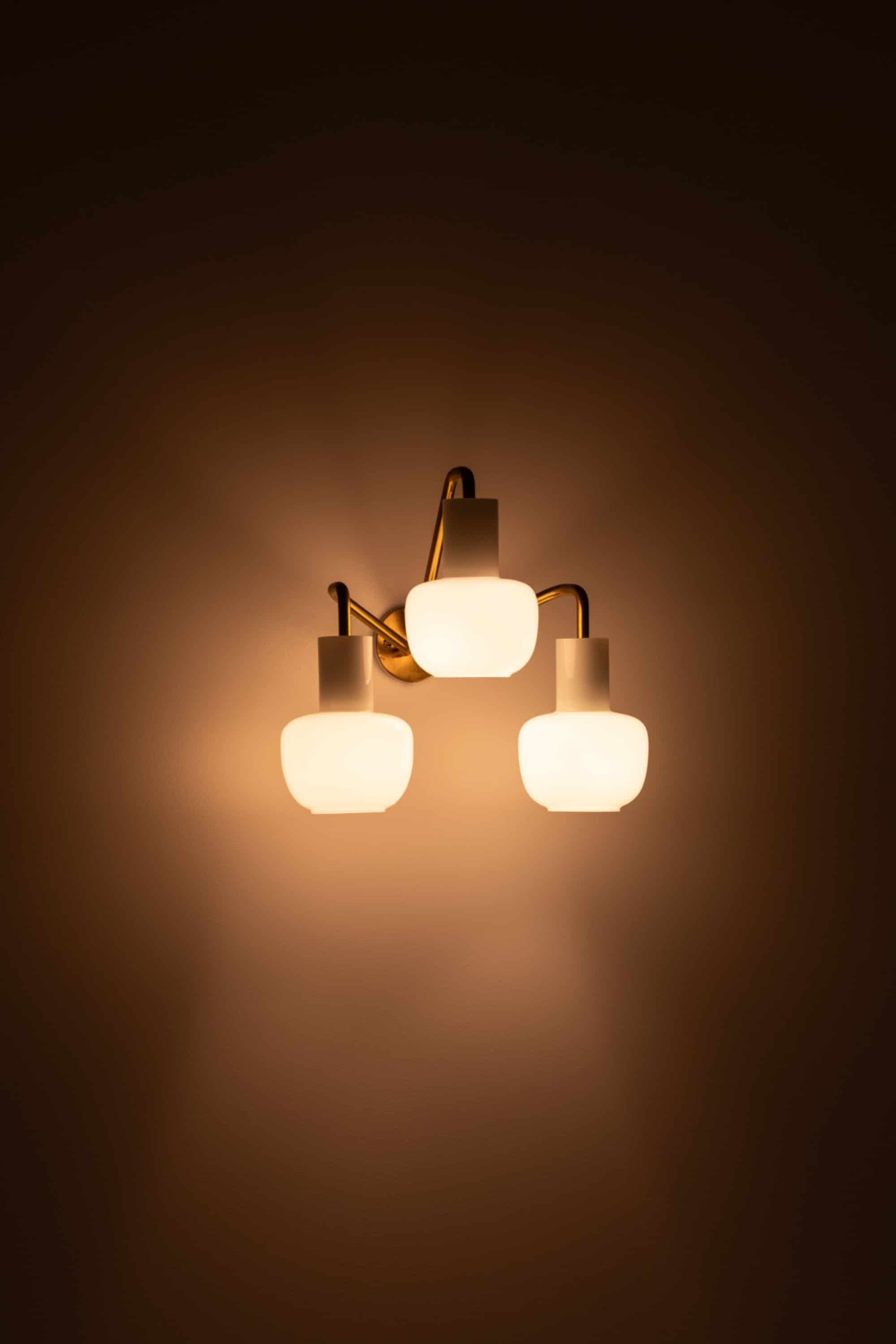
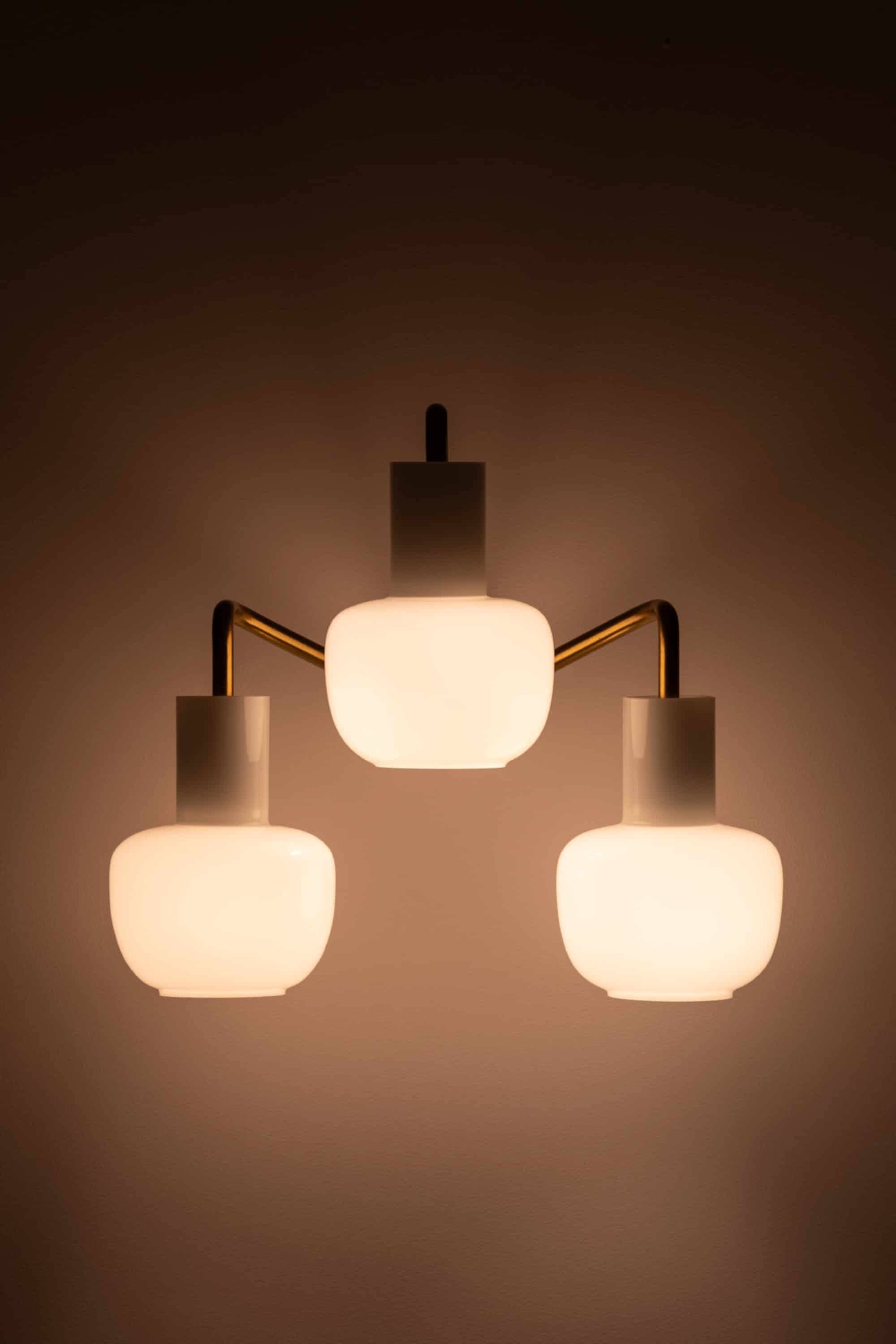
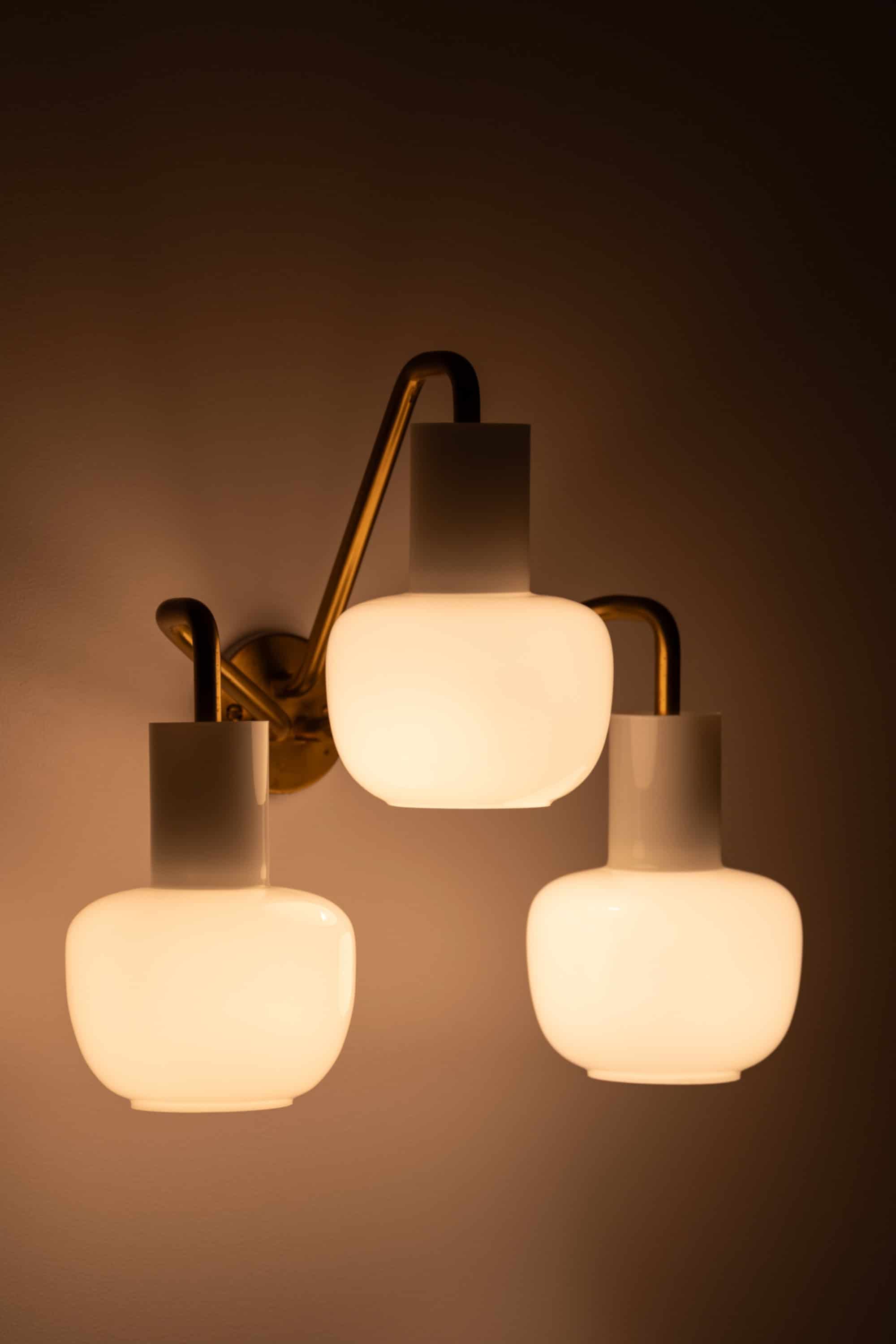
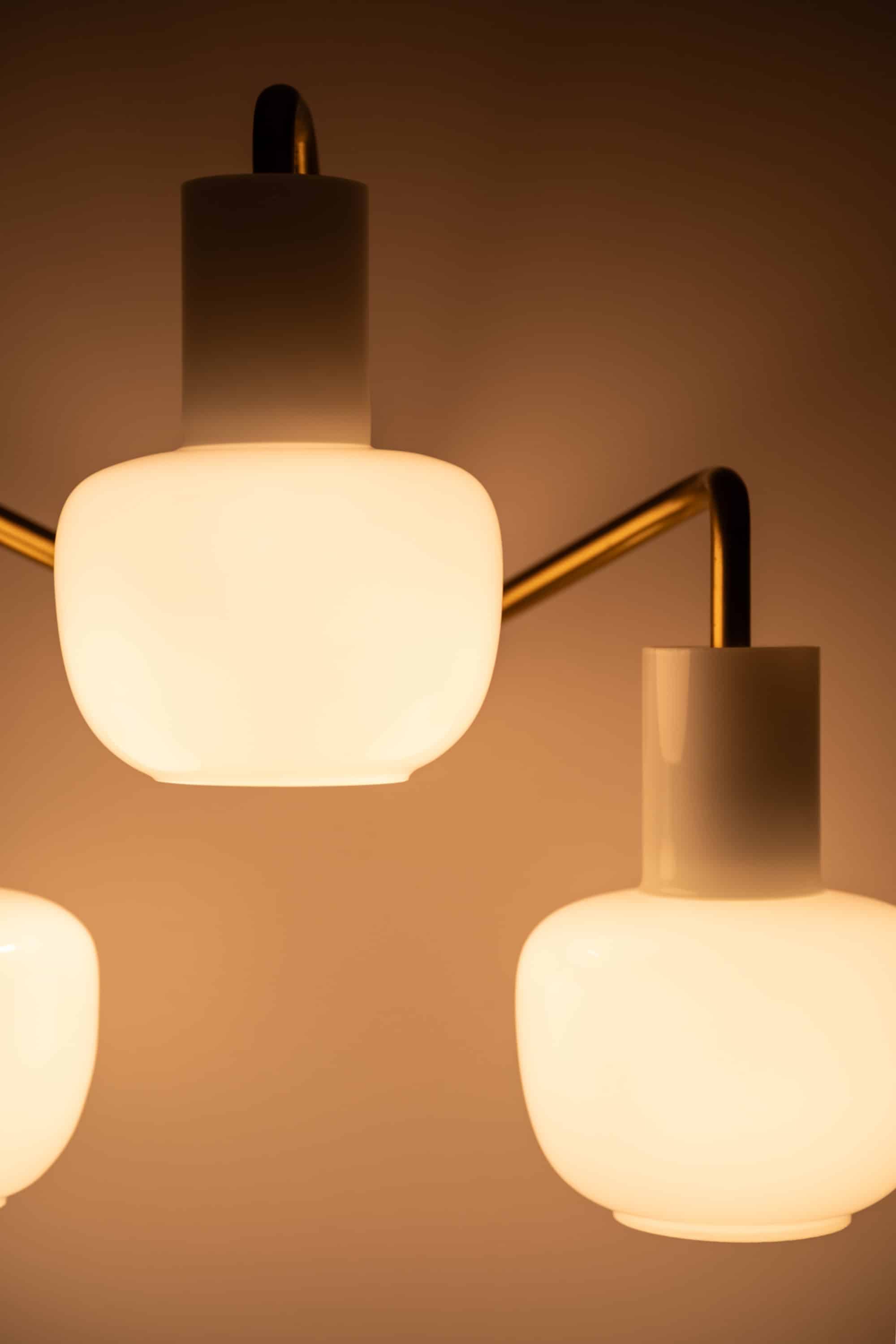
The three glass shades have a cylindrical upper section that transitions into a broad, rounded body with softly curved shoulders and a slightly flattened underside. Their proportions create a compact, sculptural appearance, while the opaline glass diffuses the light evenly and reduces direct glare. When illuminated, the shades produce a soft, warm light that spreads into the surrounding space. The combination of three separate light sources provides both general illumination and a decorative lighting effect.
Vilhelm Lauritzen (1894–1984) was one of Denmark’s most influential modernist architects, particularly recognized for his contributions to Danish functionalism. His architectural work emphasized the relationship between space, natural light, materials, and human experience. Among his important projects are Copenhagen Airport’s original terminal building, completed in 1939, and the Danish Broadcasting House, developed during the 1930s and 1940s. Lighting was an integral part of Lauritzen’s architectural approach, and his designs often combined technically considered illumination with restrained, functional forms.
Louis Poulsen, established in Copenhagen in the late 19th century, developed into one of Denmark’s leading lighting manufacturers during the 20th century. The company became particularly associated with the development of modern architectural lighting through collaborations with designers and architects, including Poul Henningsen and Vilhelm Lauritzen. Its production focused on the relationship between light distribution, glare control, and the physical construction of lighting fixtures. The collaboration with Lauritzen contributed to the development of lighting intended to complement the architectural principles of Danish functionalism.
Dating from the 1940s, these wall lamps represent the transition from early functionalist lighting toward the softer forms and material combinations that became characteristic of Scandinavian modern design during the mid-20th century. The use of brass and opaline glass reflects a period when traditional metalworking techniques were combined with increasingly simplified geometric forms and a growing emphasis on comfortable, diffused illumination.
The set is preserved in good vintage condition, with small signs of age and use consistent with its period. The brass surfaces display natural patination, minor scratches, and localized discoloration, particularly around the curved arms and circular mounting plates. The white opaline glass shades retain their glossy appearance, with no obvious major damage visible in the photographs. The overall construction and decorative elements appear well preserved.
Each wall lamp measures approximately 41 cm (16.14 inches) in width, 25 cm (9.84 inches) in height, and 37 cm (14.57 inches) in depth. The set consists of four wall lamps, each with three opaline glass shades and a brass framework.
Dimensions (cm) | W: 41 / D: 25 / H: 37 |
| Producer | Louis Poulsen |
| Color | White |
| Decade | 1940s |
| Country | Denmark |
| Style | Mid Century, Scandinavian Modern |
| Material | Brass, Opaline glass |
| Designed in | 1940s |
| Item Number | 250934 |
Vilhelm Lauritzen
Vilhelm Lauritzen (1894–1984) was a Danish architect and designer and a leading figure in the development of Danish functionalism. His work is characterised by clarity of structure, refined proportions, and a strong sensitivity to light, materia...
Read more