

Cabinet
This cabinet is a unique apprentice work designed and constructed by the Swedish cabinetmaker Georg Eriksson Höij during his formal training in furniture making between 1949 and 1953. The piece was produced in Sweden as part of his journeyman examination, a traditional requirement within Scandinavian cabinetmaking education in which the student was expected to design and execute a complete piece of furniture independently. Such apprentice works were intended to demonstrate mastery of joinery, proportion, veneer work, and structural design. According to the accompanying documentation preserved with the cabinet, the work required approximately 342 hours to complete.
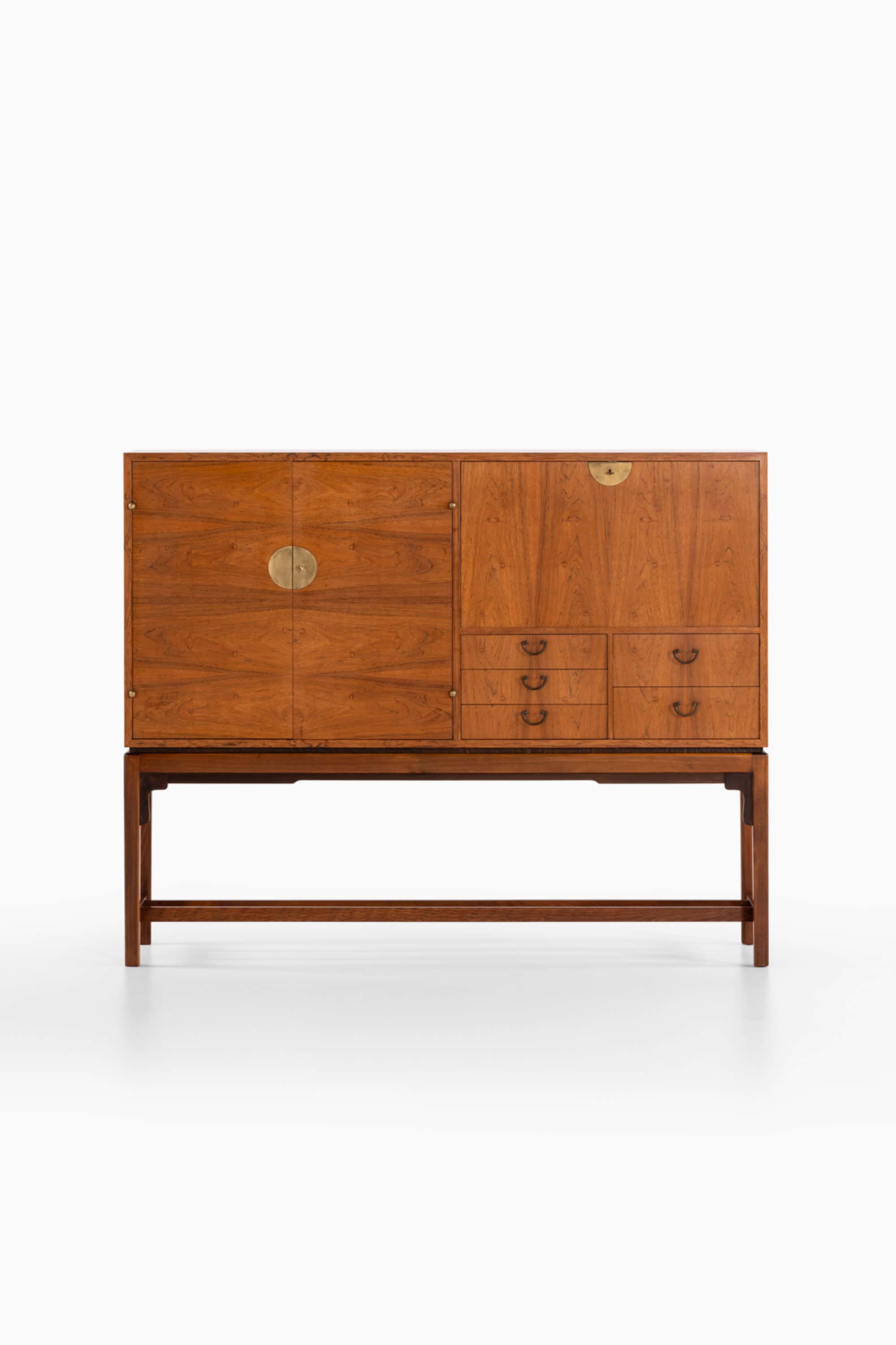
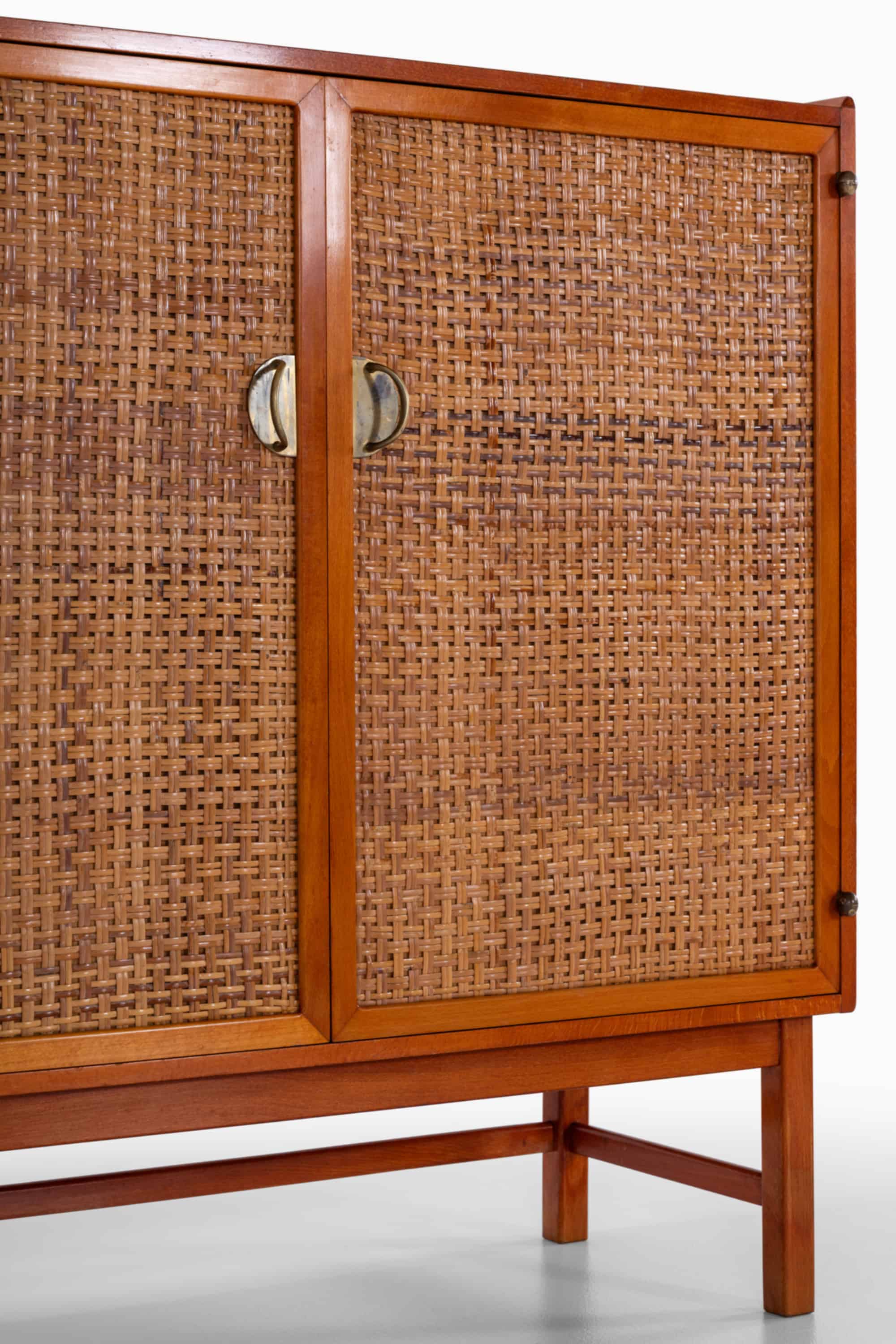
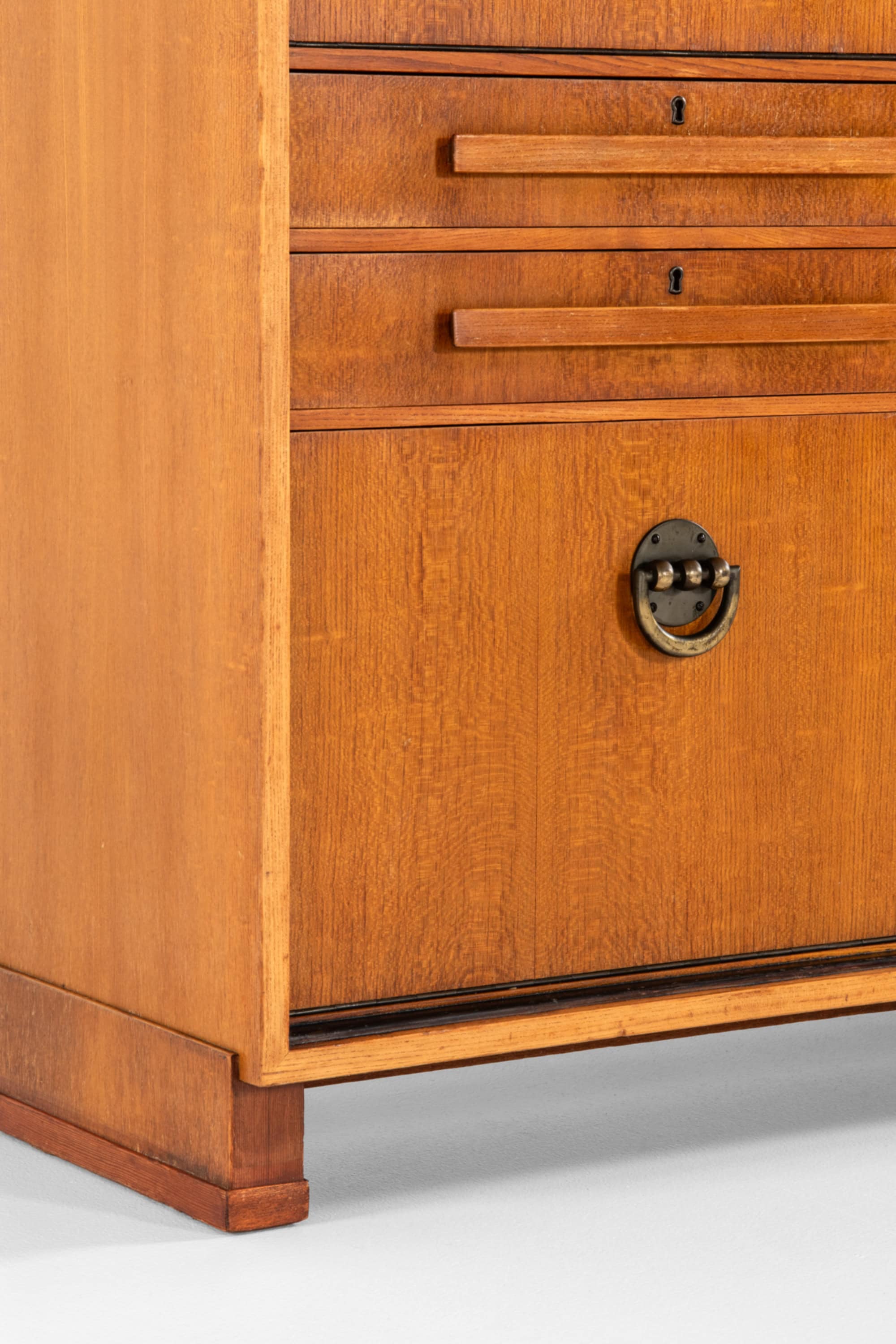
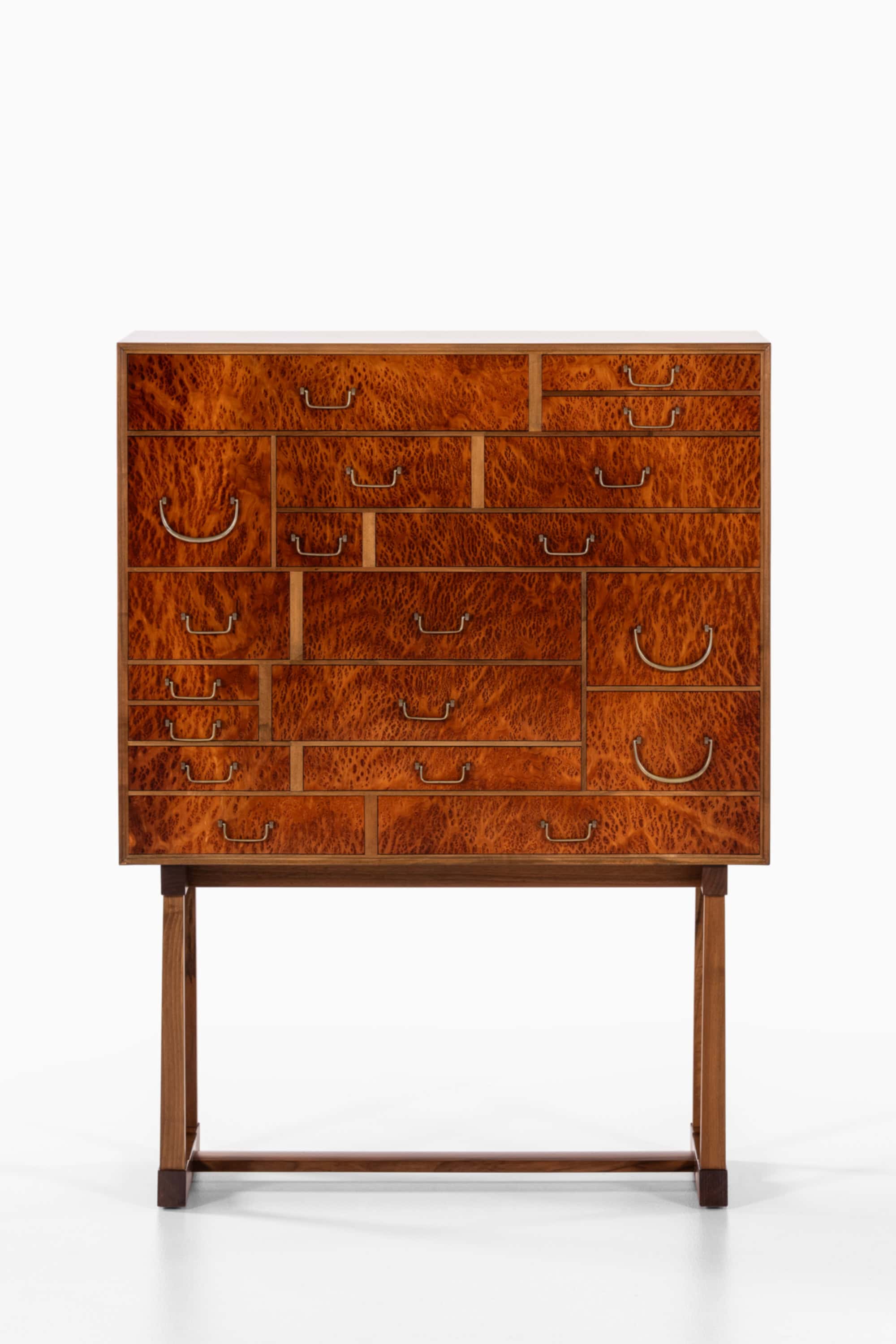
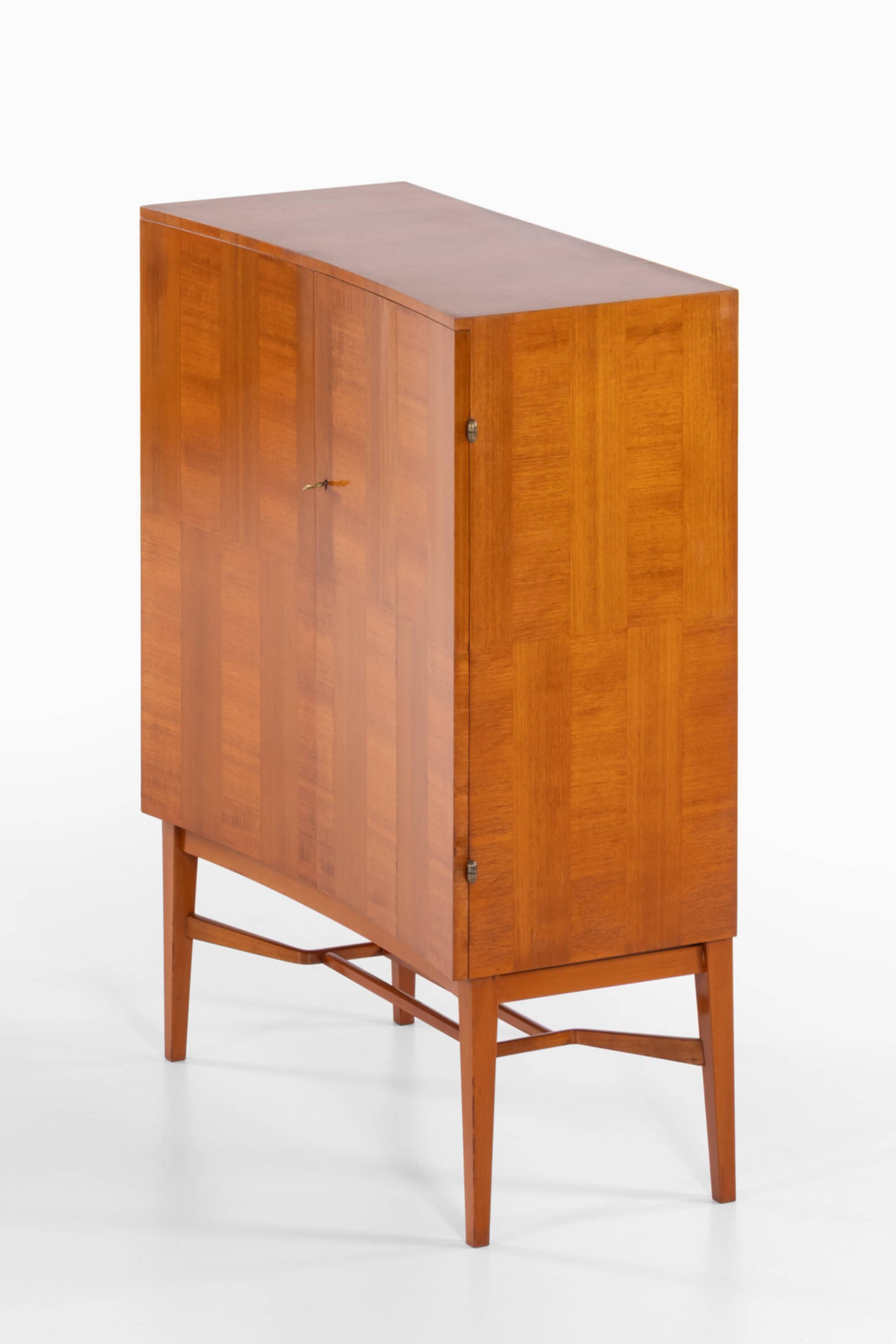
The cabinet is constructed in mahogany with brass hardware and is elevated on a refined base structure consisting of slender tapered legs connected by a sculptural stretcher system. The legs angle slightly outward and are joined by a combination of straight and curved stretcher elements that intersect beneath the cabinet body. This understructure introduces a light architectural rhythm and contributes to the visual balance of the piece by contrasting the more solid rectangular cabinet volume above. The mahogany surfaces display a warm reddish-brown coloration with subtle tonal variation and clearly visible grain patterns, characteristic of carefully selected veneer and solid elements.
The two front doors are decorated with a geometric veneer composition arranged in alternating vertical and horizontal panels. The veneer layout forms a structured checker-like pattern across the door surfaces, emphasizing the natural figure of the mahogany while maintaining a symmetrical composition across the center seam. The precise alignment of the veneer panels reflects the technical discipline associated with apprentice furniture production. The doors are fitted with brass hinges and close with a central brass lock accompanied by its original key, the metal surfaces showing a natural aged patina with darker tonal variation.
Inside the cabinet the interior is finished in mahogany and fitted with several horizontal shelves that create structured storage compartments. Beneath the shelving is a row of small drawers arranged symmetrically across the lower section of the interior. These drawers are fitted with circular wooden pulls in a lighter tone that contrasts subtly with the darker mahogany surfaces. The interior construction demonstrates careful joinery and precise fitting, consistent with the level of craftsmanship required for a journeyman examination piece.
An accompanying handwritten note documents the origin of the cabinet and provides additional historical context. The text explains that Georg Eriksson Höij attended a four-year cabinetmaking course in Örebro between 1949 and 1953. As part of his final examination he designed and constructed this cabinet in mahogany veneer. The document also records that the project was supervised by the instructor Gabrielsson and that the cabinet remained within the family before later being passed on.
The design reflects the principles of Scandinavian modern furniture from the early post-war period, combining restrained proportions with an emphasis on material quality and structural clarity. The elevated cabinet body, slender legs, and carefully composed veneer surfaces align with the broader Swedish modern tradition, while the handcrafted execution highlights the continued importance of traditional cabinetmaking techniques during this period.
The cabinet measures 100 cm in width, 45 cm in depth, and 130 cm in height, corresponding to approximately 39.4 inches in width, 17.7 inches in depth, and 51.2 inches in height. The piece remains in good vintage condition with visible signs of usage and a developed patina to the mahogany and brass components, consistent with age and careful use.
Dimensions (cm) | W: 100 / D: 45 / H: 130 |
| Decade | 1950s |
| Country | Sweden |
| Style | Mid Century, Scandinavian Modern |
| Material | Brass, Mahogany |
| Designed in | 1949 |
| Item Number | 250590 |