


Charles Rennie Mackintosh chair
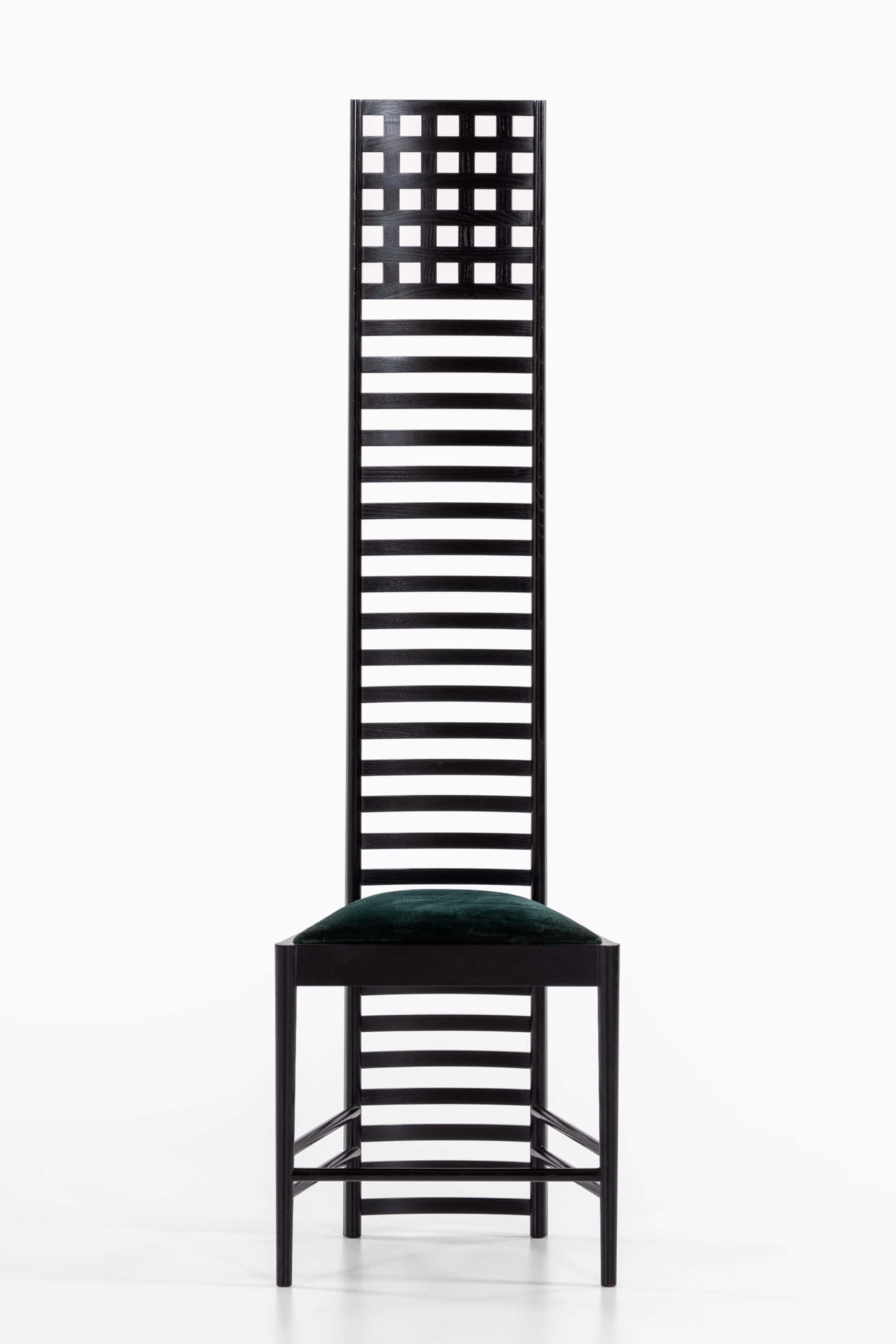
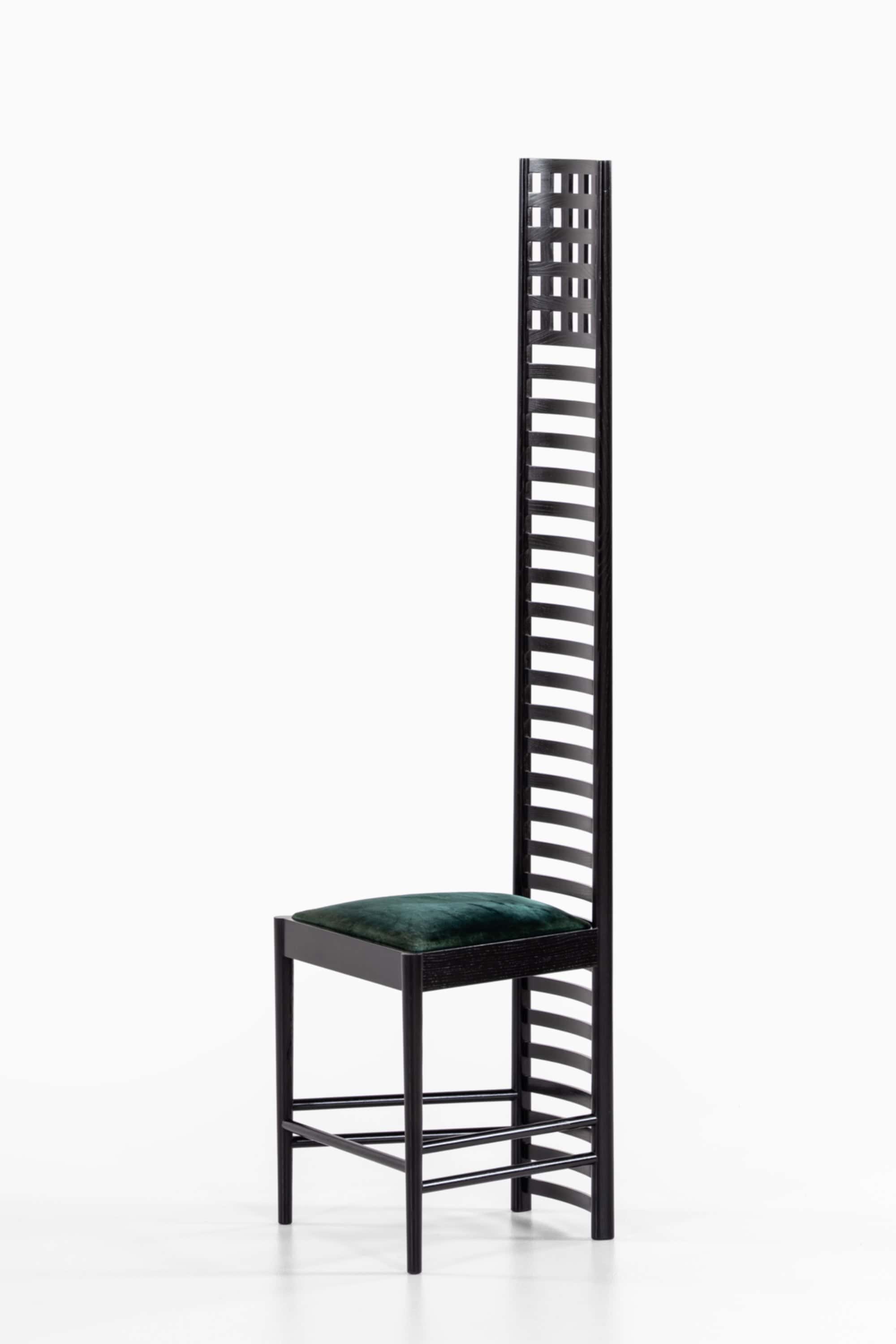
This Hill House 1 chair, model 292, was designed by Scottish architect and designer Charles Rennie Mackintosh for the Hill House project of 1902–03. Cassina conventionally catalogs the design as 1902. This example is documented as a 1973 production by Cassina in Italy and retains its original numbered identity card, bearing the number 8462. The corresponding number, Cassina mark and Mackintosh identification are also present on the chair.
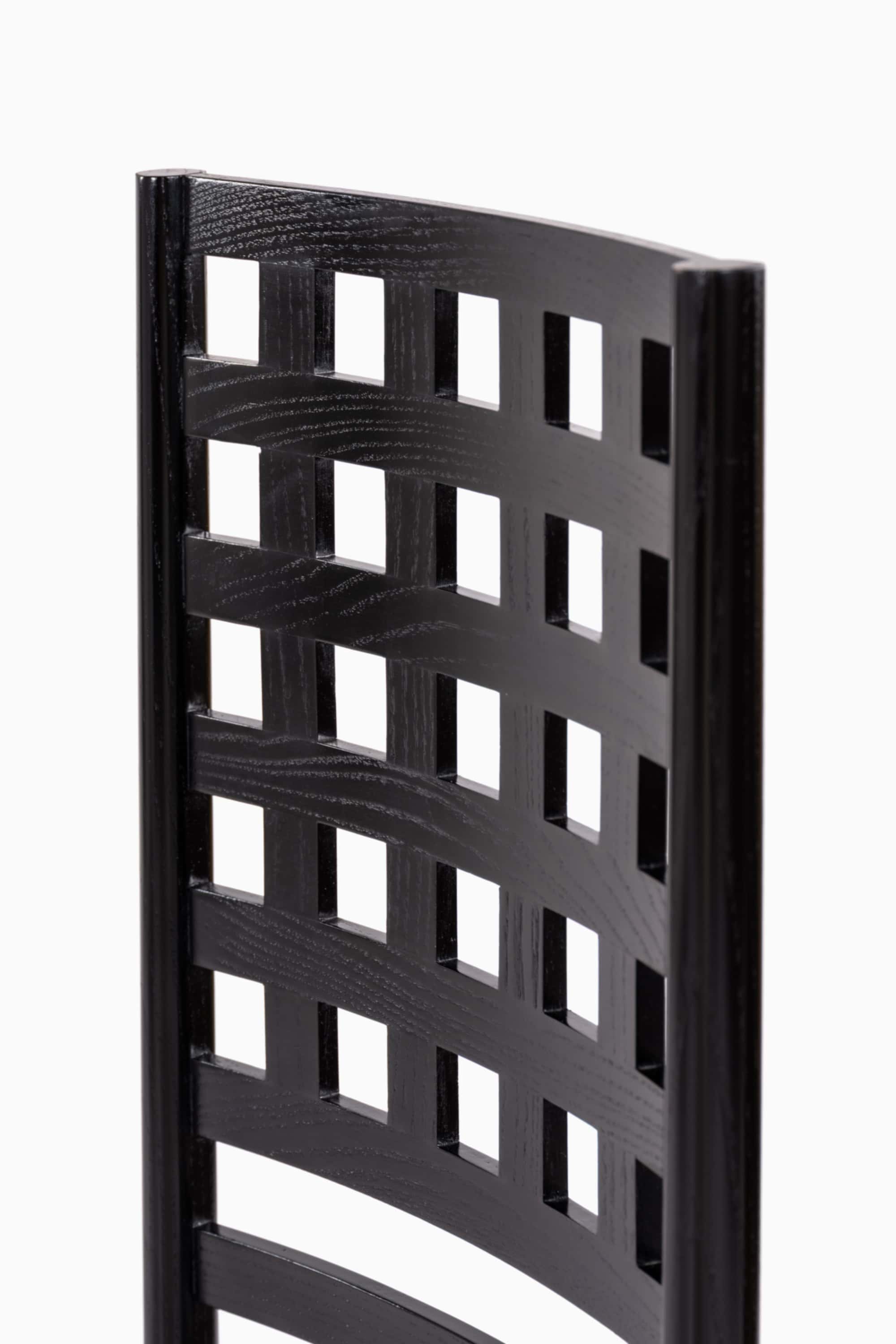
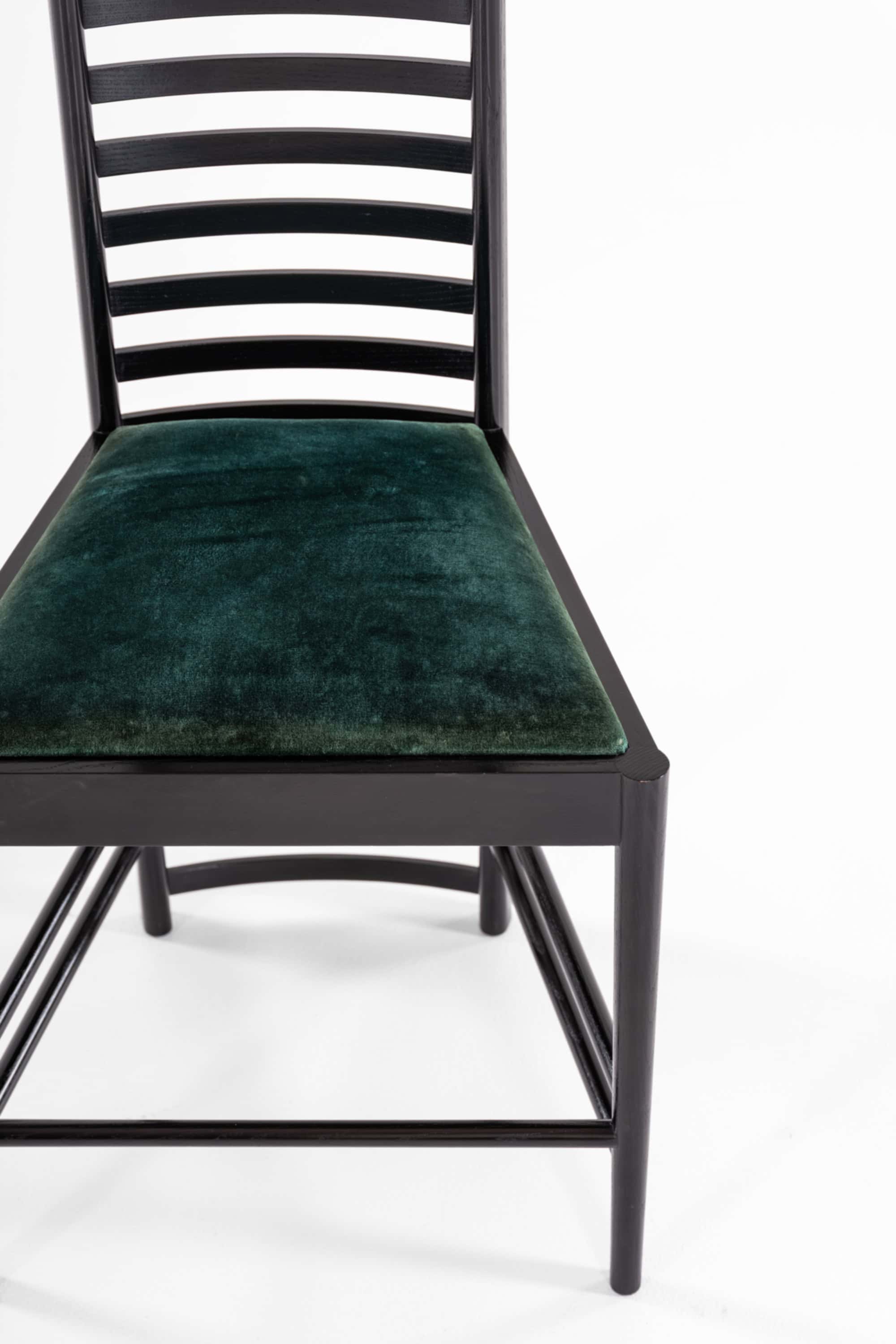
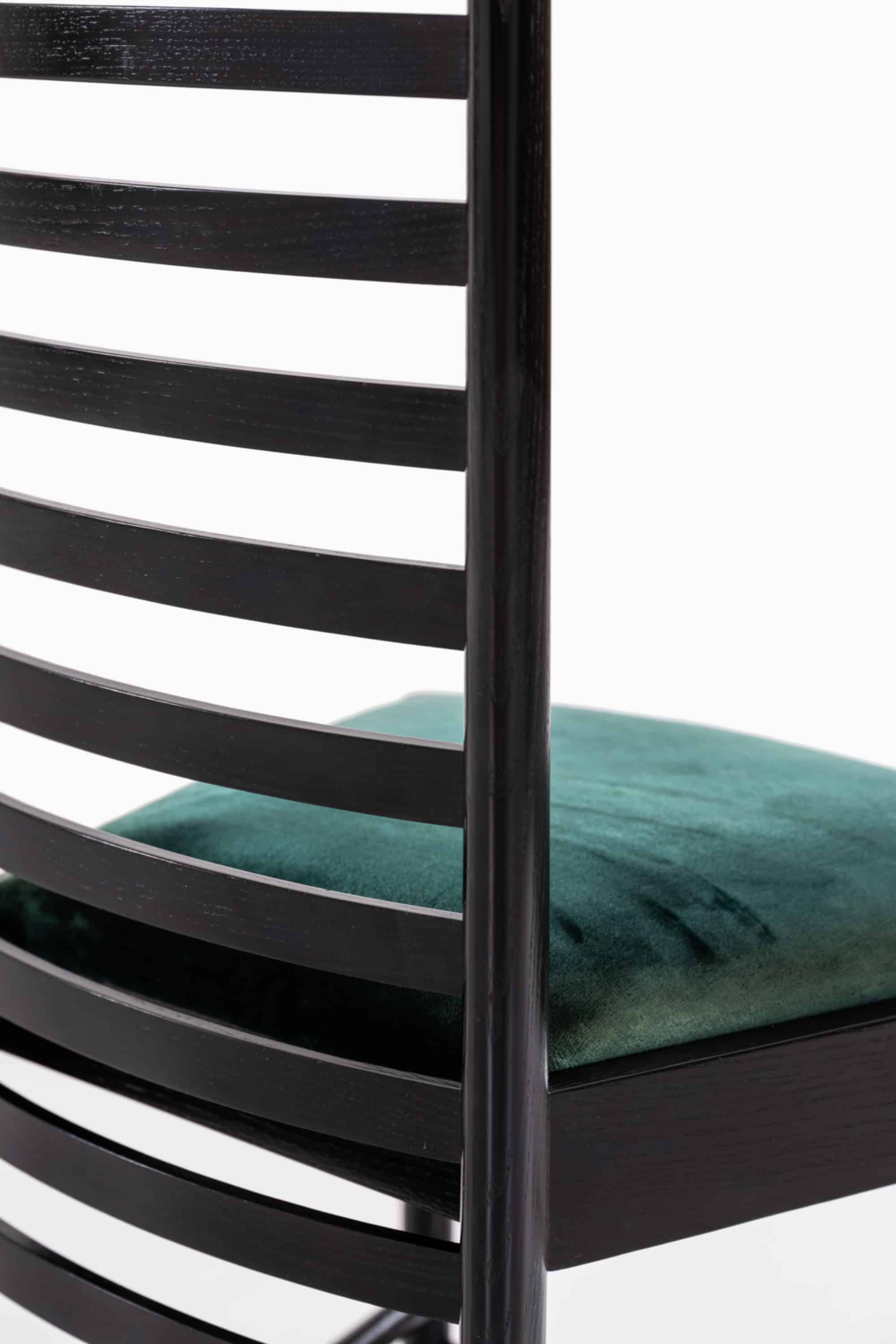
The frame is constructed from ash wood stained black, with the grain remaining visible beneath the finish. A compact upholstered seat in the original deep green Cassina velvet contrasts with the predominantly black structure. Four slender legs are connected by horizontal and diagonal stretchers, providing rigidity to the narrow frame and supporting the exceptionally tall back.
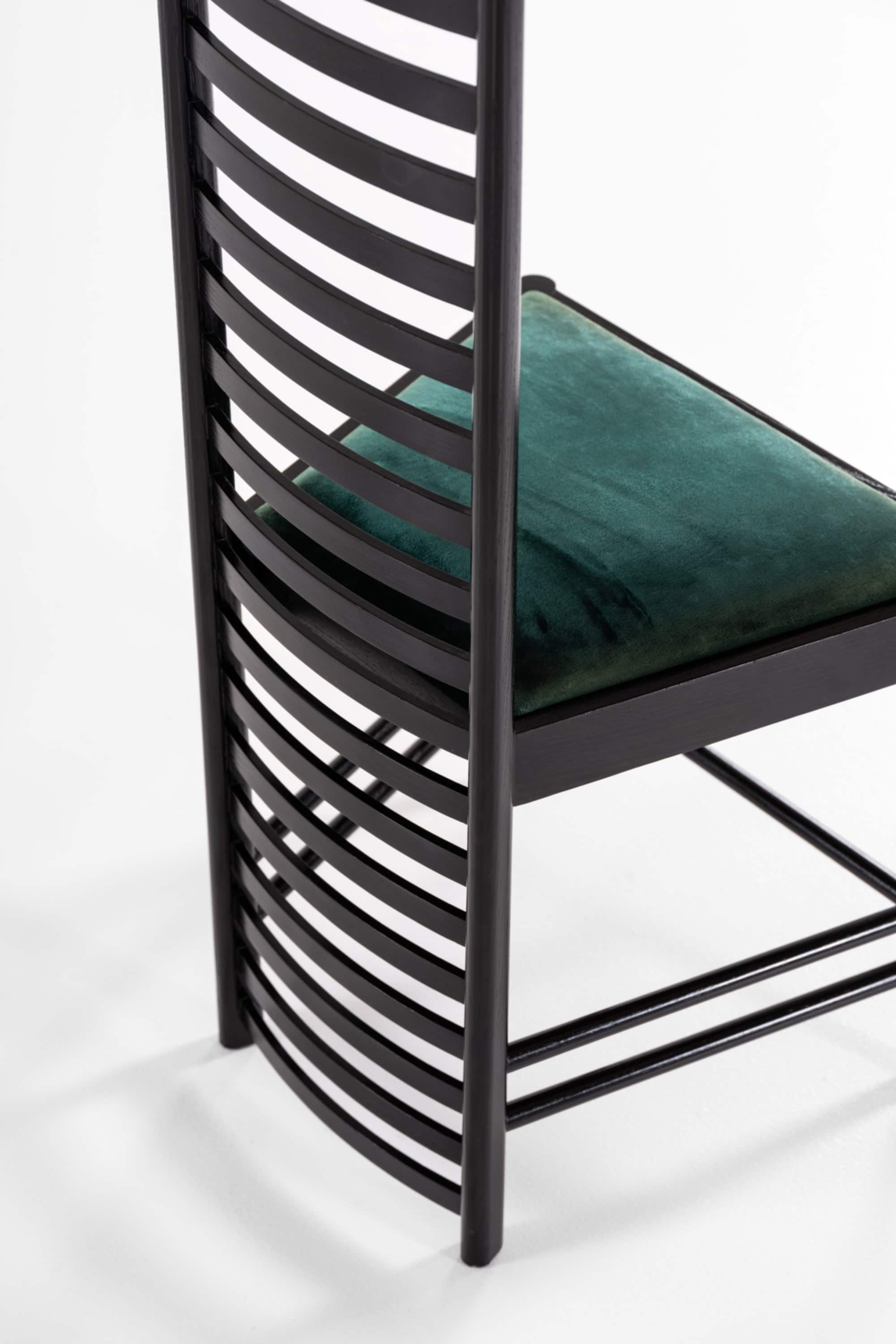
The back is formed by two continuous vertical uprights joined by a long sequence of closely spaced horizontal slats. These slats continue below the seat toward the floor, visually extending the back through the entire height of the chair. At the top, the horizontal elements intersect with short vertical members to create a rectangular grid. This grid introduces a denser geometric termination to the otherwise linear ladder-back construction.
Mackintosh designed the original chair specifically for the White Bedroom at the Hill House in Helensburgh, Scotland. The house was commissioned by Glasgow publisher Walter Blackie and was conceived as a coordinated architectural interior in which the building, furniture, textiles and decorative elements formed a unified composition. The National Trust for Scotland notes that the original ladder-back chairs were intended primarily as decorative elements rather than conventional everyday seating. Their exaggerated height, small seat and delicate proportions allowed them to articulate the surrounding space.
Charles Rennie Mackintosh (1868–1928) was a leading figure of the Glasgow School and worked across architecture, furniture, interiors and graphic design. His work combines Scottish vernacular and neo-Gothic references with Art Nouveau, Arts and Crafts principles and geometric abstraction. The repeated horizontal bars and upper grid of the Hill House chair also demonstrate the influence of Japanese design, particularly its use of linear repetition, open space and asymmetrical visual balance.
Cassina was founded in Meda, Italy, by Cesare and Umberto Cassina in 1927. The manufacturer became an important participant in the development of Italian industrial furniture production and subsequently established a program of authorized reissues devoted to historically significant modern designs. Cassina manufactures the Hill House chair in black-stained ash with a velvet seat, preserving Mackintosh’s original proportions while adapting its construction to controlled serial production.
The chair is an early documented Cassina interpretation of Mackintosh’s design. Its identity card specifies “Hill House, 1 (1902/1973),” an ebonized ash frame, velvet upholstery in green or pink, and Cassina production. The matching marks and serial number provide direct evidence of manufacture and distinguish the chair from later unlicensed copies.
The chair is in good vintage condition, with signs of use consistent with its age. The black-stained ash frame displays light scratches, small rubbed areas and localized finish wear. The original green velvet shows pressure marks, variations in pile direction, minor fading and light handling wear. The observed wear does not significantly alter the structure or overall form.
The chair measures 41 cm wide × 34 cm deep × 140 cm high, corresponding to approximately 16.1 × 13.4 × 55.1 inches. The seat height is 43 cm, or approximately 16.9 inches.
Dimensions (cm) | W: 41 / D: 34 / H: 140 / Seat H: 43 |
| Producer | Cassina |
| Color | Black, Green |
| Decade | 1970s |
| Country | Italy |
| Material | Ash, Velvet |
| Designed in | 1902 |
| Item Number | 250744 |
Charles Rennie Mackintosh