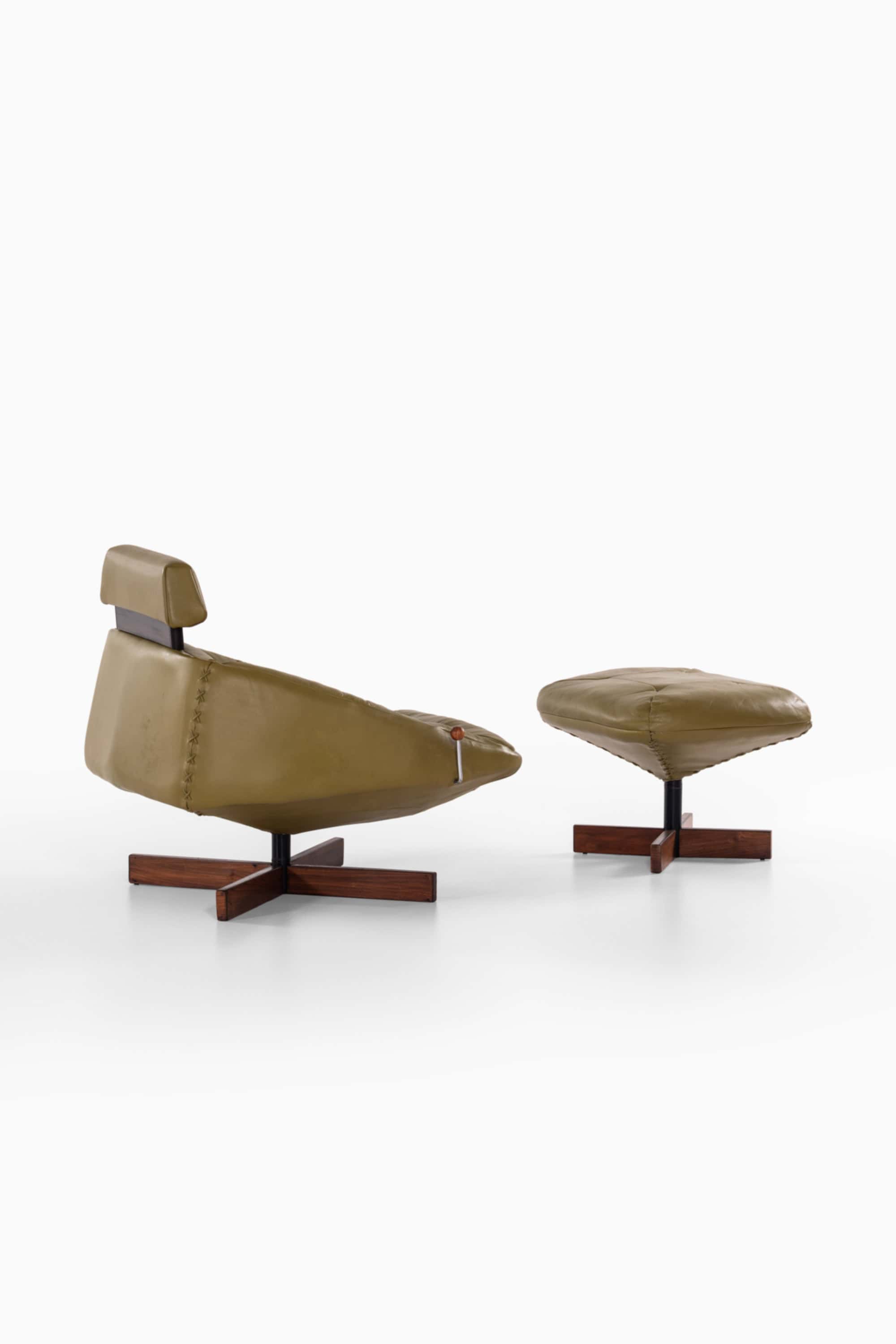
Percival Lafer easy chair
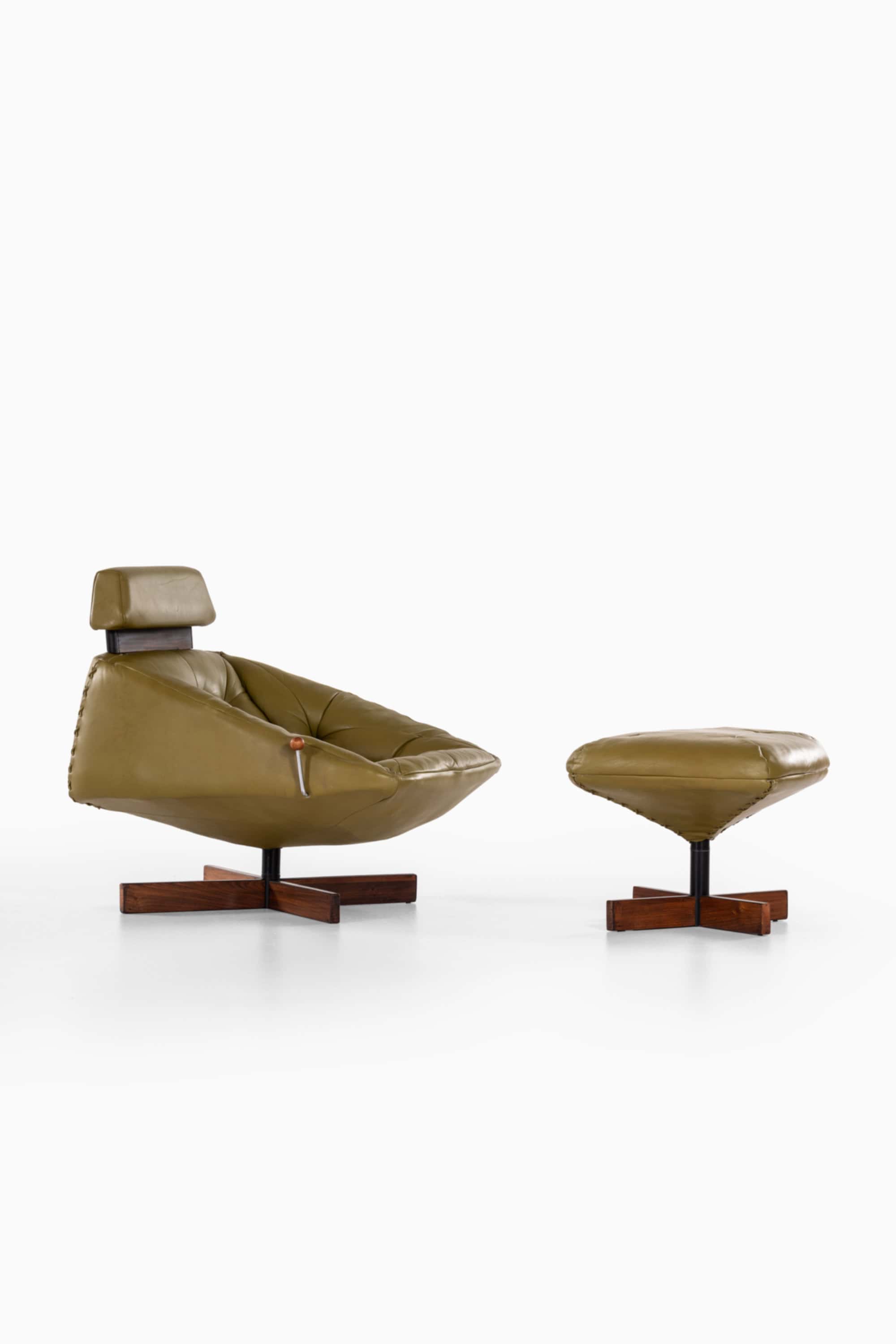
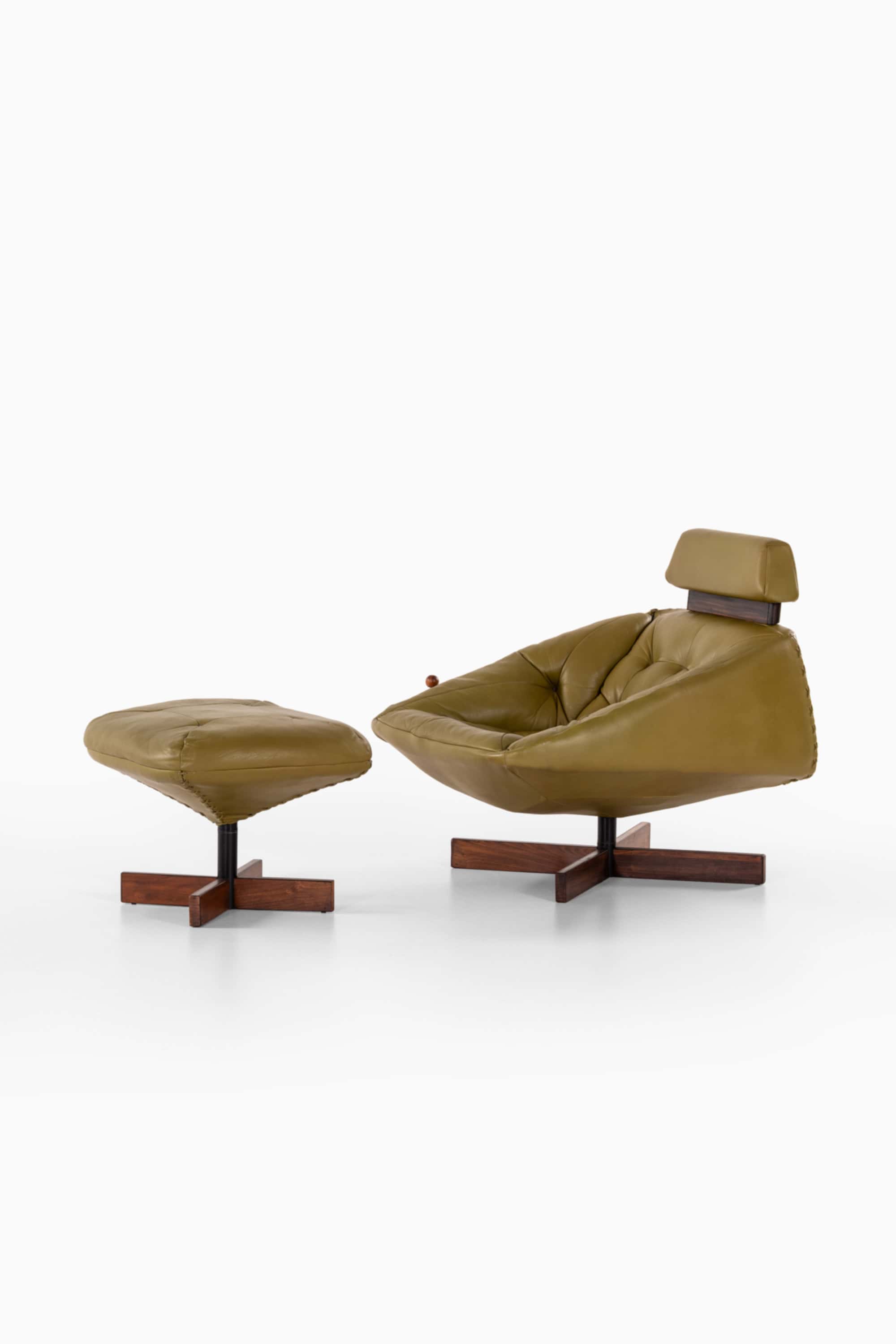
Very rare easy chair with matching ottoman model MP-43 designed by Brazilian architect and furniture designer Percival Lafer and produced by Lafer MP in Brazil during the 1970s. The ensemble combines an enveloping upholstered shell with dark rosewood and metal structural elements and belongs to Lafer’s experimental body of Brazilian modern seating, in which ergonomics, exposed construction and substantial cushioning were treated as integral aspects of the design.
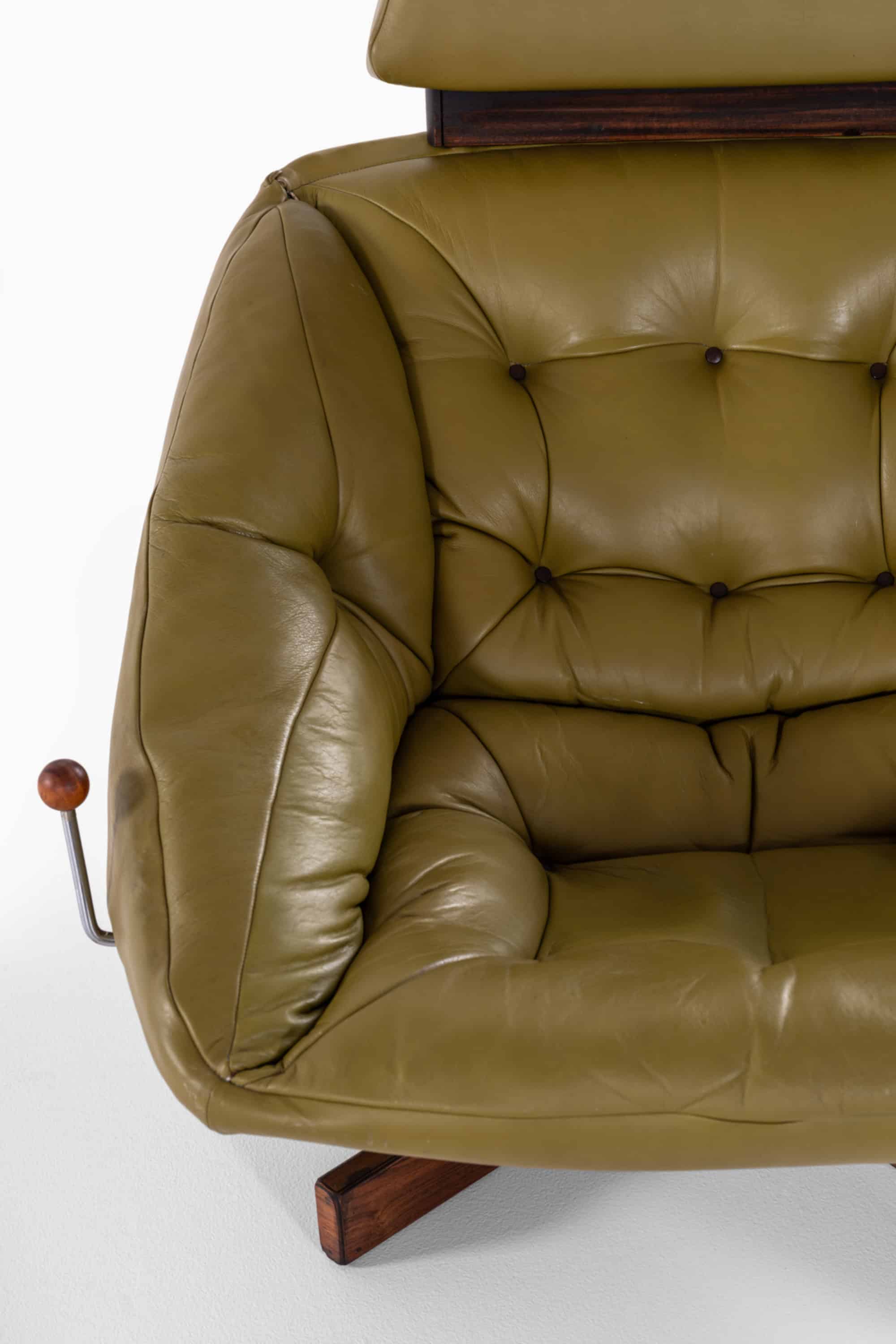
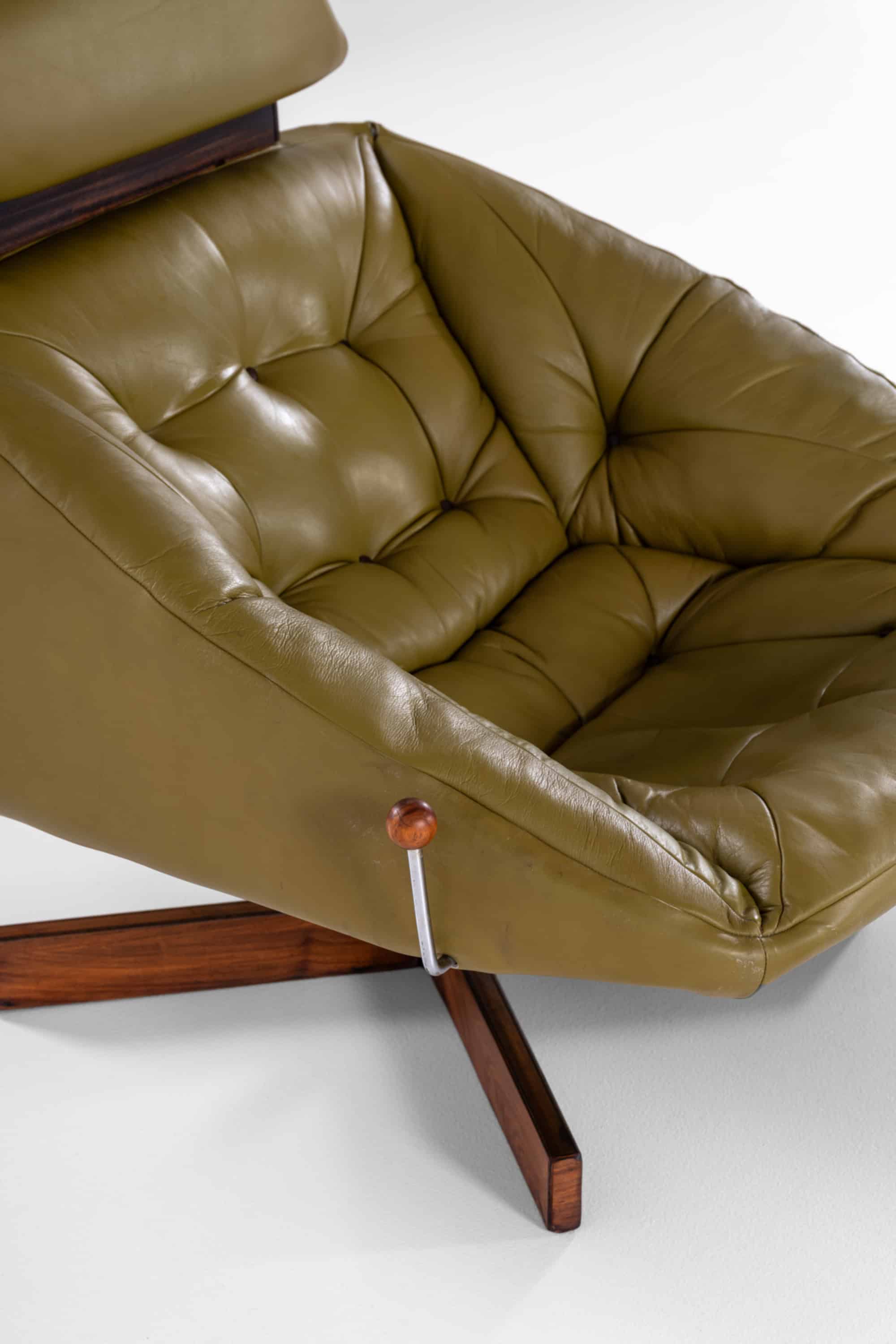
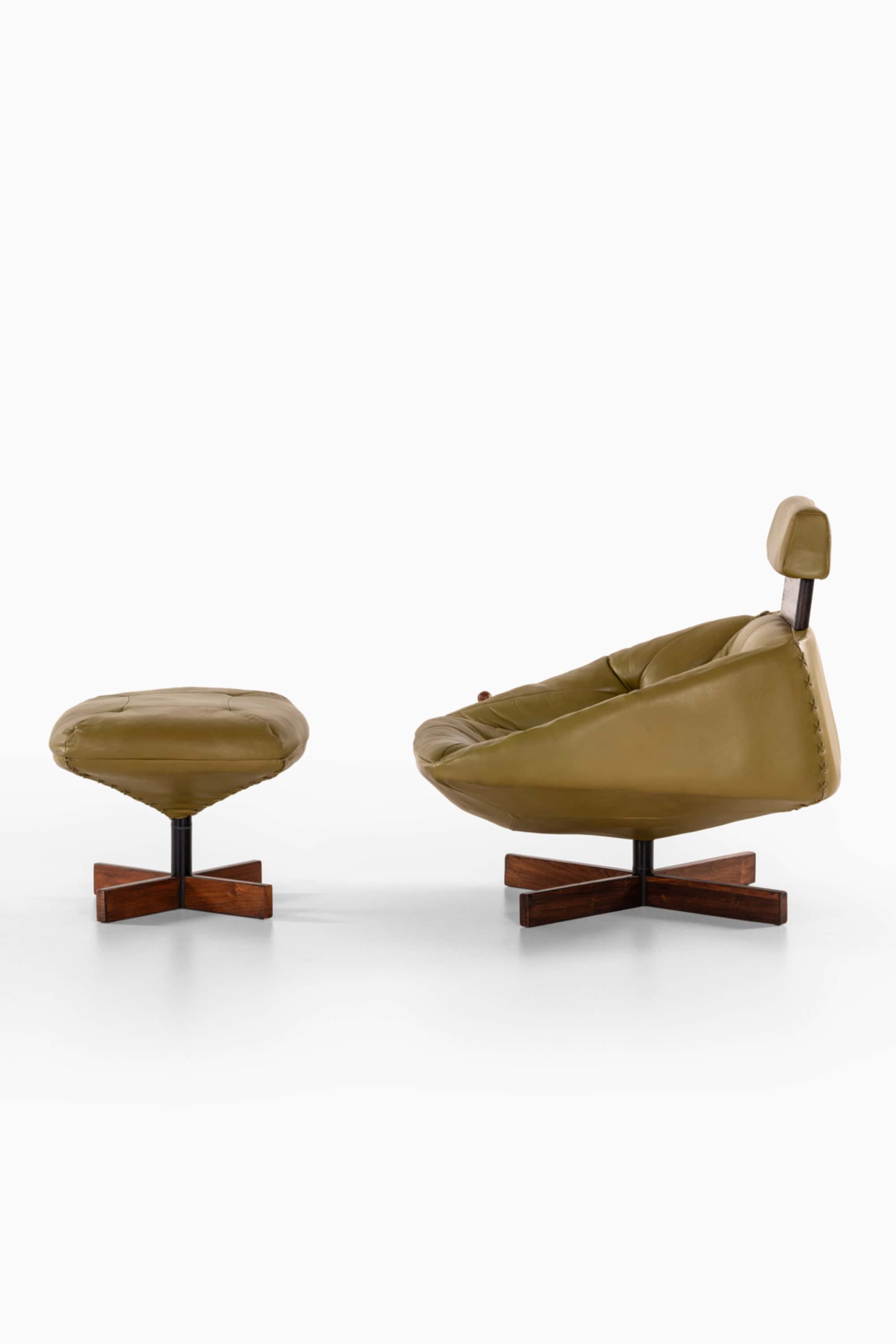
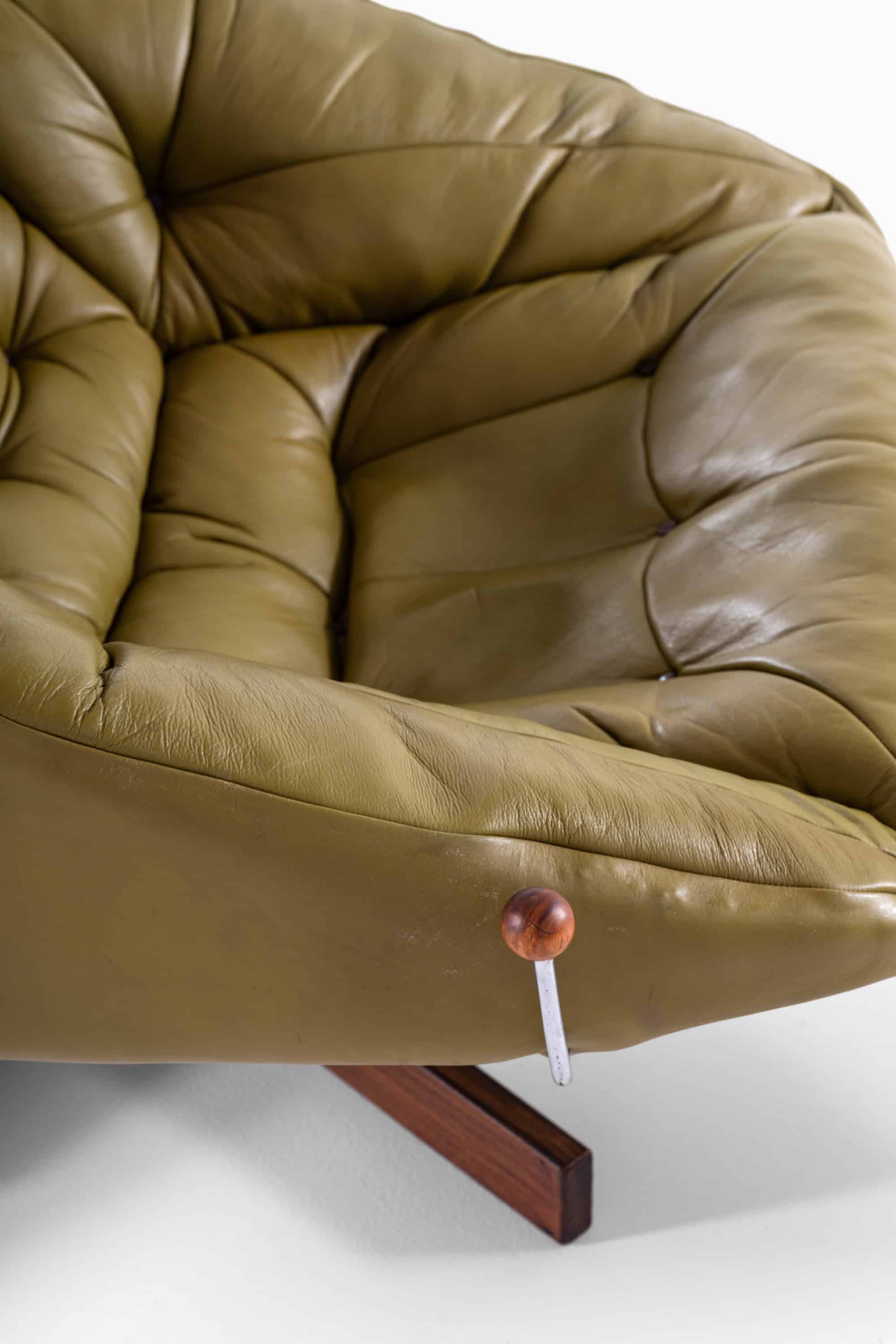
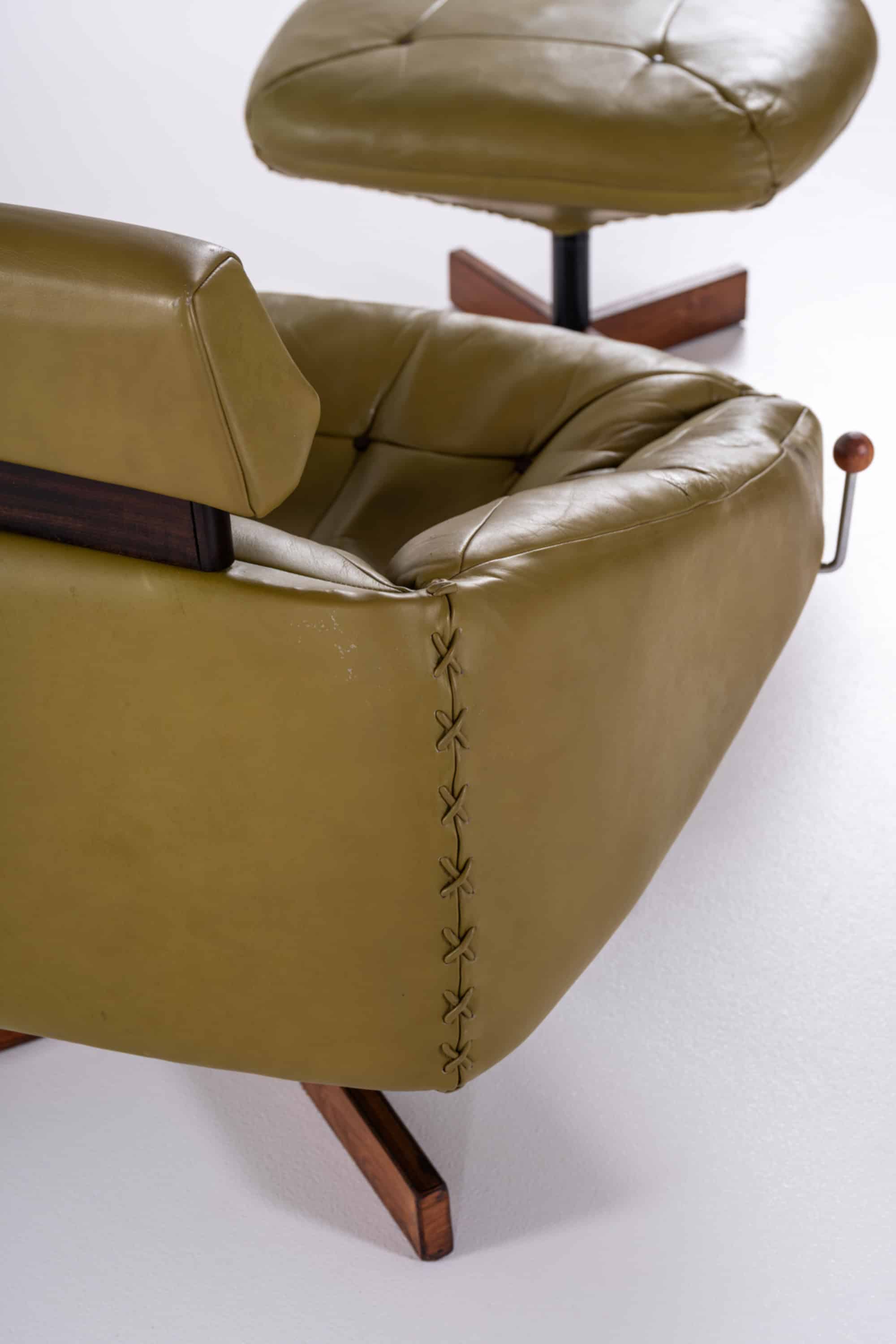
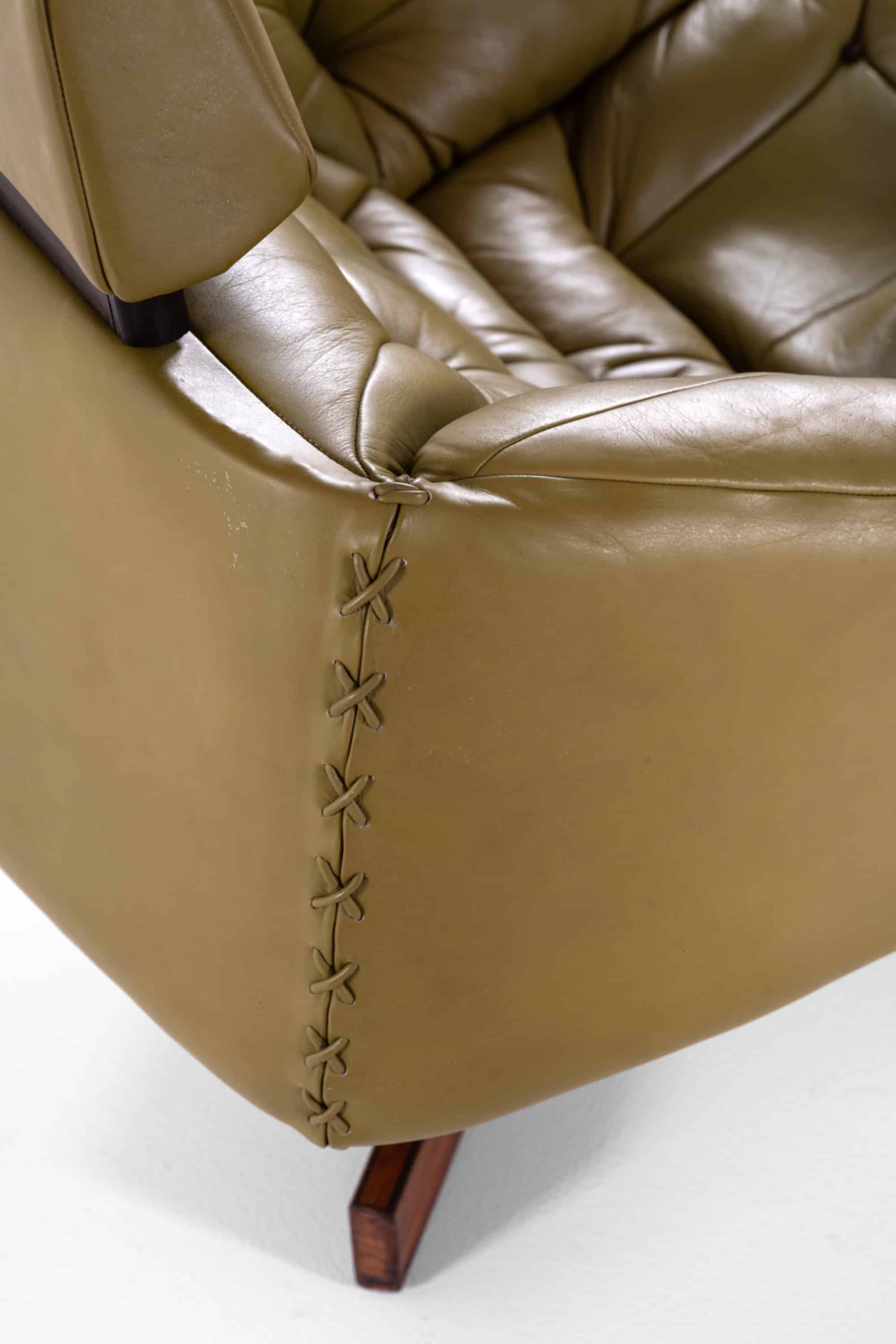
The chair is upholstered in olive-green leather, with a broad, deeply padded seat enclosed by high, continuously rising sides and back. Its overall shape is low and approximately shell-like, tapering toward the front and widening around the occupant. The interior is extensively button-tufted, dividing the leather into irregularly shaped padded sections that respond to the body rather than following a rigid rectilinear grid. The smooth outer shell provides a visual counterpoint to this deeply modelled interior. Leather lacing is exposed along the rear vertical seams, making the method of assembly part of the chair’s appearance.
The chair is supported centrally on a dark metal column terminating in a cruciform rosewood base. Four low rectangular wooden members radiate horizontally from the central support, producing a visually light separation between the upholstered body and the floor. The matching ottoman repeats the same construction on a smaller scale, with a centrally mounted upholstered cushion and corresponding cruciform rosewood base. The dark reddish-brown timber, blackened metal and muted olive leather create a distinctly earthy material palette associated with Brazilian furniture of the period.
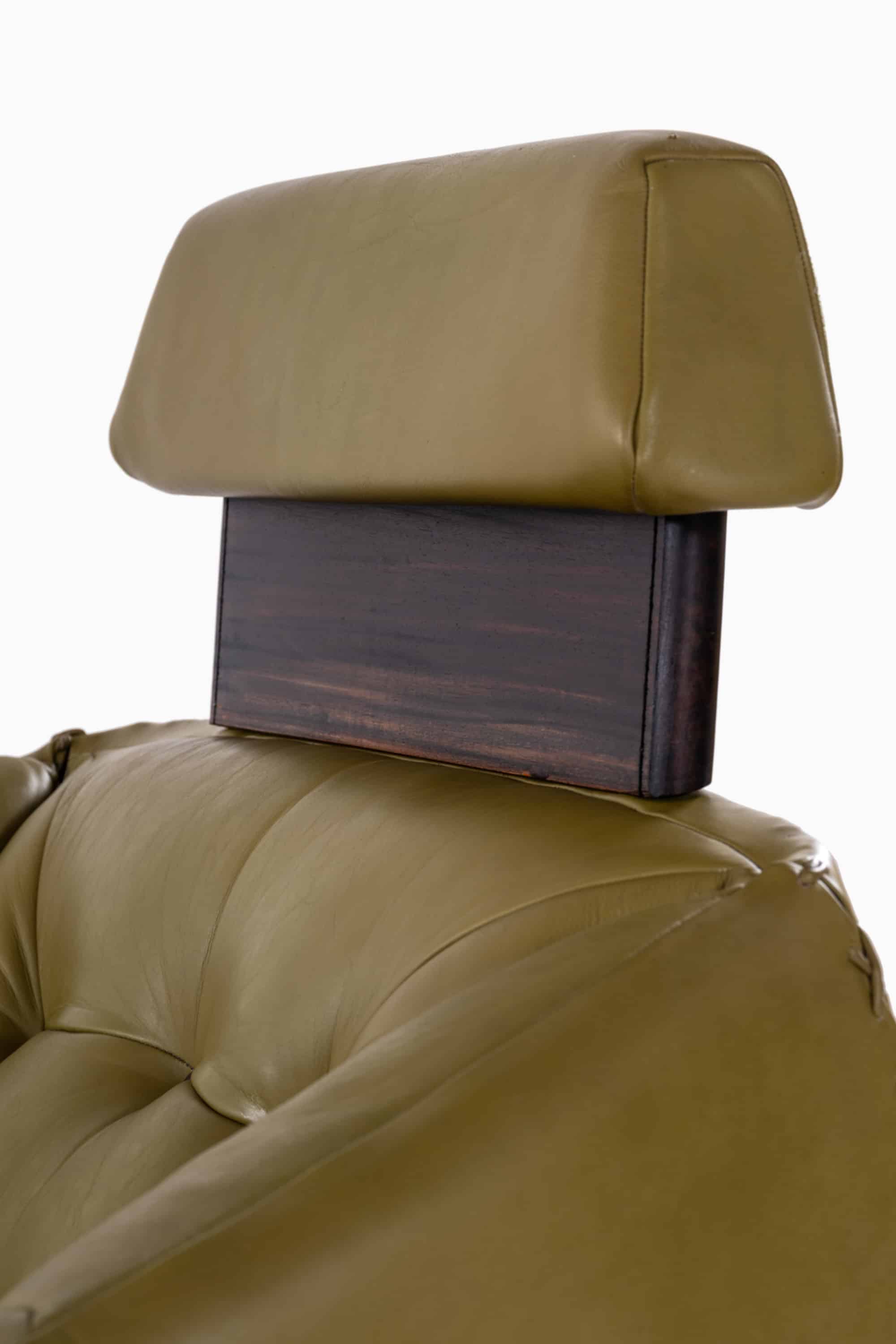
A notable functional element is the adjustable headrest. The upholstered head cushion is mounted above the main back on a substantial rosewood support, allowing its position to be altered according to the sitter. The visible wooden element deliberately separates the headrest from the upholstered body and makes the adjustment mechanism legible as part of the chair’s construction. A further mechanical control is positioned at the side of the seat: a bent metal lever terminating in a spherical rosewood knob. This combination of comfort, mechanical adjustability and visibly expressed components reflects Lafer’s continuing interest in furniture as an engineered object rather than simply an upholstered form.
Percival Lafer, born in Brazil in 1936, trained in architecture at Universidade Mackenzie in São Paulo. Following the death of his father, he became involved with the family furniture business and moved from architecture into furniture design during the early 1960s. His work developed around the idea of producing technically inventive modern furniture at comparatively accessible prices. Lafer became particularly known for lounge seating that combined generous polyurethane cushioning with hardwood, leather and exposed structural systems, establishing a design language noticeably different from the thinner, more rectilinear forms associated with much European and North American mid-century furniture.
Stylistically, this chair and ottoman belong to Brazilian modernism of the late 1960s and 1970s and can also be situated within the broader development of postwar organic modern design. Rather than relying on the rigid geometry characteristic of earlier modernism, the design uses a low center of gravity, substantial cushioning and an enveloping form to establish a more informal relationship between furniture and the body. The contrast between the soft leather shell and precisely constructed rosewood base is particularly characteristic of Lafer’s approach. The design simultaneously exposes its materials, emphasizes comfort and treats mechanical details such as the headrest and side control as visible components of the composition.
The chair and ottoman remain in good vintage condition with small signs of use consistent with age. The olive-green leather displays natural creasing, wrinkles, minor surface marks, rubbing and localized variations in tone. The upholstery retains the characteristic softness and tufted definition of the design. Minor wear is visible on the exterior leather and around edges and seams, while the rosewood elements show light surface wear consistent with use. The visible lacing, wooden components and mechanical elements remain important original details of the construction.
Chair dimensions: 82 × 85 × 80 cm (32.3 × 33.5 × 31.5 in). Seat height: 37 cm (14.6 in).
Ottoman dimensions: 63 × 55 × 43 cm (24.8 × 21.7 × 16.9 in).
Dimensions (cm) | Chair: W: 82 / D: 85 / H: 80 / Seat H: 37 Stool: W: 63 / D: 55 / H: 43 |
| Producer | Lafer MP |
| Color | Green |
| Decade | 1970s |
| Country | Brazil |
| Style | Brazilian Modern |
| Material | Leather, Rosewood |
| Designed in | 1970s |
| Item Number | 250780 |
Percival Lafer
Percival Lafer (1936–2016) was a Brazilian furniture designer and entrepreneur whose work helped define modern Brazilian interiors in the second half of the 20th century. Known for combining industrial production techniques with rich natural mat...
Read more