Studio B.B.P.R. table lamp
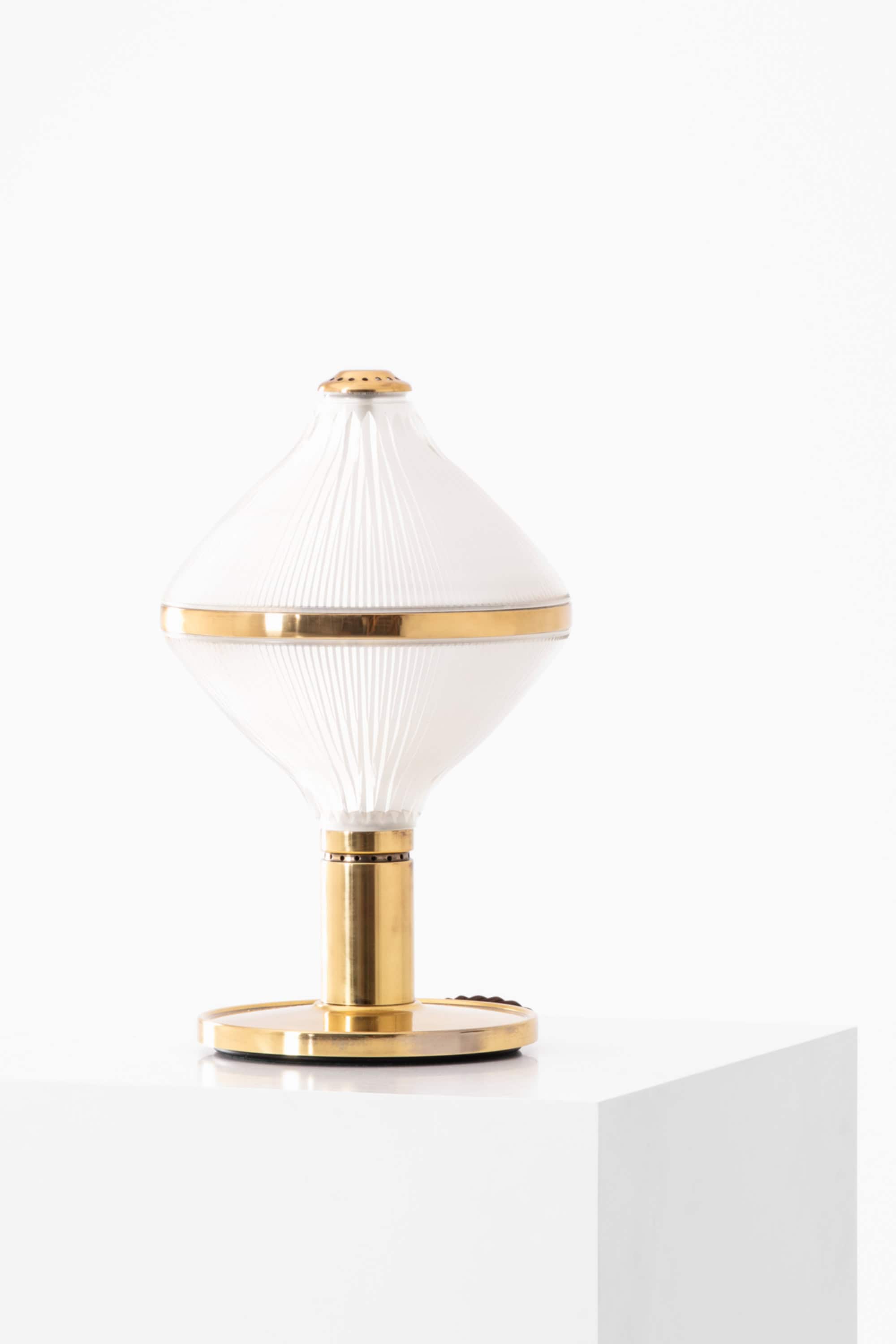
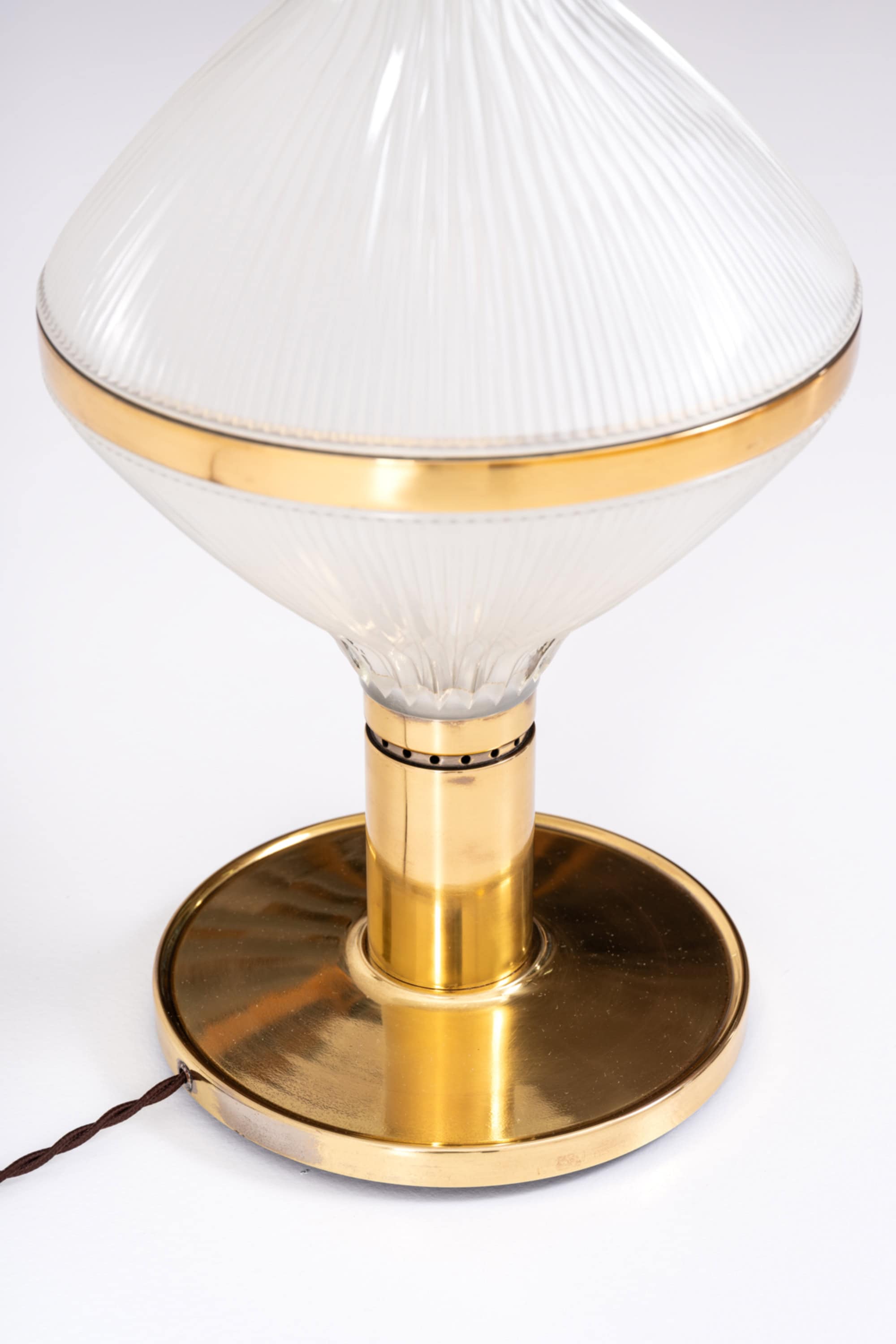
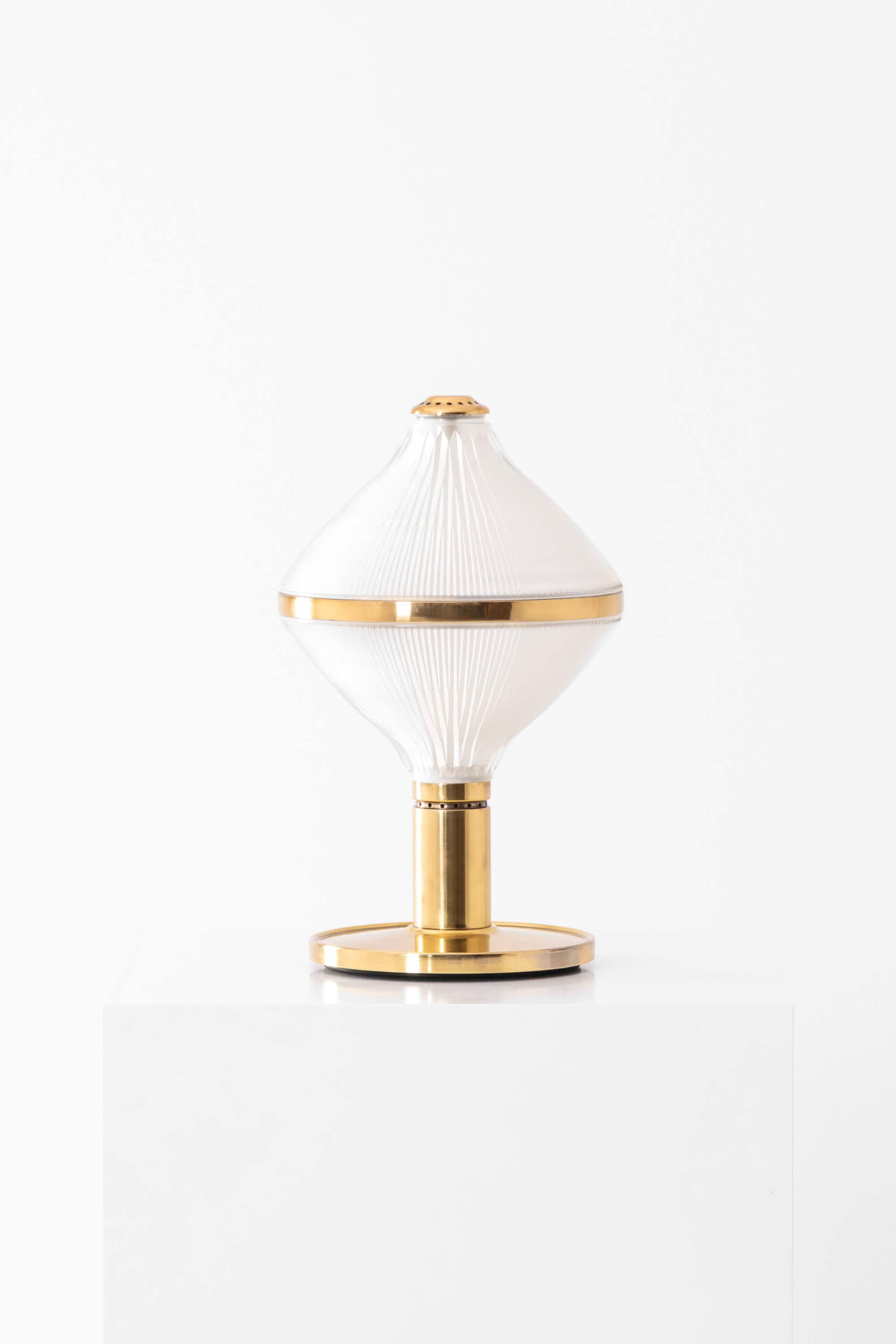
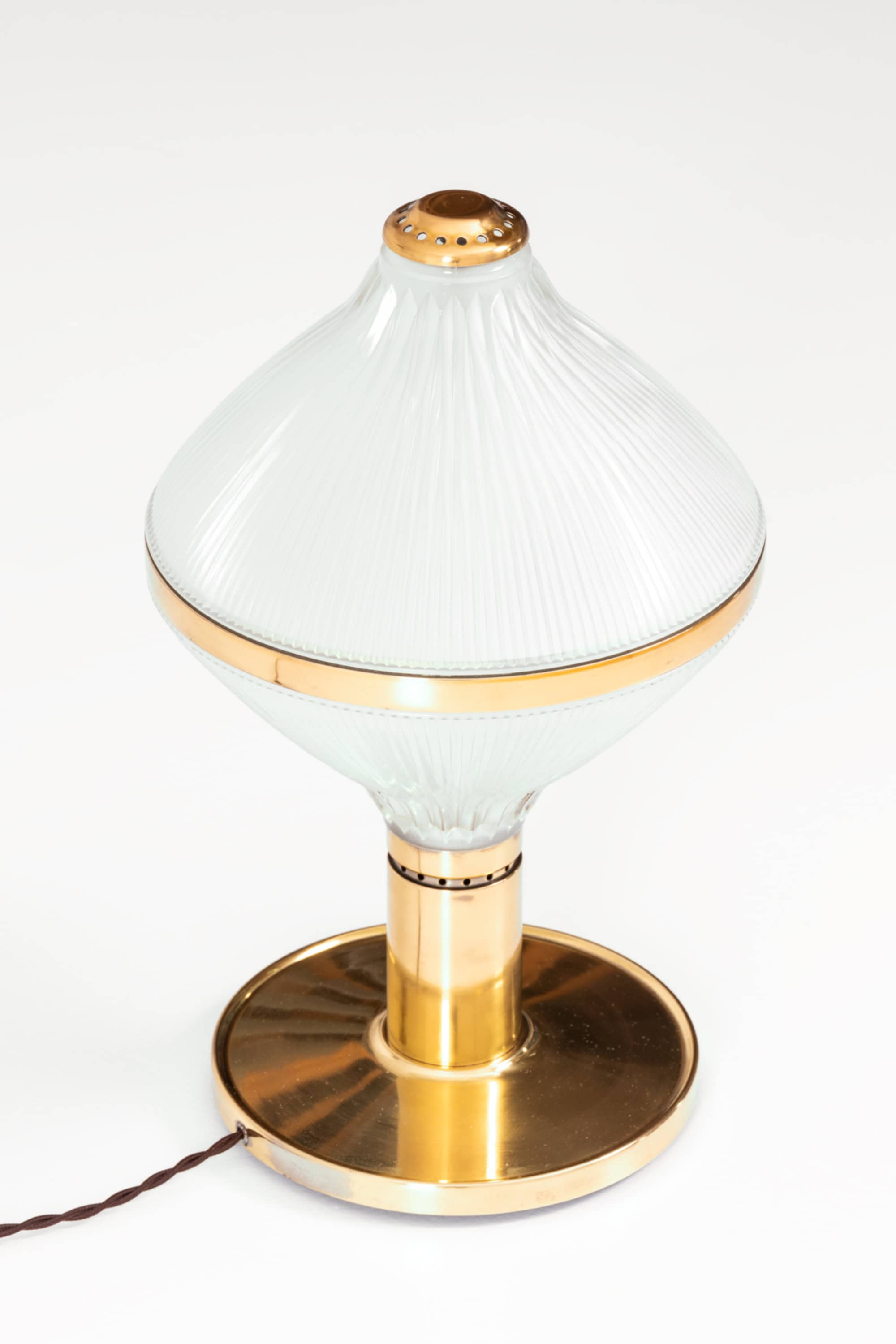
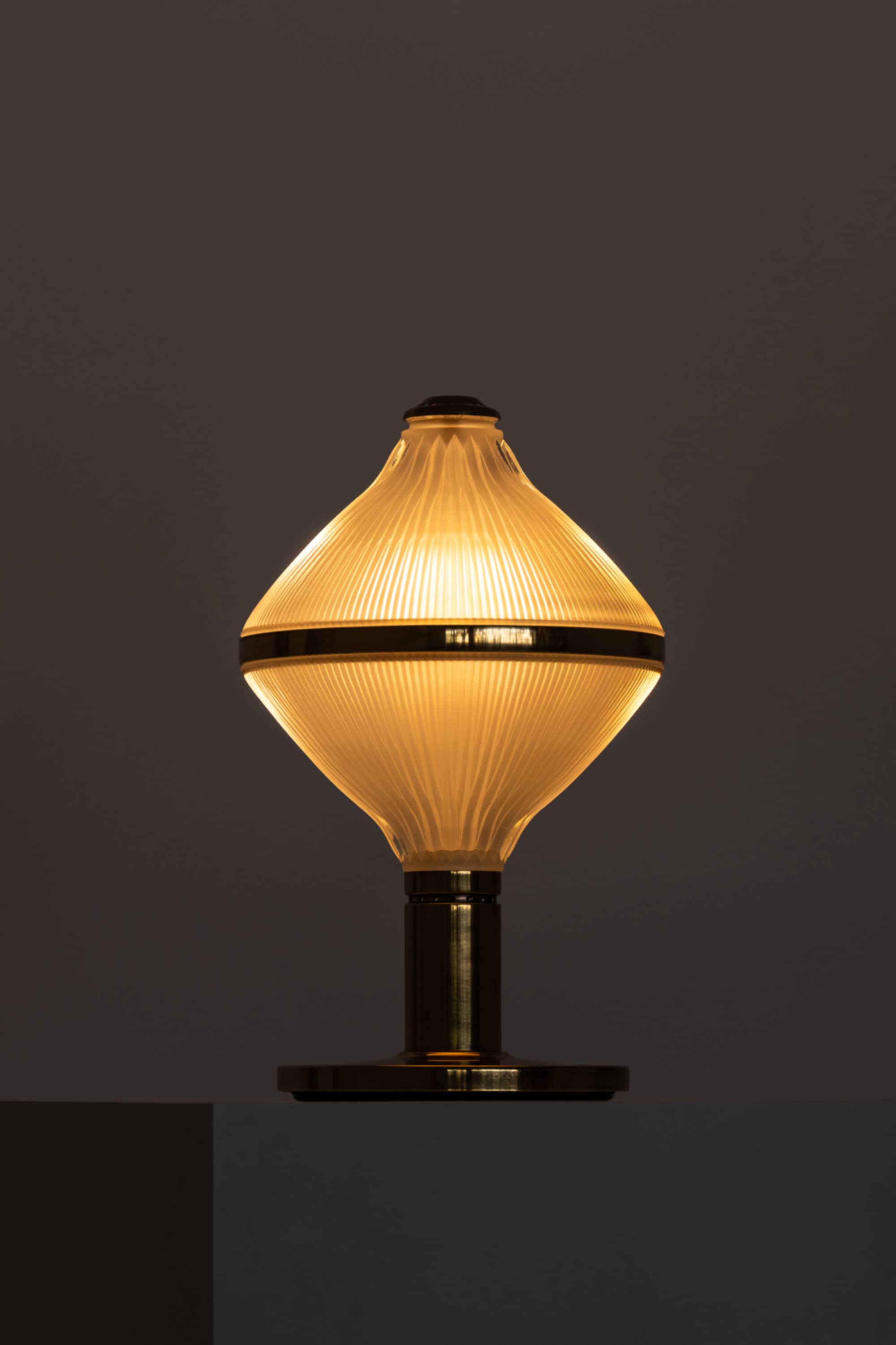
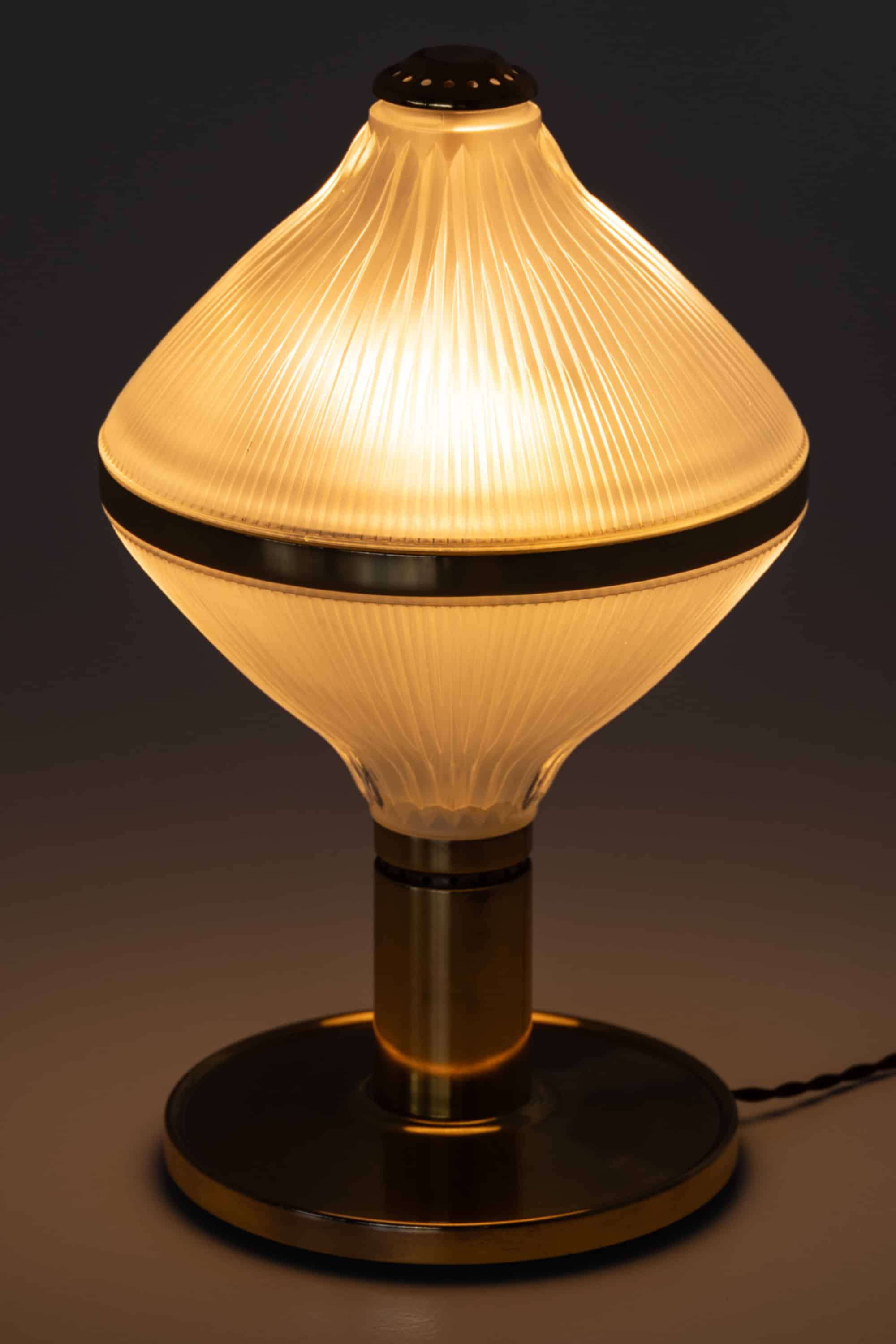
The lamp features a distinctive double-conical glass diffuser, with two gently curved, tapering sections meeting at their widest point. A polished brass band encircles the central circumference, visually separating the upper and lower portions of the shade while emphasizing its horizontal axis. The glass has a milky white appearance and is decorated with closely spaced vertical ribs that extend from the narrow openings toward the central band. These fine linear details follow the curvature of the glass, creating a regular pattern of light and shadow across the surface. The combination of translucent white glass and warm golden brass gives the lamp a restrained yet architecturally defined appearance.
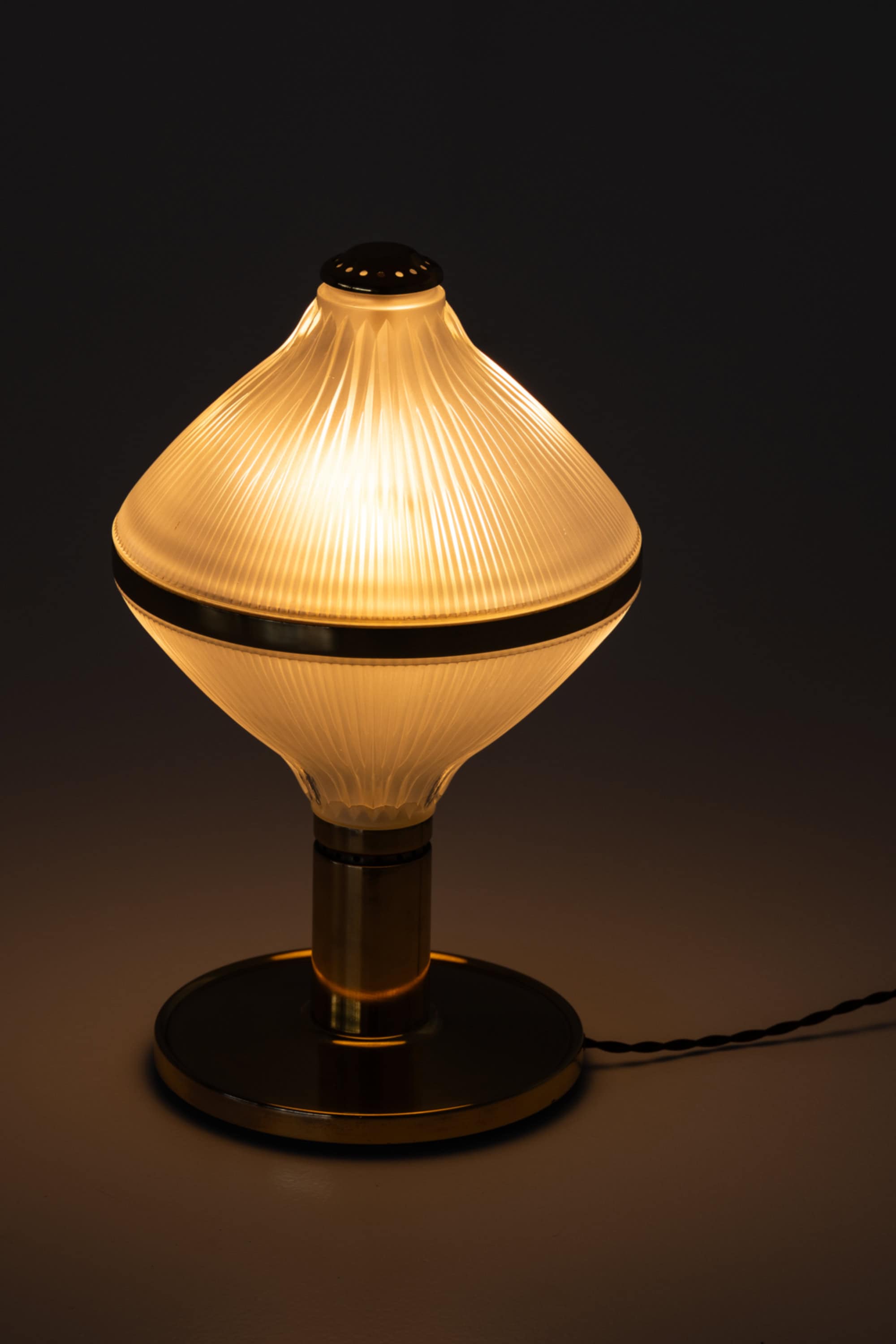
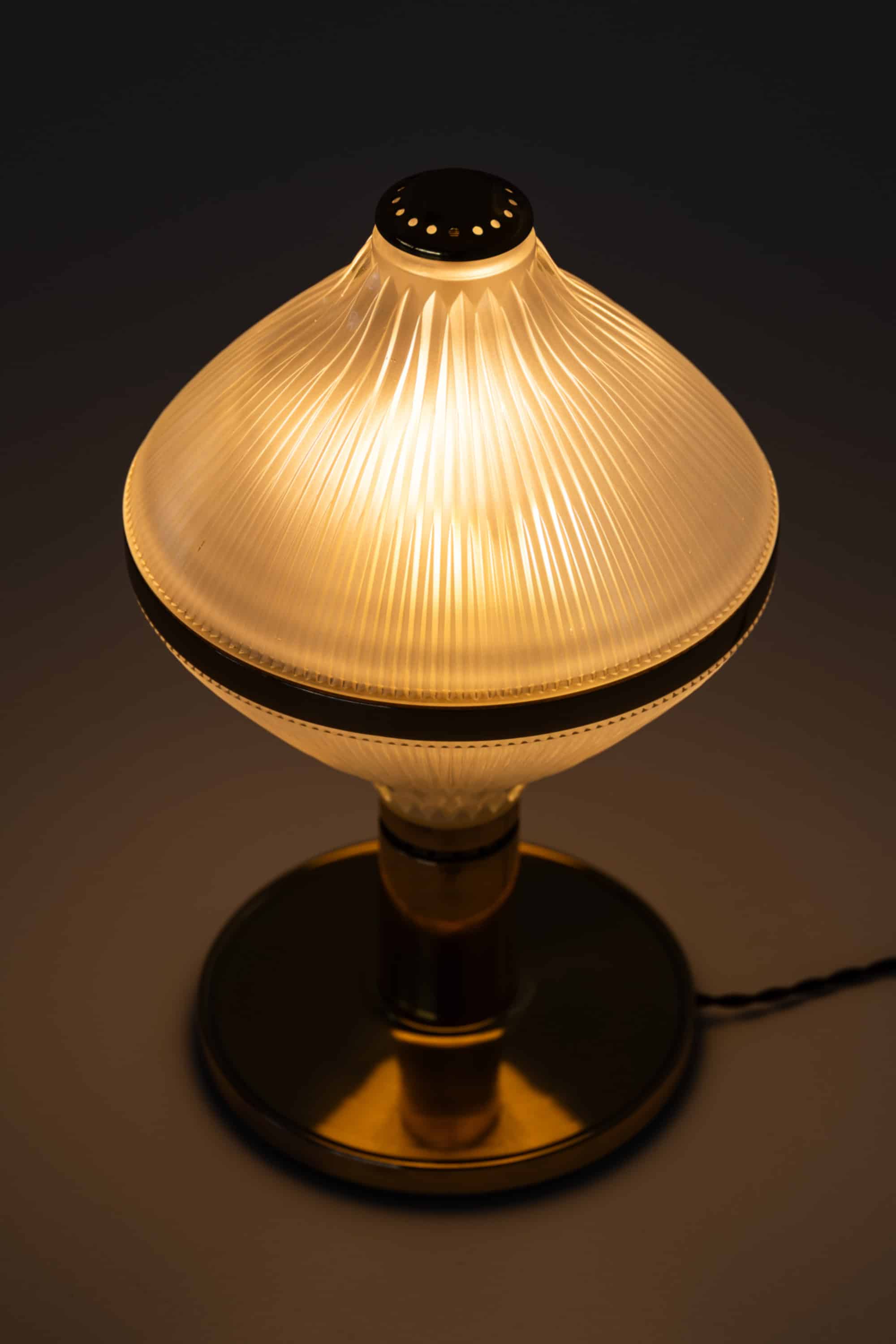
The diffuser is supported by a cylindrical brass column mounted on a circular brass base with a slightly raised perimeter. A narrow perforated metal ring is positioned directly beneath the glass, while a small circular brass cap with ventilation openings completes the upper section. The polished metal surfaces contrast with the finely textured, matte glass, establishing a clear distinction between the structural and light-diffusing components. The lamp is fitted with a textile-covered electrical cord. When illuminated, the glass diffuser produces a warm, evenly distributed glow, with the vertical ribbing becoming more pronounced through variations in light intensity. The brass band remains visually prominent, dividing the illuminated glass into two distinct sections.
Studio B.B.P.R. was founded in Milan in 1932 by architects Gian Luigi Banfi, Lodovico Barbiano di Belgiojoso, Enrico Peressutti, and Ernesto Nathan Rogers. The studio became an important presence in twentieth-century Italian architecture and design, contributing to the development of Italian Rationalism and later modernist architectural thinking. Its work encompassed architecture, urban planning, exhibition design, furniture, and industrial objects. Following the Second World War, the surviving members continued the practice, developing an architectural language that combined modern construction methods with sensitivity to historical context and material expression. Among the studio’s most significant architectural projects is the Torre Velasca in Milan, completed in 1958.
Artemide was established in Milan in 1960 by Ernesto Gismondi and Sergio Mazza and became one of the leading manufacturers of Italian modern lighting. The company developed a reputation for collaborating with architects and designers, combining technological experimentation with functional and aesthetic research. During the 1960s, Artemide contributed to the international recognition of Italian lighting design through the production of innovative fixtures that explored new materials, manufacturing techniques, and approaches to light distribution. The Polinnia lamp belongs to this formative period in the company’s history, when lighting was increasingly treated as an integrated architectural and industrial design discipline.
The Polinnia reflects the principles of Italian mid-century modernism through its geometric composition, balanced proportions, and controlled use of ornamentation. Its silhouette recalls traditional lantern forms, reinterpreted through the simplified geometry and material precision associated with modern industrial design. The ribbed glass introduces a subtle decorative quality without compromising the clarity of the overall construction. The combination of brass and opaline glass also connects the lamp to the refined material vocabulary of Italian interiors during the early 1960s, when functional lighting objects were frequently developed with a strong sculptural presence.
The lamp is preserved in good vintage condition, showing minor signs of age and use consistent with its production period. The brass surfaces display light scratches, small marks, and subtle variations in tone, with some areas of natural patina. The glass diffuser is well preserved, retaining its characteristic ribbed texture and matte white appearance. The overall structure remains visually consistent with the original design, and the lamp is shown illuminated.
The lamp measures 26.5 cm (10.4 inches) in diameter and 42.5 cm (16.7 inches) in height. Its compact circular base, cylindrical support, and comparatively wide glass diffuser establish a balanced vertical composition, characteristic of the architectural approach to lighting developed by Studio B.B.P.R. for Artemide in the early 1960s.
Dimensions (cm) | H: 42.5 / ⌀: 26.5 |
| Producer | Artemide |
| Color | Gold |
| Decade | 1960s |
| Country | Italy |
| Material | Brass, Glass |
| Designed in | 1963 |
| Item Number | 250860 |
Studio B.B.P.R